Arm Dagger
Arm Dagger
Fur - Sudanese Arab
Khartoum - Omdurman, Mahdist Sudan (Sudan)
Dated Hijri 1312 (1894/95)
Steel, Wood, Silver, Crocodile Skin, Leather
Blade: 9 1/8" (23.2cm)
Hilt & Blade: 14 1/2" (36.8cm)
Hilt, Blade, Sheath: 14 7/8" (37.8cm)
Collection Date: 2022
Collection Number: 303
Ex. Oriental Arms: Haifa, Israel (2022)
Ex. Sworder Fine Art: Stasted Mountfitchet, UK (2022)
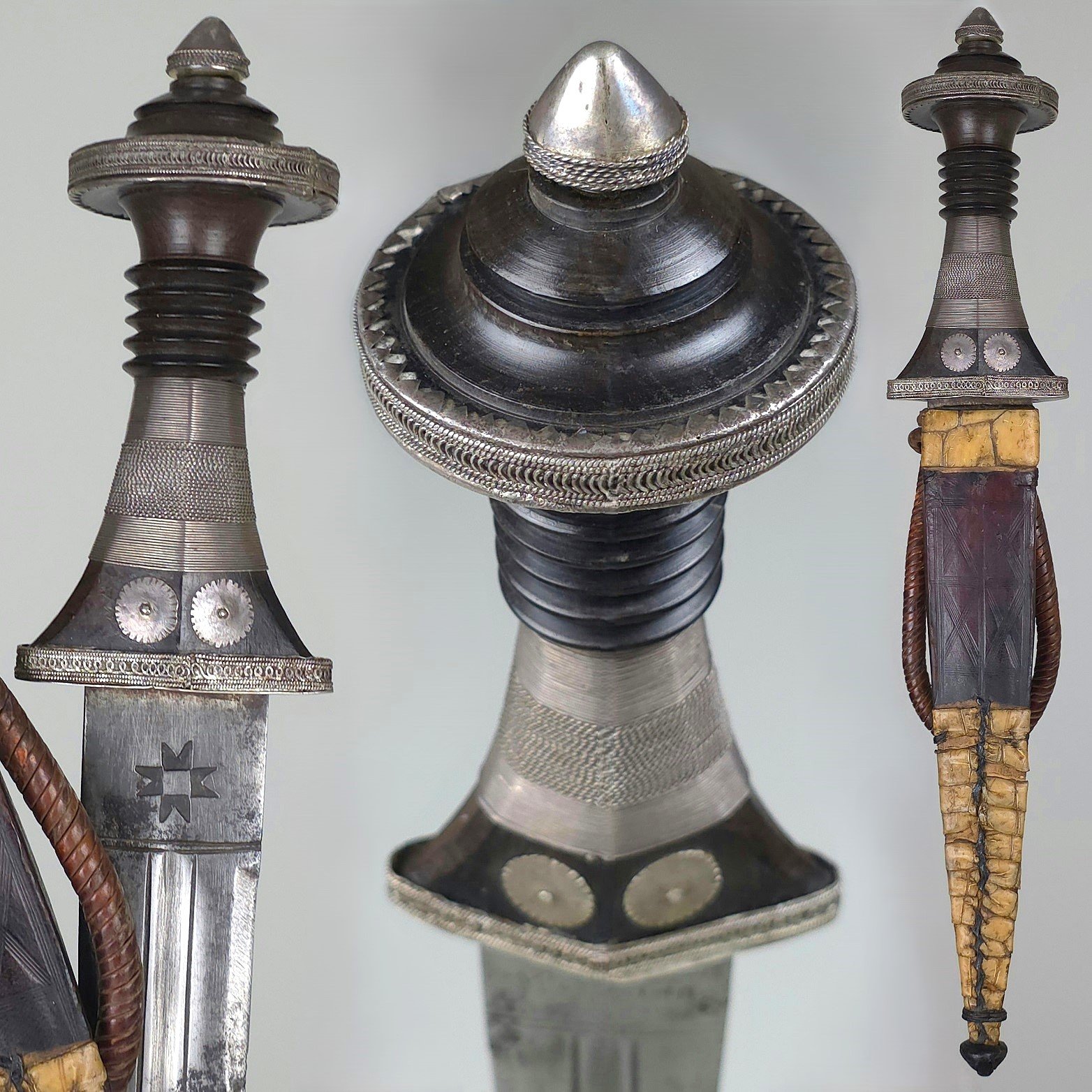
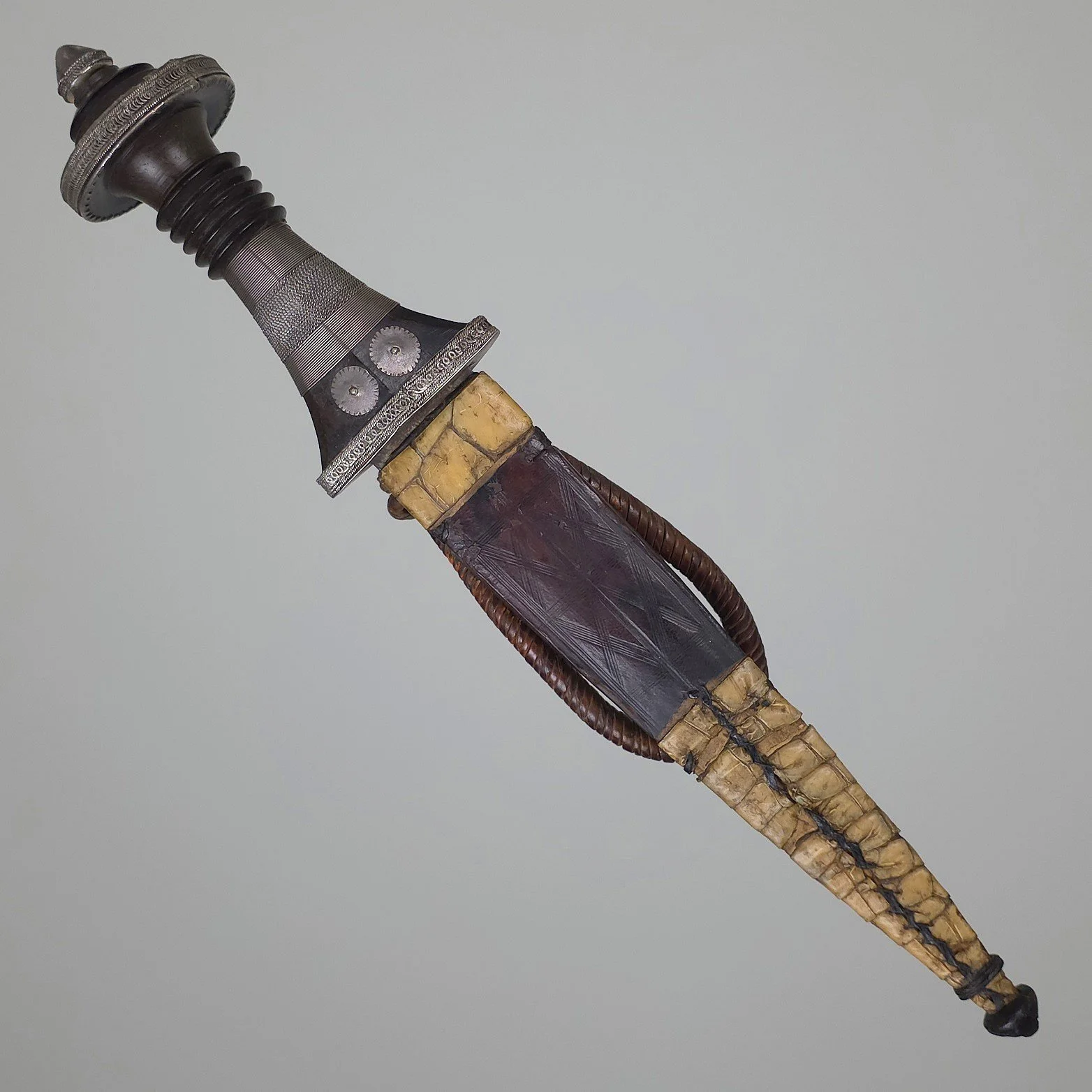
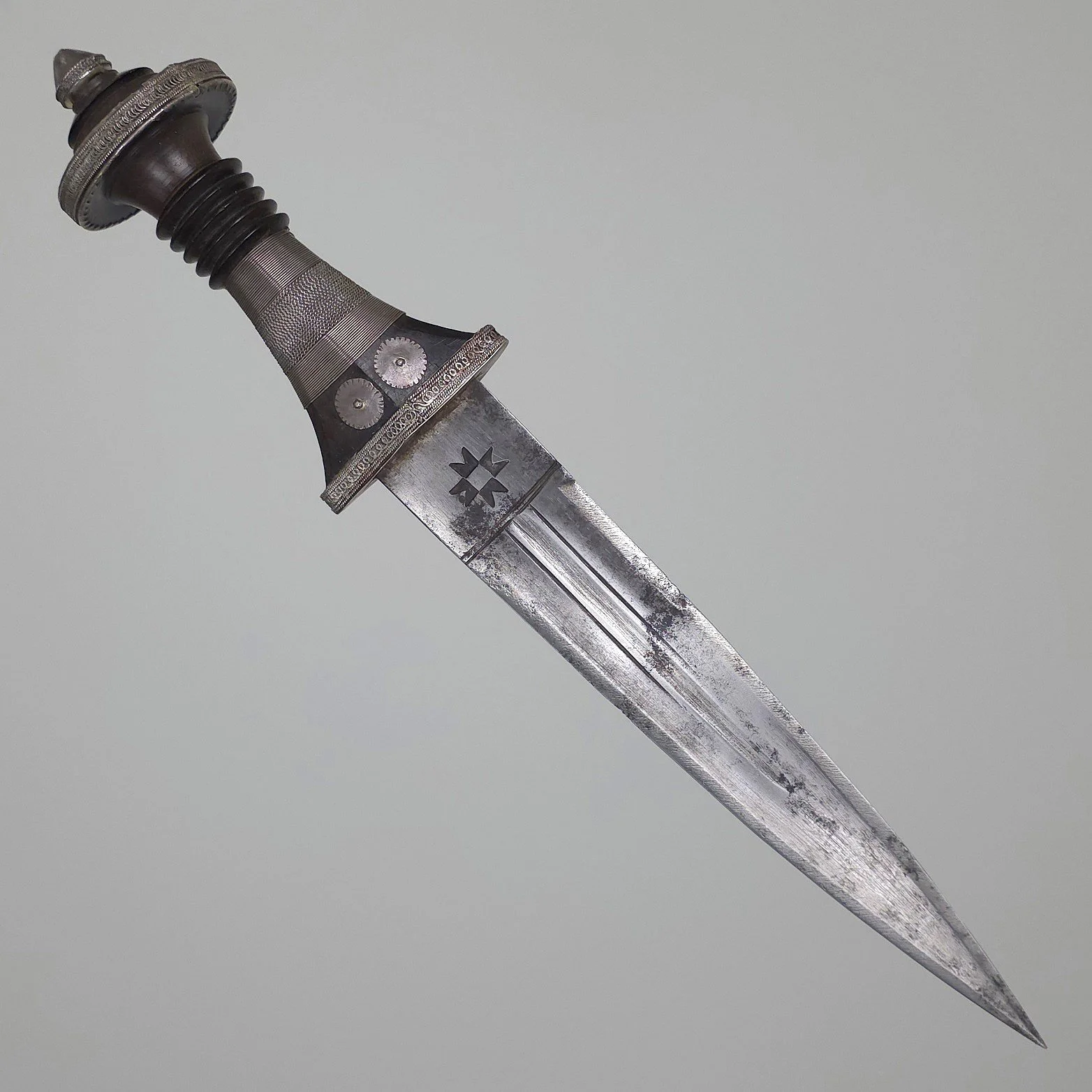
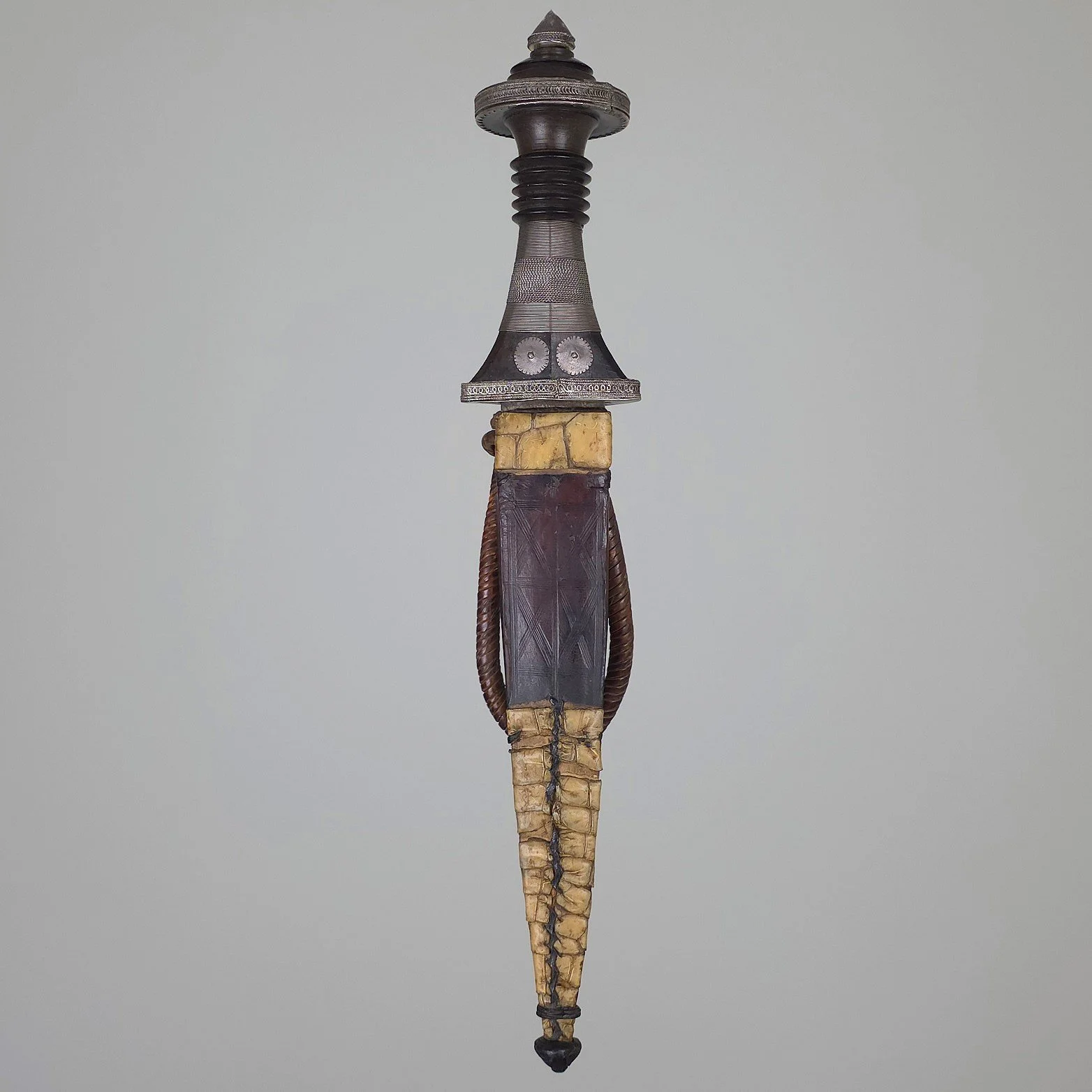
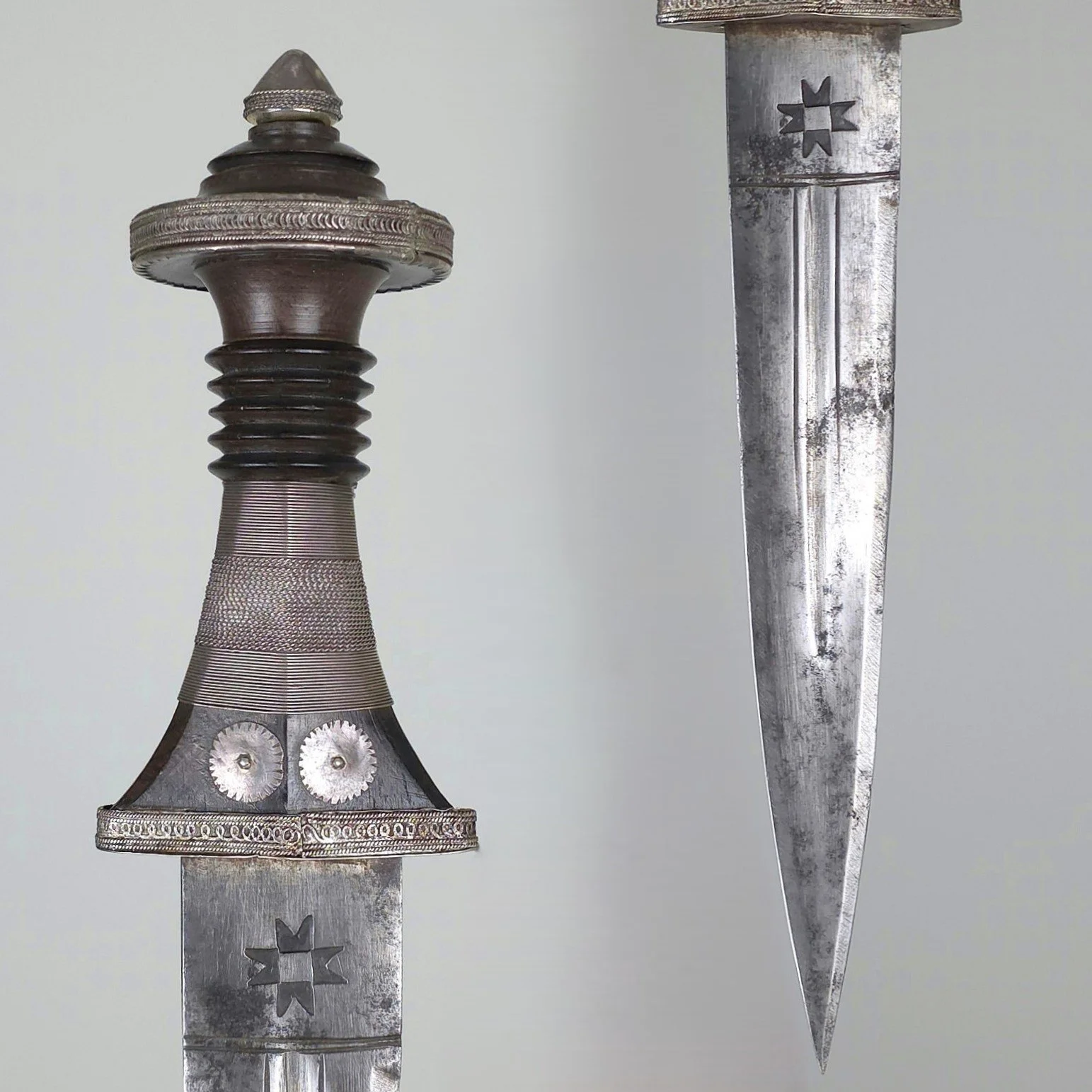
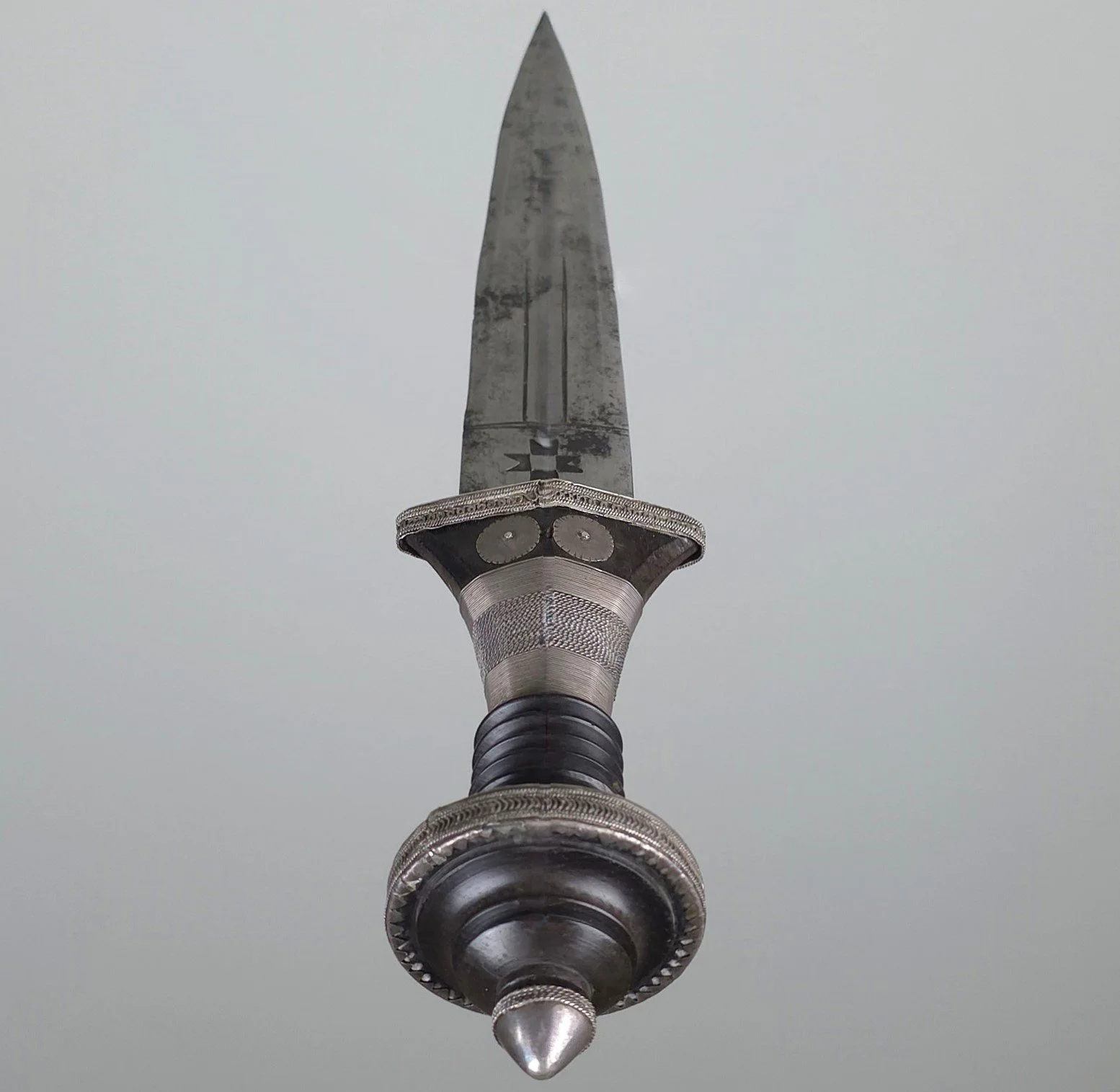
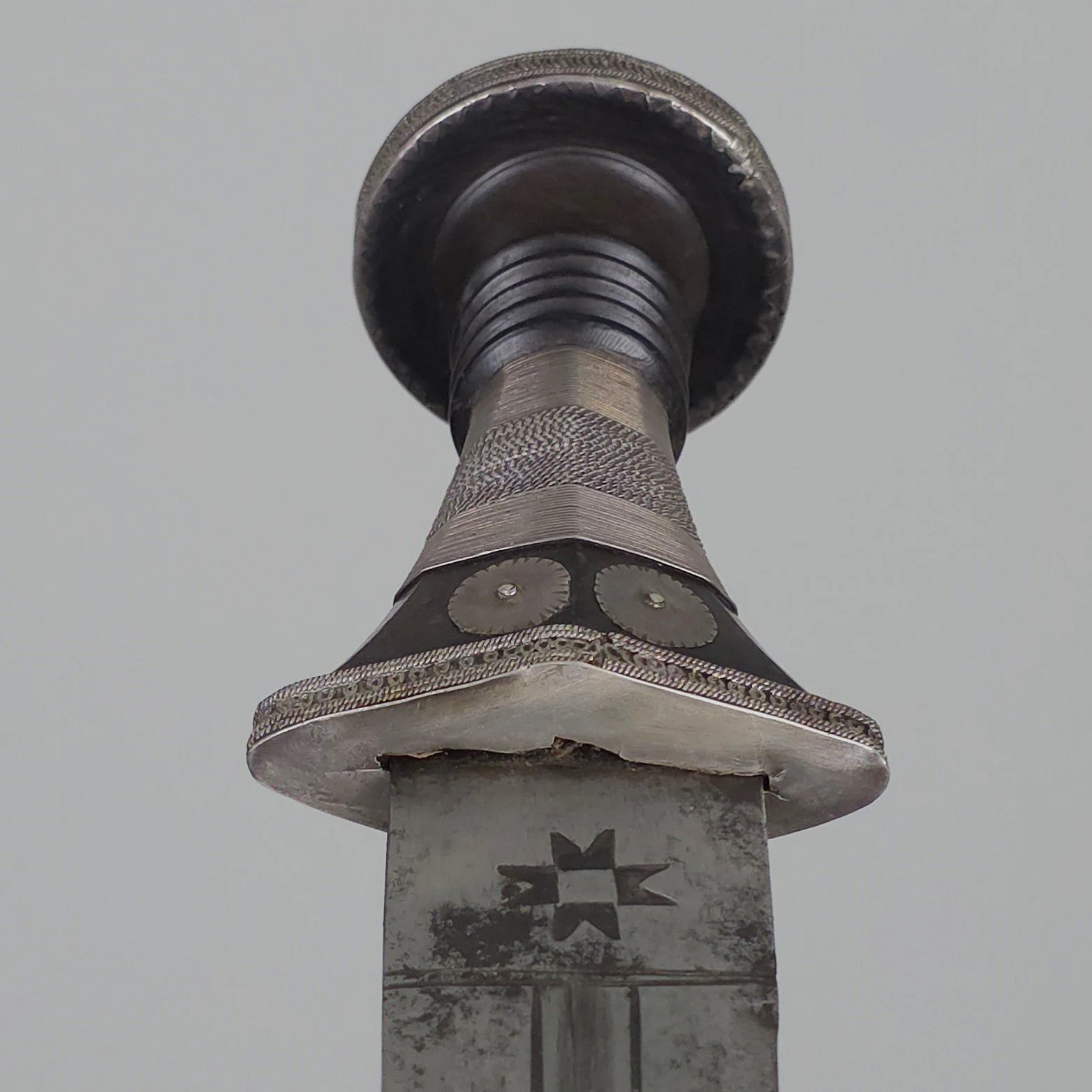
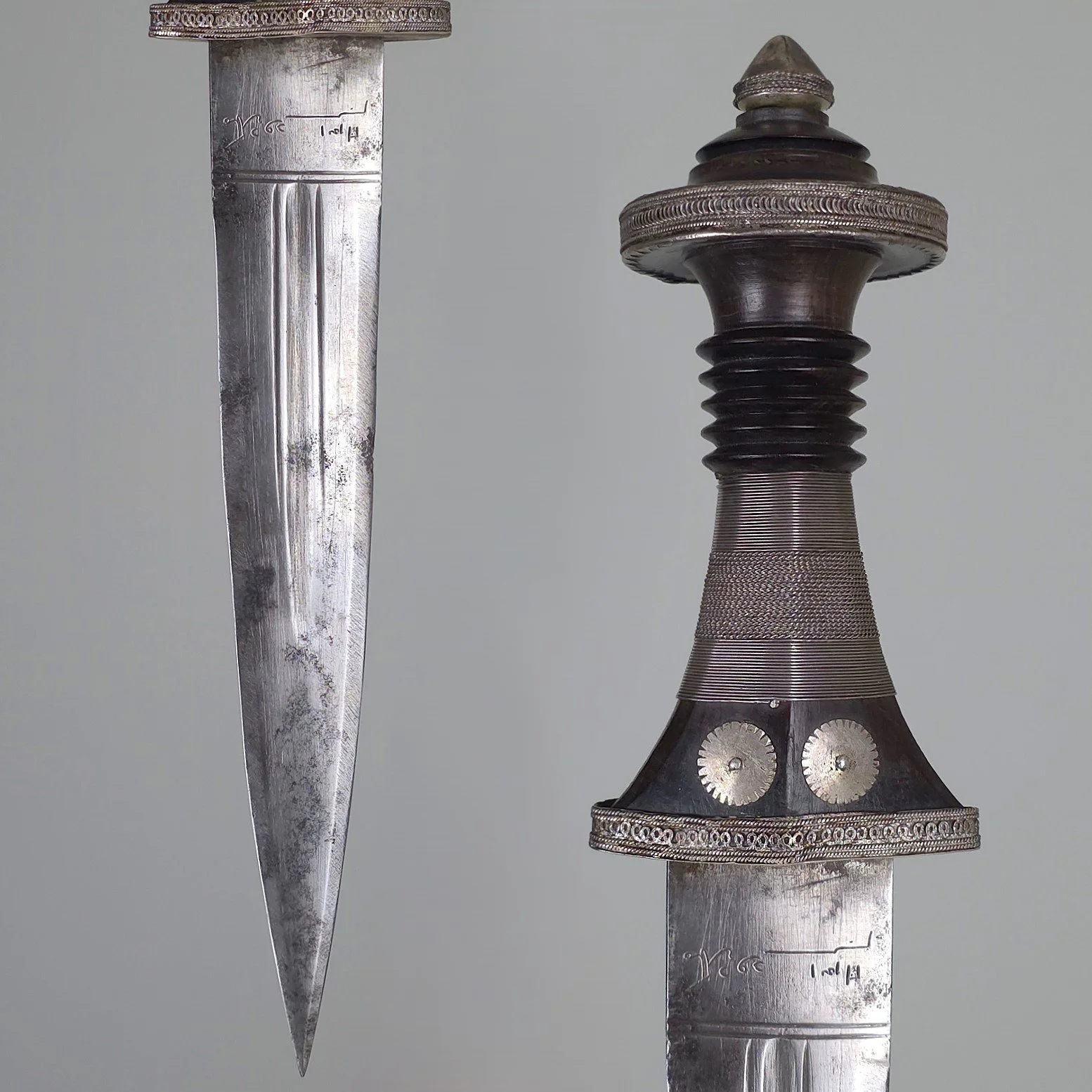
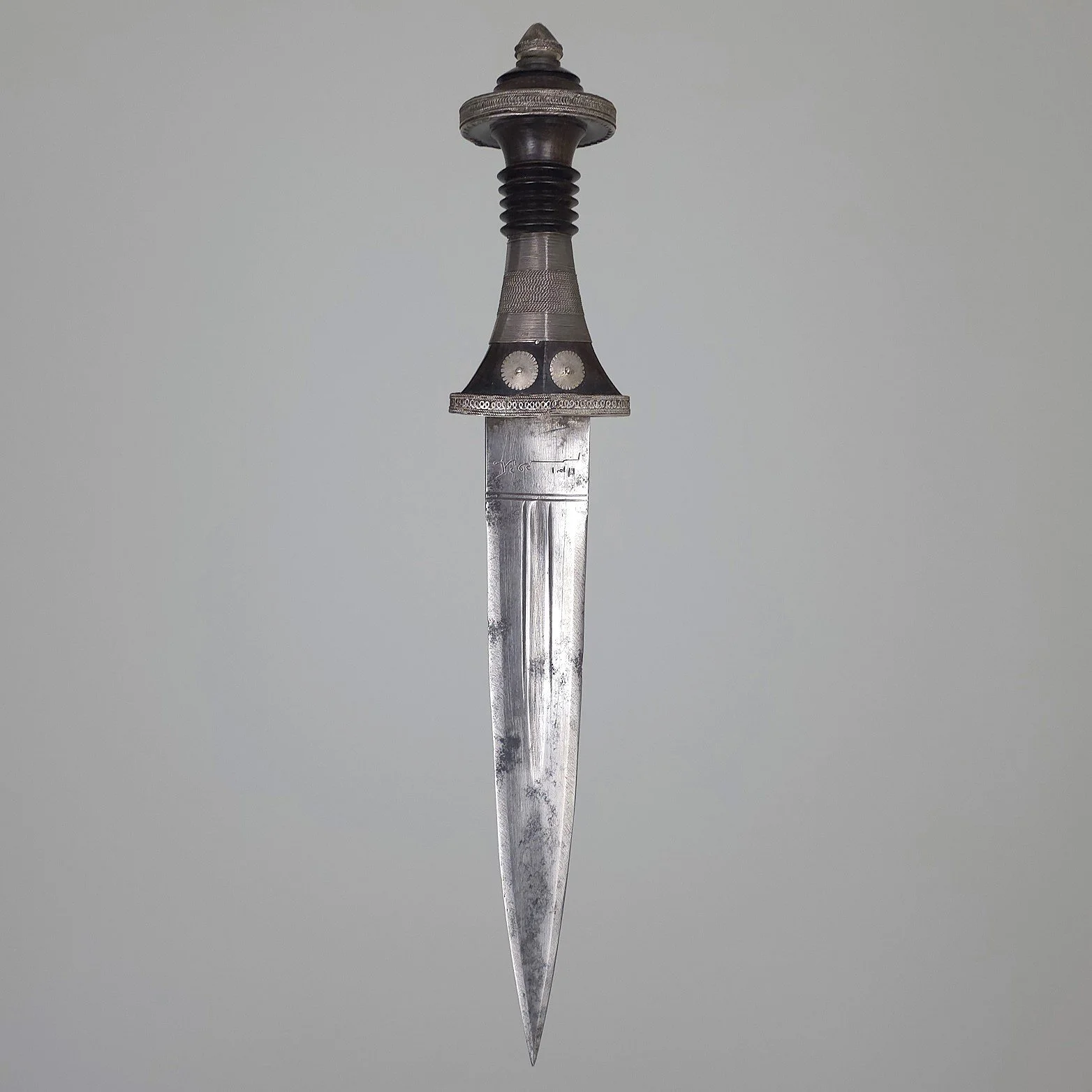
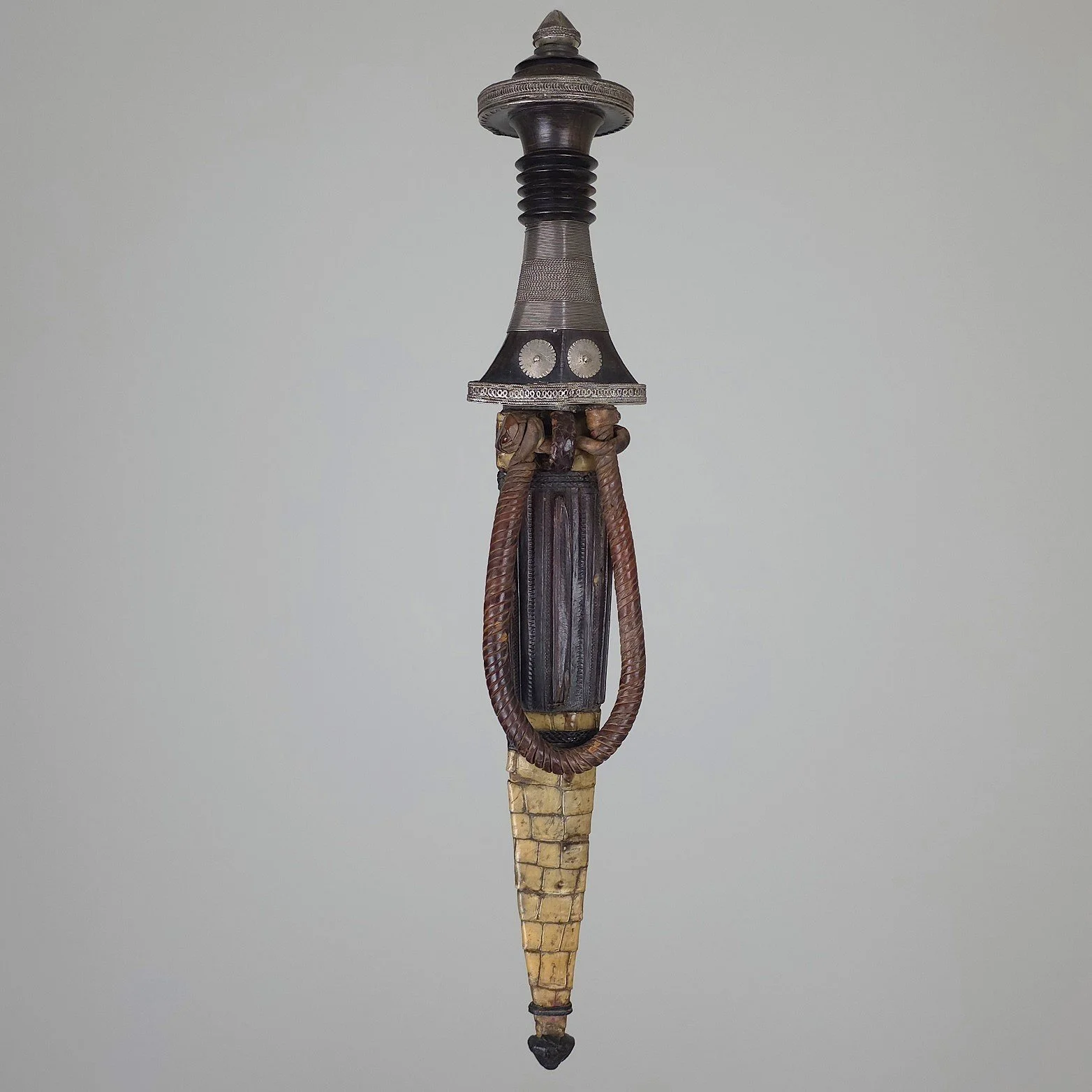
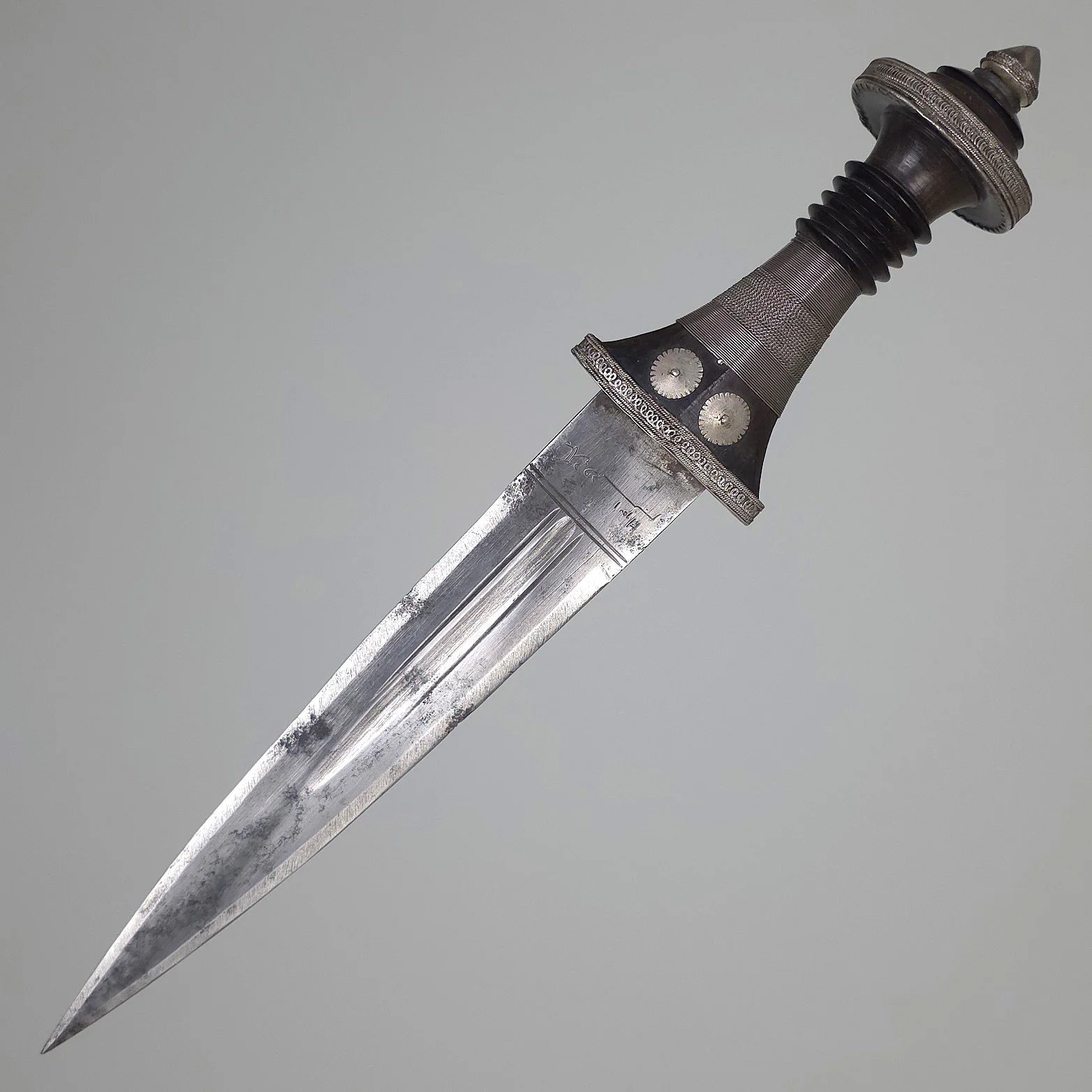
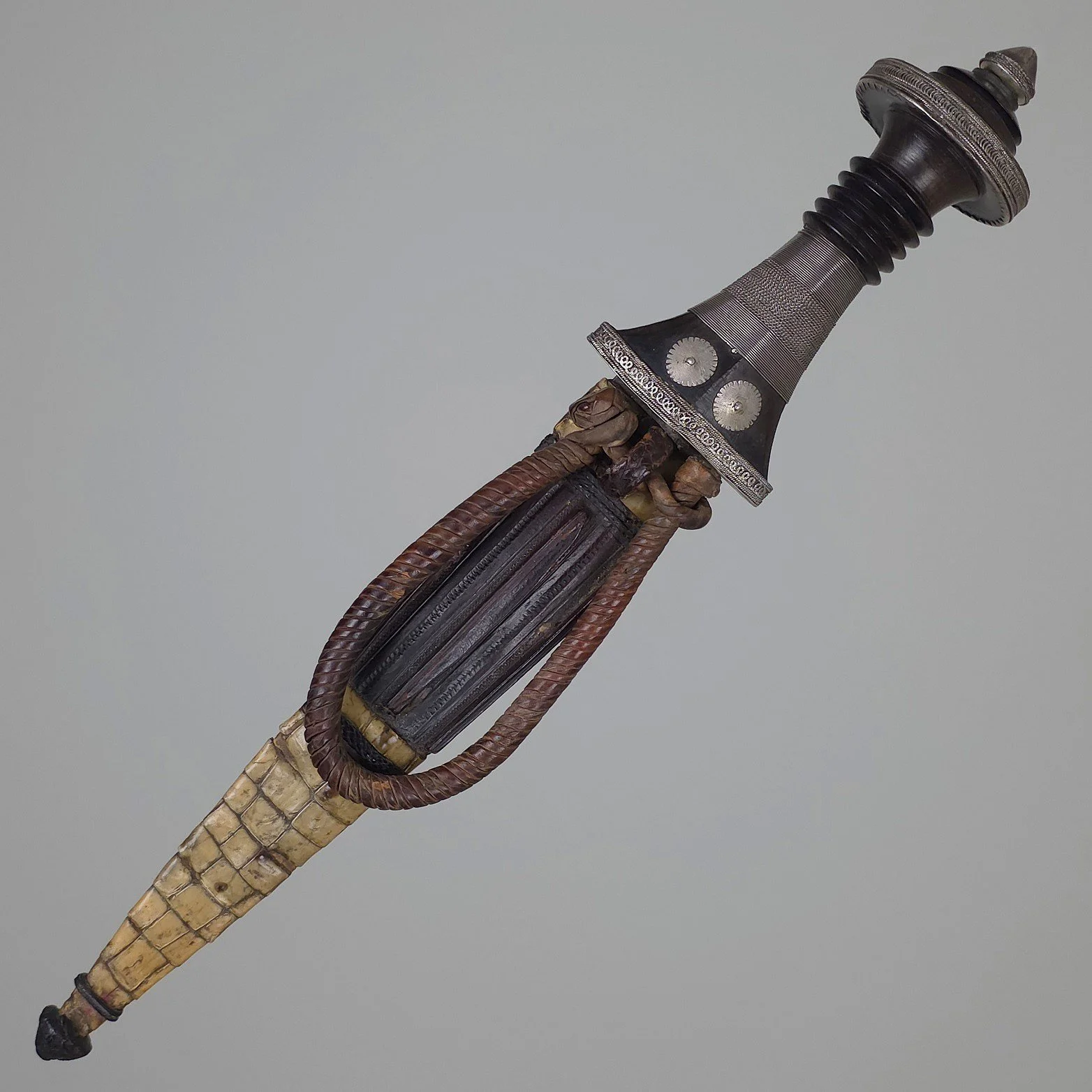
A very fine Sudanese arm dagger of great quality decorated in silver mounts, dated and engraved with the owner's name. This style of arm dagger is typical of the twin Nile cities of Khartoum and Omdurman during the Mahdist period.
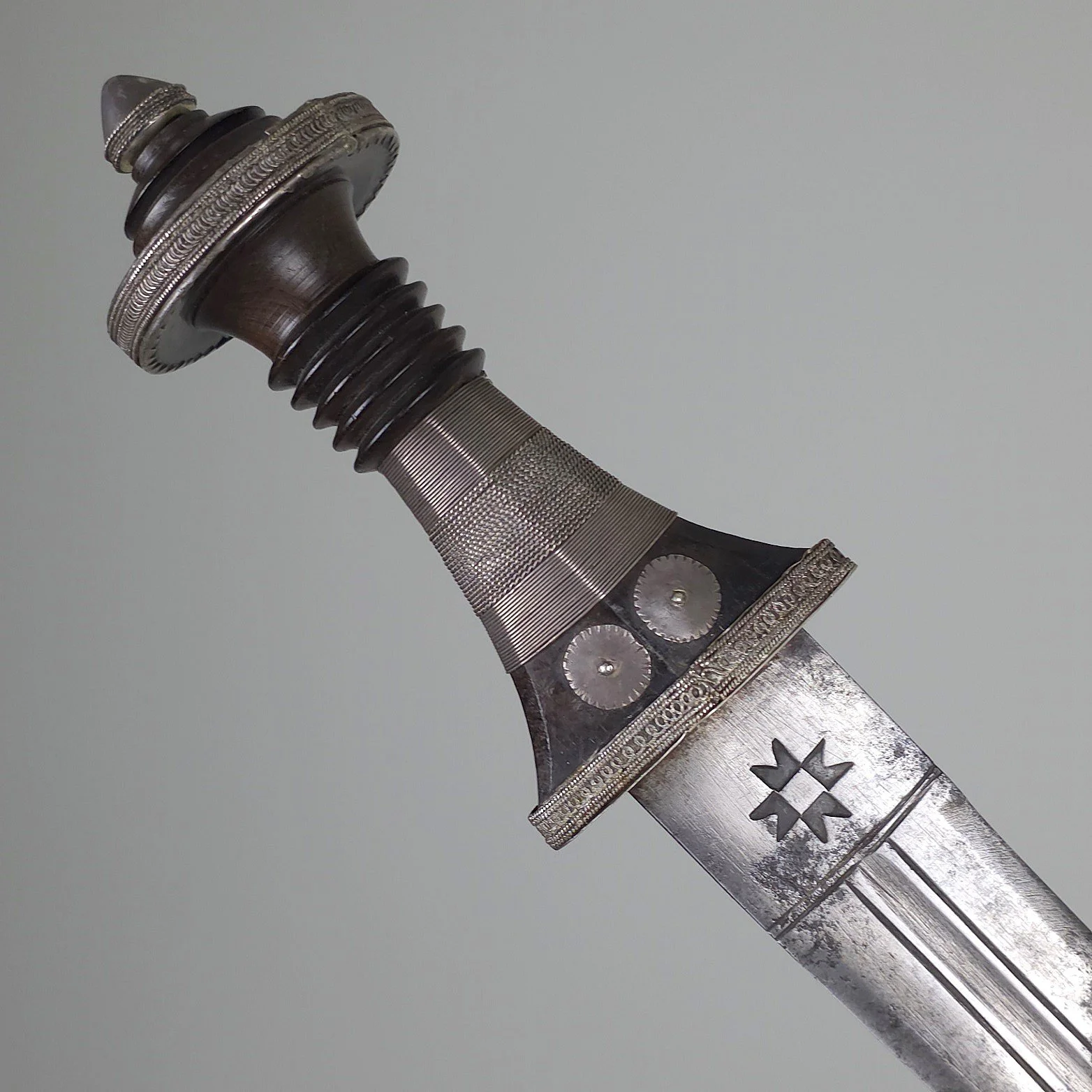
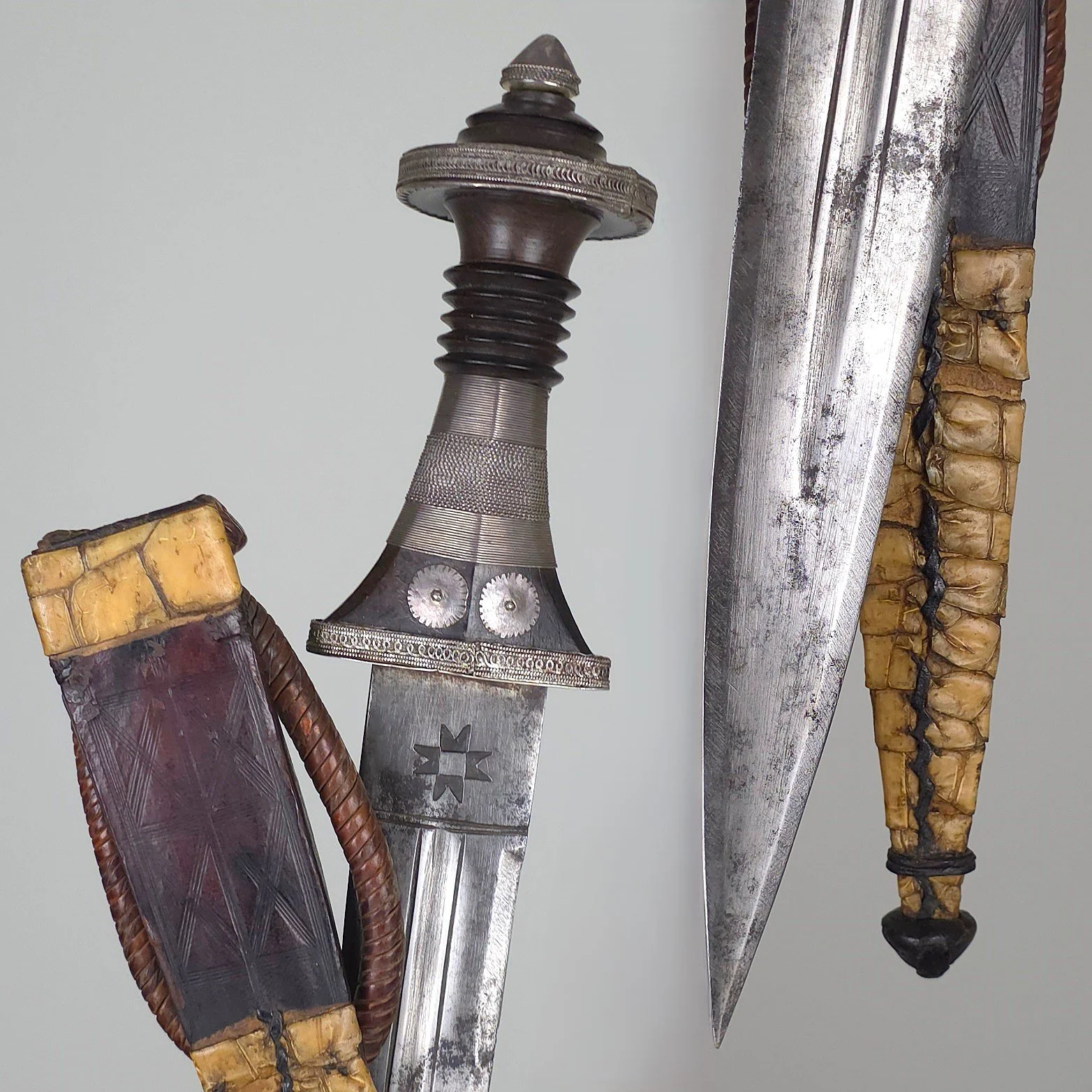
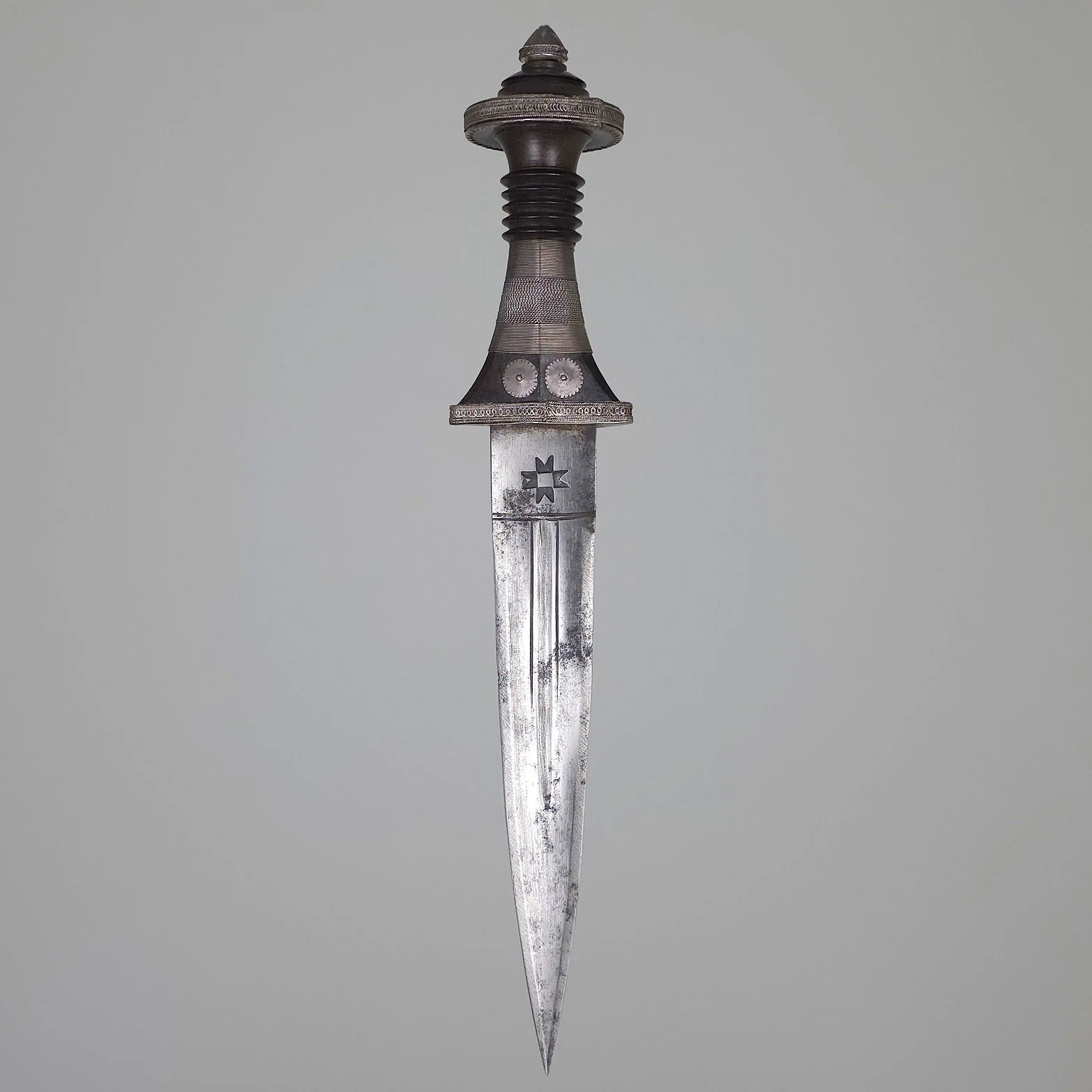
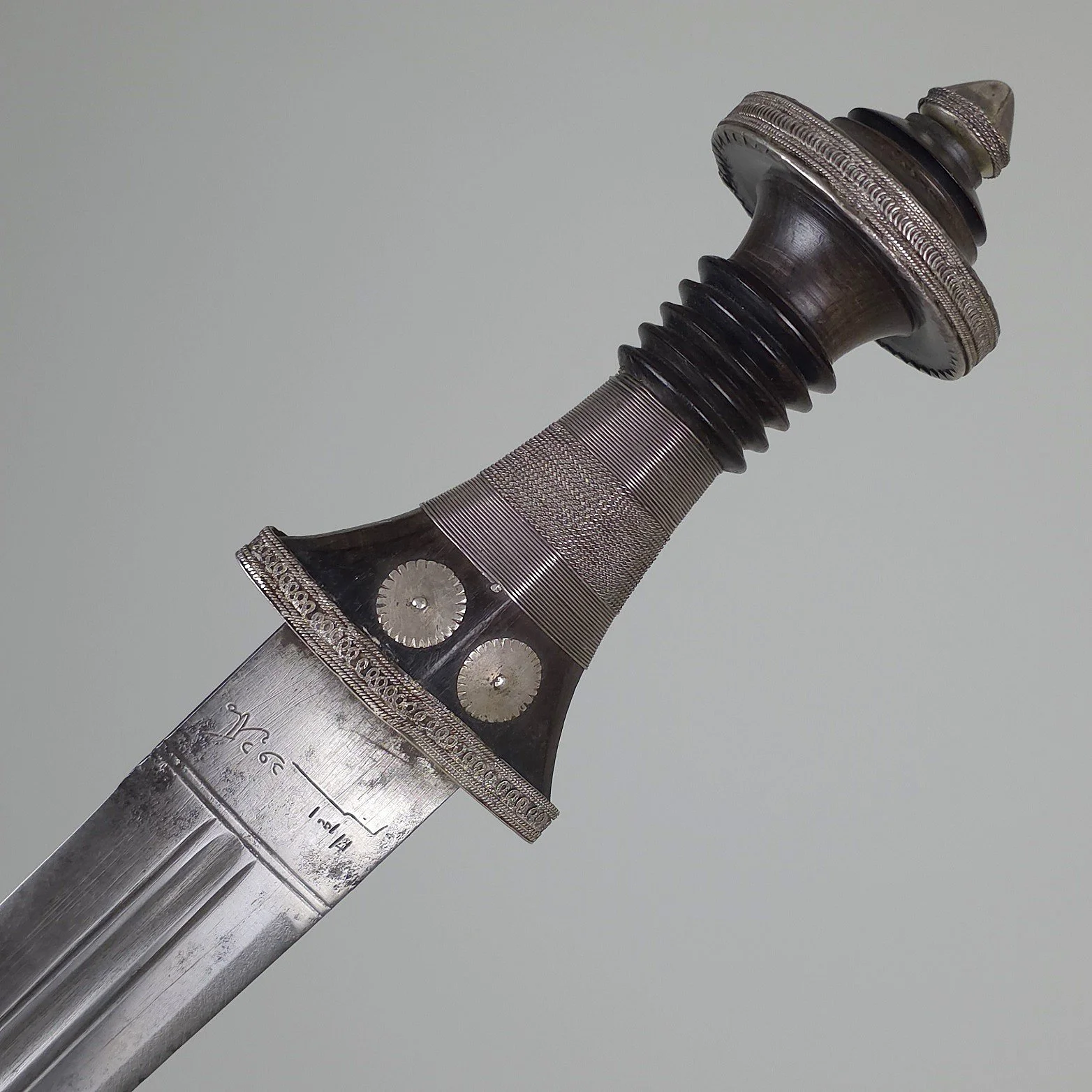
The straight steel blade is double- edged, leaf shaped, with chamfered edges. A prominent central fuller spans half of the blade's length between two deep grooves. Two horizontal lines frame the ricasso. Within, is an engraved stamp of an eight pointed star in squared form, or the Yildiz Star, often found on Anatolian Kilim tapestry, representing cosmic order and protection among many other interpretations. On the reverse, with an Arabic engraved inscription "Owned by Daud", (Arabic for David). AI translates this inscription to "Owned by Wad Ahmad" (Son of Ahmad). I can not be completely sure of the correct translation. Also engraved to the left is a Hijri date of 1312 corresponding to 1894/95 in Gregorian.
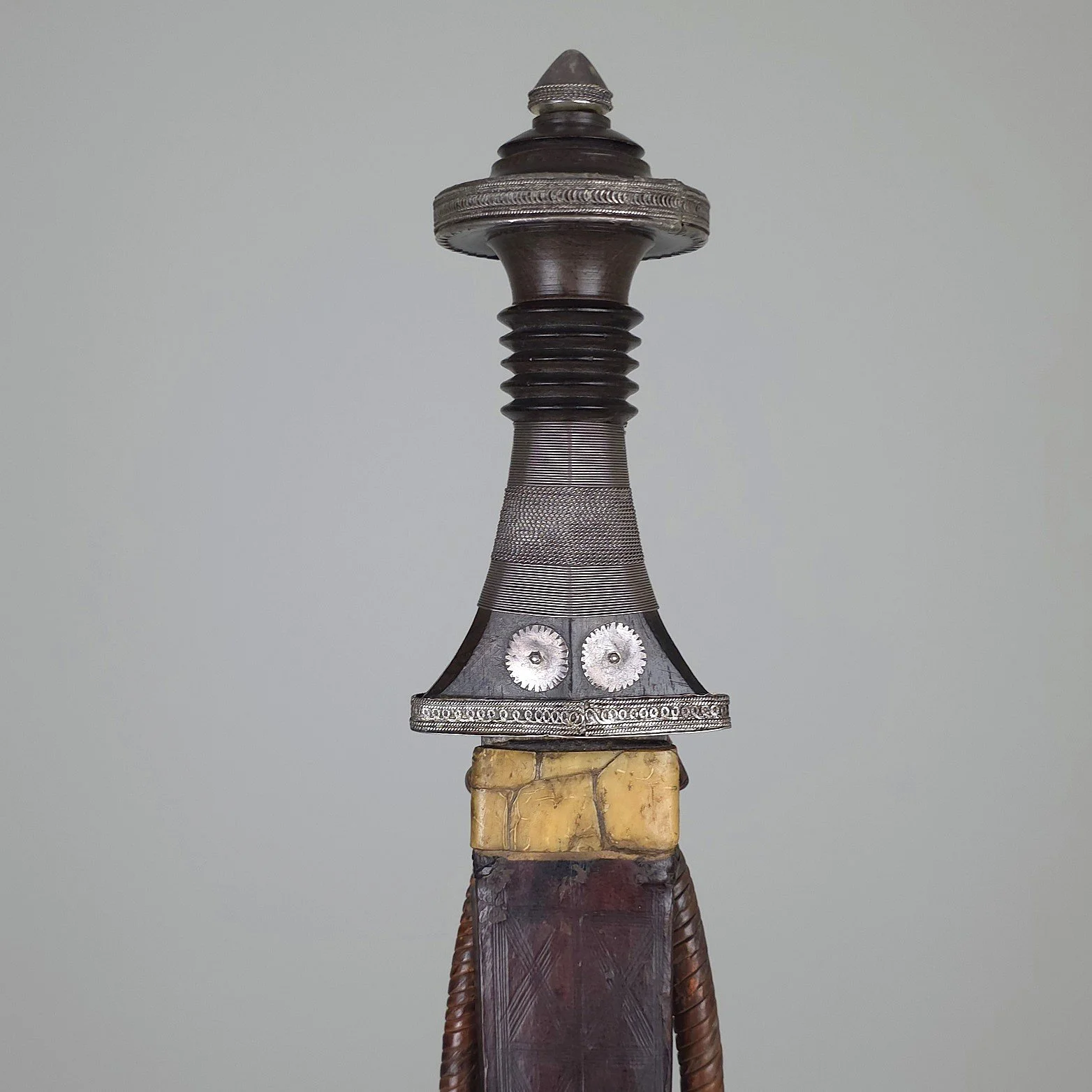
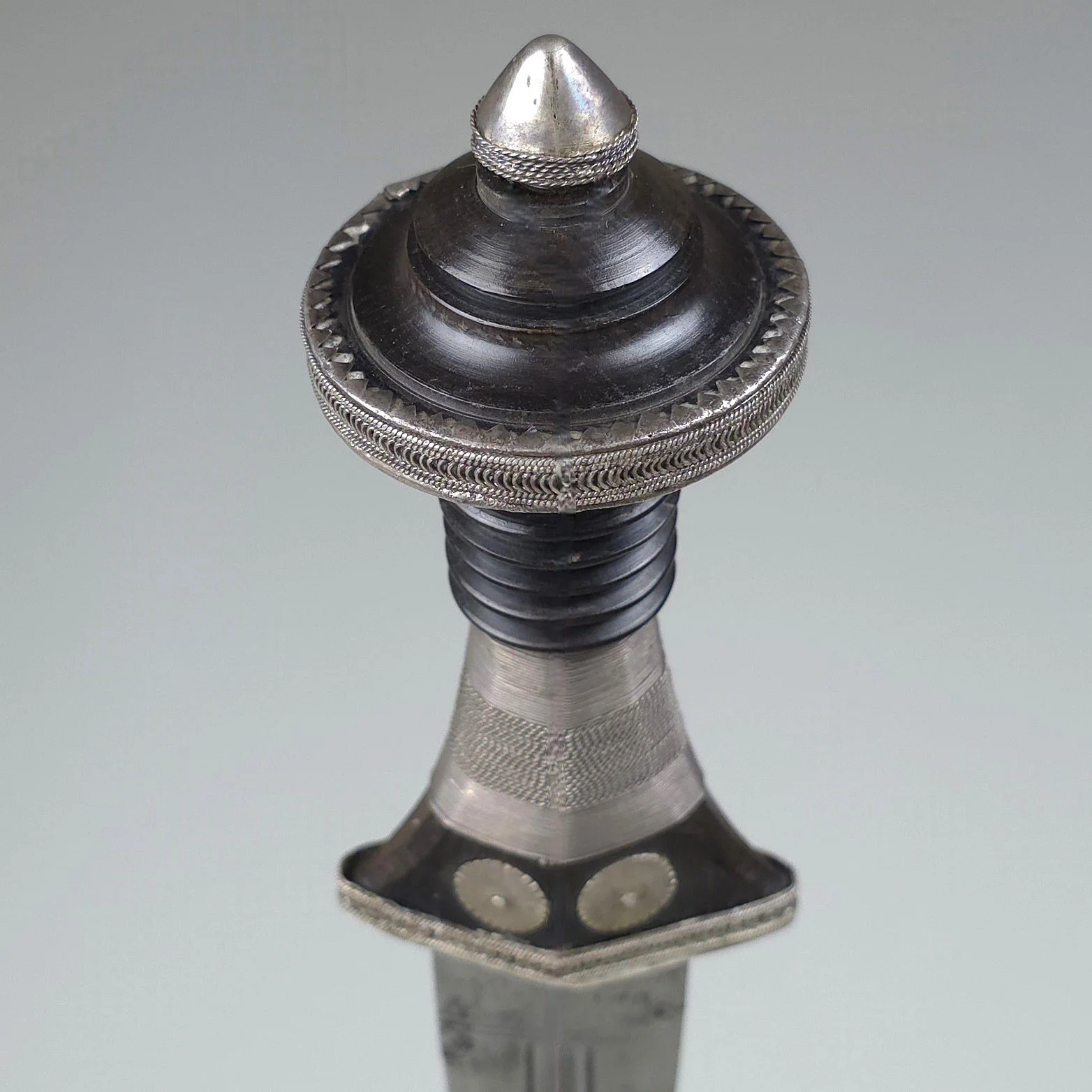
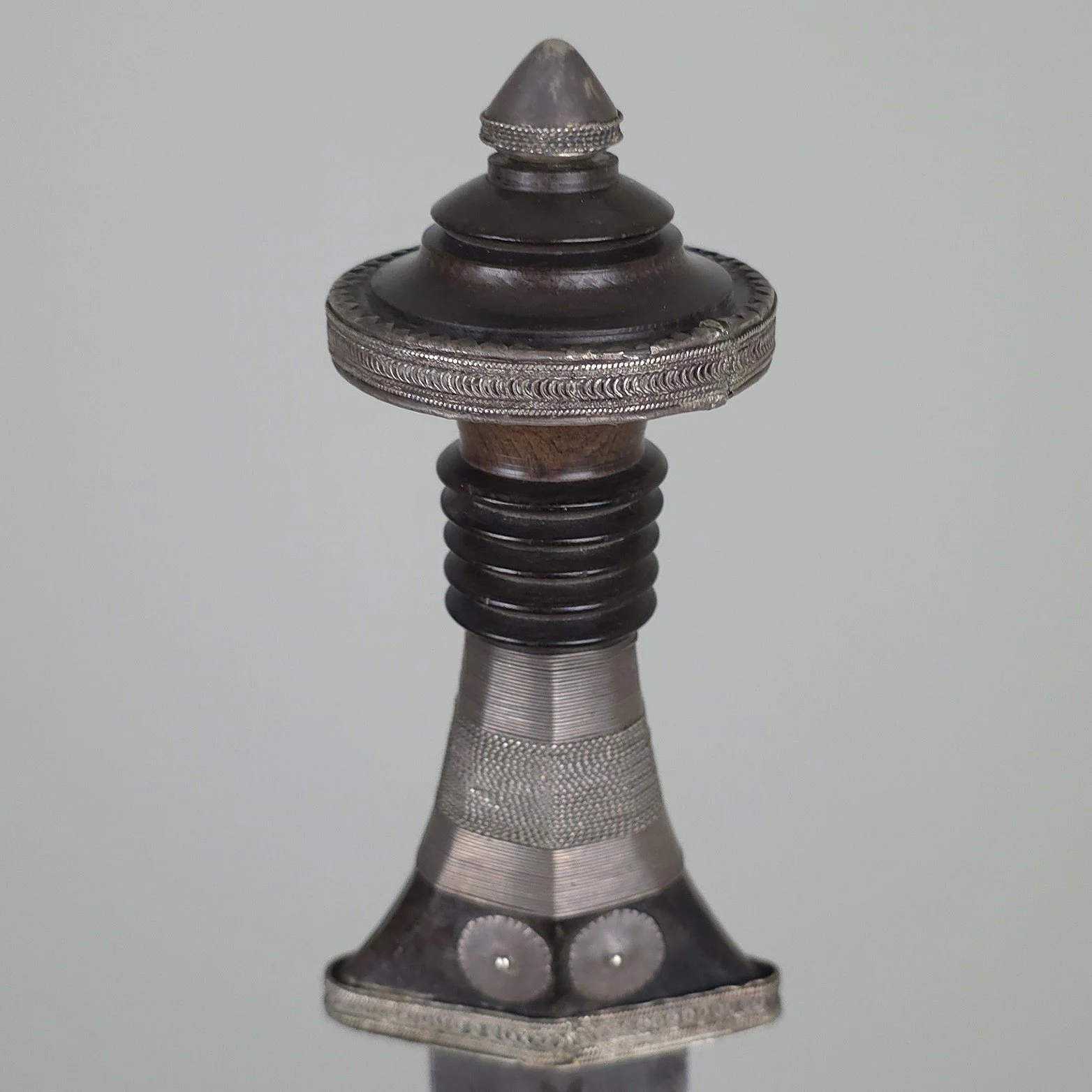
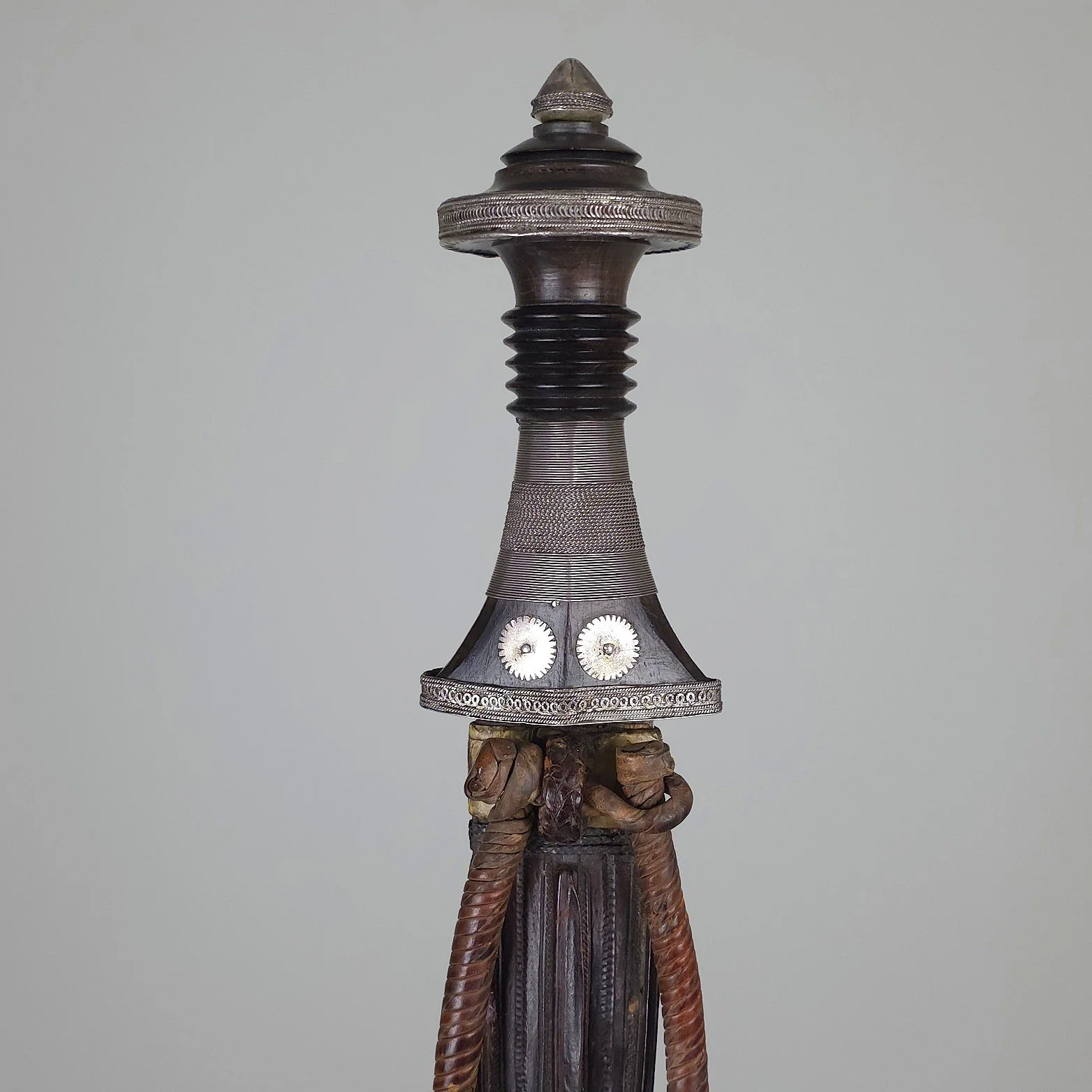
The hilt is carved from African black wood with a flared guard, turned central grip, and a disc- shaped pommel. The hilt is extensively adorned in filigree worked silver bands, silver russets, and with silver wire neatly coiled and tightly braided around the central grip. Present at the pommel is a turned domed section with a large silver cap, shaped in the manner of the Mahdist commander's conical helmet, a second hand use from Ottoman turban helmets (tolga). Highly regarded Ottoman Turban helmets, chain mail, and weaponry were reused by Mahdist Emirs and high ranking commanders, the equipment captured from Turko- Egyptian Sudan during Sudanese resistance of the occupation of the Khedivate of Egypt from 1821 to 1885, with Turkiyya fall at the siege of Khartoum, resulting in the official proclamation of the Mahdist state.
The sheath is of a dyed red leather, geometrically tooled in "X" patterns, having a crocodile skin mouth and chape. On the reverse, a leather plaited arm loop is attached.
This example is a a very fine arm dagger of exceptional quality. Complete with its original sheath while signed and dated, and in very good condition. The knife would have been owned by an individual of high status during the time of the Mahdiyya with a high likelihood collected as a battlefield pickup duirng the war campaigns of the period, while eventually ending up in Britian. One of the nicest Sudanese arm daggers that I have come across.
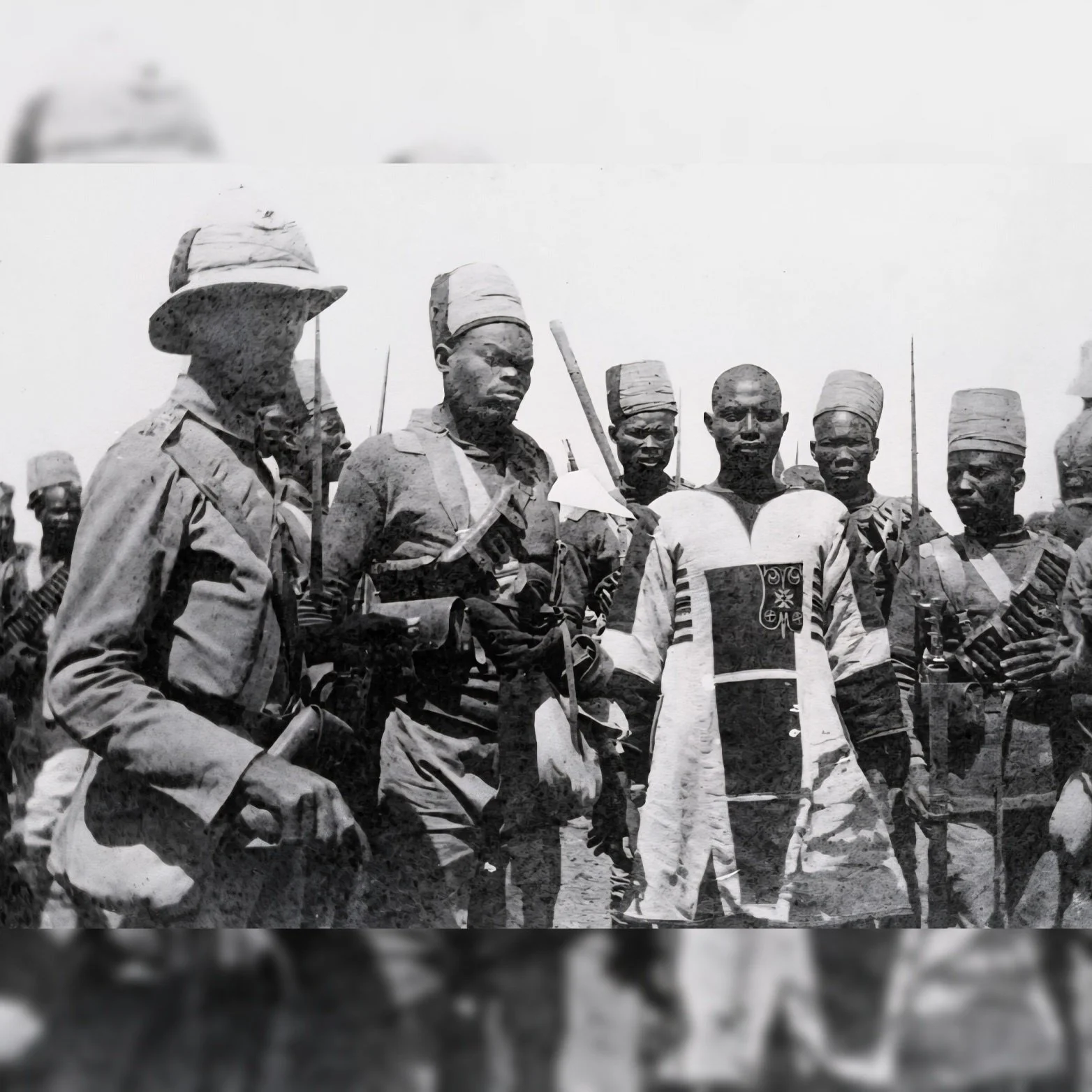
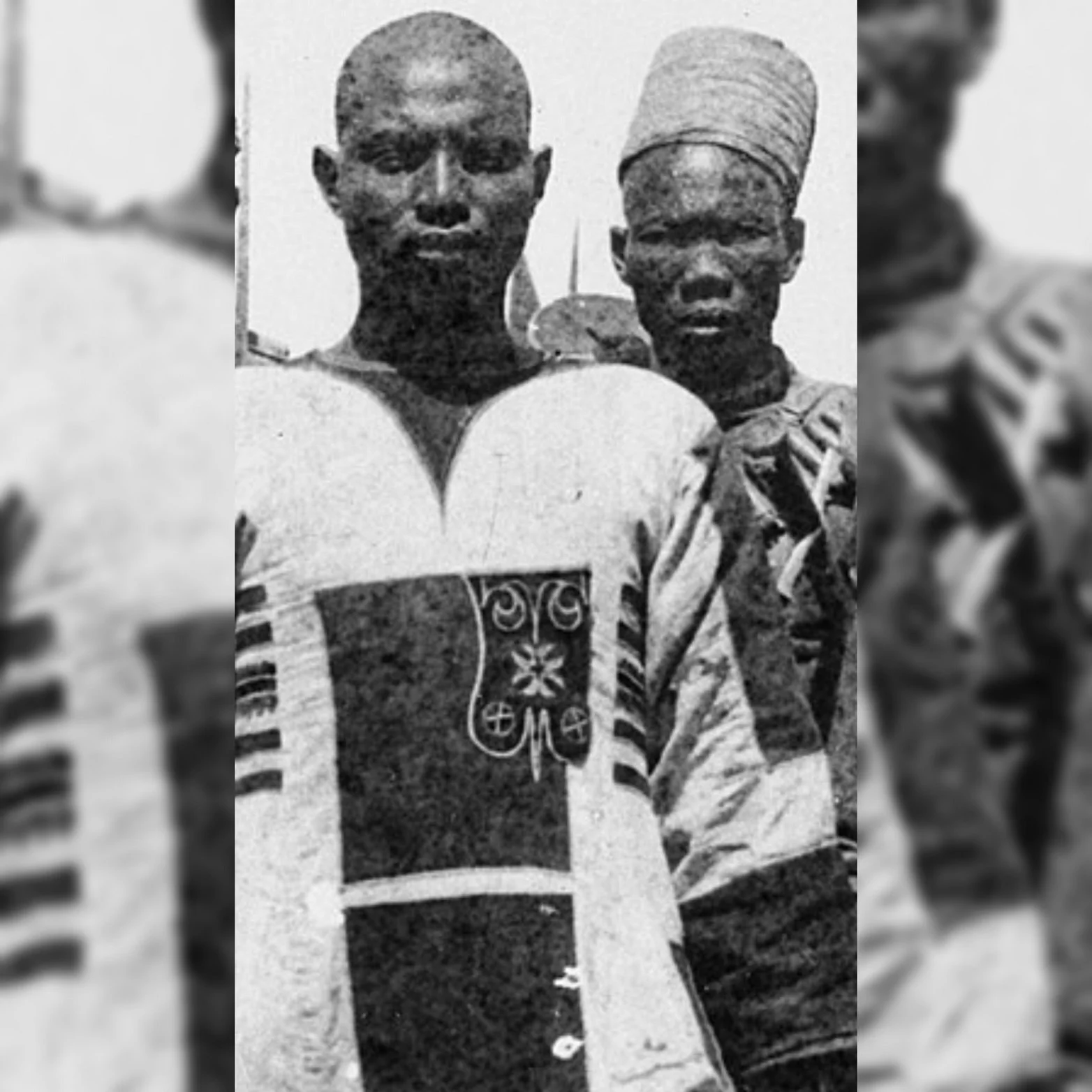
The eight pointed star, similar to the Maltese Cross symbol, was often stamped on blades from the Khartoum armory by blacksmiths during the reign of the Mahdi which continued into the early years of the Anglo- Eyptian Sudan. The stamps seem to show up in the 1880s and end around 1902 tentatively, found on arm daggers from the time period. As discussed earlier the symbol itself is often found on Anatolian tapestry as the Yildez Star. The motif likely gained popularity in the Sudan from Ottoman imports to Egypt transversing down the Nile into Khartoum. Interestingly, this symbol is also present as a patch on the jibba worn by Emir Mahmoud, (Amīr Mahmud Ahmad) the Mahdist governor of Darfur and nephew of Khalifa Abdallahi. Mahmoud traveled with Ali Dinar, (Sultan of Darfur) to Omdurman to meet the Khalifa (Abdullah ibn-Mohammed al-Khalifa) in preparation for Mahmoud's campaign of 1895 (same year dated as the knife), commanding a force of 10,000 Dervish Army from Darfur and Kordofan under the leadership of the Khalifa. Emir Mahmoud would later be wounded and captured by British forces at the Battle of Atbara in 1898.
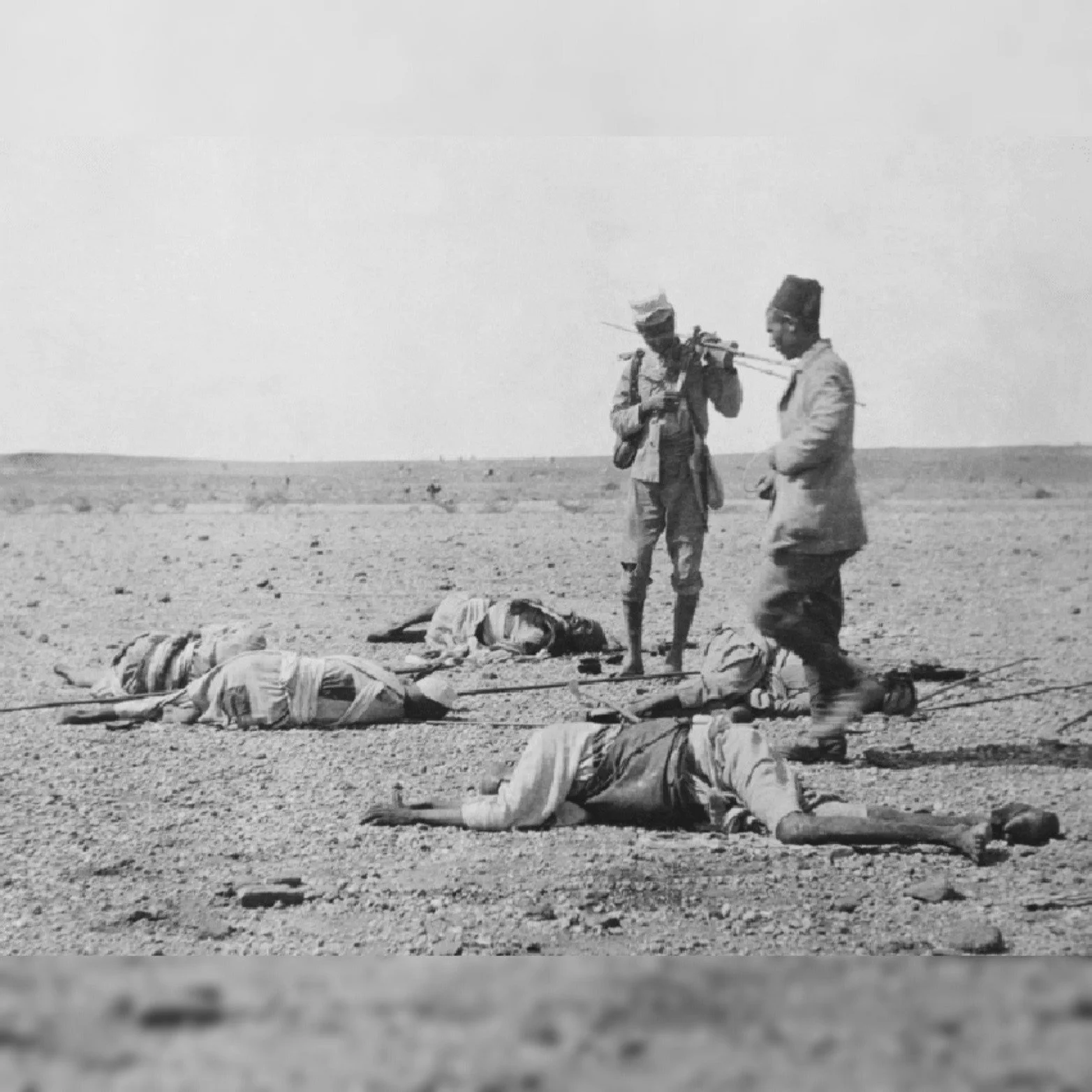
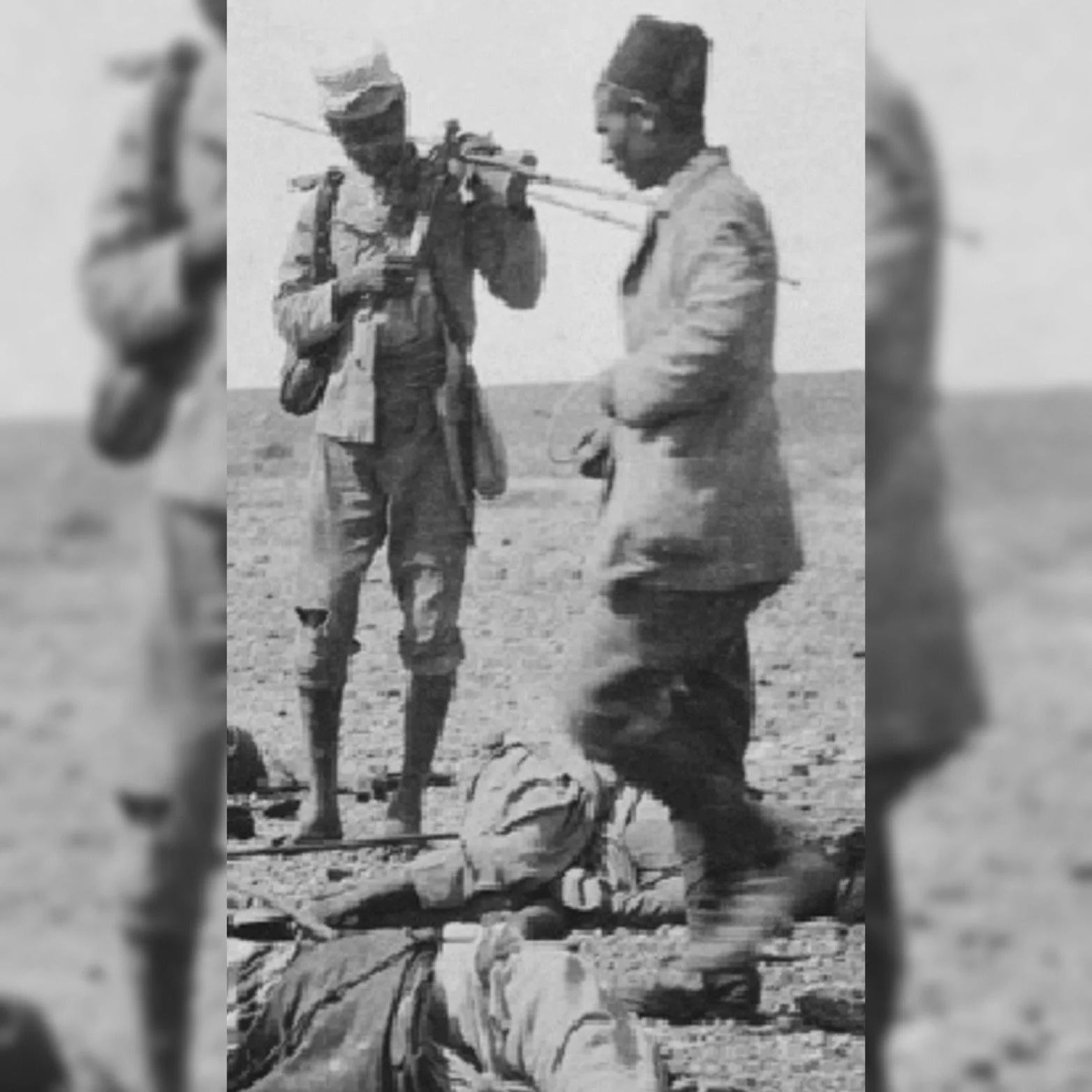
Photographs 21 & 22: Soldiers looting from dead and wounded Mahdists on the battlefield at Karari after the Battle of Omdurman. September 2, 1889 (11:30A.M.) A very similar dagger can be seen held in the hands of a Sudanese or Egyptian soldier inspecting the knife.
Photographs 23 & 24: Emir Mahmoud captured at the Battle of Atbara, April 8, 1898. He is shown with a prisoner escort formed from of men from the 10th Sudanese Battalion. The bloodstains on his jibba are from a bayonet wound to his left leg. Mahmoud was imprisoned at Rosetta and died in 1906. His jibba displays the Yildez star motif on a embroidered patch, likely from an Ottoman Tapestry, denoting the Western Division of the Mahdist army composed of troops from Darfur and Kordofan, primarily of Baggara warriors.
[1] https://www.invaluable.com/auction-lot/a-moroccan-jambiya-115-c-22a4b25999?objectID=173427414&algIndex=undefined&queryID=13ba0fc93ef0a2c410a7e3b76821669e (This Knife)
[2] http://www.oriental-arms.co.il/item.php?id=776
[3] http://www.oriental-arms.co.il/item.php?id=3960
[5] https://africanarms.com/gallery?1-fur-1900-33-7-cm-kl
[6] http://vikingsword.com/lew/w0105/w0105.html
[7] https://www.kilim.com/kilim-wiki/kilim-motifs/star?srsltid=AU7gw4U1ngAcn6eFrC2PeZQyVLOTjk-iMHoWEaoo4prMNS-EYYG_stz4 (Kilim Tapestry – Yildiz Star)