Keris Penjang (Bahari Keris)
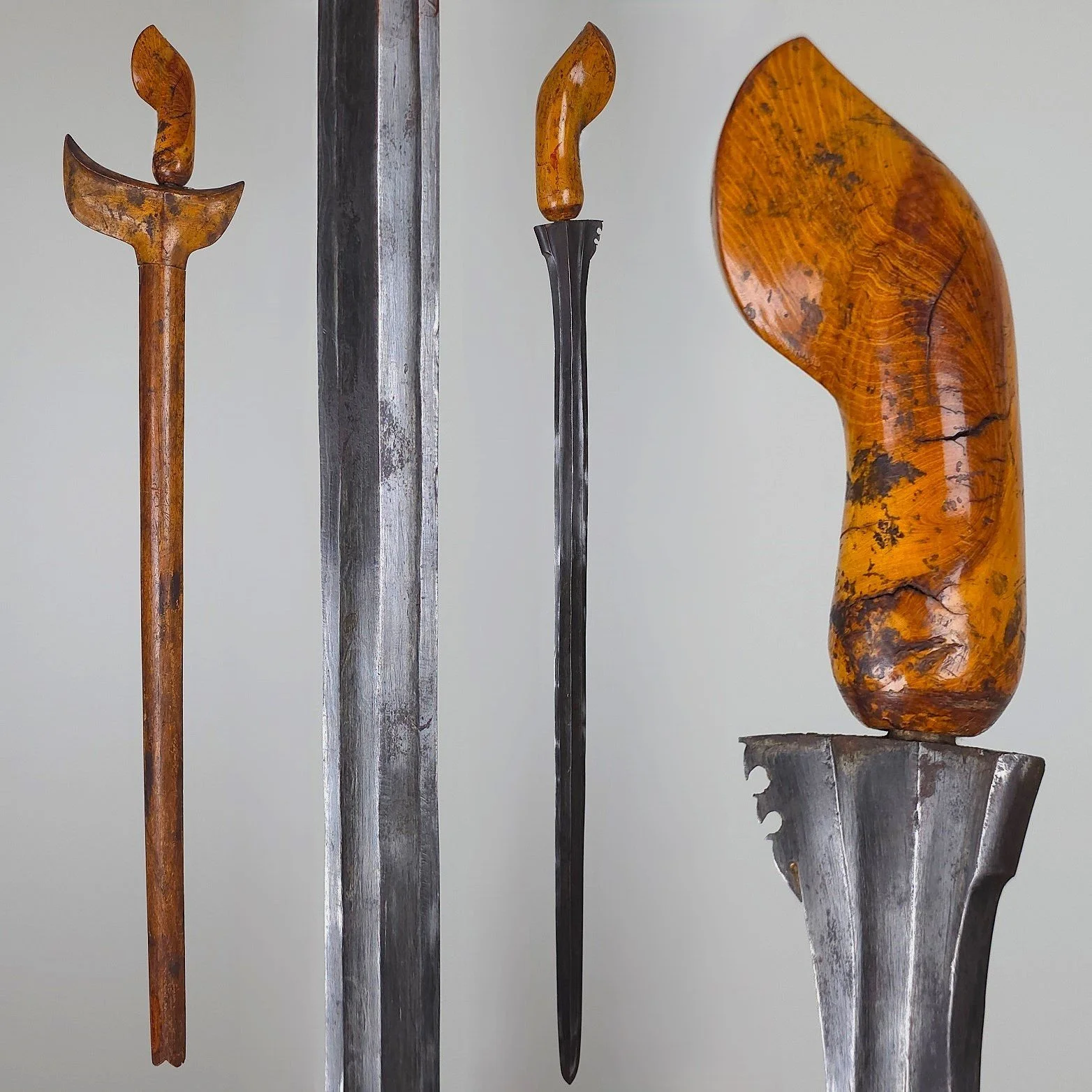
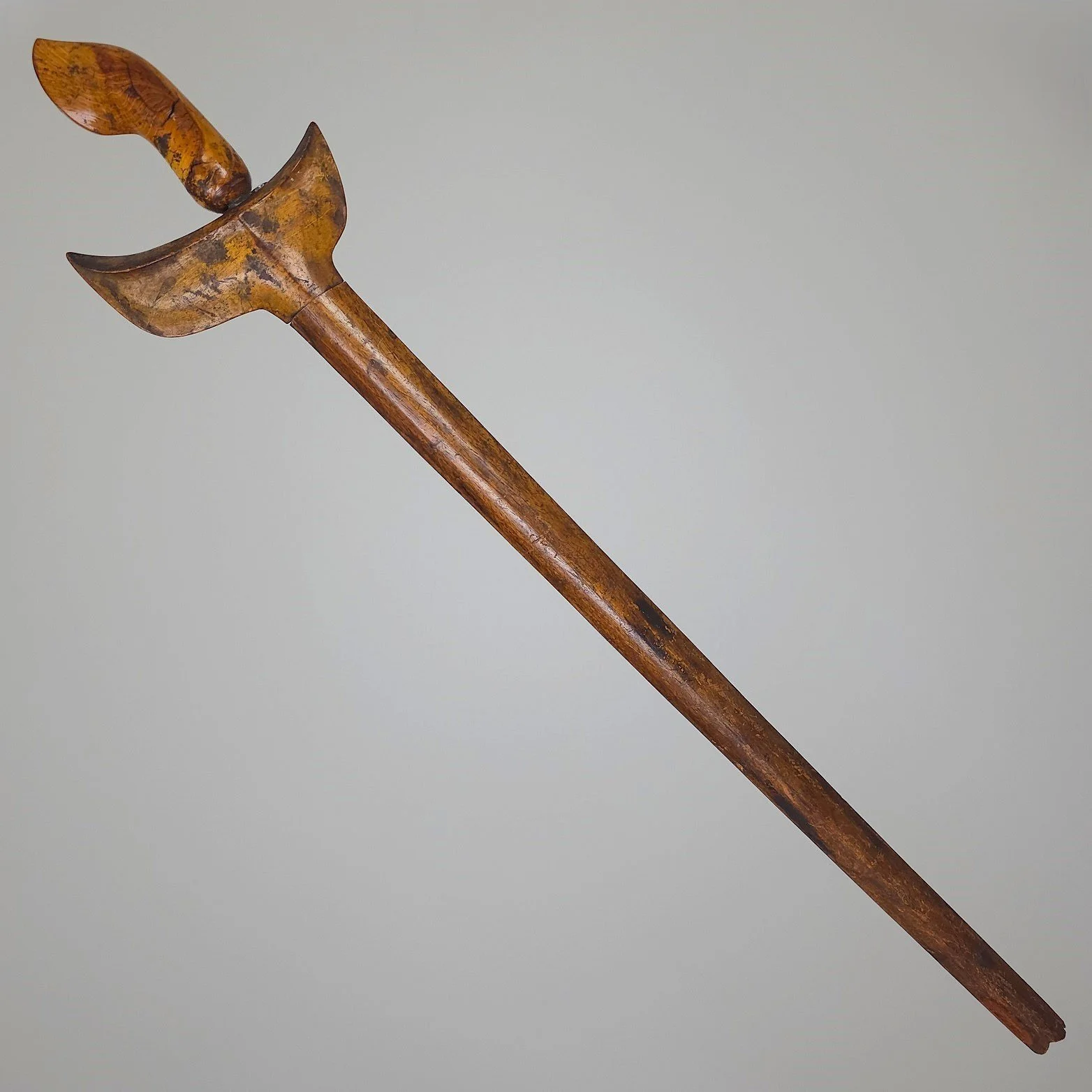
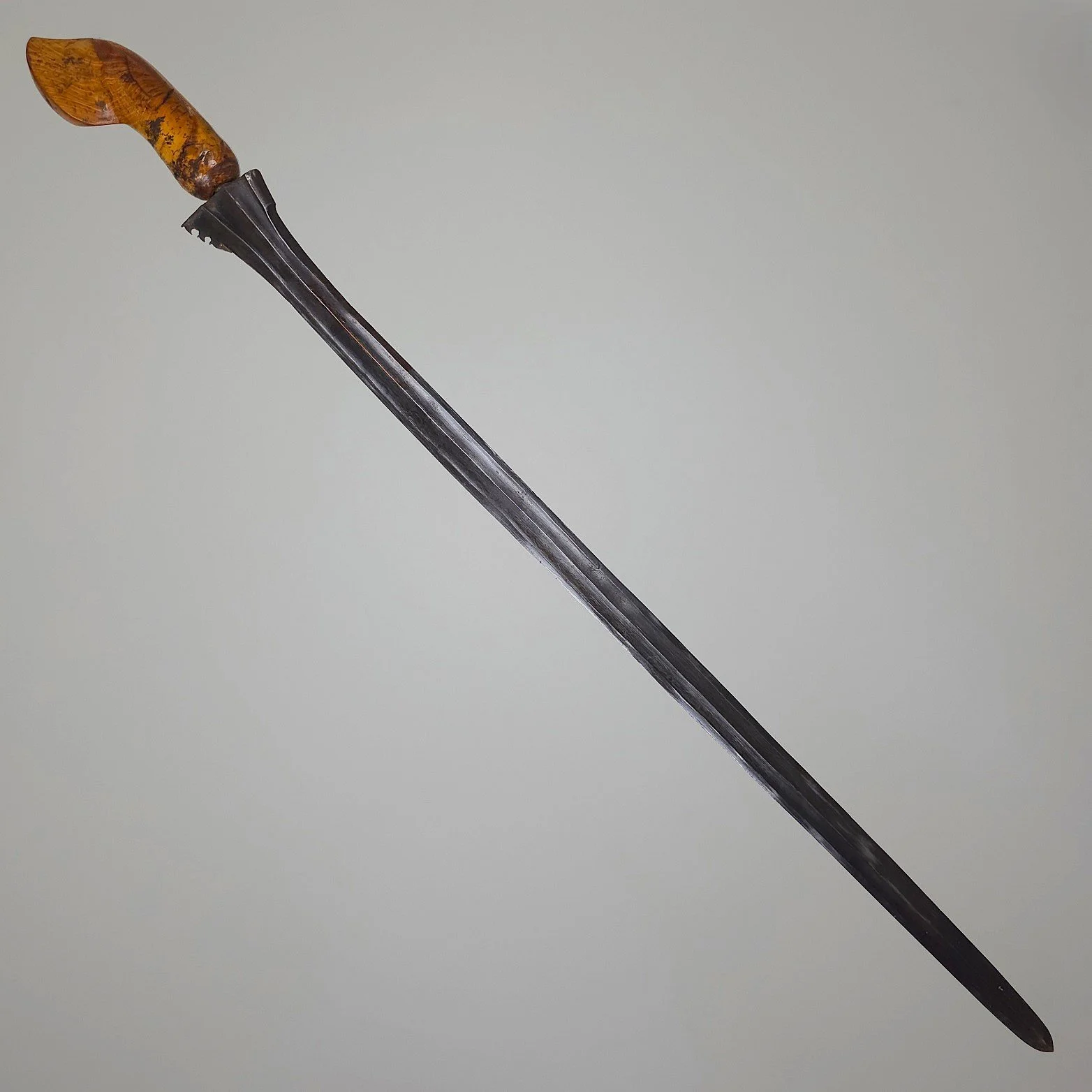
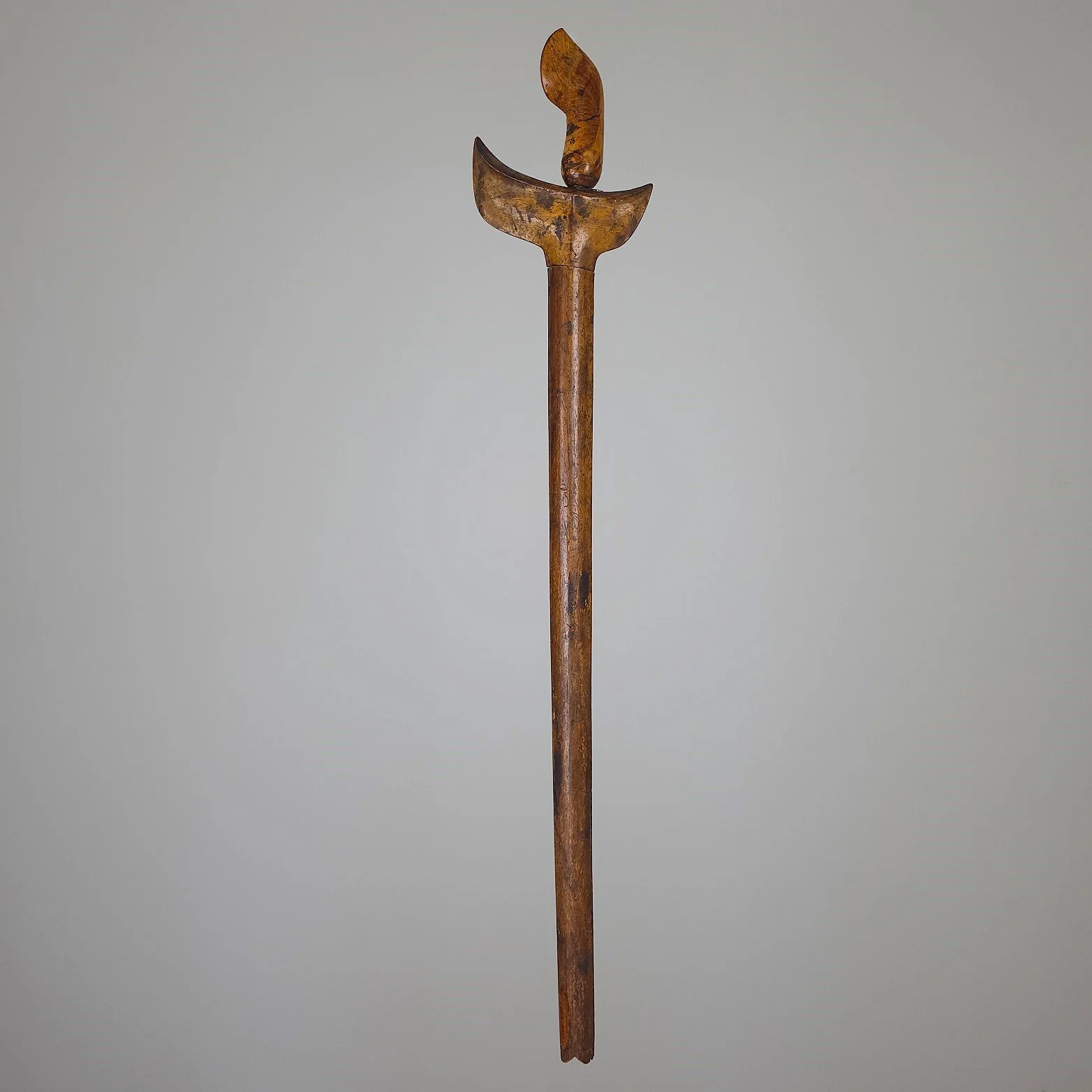
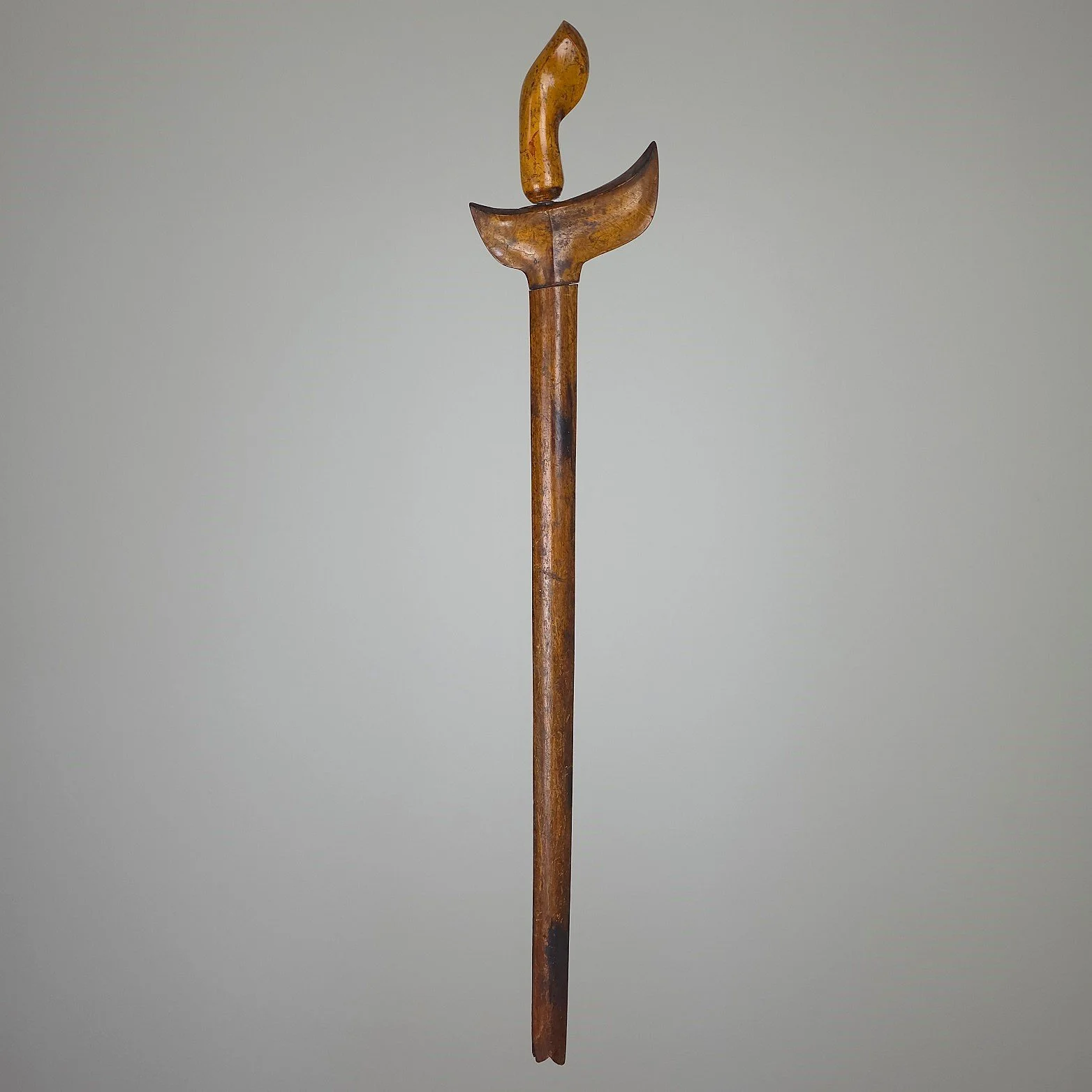
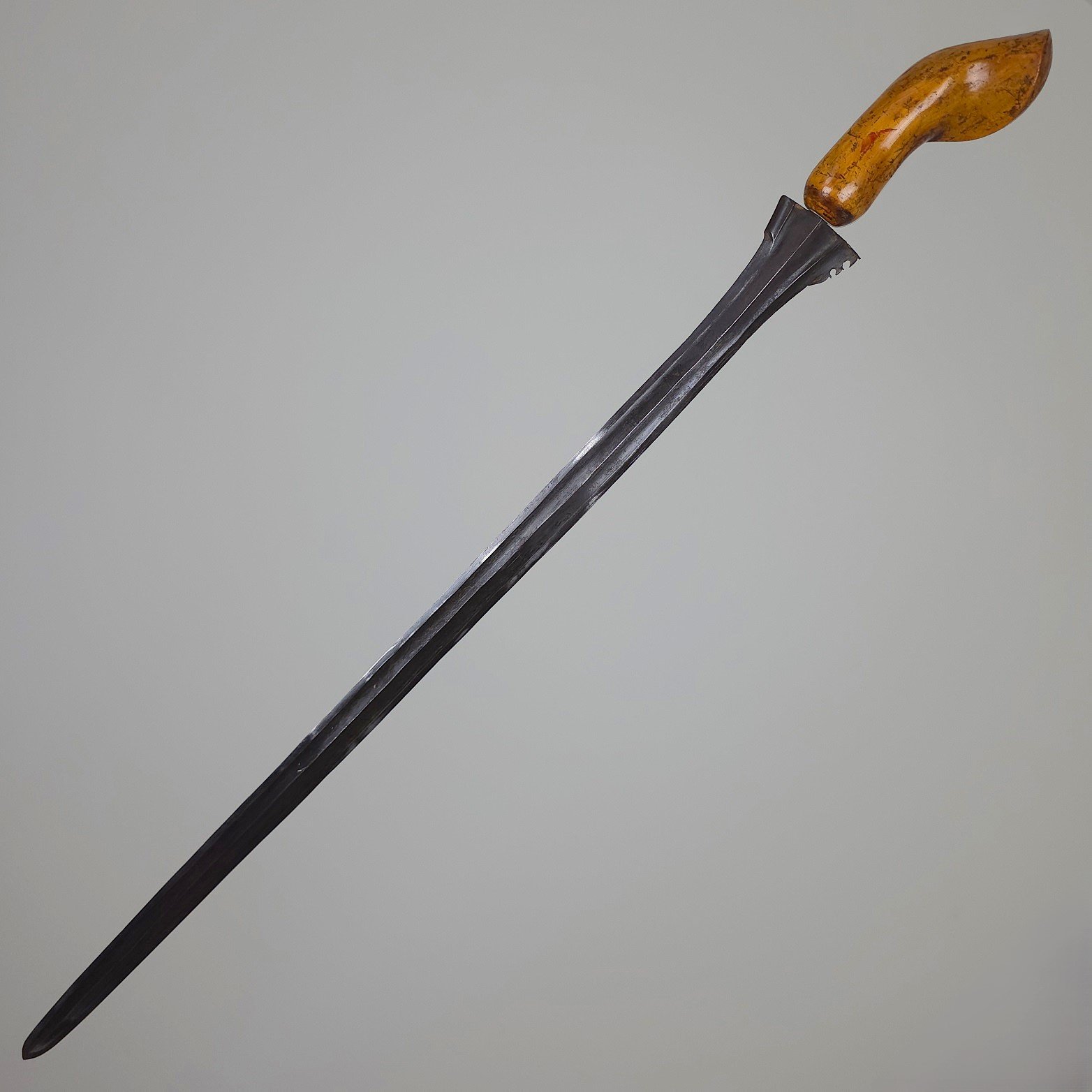
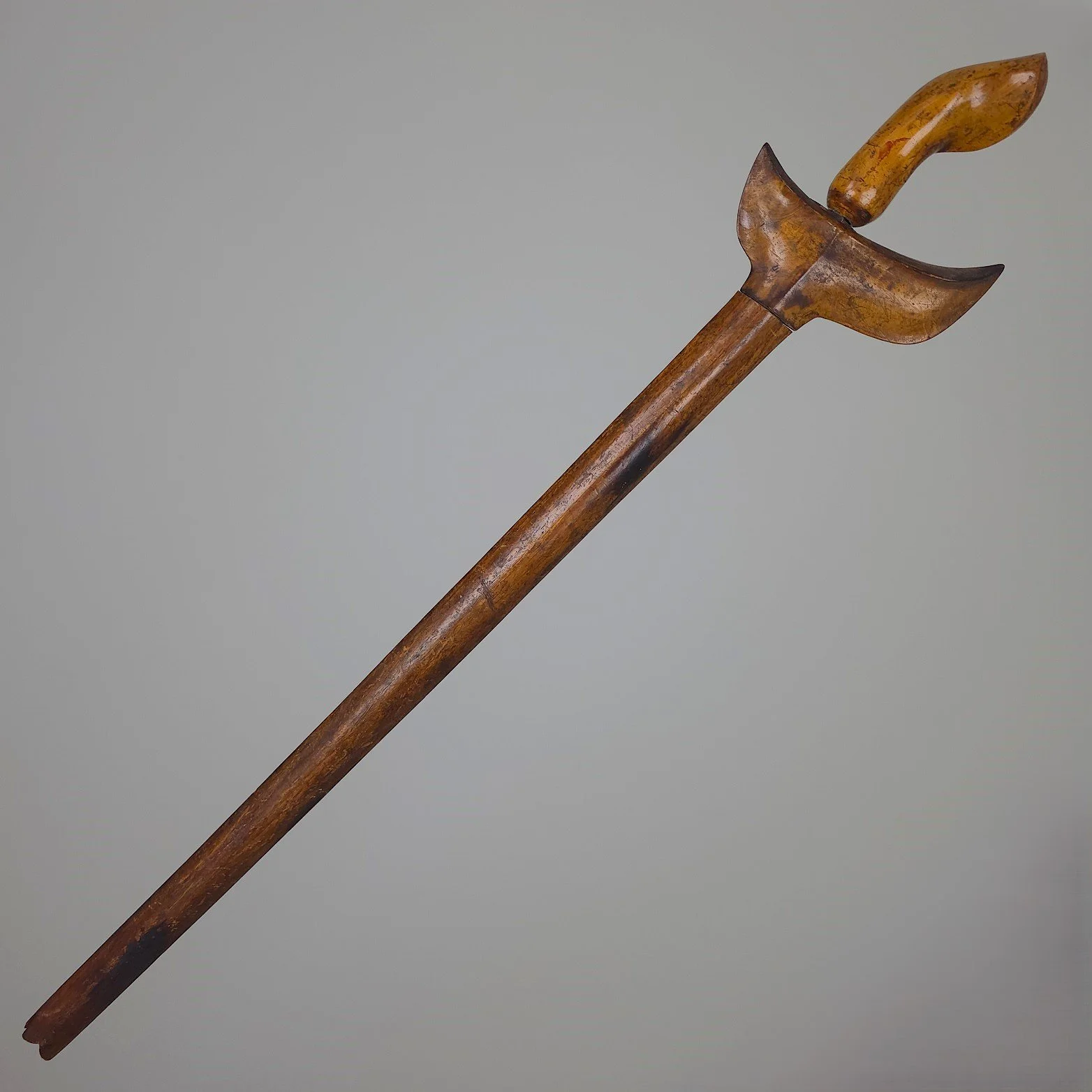
Keris Penjang (Bahari Keris)
Siak Sultanate - Aceh Sultanate - Dutch East Indies (Riau - Minangkabau - Padang Highlands, Sumatra, Indonesia)
Late 19th century (ca. 1870 - 1900)
Steel, wood
Blade: 51,4cm
Hilt & Blade: 61cm
Hilt, Blade, Sheath: 65,1cm
Collection Date: 2021
Collection Number: 404
Deaccessioned from the Valentine Museum: Richmond, Virginia, USA (2021)
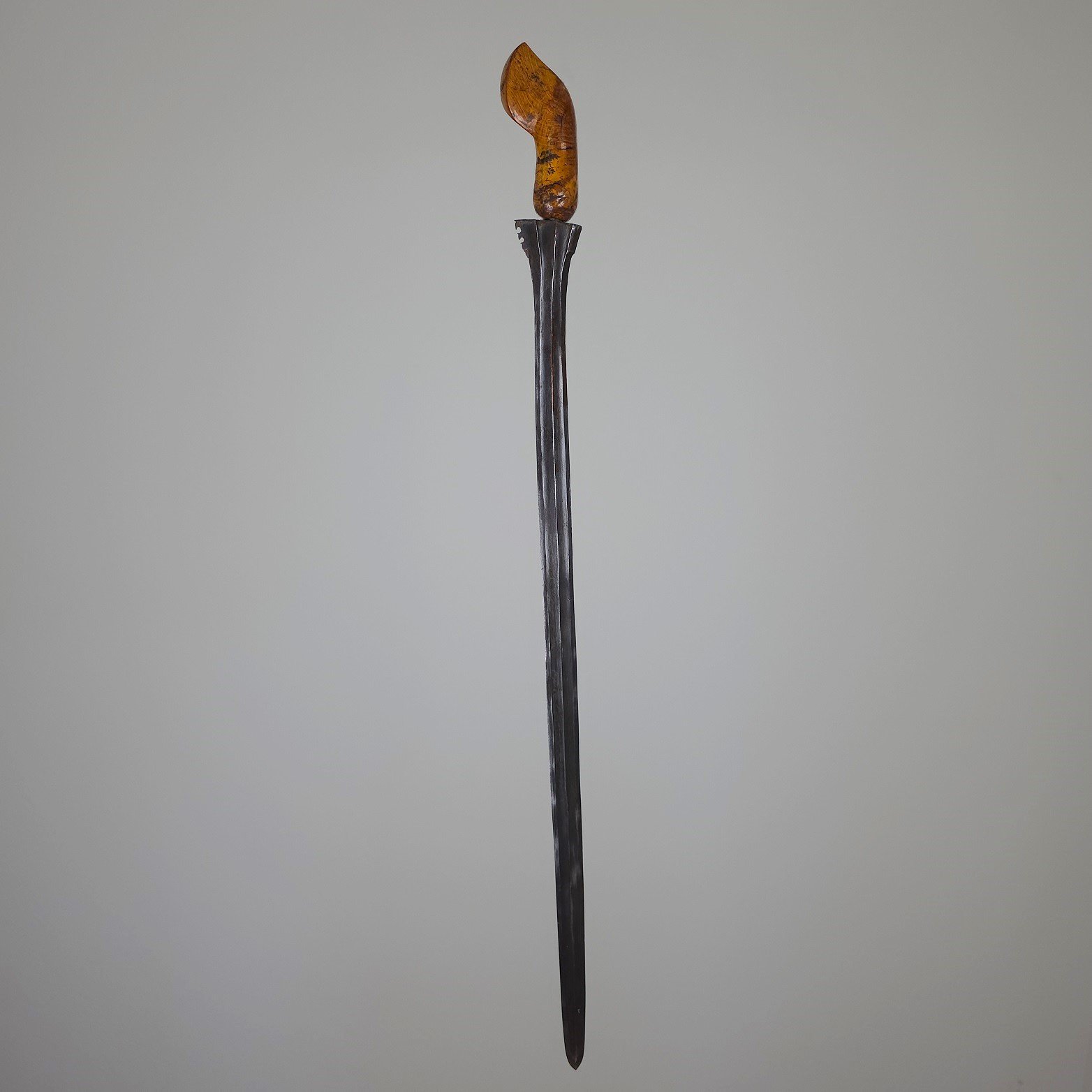
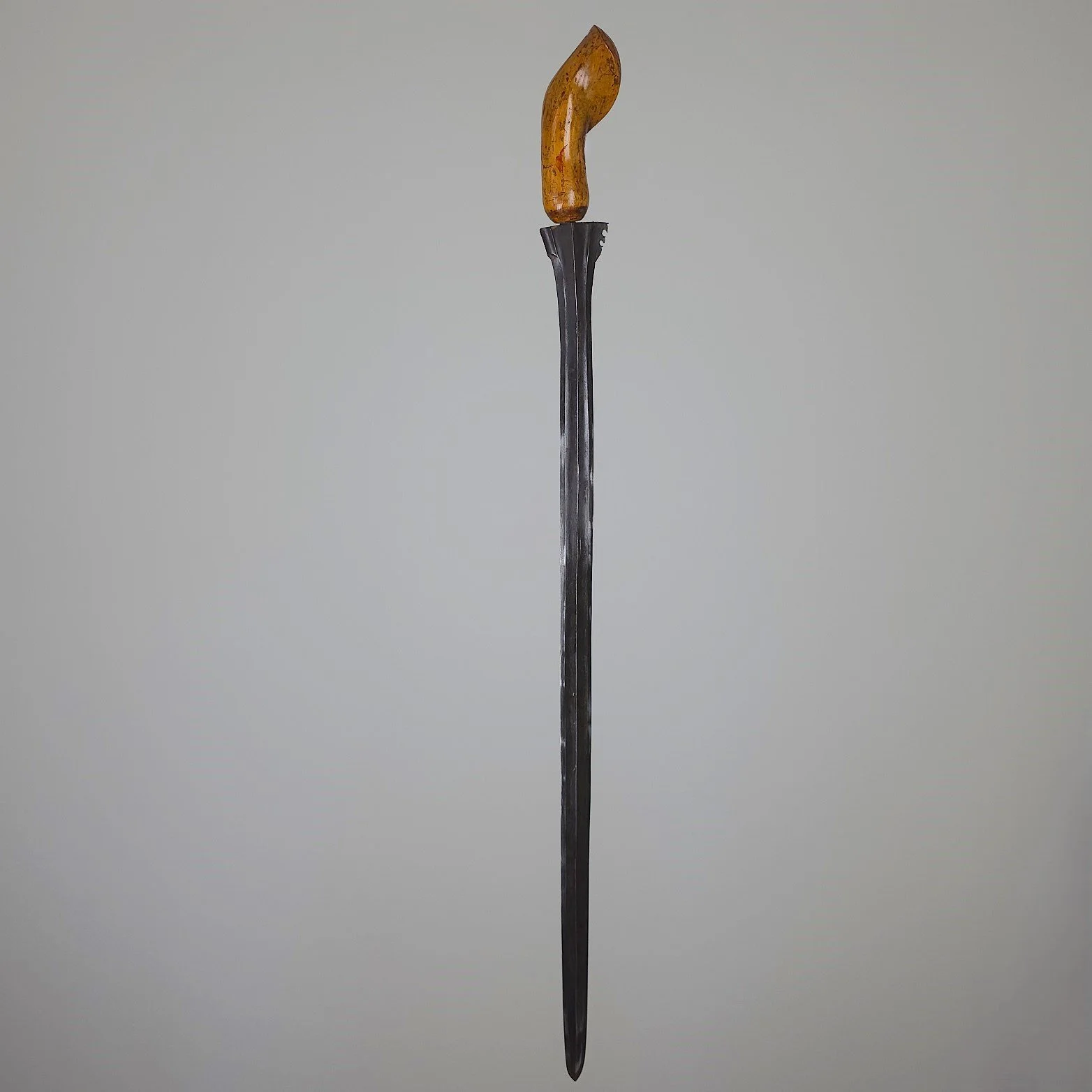
One of the many variations of the keris penjang, this one from the Indonesian Island of Sumatra. This style is also known as execution keris from historical accounts describing the insertion of the long narrow blade above the collarbone of the sitting criminal and having a cloth placed over the shoulder. Then, the blade was driven down directly into the heart, causing instant death. There is no doubt that some were used in this way, but many remained symbols of status as well. This keris penjang is a regional development of Central Sumatra, across the straight of Malacca from Malaysia.
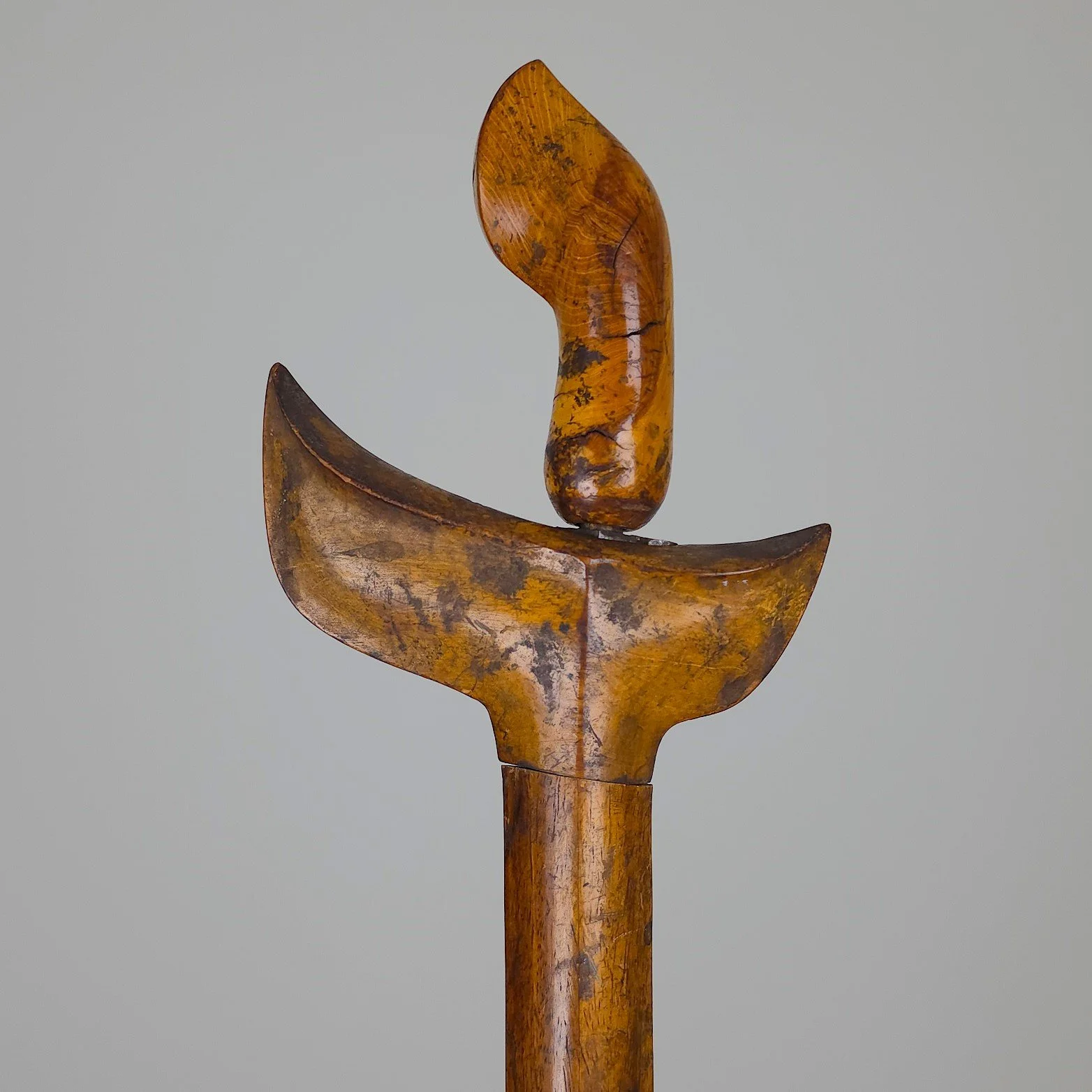
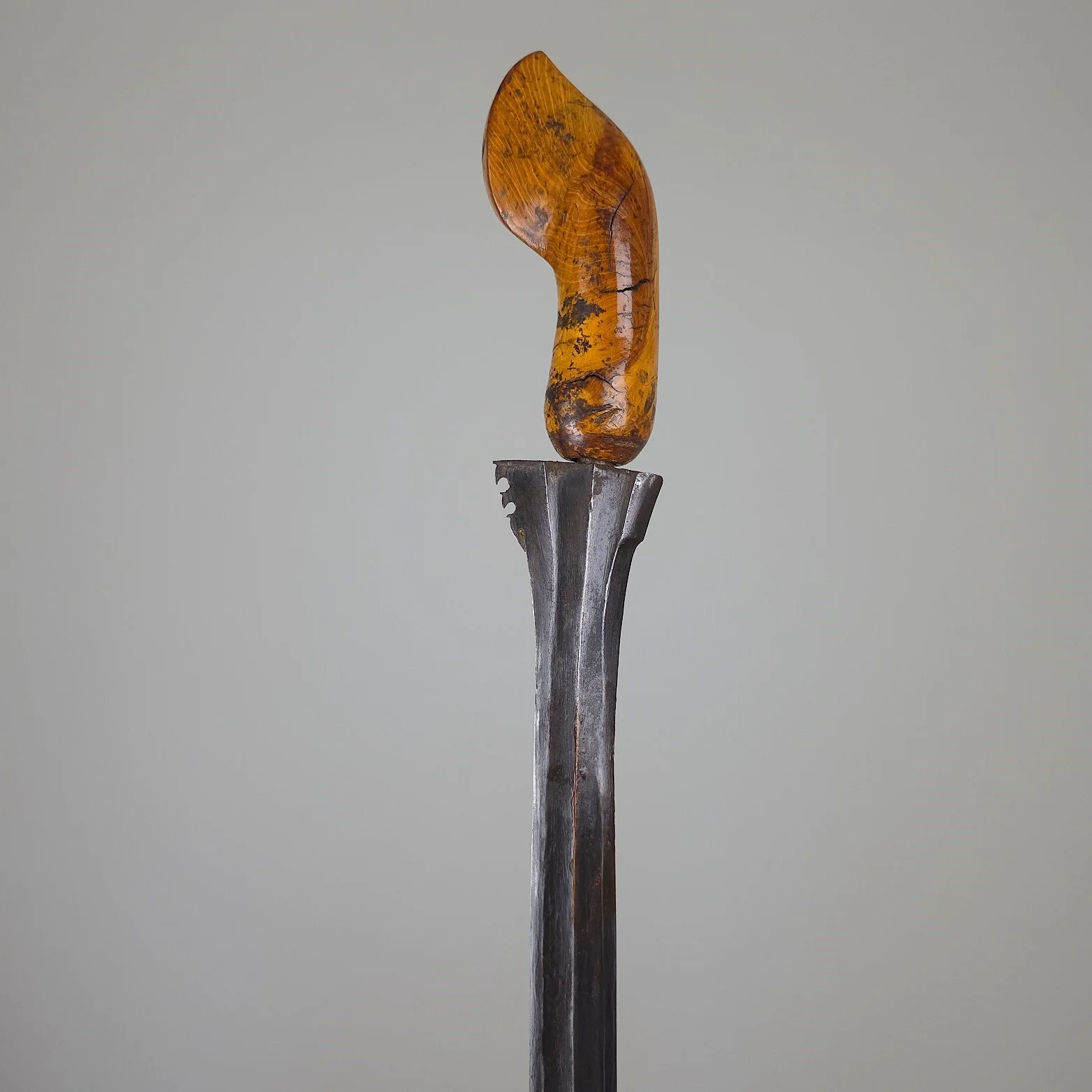
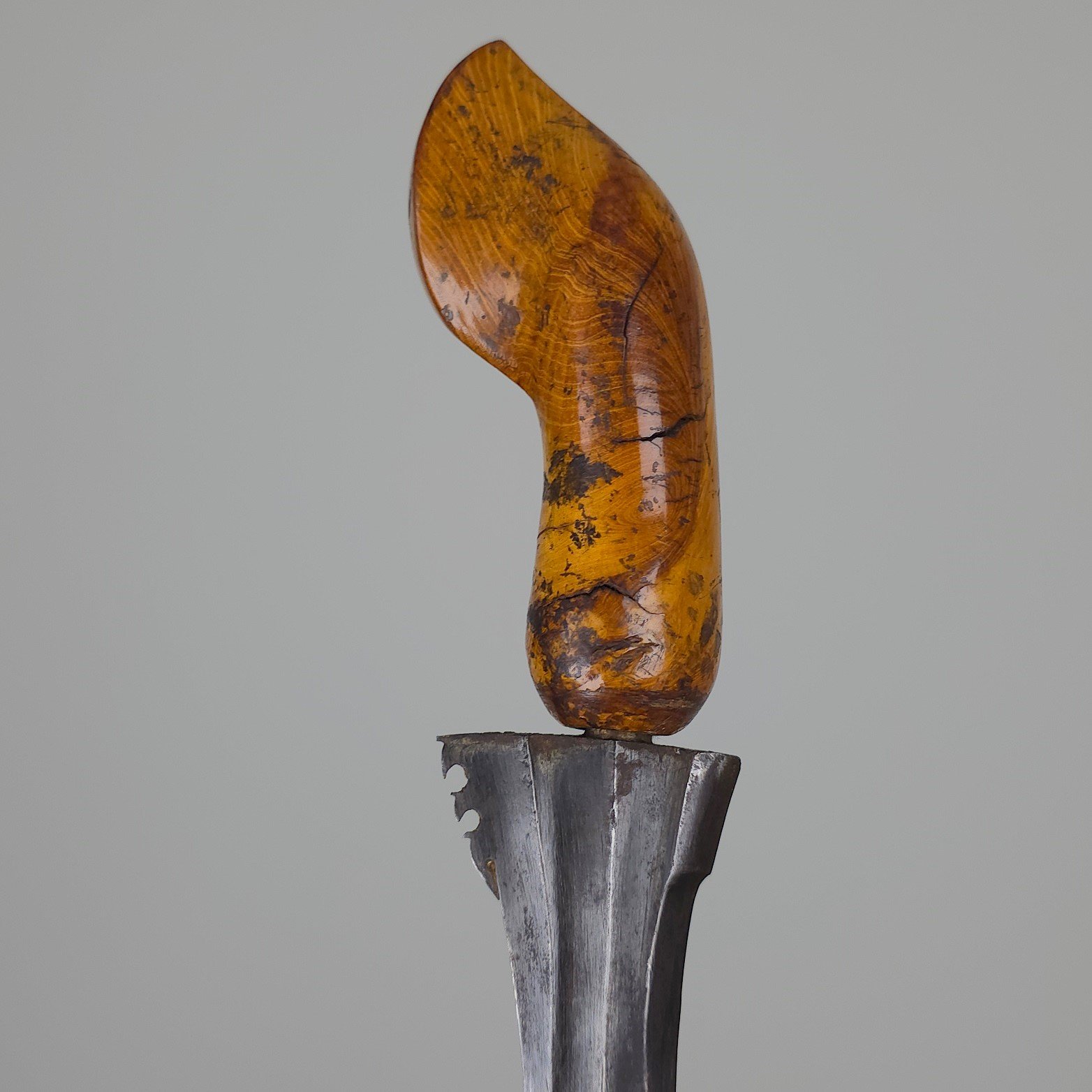
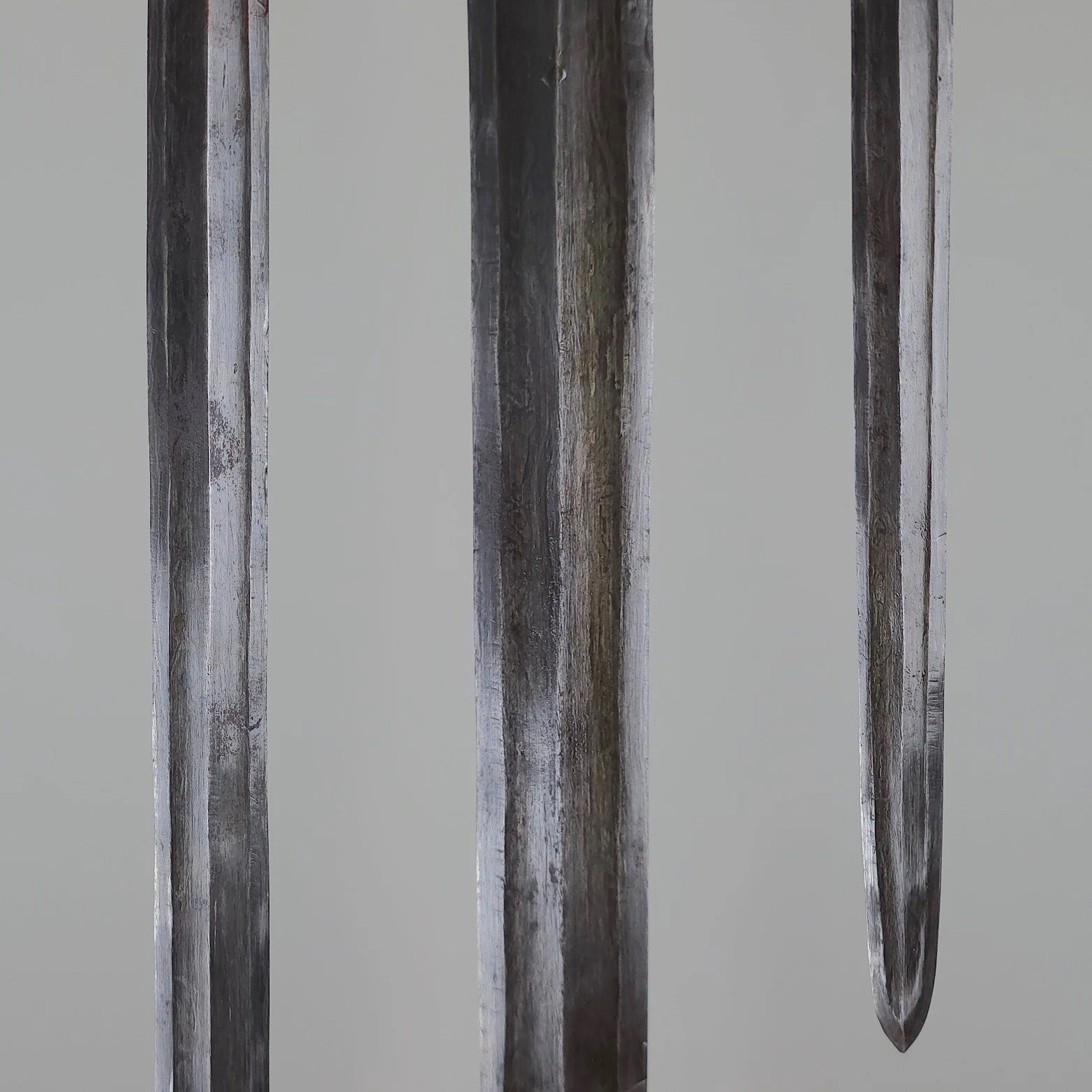
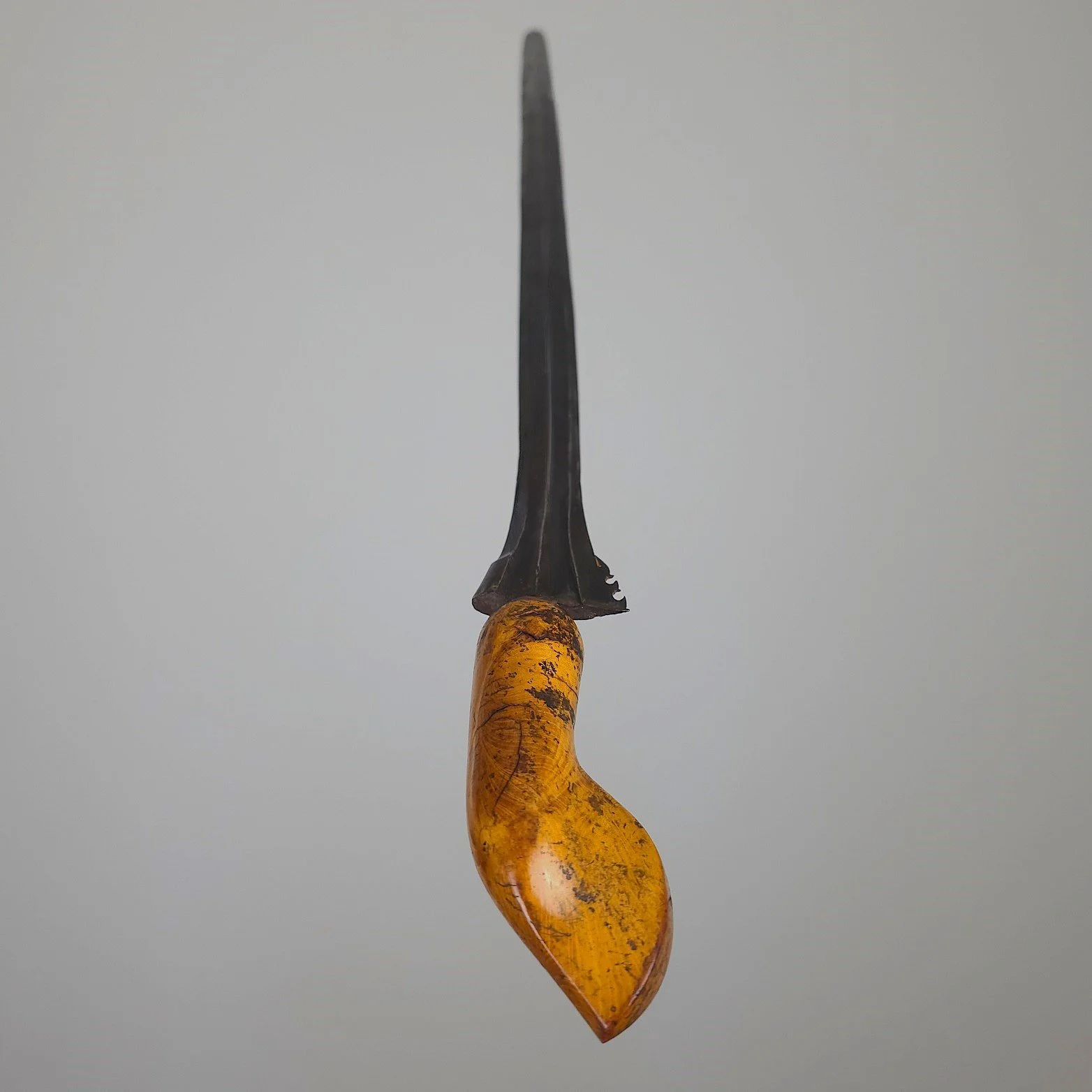
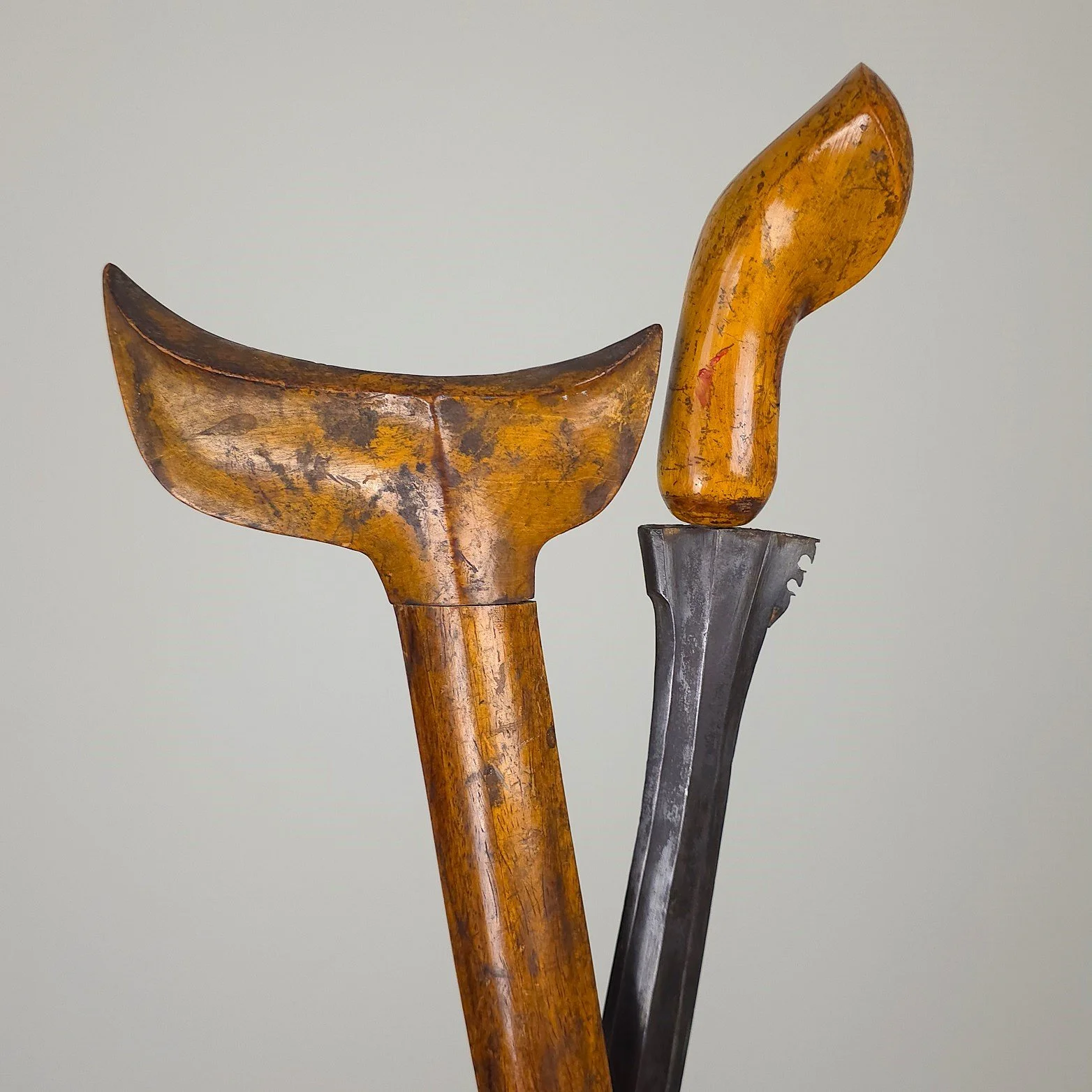
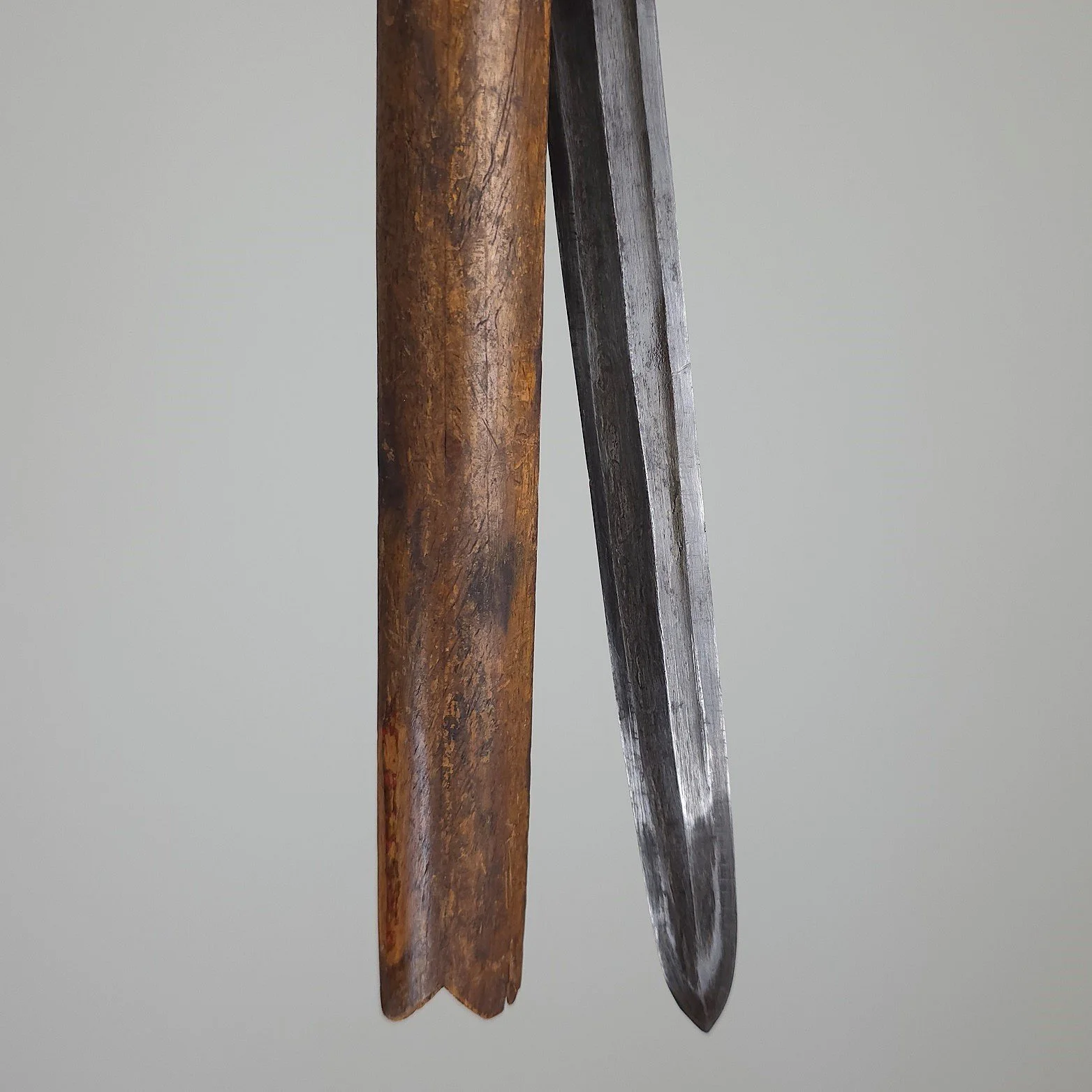
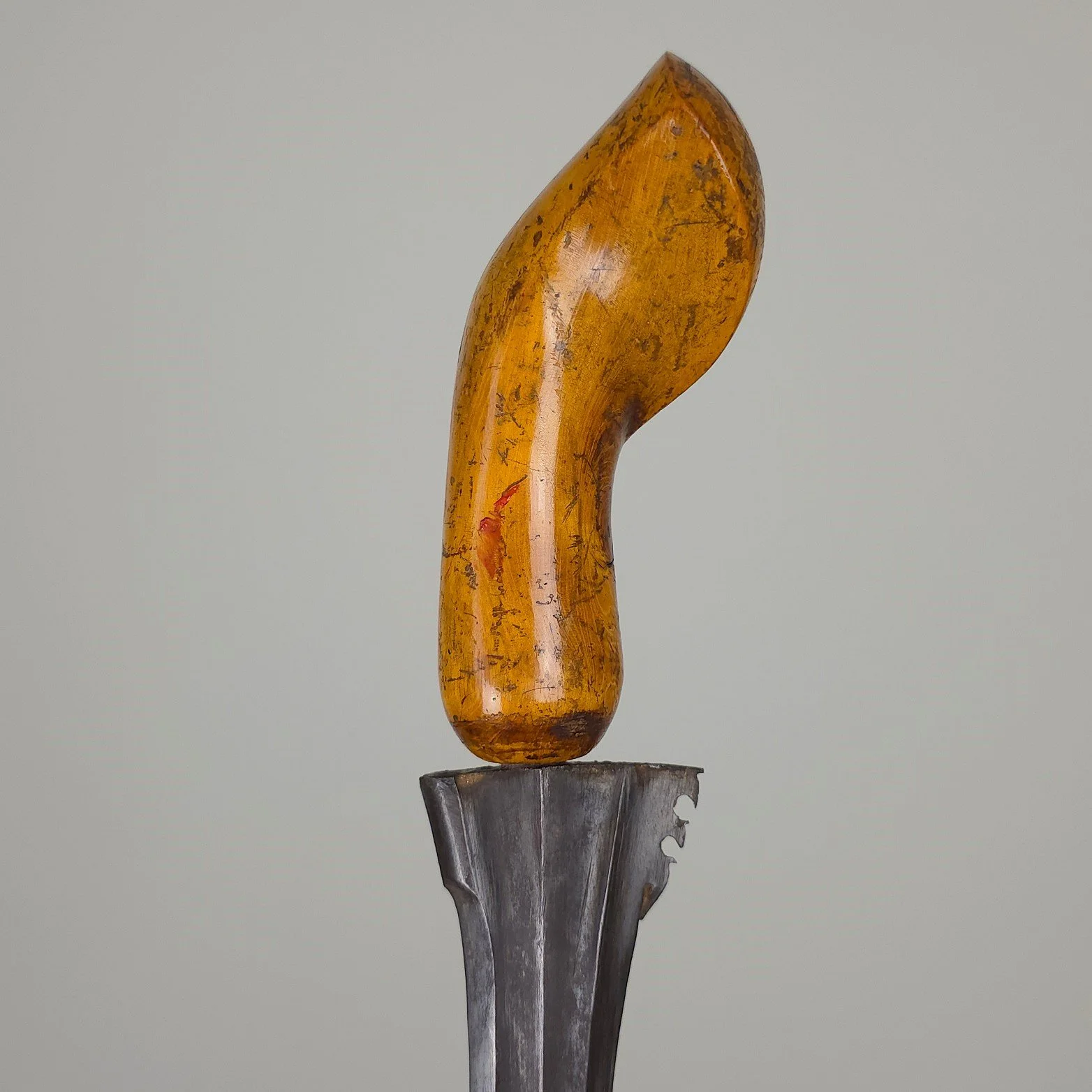
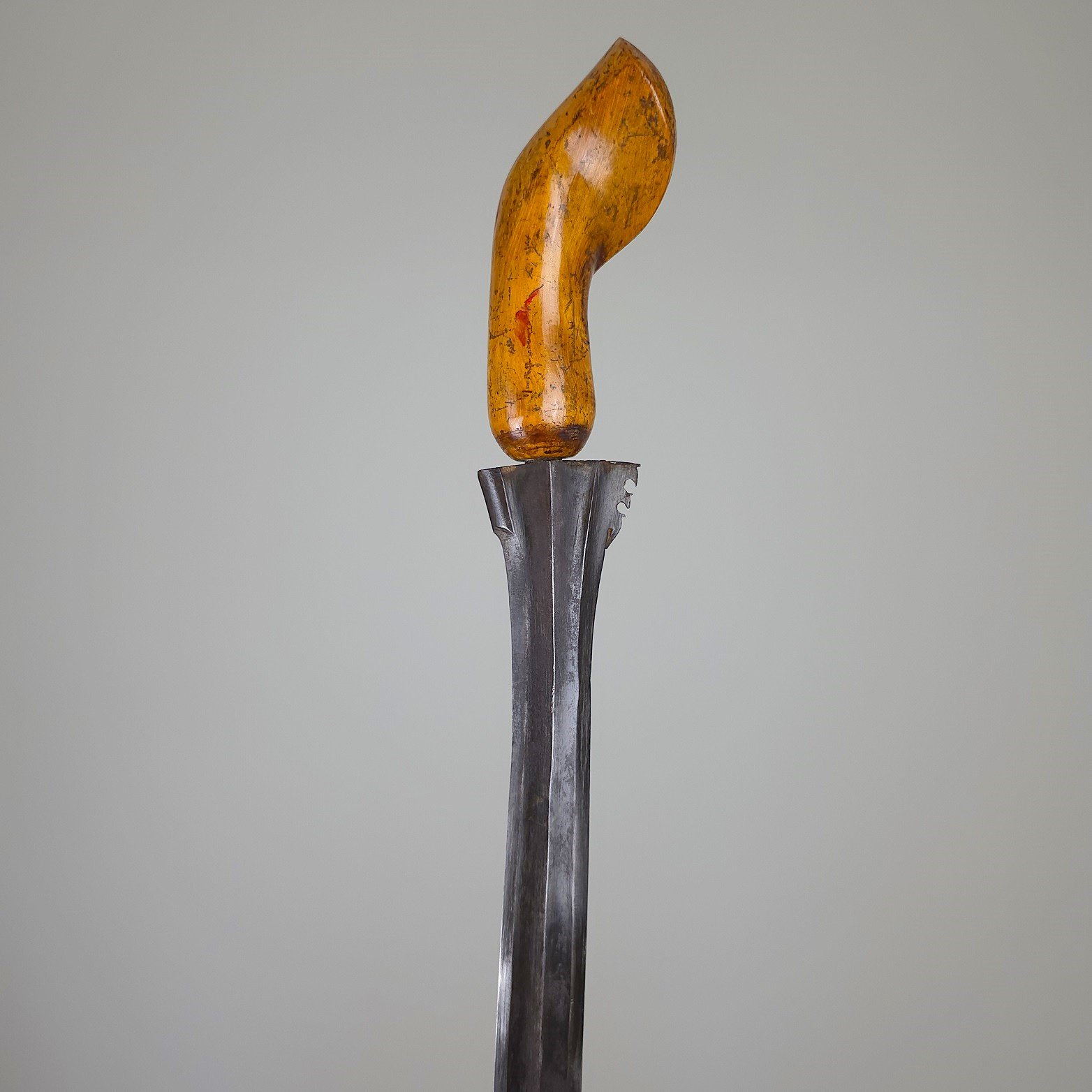
The example here is slightly longer than the average at 61cm and with great coloration tones. The long straight steel blade is narrow, double- edged, with a profiled ganga with greneng (teeth) at the base. Two central fullers are present between a raised medial ridge that extends the entire profile of the blade before transitioning to the point. The dark blade having a clear pamor pattern seen throughout. There is a small section of epoxy present where a red musuem accession number was previously located near the base of the blade.
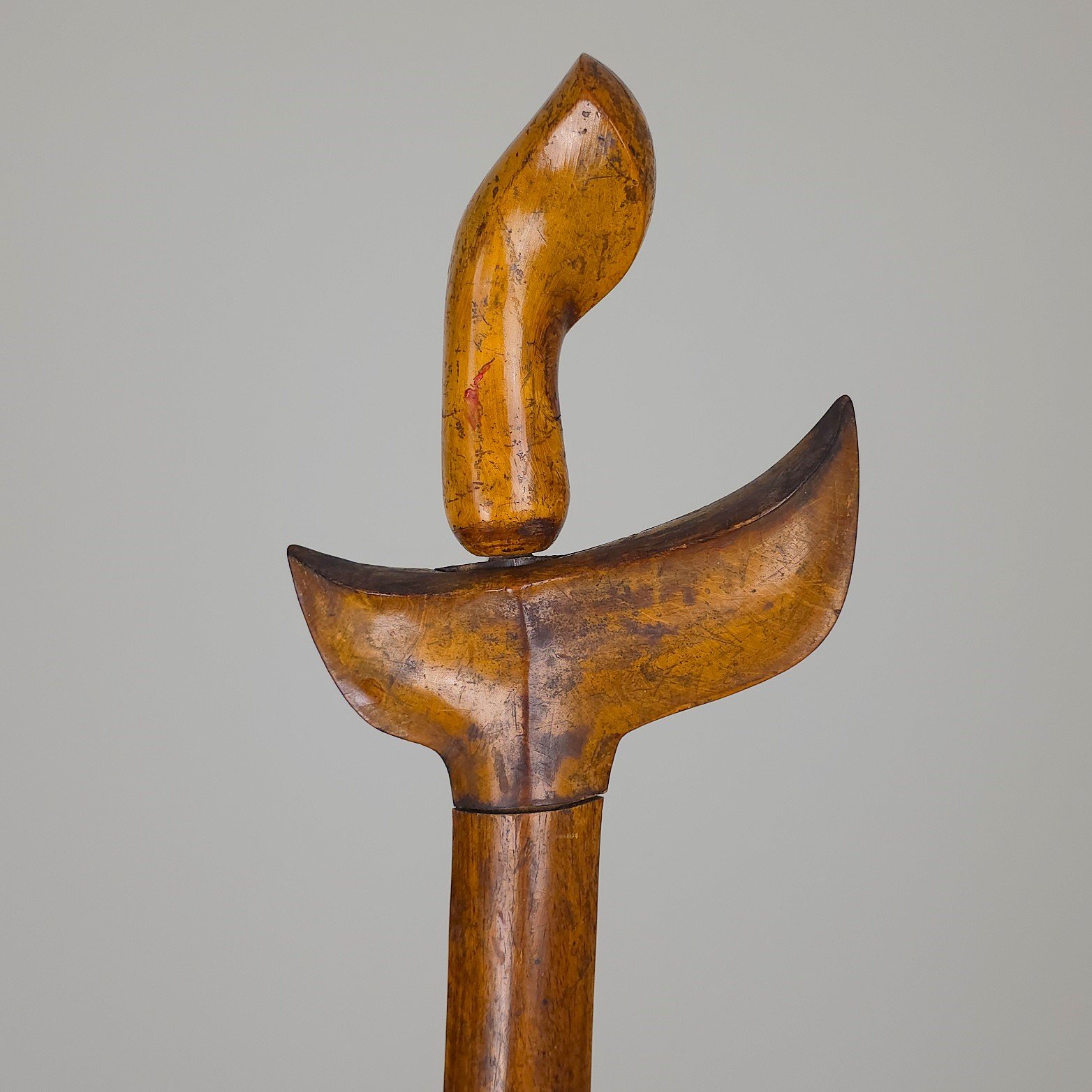
The hardwood cylindrical carved hilt (hulu) flares outward asymetrically to one side. Missing its medak. The sheath, placed in two pieces of wood, the wranka (top part) and gandar (sheath body). The bottom tip insert of the sheath is missing. Both the hardwood hilt and sheath are carved from a beautiful type of jungle wood that emits an orange hue tone contrasted with fine dark grain colorations. An attractive and longer example of the keris penjang, whereas they are not as common compared to the shorter keris swords.
[1] Lord Egerton of Tatton. 2002. “Indian And Oriental Arms And Armor”. Page 96. #282
[2] https://www.roots.gov.sg/Collection-Landing/listing/1079871
[3] https://prm.ox.ac.uk/collections-online#/item/prm-object-200670
[4] https://prm.ox.ac.uk/collections-online#/item/prm-object-93252
[5] https://prm.ox.ac.uk/collections-online#/item/prm-object-143117
[6] https://www.metmuseum.org/art/collection/search/31242
[7] https://www.metmuseum.org/art/collection/search/31379
[8] https://www.mandarinmansion.com/glossary/execution-keris
[9] http://www.oriental-arms.co.il/item.php?id=6479
[10] http://www.oriental-arms.co.il/item.php?id=918
[11] http://www.oriental-arms.co.il/item.php?id=665