Seth Thomas Admantine Mantle Clock
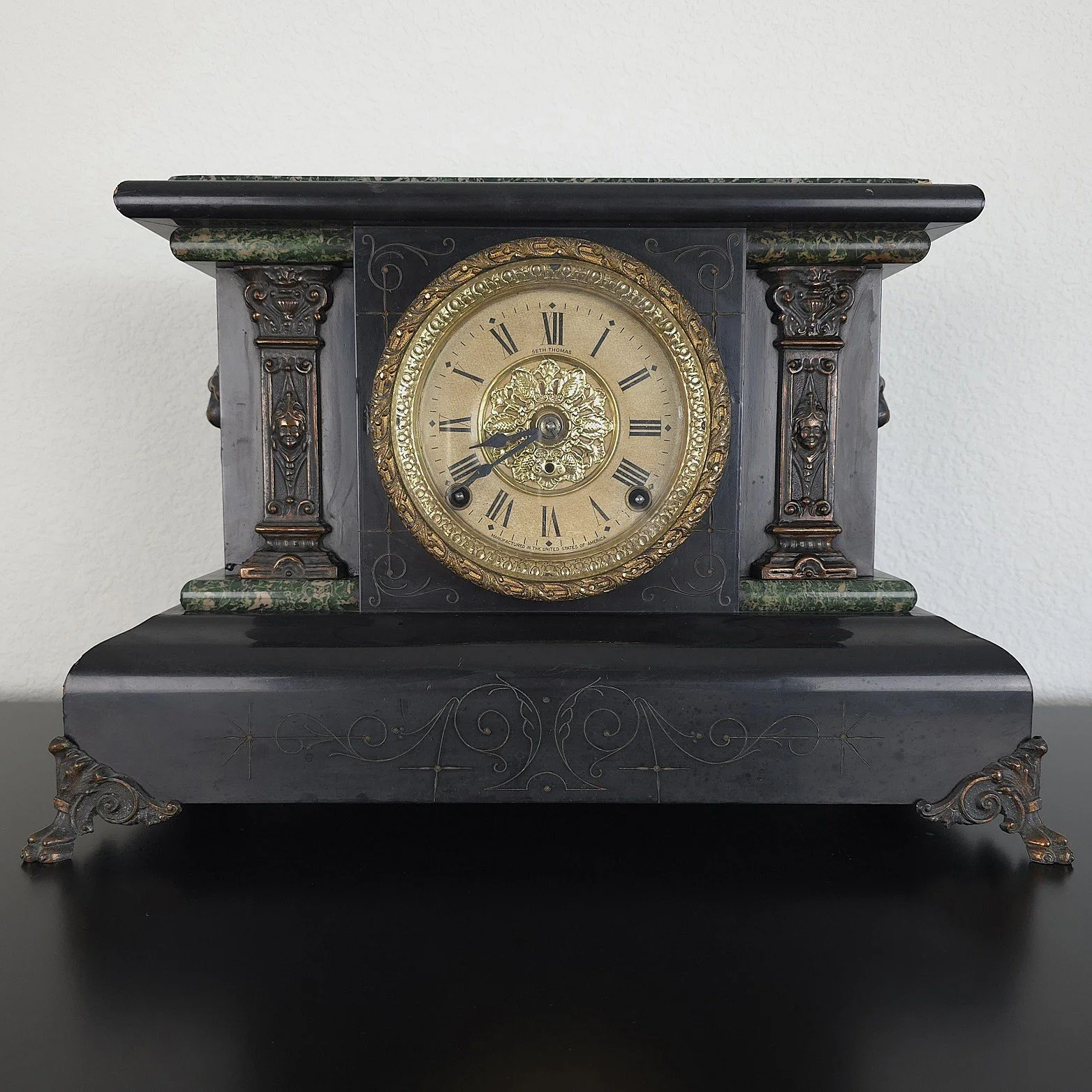
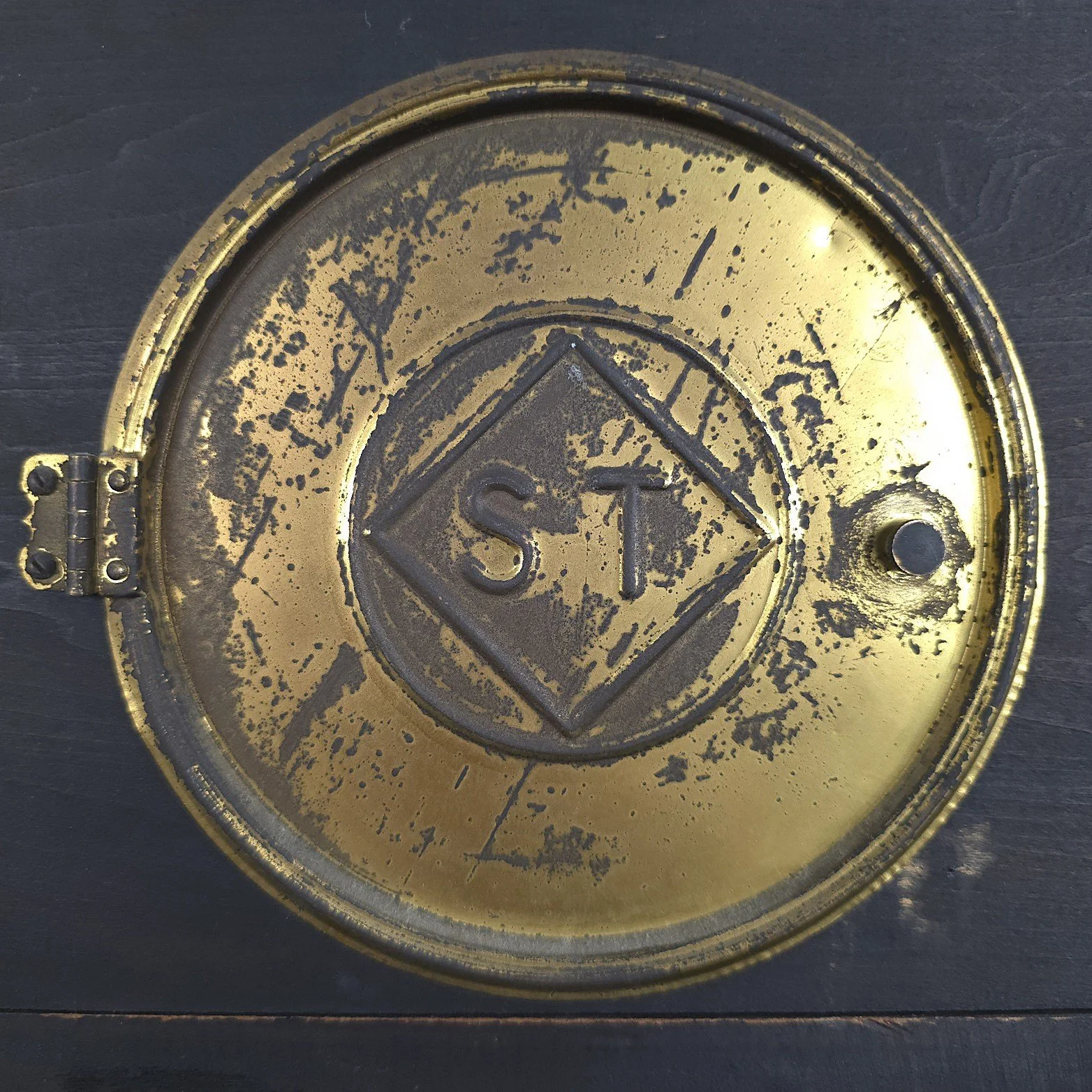
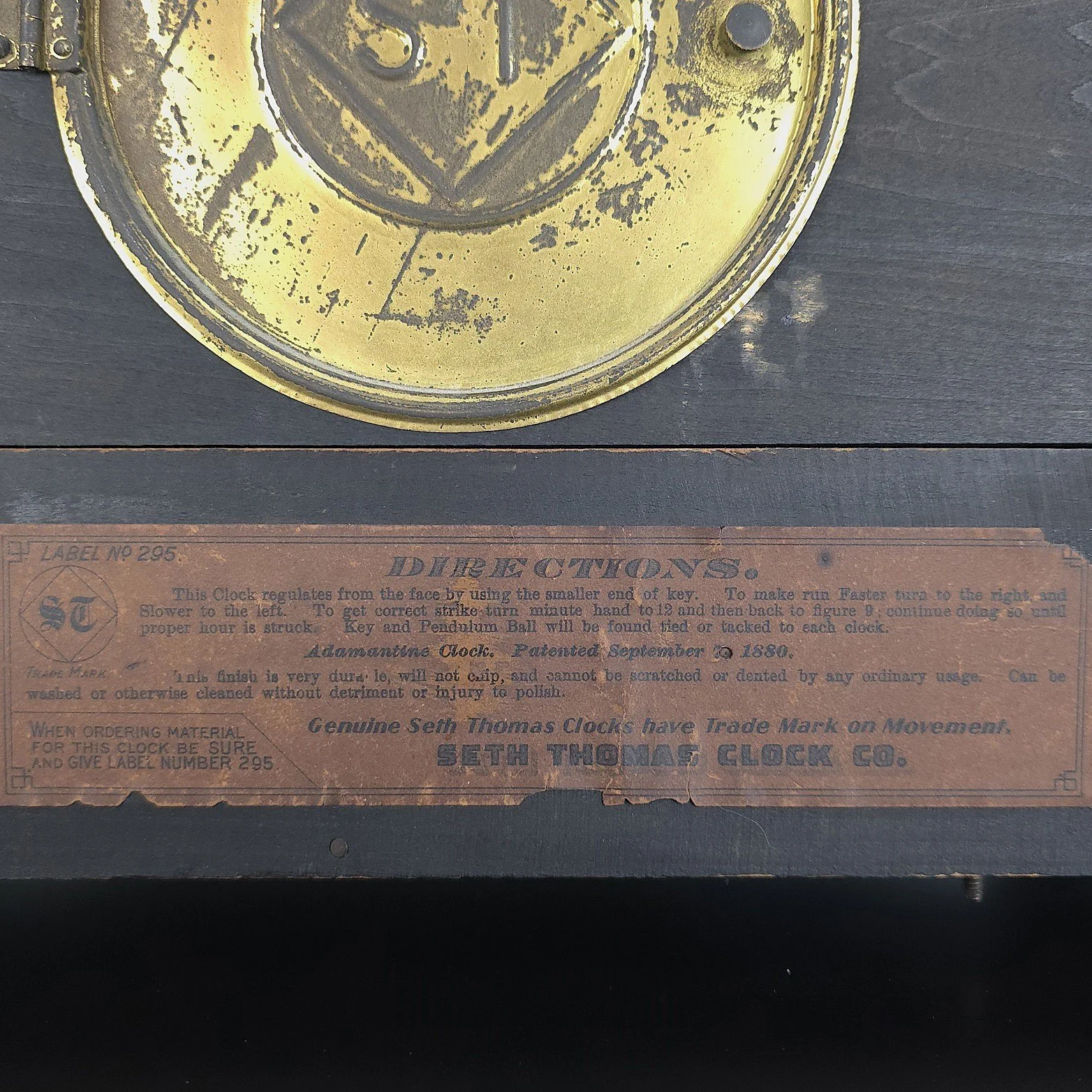
Seth Thomas Adamantine Mantle Clock
Seth Thomas Clock Company
Thomaston, Connecticut, United States
First quarter of the 20th century (ca. 1900 - 1922)
Wood, bakelite, adamantine, brass, paper, ink, iron
Width: 17,1cm
Length: 42,2cm
Height: 28,3cm
Collection Date: 2011
Collection Number: 186
Ex. Philadelphia, Pennsylvania Art Market (2011)
Seth Thomas Adamantine clocks were popular "black mantel" clocks produced from roughly 1880 to 1931, featuring a durable, celluloid veneer that was patented in 1880. These American clocks, produced out of Connecticut, were a cheaper and more affordable alternative to French clocks of marble and porcelain while still retaining the European styling.
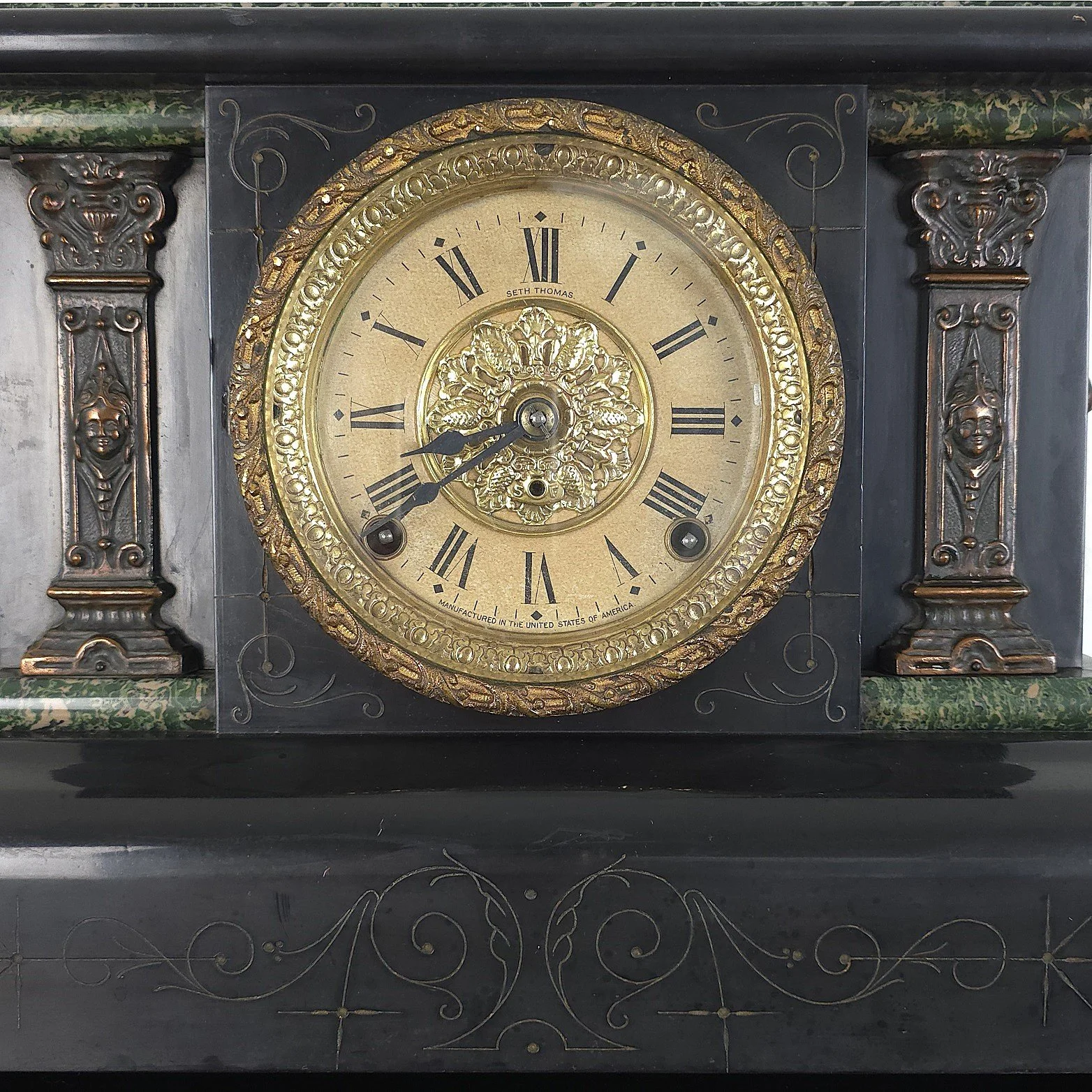
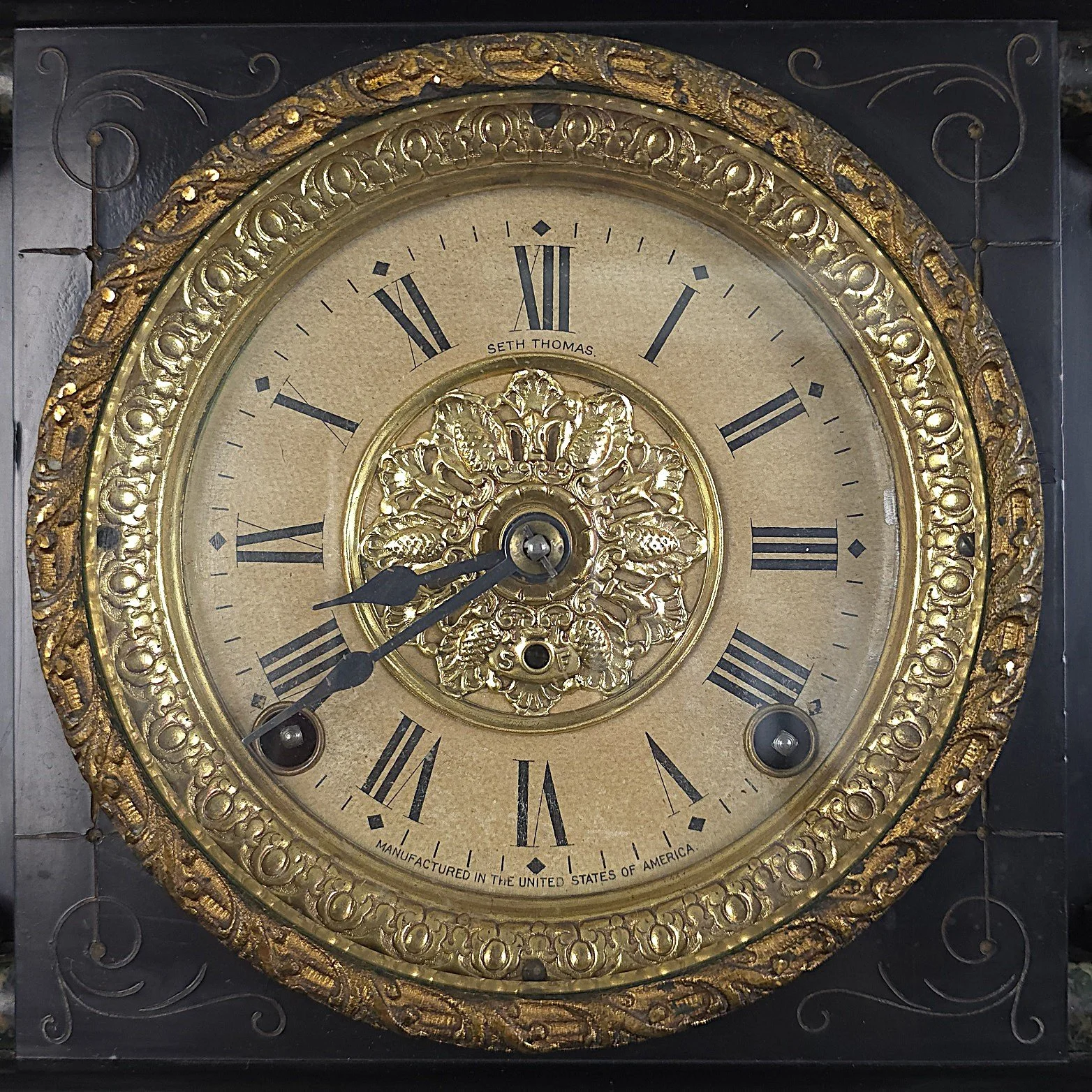
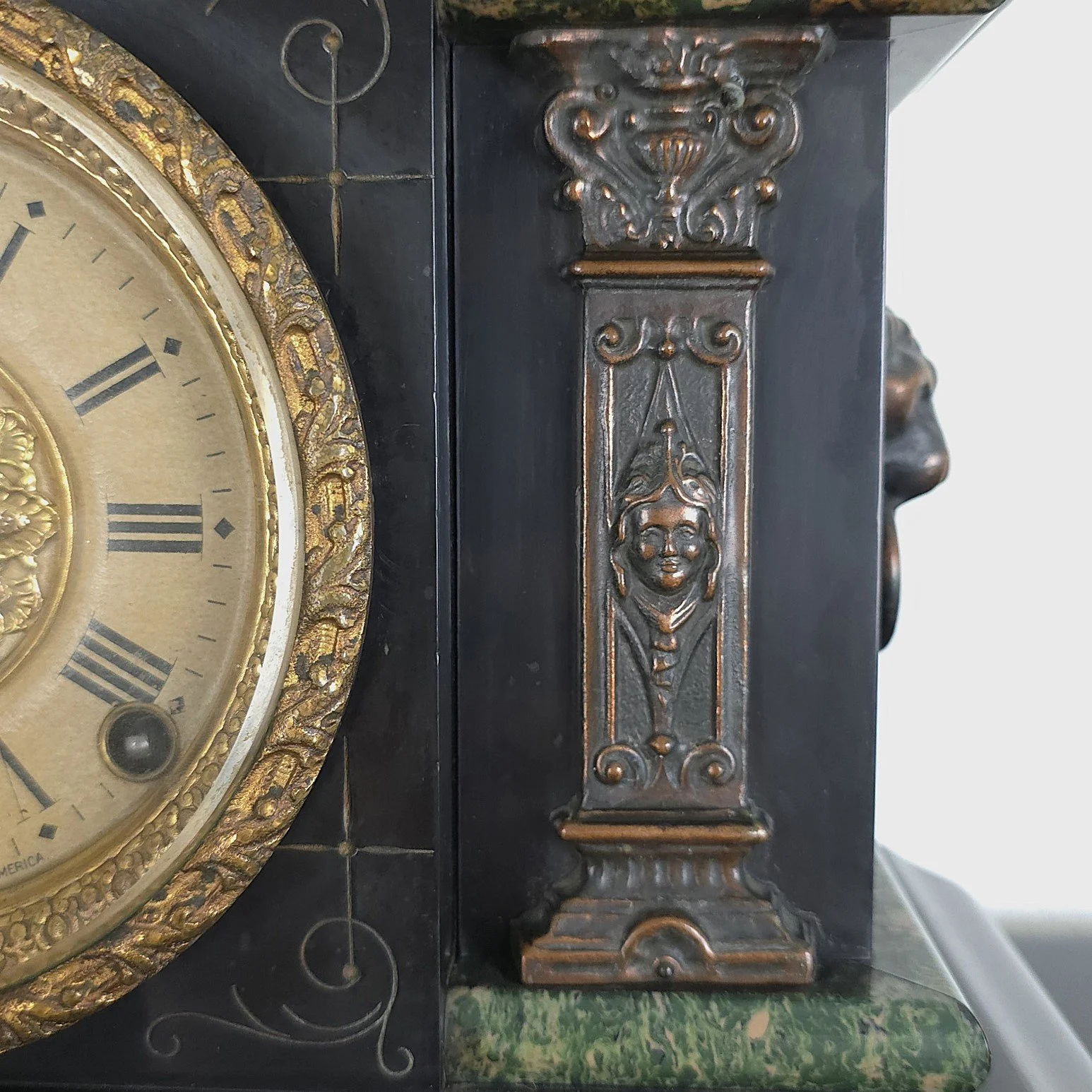
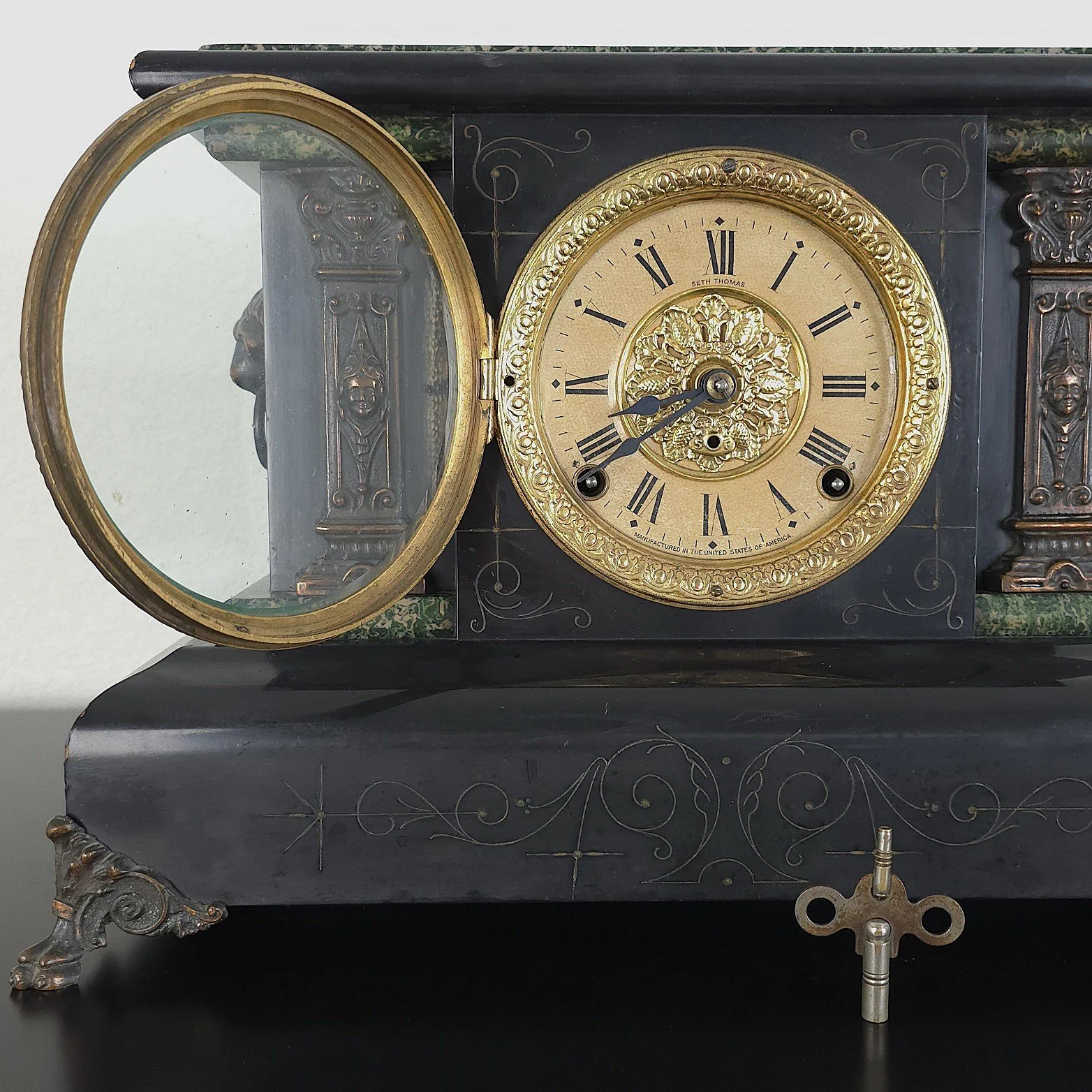
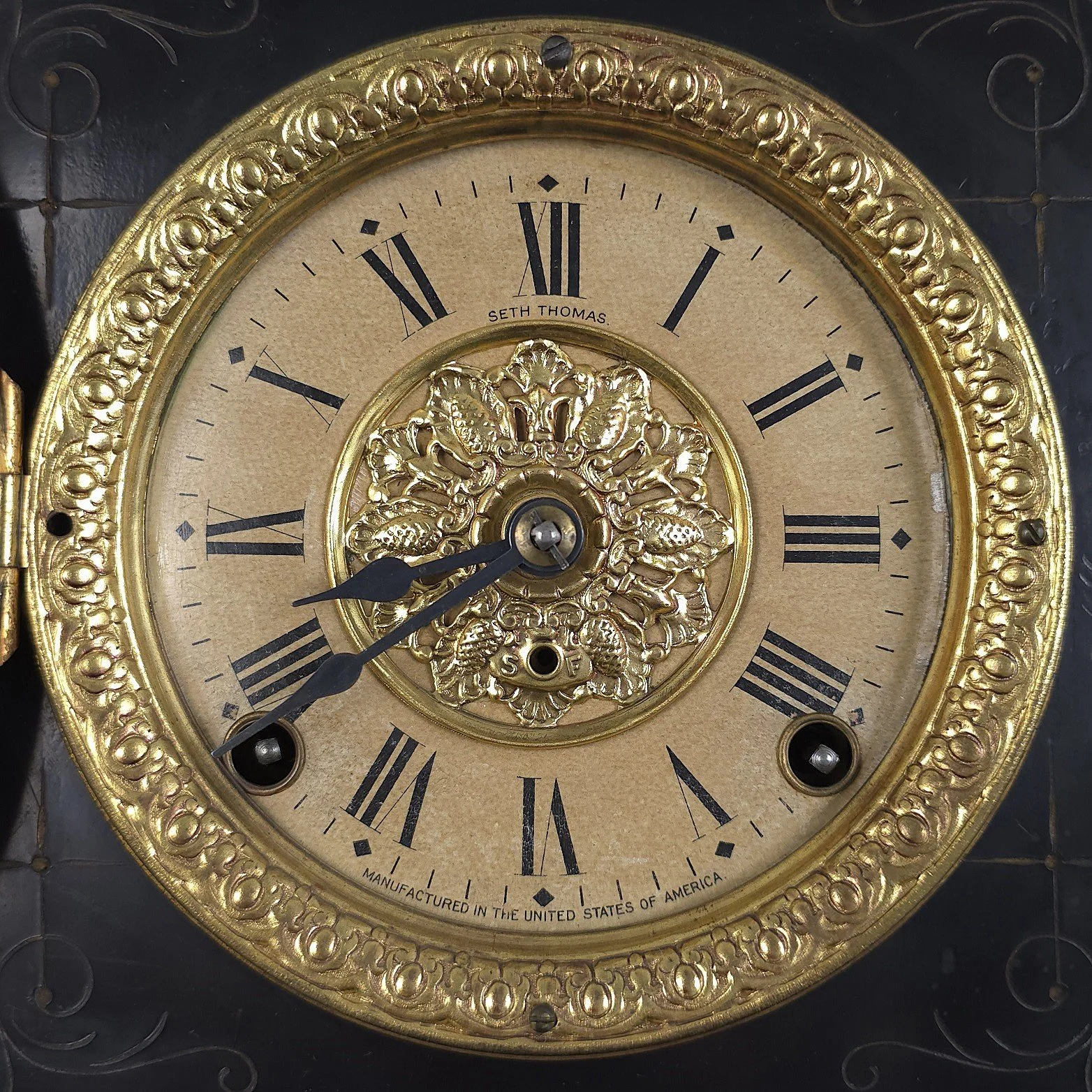
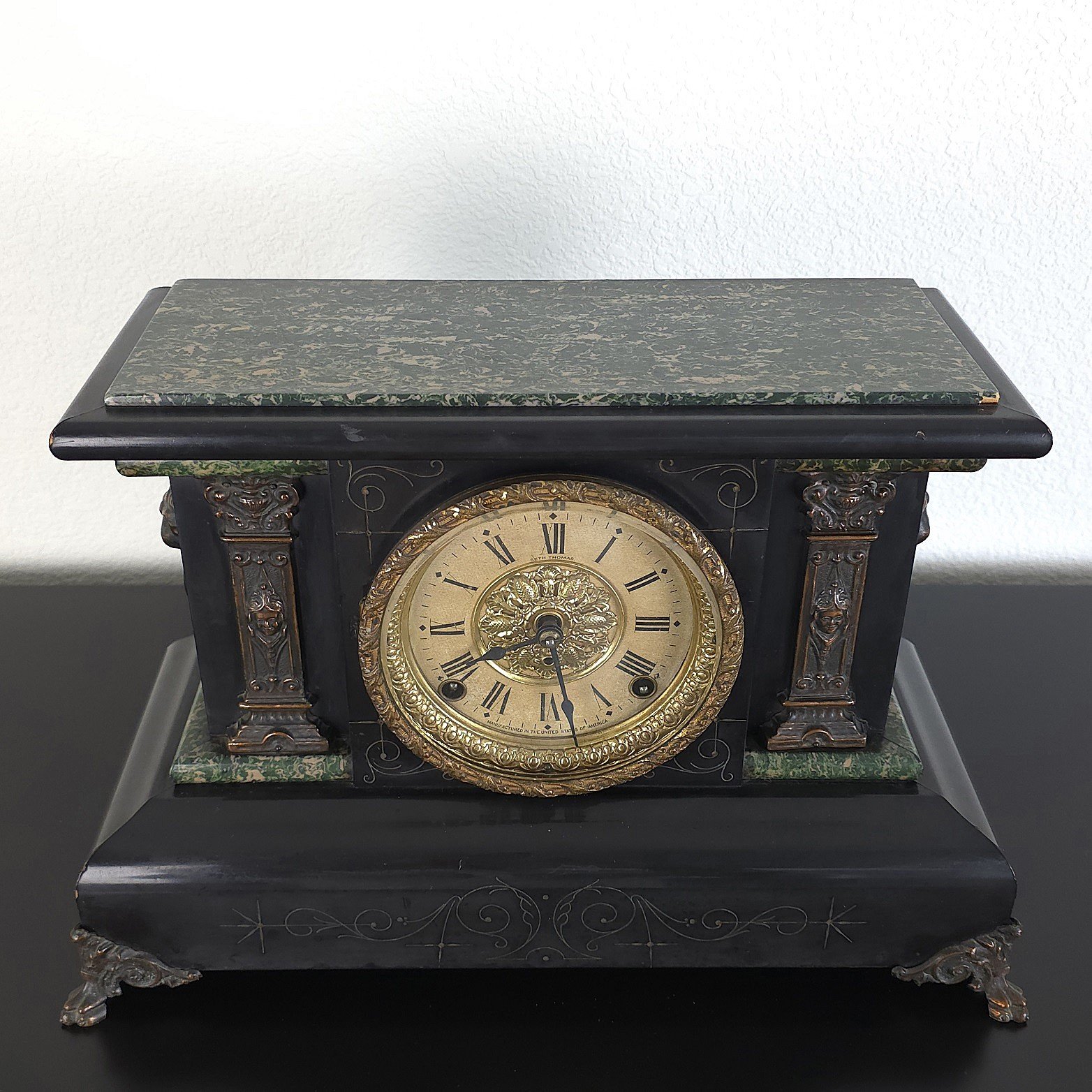
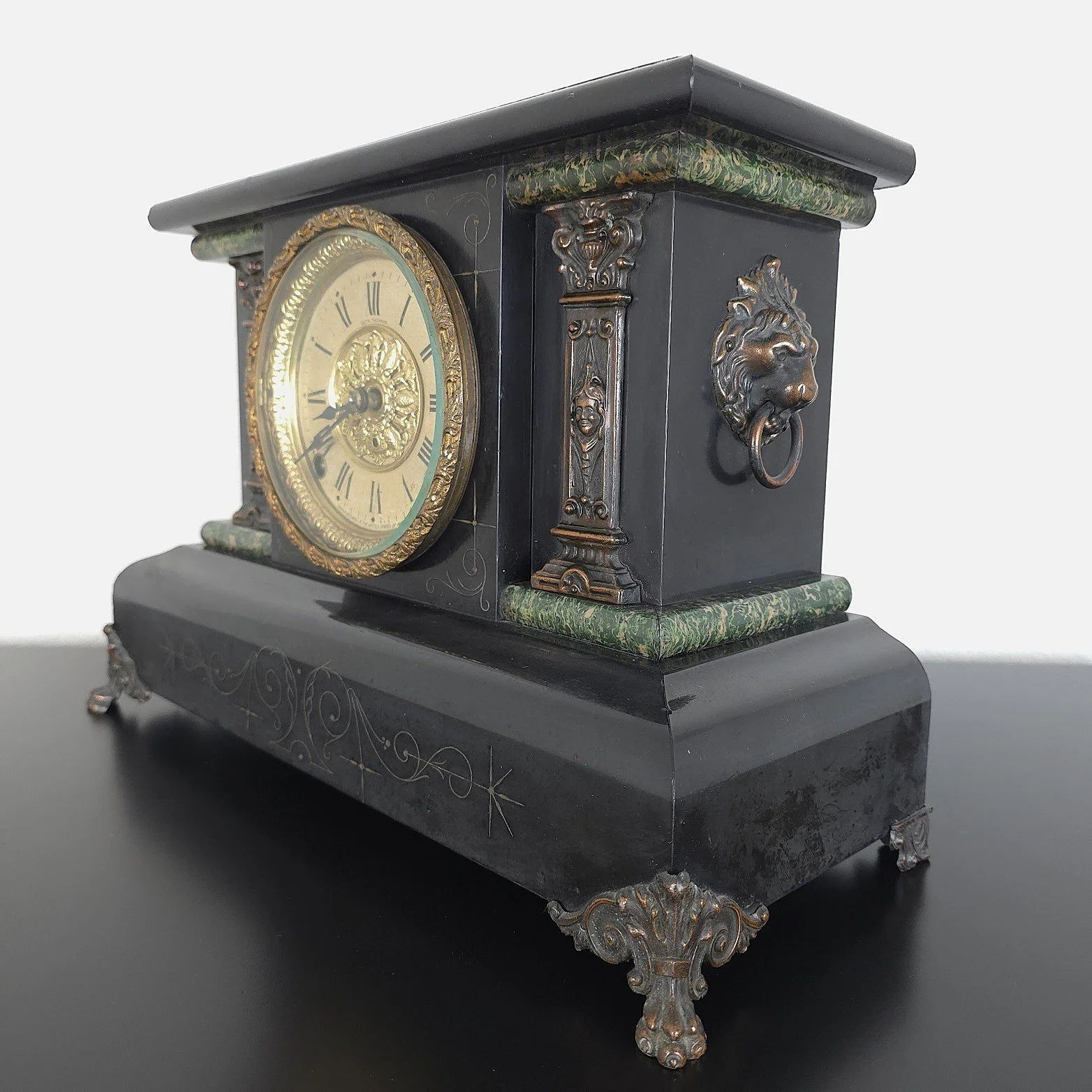
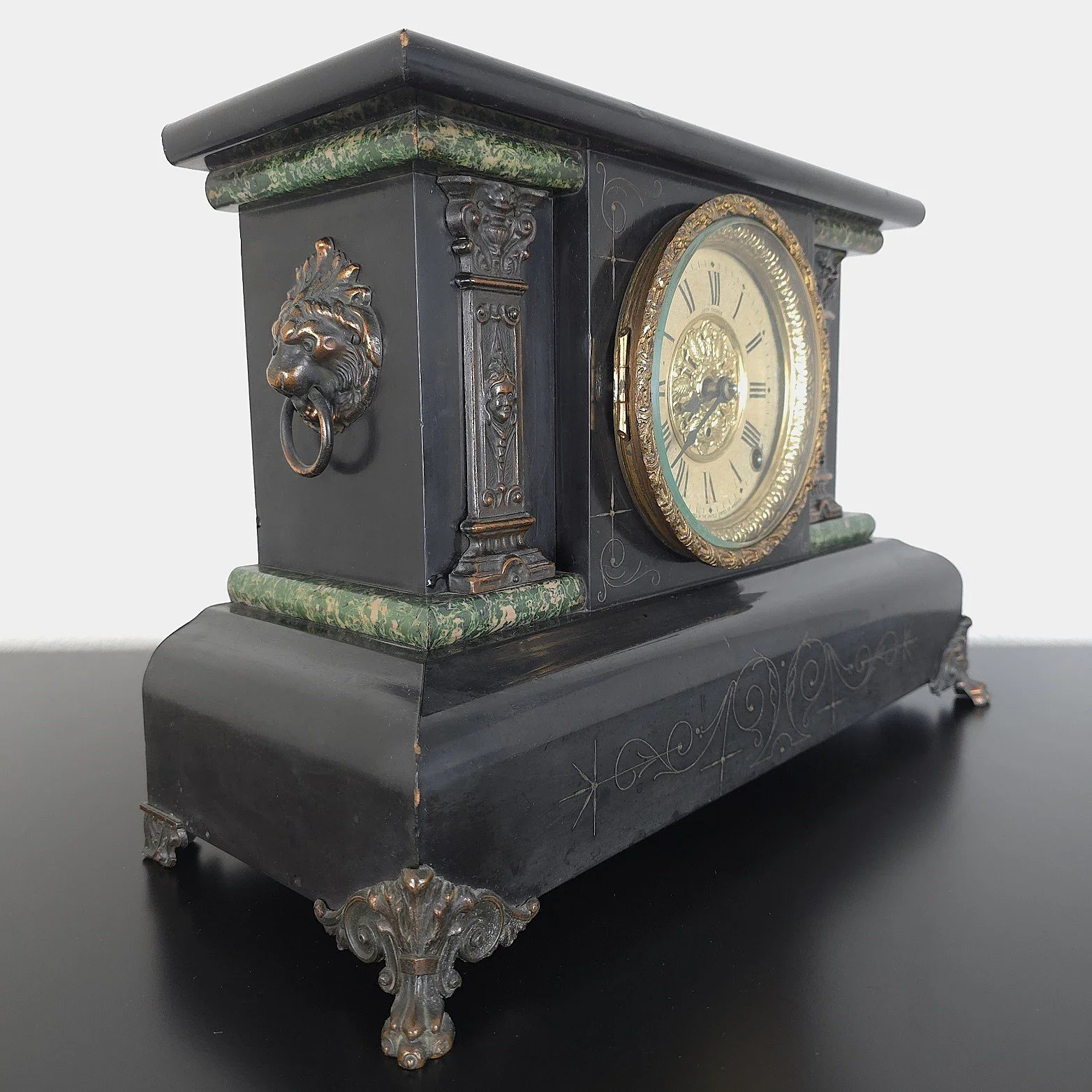
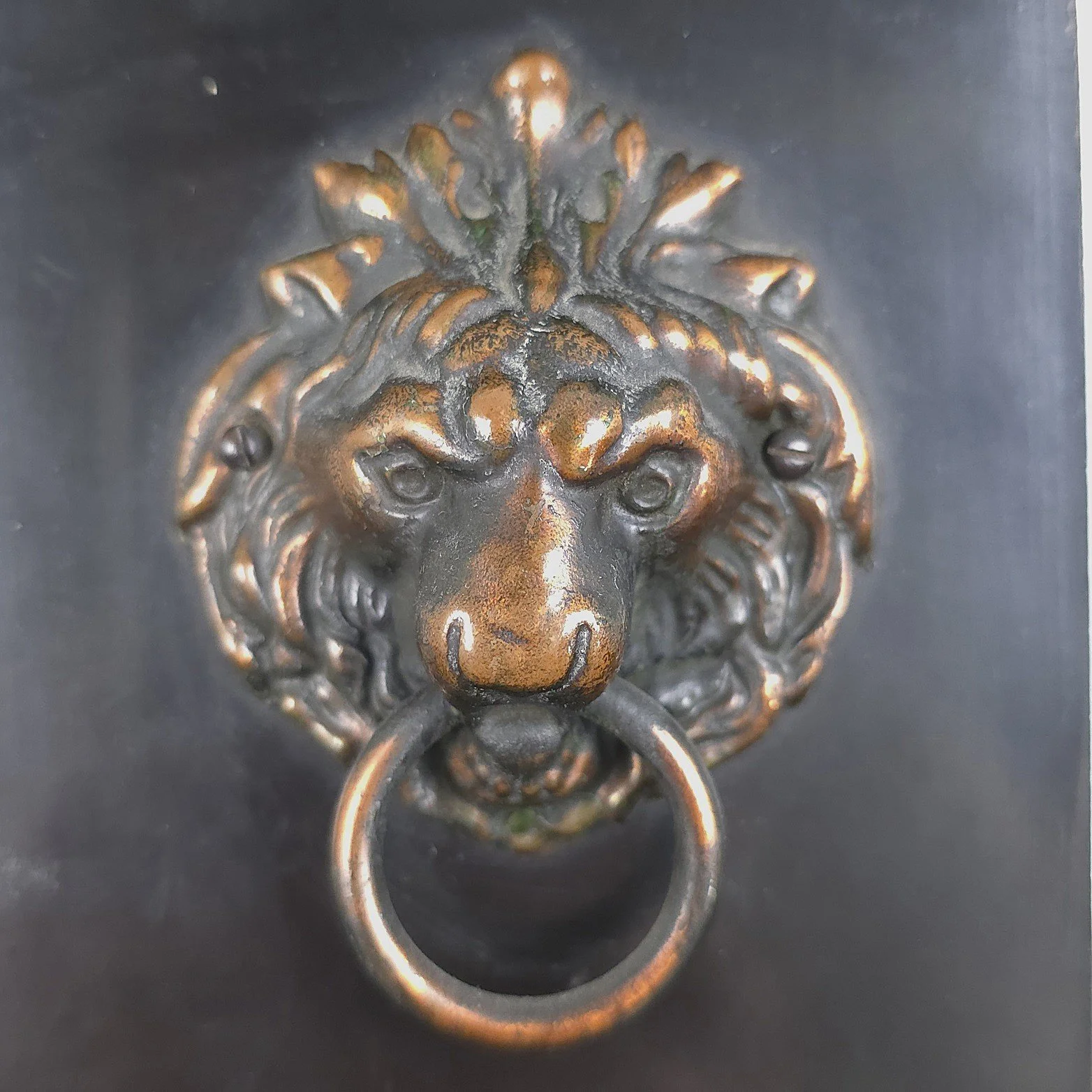
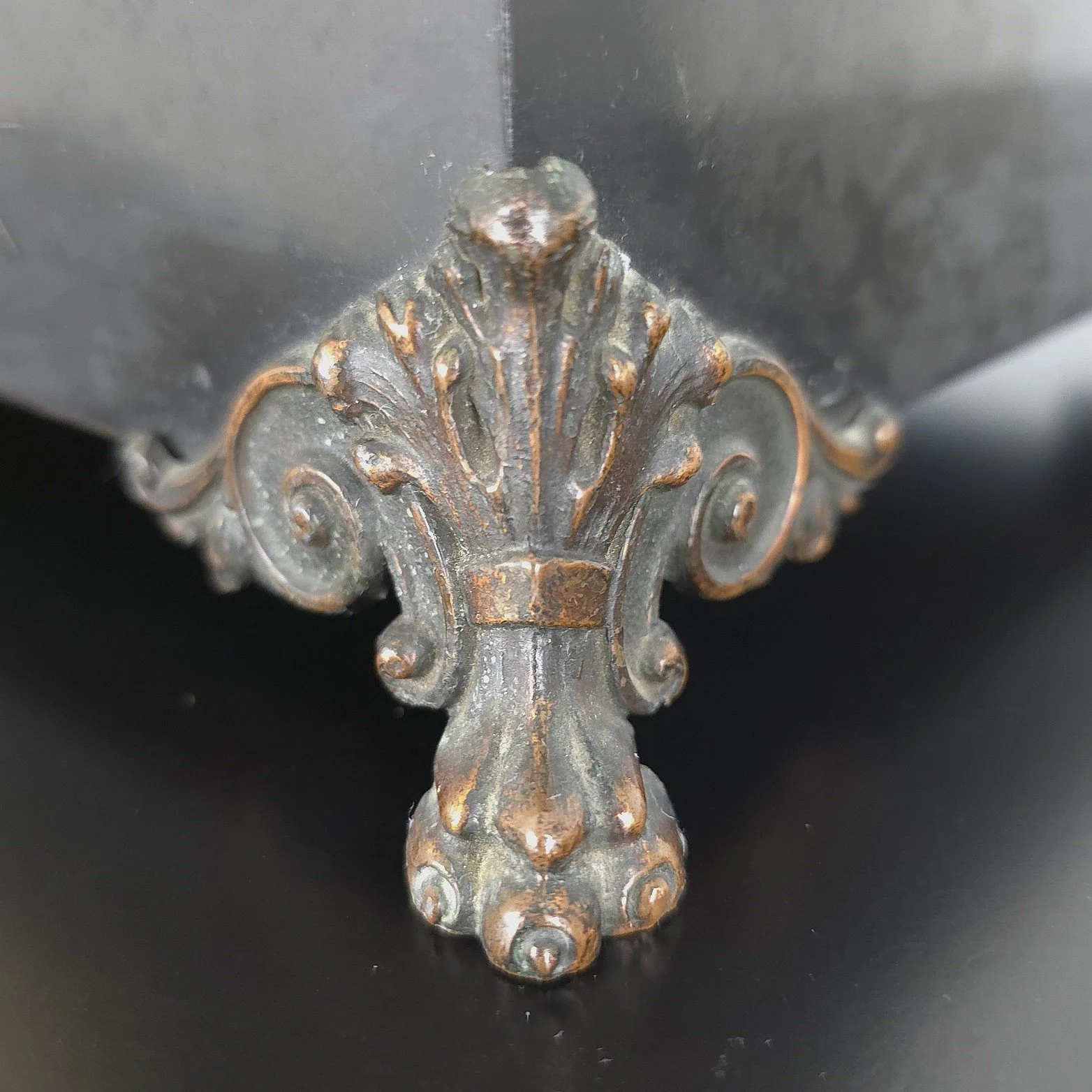
This Seth Thomas clock has a wooden interior frame with a black bakelite casing decorated in etched scrollwork and finished in accents of dark green celluloid veneer known as adamantine, simulating marble in a faux finish. The clock is in neoclassical styling with two front facing decorative columns, having detailed faces in relief. The sides have decorative mounted lion heads holding a circular ring striker in their mouth. Lion claw feet at the base. The dial in cardstock with roman numerals, embellished with a gilt brass center and frame of open work acanthus leaves, pinecones, and rococo inspired flourishes protected by a glass lense swinging door.
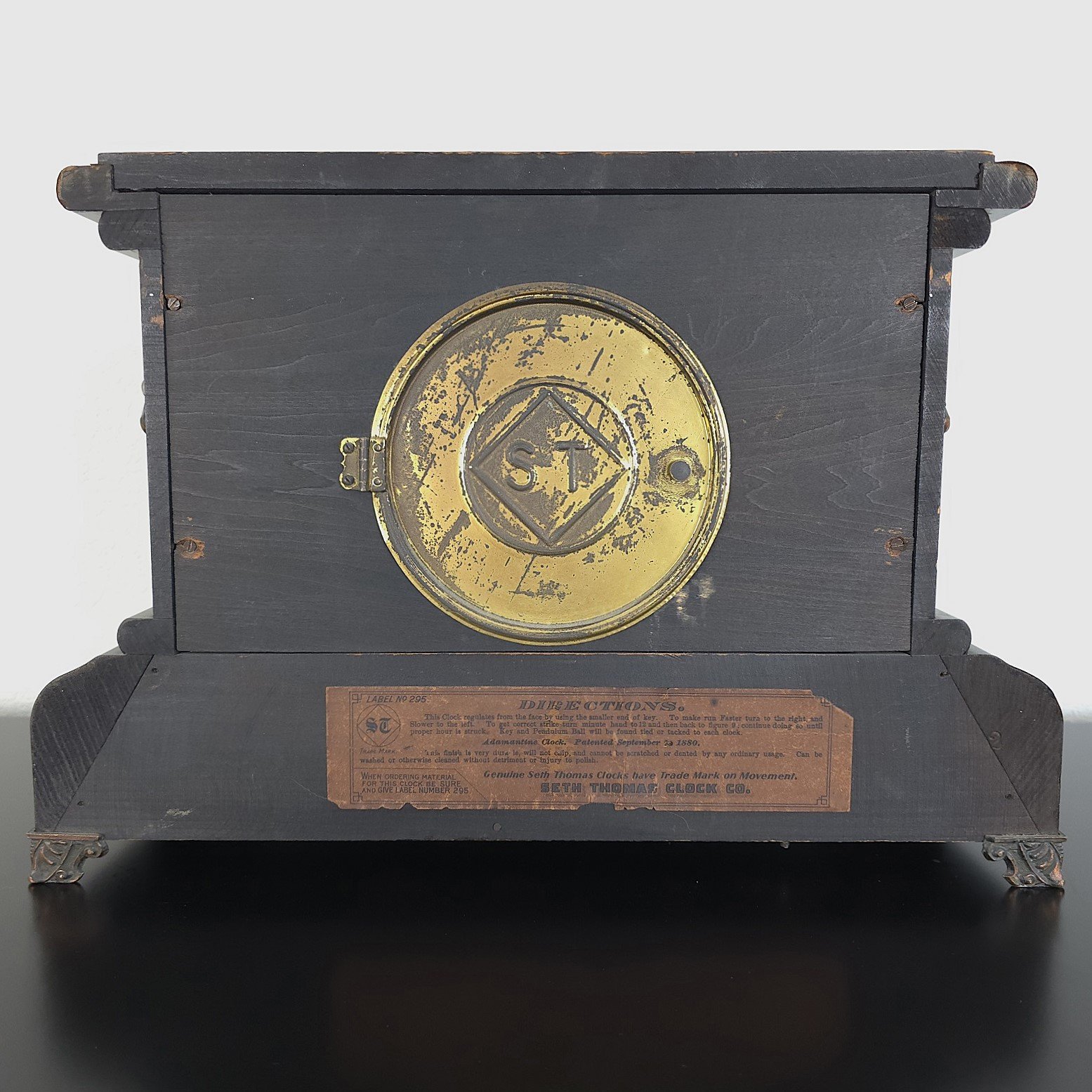
The internal workings are composed of brass parts with 89 type movement, allowing for a spring wind-up time of 8 days using a time and strike platform. Brass swinging door with "ST" on the back. Below, the original 296 label is still present, showing the design patented on September 7, 1880. On the bottom painted is "No. (?) 22, possibly for the date of 1922, but this is not in the correct stamping format and may refer to a batch number or something else. Closely related clocks of this type are dated from around 1900 and 1910. The iron two ended wind-up key is still present. An antique and popular American clock from the Seth Thomas Company of the early 1900s progressive era in American history.
[1] https://www.clockguy.com/SiteRelated/SiteReferencePages/SethThomasHistory.html