Prestige Blade
Prestige Blade
Fur or surrounding neighbors
Khartoum, Mahdist Sudan (Khartoum, Sudan)
1885 - 1898
Iron, Silver
Blade: 20" (50.8cm)
Hilt & Blade: 25 1/8" (63.8cm)
Hilt, Blade, Sheath: -cm
Collection Date: 2021
Collection Number: 173
Ex. Rick Stroud (RSWORD): Raleigh, North Carolina, USA (2021)
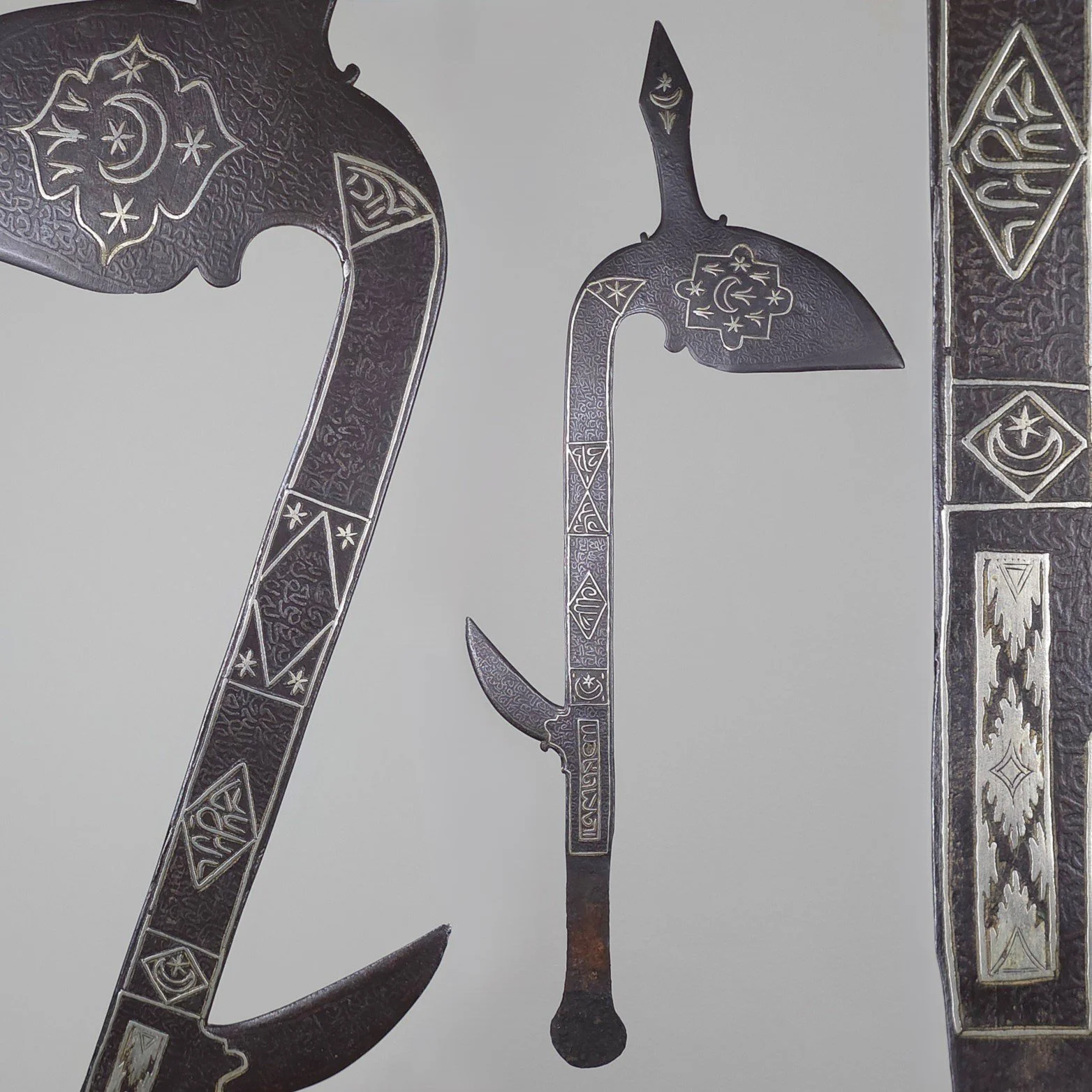
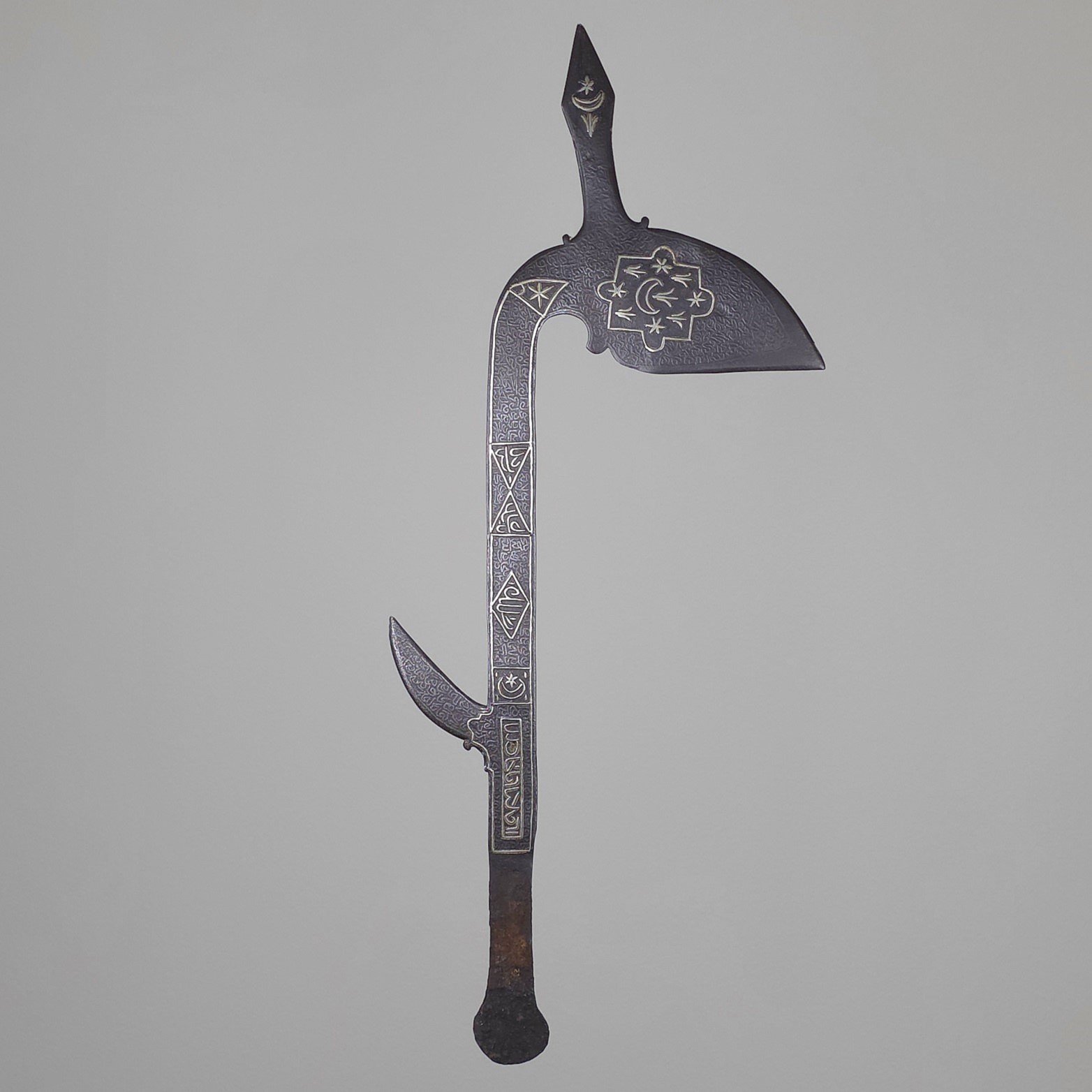
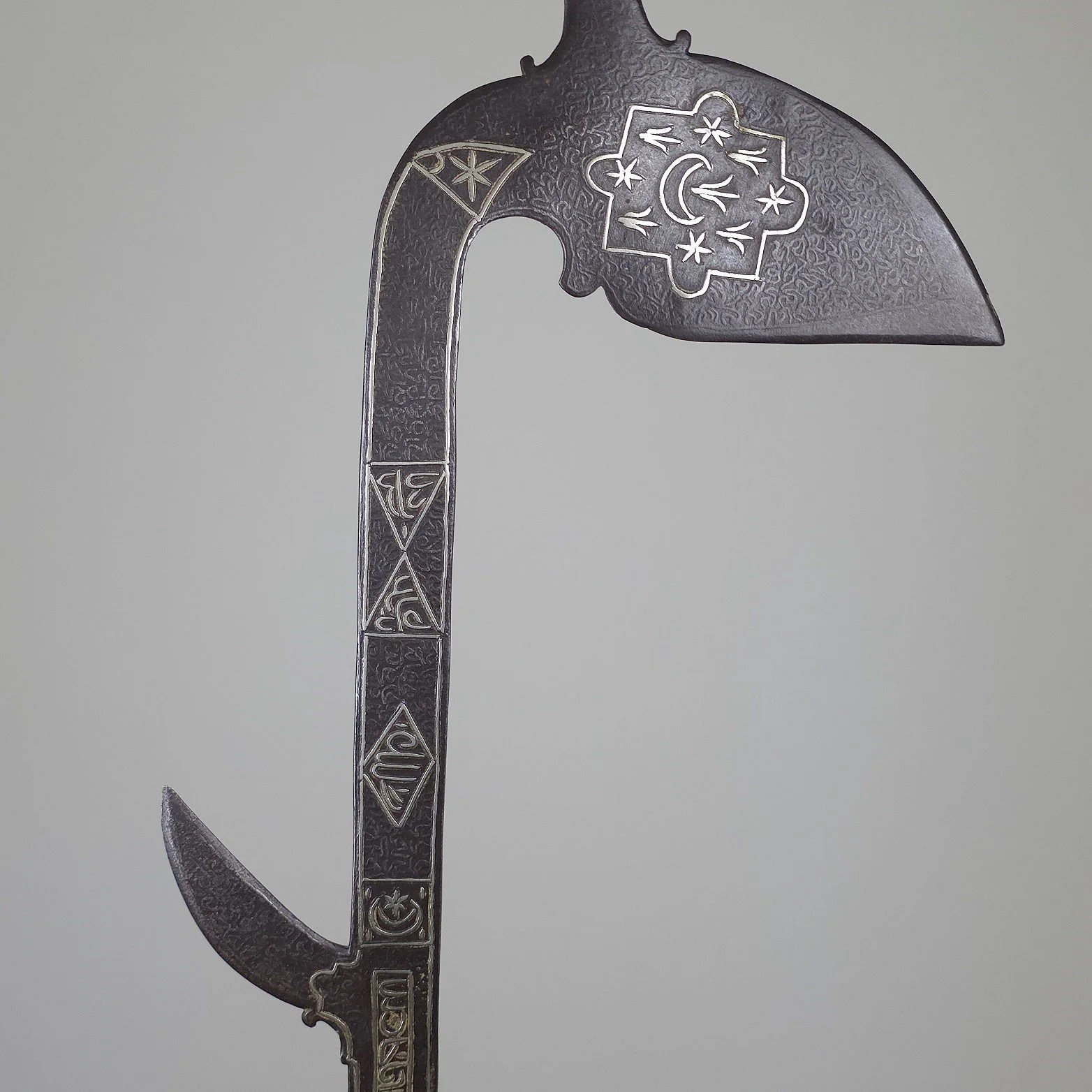
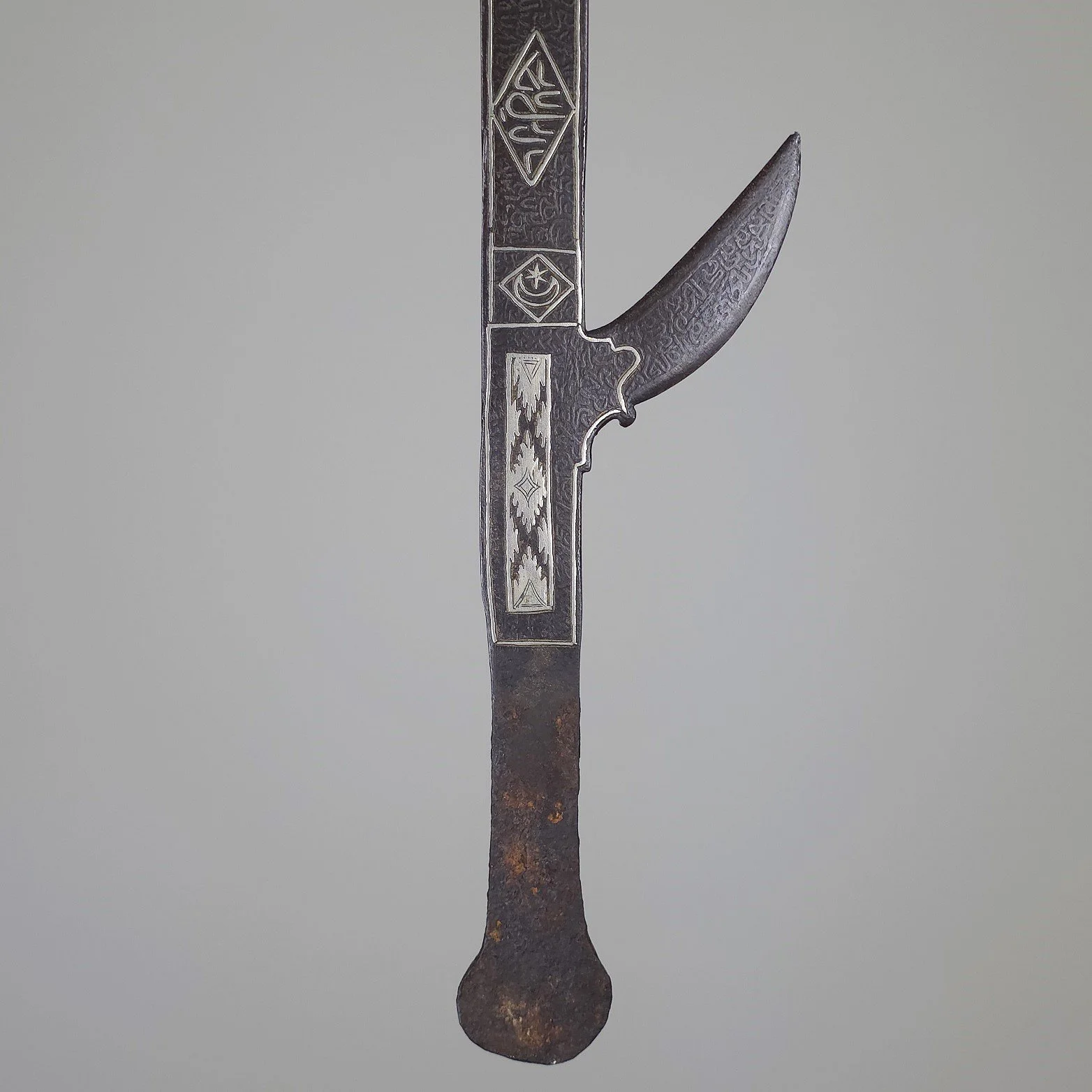
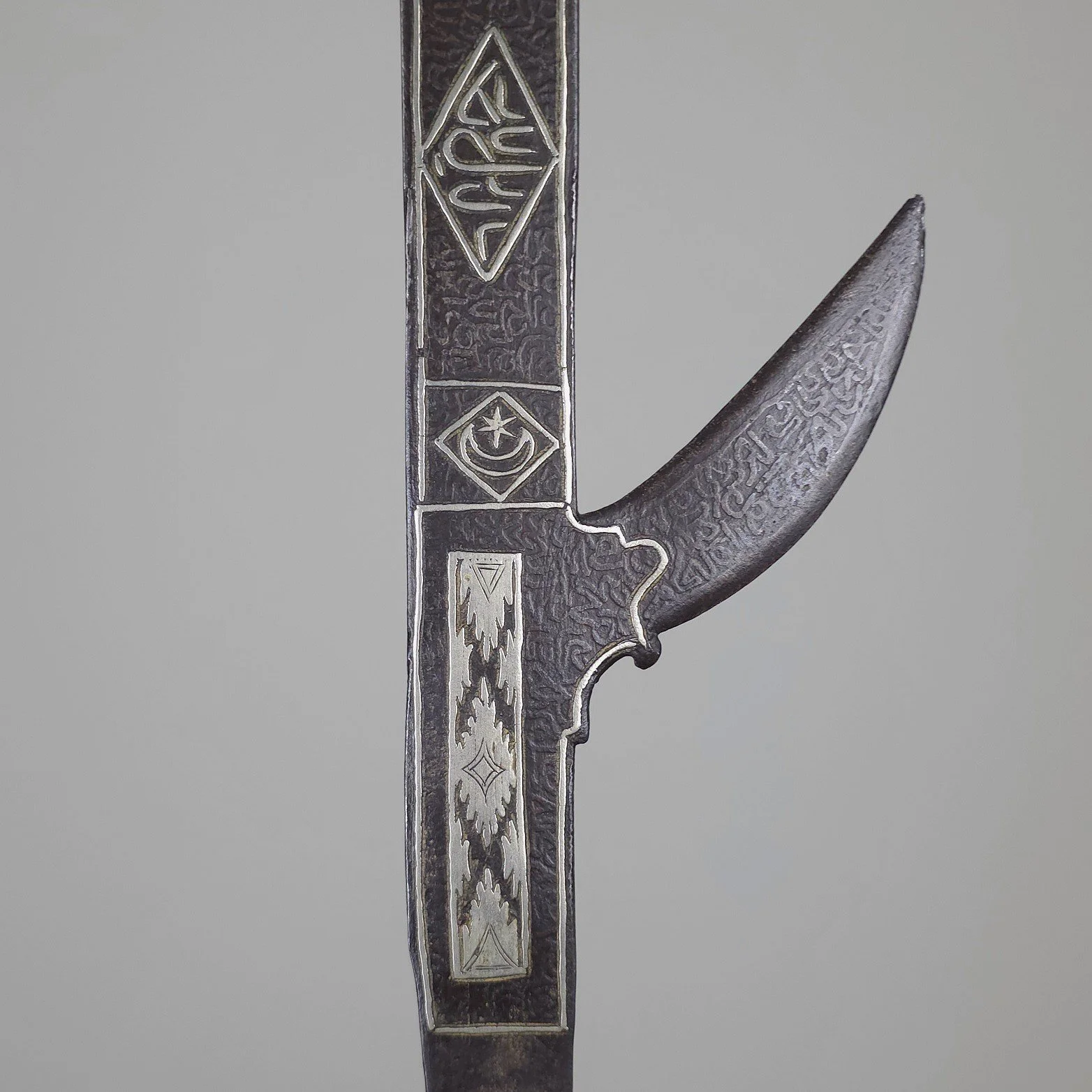
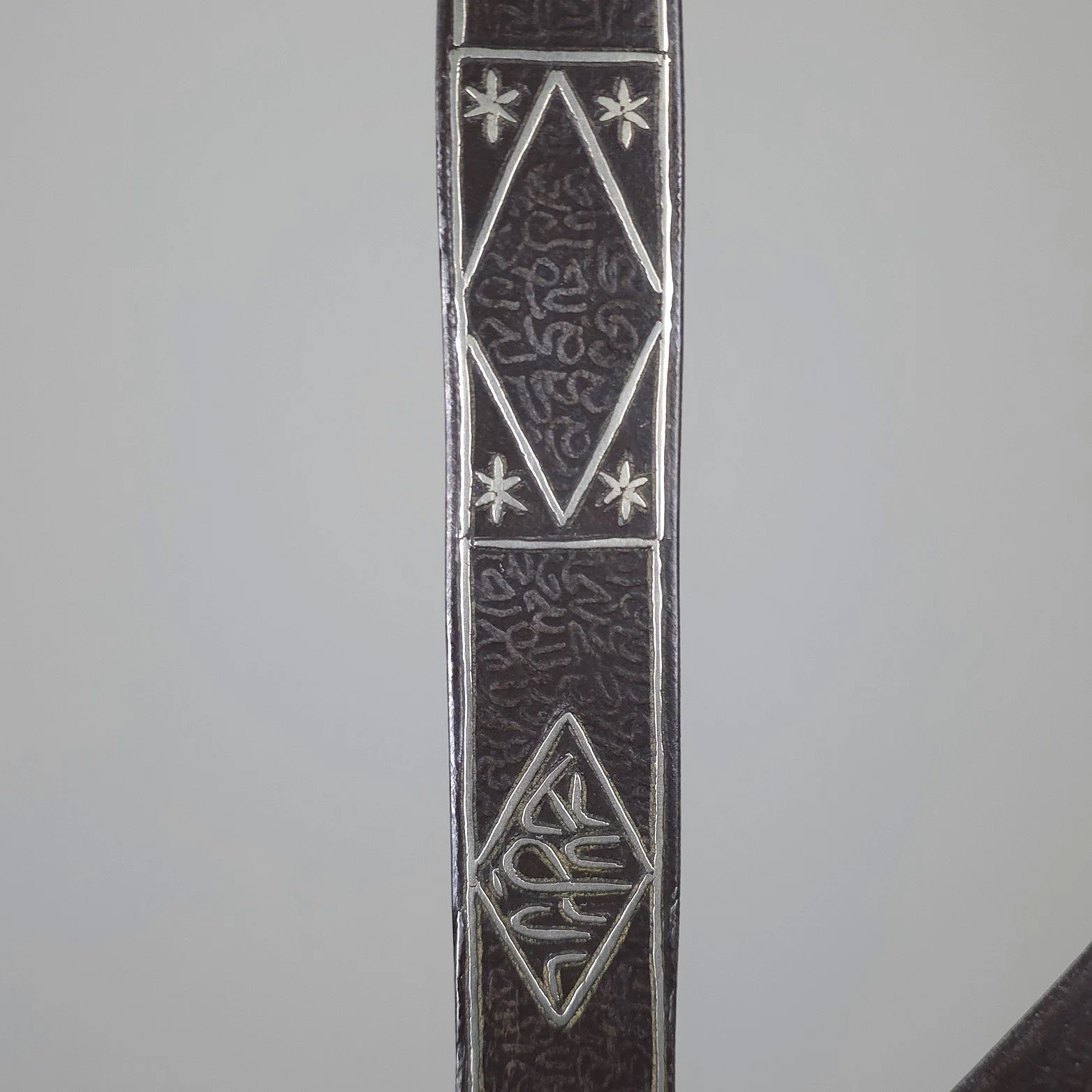
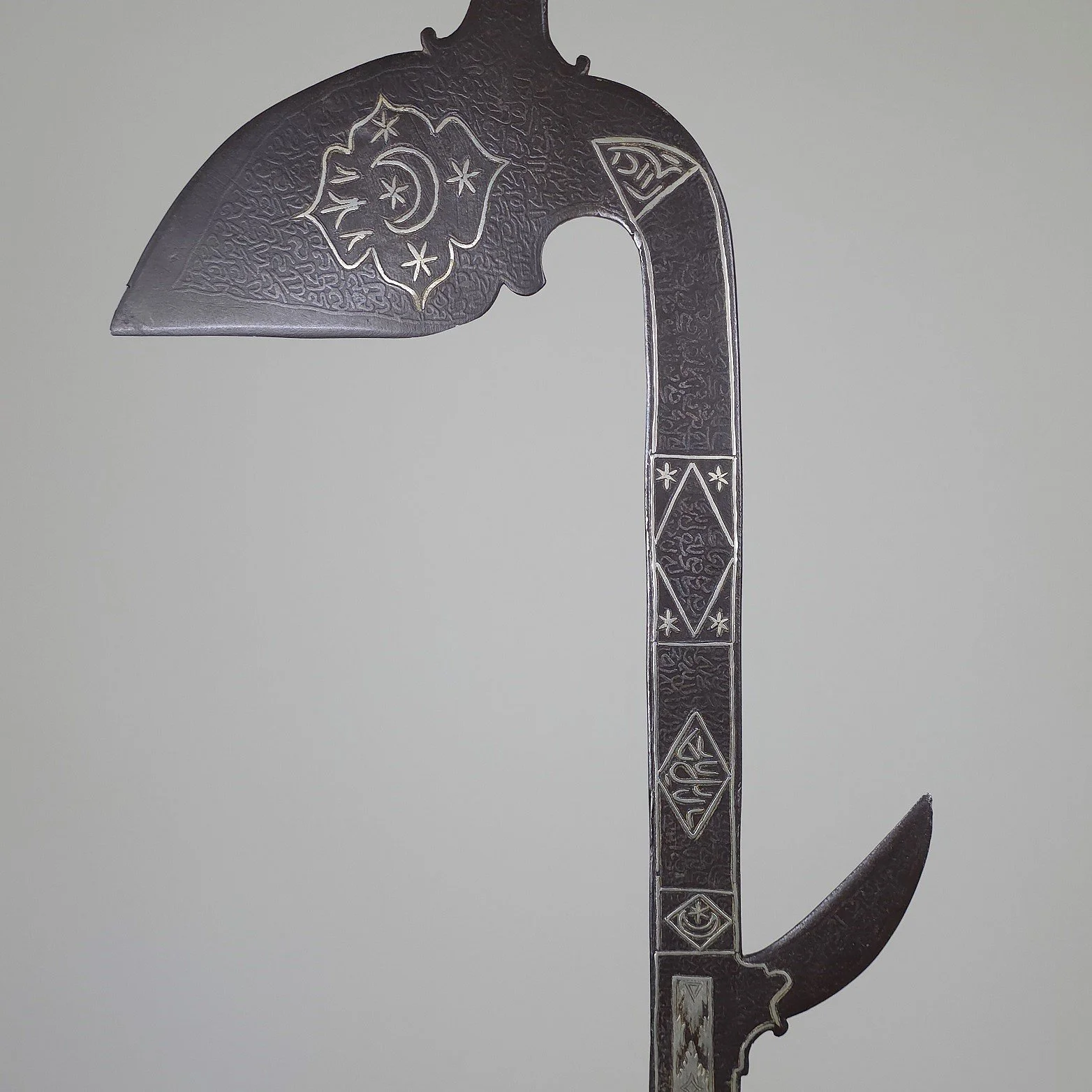
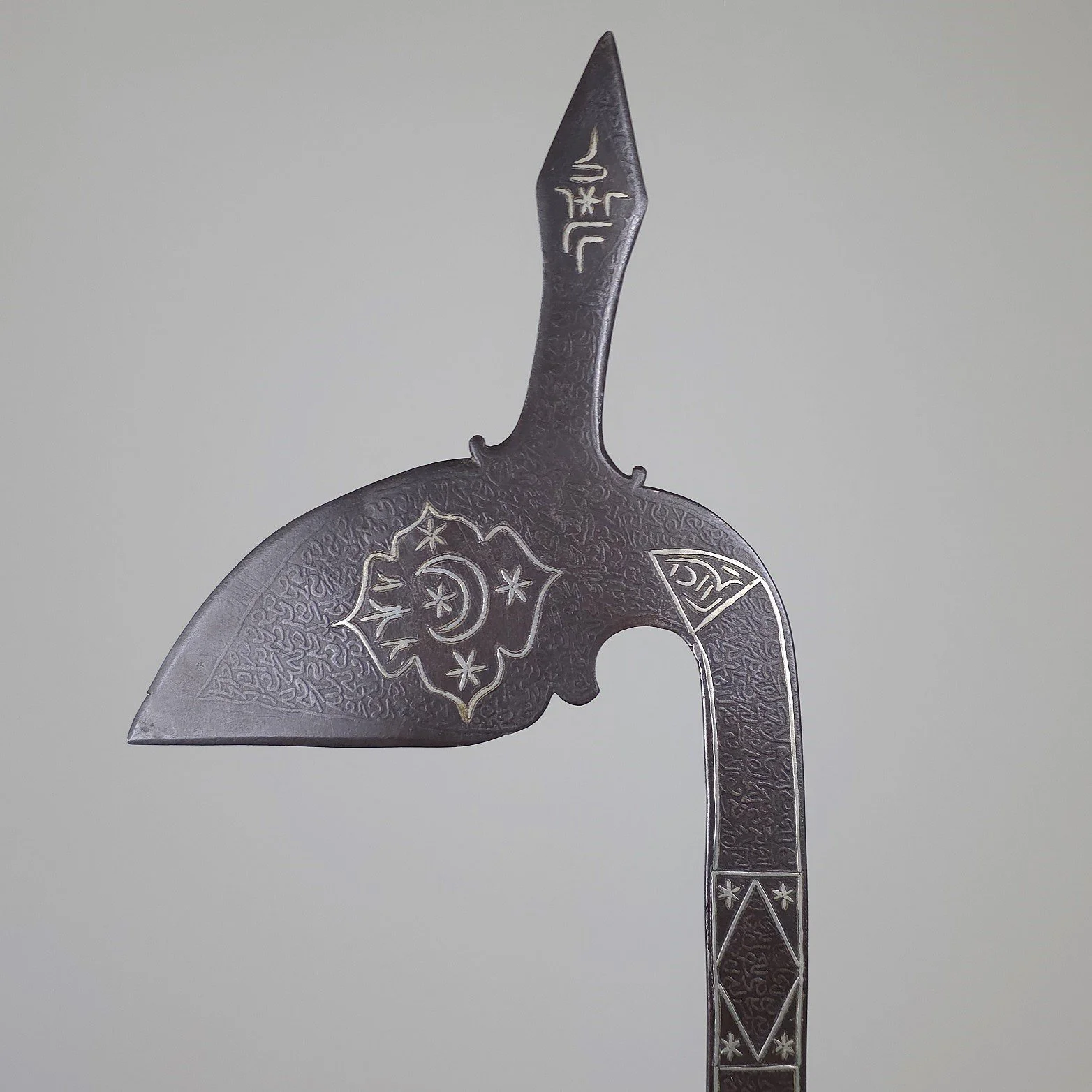
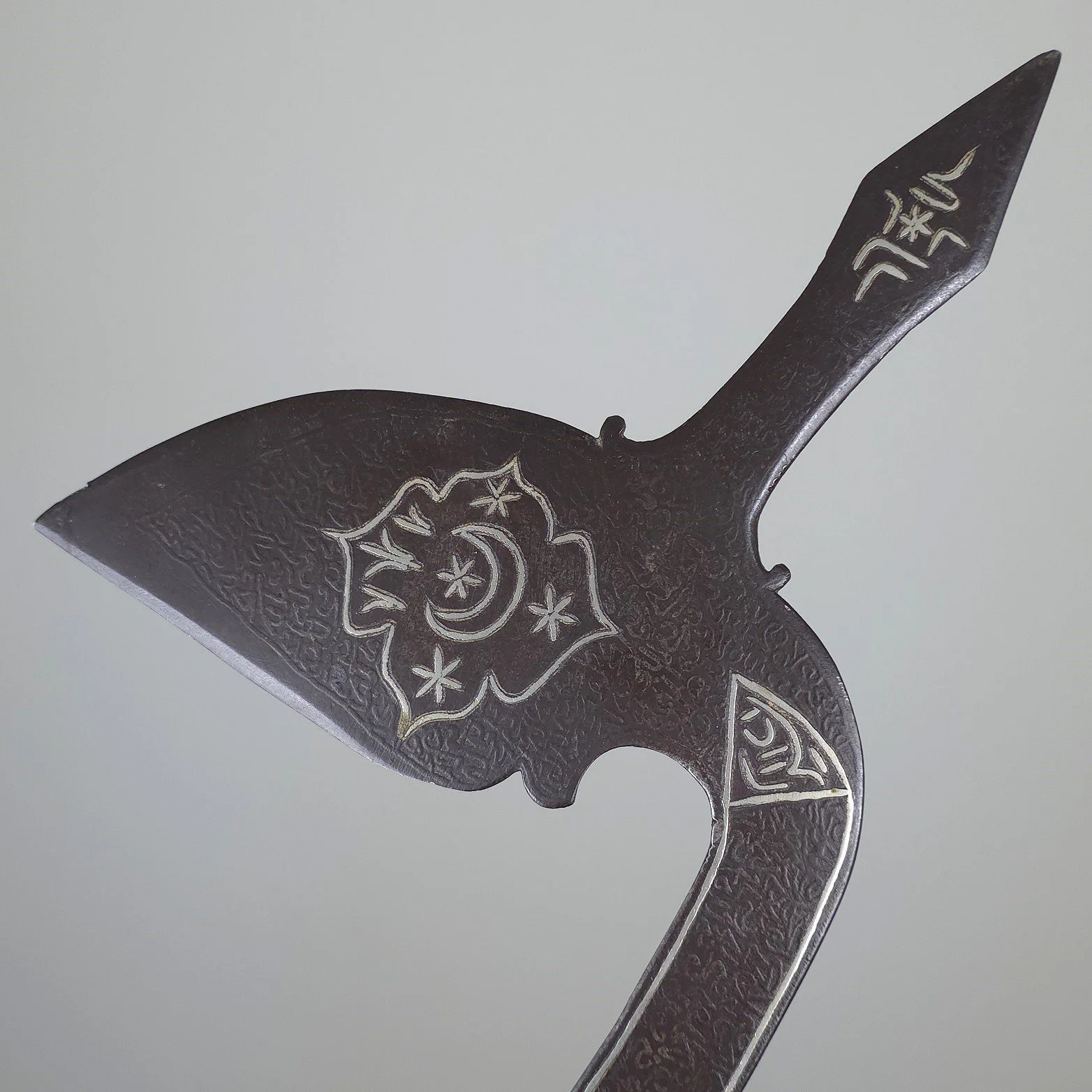
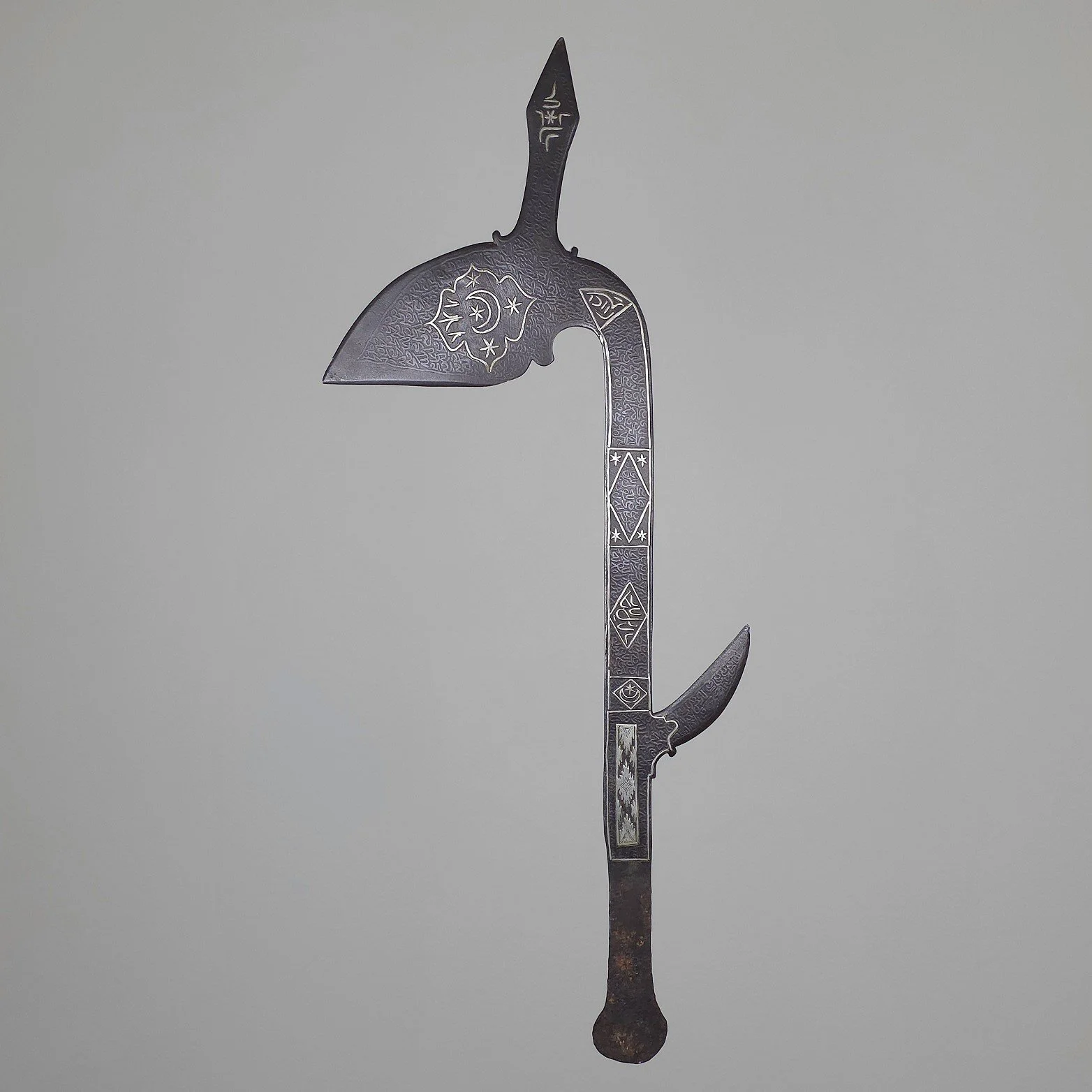
A very fine and rare prestige blade, also known as a replica throwing knife, from the Mahdist period of Sudan. Examples such as this, along with axes, tridents, and standards, were produced in the workshops of Khartoum after the British fall of Omdurman from 1885 until the demise of the Mahdist state in 1898. Their form and decoration are consistent in manner with thuluth etchings influenced by Qajar period arms in regards to the Sufi order. They were not used for battle but rather used as an emblem or insignia of rank and leadership and as talismans to rouse ansars before battle in Sufi devotion. Associated with alams or standards decorated in the same manner, they were badges of command and were also used to symbolize units within the Mahdist army.
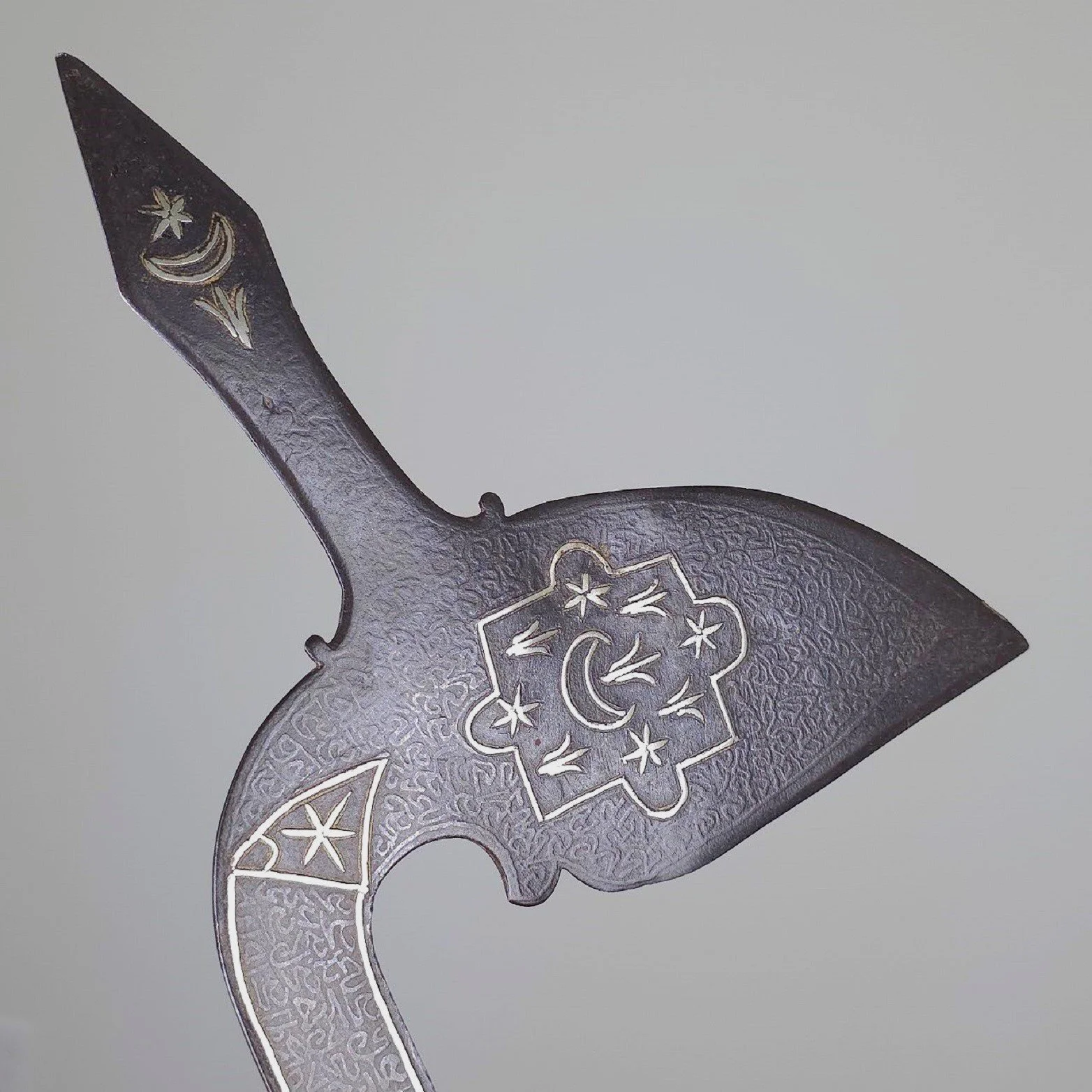
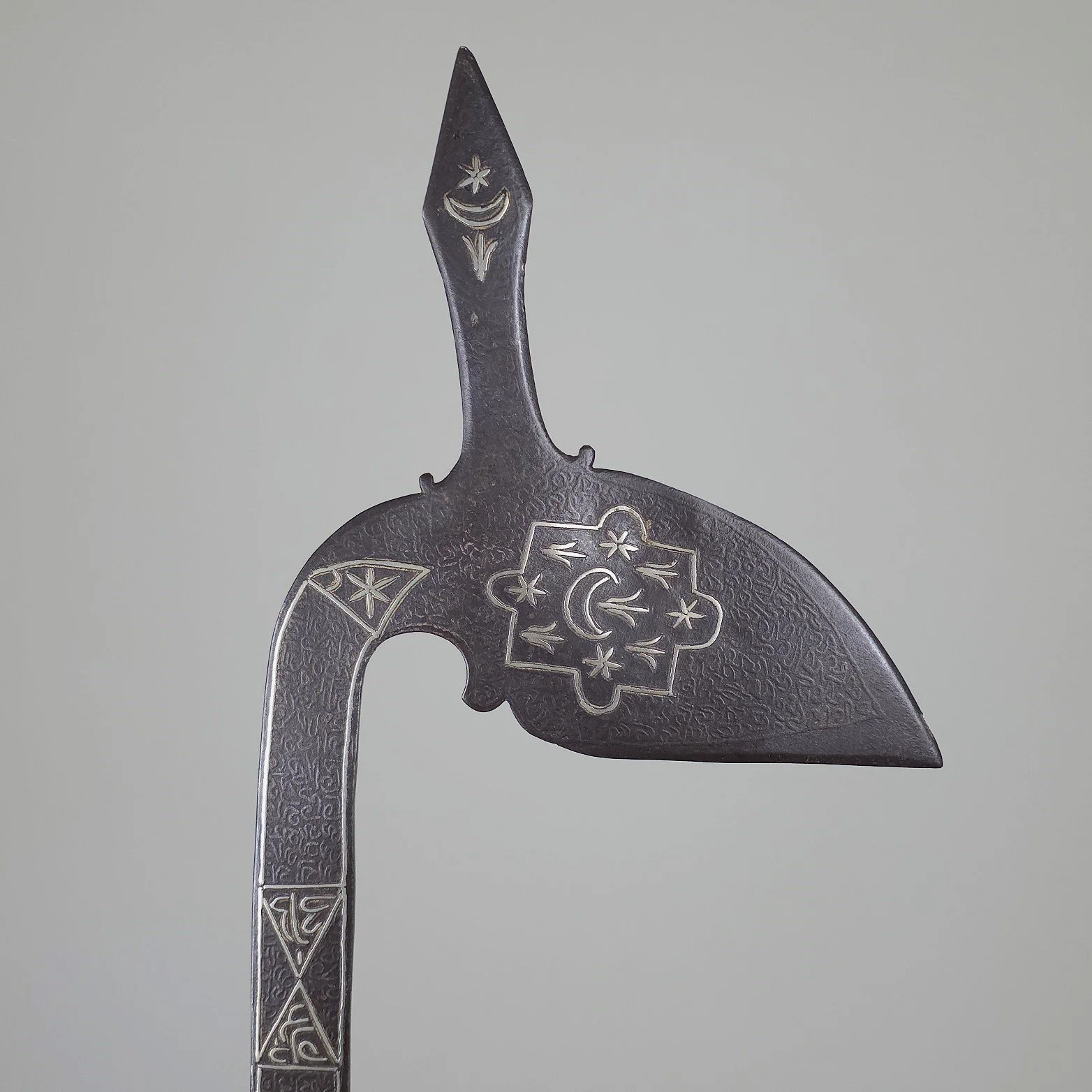
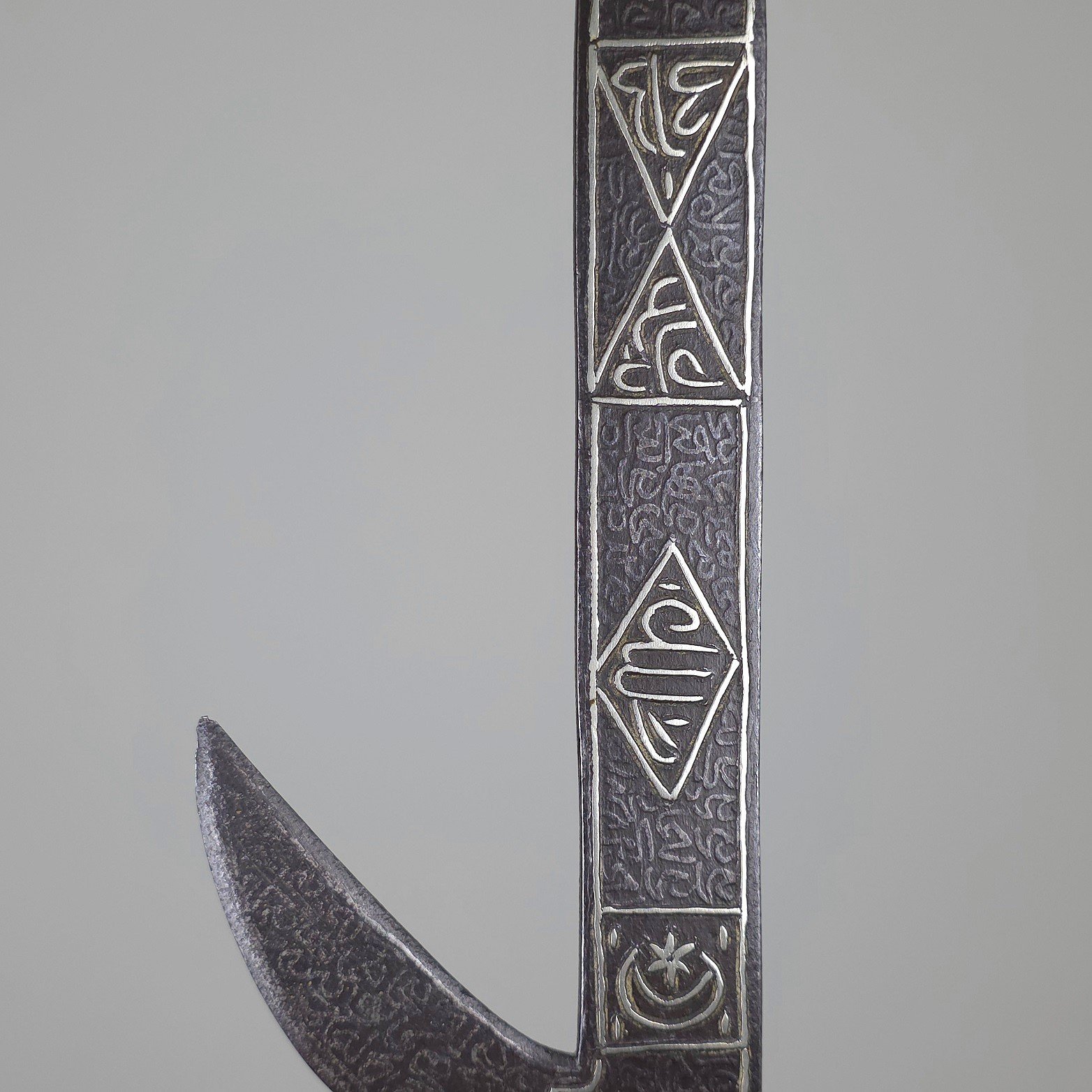
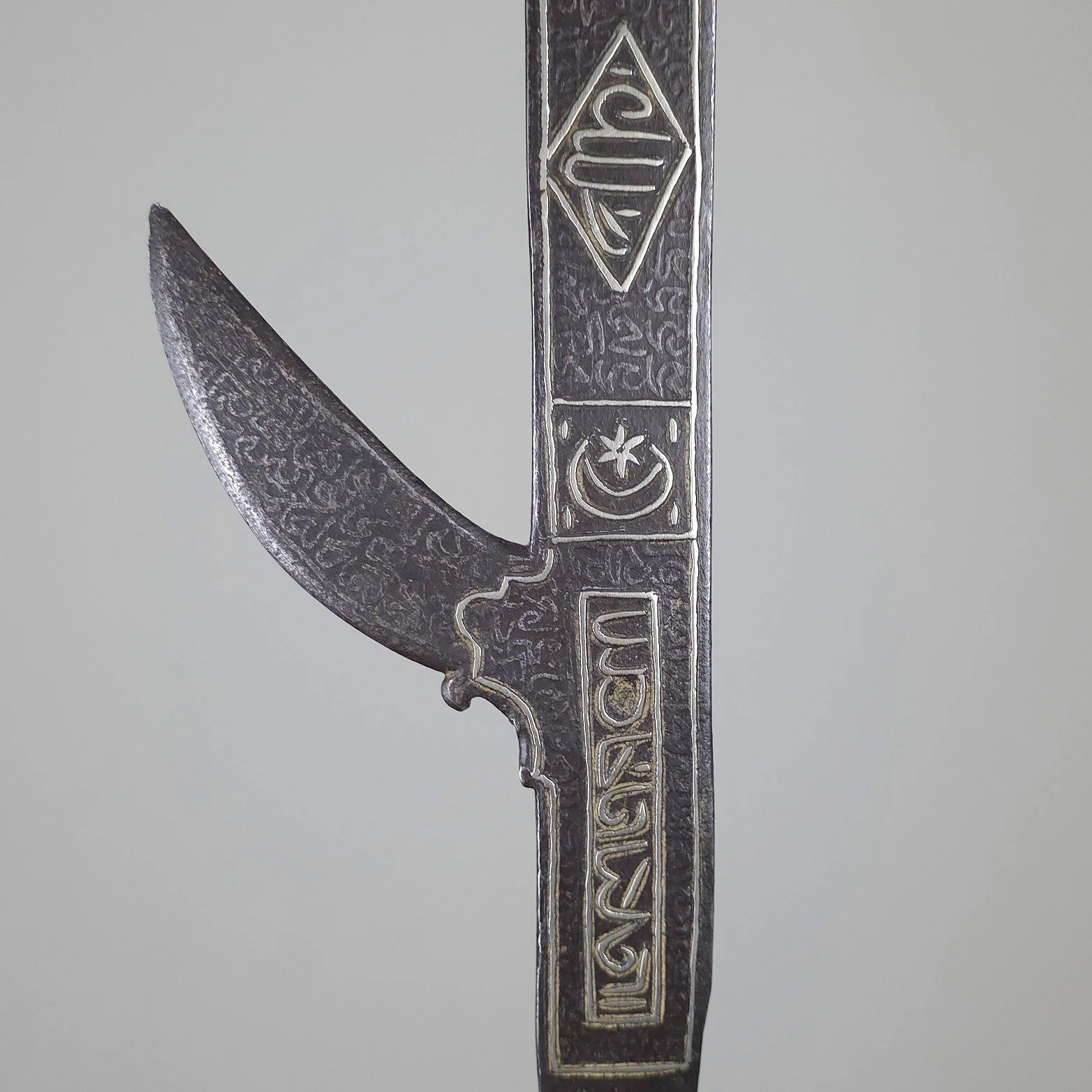
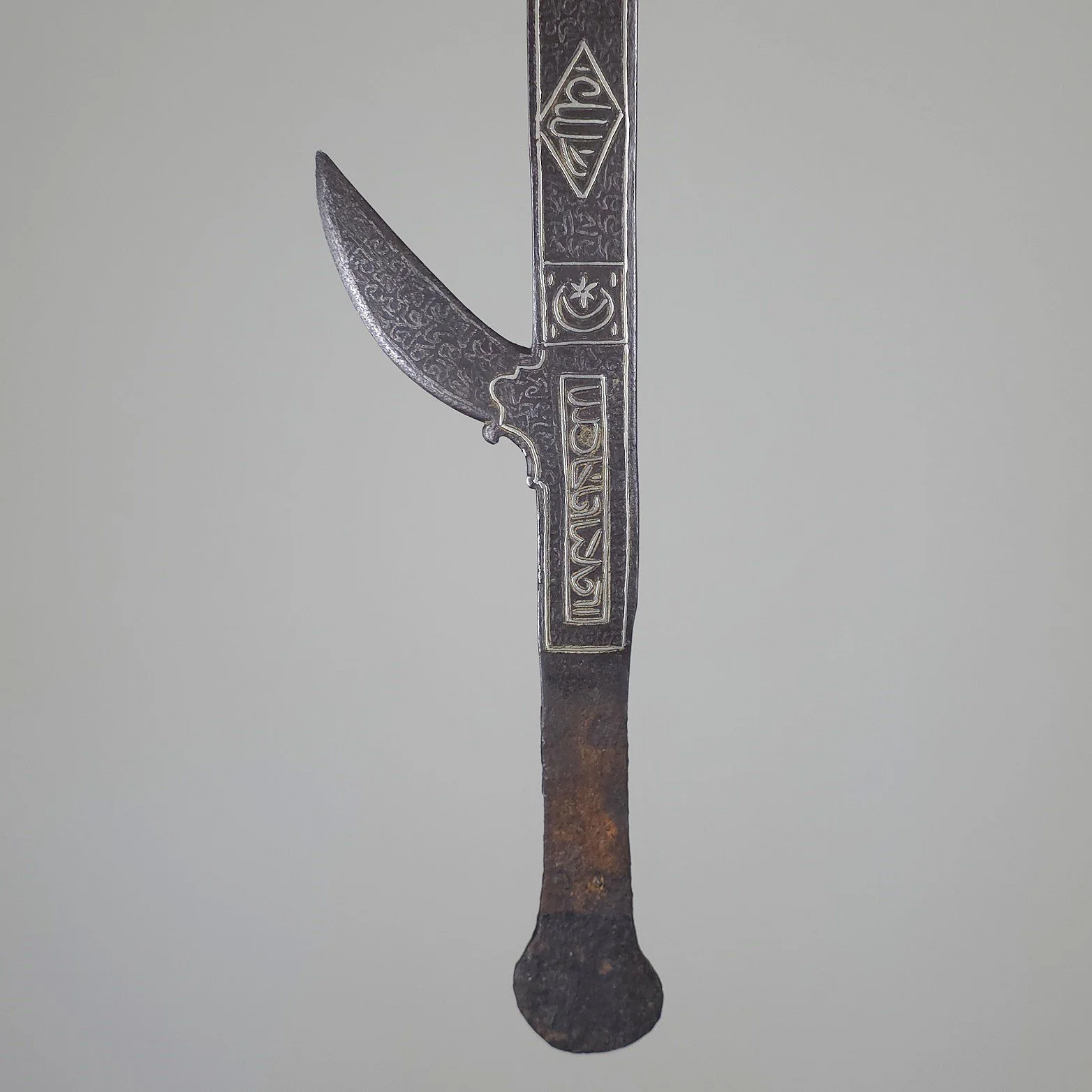
This prestige knife is made of heavy iron with unsharpened edges and protruding blades. The iron is quite thick and likely made from old railway tracks from northern Sudan and Wadi Halfa, where quality steel could be recycled within Khartoum by local bladesmiths. The heavy iron knife having three distinct protrusive blades. One protruding from the lower base at about a 45- degree angle upward, the main blade at a 90- degree angle, while the spike at the top extremity angled upward. The iron is extensively covered on both sides in acid etched repeated calligraphic verses of thuluth (psudo- Arabic) script. Both sides are also inlaid in silver bordered panels of Islamic symbolism, stylized cartouches, and celestial motifs (crescents moons, stars, tridents, and geometric patterns. The word 'Allah' can be seen in one diamond lozenge in a stylized strip, along with Mahdist prayer formulas, while the main axe head features a polylobed cartouche with crescents, stars, and tridents: heavily influenced by Sufi weaponry of Persia. Each side while mirroring the other is different in design. Missing the organic handle grip which over time dried out, rotted, or stripped away, now exposing the rough and unpolished section of the handle. The material would have been either a reptile skin, leather, or vegetal fiber. A rare mahdist prestige blade with bold acid etchings and complete with silver inlays.
[1] http://www.vikingsword.com/vb/showthread.php?t=28561&highlight=mahdist+knife
[3] https://prm.ox.ac.uk/collections-online#/item/prm-object-78671
[4] https://www.britishmuseum.org/collection/object/E_Af1954-23-973_1
[5] https://www.britishmuseum.org/collection/object/E_Af1954-23-963
[6] https://www.britishmuseum.org/collection/object/E_Af1979-01-123
[7] https://www.britishmuseum.org/collection/object/E_Af1954-23-976
[8] https://www.britishmuseum.org/collection/object/E_Af1936-0508-8