Parang Ilang (Mandau)
Parang Ilang (Mandau)
Kayan - Kenyah - Bahau - Iban / Apo Kayan / Dayak
Bruneian Empire - Sultanate of Sulu - Sultanate of Bulungan - North Borneo, Dutch East Indies (Sarawak, Malaysia - North, East Kalimantan, Borneo, Indonesia)
Last half 19th century (ca. 1850 - 1880)
Steel, wood, brass, beads, vegetal fiber, horn
Blade: 54,3cm
Hilt & Blade: 68,3cm
Hilt, Blade, Sheath: 71,4cm
Collection Date: 2021
Collection Number: 171
Ex. Rick Stroud (RSWORD): Raleigh, North Carolina, USA (2021)
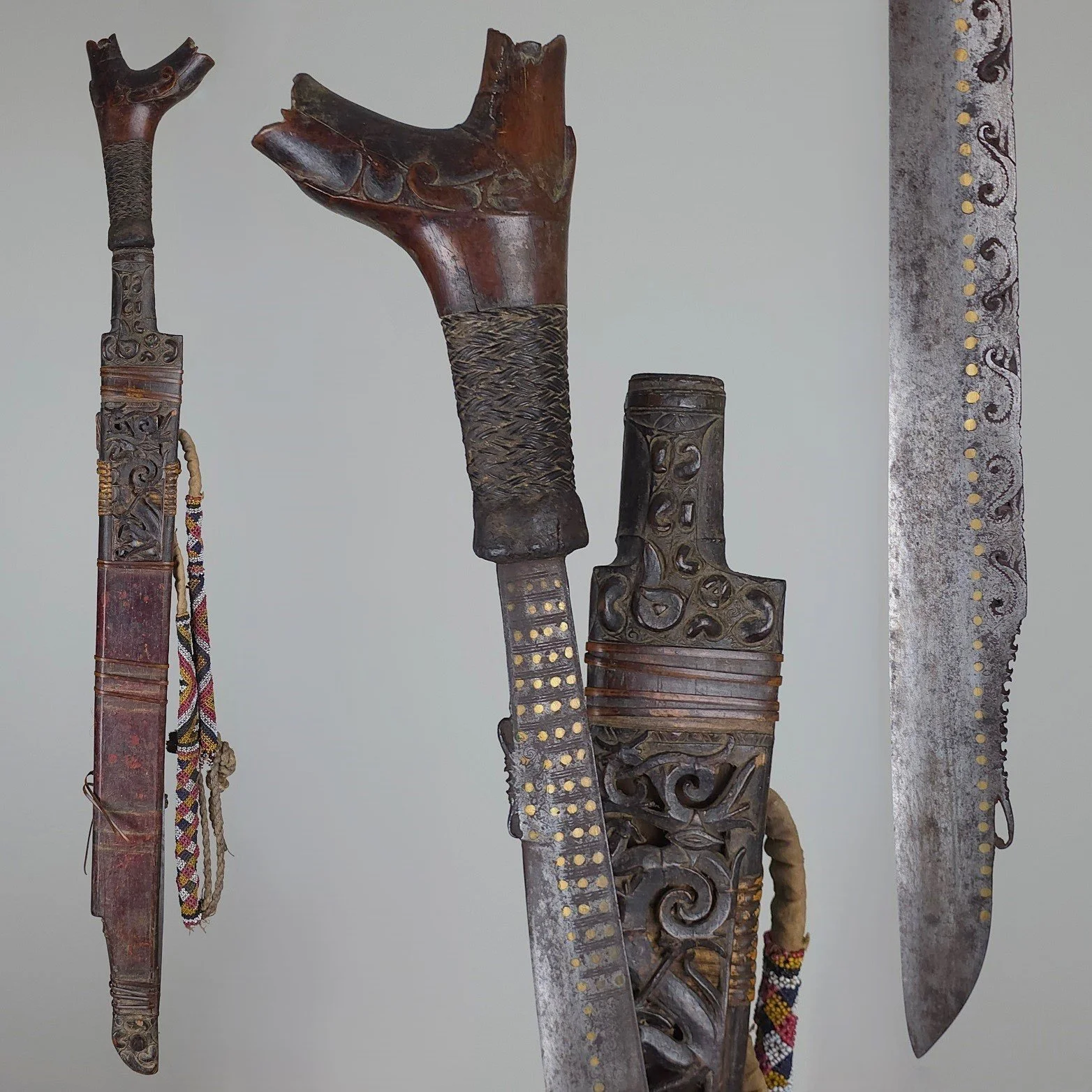
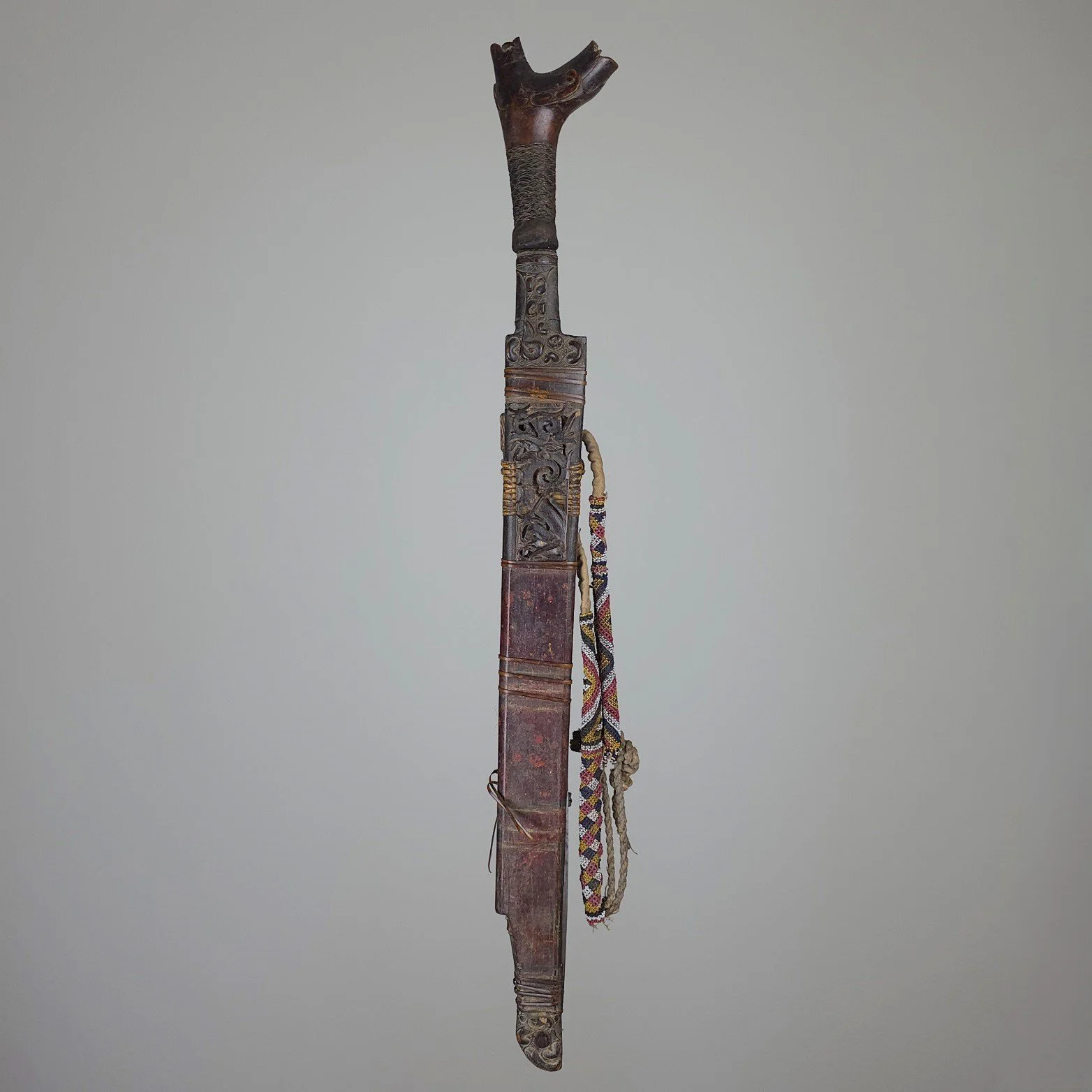
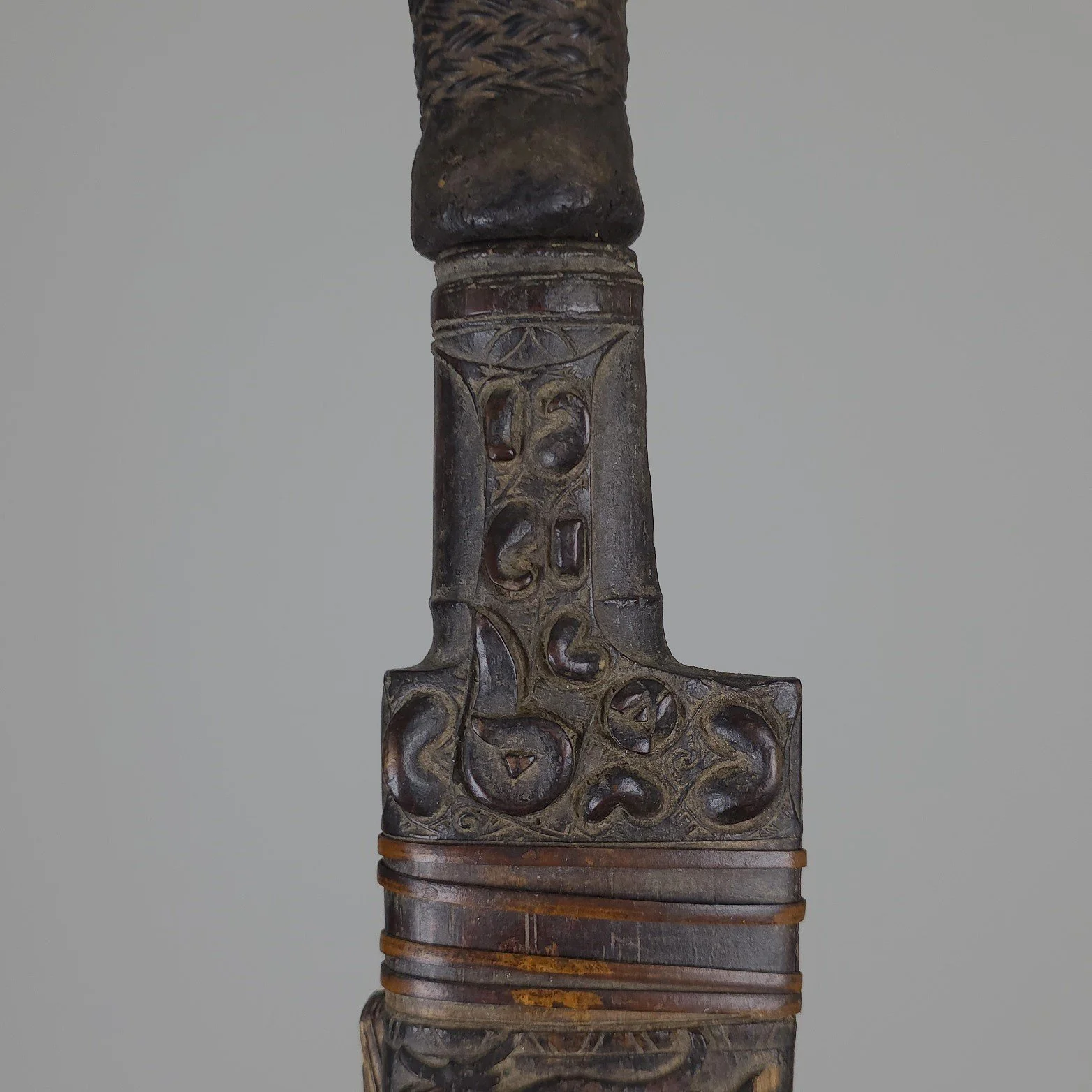
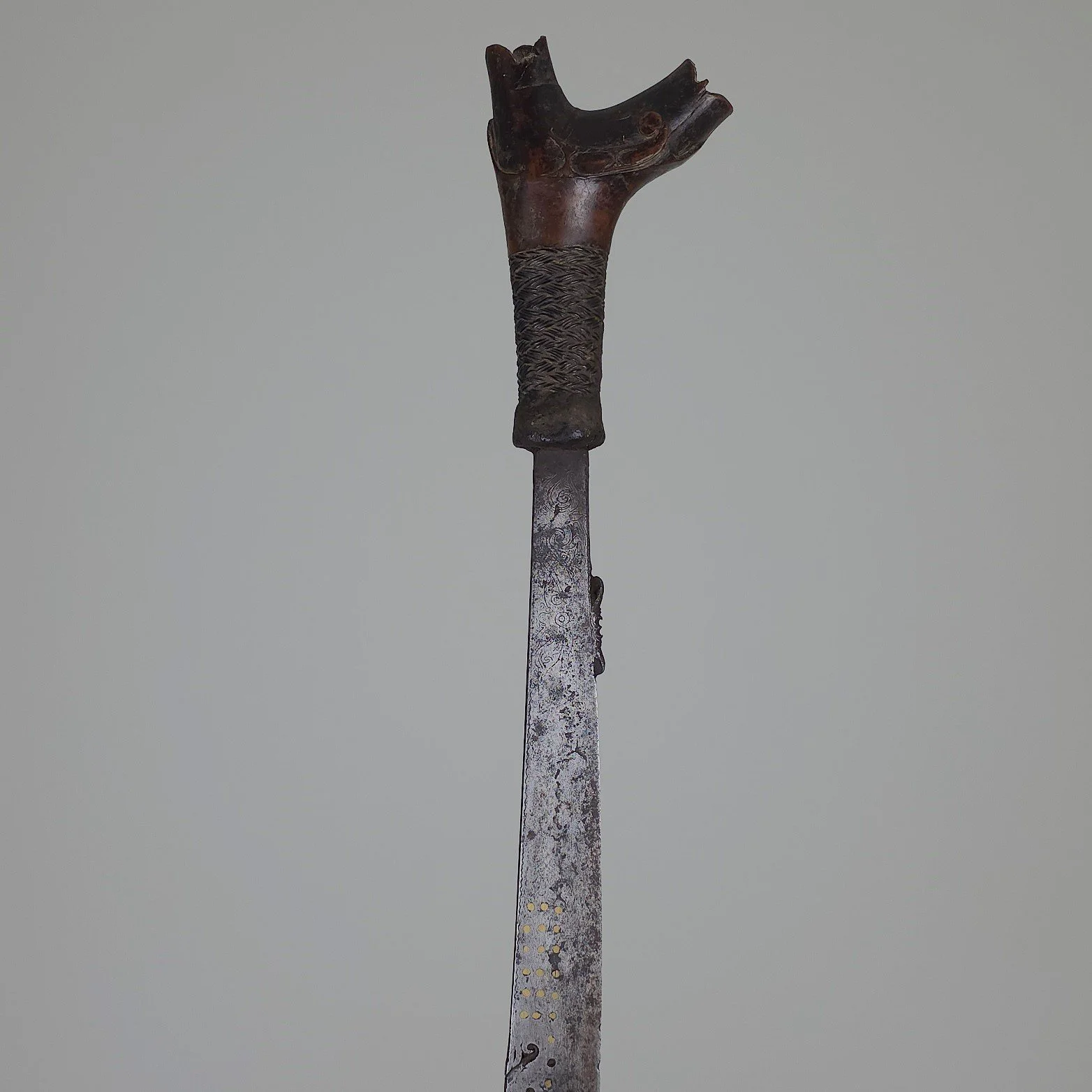
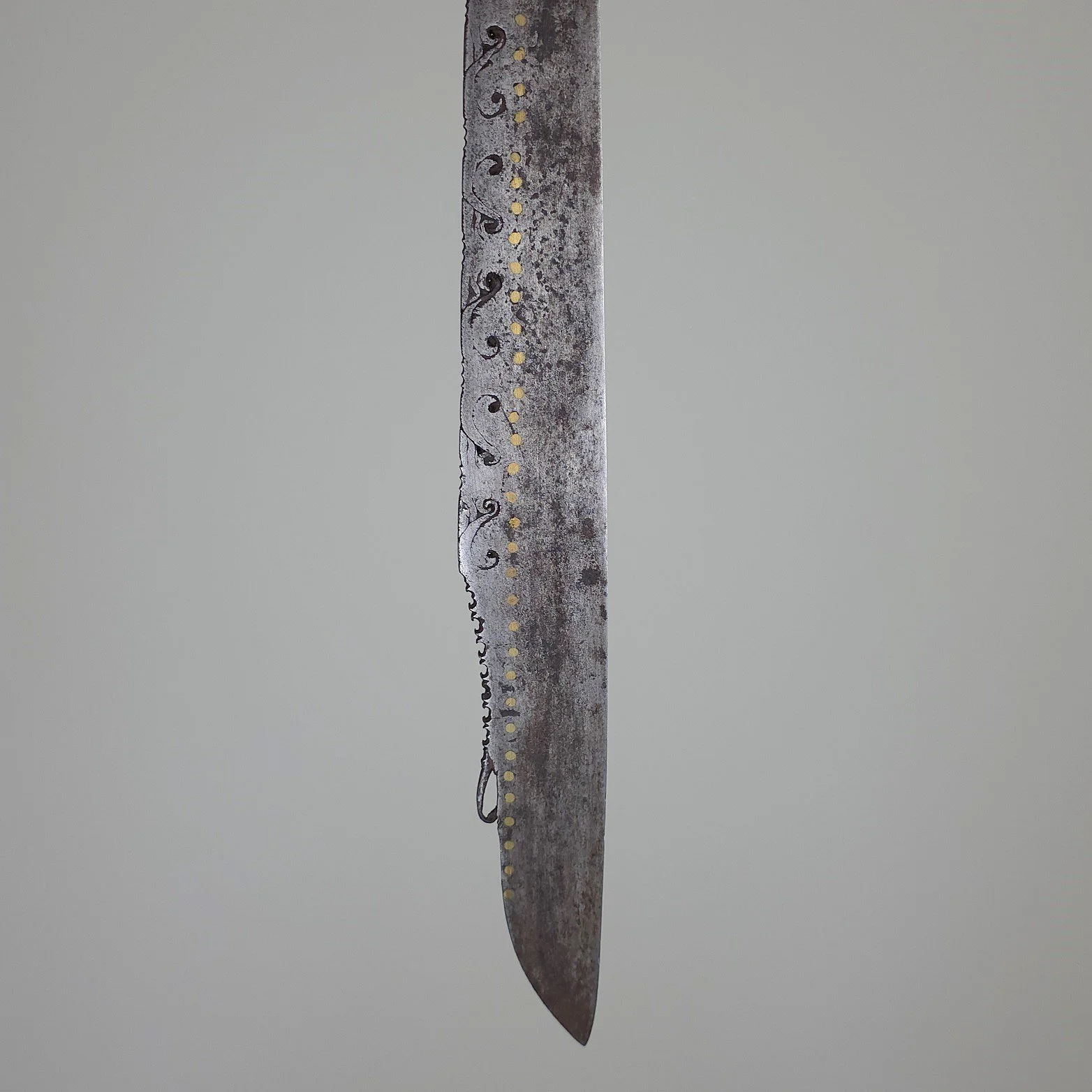
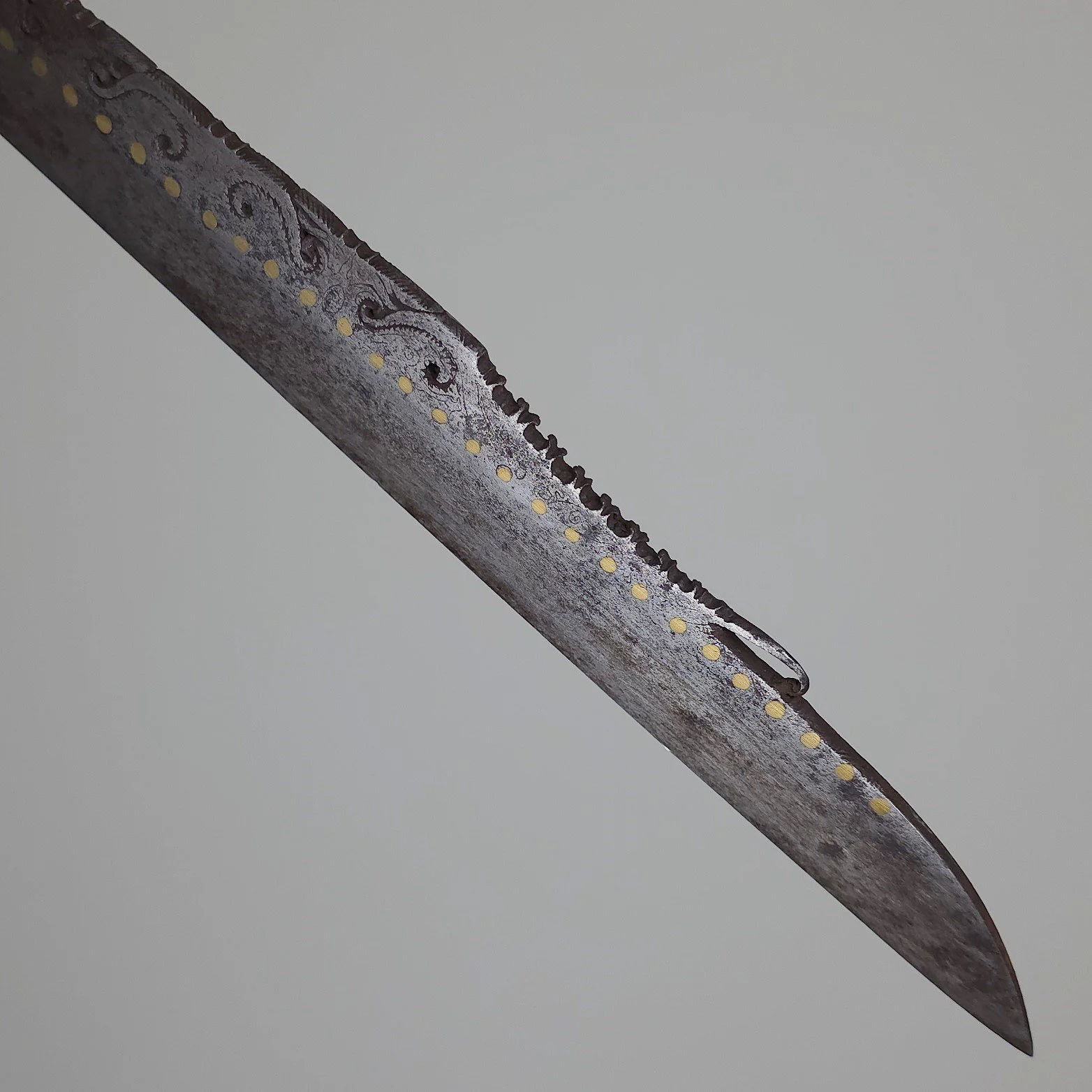
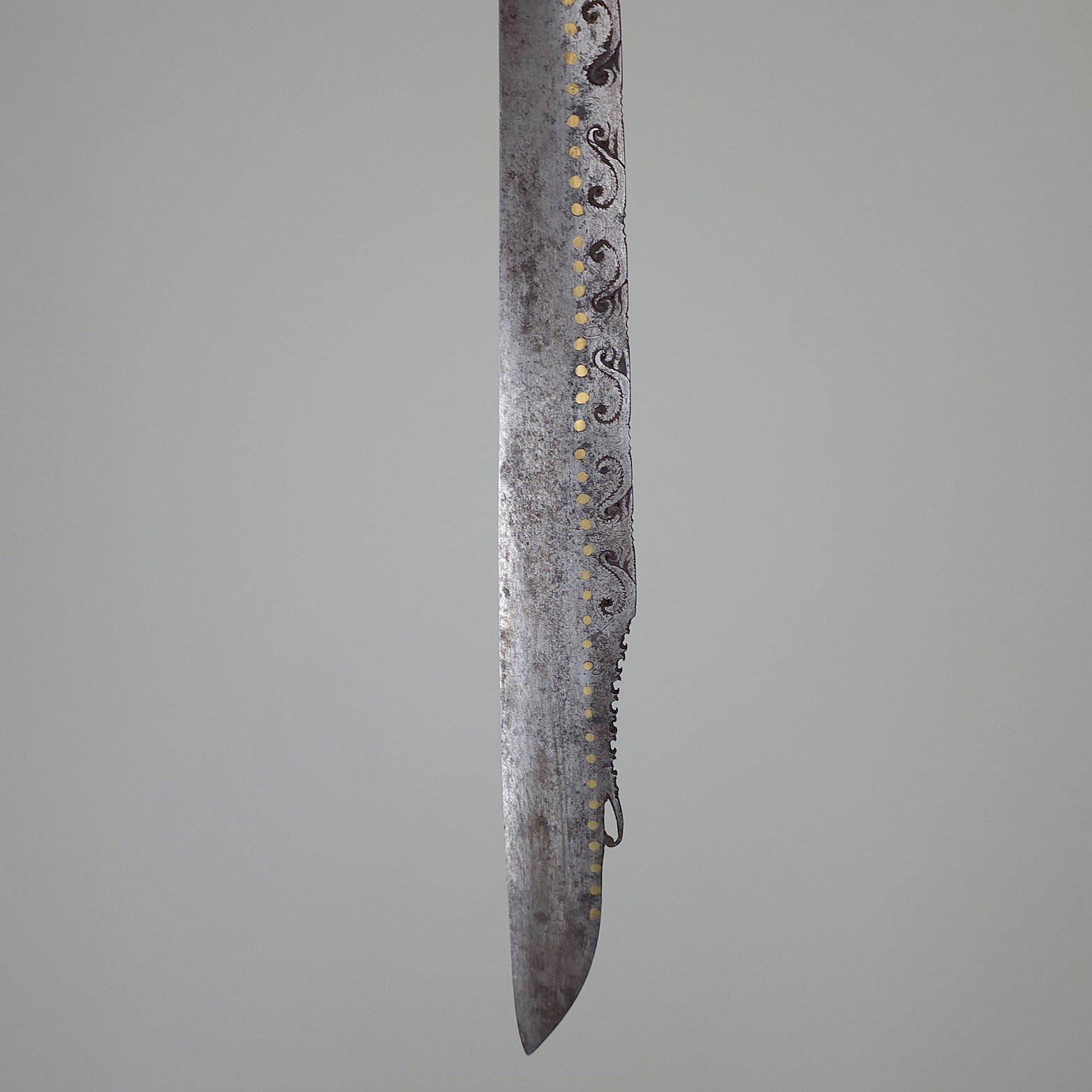
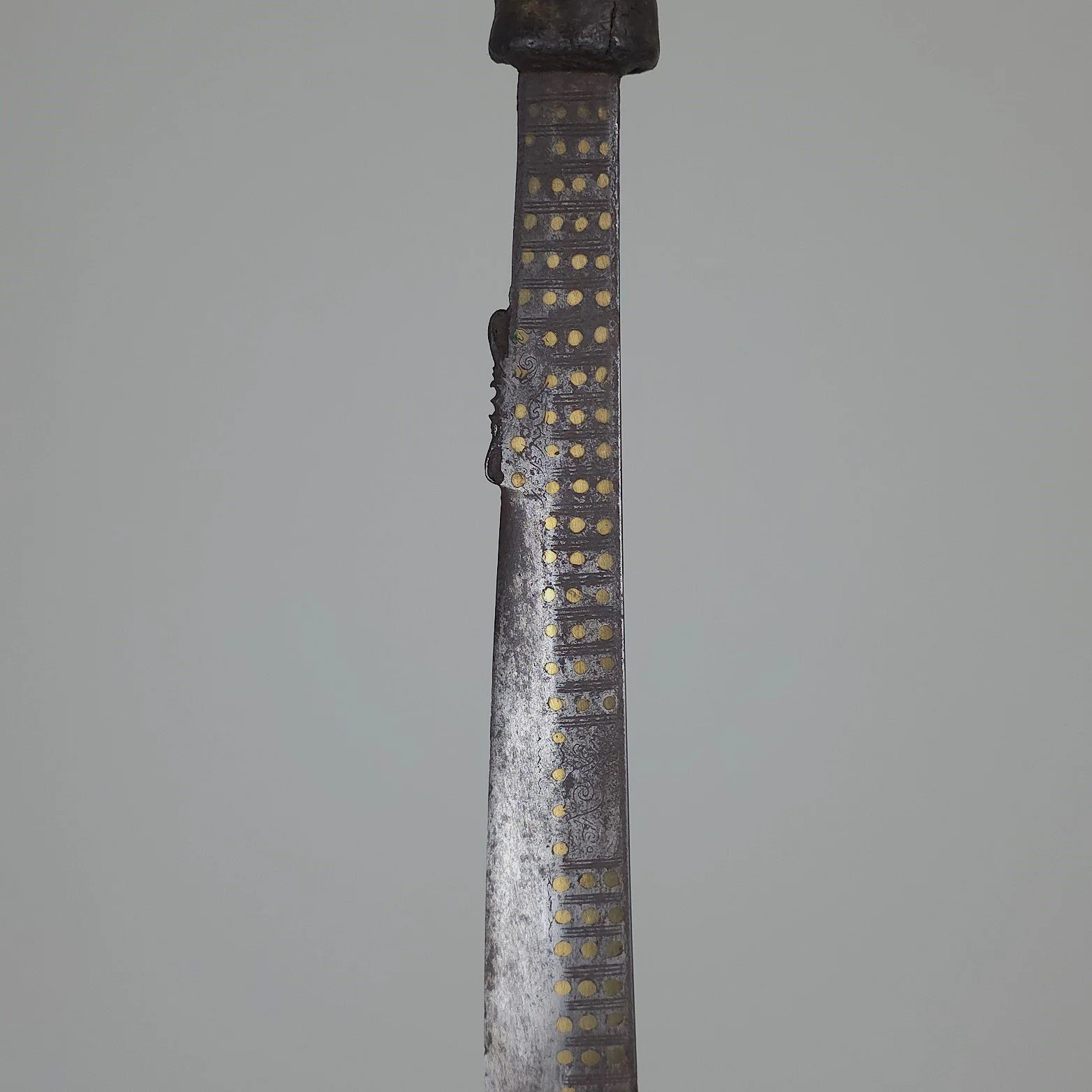
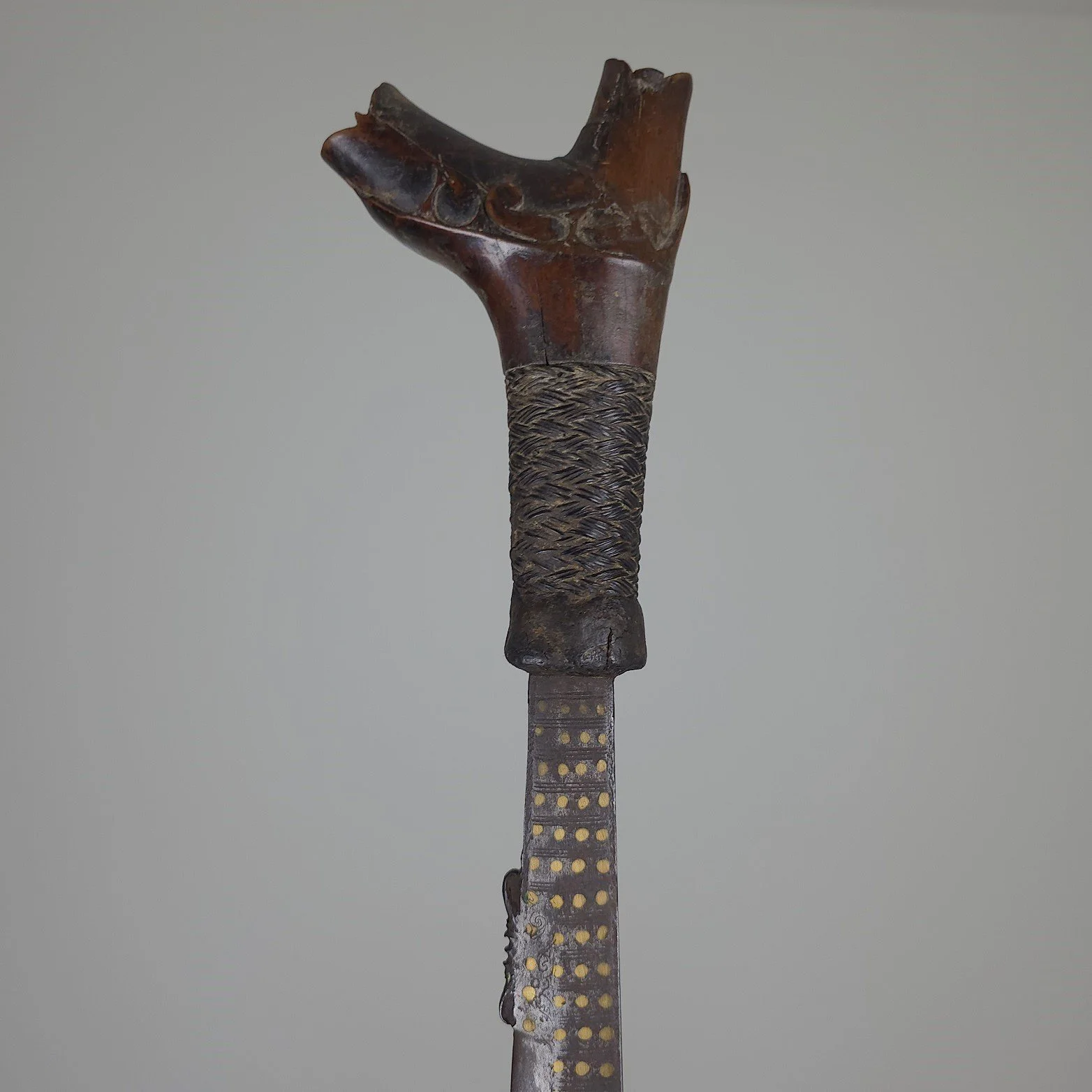
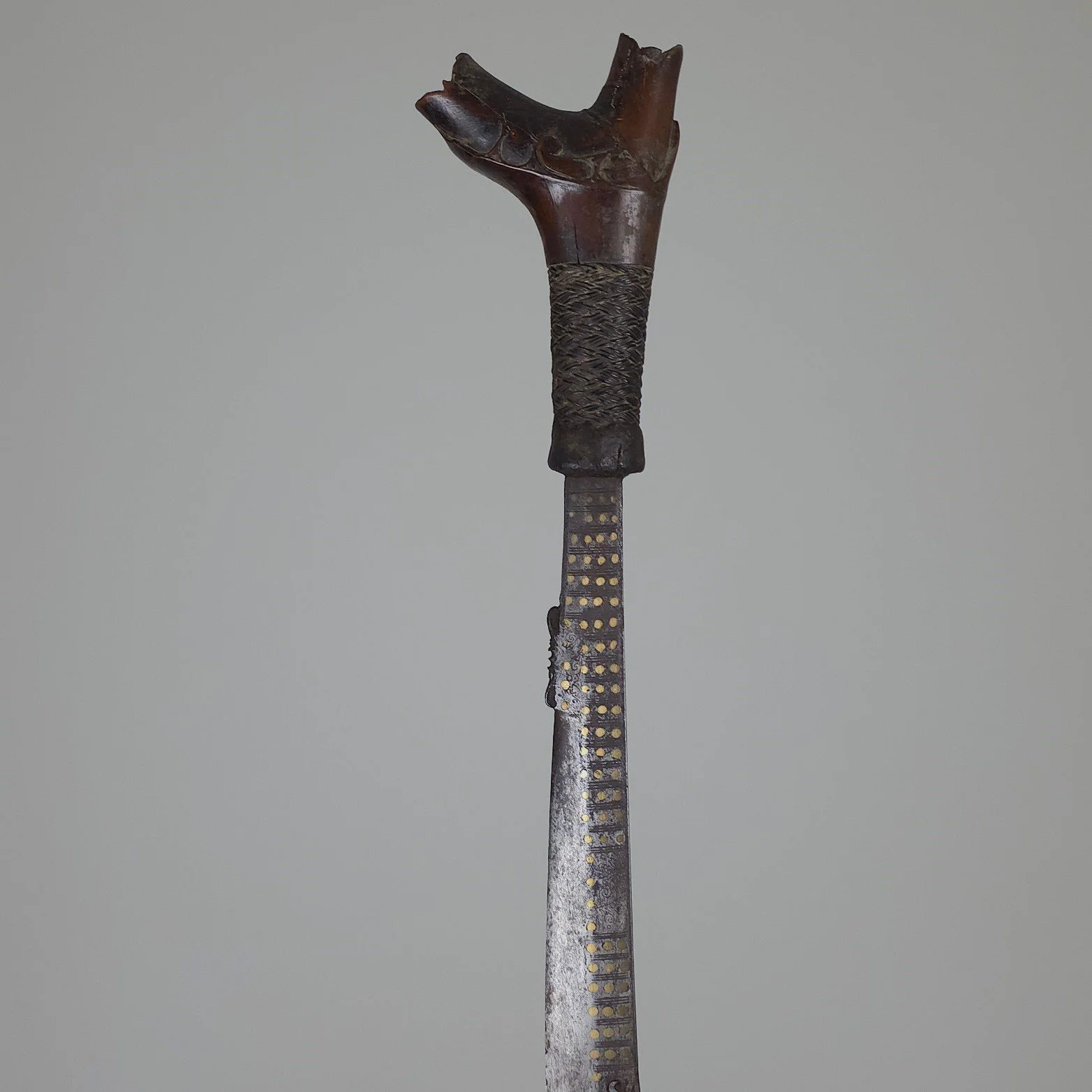
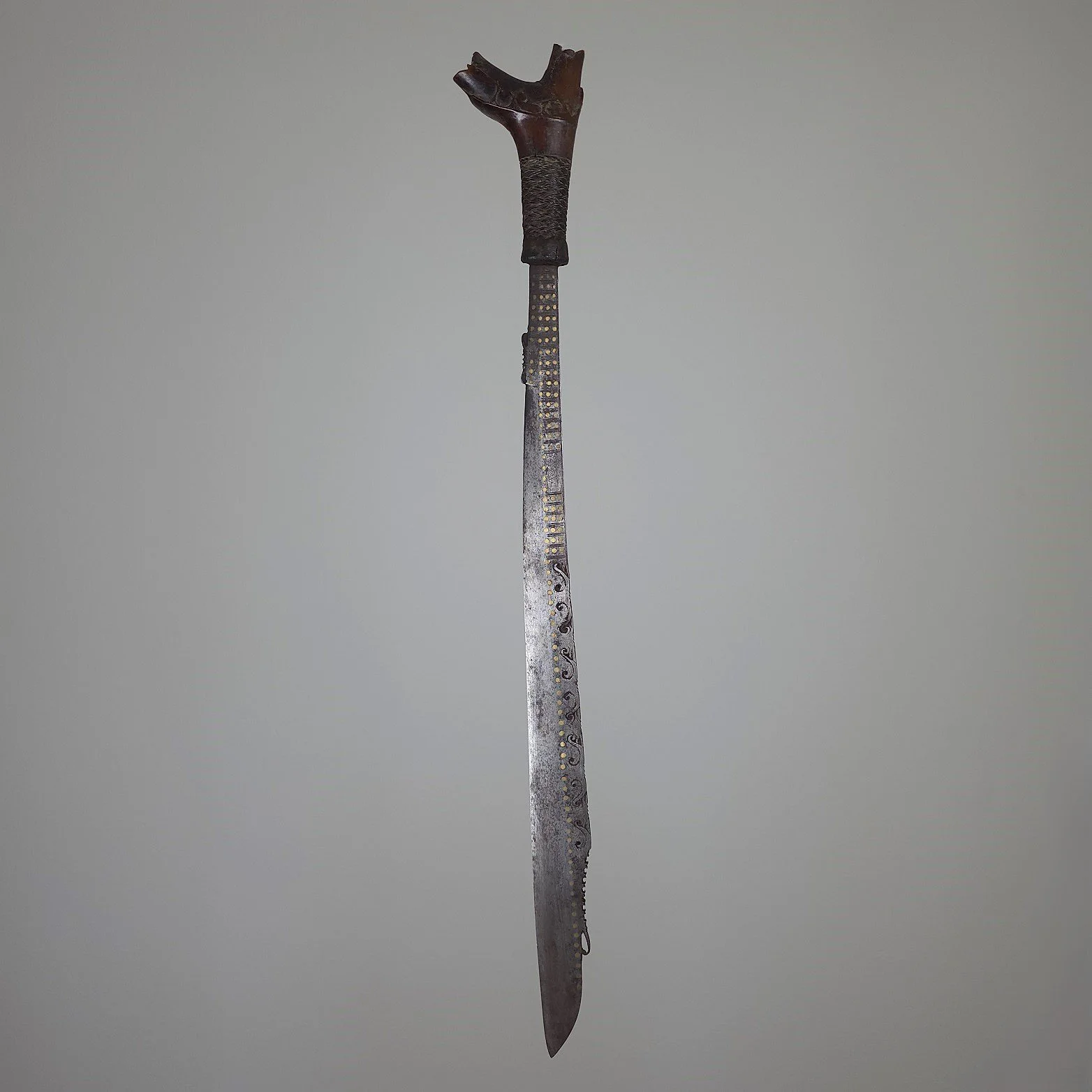
The mandau, or parang llang, is the traditional sword of the Dayak cultures of Borneo and Sarawak. This example is most likely from the Apo Kayan cluster in Sarawak extending into North and East Kalimantan by the decorative features it presents. A moderately old example, from the last half of the 19th century with wonderfully detailed characteristics on the fine blade and having excellent beaded workmanship.
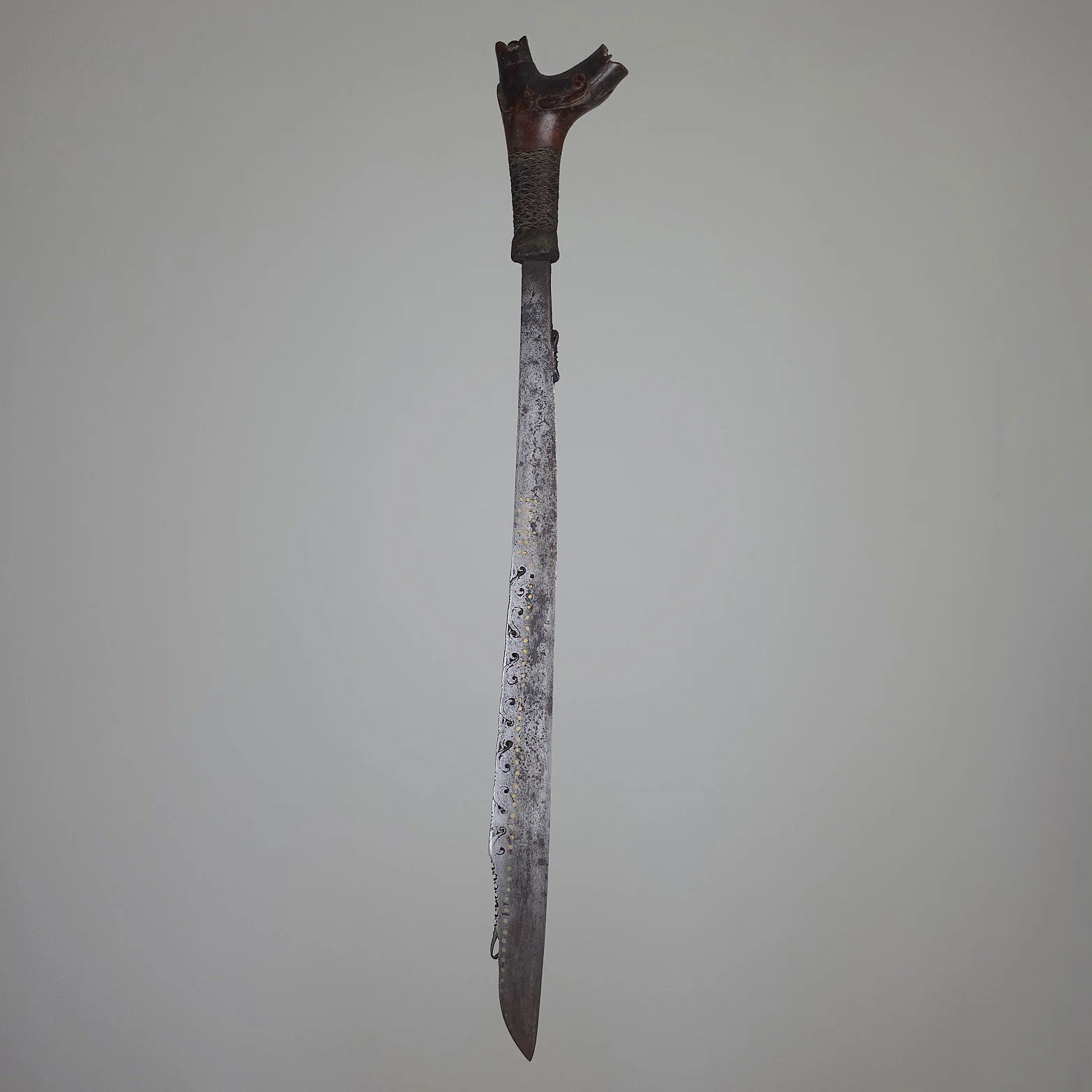
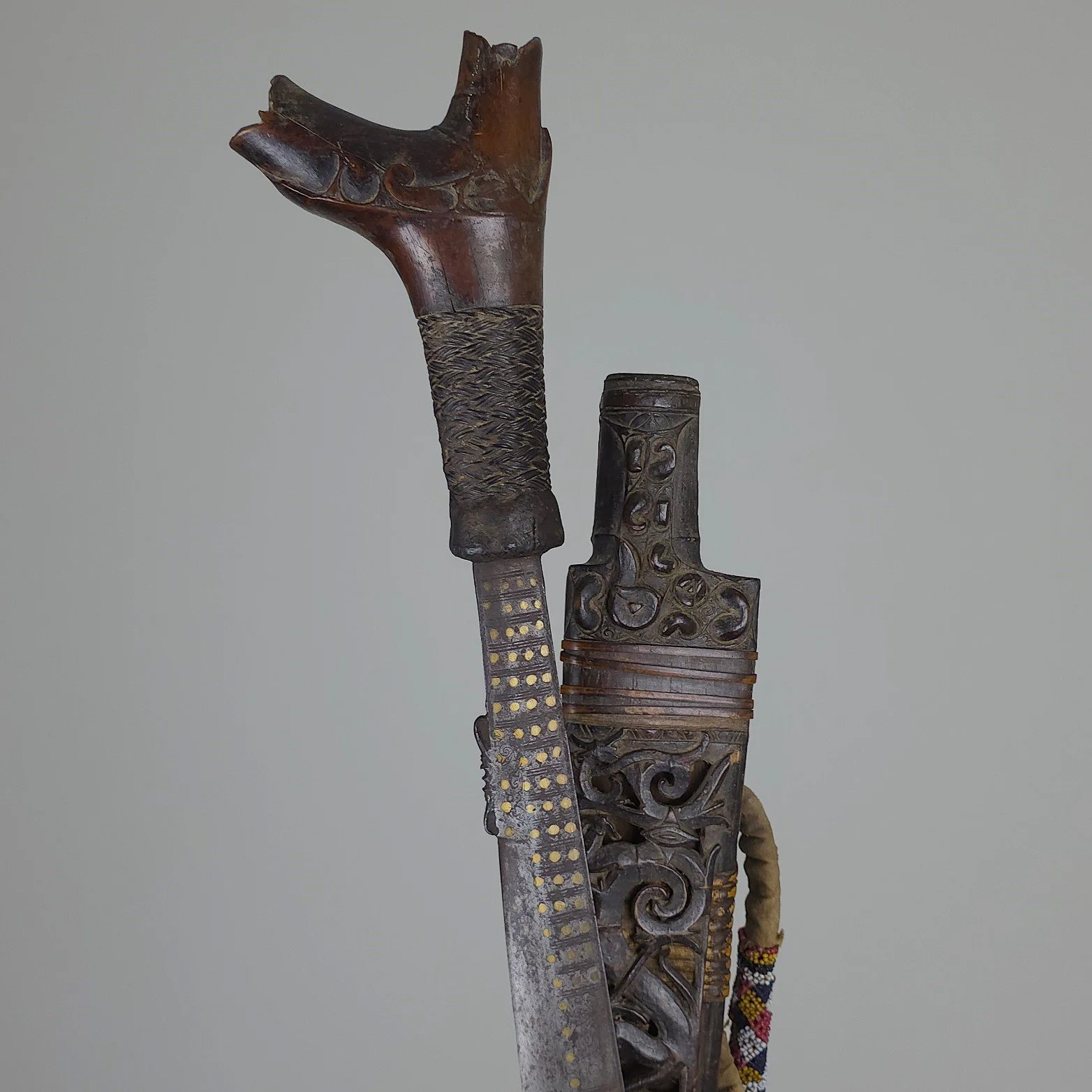
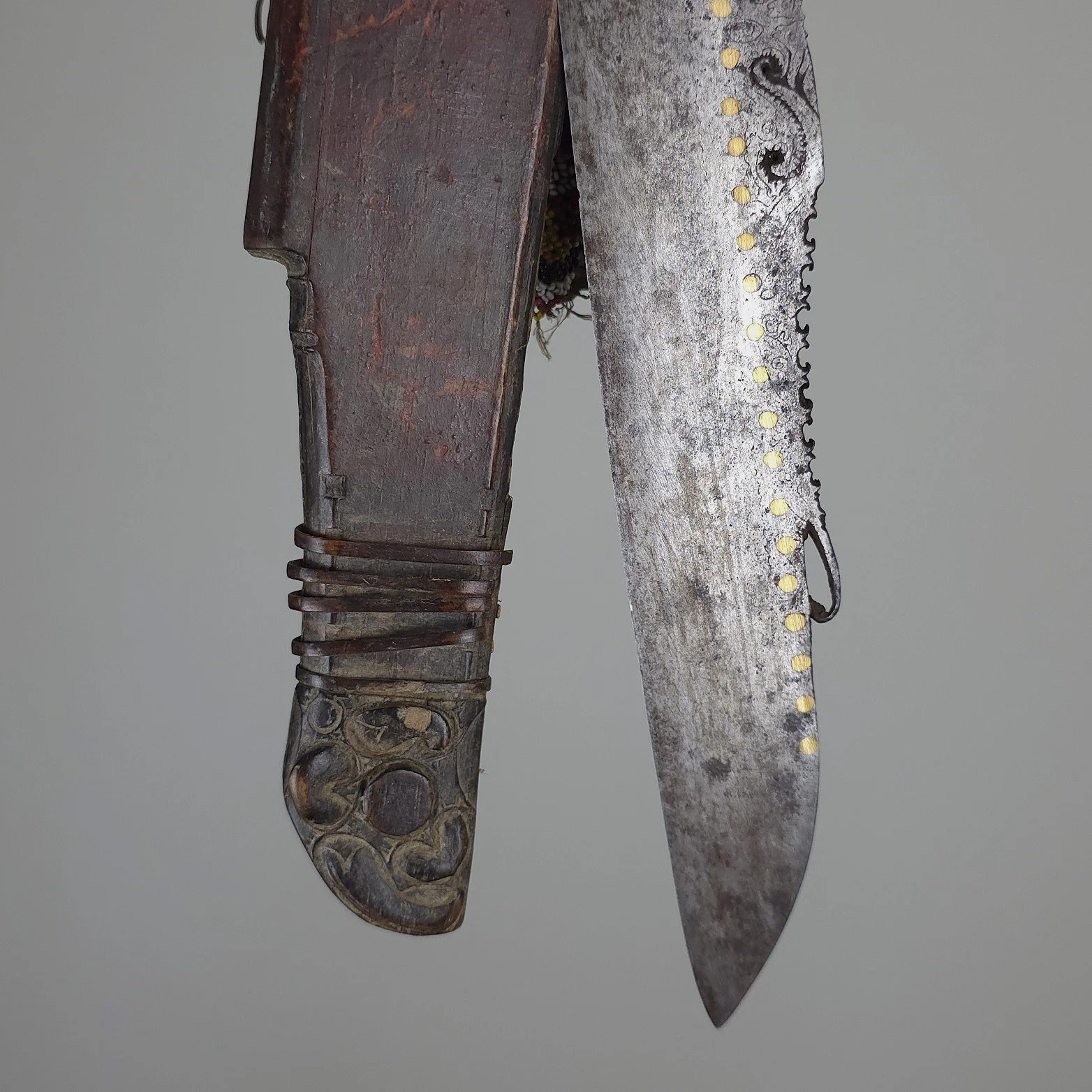
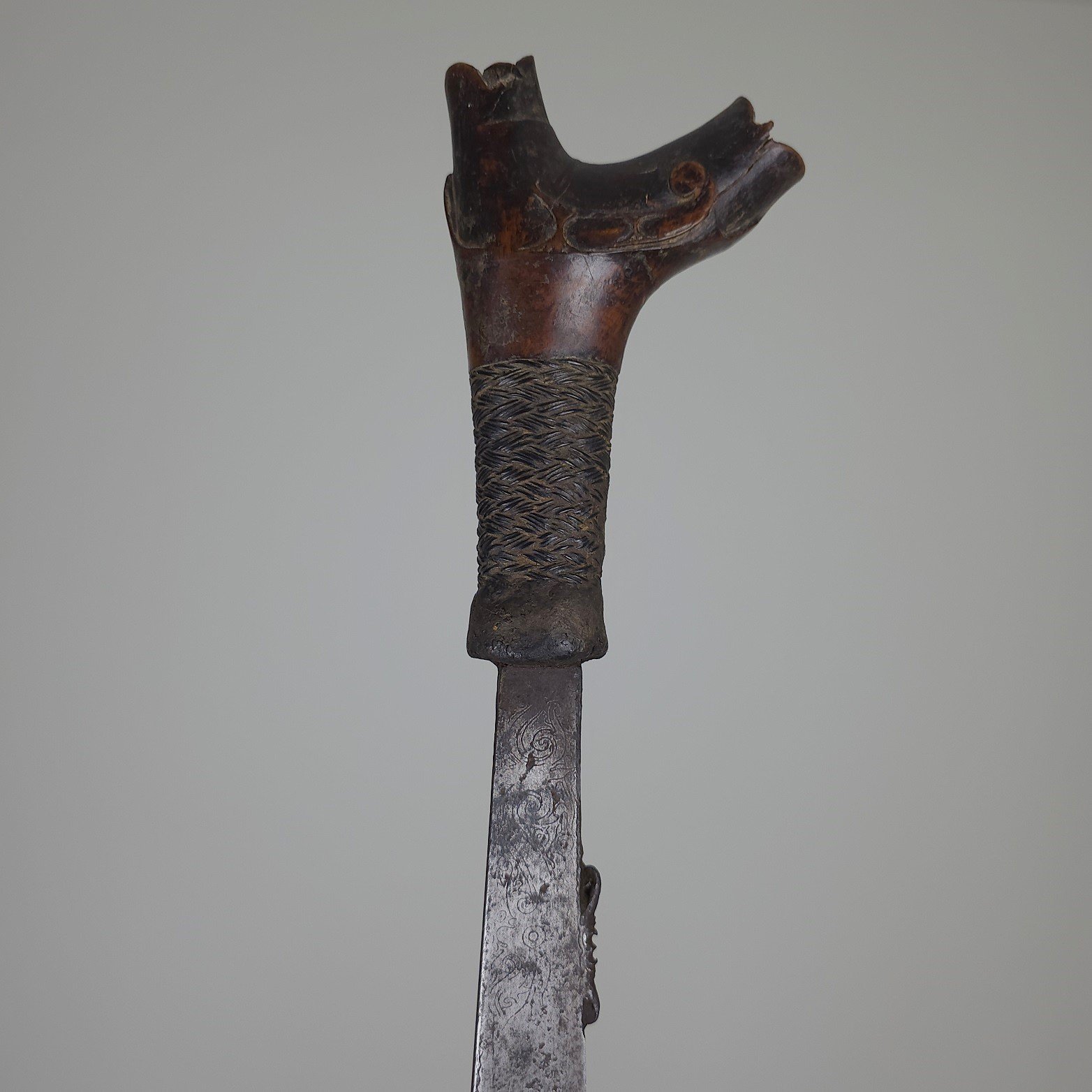
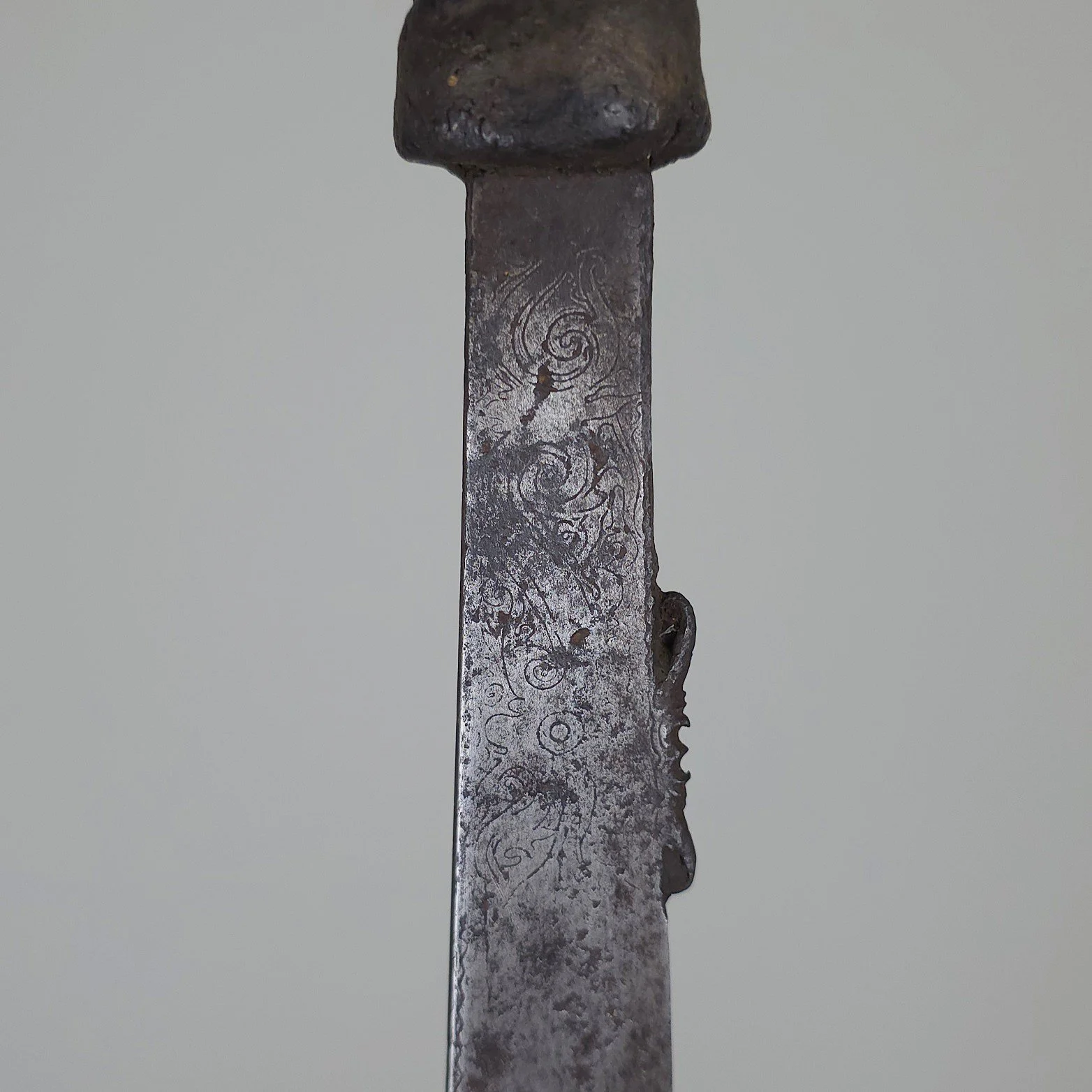
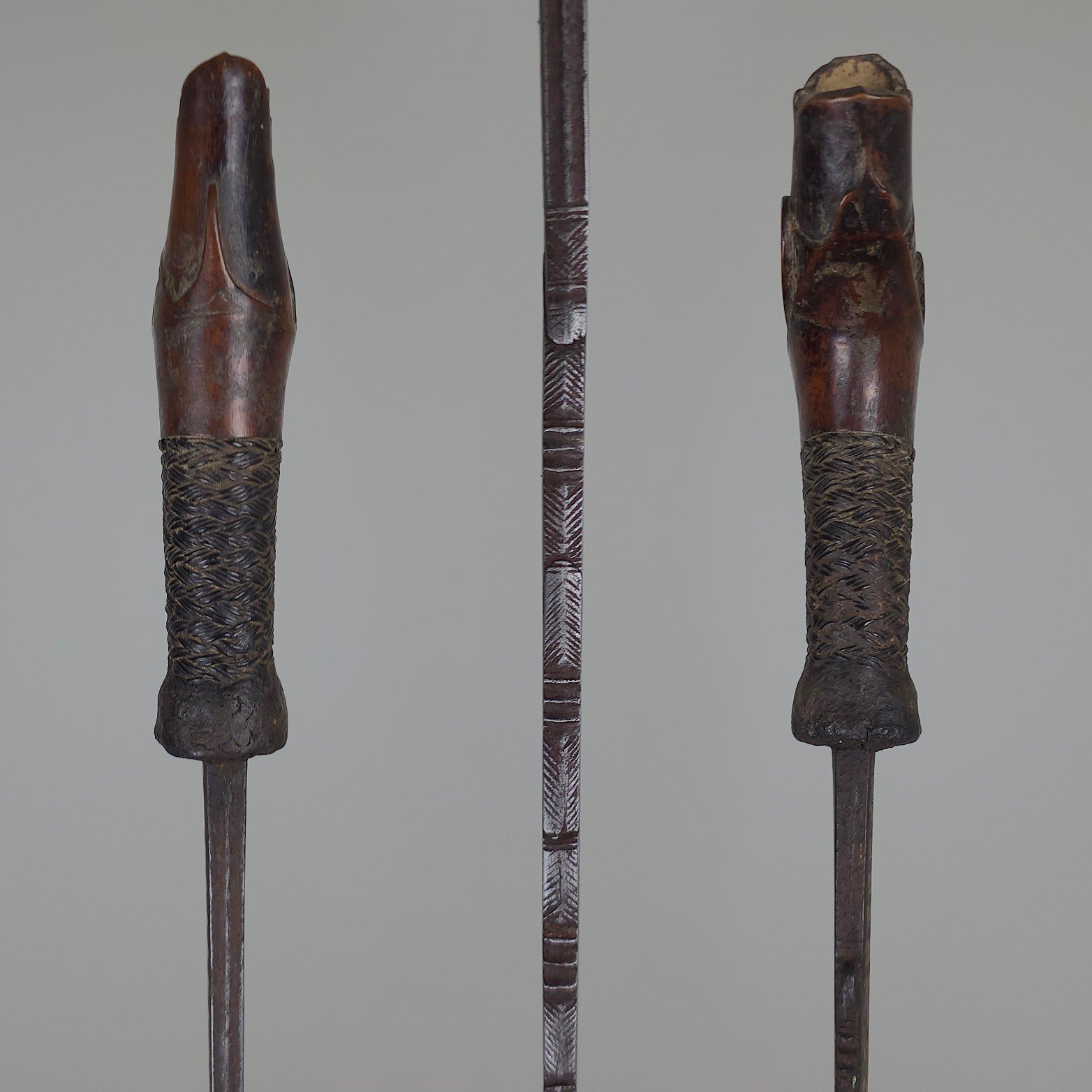
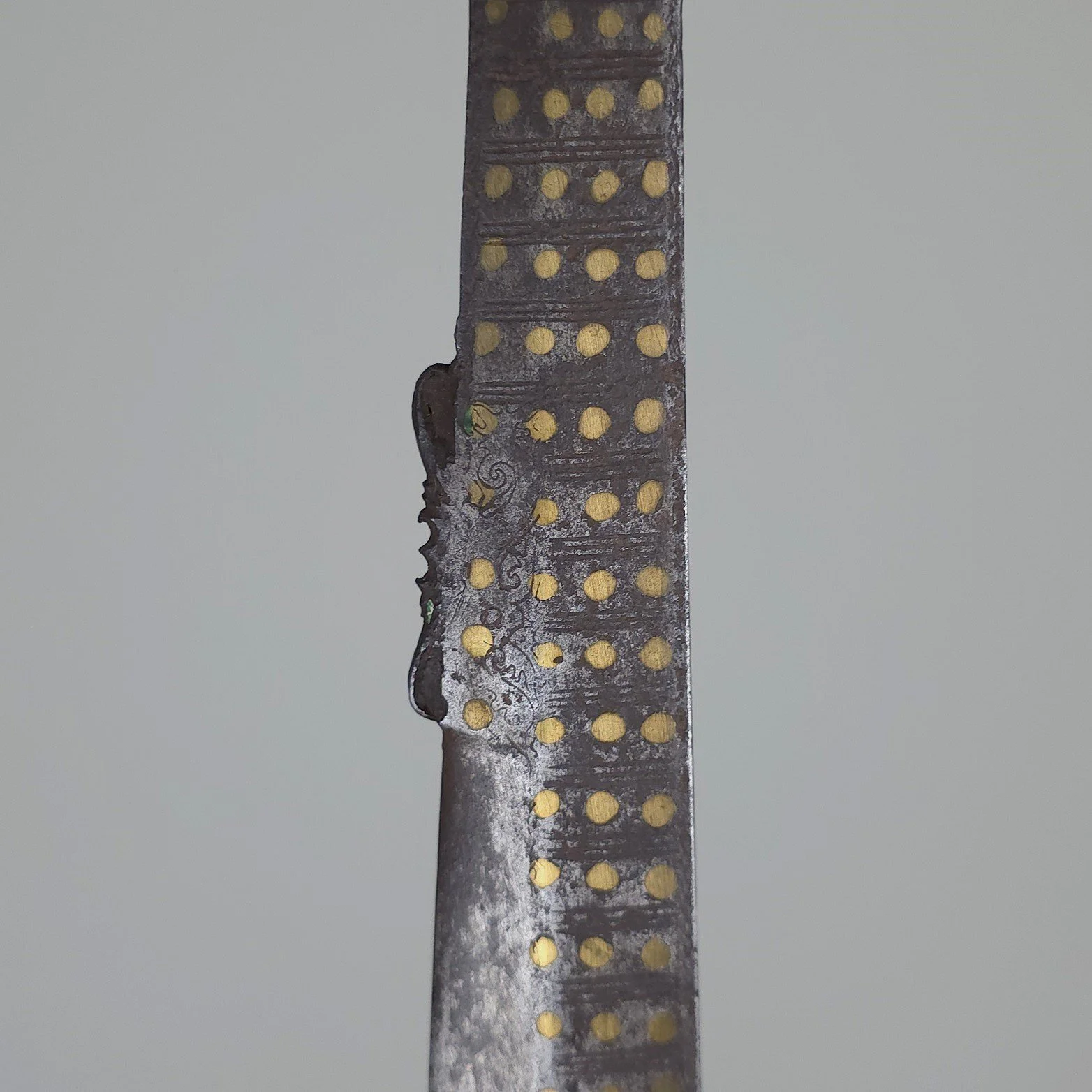
The single edged steel blade slighlty curves upwards. The convex side having 126 brass plugs, the top engraved with seven mata kalong, or aso, the Dayak mythical dragon-dog. On the reverse side of the blade which is concaved, 59 inlaid brass brass plugs are present (one missing) with seven more mata kalong engravings along the spine and at the forte. There are curled protrusions on the blade near the hilt with more curled protrusions present toward the point. The spine has hand chiseled linear decoration in a complexity of designs in its entirety.
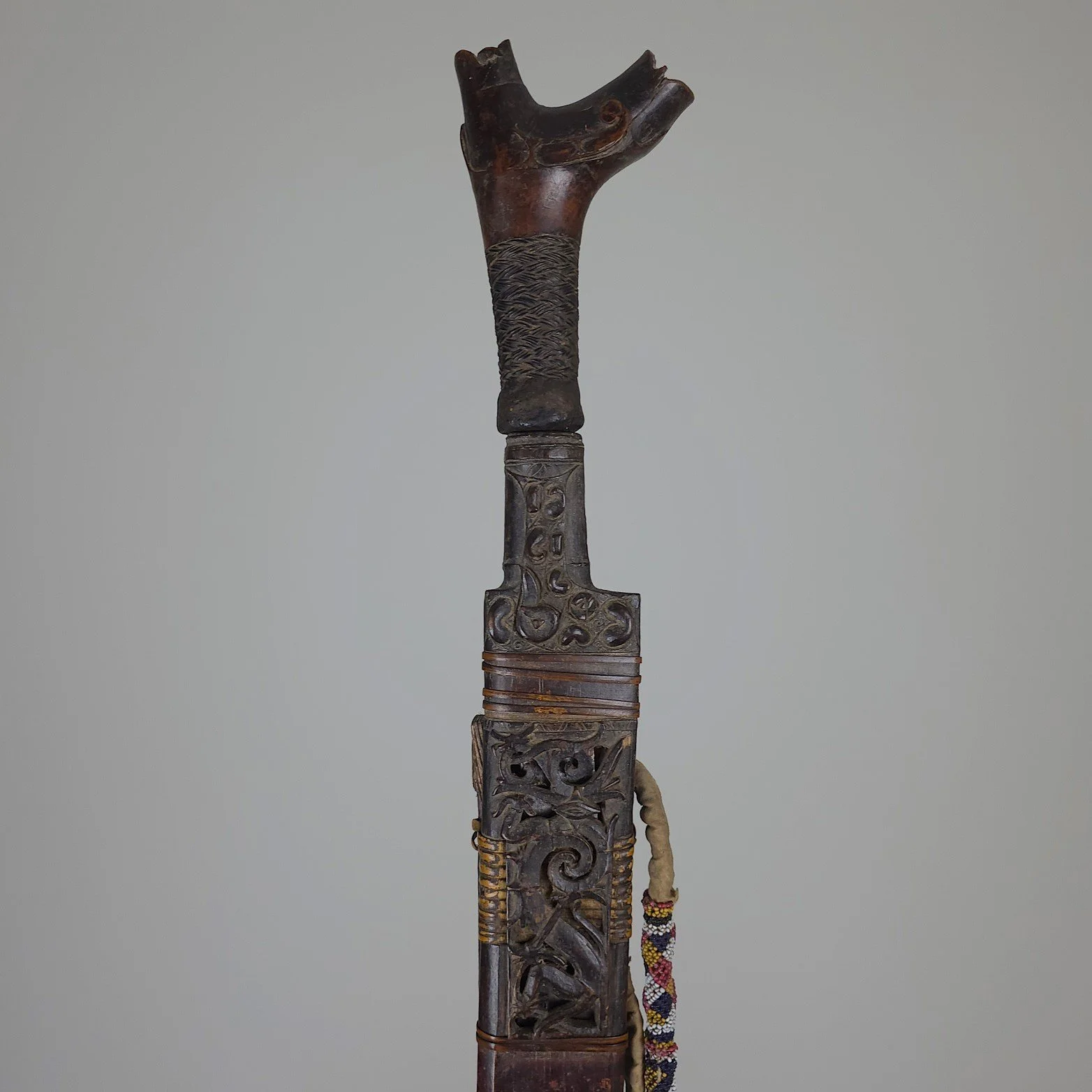
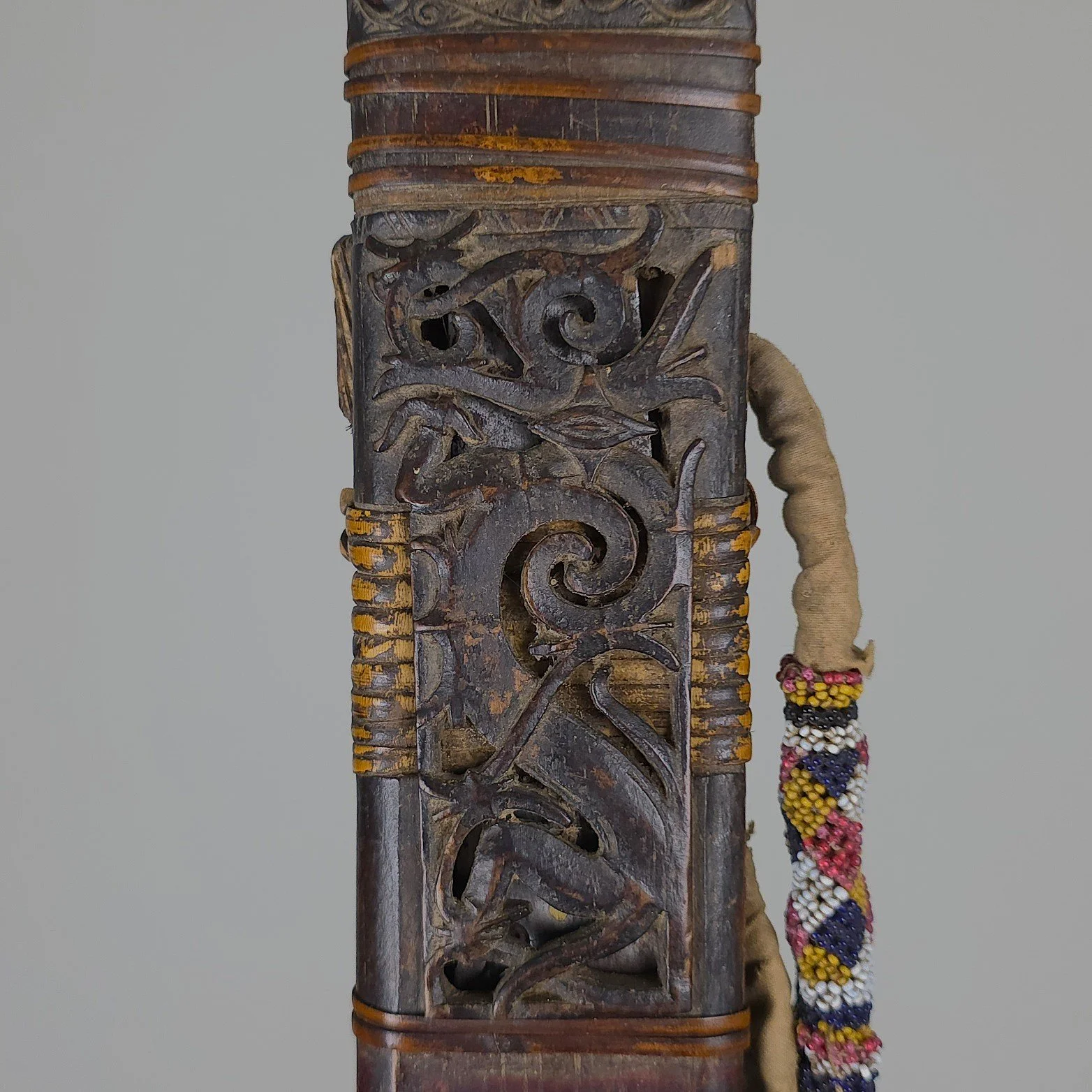
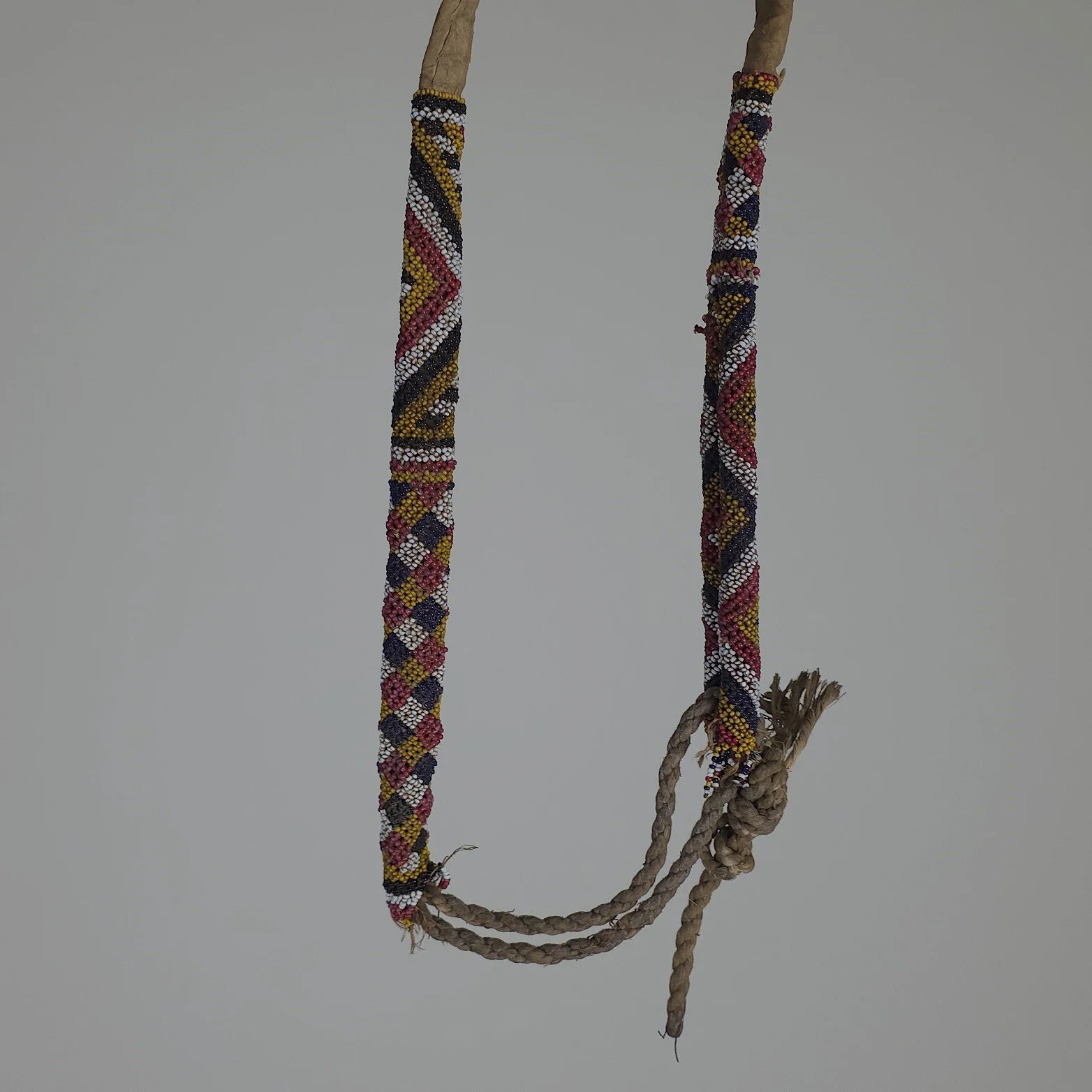
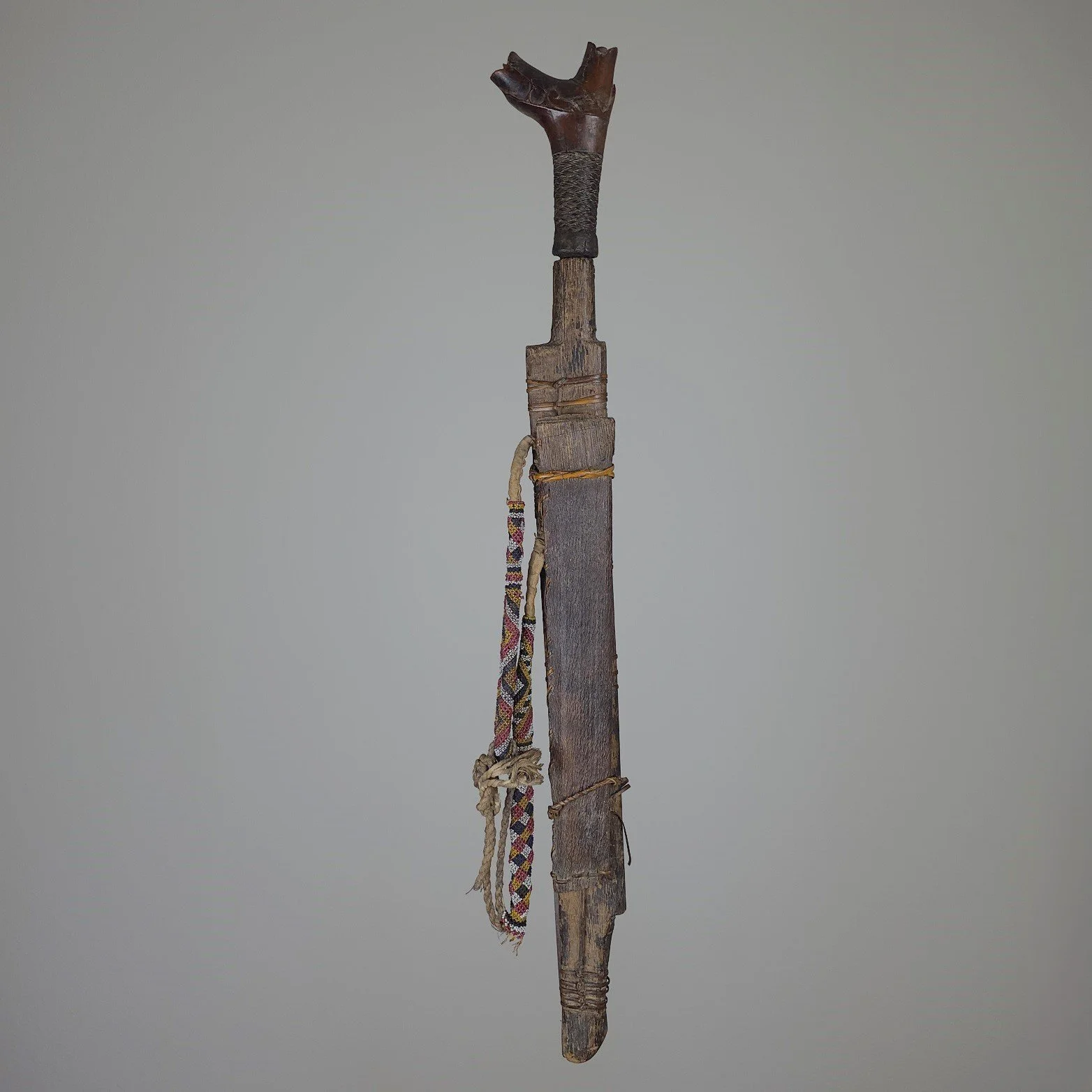
The forked ironwood handle, now with a rich deep patina and carvings with a woven rattan grip and damar (resin) ring. Missing its original hair plugs. The wooden sheath also displays a rich patina, with extensive carving work at the top and bottom bound by four horn bands (poeset- blanak) with a cotton lanyard displaying beautifully patterned bead work which is likely original. The carvings of leeches (lemetek) and scrolls. The leeches stand for taking blood, of which they do to their enemies. Palm bark backing on the sheath.
An old example, well used, and with some minor losses and damage, although a great quality one. The beadwork looks to be original and is rare to still be present. This style was commonly used by the Kayan peoples subgroup and may originate more specifically from the Baram District in the Sarawak region of Borneo. The number of brass plugs inlaid in the blade is greater than usually seen, which indicated an important owner who was also left-handed as the concave and convexed sides of the blade are reversed. A very interesting parang ilang sword.
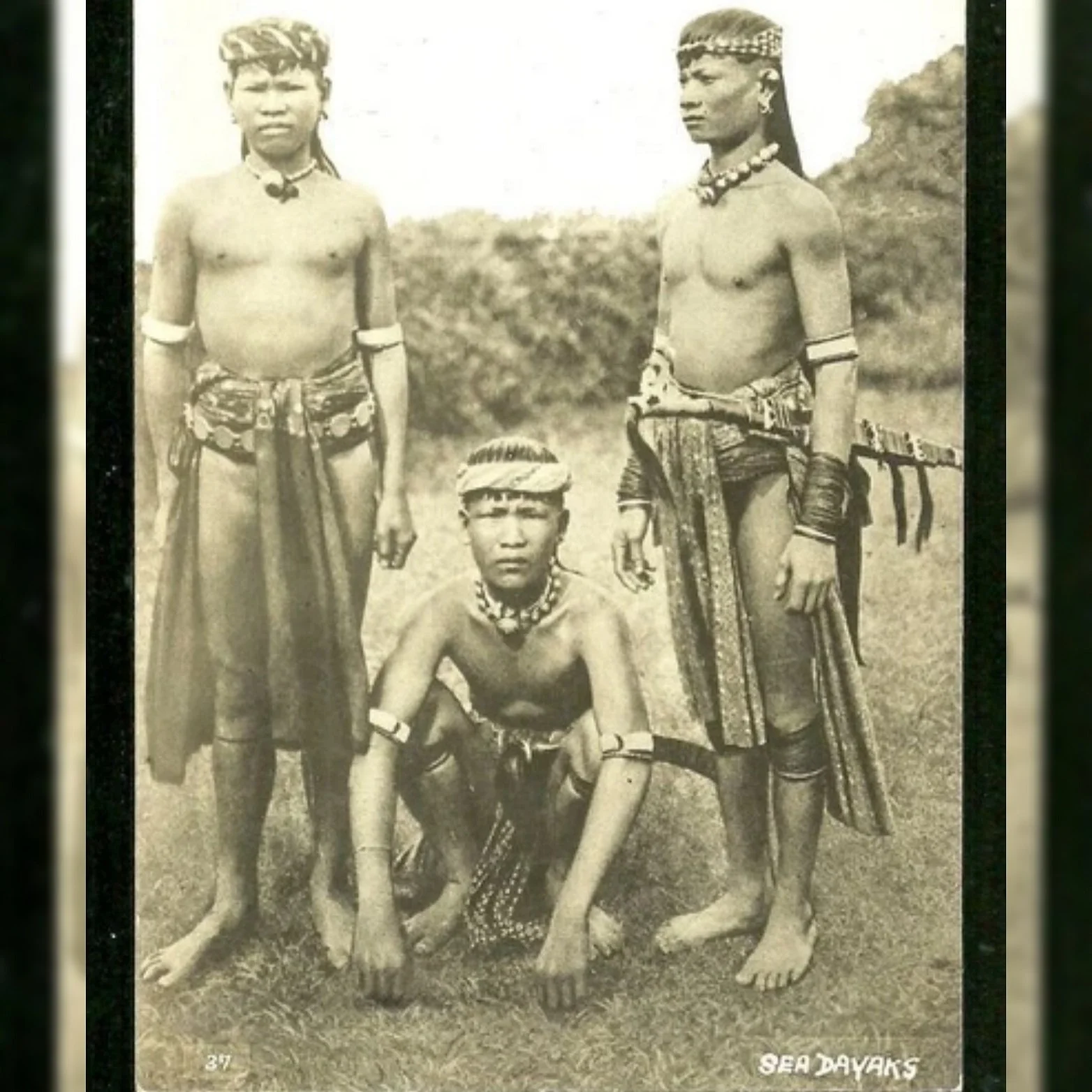
Photograph 23: Three Sea Dayak or Iban warriors in traditional attire, British Borneo, 1922.
[1] W. O. Oldman, “Illustrated Catalogue of Ethnographic Specimens”, List No. 65; Item #4 (4258)
[2] https://prm.ox.ac.uk/collections-online#/item/prm-object-254671
[3] https://www.metmuseum.org/art/collection/search/318549
[4] https://www.britishmuseum.org/collection/object/A_As1905-714-a
[7] http://www.oriental-arms.co.il/item.php?id=8646
[8] http://www.oriental-arms.co.il/item.php?id=7376
[9] http://www.oriental-arms.co.il/item.php?id=1286
[10] http://www.oriental-arms.co.il/item.php?id=1198
[11] www.mandarinmansion.com/item/baram-kayan-mandau