Keris
Keris
Balinese / Sasak
Dutch East Indies (Lombok, Indonesia)
Late 19th - Early 20th century (ca. 1890 - 1925)
Iron / nickel, brass, ruby, glass or pink saphire, wood, hair, paint, gold
Blade: 41,6cm
Hilt & Blade: 52,7cm
Hilt, Blade, Sheath: 64,7cm
Collection Date: 2020
Collection Number: 148
Ex. Rick Stroud (RSWORD): Raleigh, North Carolina, USA (2020)
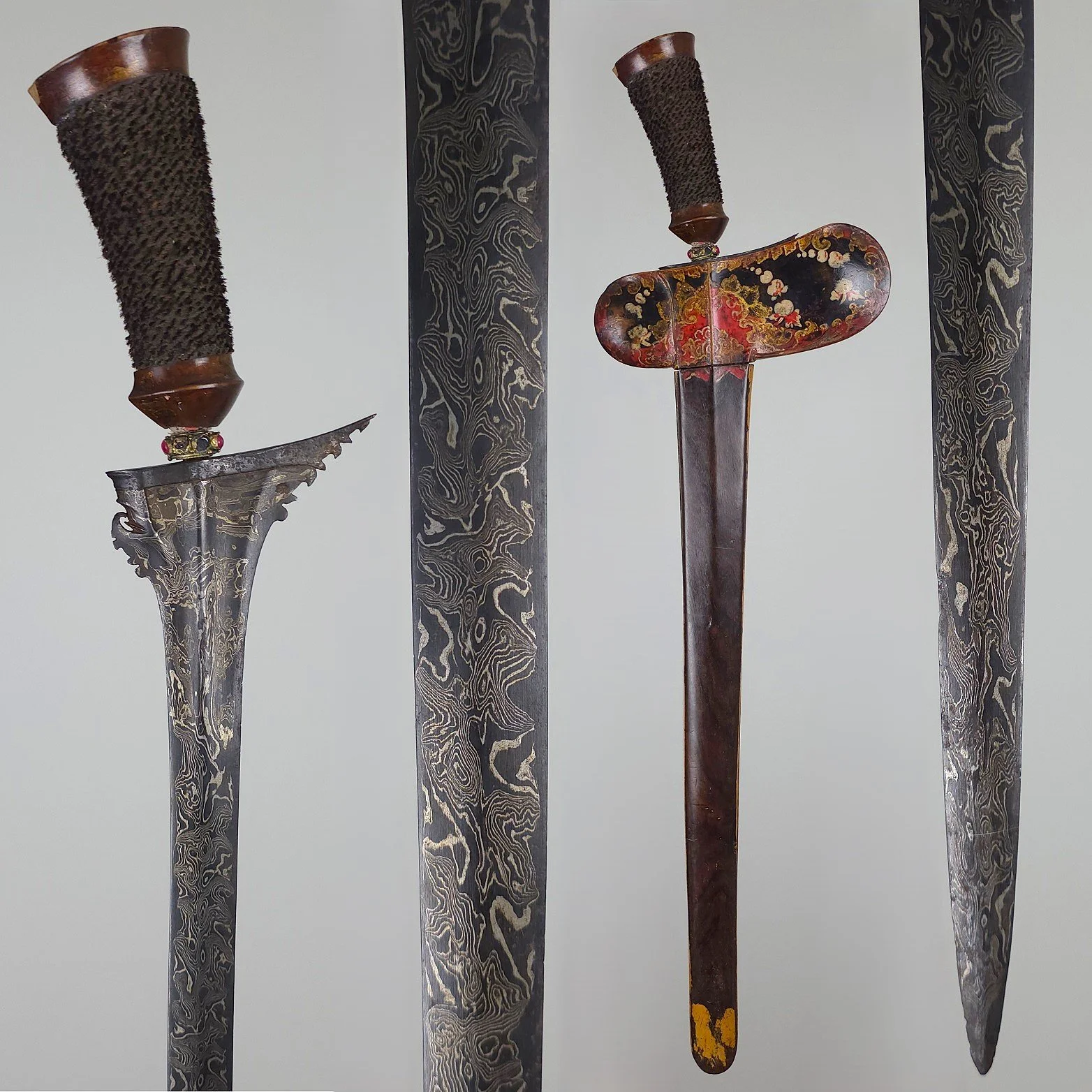
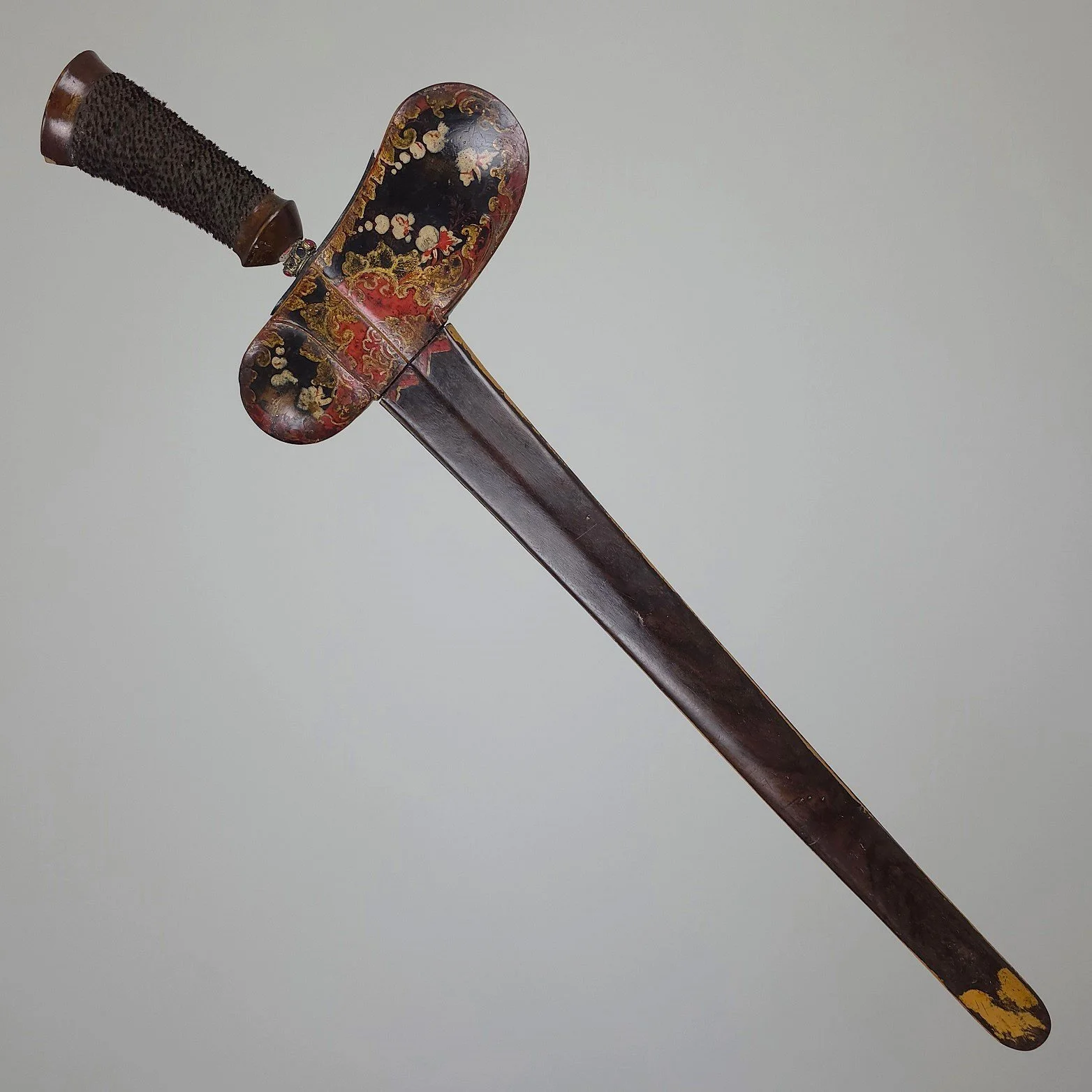
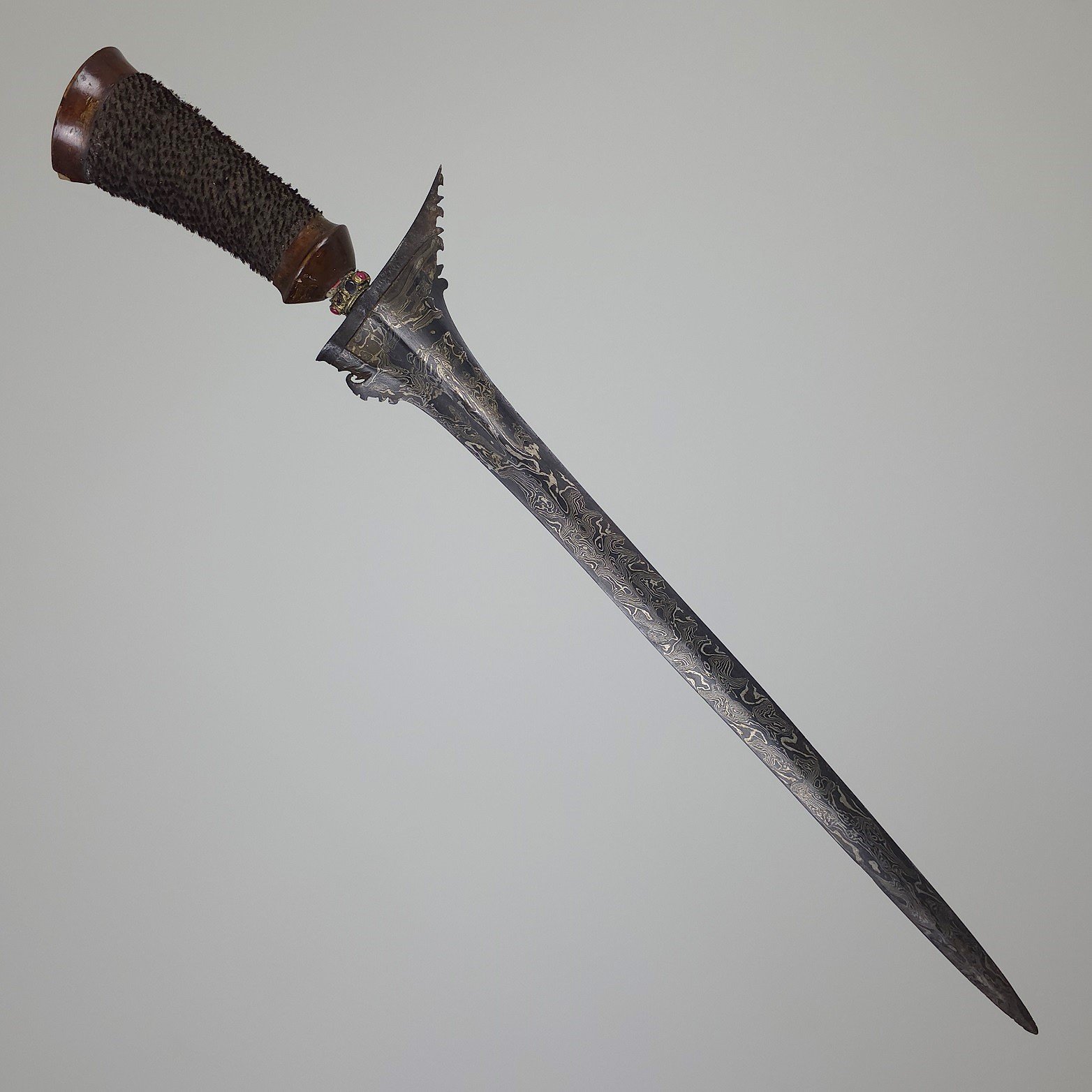
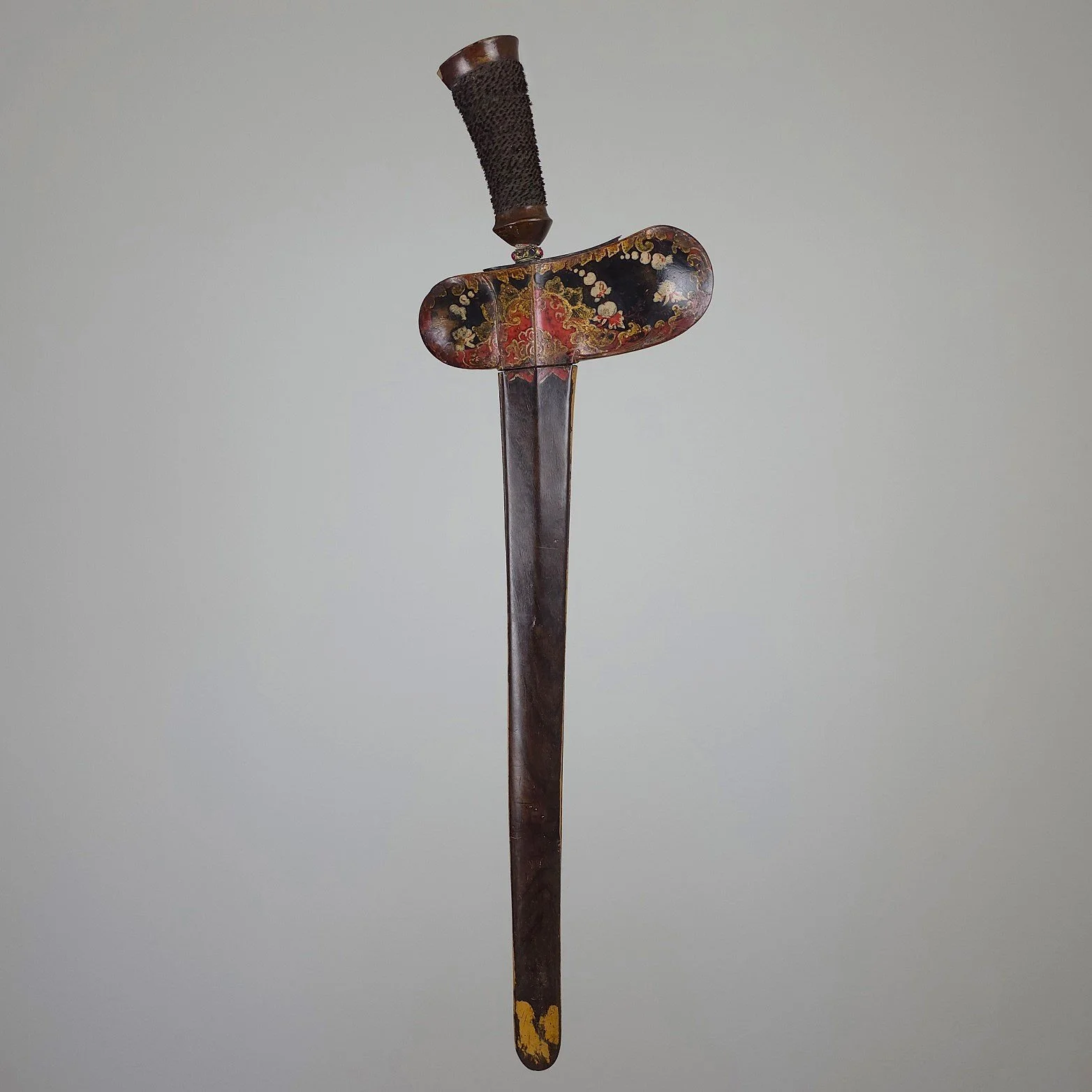
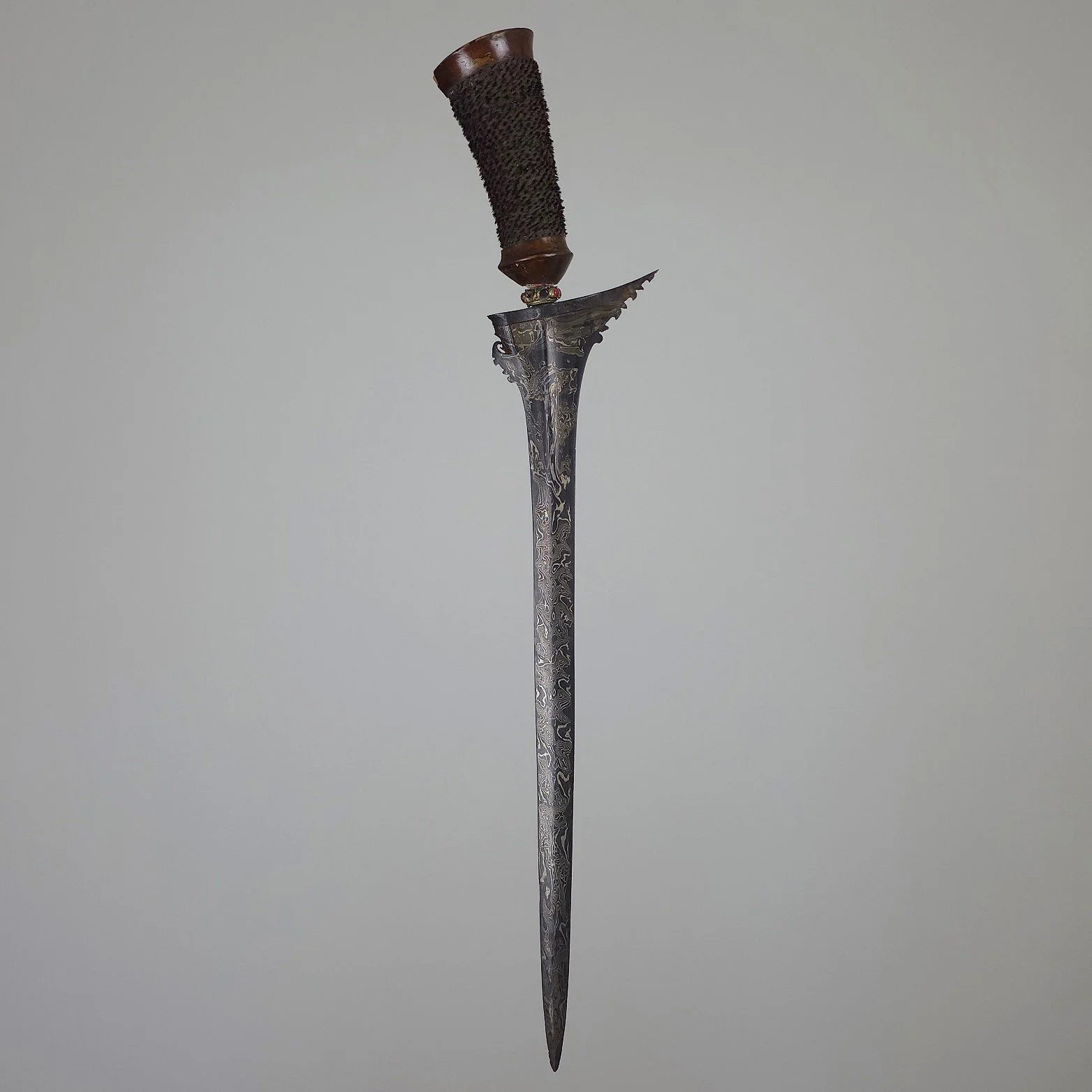
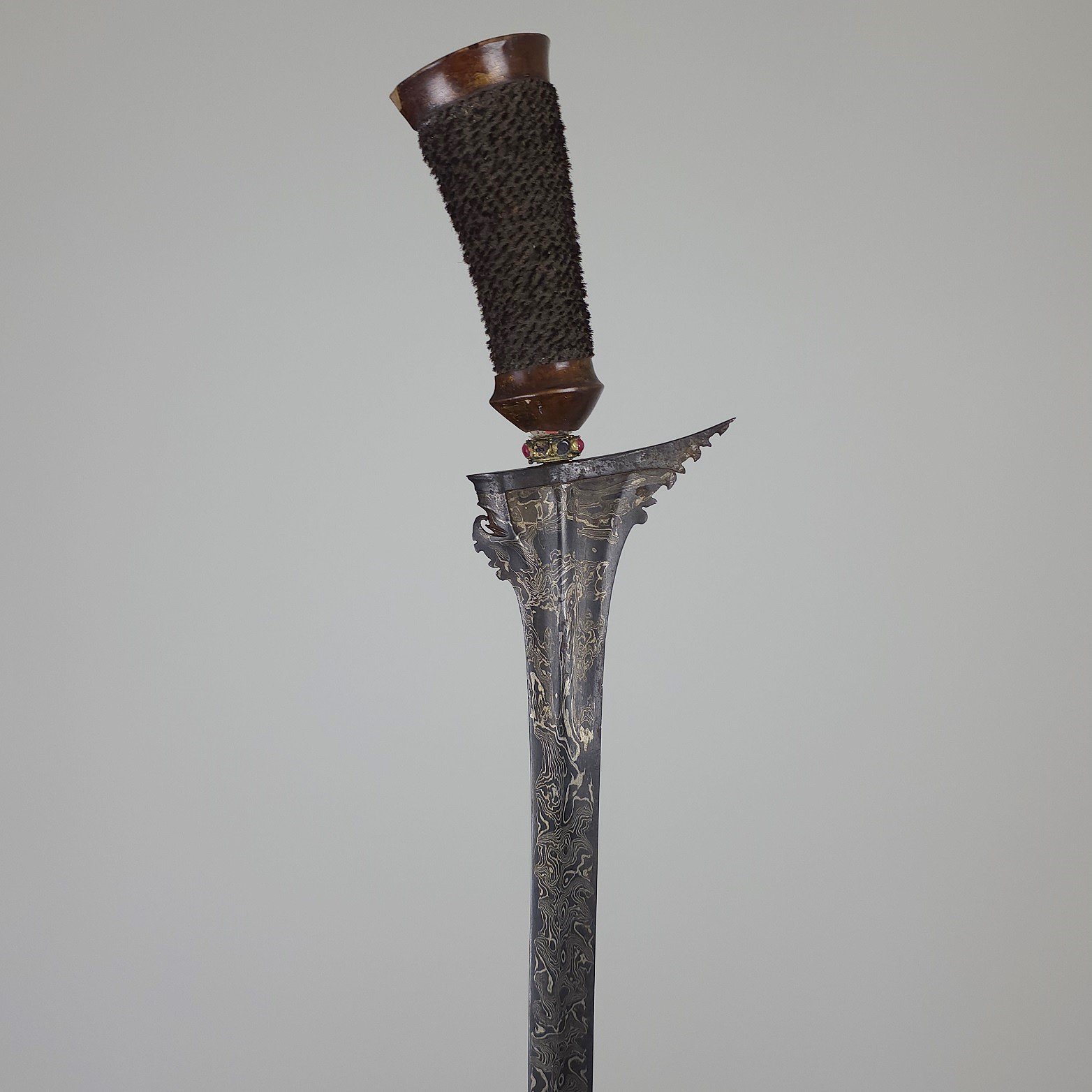
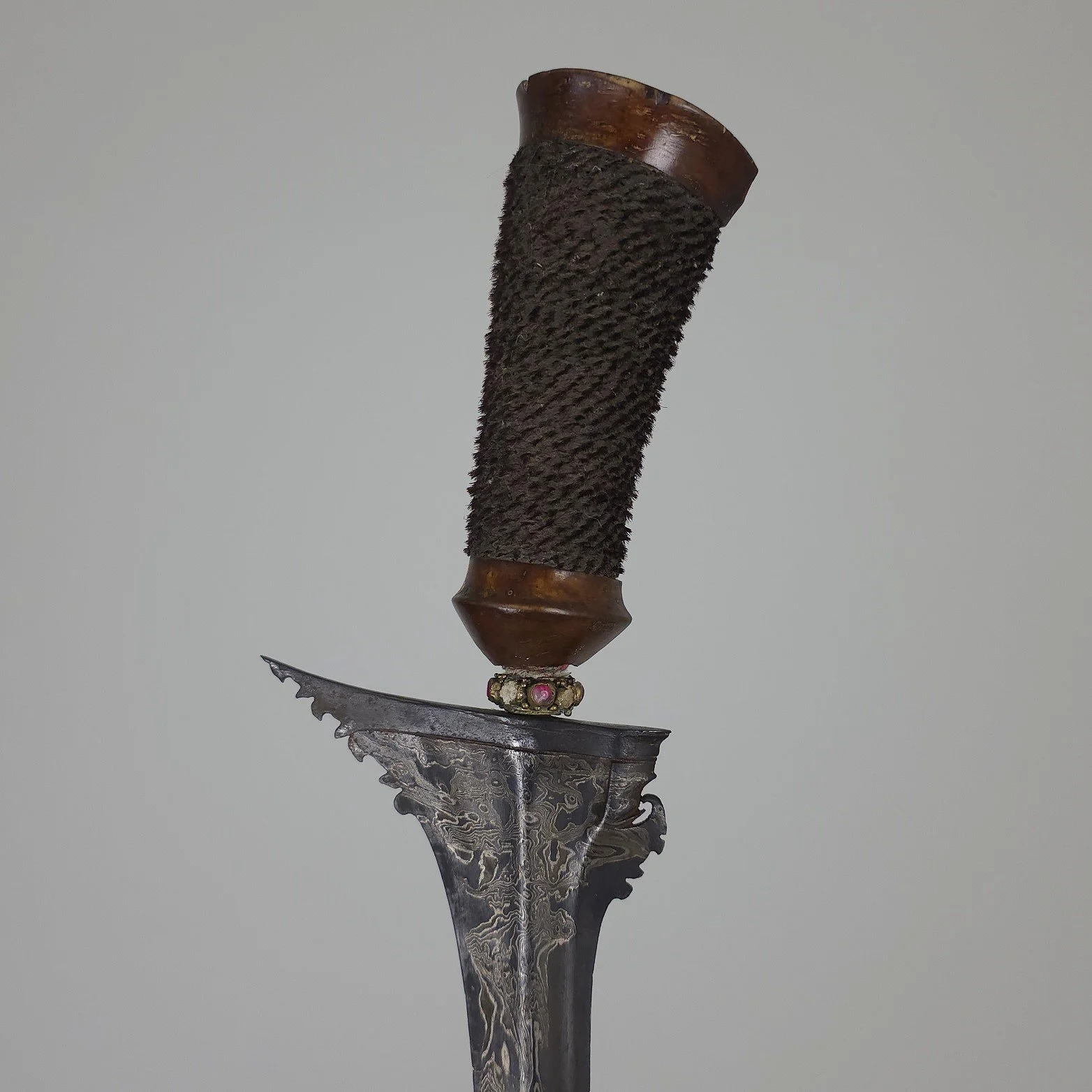
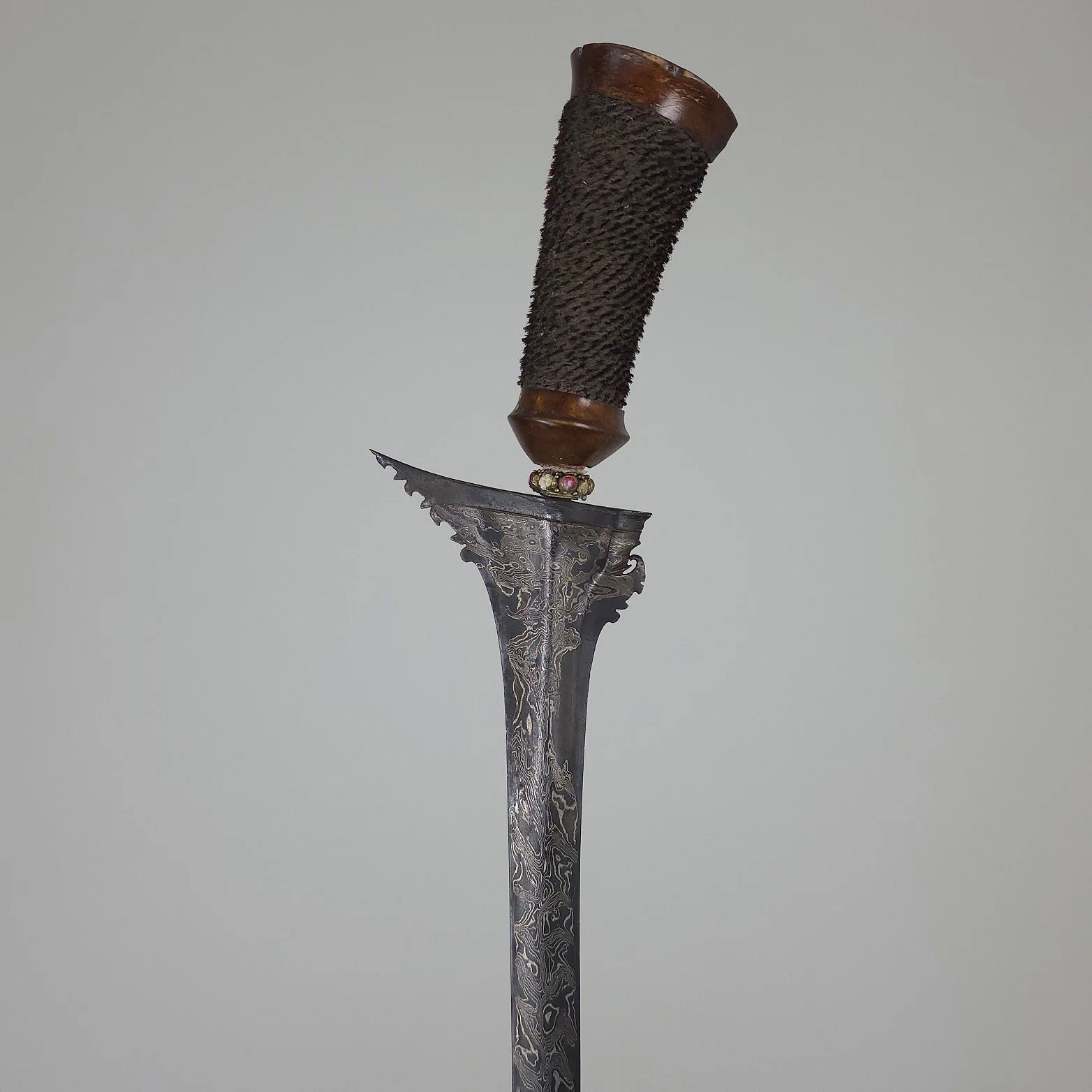
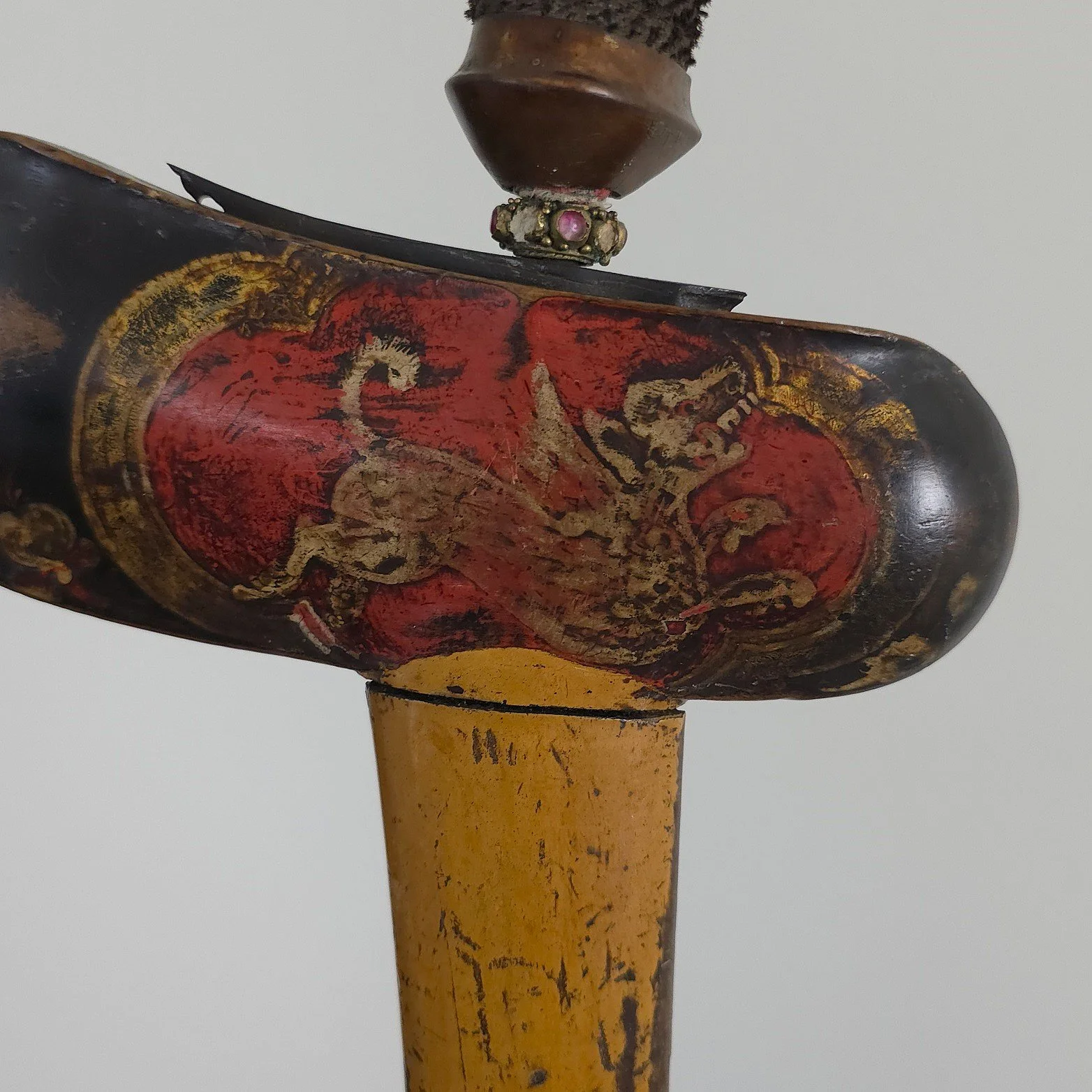
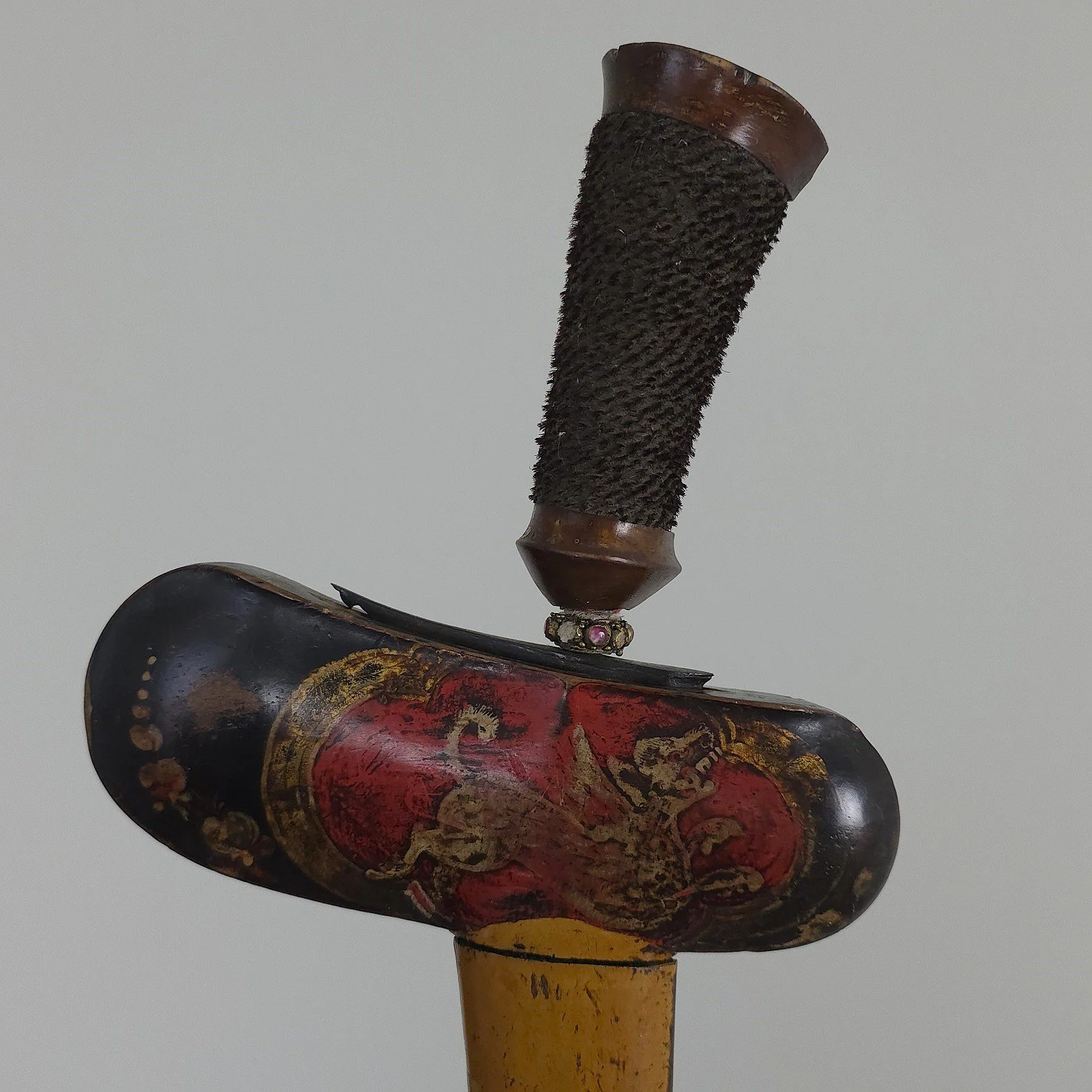
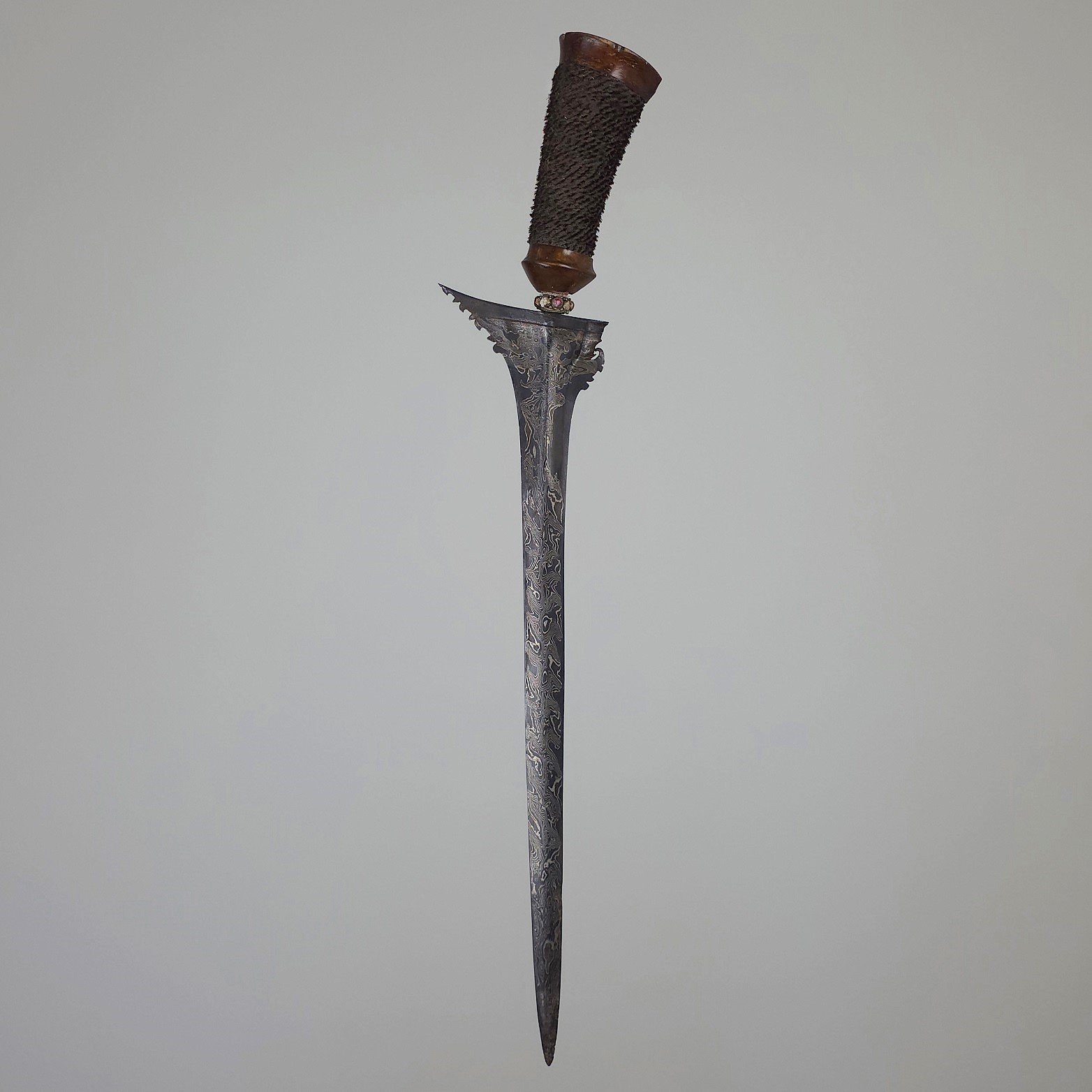
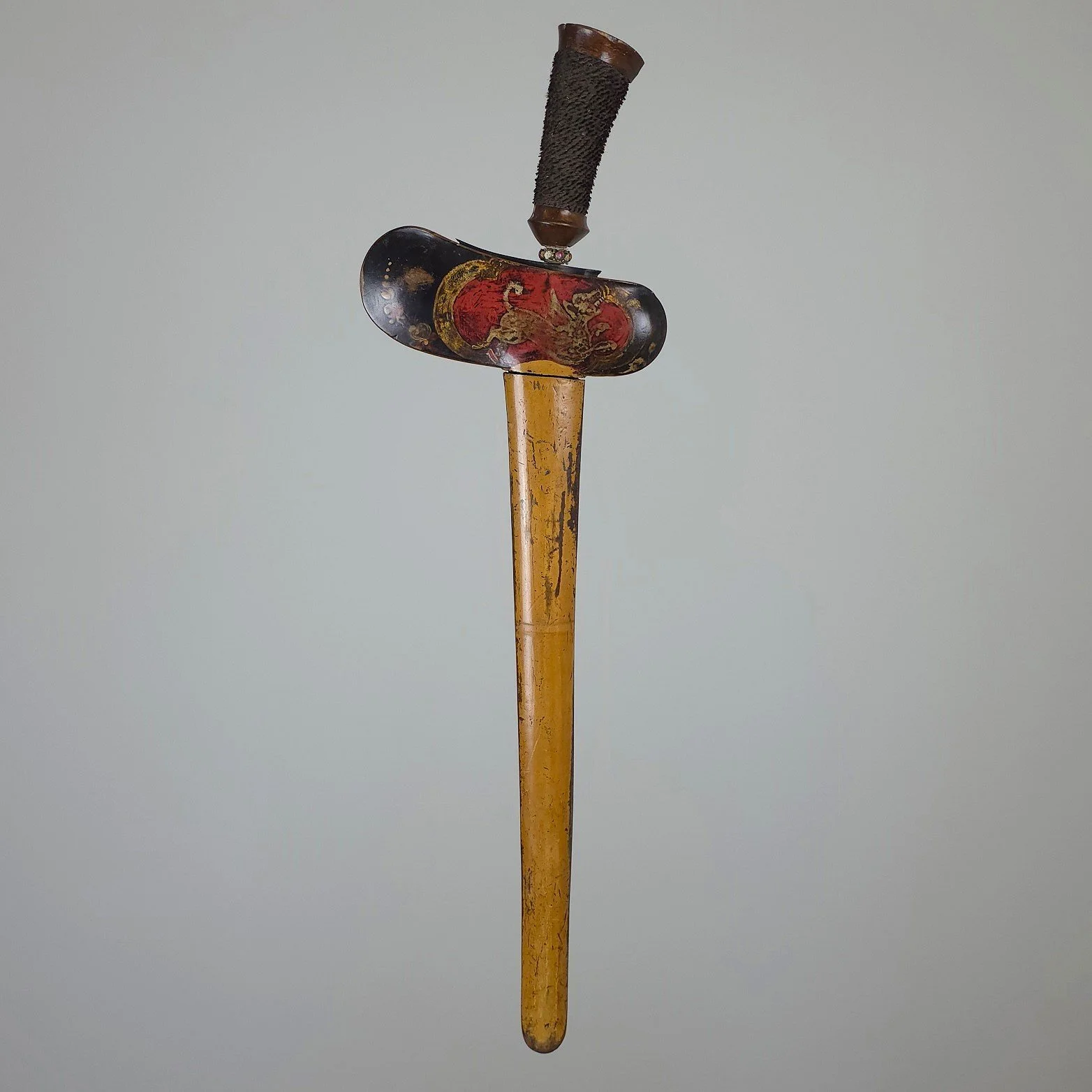
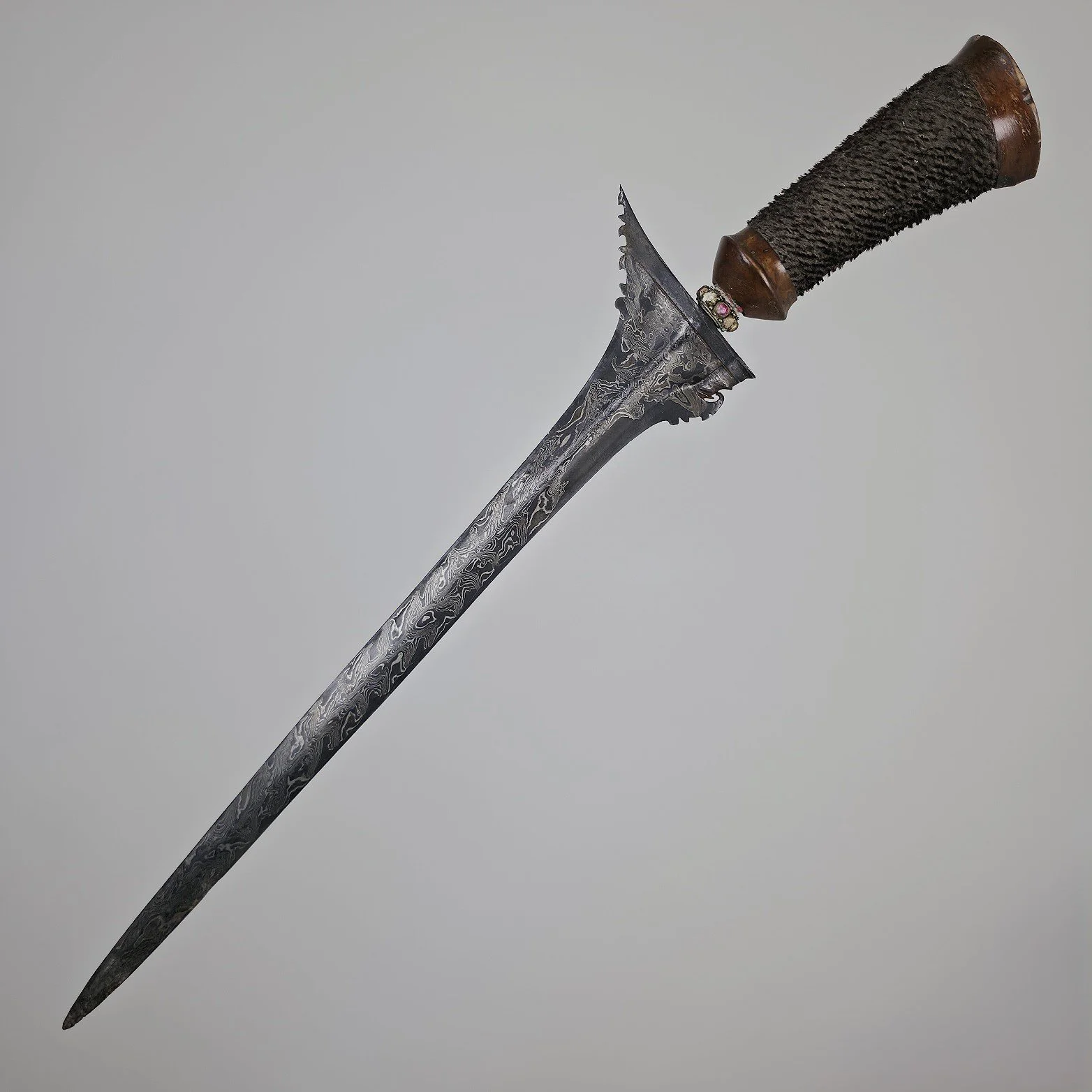
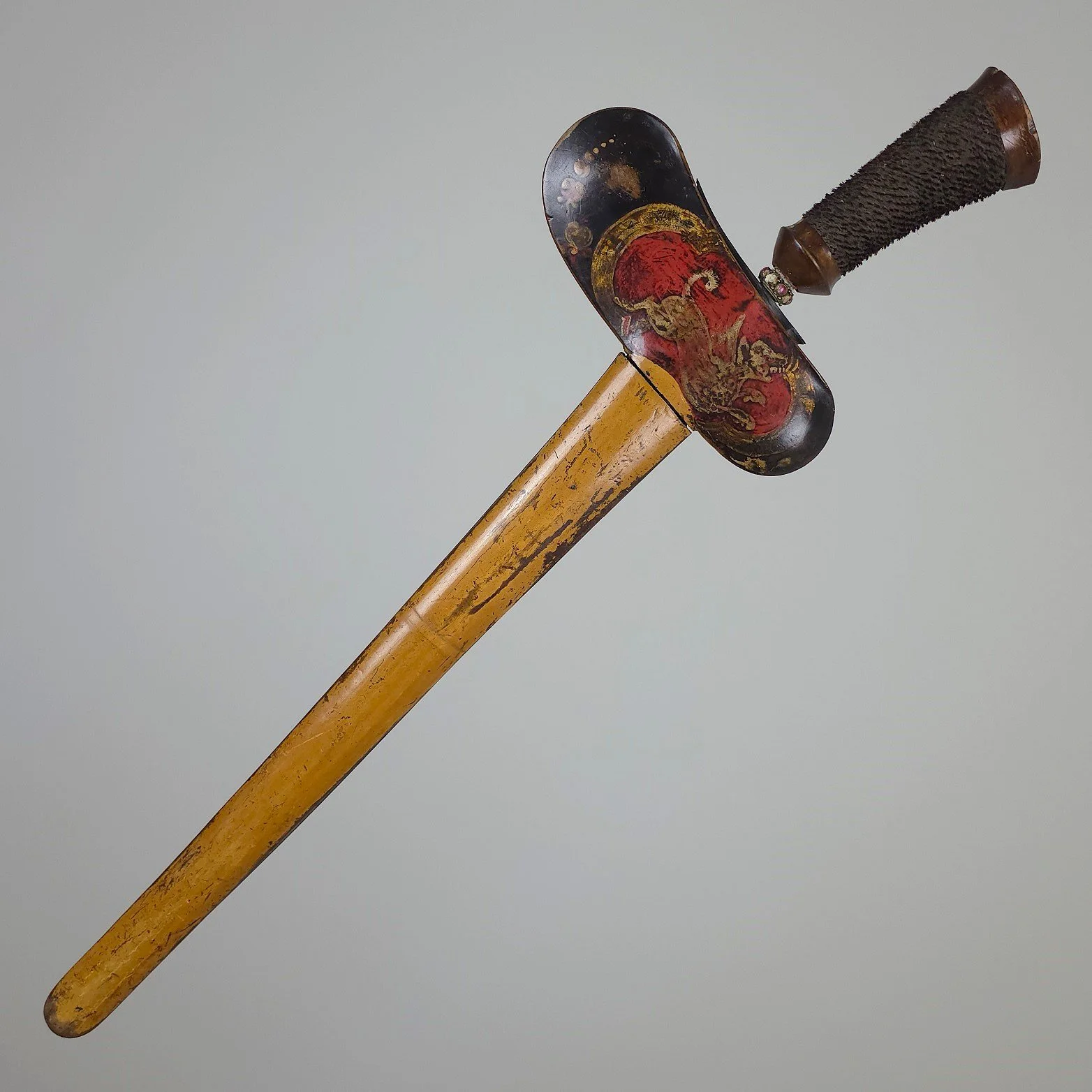
A fine keris sword from the Island of Lombok, having a beautifully painted sheath and mounted on a nicely pamored blade. Dating to the late 19th to early 20th century.
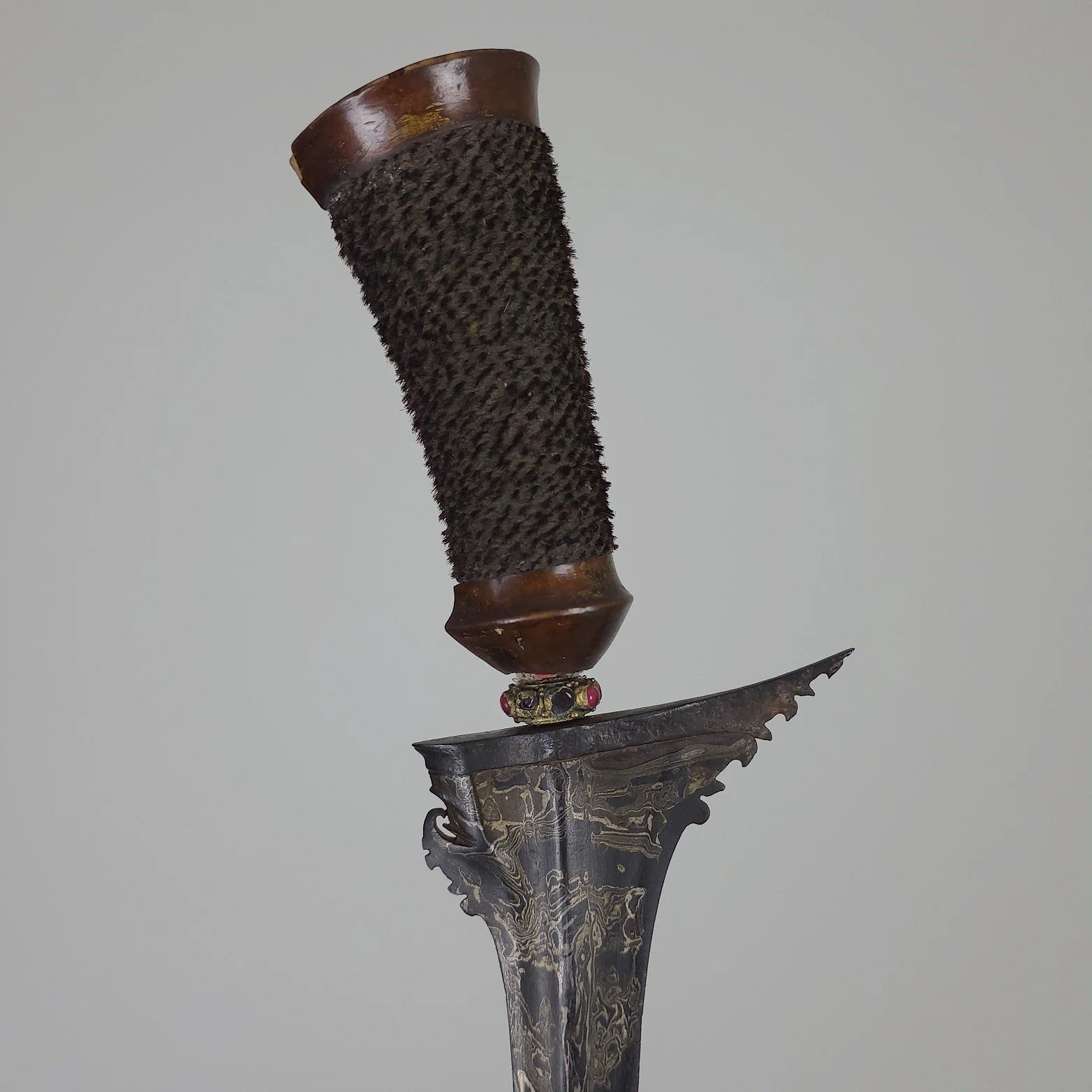
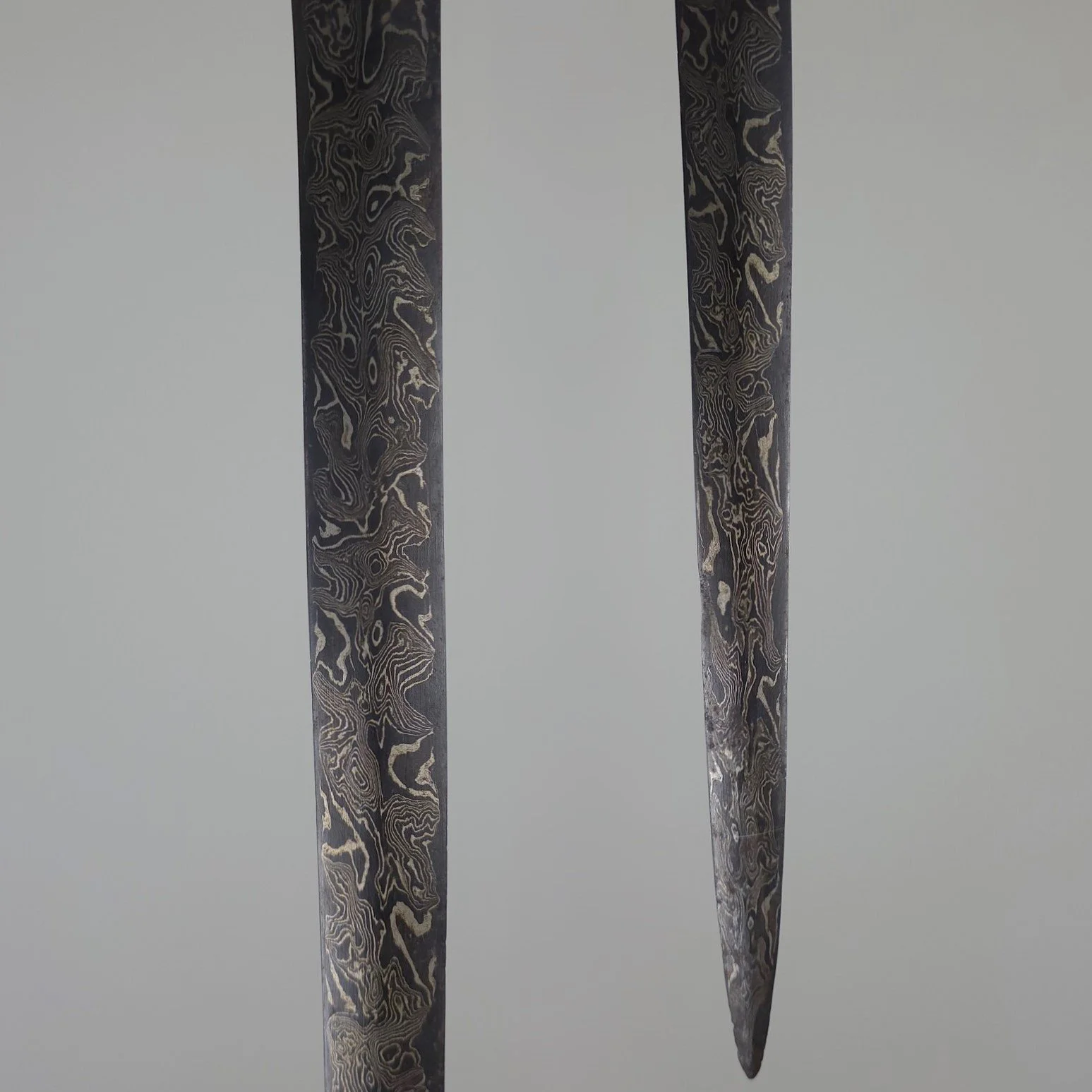
The blade is straight, double-edged, with a slight medial ridge that extends to the point. The entire blade presents a high contrast of a bright nickel pamor against the black steel background. Profiled ganga with greneng (teeth) at the base.
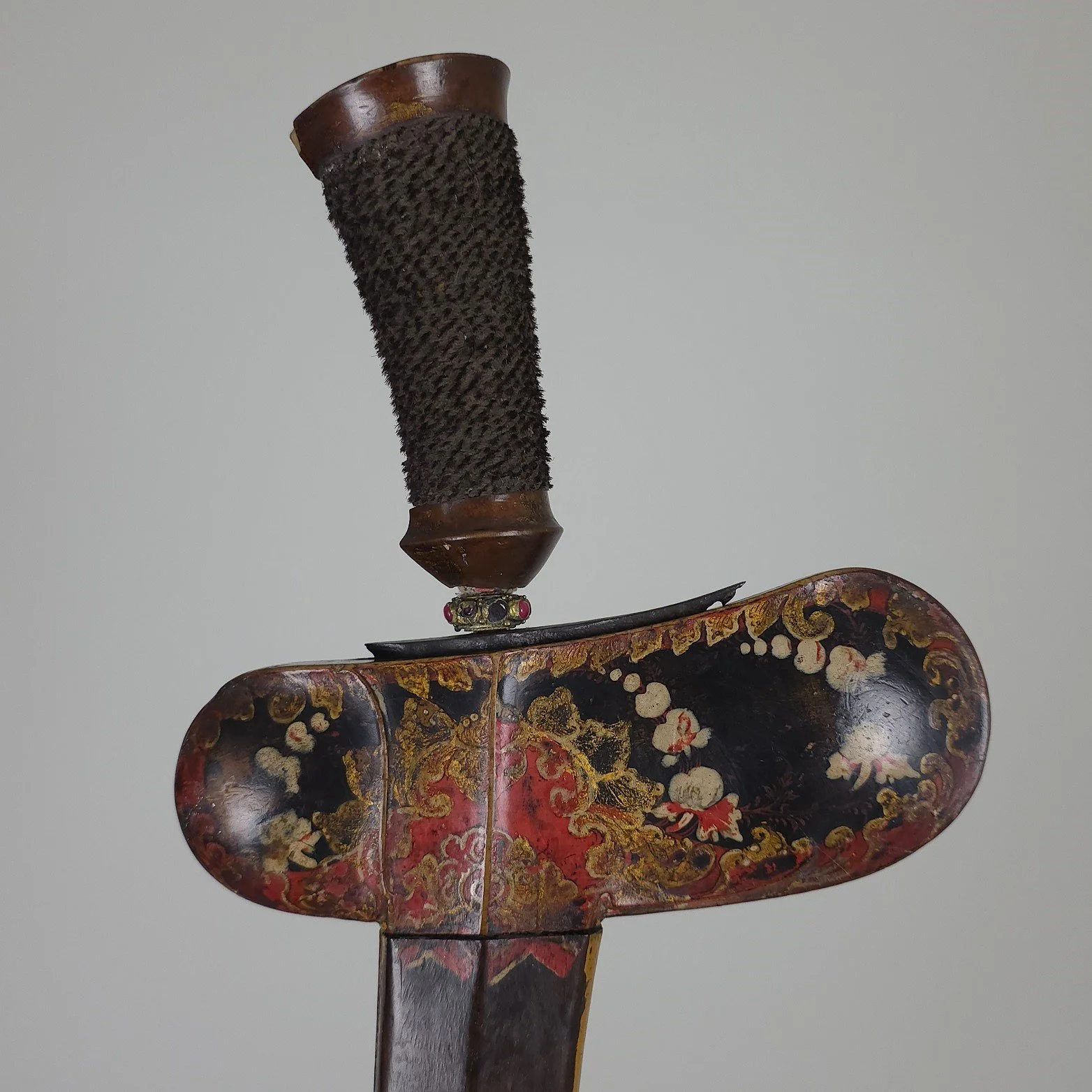
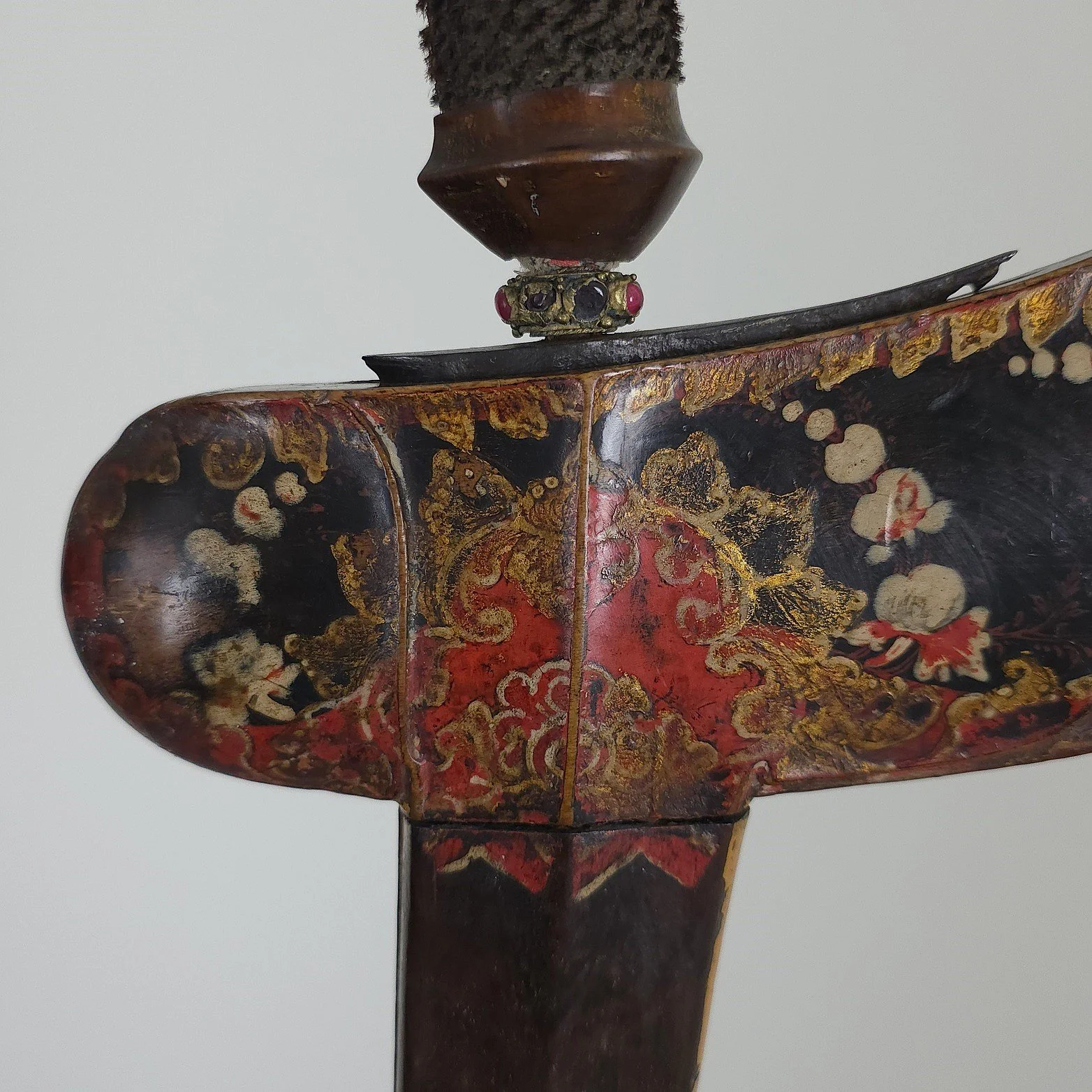
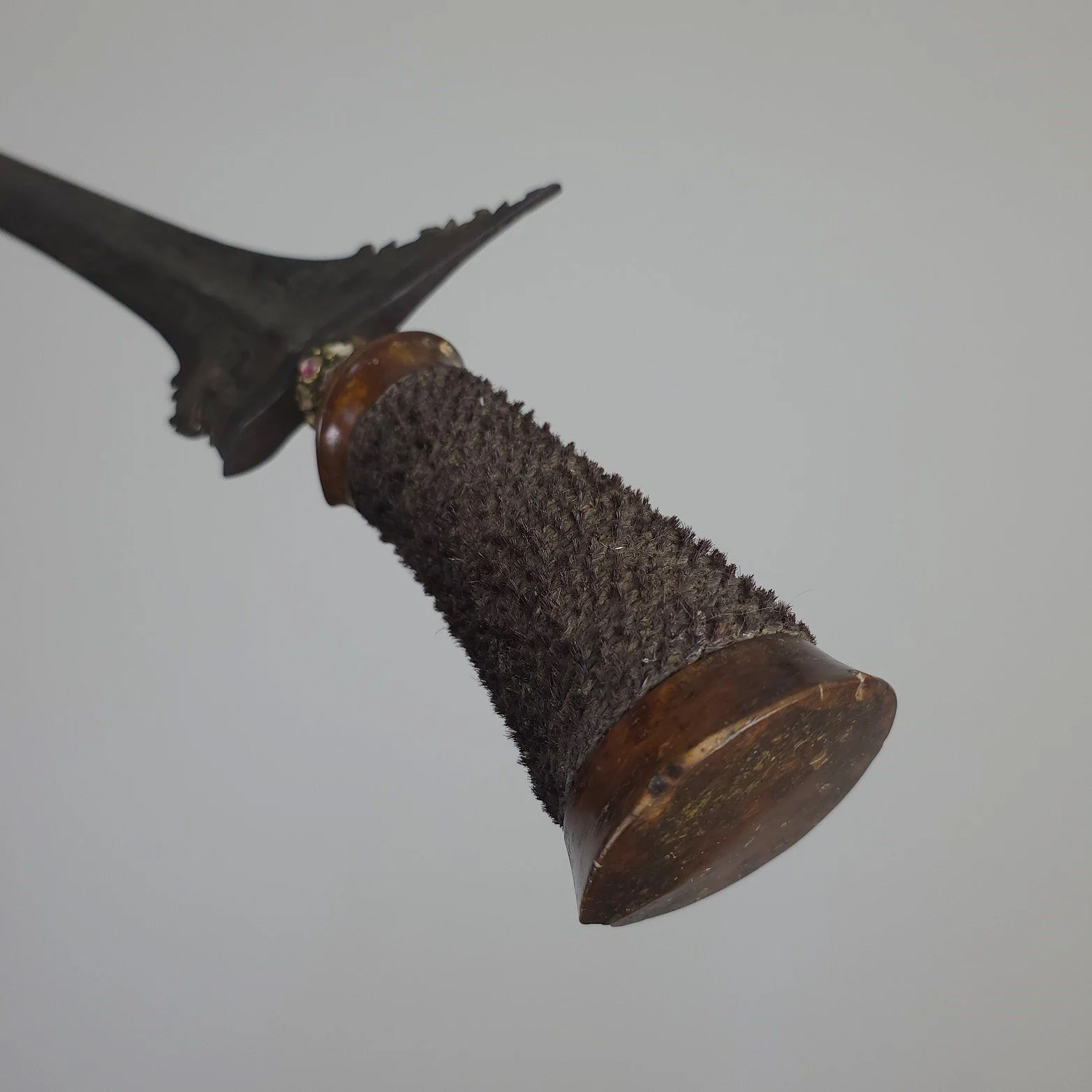
The wooden hulu (hilt) of cylindrical form, flared asymmetrically, in Locengan style having remnants of gold flake paint. The central grip is plaited with short tufts of hair, likely horse hair, protruding from the weaves. Set in a beaded brass mendaq are two original ruby stones, four pink glass stones (possibly pink saphire), with two stones missing. The pink stones are a later replacement to the original ruby stones.
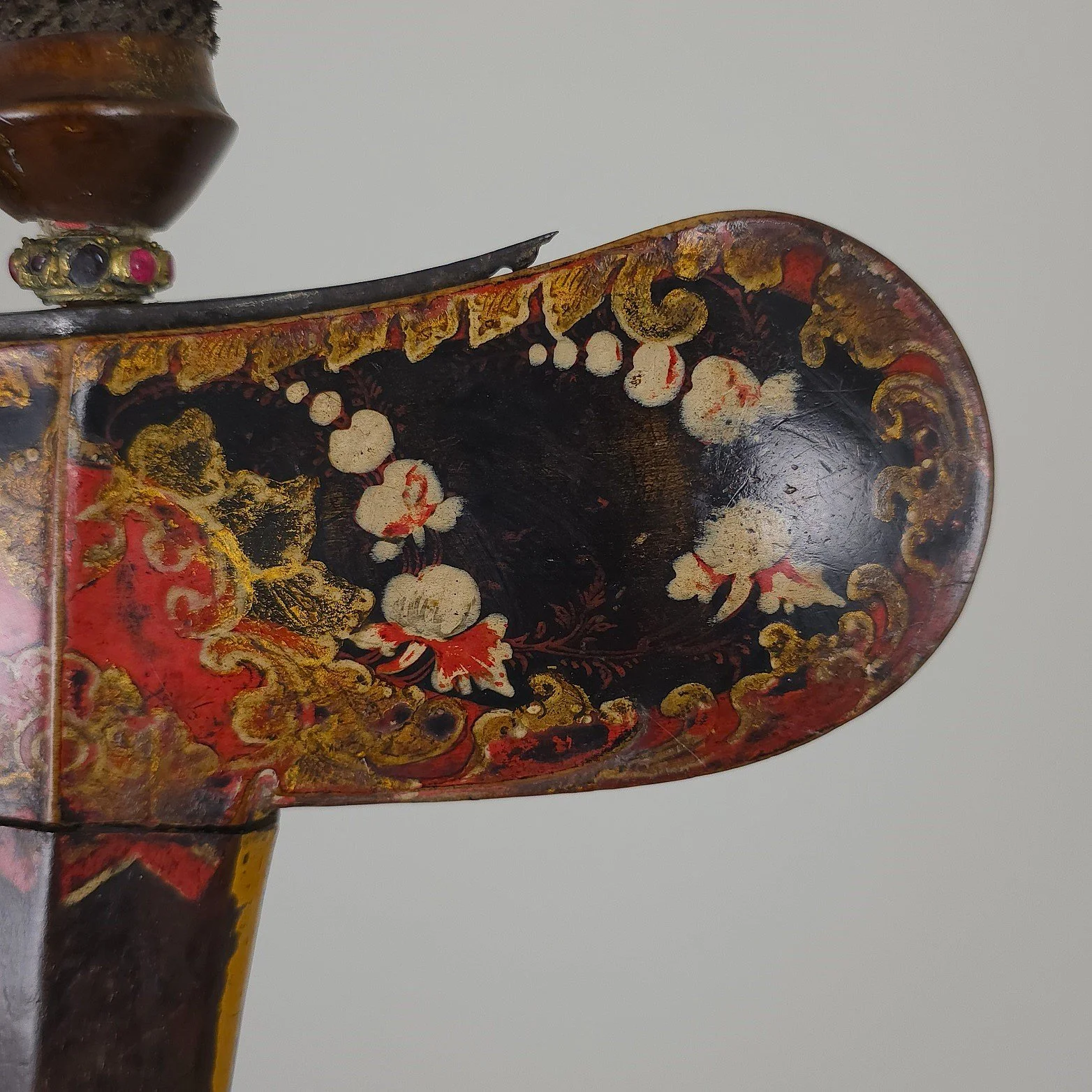
The wooden sheath (waranka) of two pieces, is finely hand painted in Indonesian mythology on both sides. The wranka (top part) of a kidney shape and the gandar (sheath body). One side of the wranka is hand painted in black, red, gold, and white colors with gold flake, displaying a leaping animal, possibly a winged lion (singa) or dog (barong asu), where the gandar is painted in a solid gold color. On the reverse side, elaborately hand painted in red, gold, white, and gold flake of an image of possibly clouds and/or waves with a black background with red floral motifs. It is not clear what the images represent from my knowledge of the iconology. A fine and impressive Lombok keris, with a Bali influenced sheath. Likely used by a noble or a priest due to its elegant presentation.
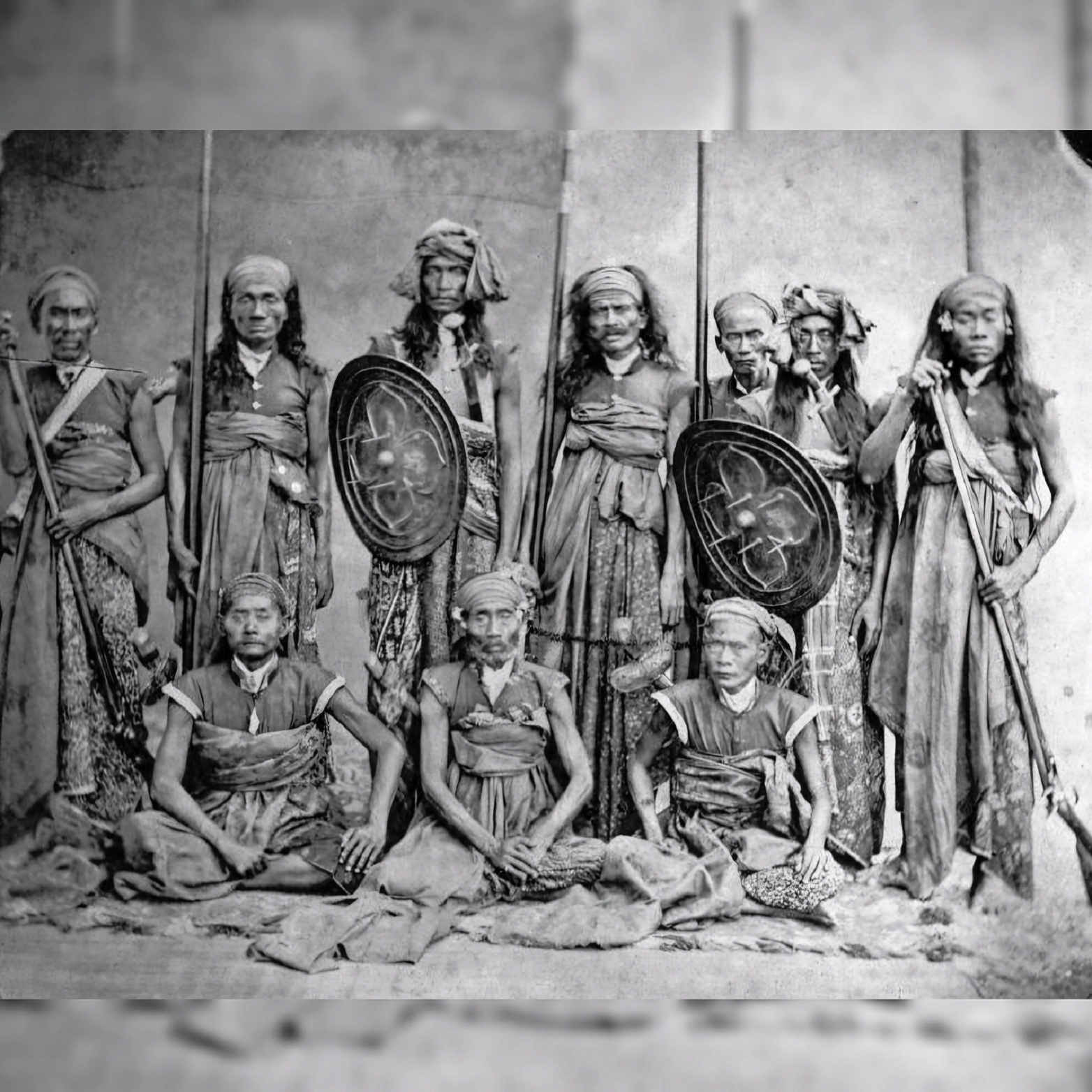
Photograph 21: Sasak chiefs of Lombok, ca. 1870 - 1890.
[1] Richardson Thom. 2018. Islamic Arms And Armour. Page 120.
[2] https://www.britishmuseum.org/collection/object/A_As1896-532-a
[3] https://www.britishmuseum.org/collection/object/A_As1884-0411-14-a
[4] http://www.oriental-arms.co.il/item.php?id=457
[5] http://www.oriental-arms.co.il/item.php?id=2818
[6] http://www.oriental-arms.co.il/item.php?id=8194
[7] http://www.oriental-arms.co.il/item.php?id=1151
[8] http://www.oriental-arms.co.il/item.php?id=5843
[9] http://www.oriental-arms.co.il/item.php?id=8166
[10] http://www.oriental-arms.co.il/item.php?id=6933
[11] http://www.oriental-arms.co.il/item.php?id=8187
[12] http://www.oriental-arms.co.il/item.php?id=469
[13] http://www.oriental-arms.co.il/item.php?id=4230
[14] http://www.oriental-arms.co.il/item.php?id=7129
[15] http://www.vikingsword.com/vb/showthread.php?p=207435
[16] http://www.vikingsword.com/vb/showthread.php?t=20845
[17] https://www.mandarinmansion.com/glossary/keris
[18] https://www.mandarinmansion.com/article/balinese-keris-blade-finishing