Khyber Sword
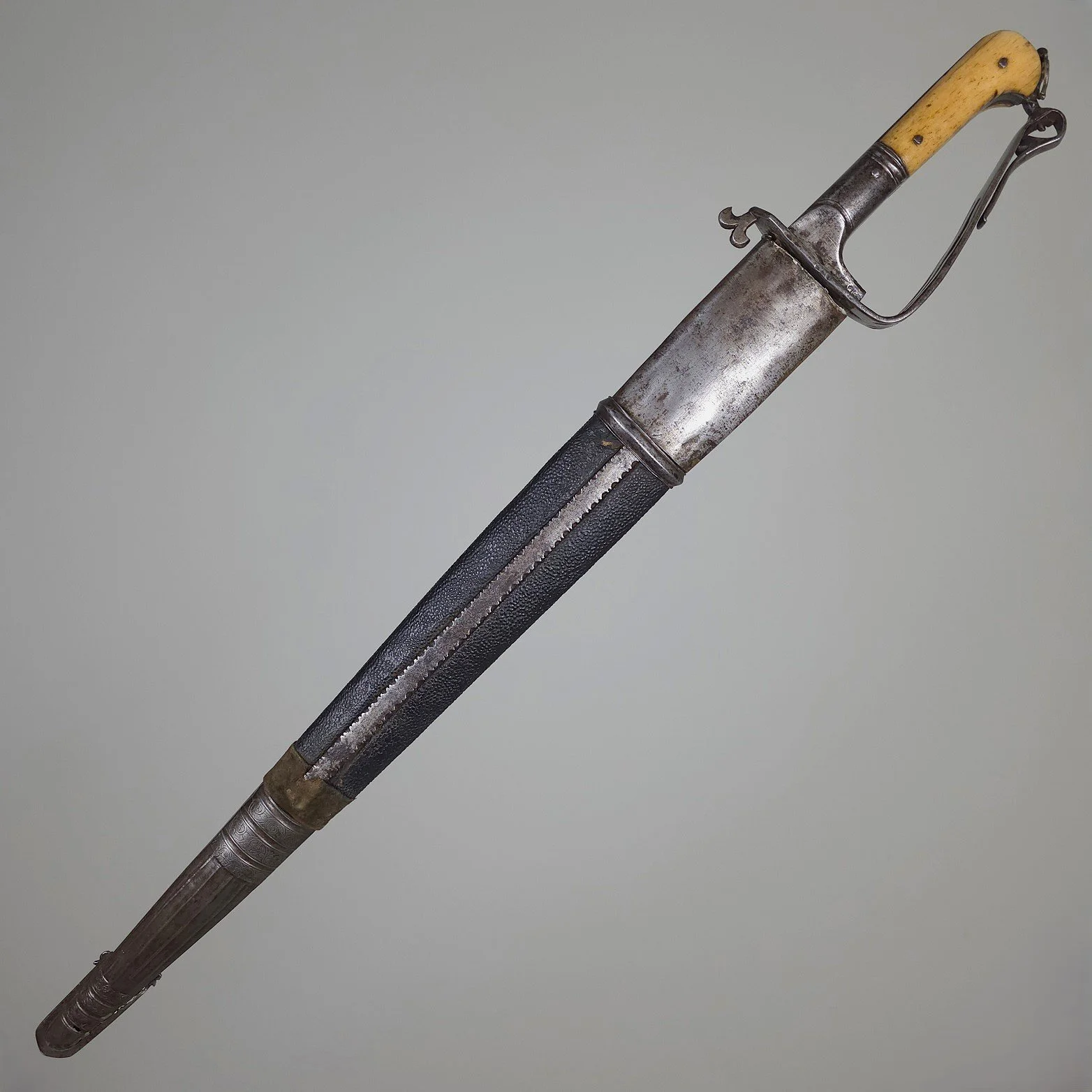
Khyber Sword
Pashtun
Emirate of Afghanistan (Afghanistan)
Late 19th century - Early 20th century (ca. 1880 - 1910)
Steel, iron, brass, bone, wood, leather, fabric
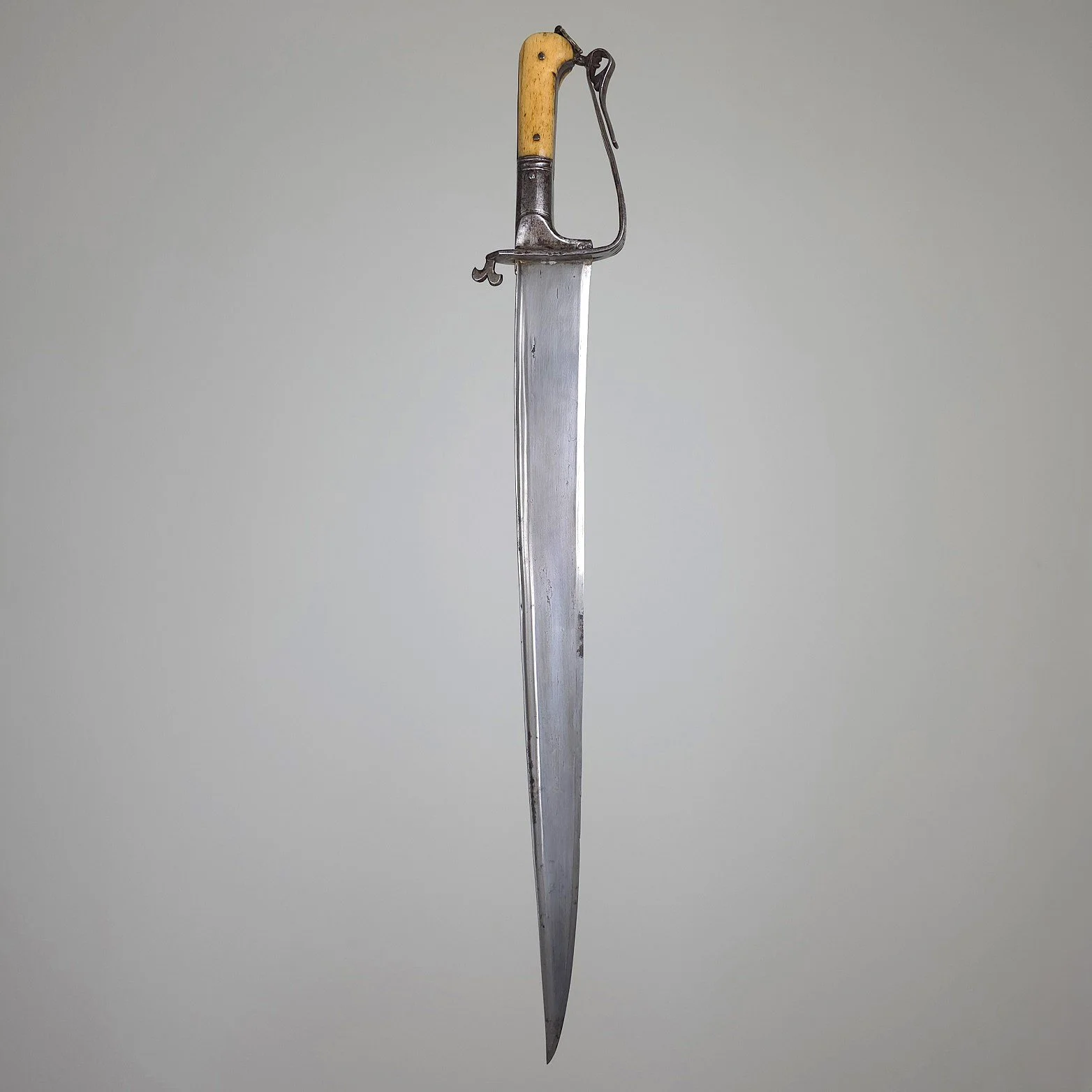
Blade: 57,5cm
Hilt & Blade: 72,7cm
Hilt, Blade, Sheath: 77,8cm
Collection Date: 2026
Collection Number: 516
Ex. Rick Stroud (RSWORD): Raleigh, North Carolina, USA (2026)
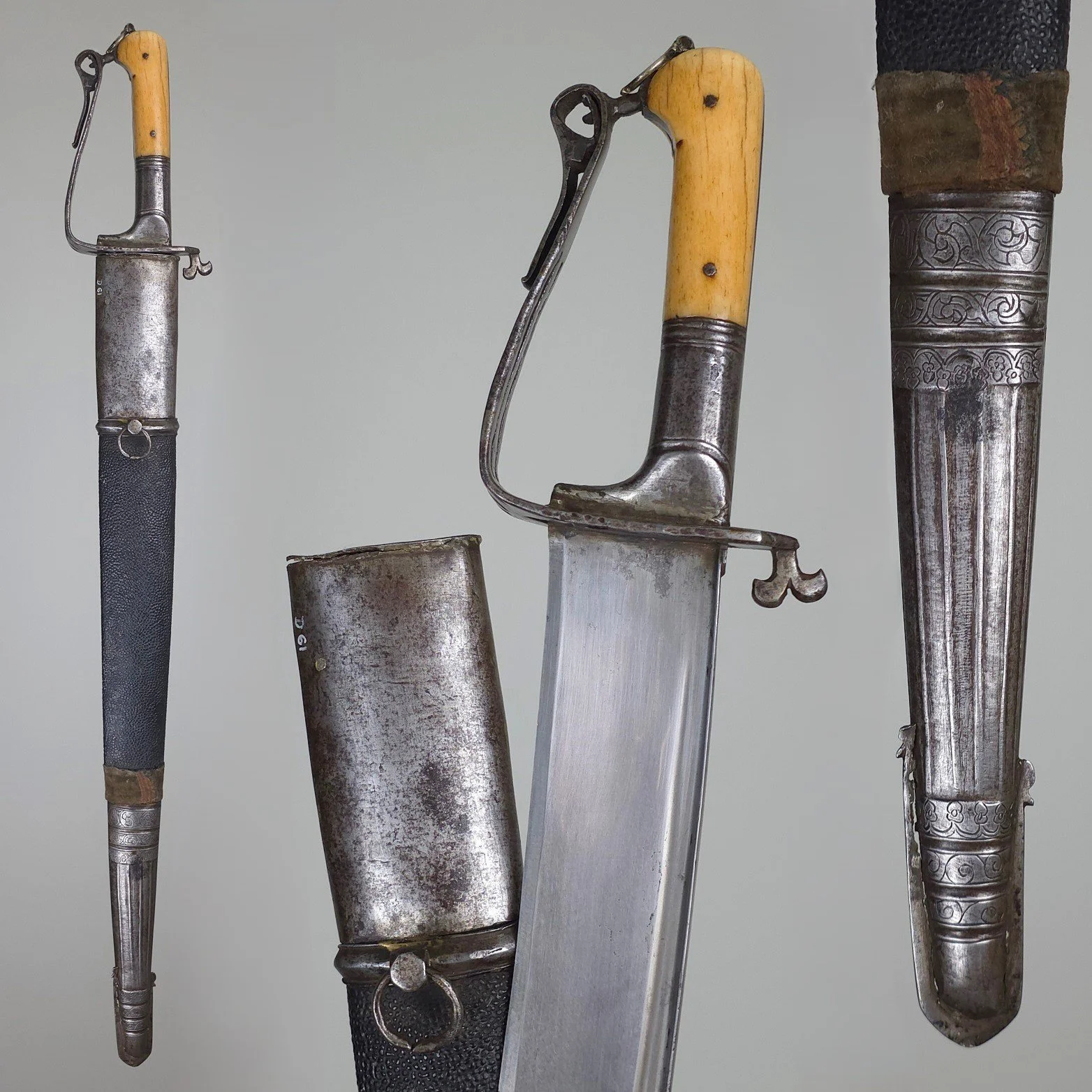
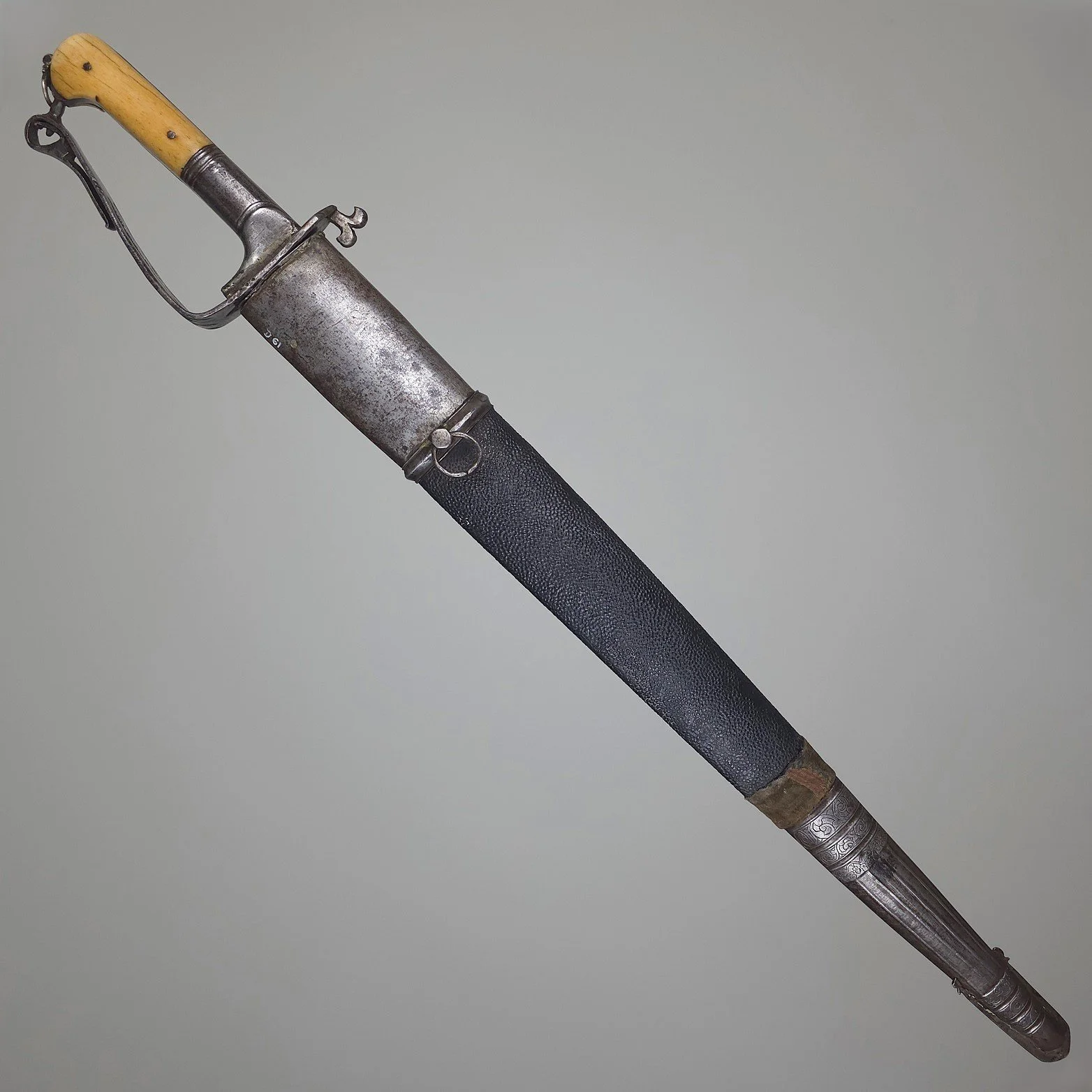
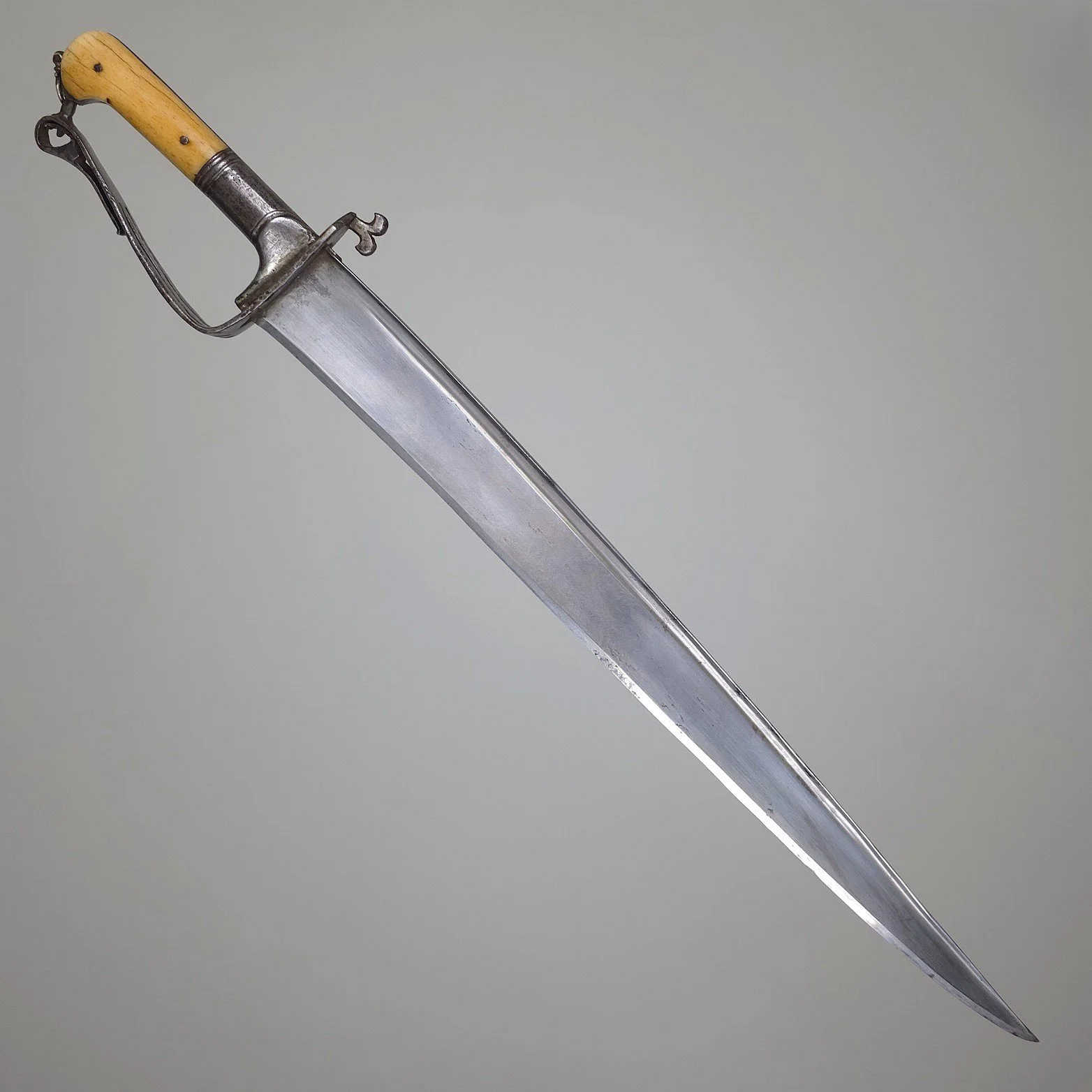
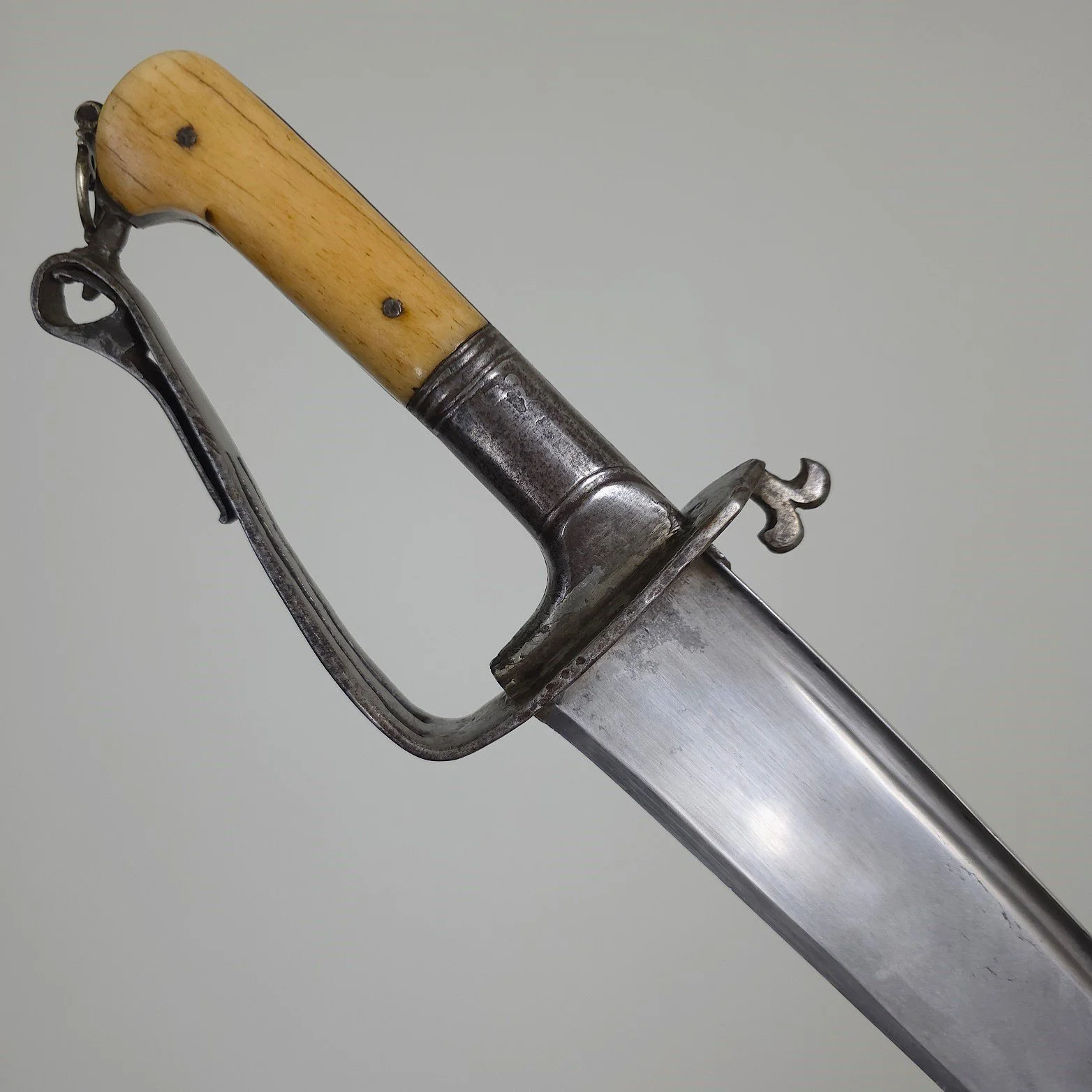
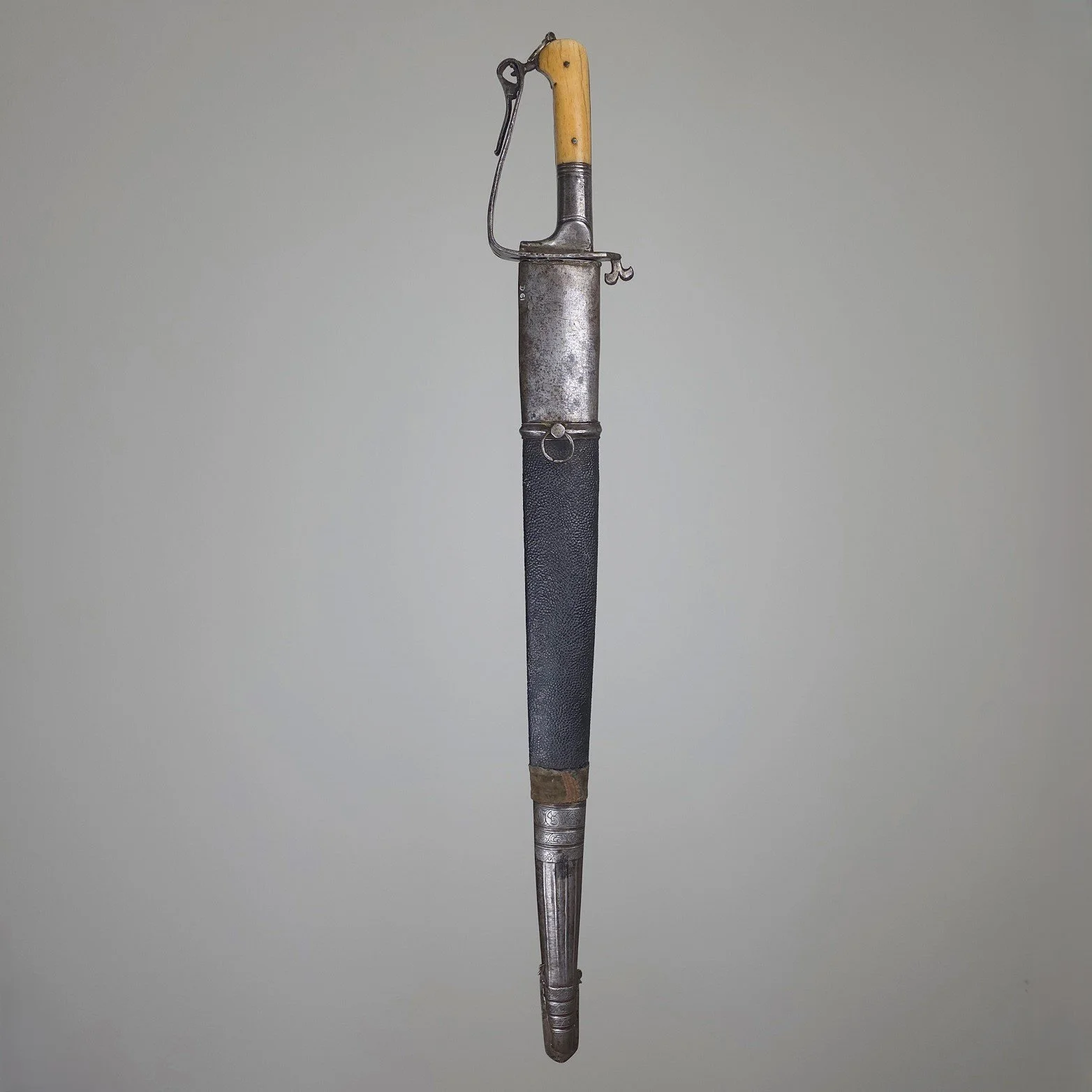
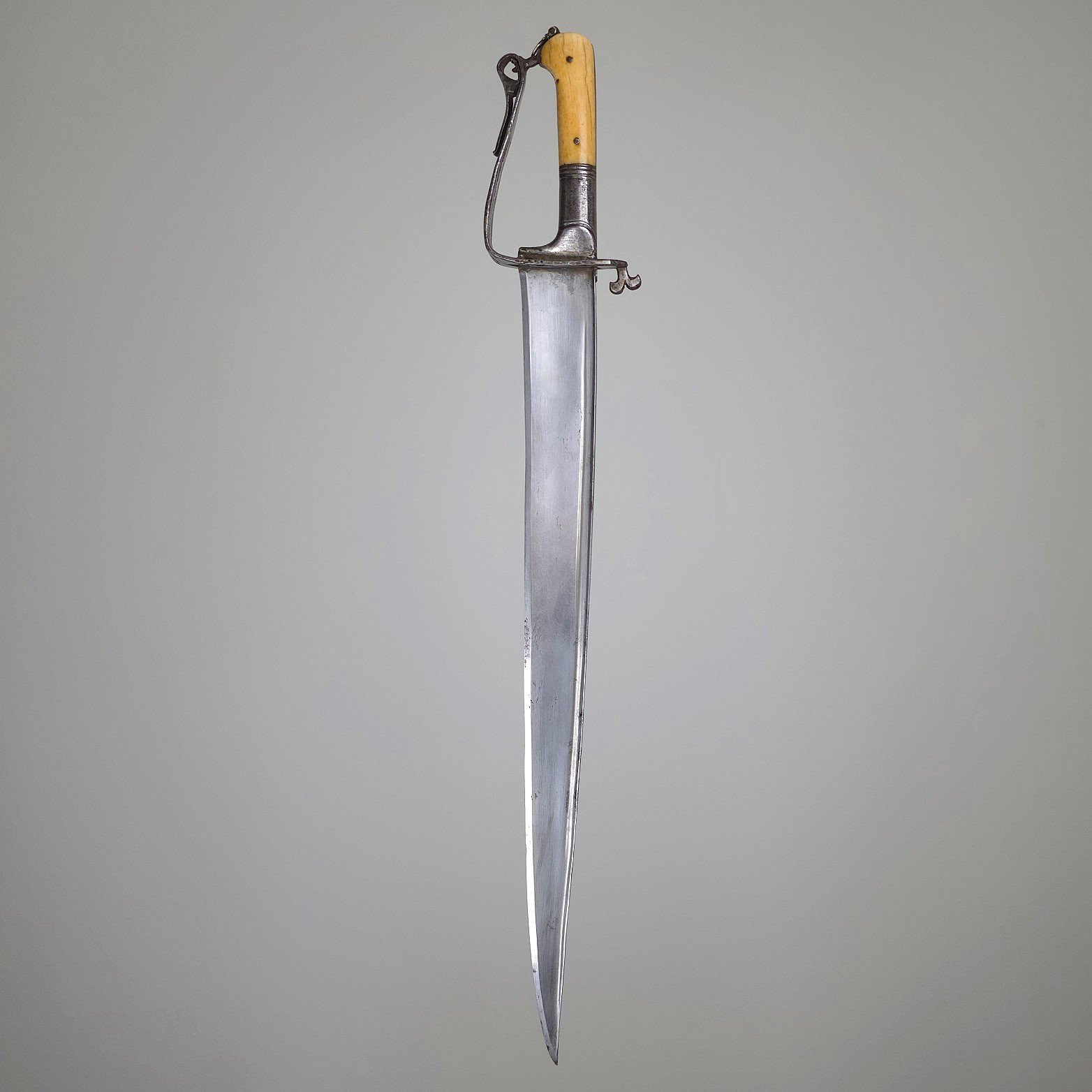
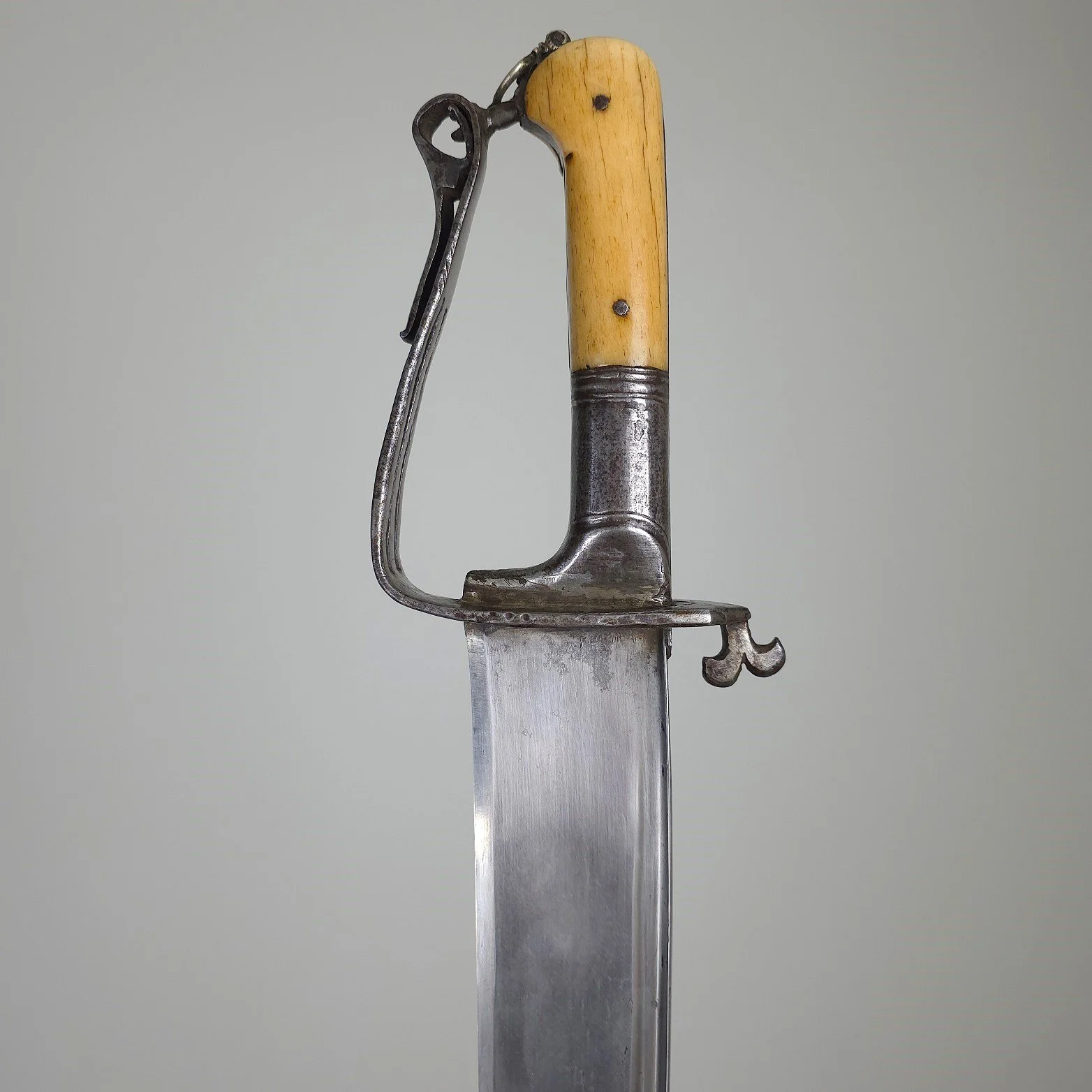
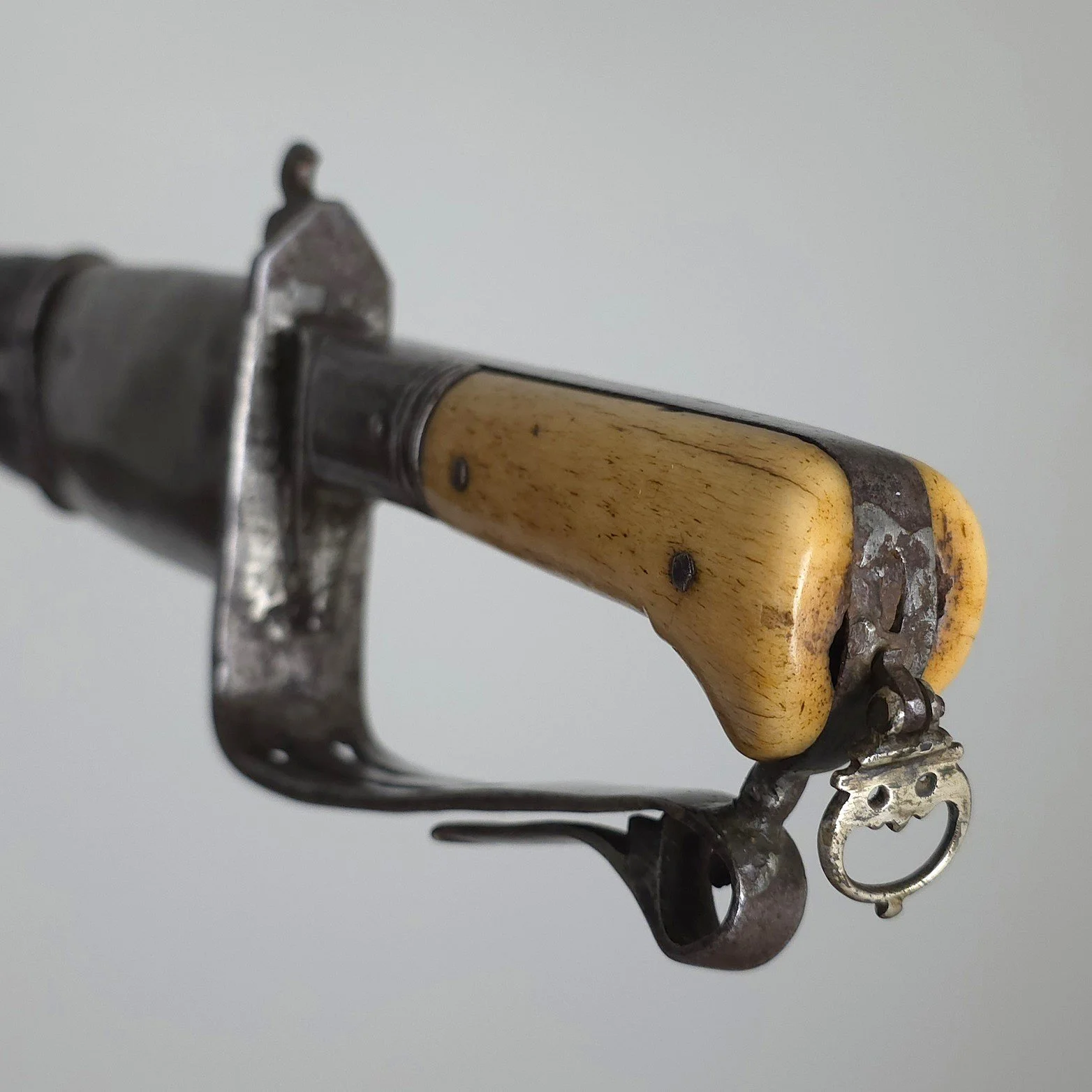
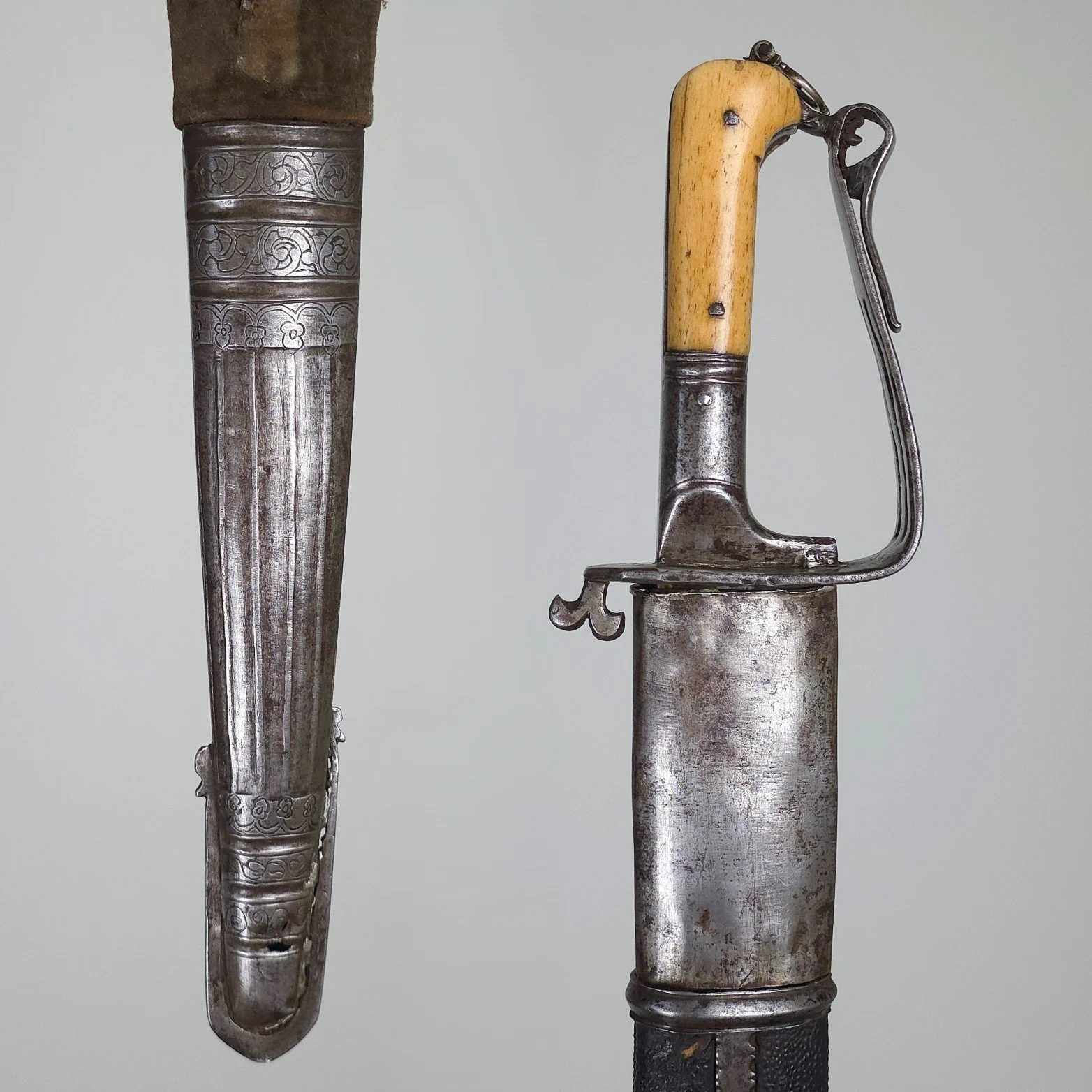
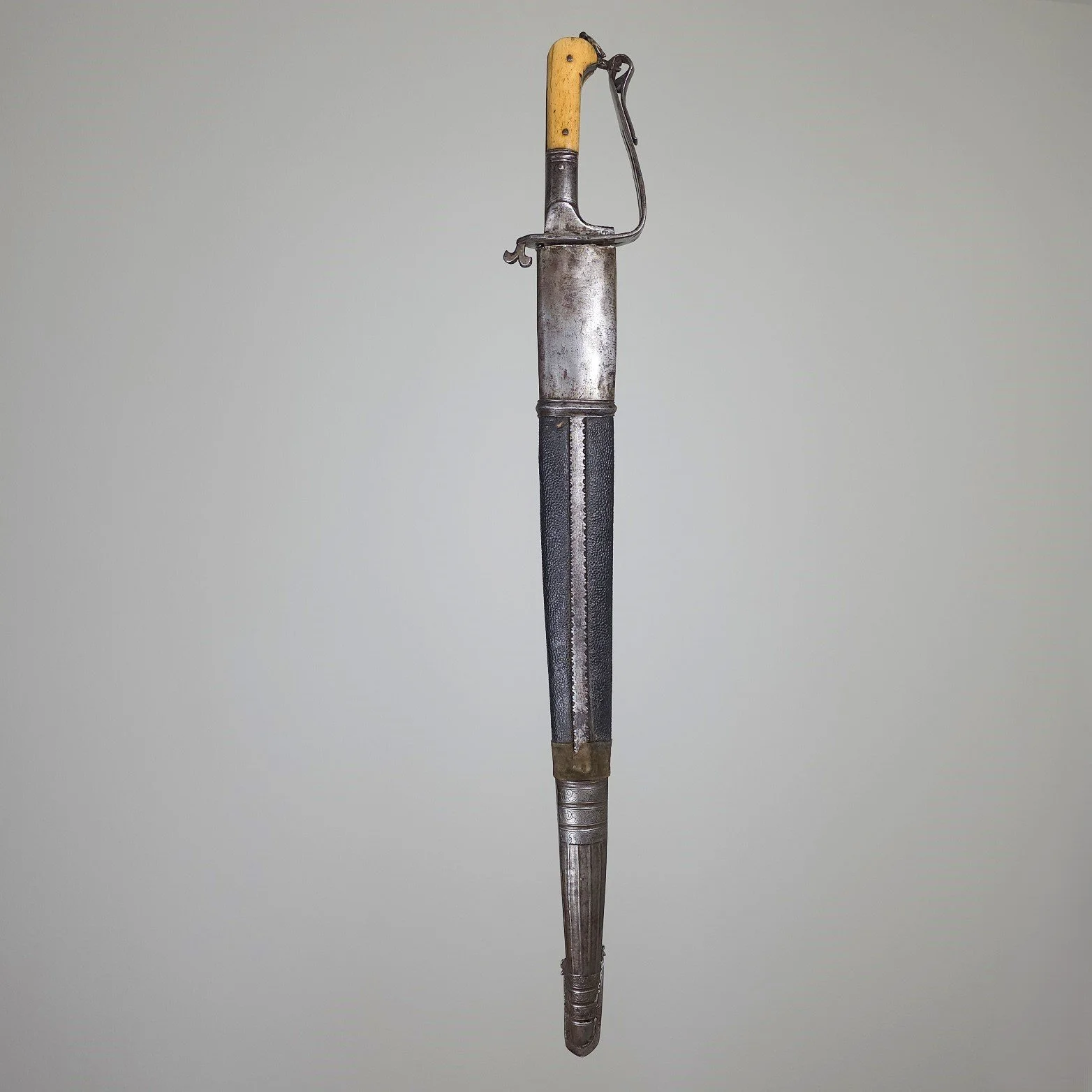
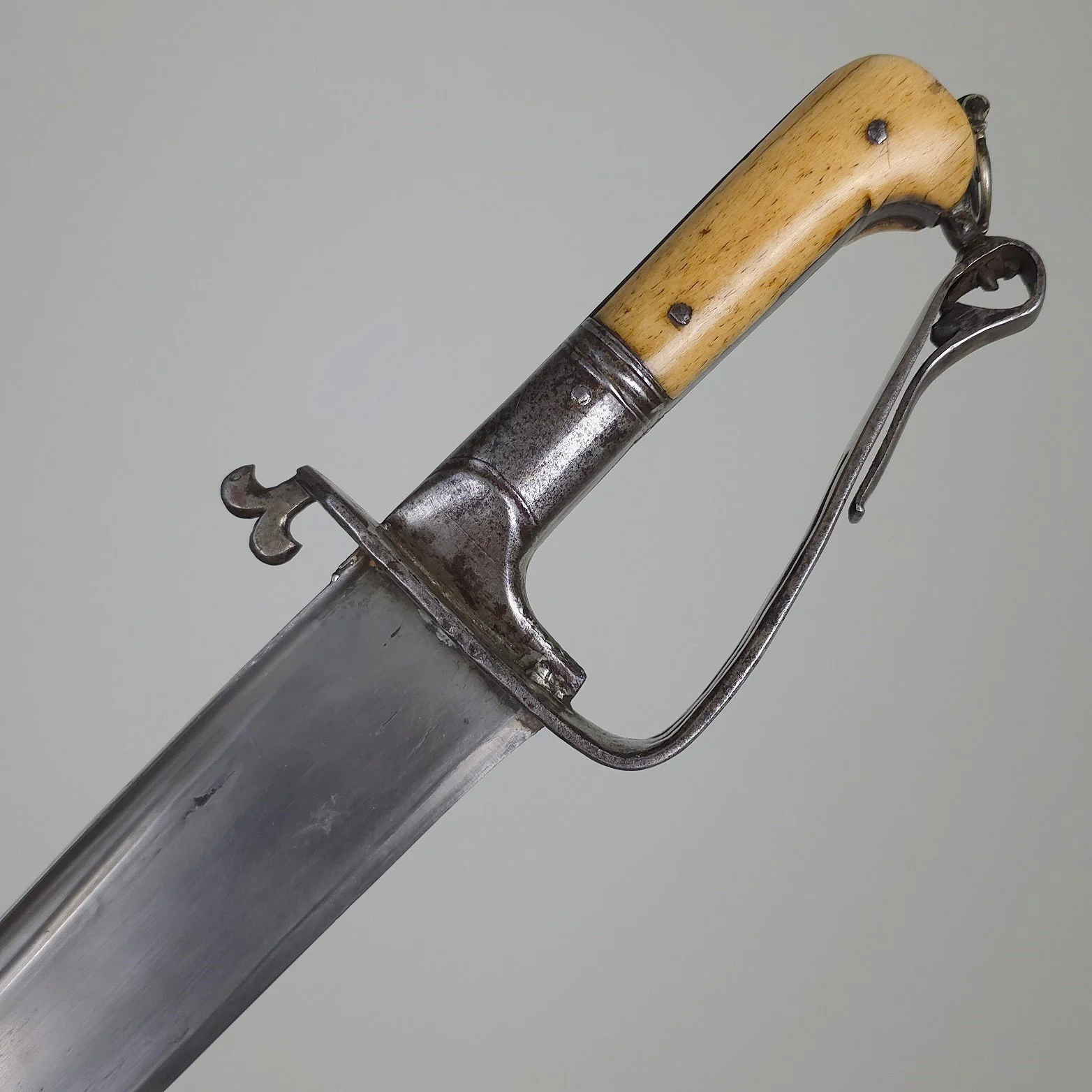
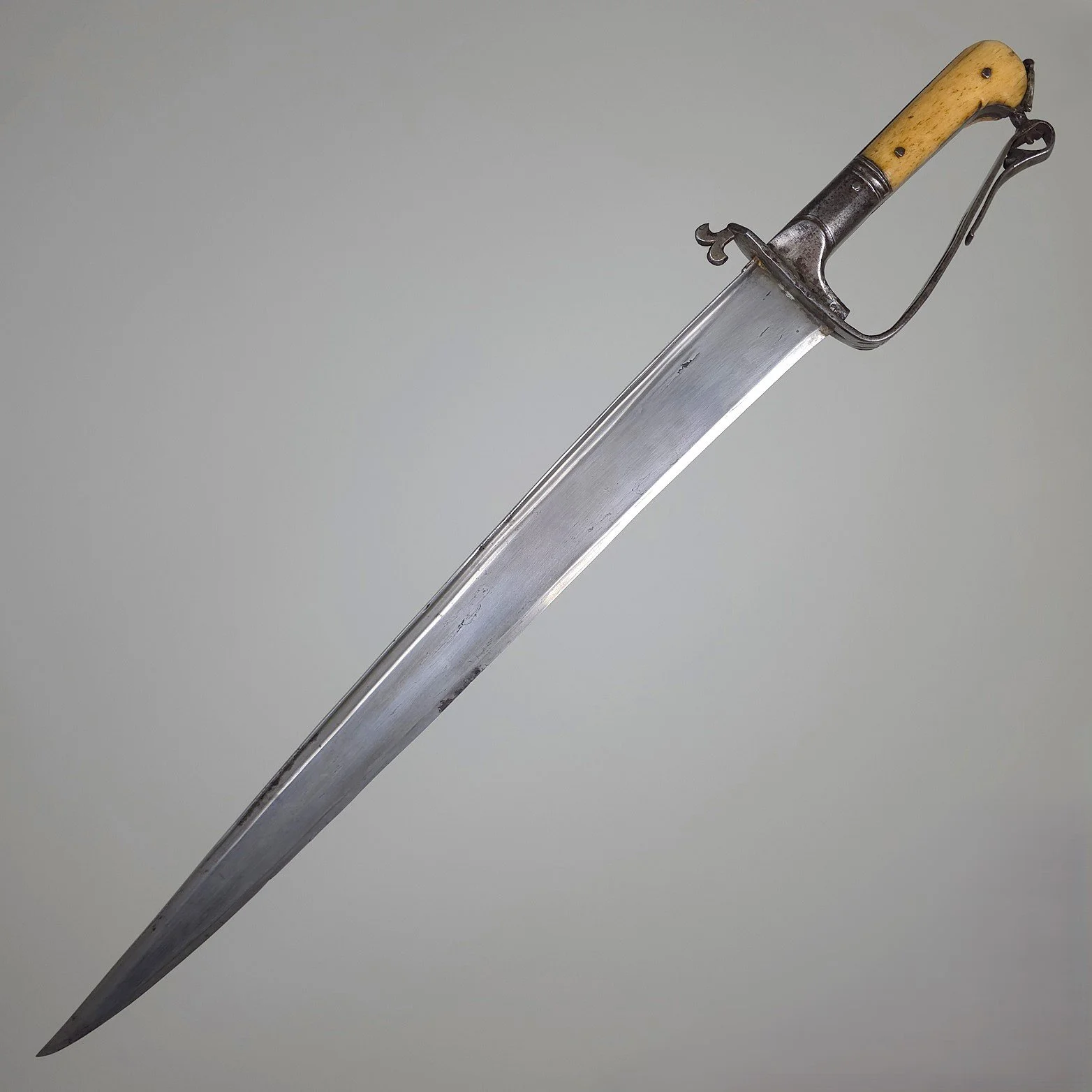
A very good pashtun sword from the Emirate of Afghanistan. This specific example is a less common form of the Afghan Khyber sword, a transitional development with a mixture of both tribal and regulation patterned characteristics. This type was only made for a few decades during the reconfiguration period of the Afghan military where Afghan forces were reorganized into a new modern formidable fighting force influenced by the British military model and standardization. These regulation swords evolved over a number of decades from the late 19th century into the early 20th century. British influence can be recognized by the additions of the iron knuck guard and the iron mounts on the sheath.
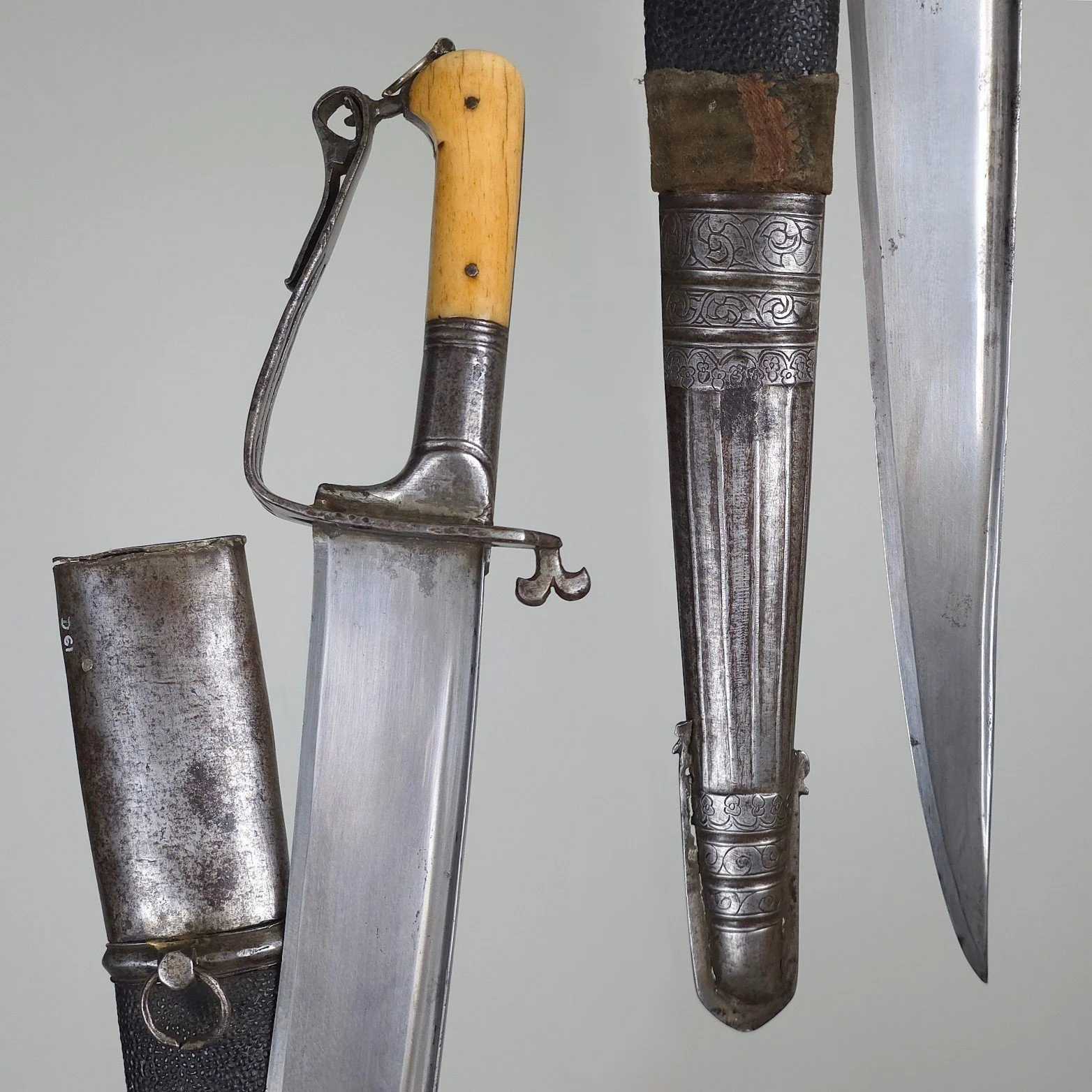
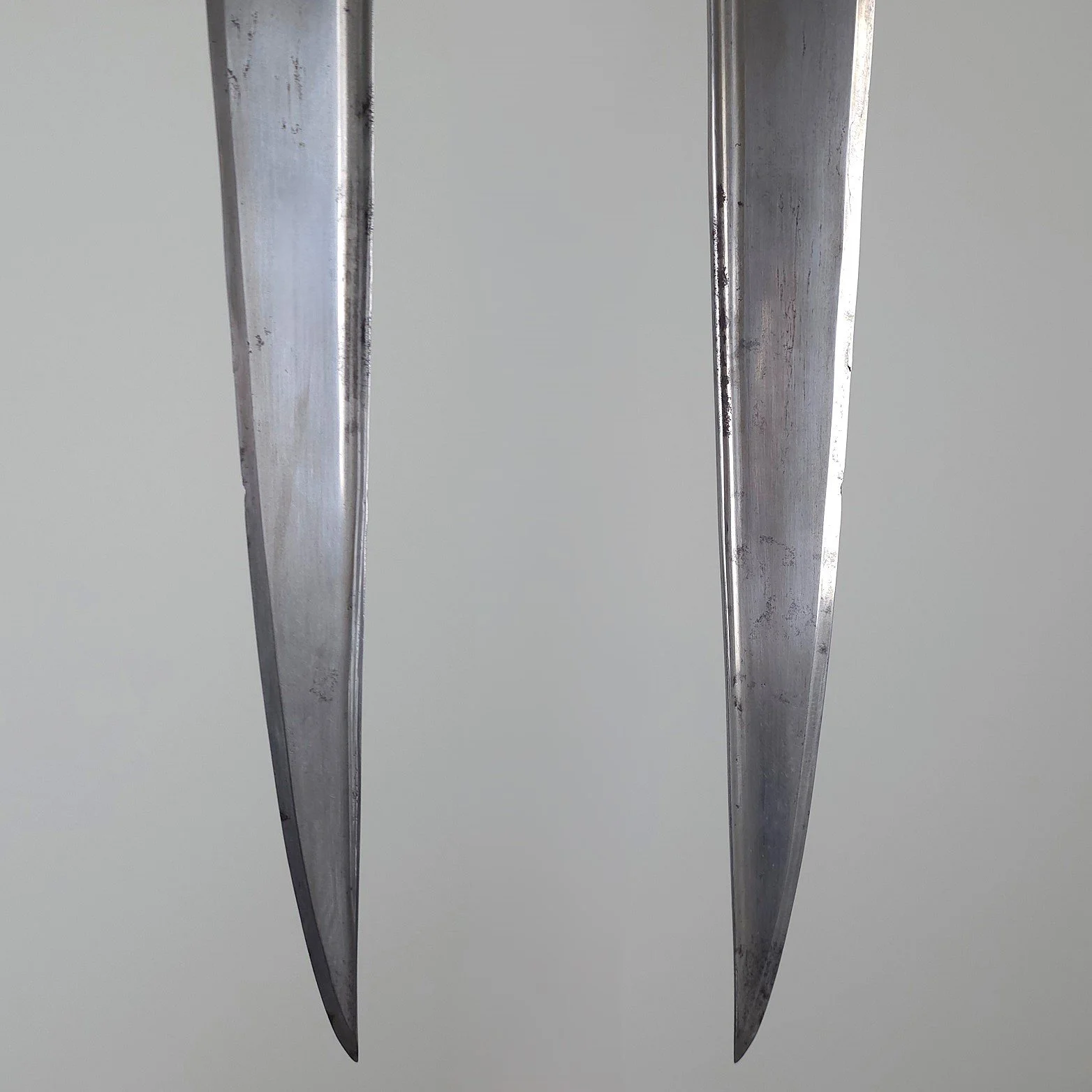
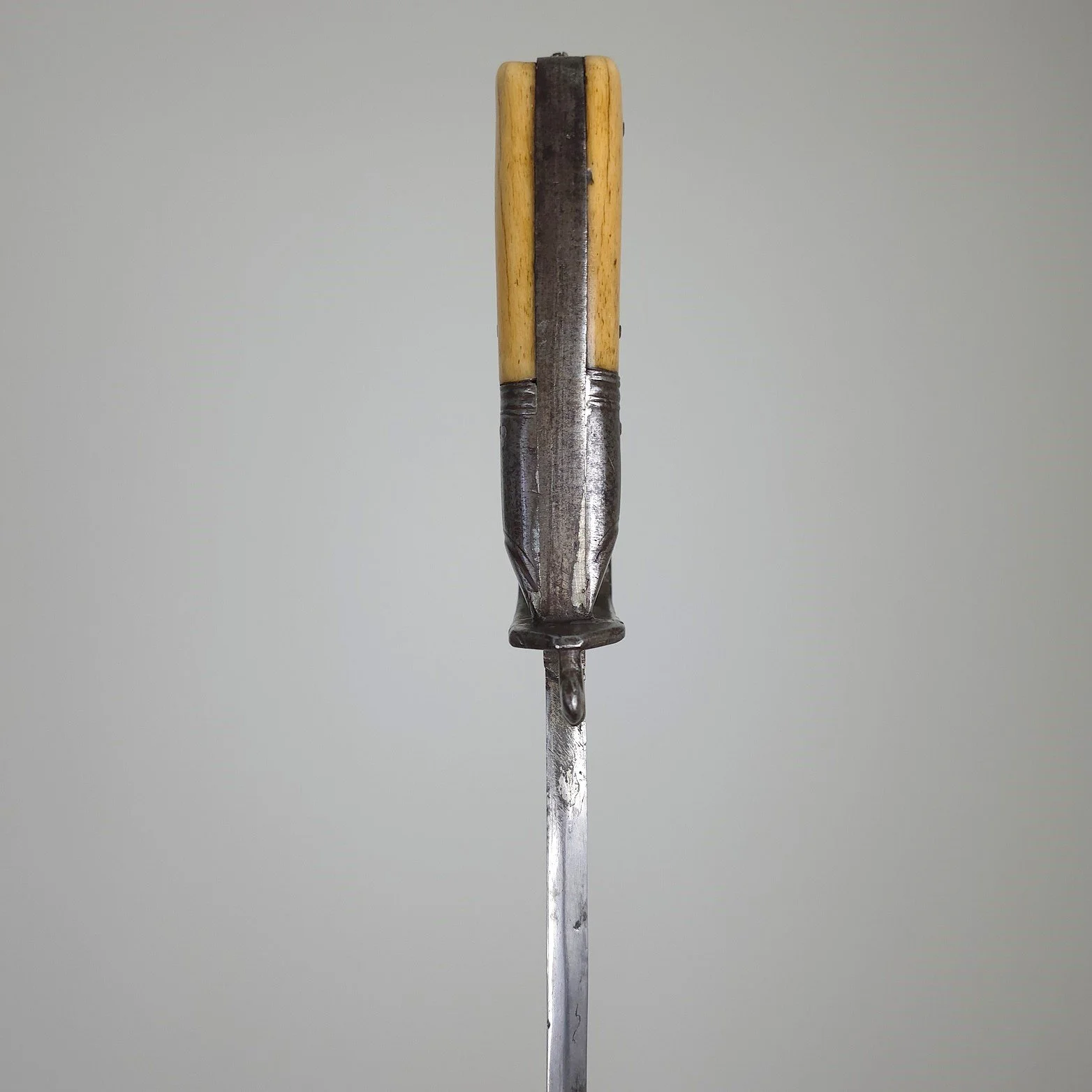
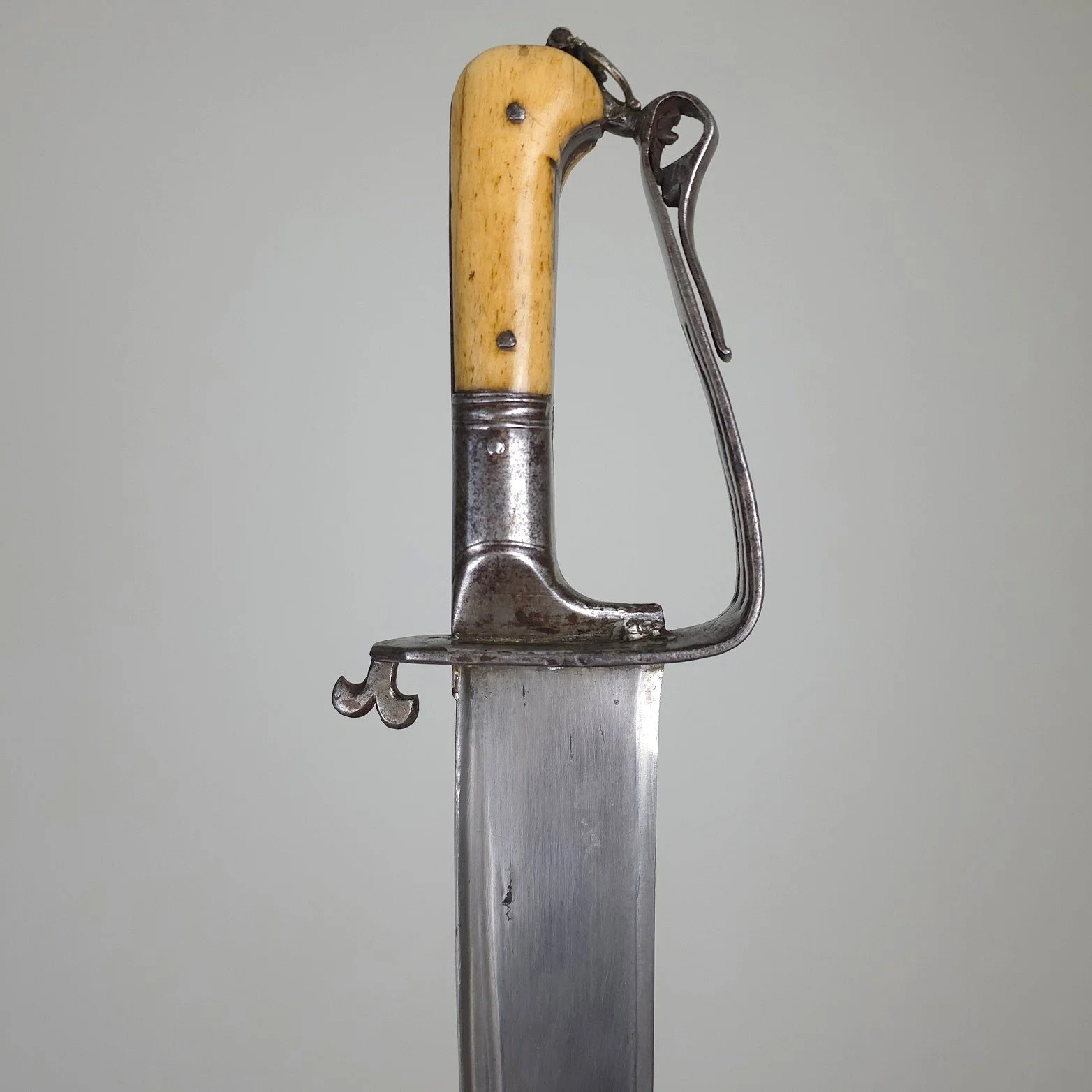
The broad and heavy single- edged straight steel blade slightly recurves near the point. Strong T- shaped cross- section spine that is beveled in the center. A deep fuller follows the spine for most of the blade's length.
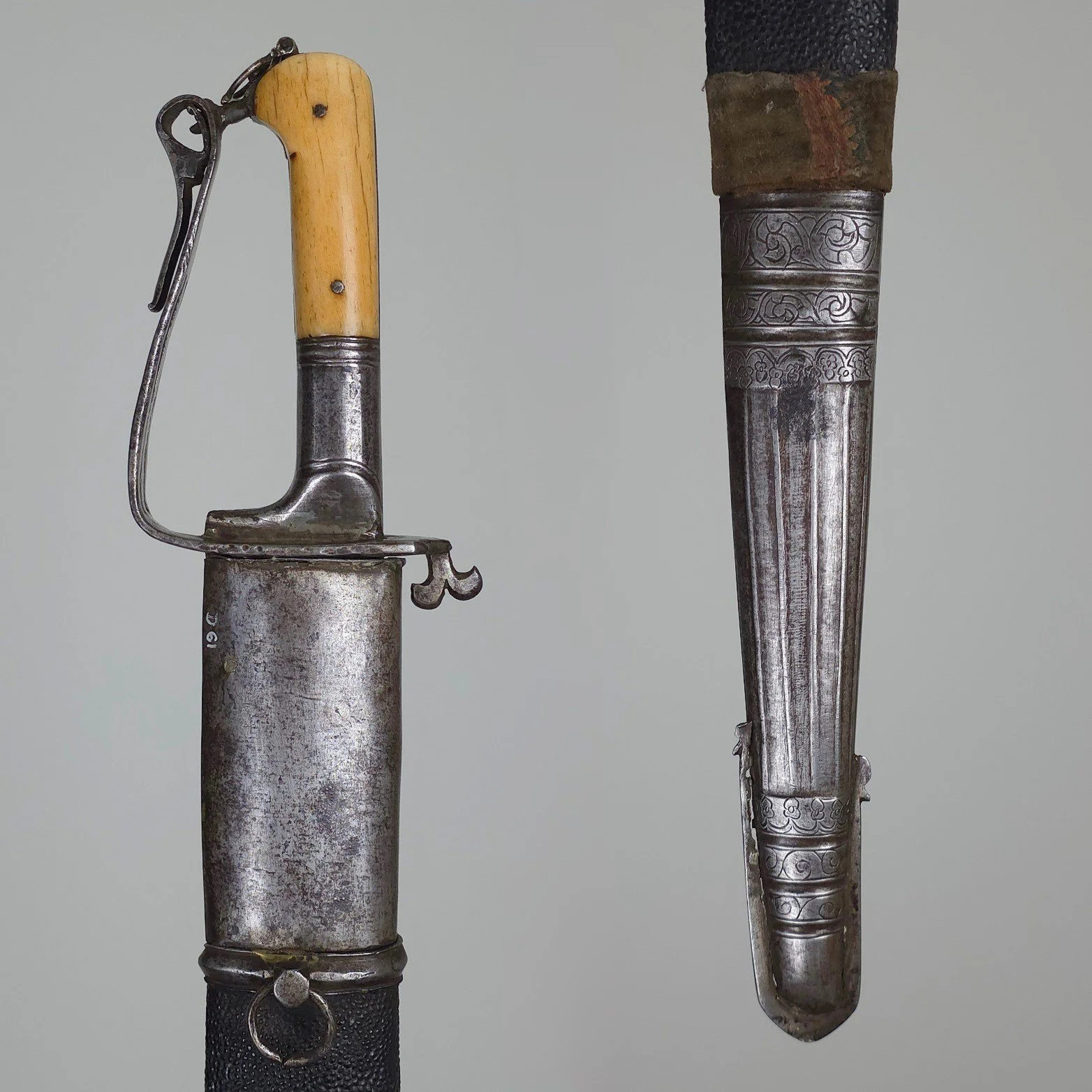
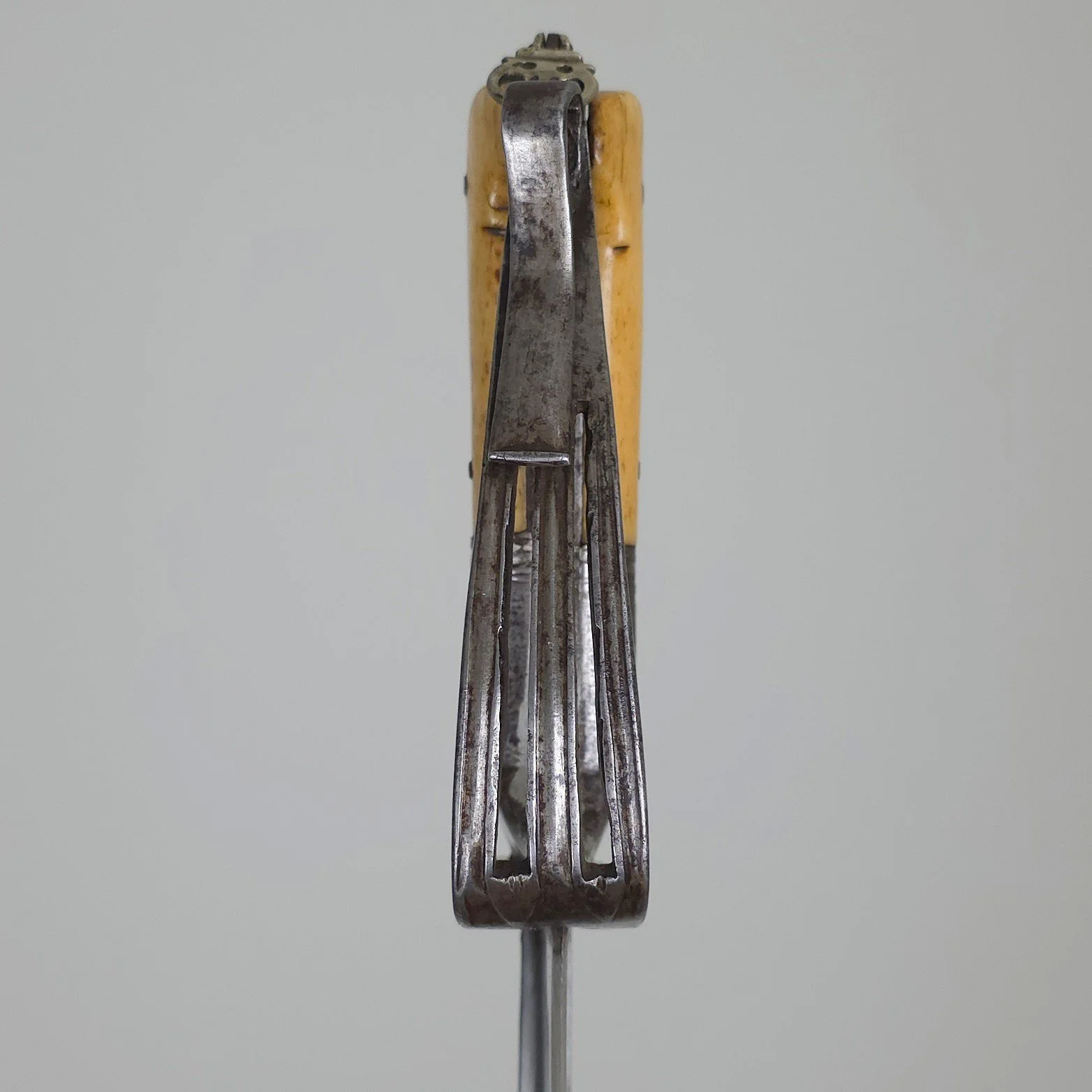
Octagonal iron bolster with linear designs. Forged between the blade and the bolster is an iron handguard, the top qullion protruding outwards in a blossoming flower design while the openwork three- bar knuckle bow curls back to itself. Iron backstrap. Honey- colored bone scale grips held in place by two iron nails. Pinned to the pommel is a brass lanyard pendant that swivels.
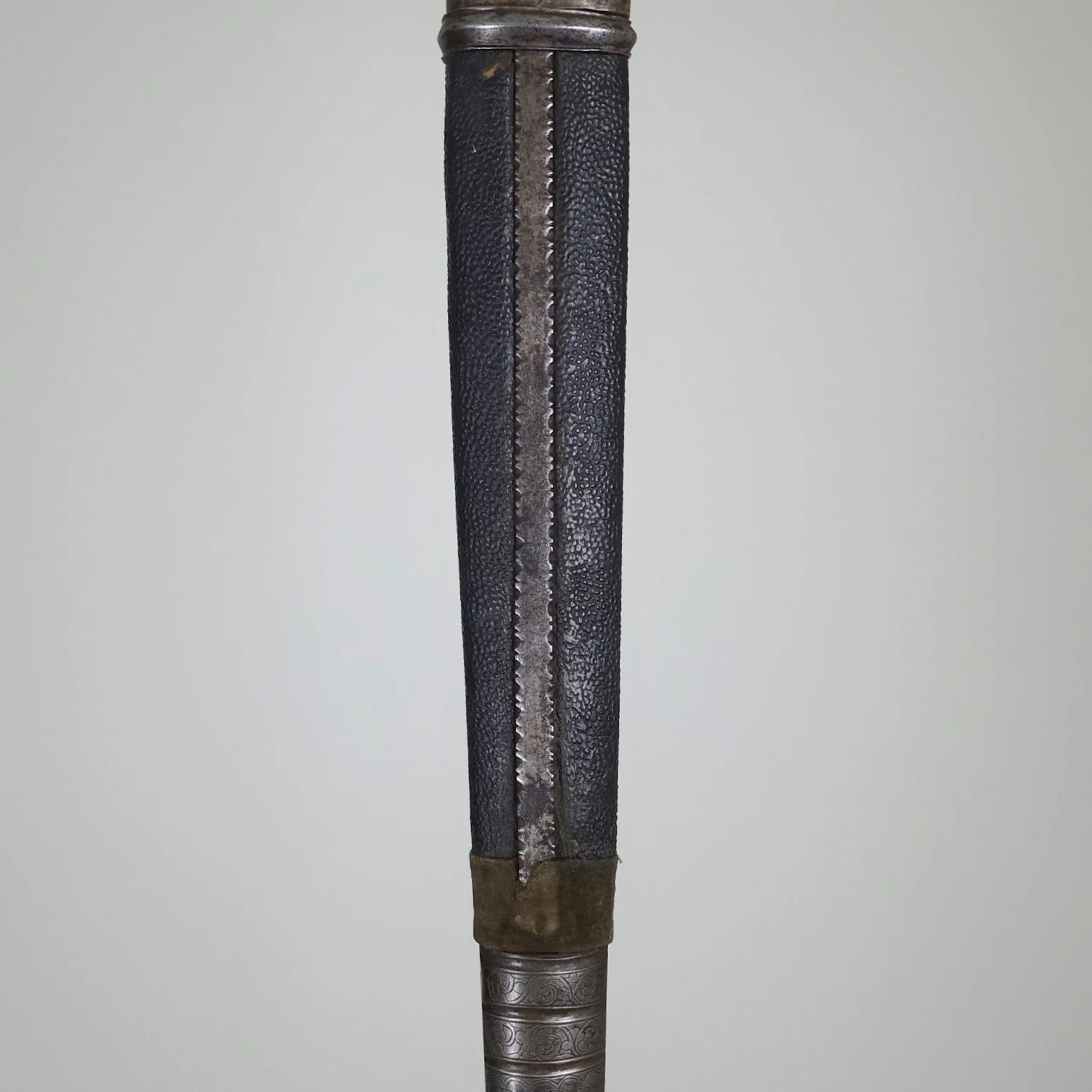
The sheath of a wooden interior covered in a hardened black leather. Two mounts consisting of an iron mouth, attached with an iron lanyard ring. An old collection number written in white is present on one side reading "D61," possibly a former museum piece. The iron chape is elaborately decorated in repoussé longitudinal lines and chased horizontally, with detailed scrolls and foliage on the top and bottom. A serrated iron strip is present on the backside that connects both mounts, which hides the leather seam, with a small section of fabric sewn to the top of the chape. A very good quality khyber sword from around the turn of the century, during the Afghan military modernization. Starting in 1880 under the reign of Amir Abdur Rahman Khan, the new military system attemped to unify ethnic tribal clans and confederacies into a unified state creating a standardized army, including a regular army, calvary, infantry, artillery, as well as setting up central hubs of factories and armories producing gunpowder, cannons, and patterend arms in the Kabul capital.
[1] Miloserdov, Dmitry Yurievich. 2019. “Edged Weapons of Afghanistan”. Pages 226–227, 232-235, 247, 254-255, 443, 446, 450,
[2] https://www.metmuseum.org/art/collection/search/31613
[3] http://www.oriental-arms.co.il/item.php?id=3281