Keris
Keris
Balinese
Dutch East Indies (Bali, Indonesia)
Mid- 19th century - Hilt: 20th century
Iron / nickel, metal alloy, glass, bone, wood
Blade: 13 5/8" (34.6cm)
Hilt & Blade: 17 1/4" (43.8cm)
Hilt, Blade, Sheath: 20 1/8" (51.1cm)
Collection Date: 2016
Collection Number: 547
Ex. Paris, France Art Market (2016)
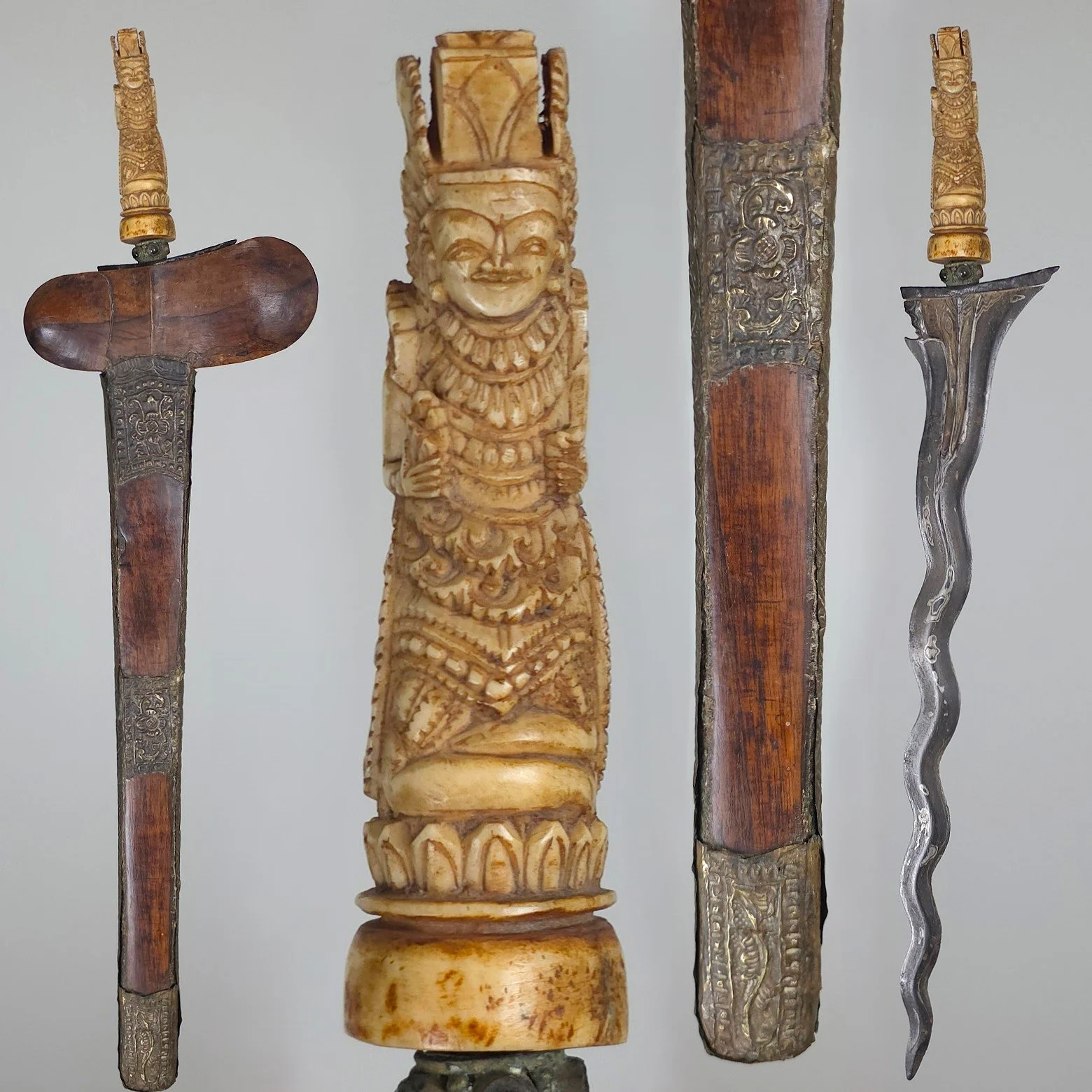
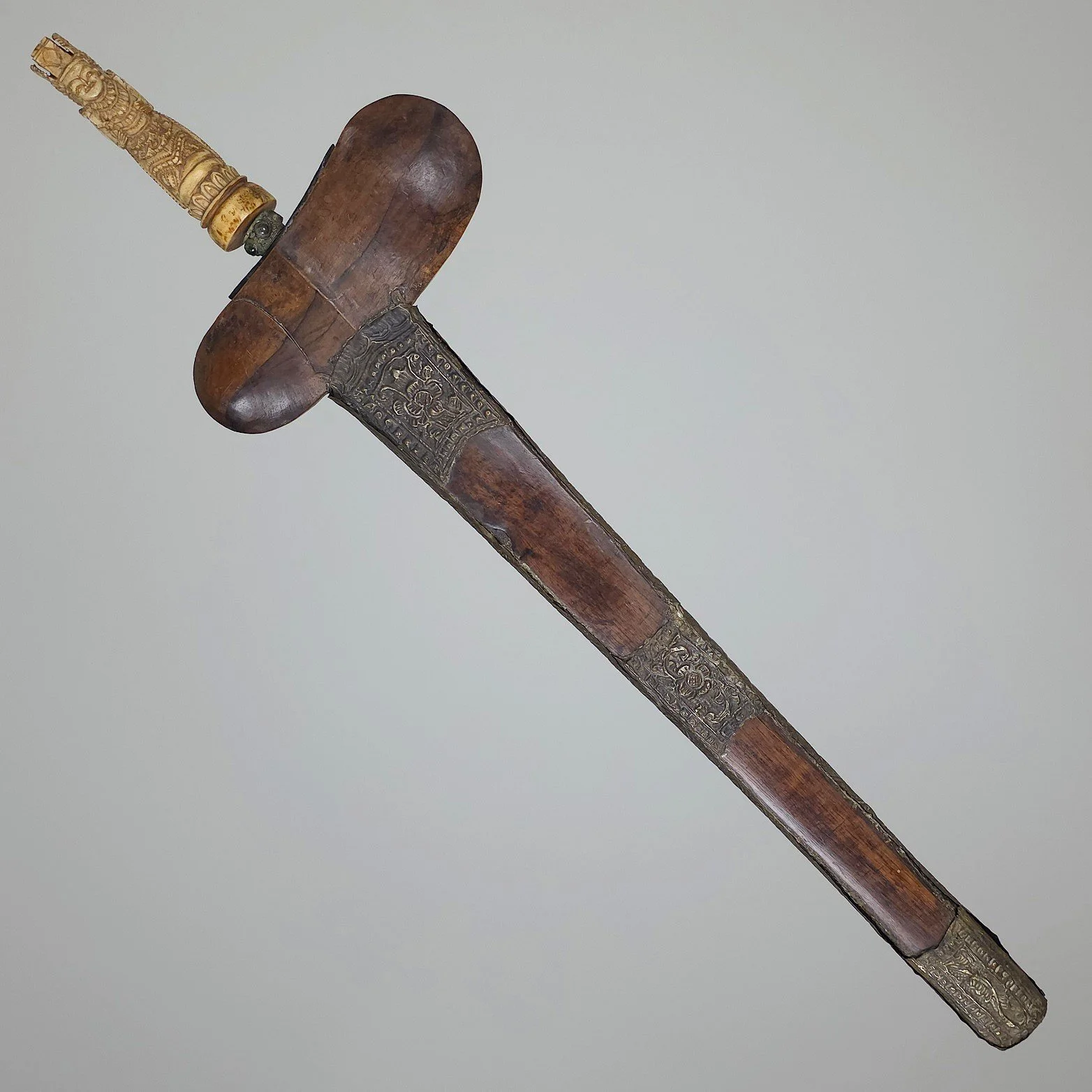
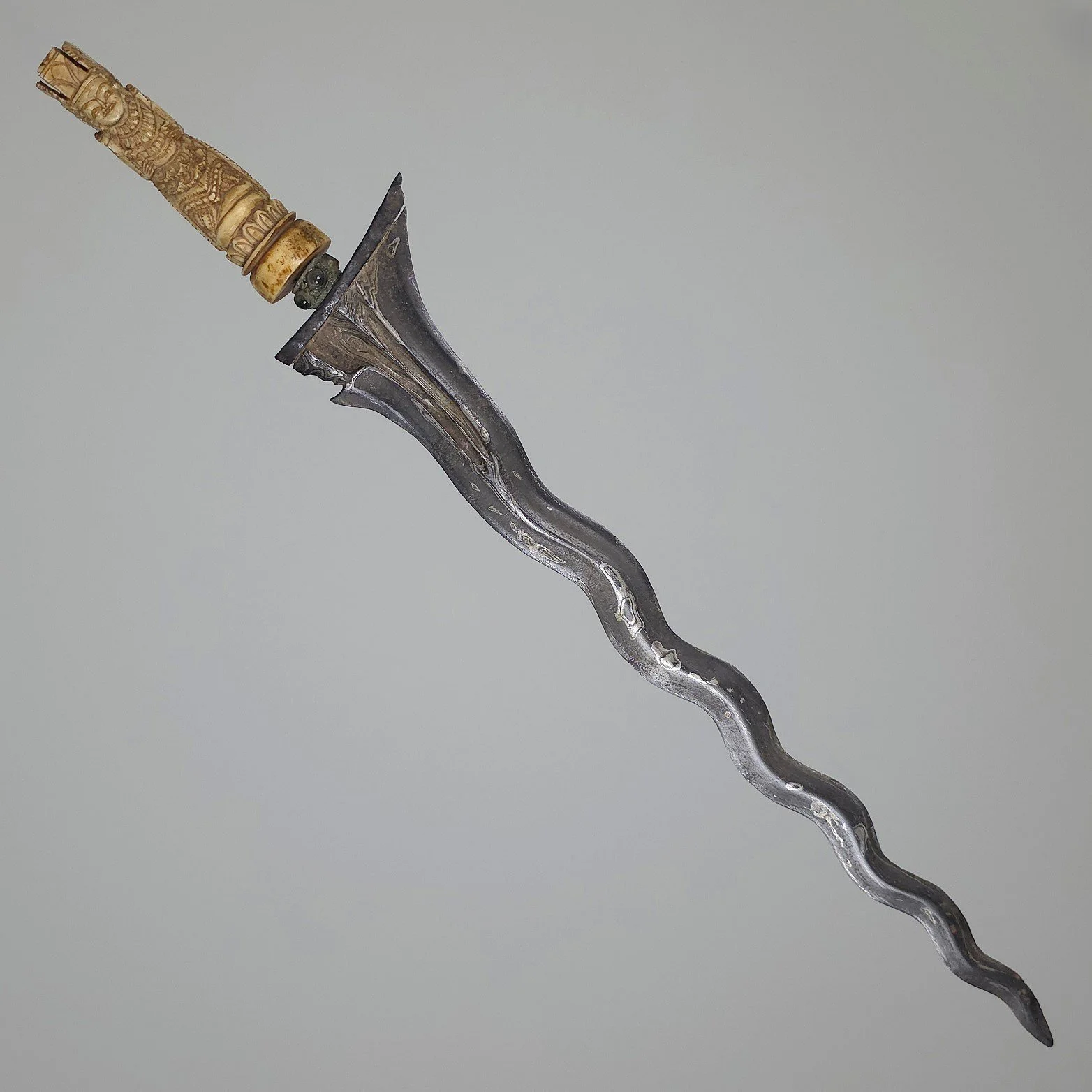
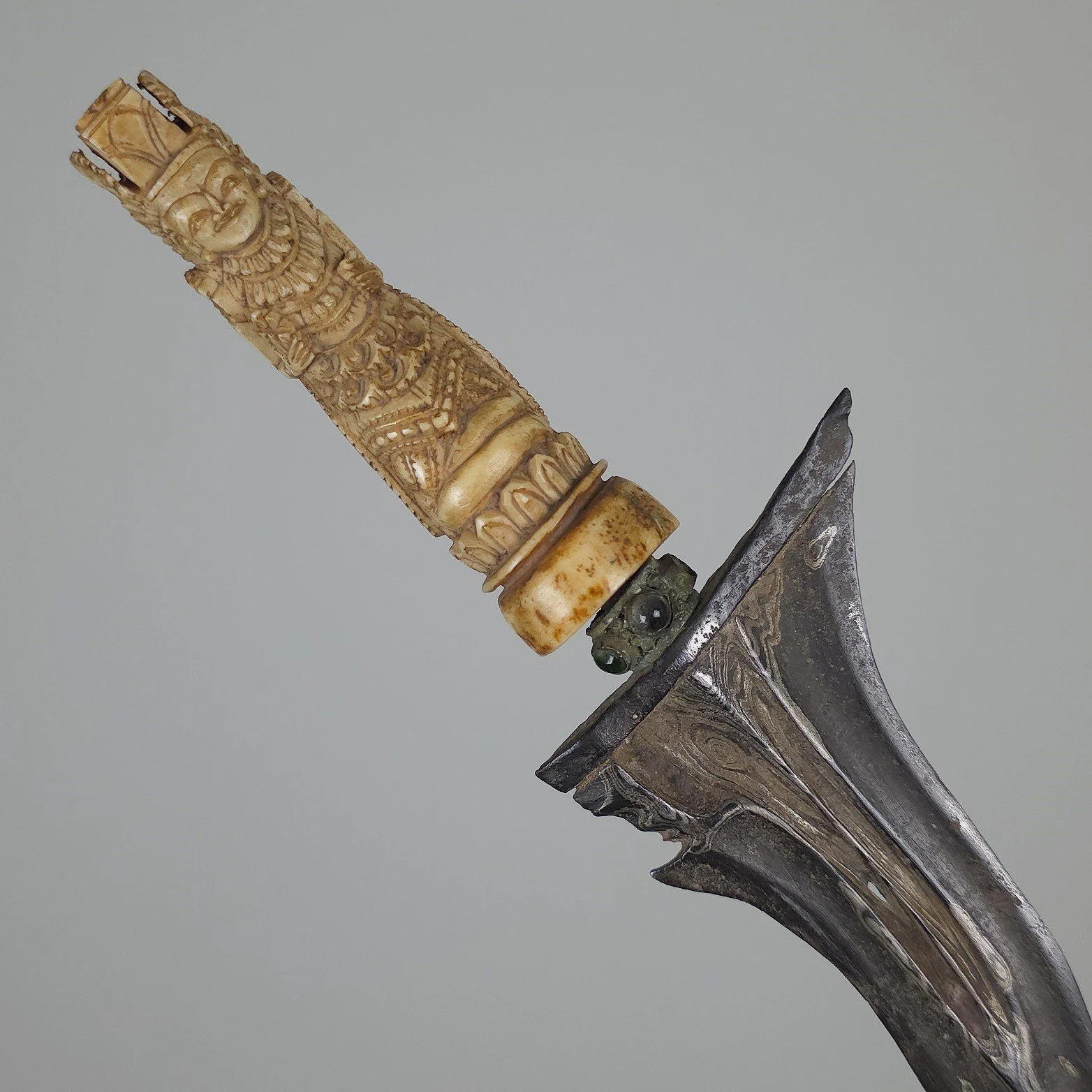
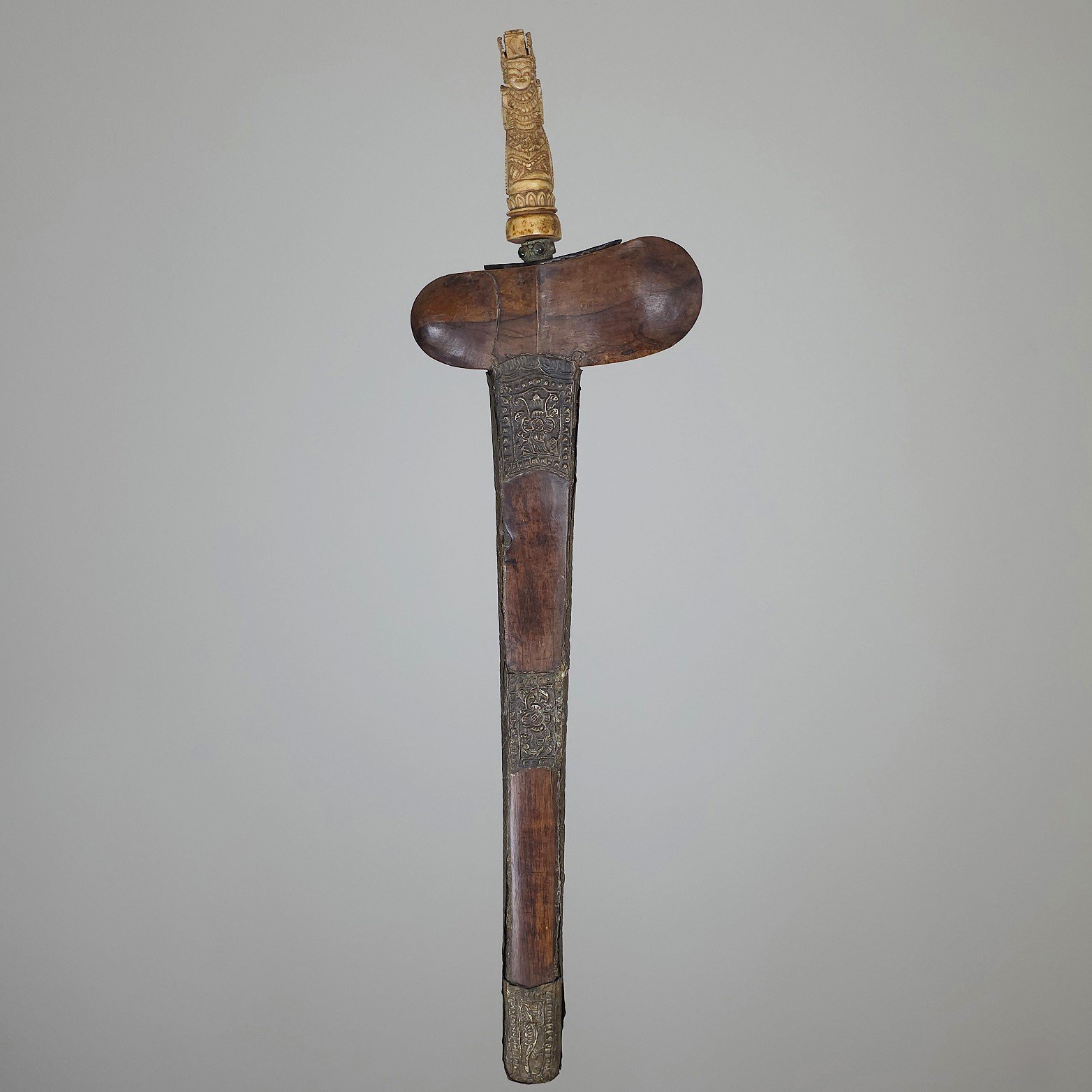
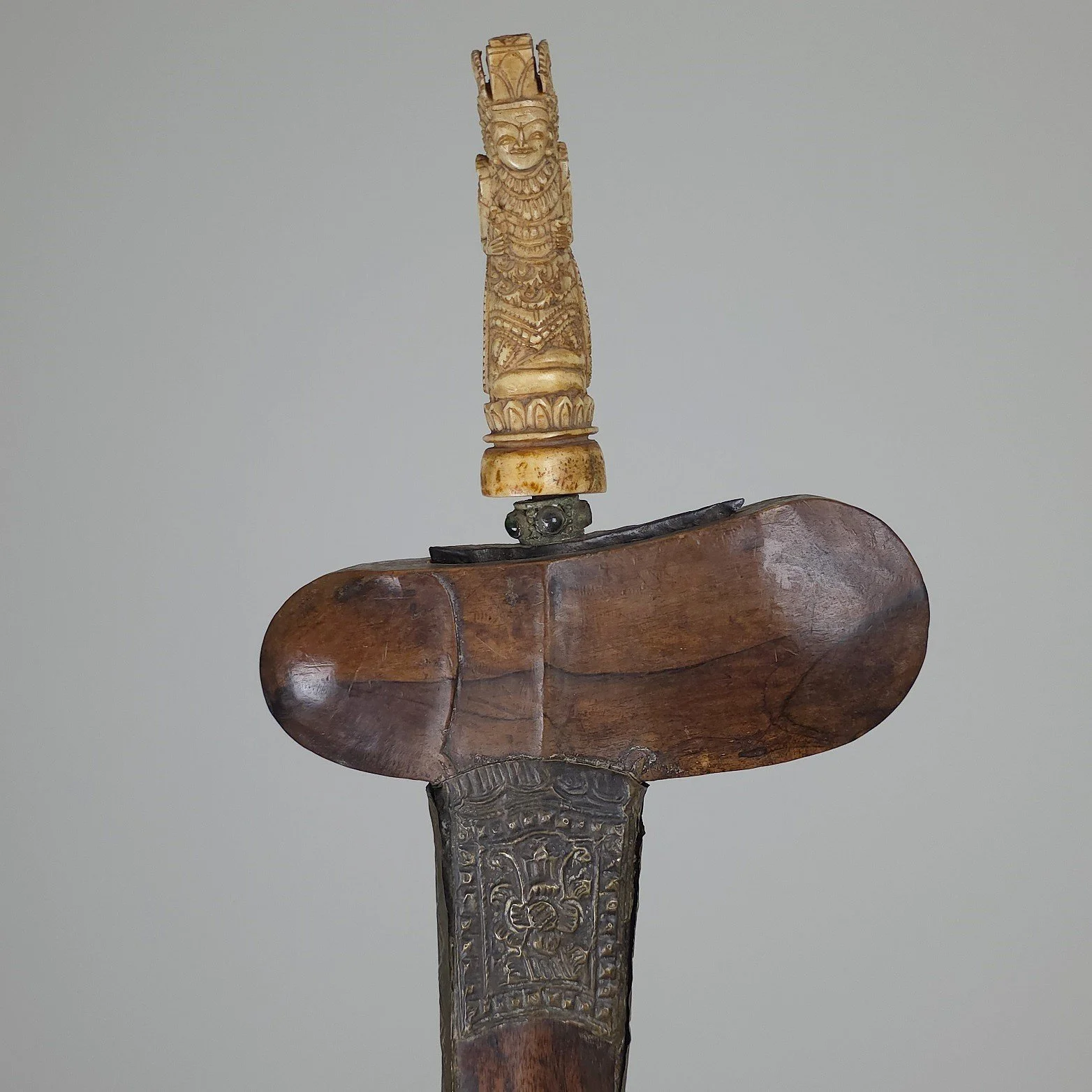
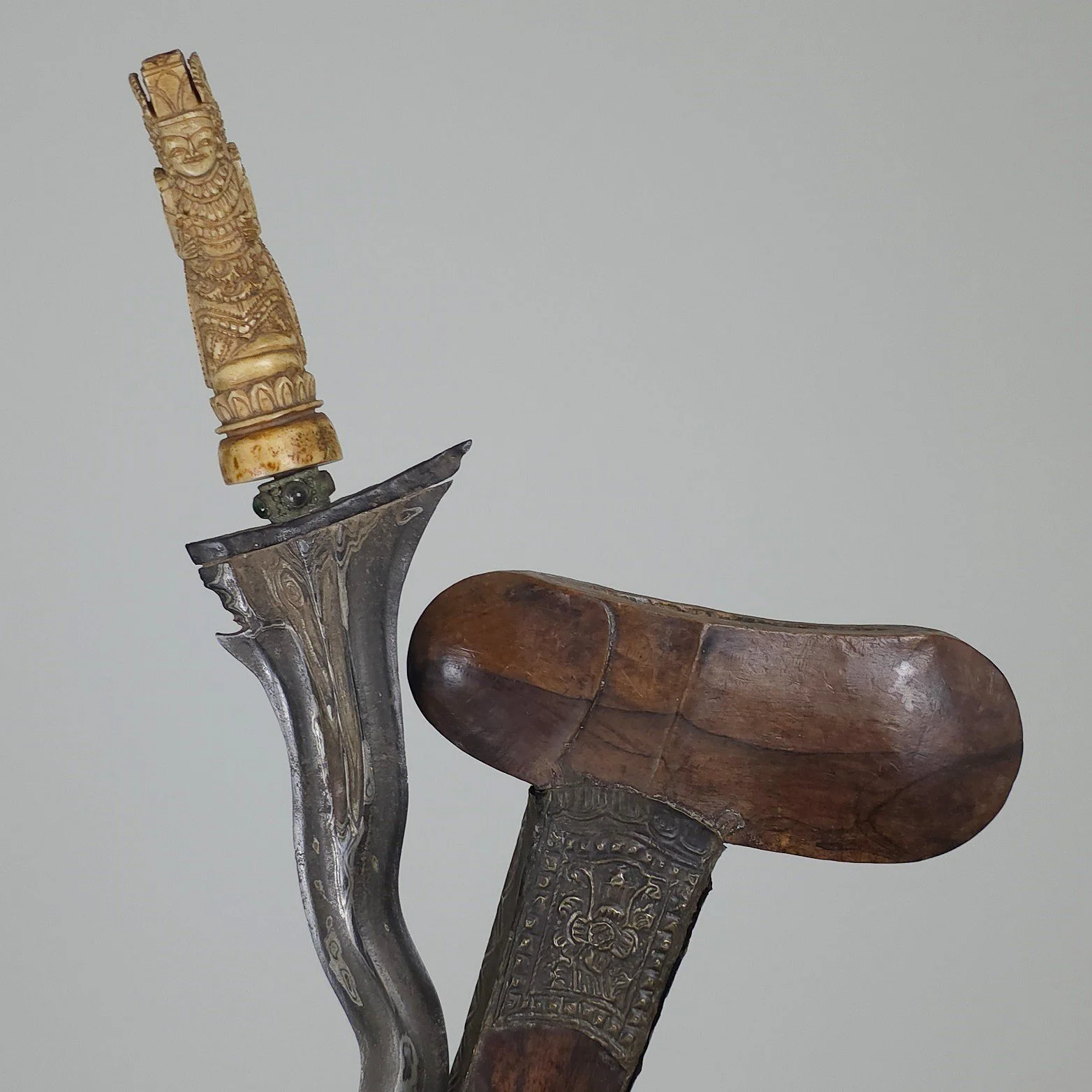
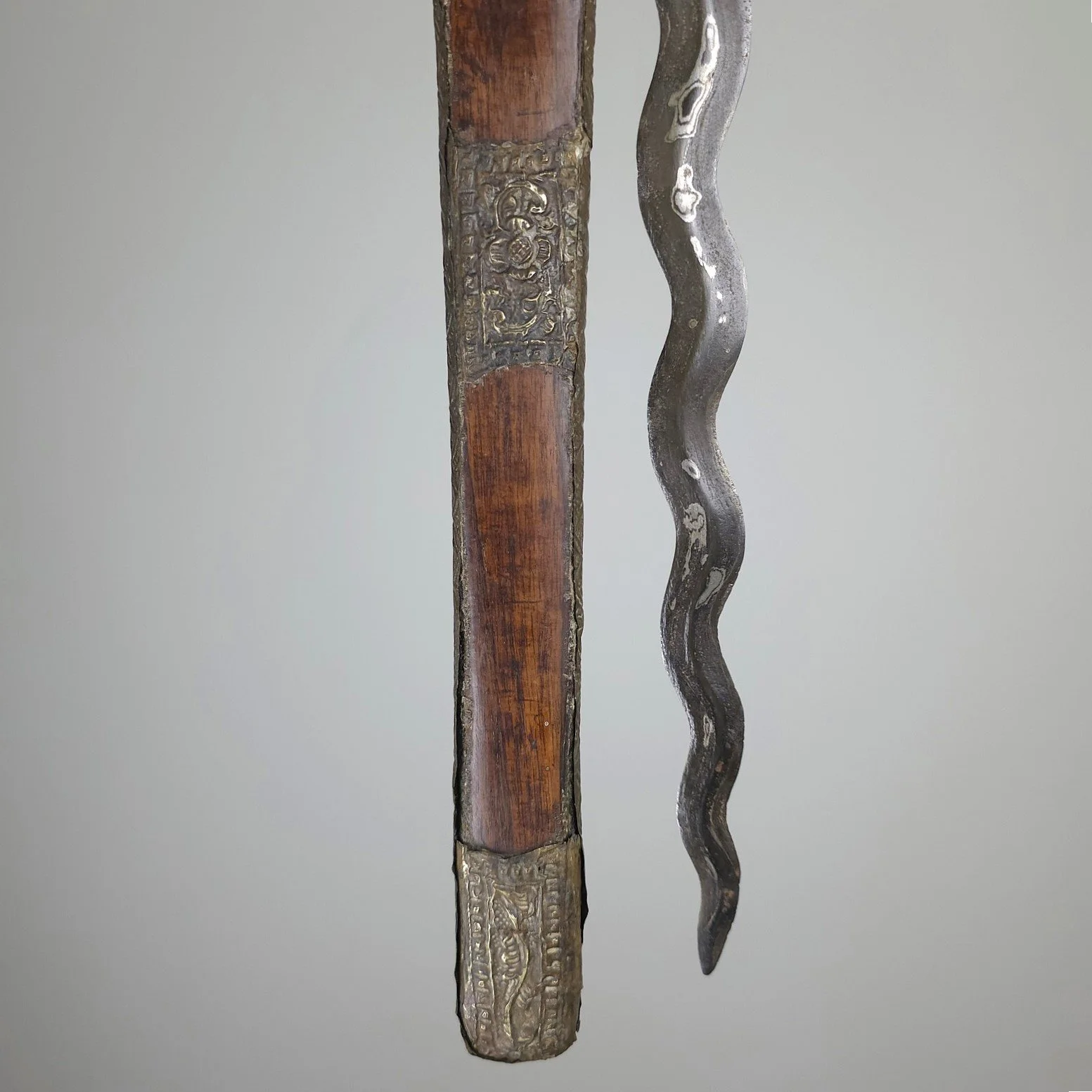
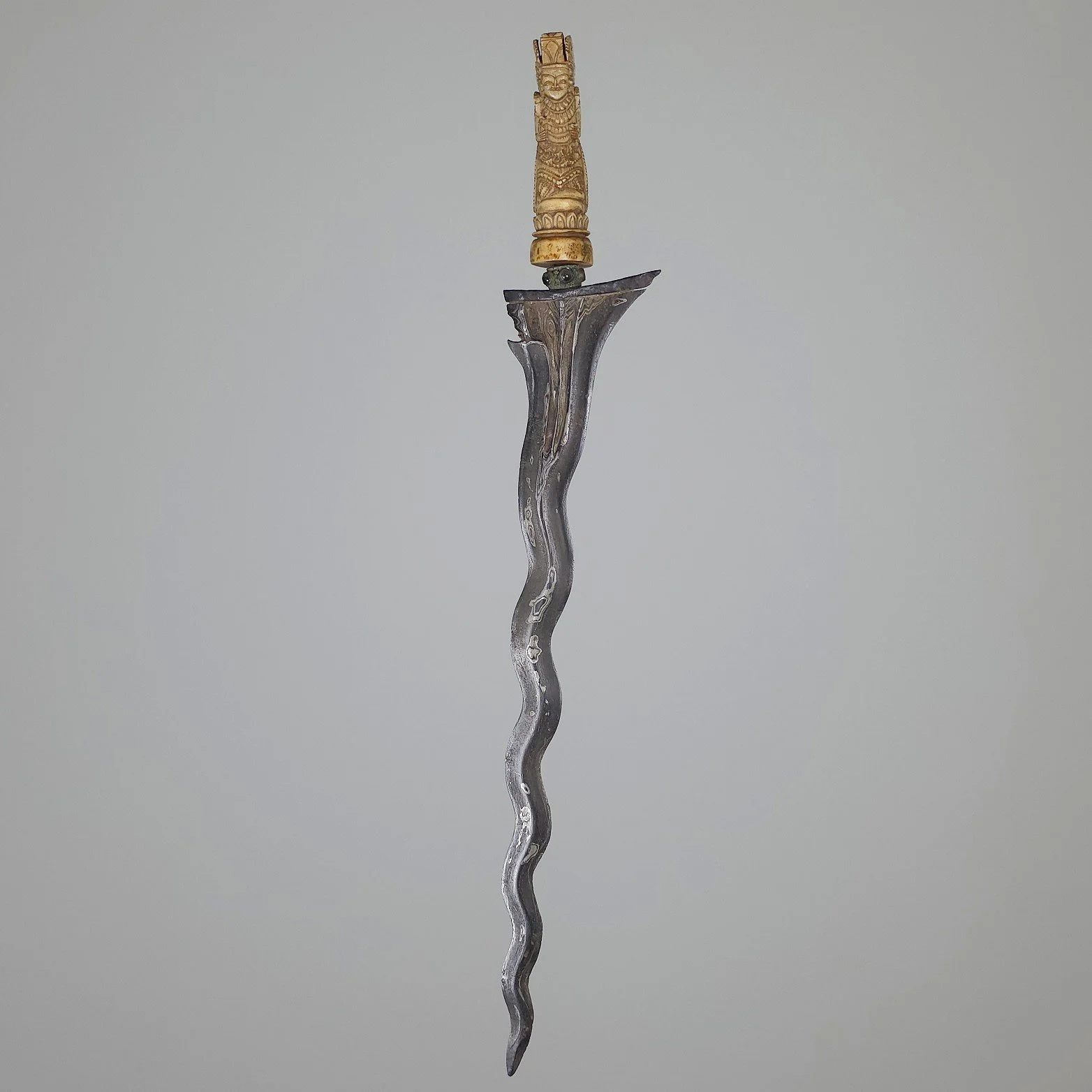
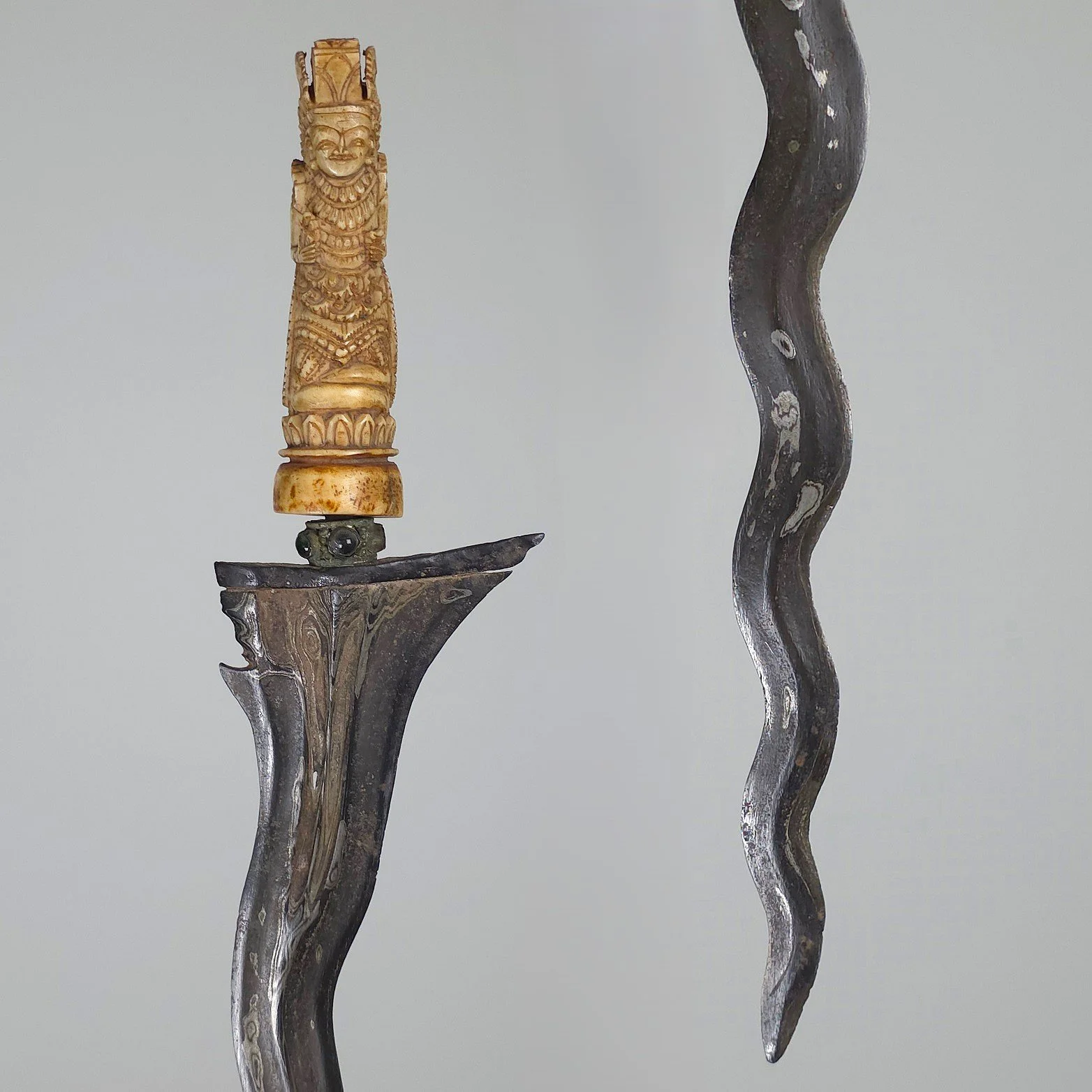
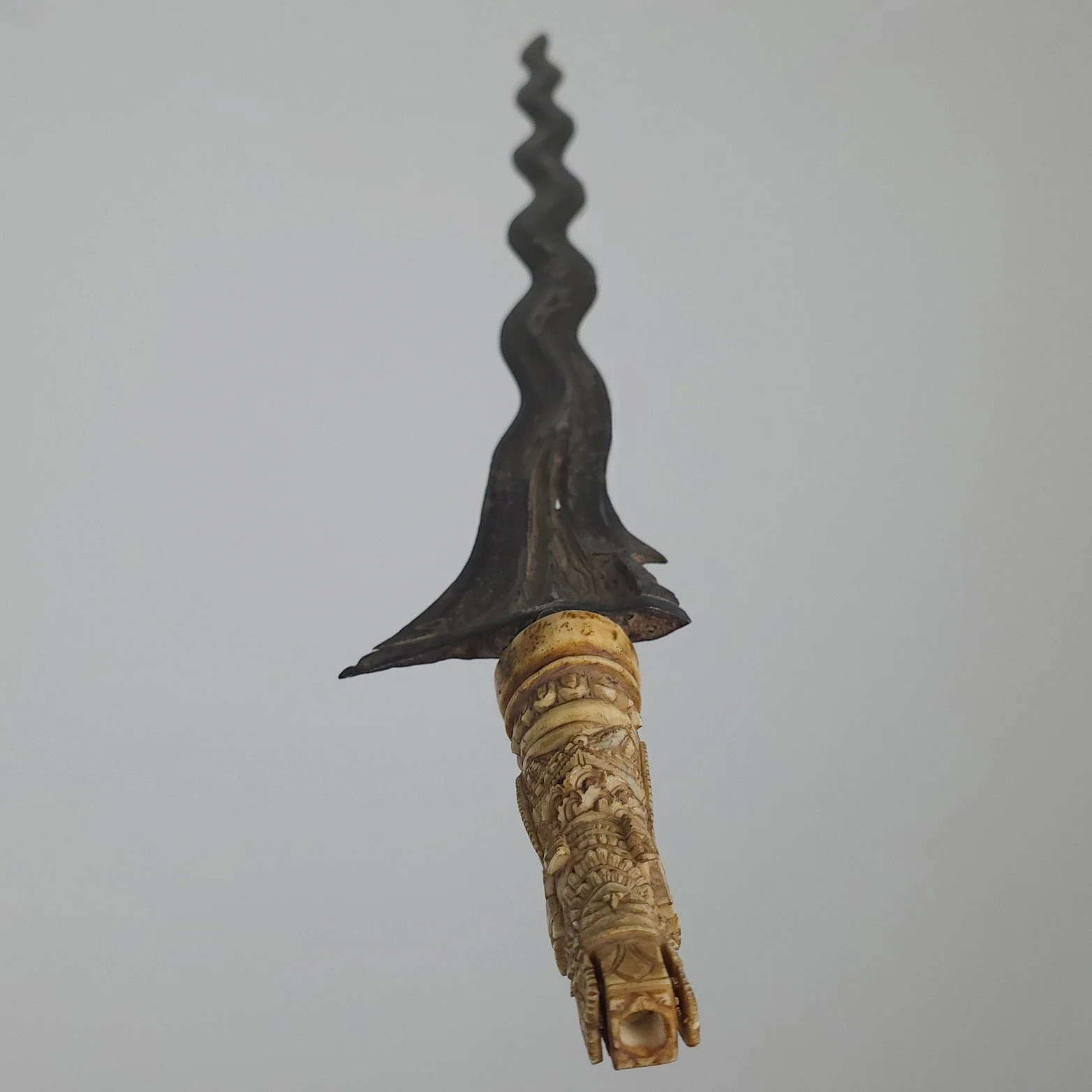
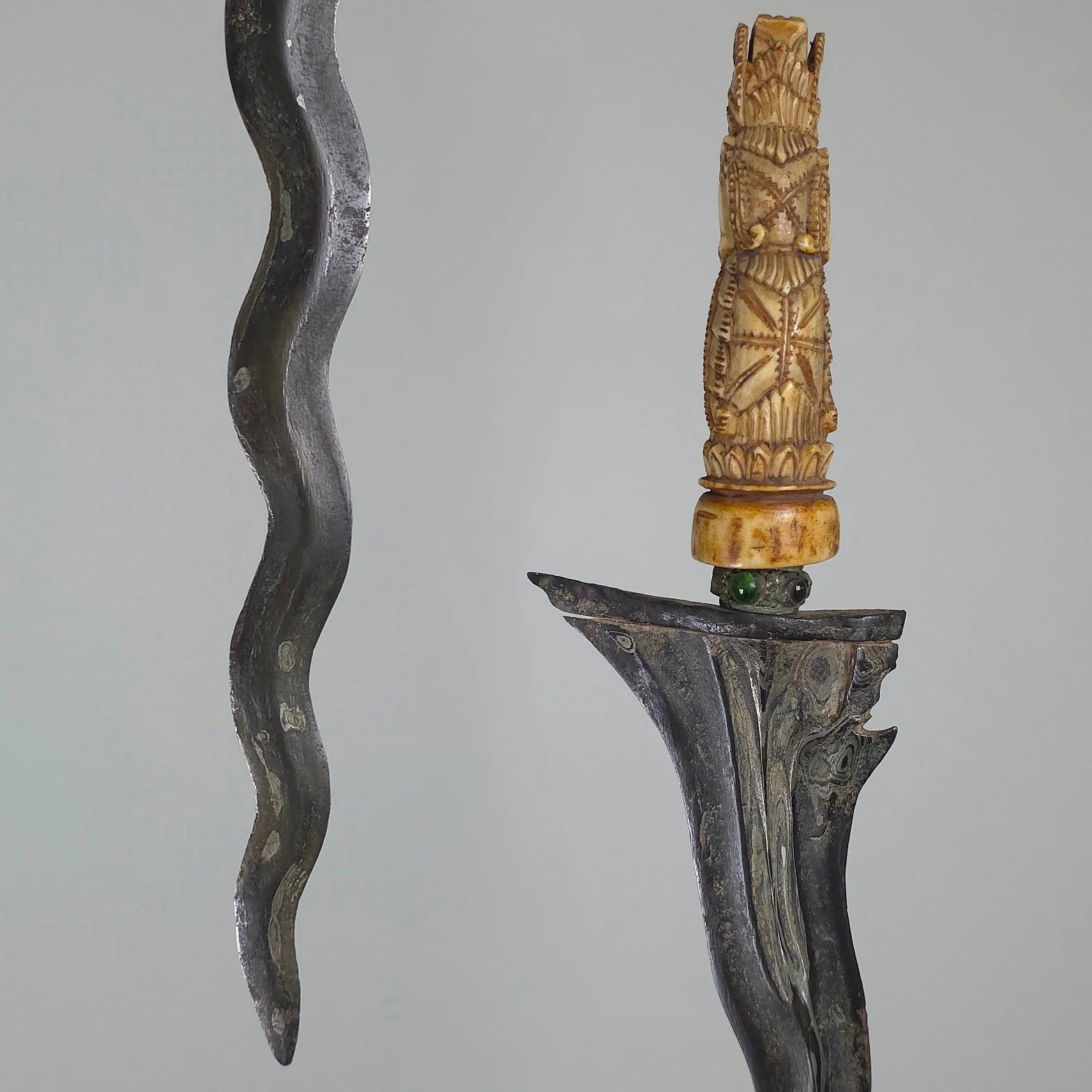
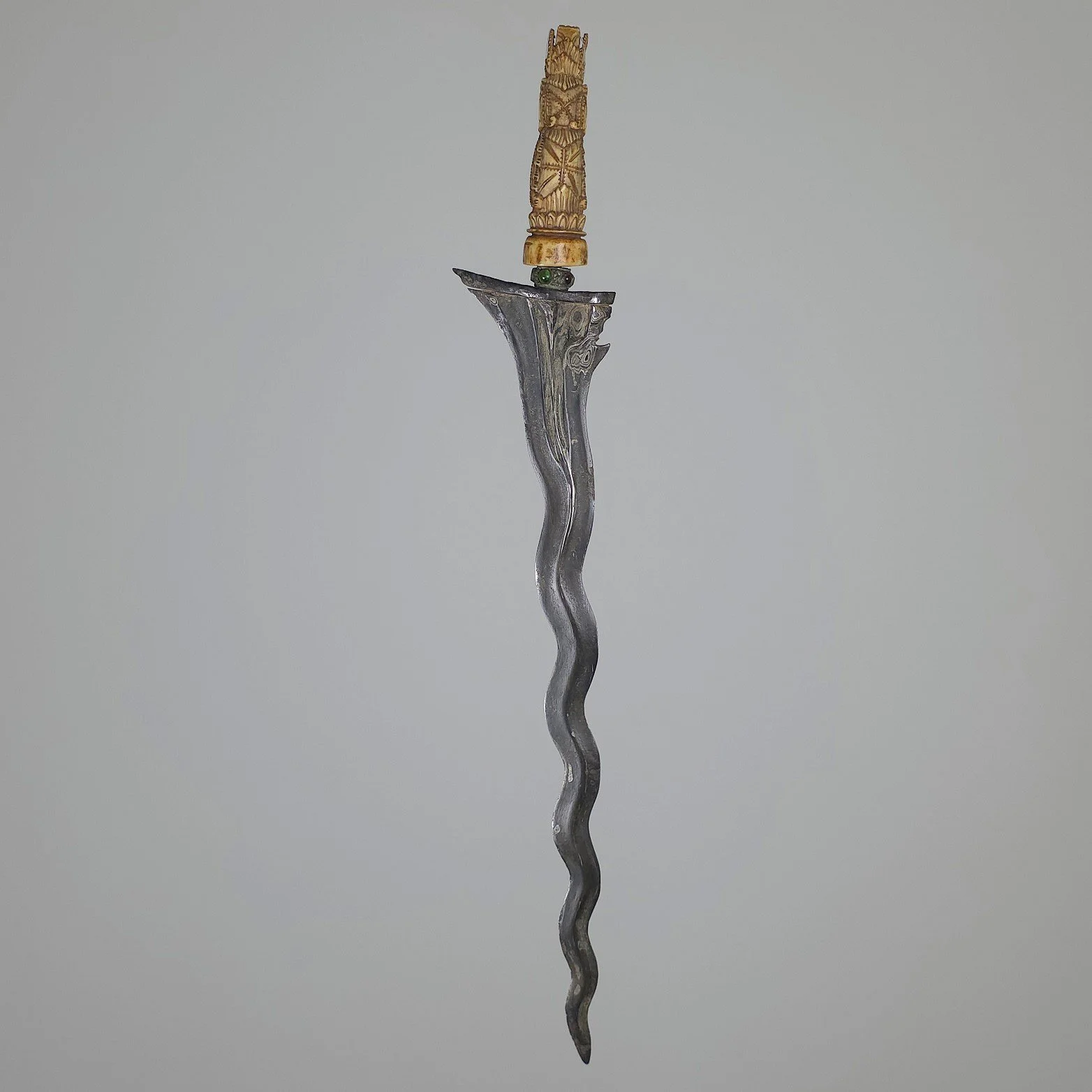
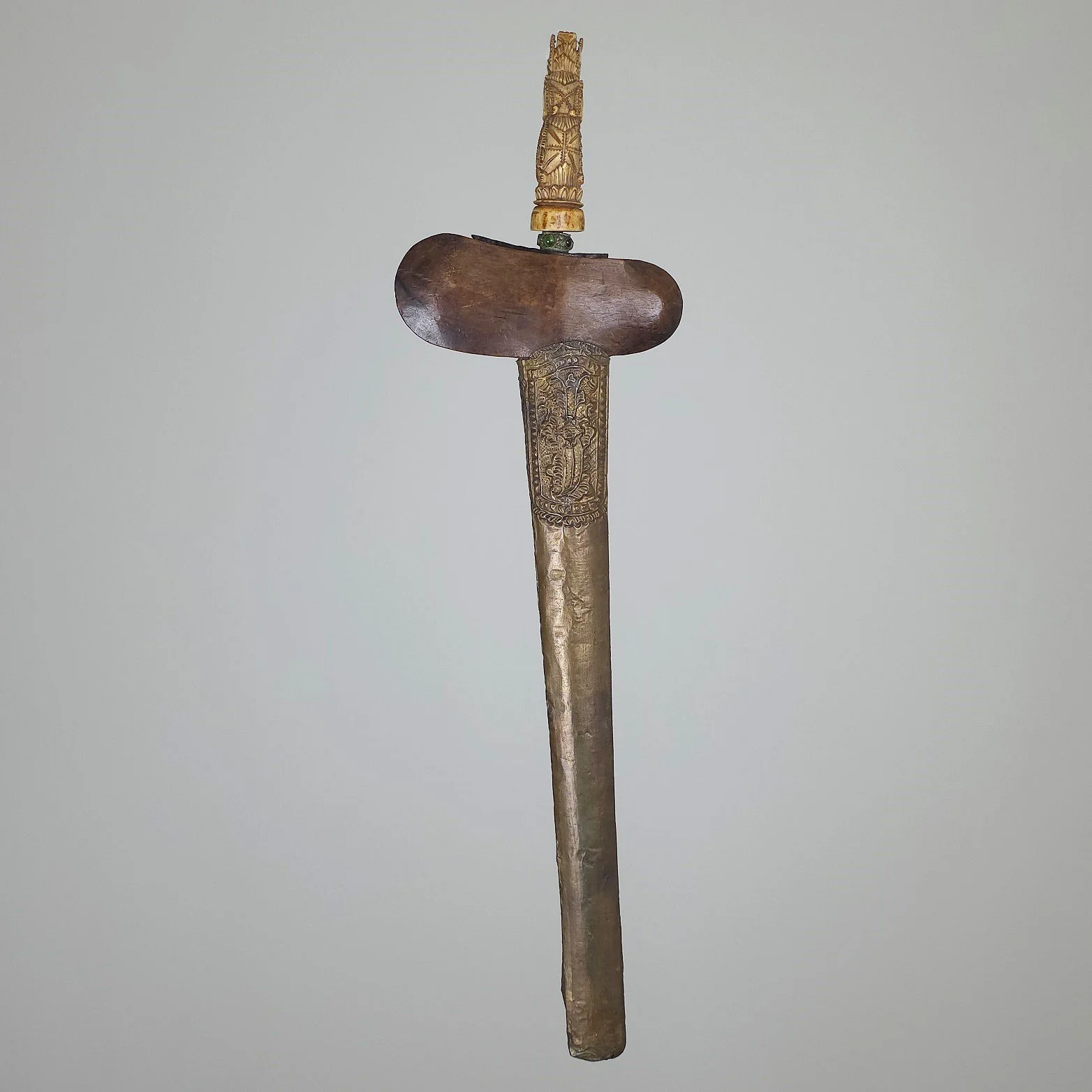
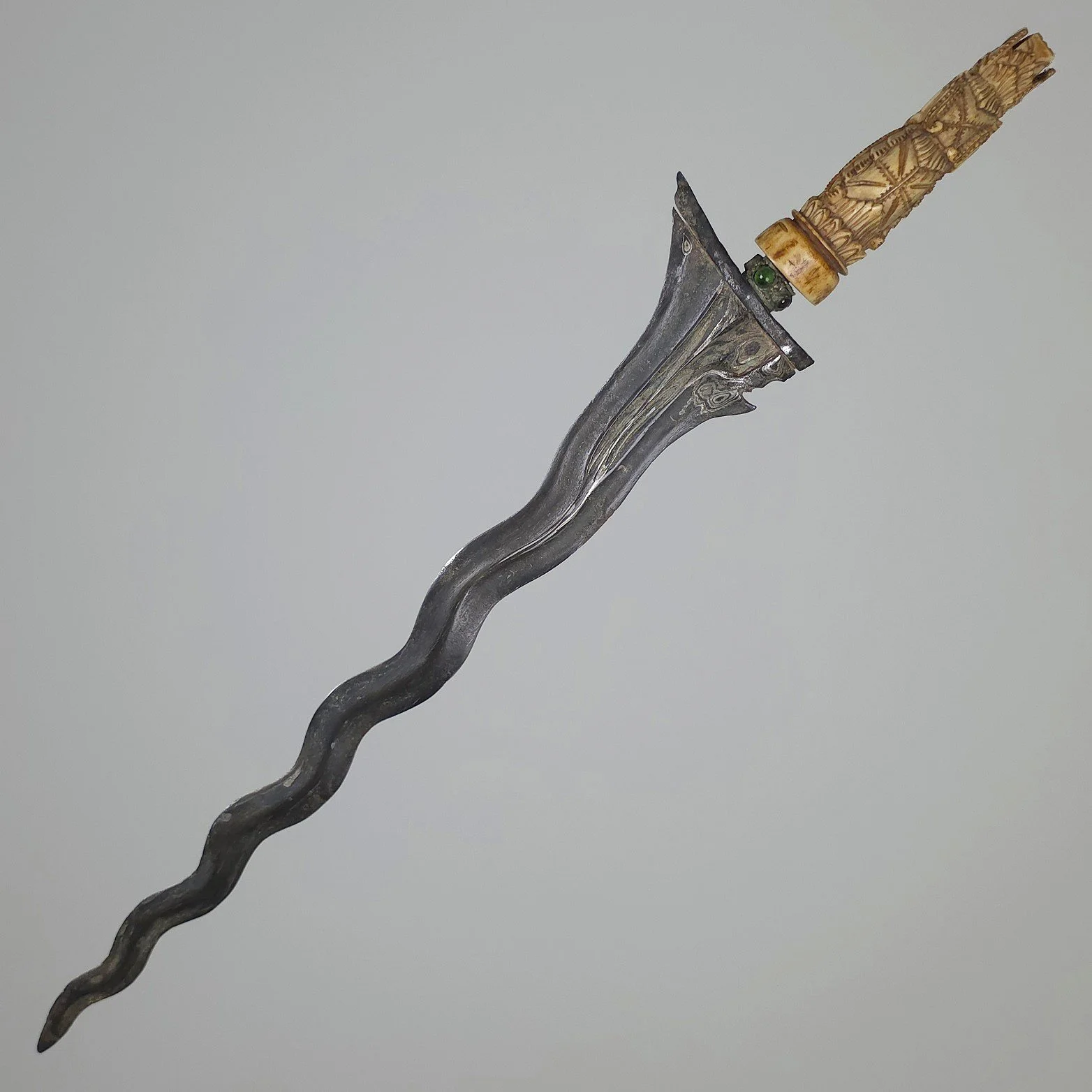
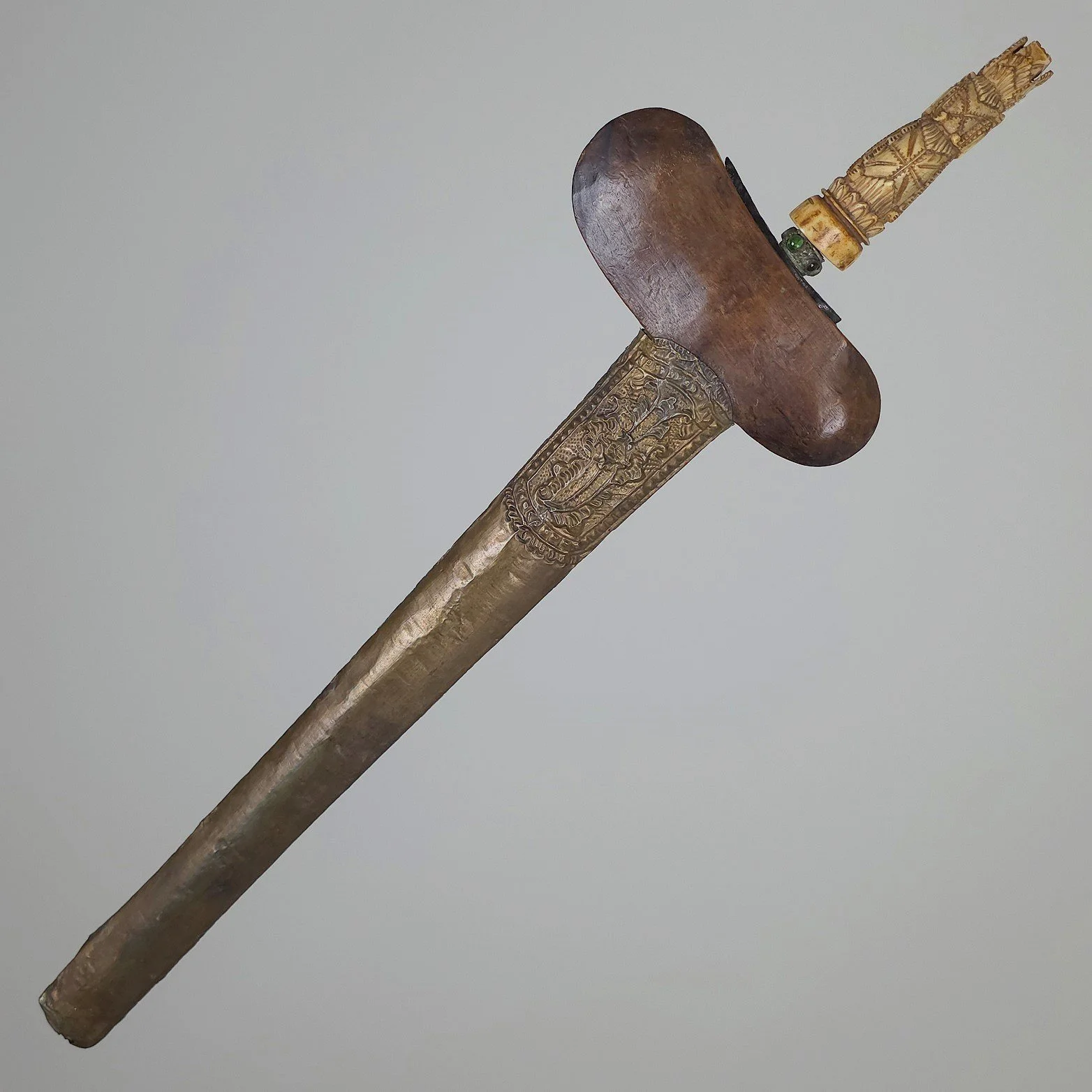
An old keris sword from the Island of Bali, having an intricately carved hilt mounted on a pamored blade with brass sheet floral sheath. Dating from the 19th while the hilt is a later replacement of the 20th century.
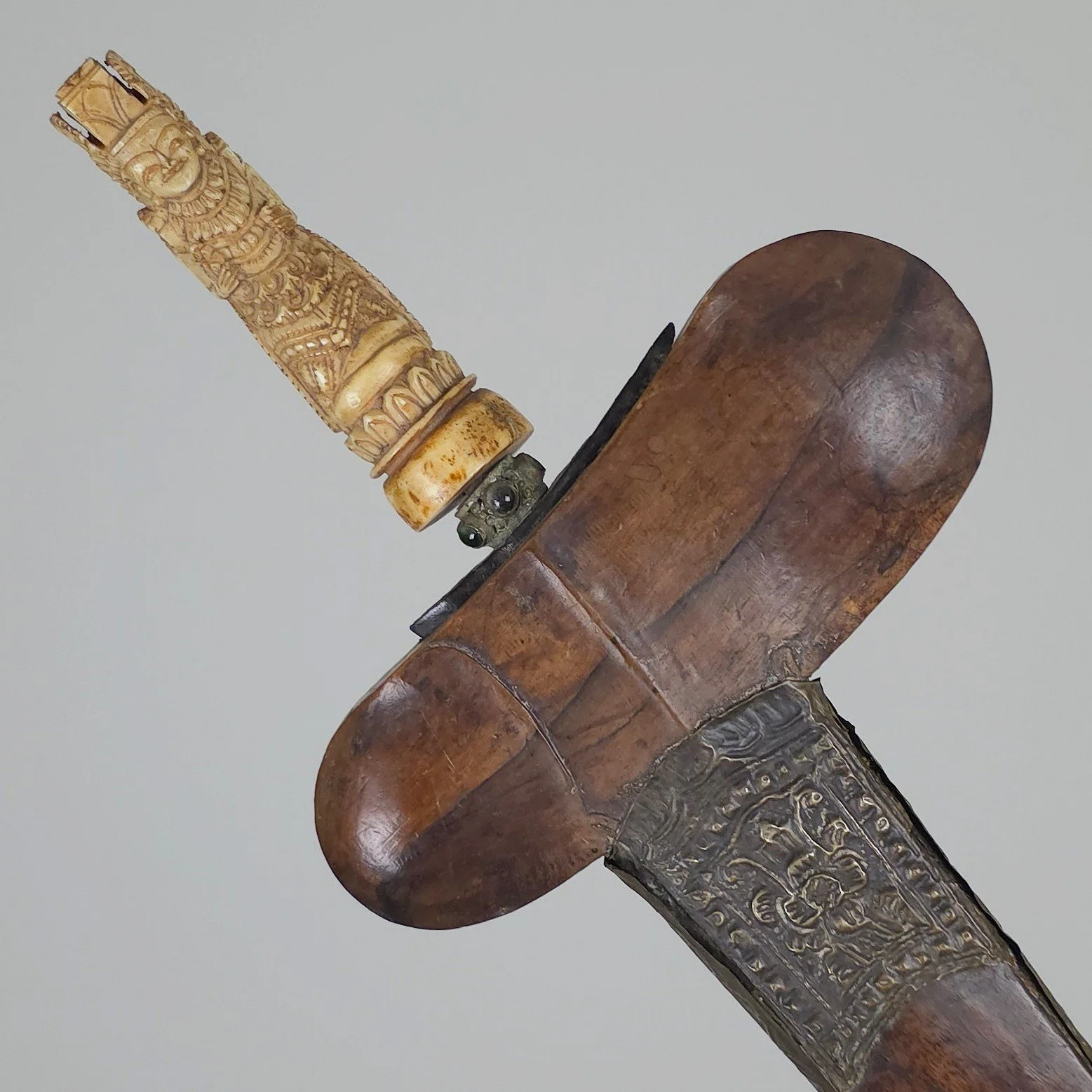
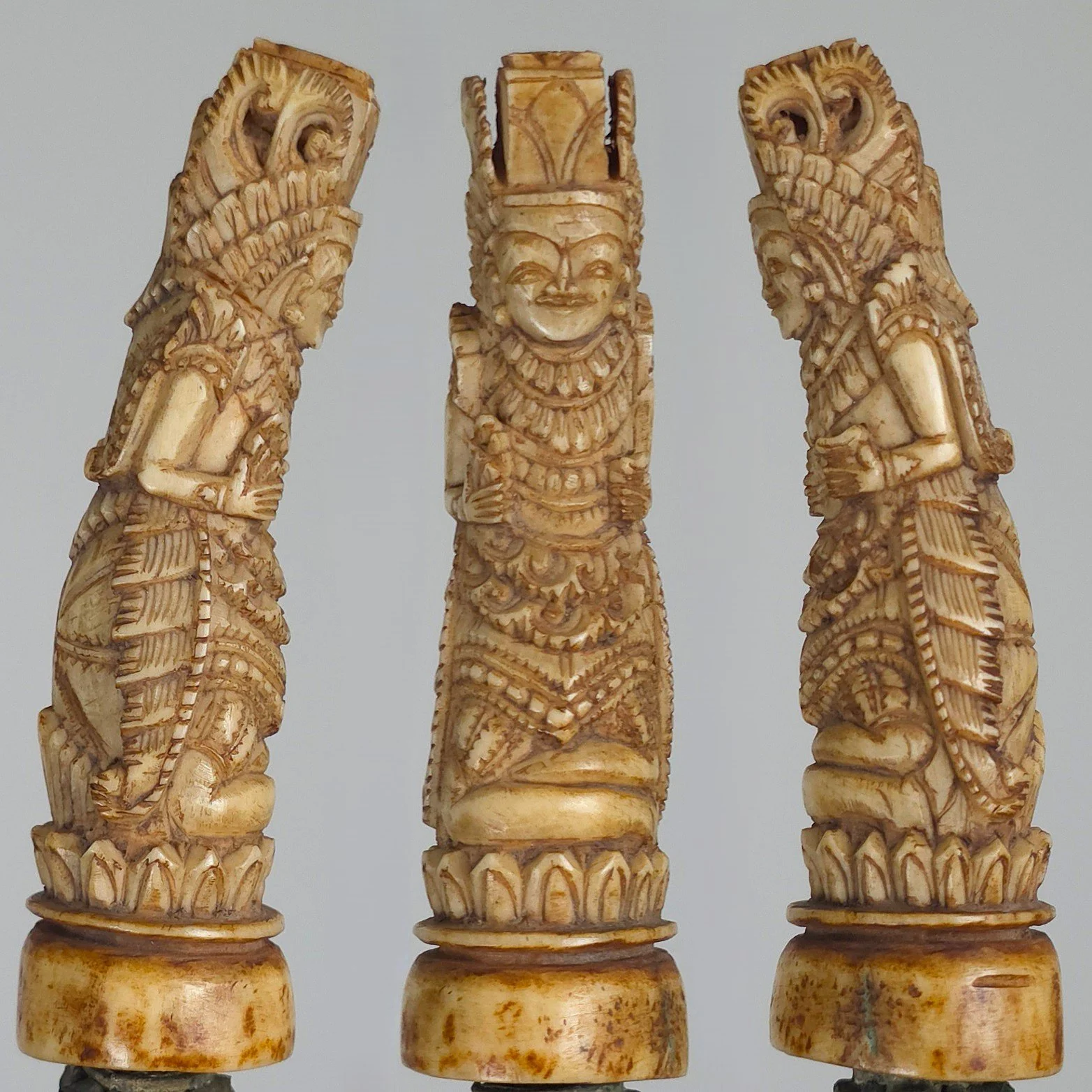
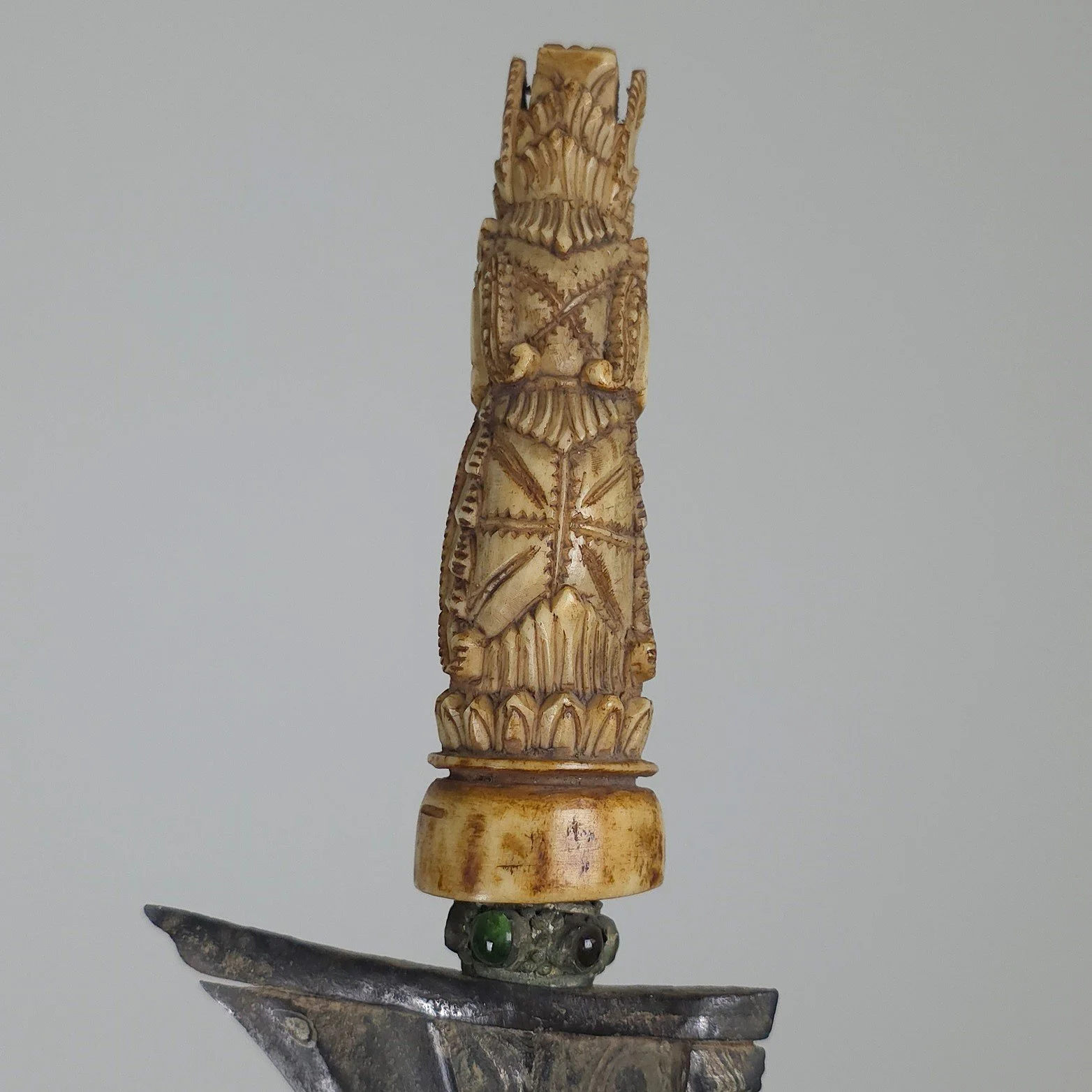
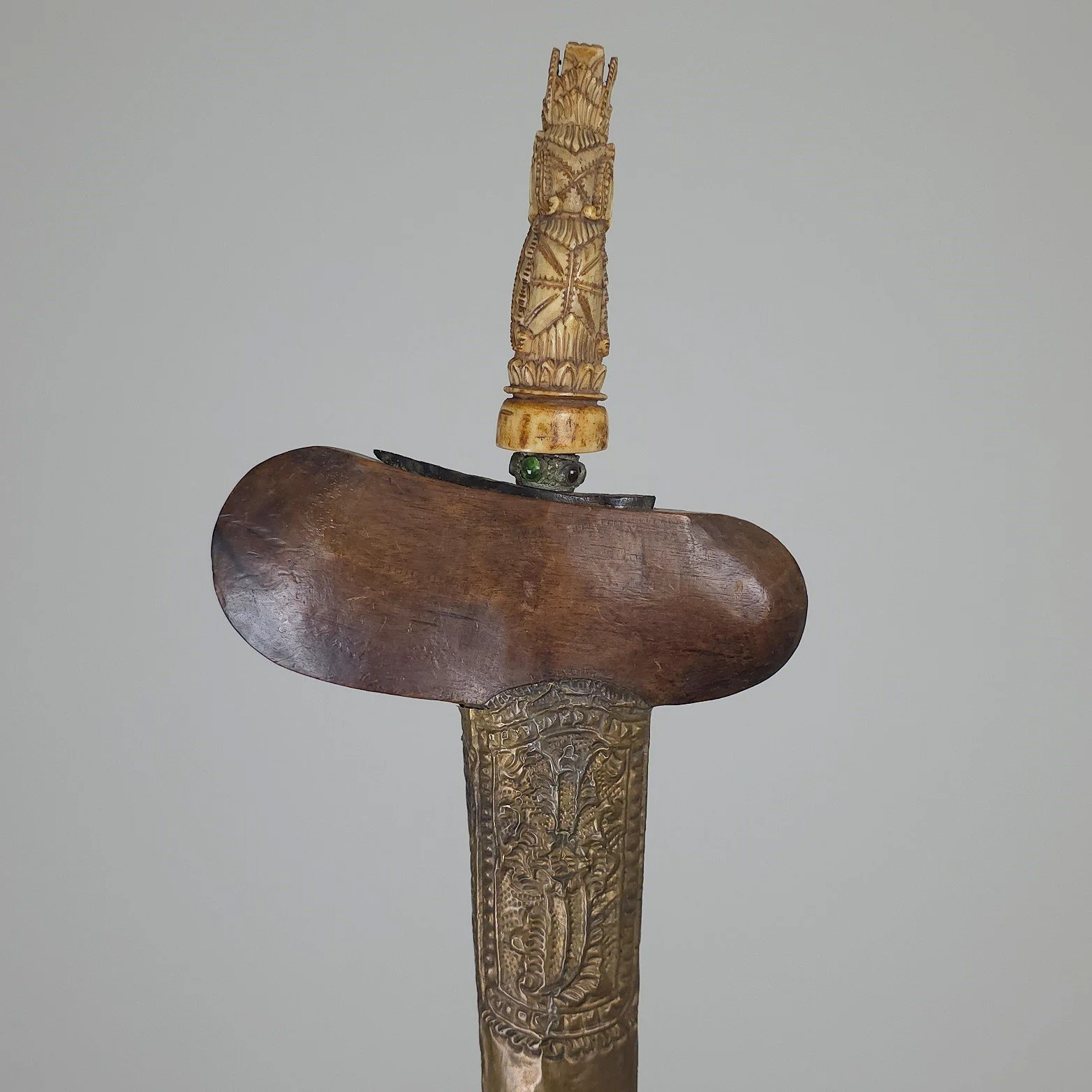
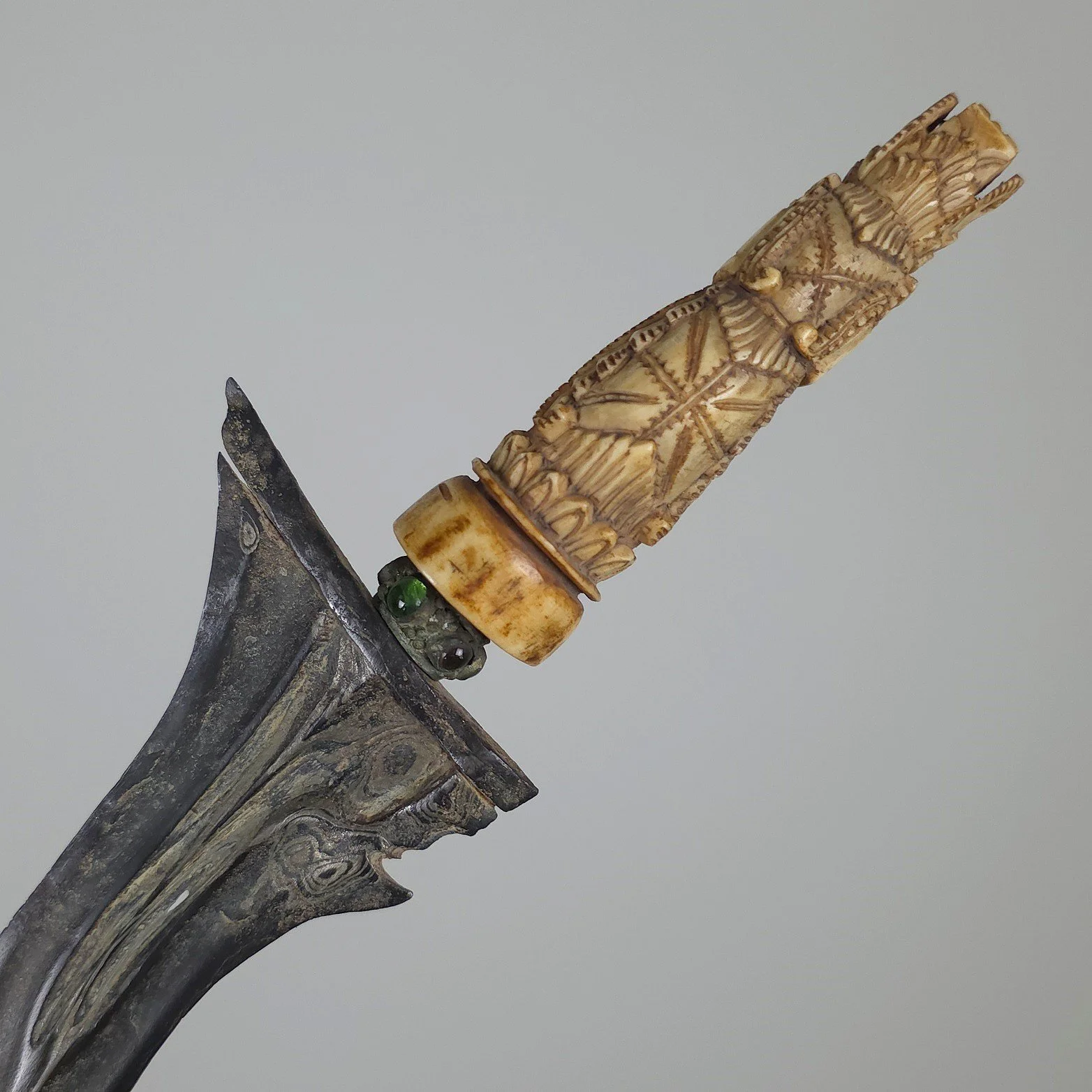
The double- edged wavy blade having 11 luk (waves). Well pronounced ricikan with strong sogokan, tikel alis, and ada-ada. Iron wilah (blade) showing laminations of nickel pamor swirls throughout. Bone hulu (hilt) in a relief carving of the epic hero figure Rama, representing virtue, divine justice, and regal discipline, which is delicately carved in the style of togogan. He wears a tiered crown, his hands held close to his chest supporting a stylized vessel while sitting atop a carved downward pointing lotus pedestal. The hilt is a 20th- century replacement. Below, a metal alloy medeq (ferrule) decorated in vertical alloy beads, set with clear, green, and pink glass stones. One stone is missing.
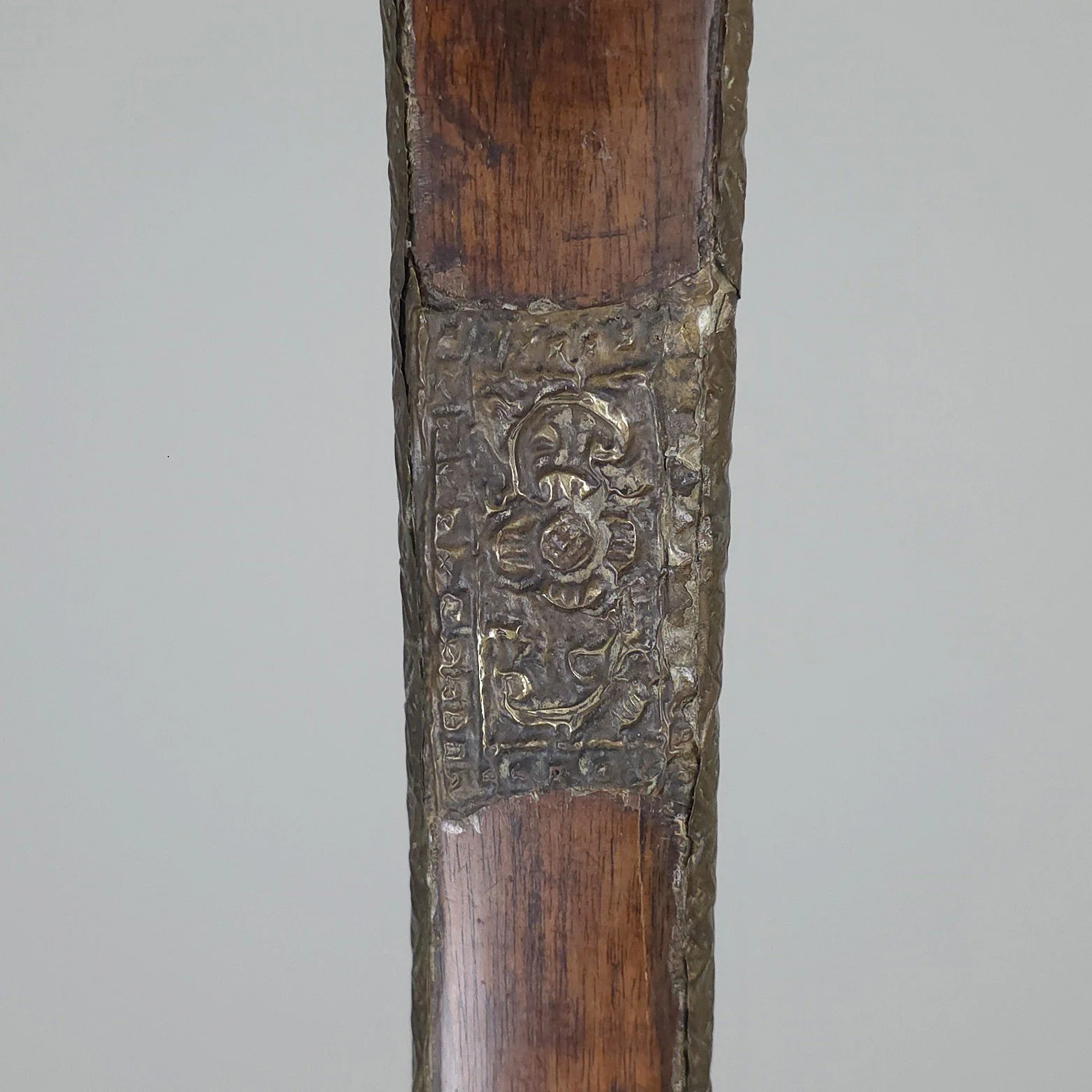
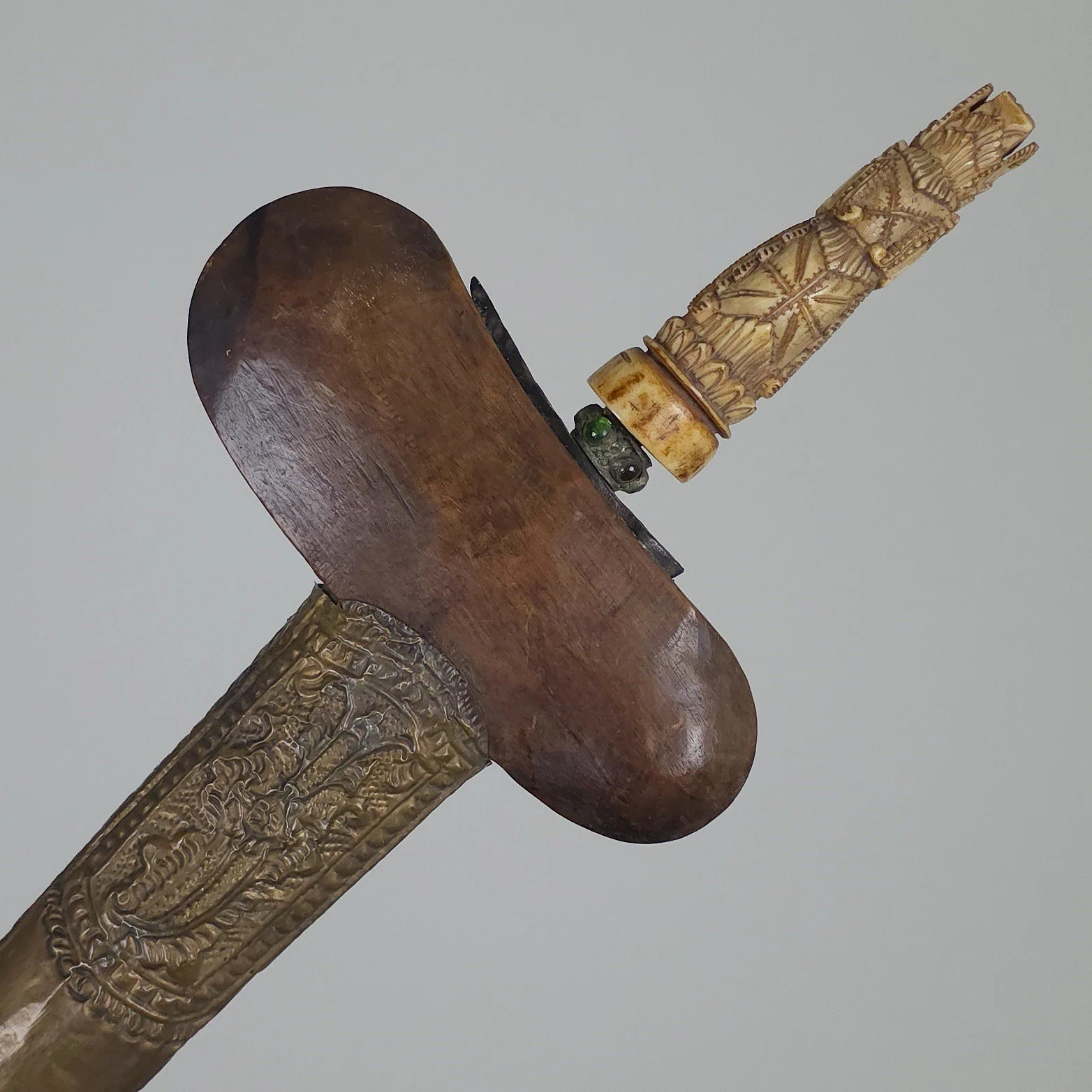
The blade housed in a fine tropical wood warangka ( sheath). The wooden wranka (top part) is kidney shaped. The front side of the gandar (sheath body) having central panels of wood exposed with three segmented brass bands (pendok blewangan), decorated in traditional intertwining foliage patterns and blooming floral repoussé arrangements symbolizing growth, life, energy, and protective nature spirits. The edges are framed by decorative borders in the same manner. On the reverse, the sheath is completely encased in brass sheet on the stem (pendok bunton), with the upper focal point highlighting a vertical floral centerpiece mimicking the tree of life (kayonan). The central blossom spreads outward with broad, symmetrically driven petals, branching into curling tendrils that snake downward. Behind the main floral work are heavily textured indentations of the repoussé. All framed in a distinct scalloped panel. A very good and old Bali keris displaying a nice contrast between the nickel- iron blade with natural timber grain and ornate metalwork of the sheath. Althought the hilt is newer, it is finely carved in detail with an elegant presentation.
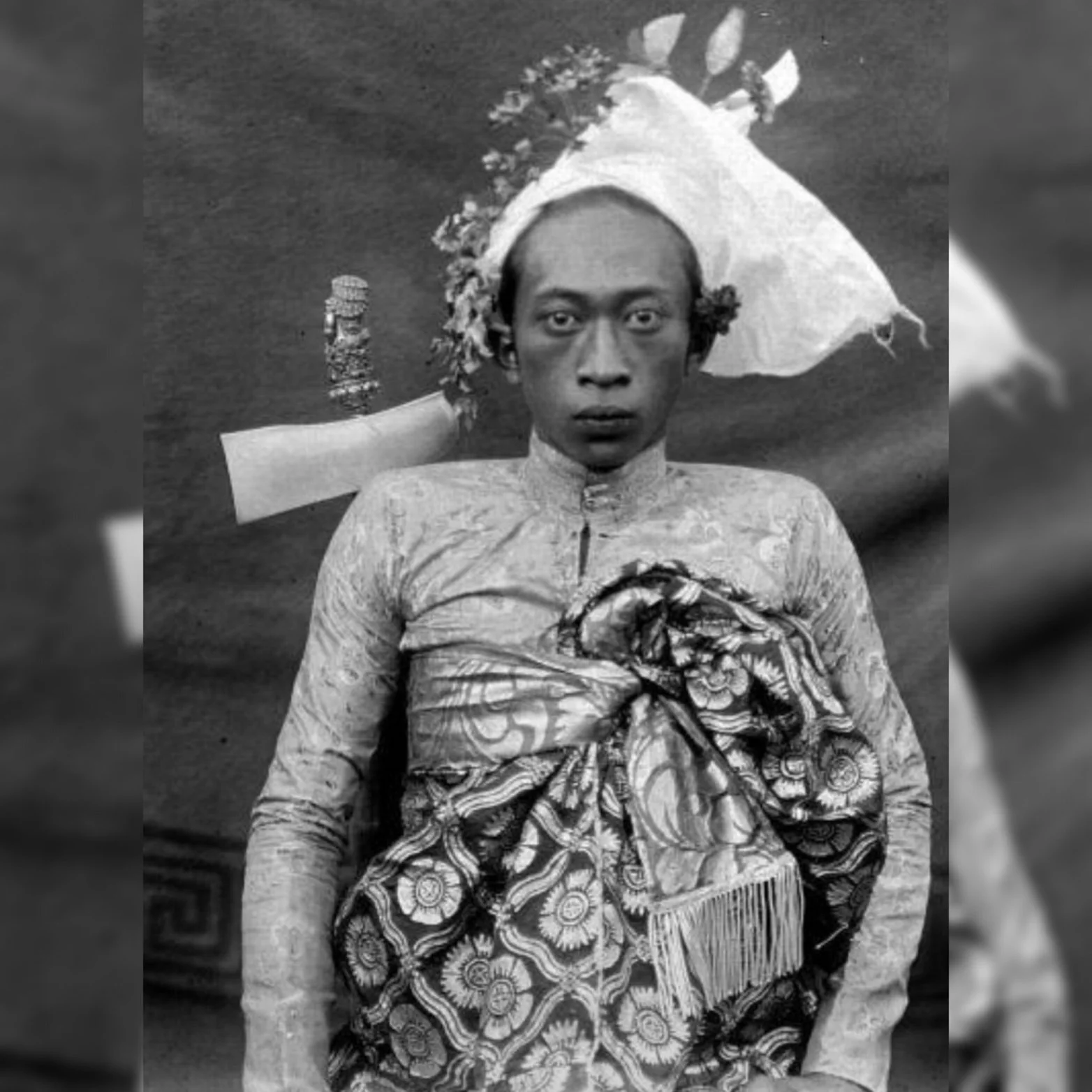
Photograph 24: Likely a photograph portrait of Gusti Bagus Jelantik, the raja or regent of the Karangasem Kingdom of Bali during the Dutch Colonial Period, ca. 1920.
[1] Lord Egerton of Tatton. “Indian And Oriental Arms And Armor”. 2002 Page 96: No. 276
[2] http://www.oriental-arms.co.il/item.php?id=5501
[3] http://www.oriental-arms.co.il/item.php?id=4
[4] http://www.oriental-arms.co.il/item.php?id=6203
[5] http://www.oriental-arms.co.il/item.php?id=2611
[6] http://www.oriental-arms.co.il/item.php?id=4971
[7] http://www.oriental-arms.co.il/item.php?id=8449
[8] https://www.mandarinmansion.com/item/balinese-rama-keris-holder (carving)