Keris
Keris
Madurese
Madoera Residency, Dutch East Indies (Madura Island, East Java, Indonesia)
Late 19th - Early 20th century
Iron / Nickel, Ivory, Brass, Glass or Semi- Precious Stones, Wood, Silver Alloy
Blade: 14 3/4" (37.5cm)
Hilt & Blade: 18" (45.7cm)
Hilt, Blade, Sheath: -
Collection Date: 2024
Collection Number: 449
Ex. Rick Stroud (RSWORD): Raleigh, North Carolina, USA (2024)
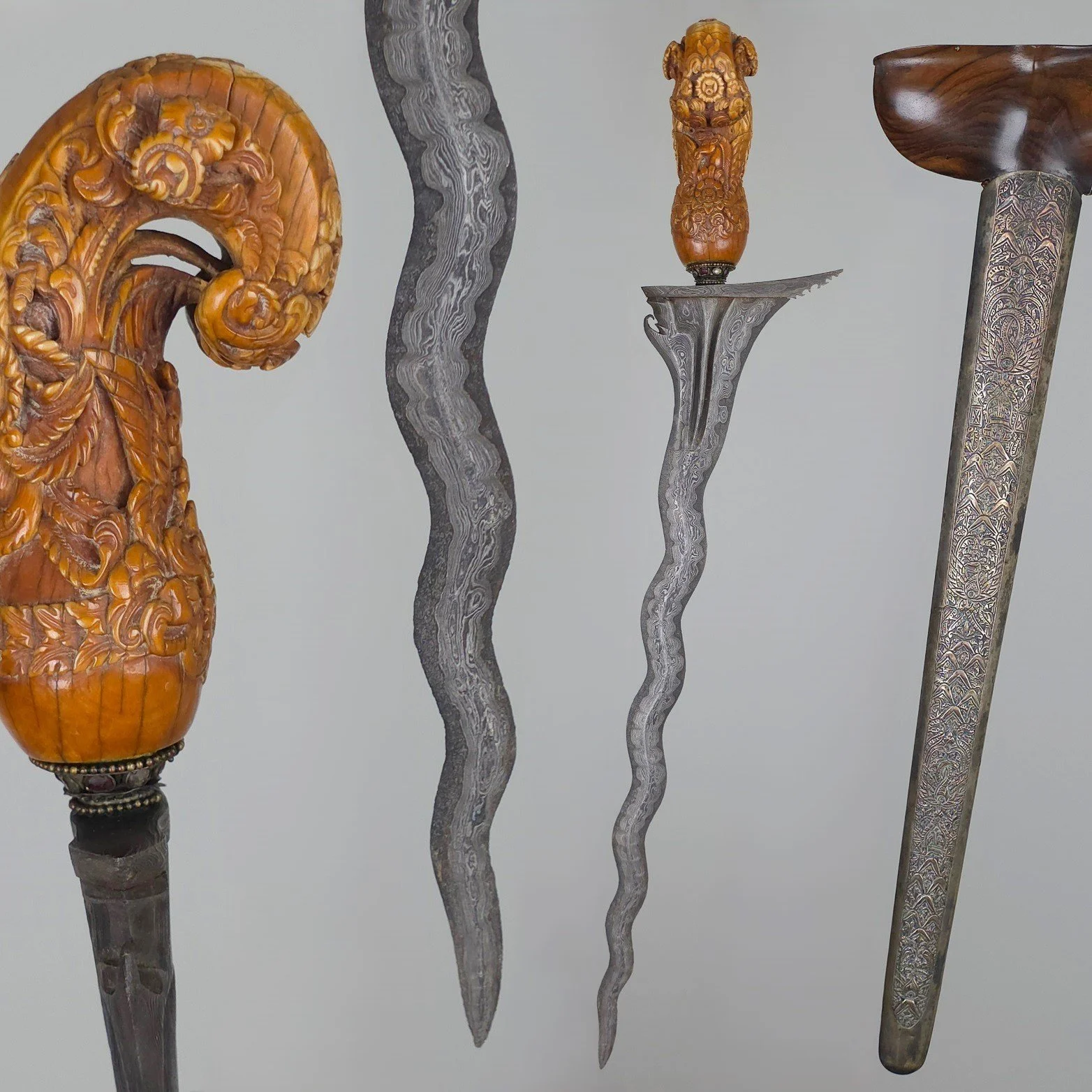
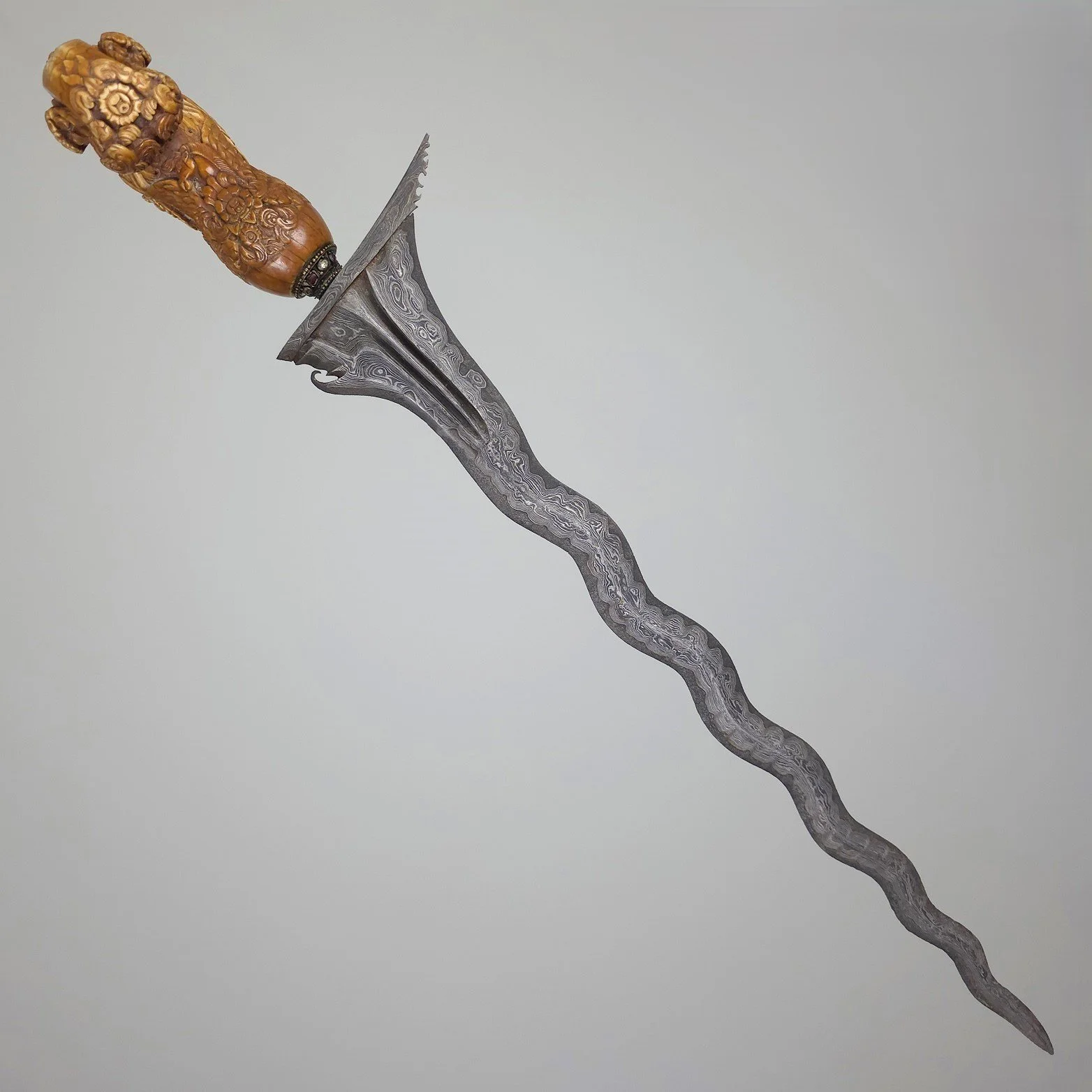
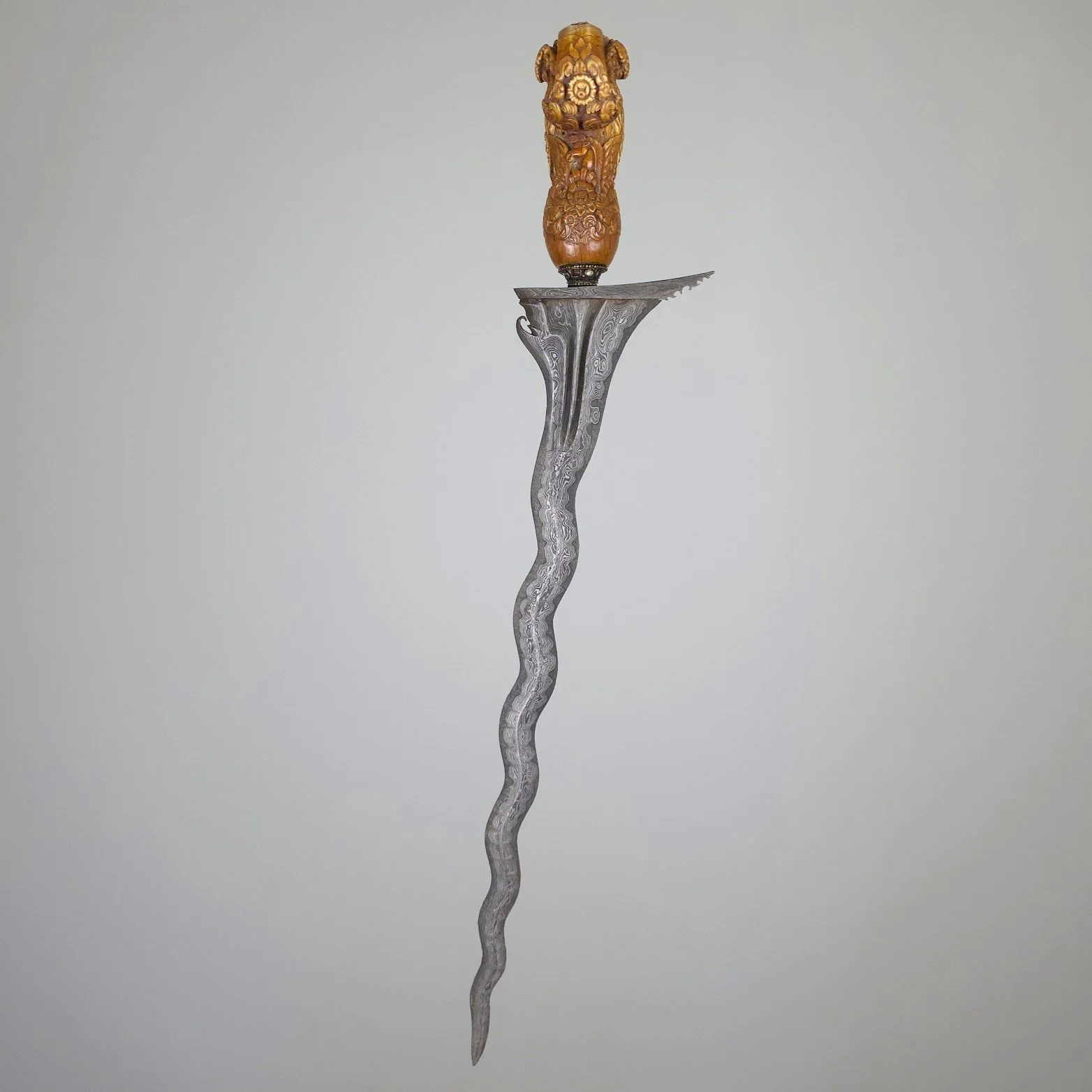
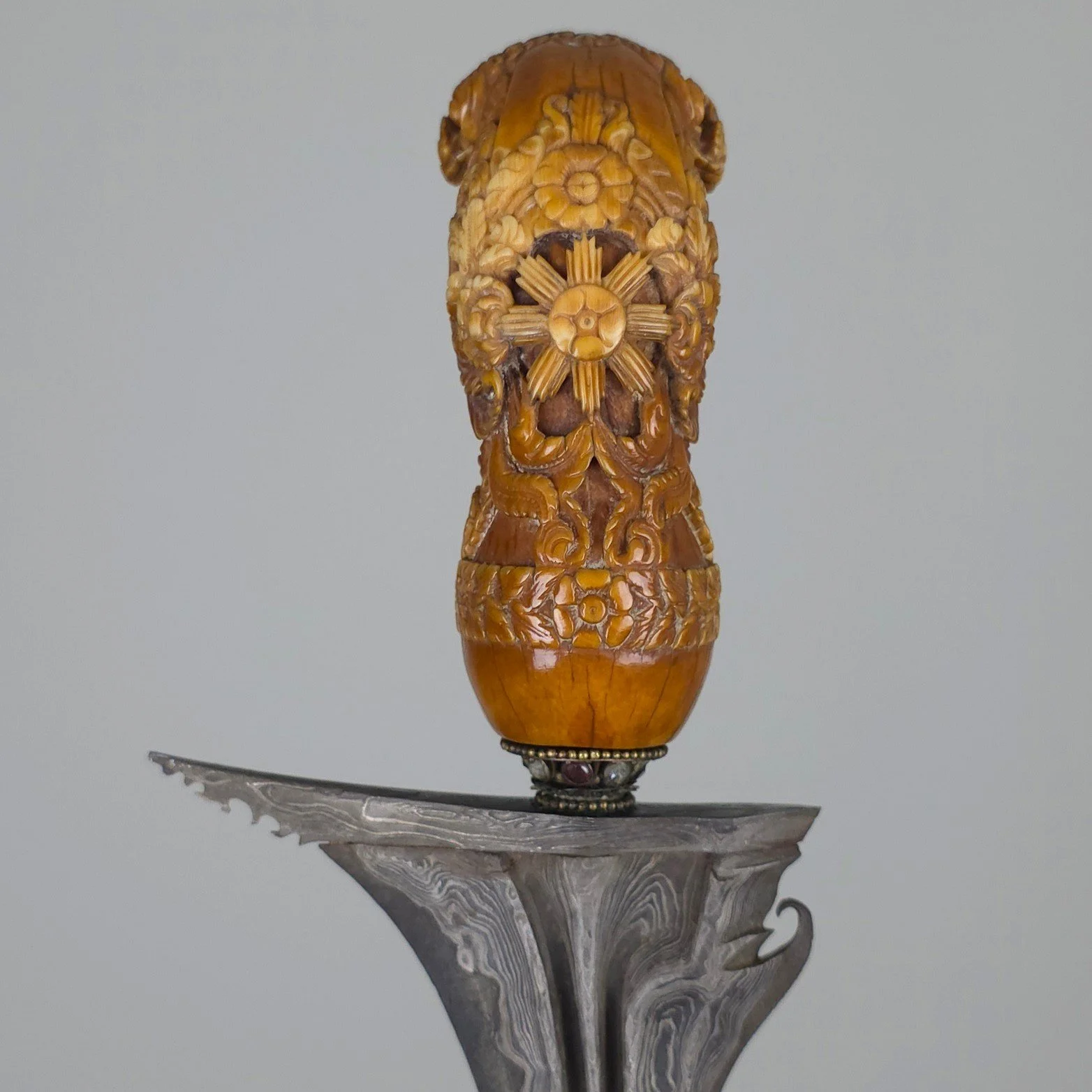
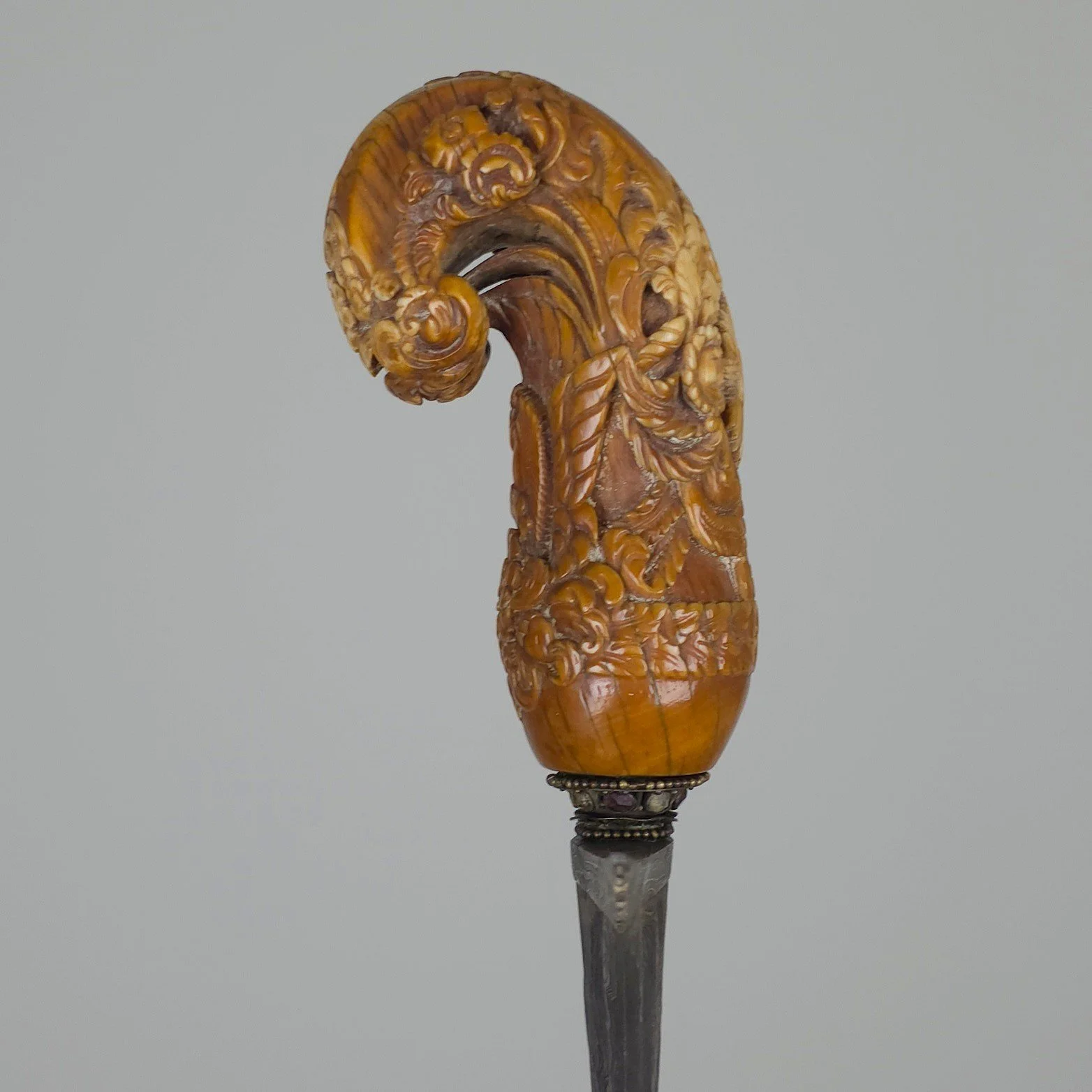
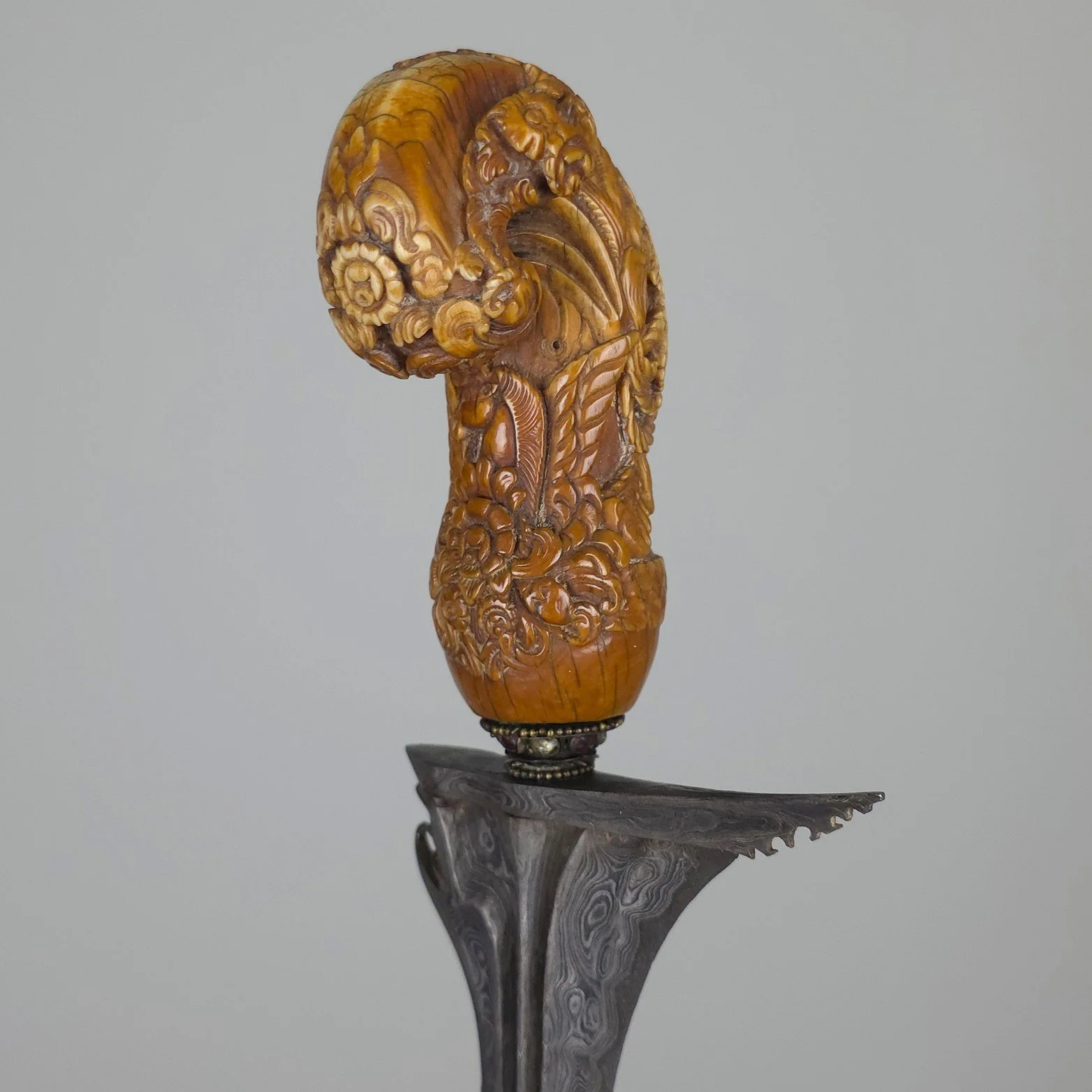
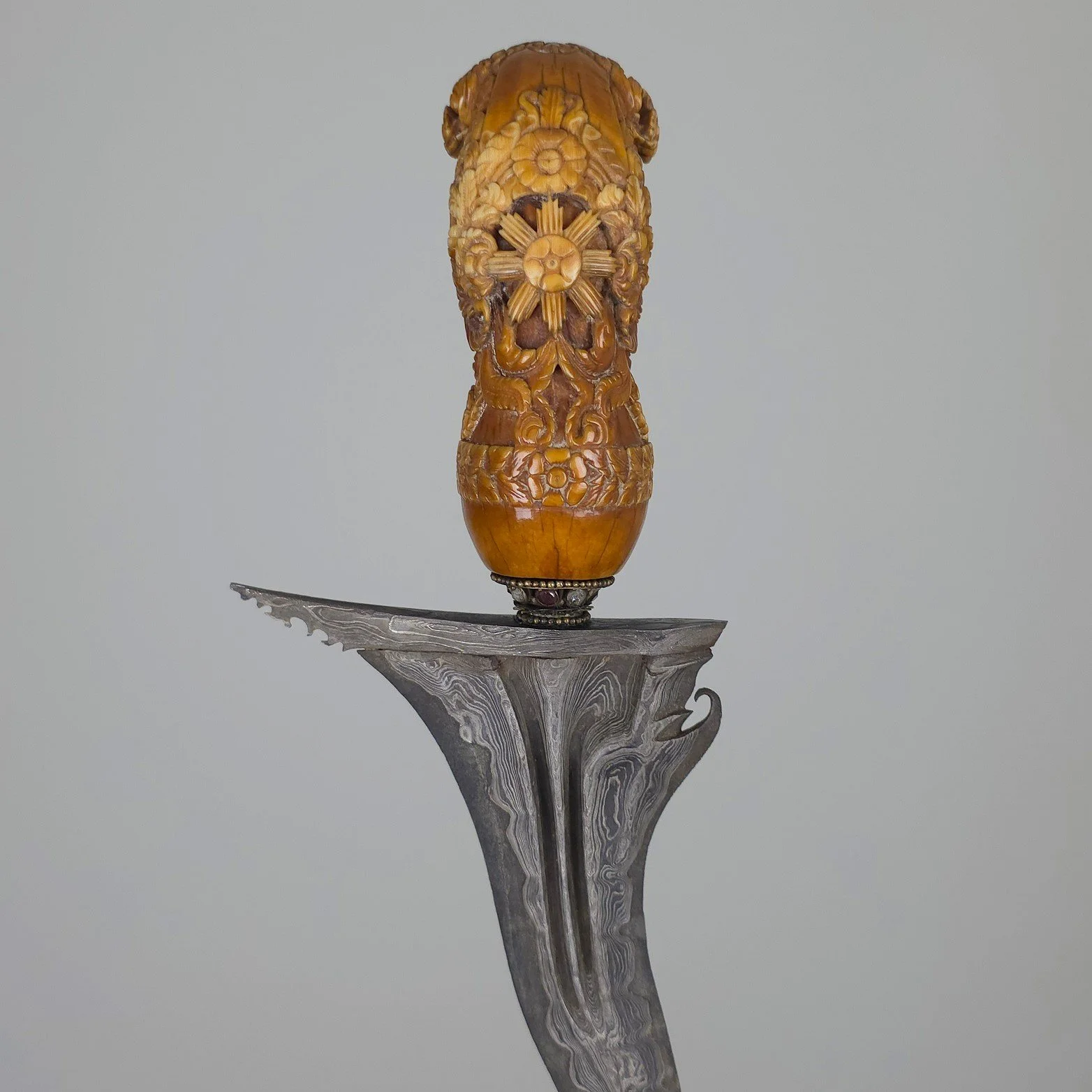
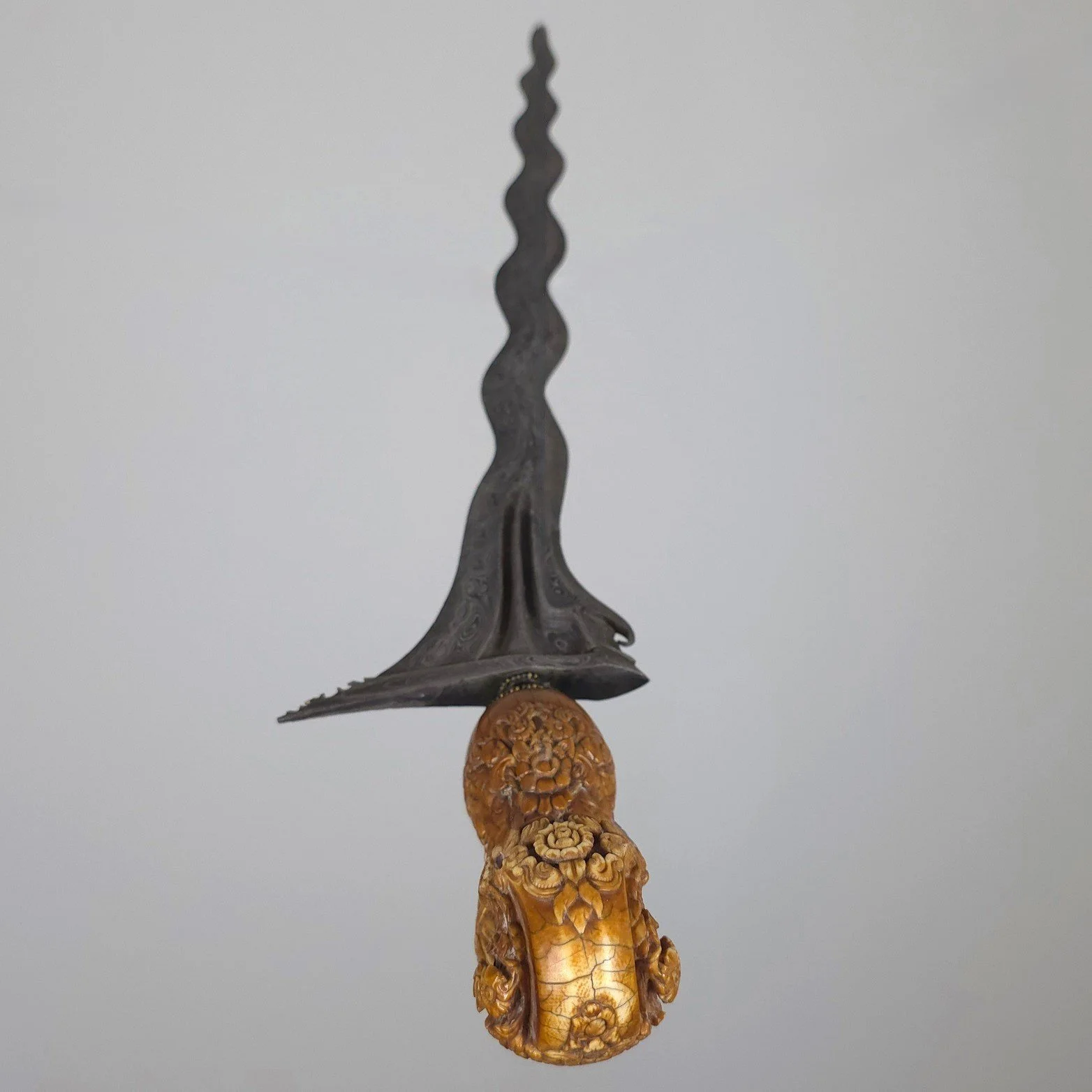
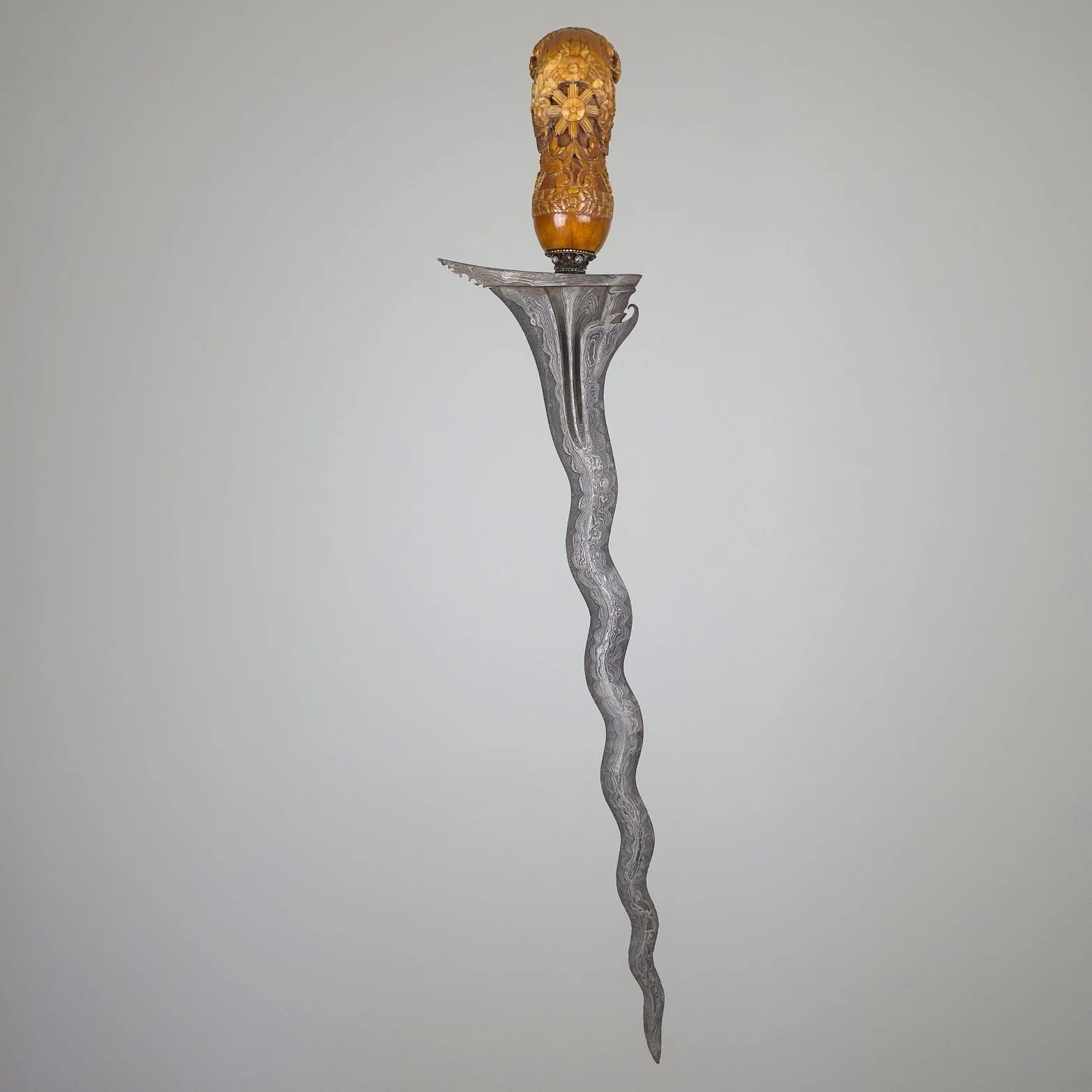
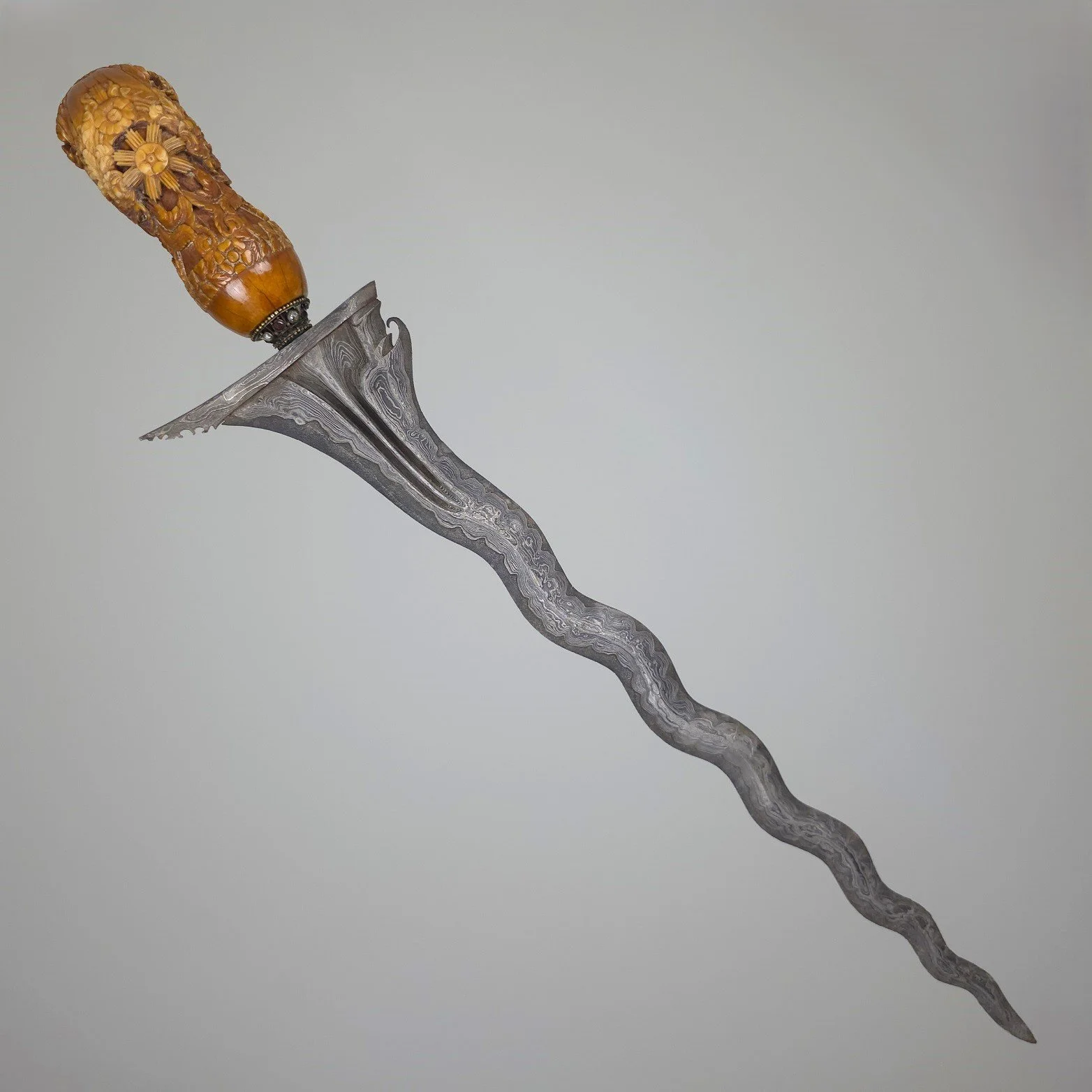
A fine Madurese keris from the island of Madura, featuring an intricately carved hilt and a beautifully pamored blade. Dating from the late 19th to early 20th century.
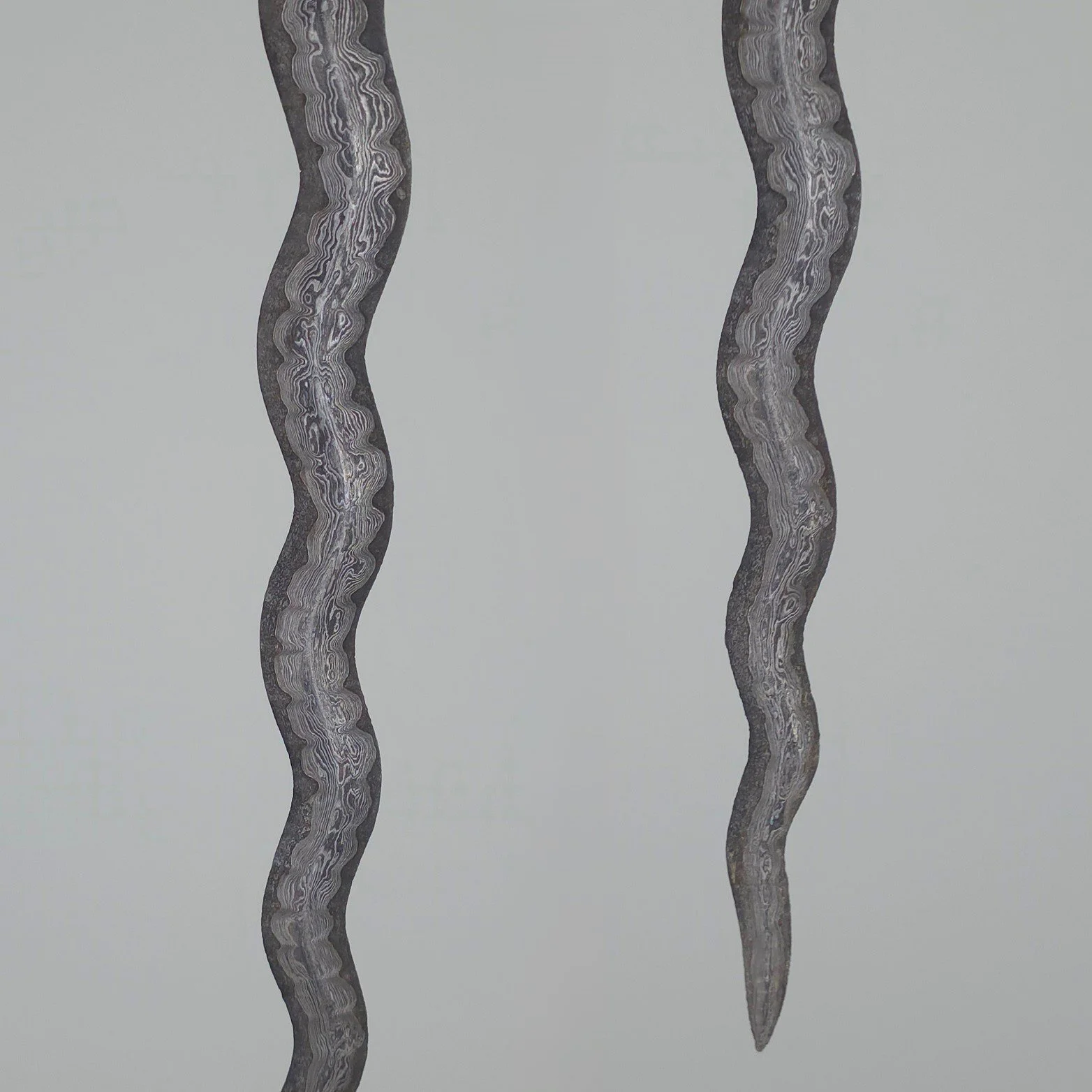
The double-edged wilah (blade) displays 13 luk (curves), with a strikingly defined iron- nickel pamor pattern. Distinct nickel- rich bands curve, split, and twist alongside the luks, contrasting beautifully against the darker iron base. The blade may be karmadikan, suggesting it is a newer replacement or remounted blade compared to the rest of the keris dress. Nevertheless, it is exceptionally well constructed.
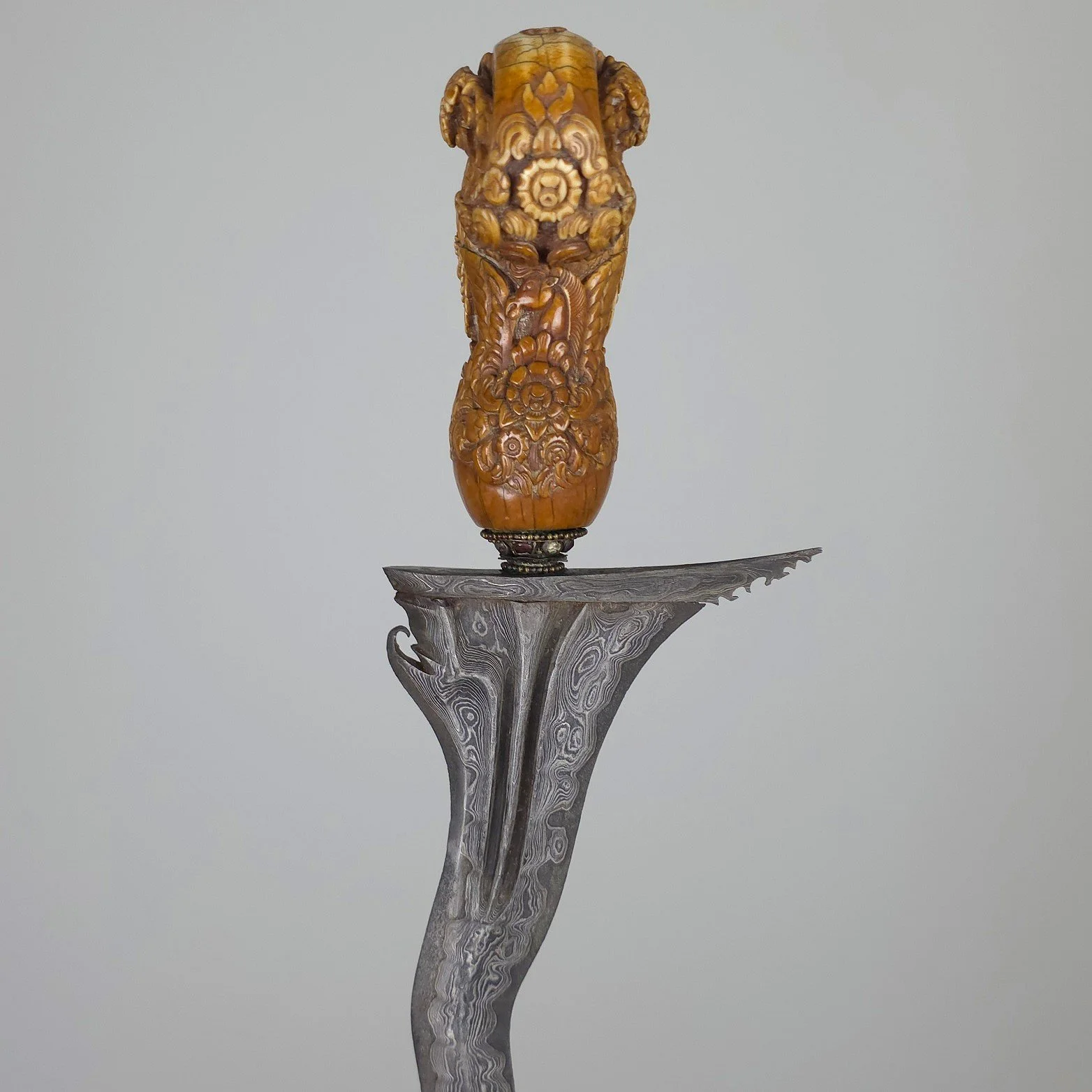
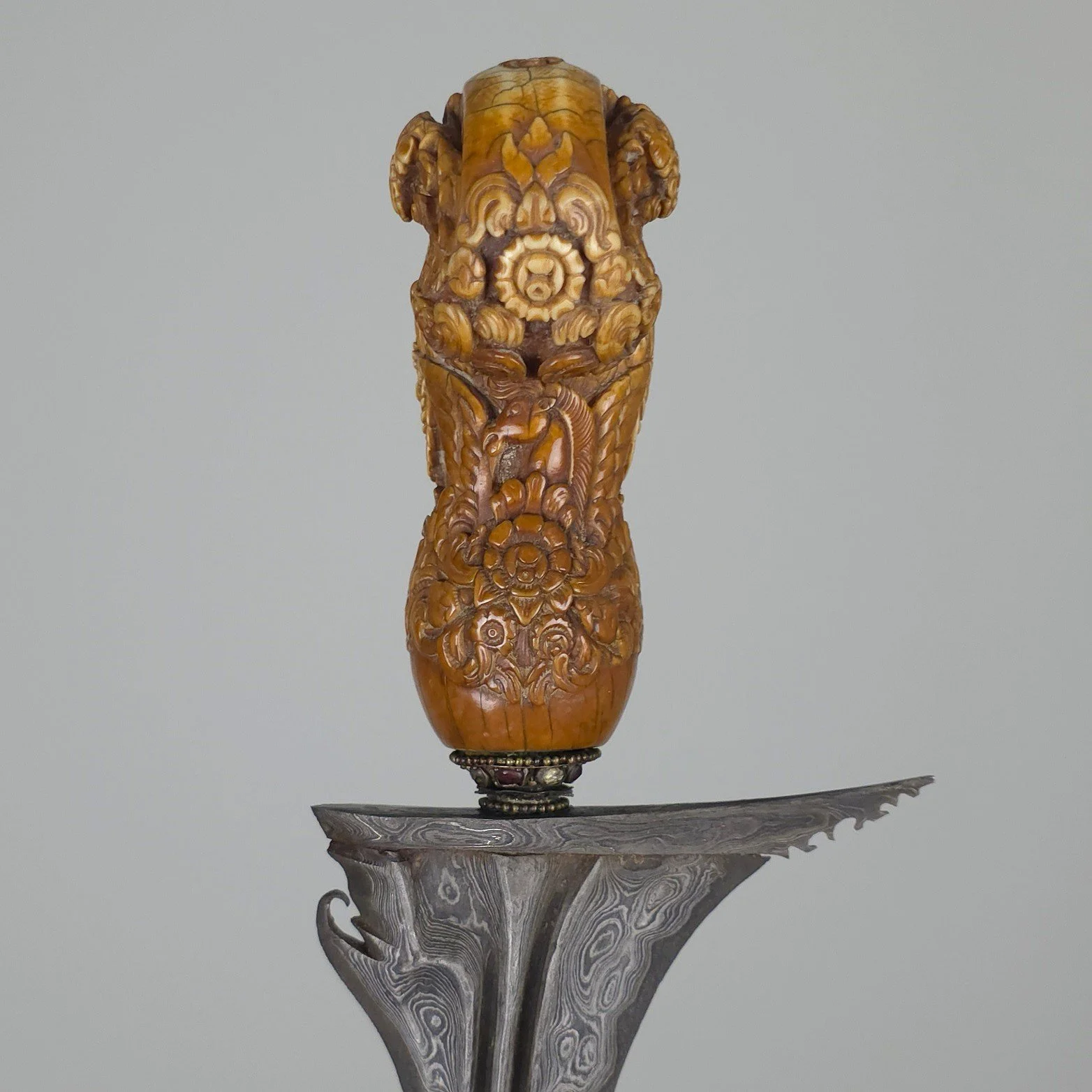
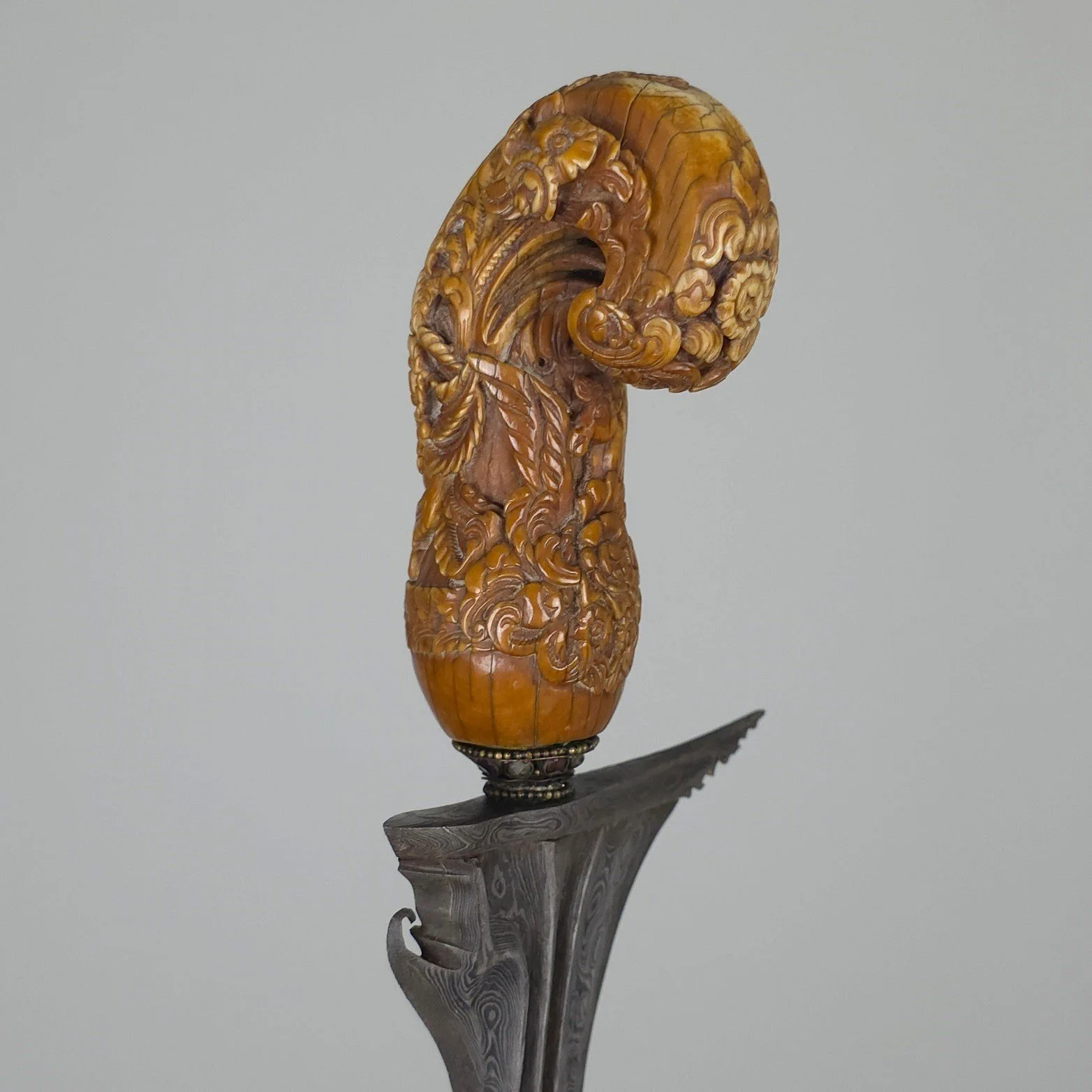
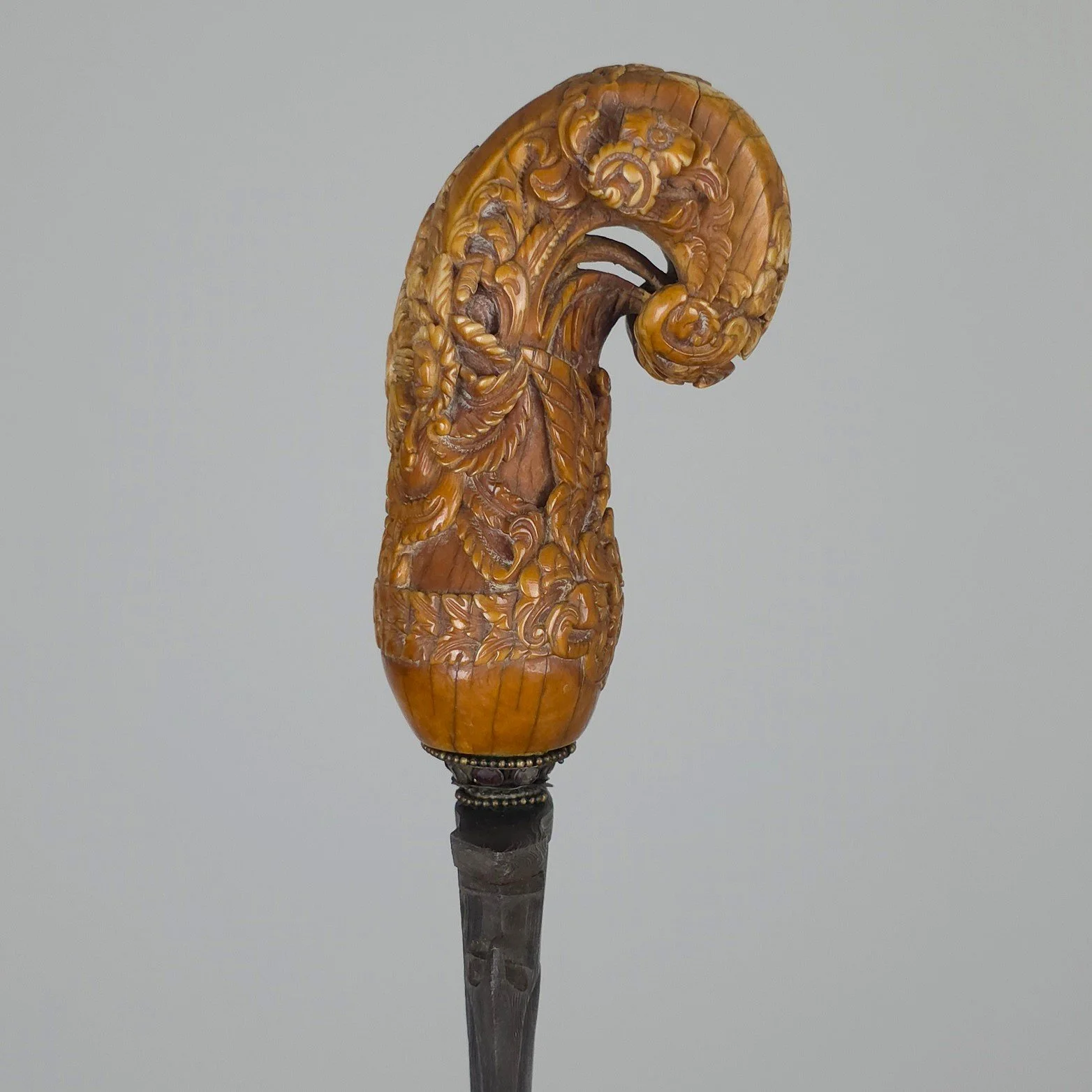
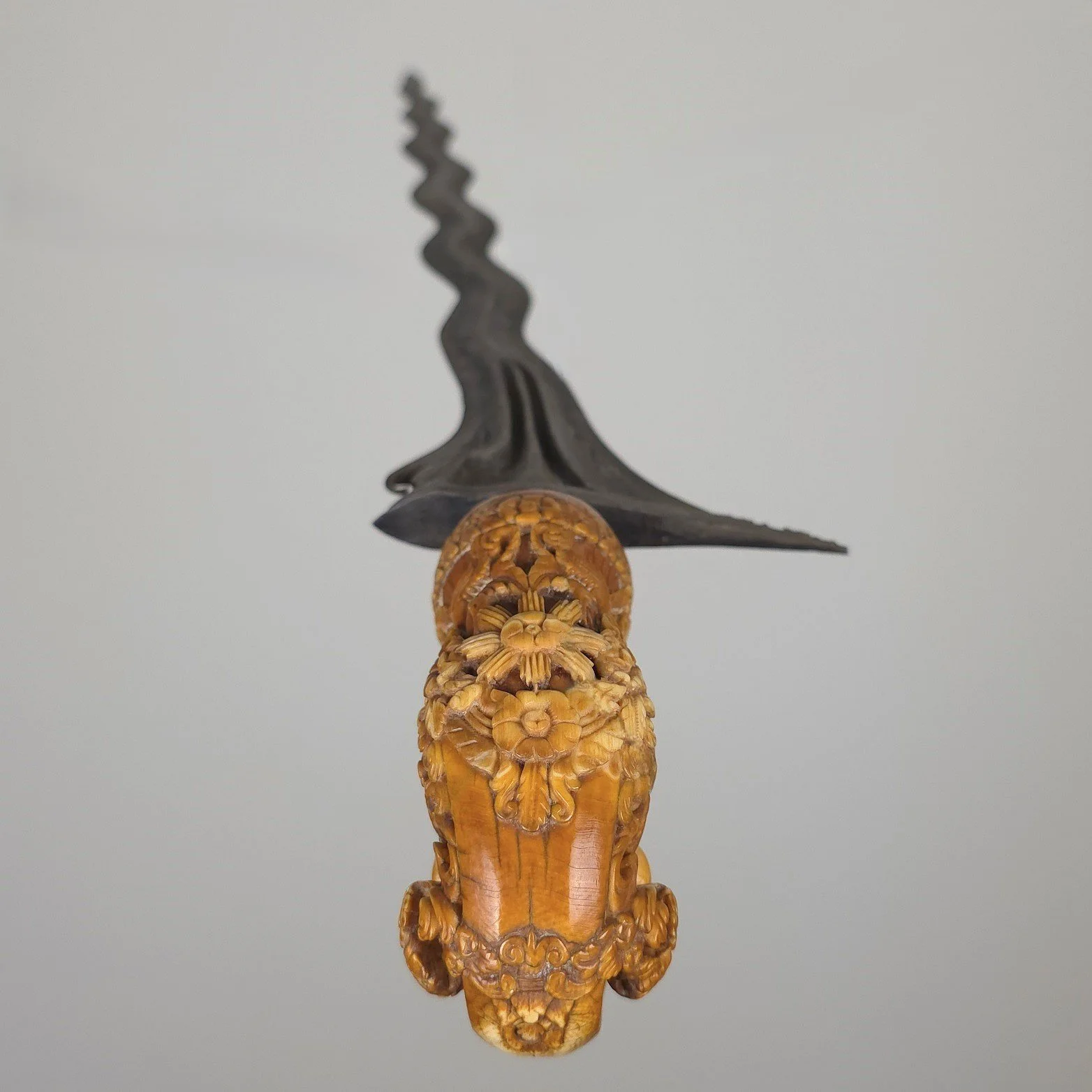
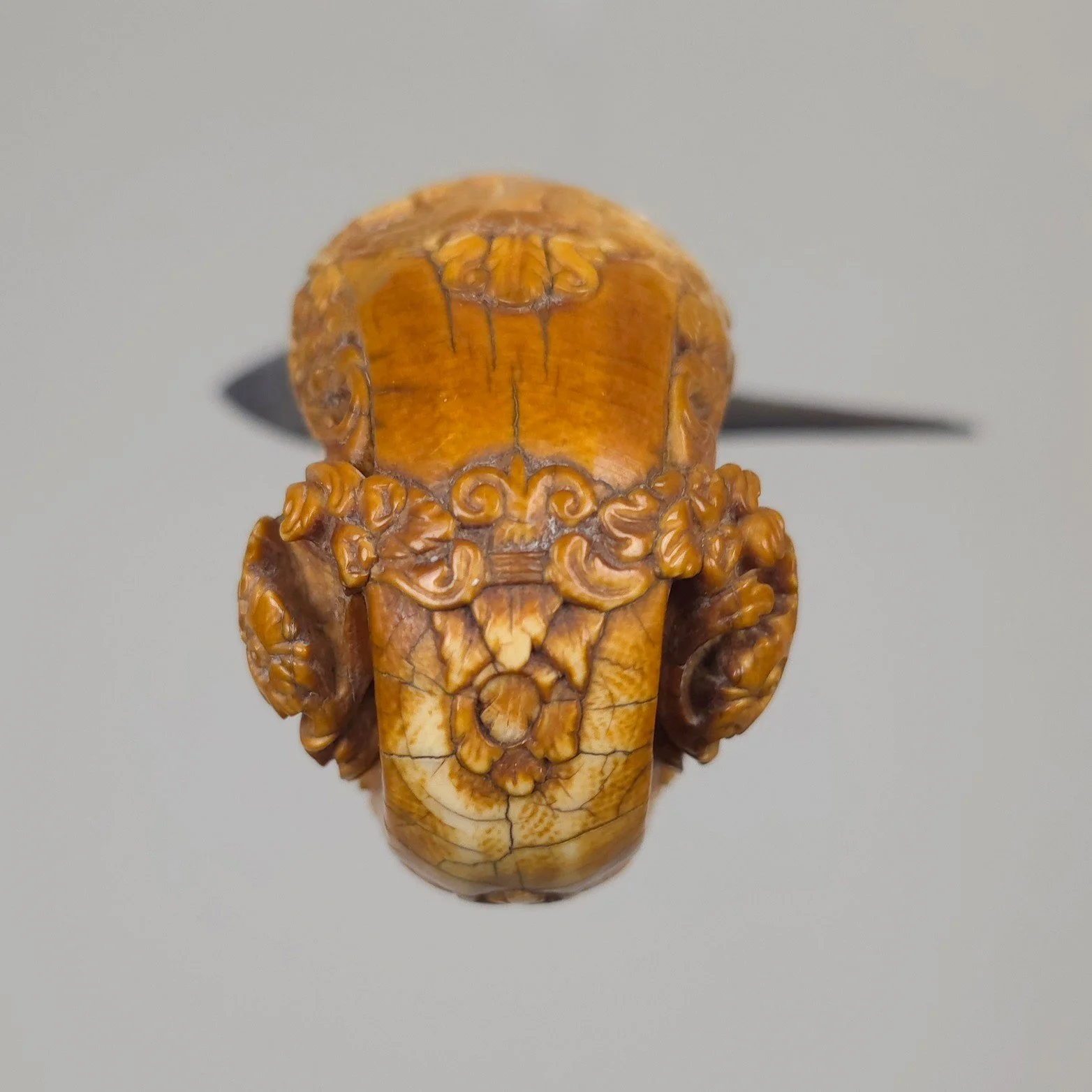
The large elephant ivory Donoriko hulu (hilt) displays a rich, dark orange patina and extensive openwork carving featuring elaborate floral and lotus motifs. Its distinctive form incorporates the legendary winged horse Jaran Semberani, also known as Kuda Panoleh, an important emblem associated with the Madurese Sultanate of Sumenep. The figure is characterized by a massive upper section, or head, rounded and bent forward, with two lateral protrusions resembling ears. The reverse features an eight-spoked cakra, or Surya Majapahit sunburst.
The brass mendak features granulated edges and alternating red and white stones: four red (possibly ruby or garnet) and four white (possibly diamond or white quartz). Their irregular, roughly cut edges suggest they may be natural stones rather than cut or polished glass.
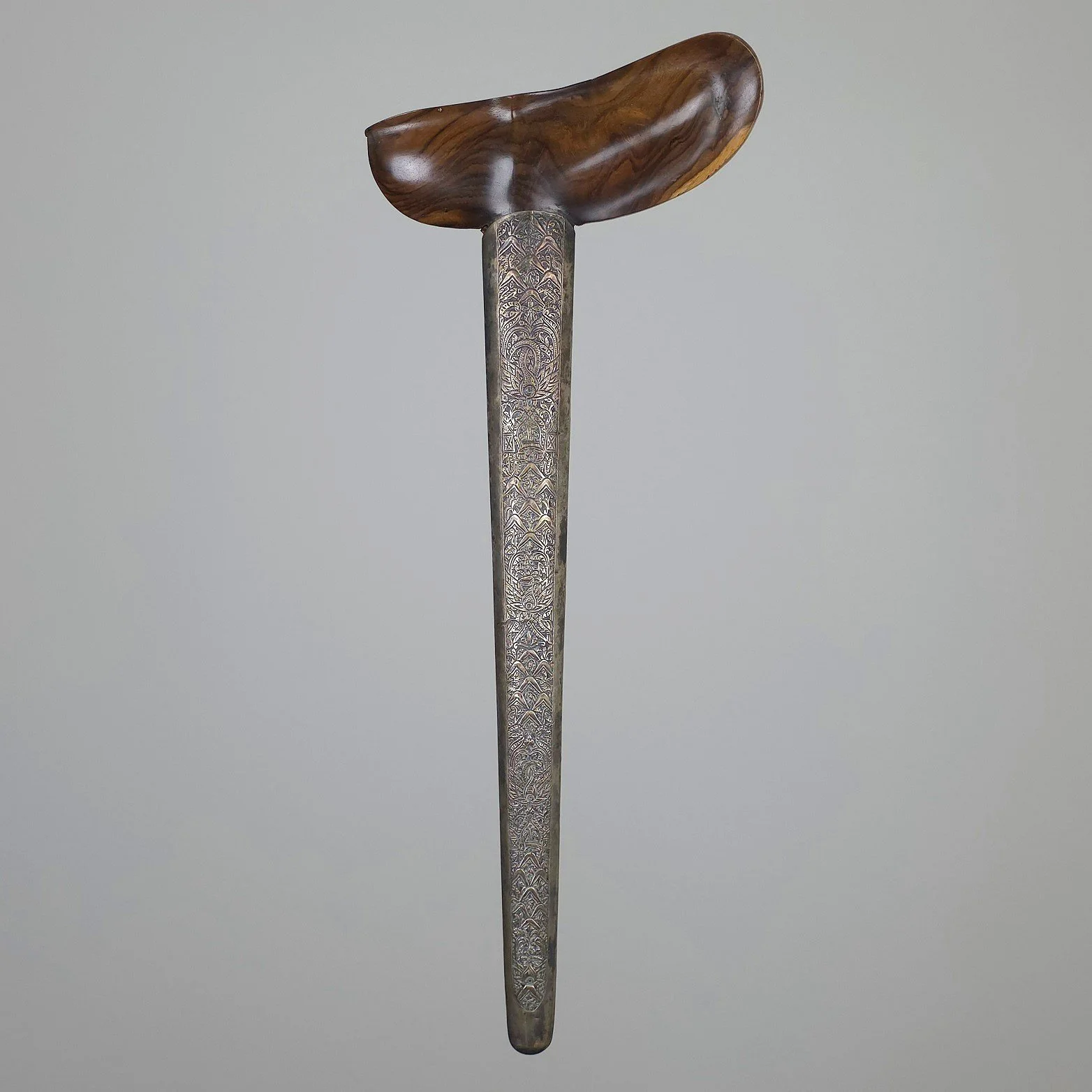
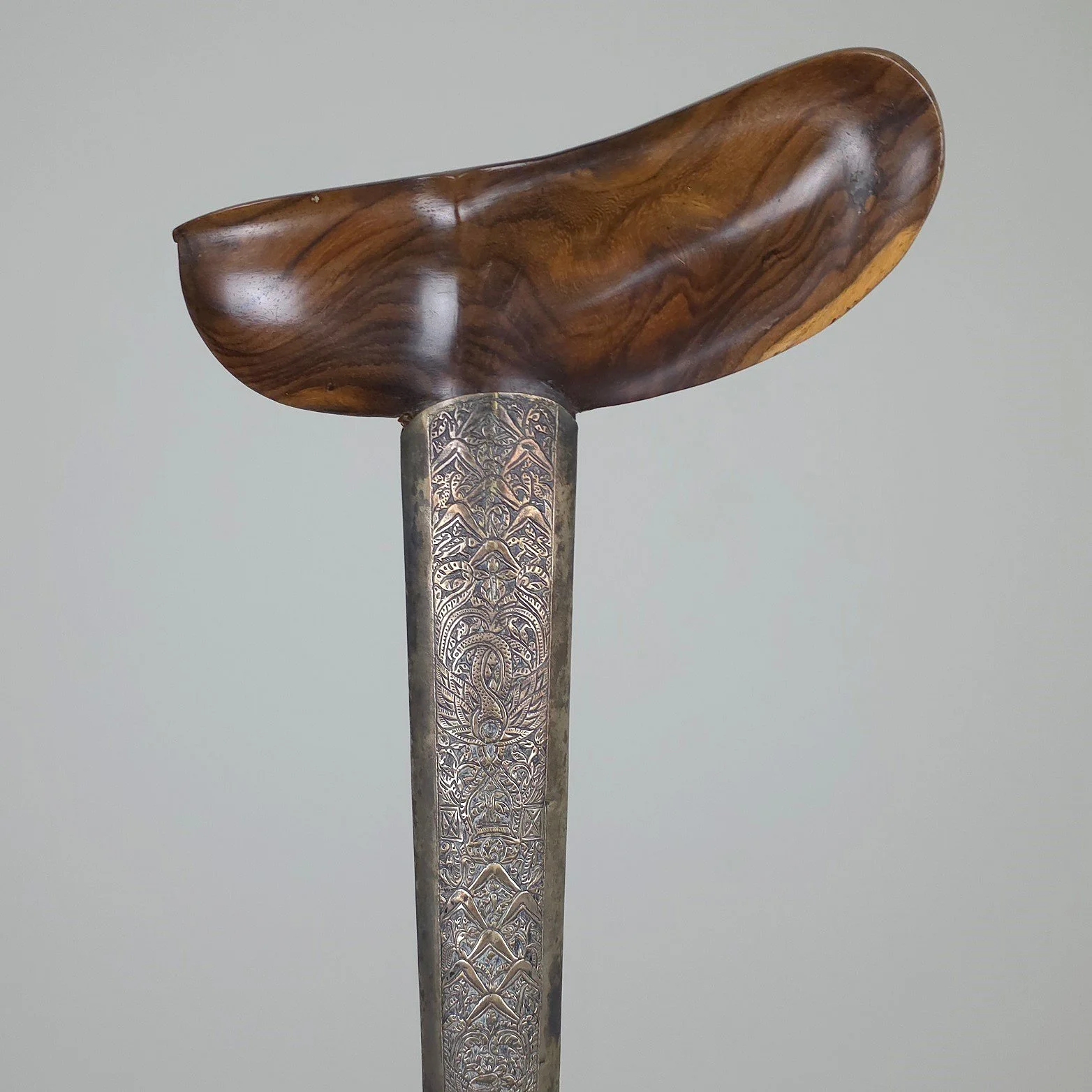
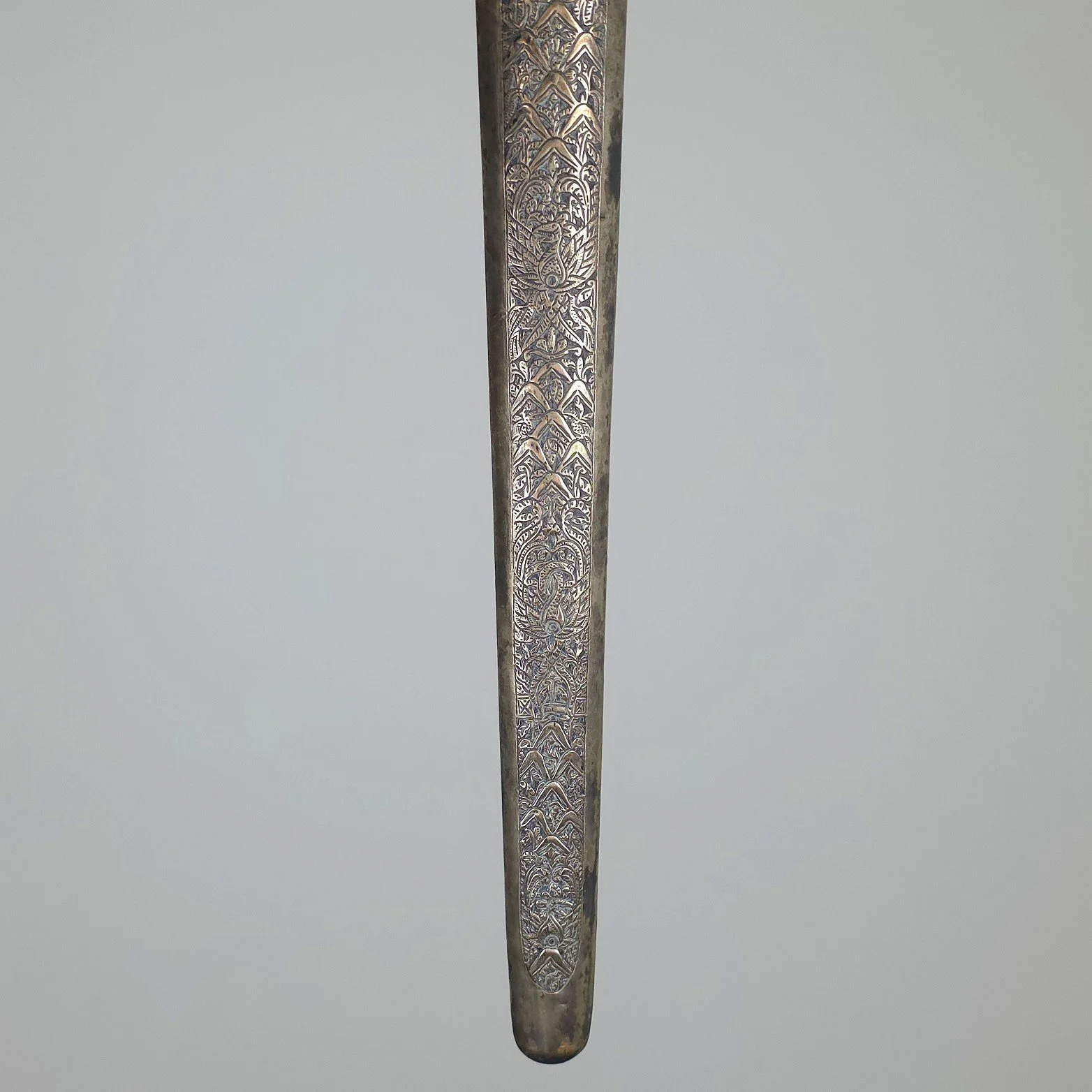
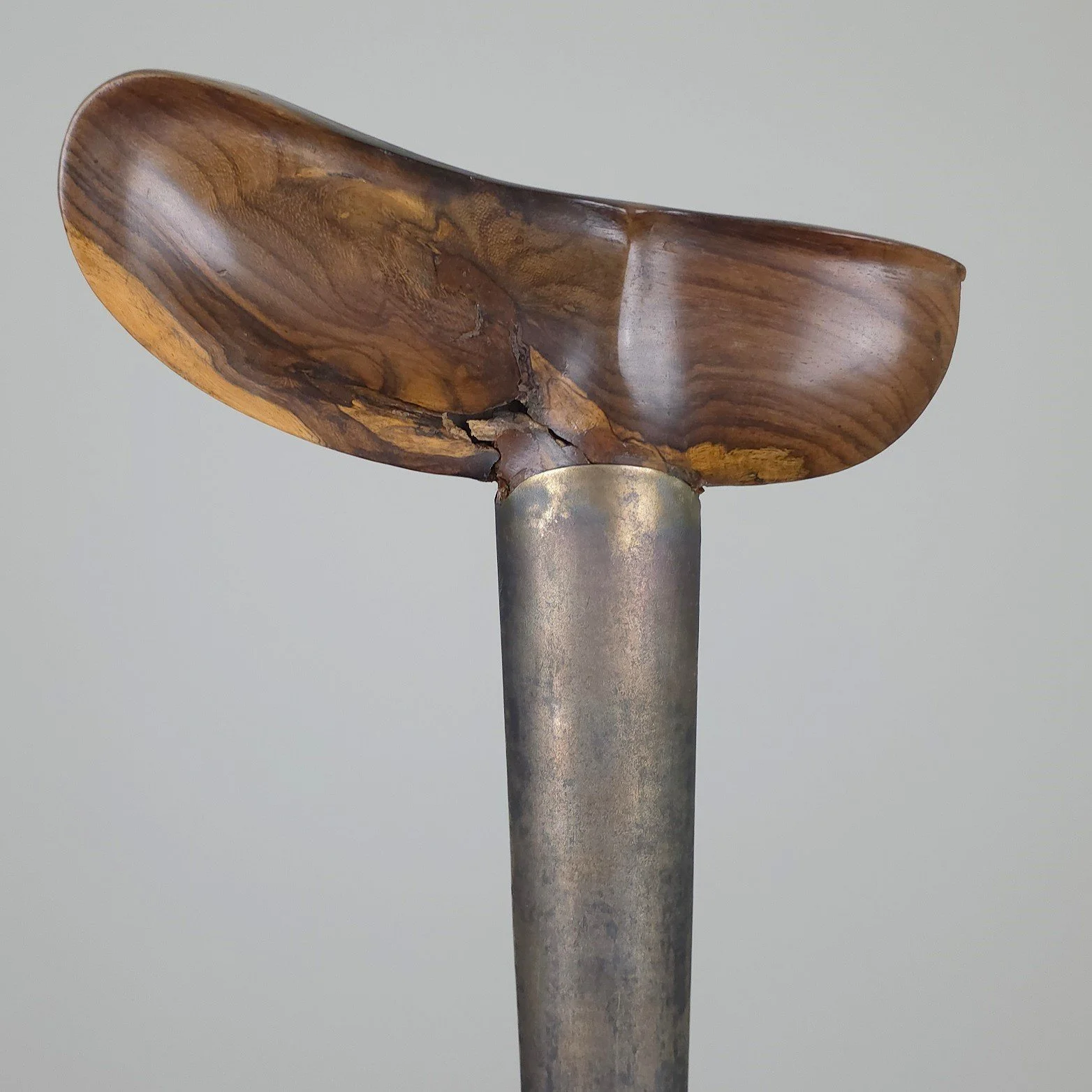
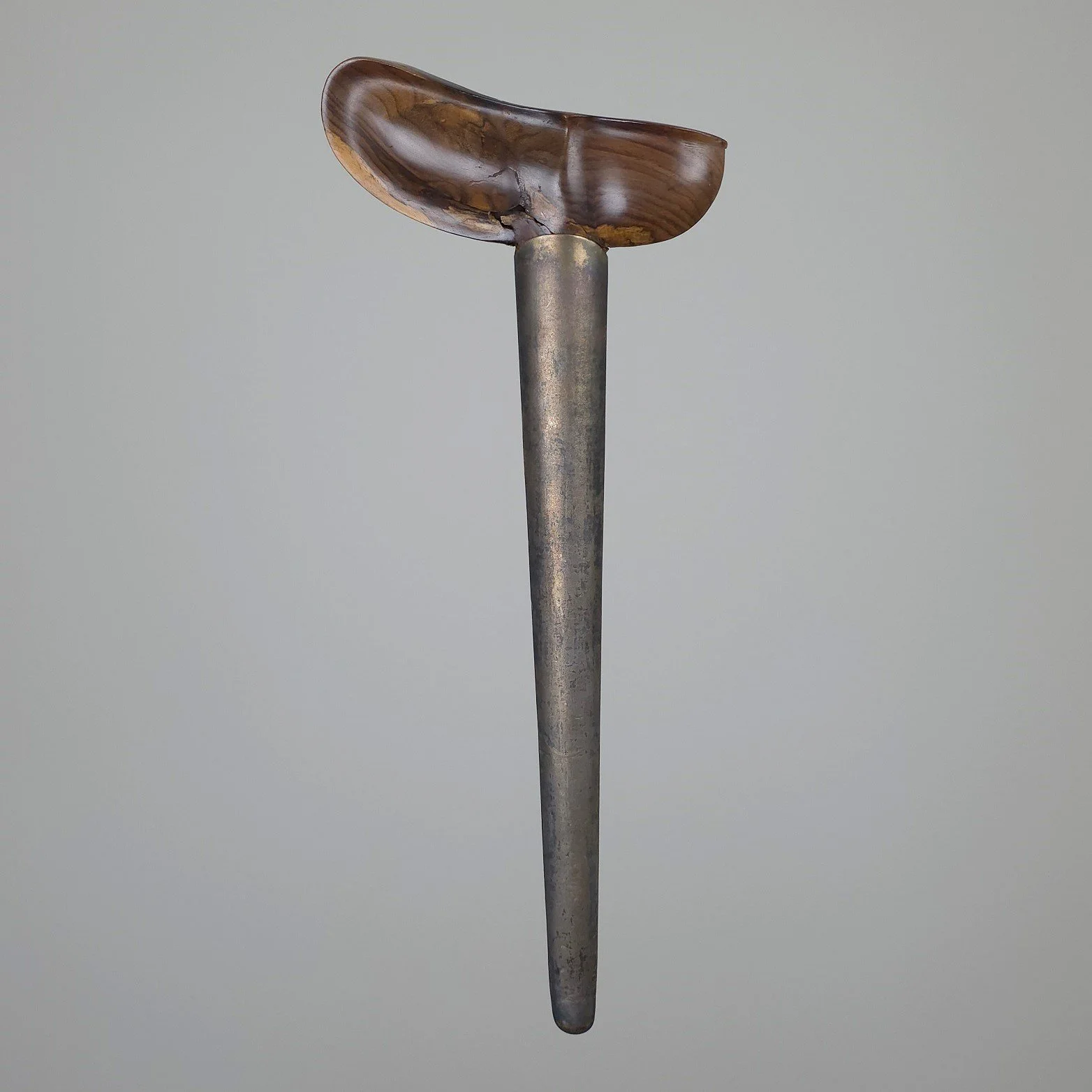
The warangka (sheath) is in the Central Javanese Yogyakarta (Yogya) Gayaman style, constructed from polished exotic wood, possibly kayu pelet or burl teak, with naturally contrasting grain patterns. The silver- alloy pendok is extensively chased with birds, foliage, canopy scrollwork, and intricate variations of the Alas- Alasan motif, a traditional Javanese design representing a mythical forest teeming with life. The sheath is not original to the keris and was included with it at the time of purchase. It is damaged, with the warangka completely detached from the gandar. A previous repair using adhesive is evident, although the piece appears suitable for professional restoration.
An impressive Madurese keris distinguished by its finely carved ivory hilt and rich, dark orange patina. The winged horse, Kuda Semberani, is closely associated with Sumenep and is also known in Madura as Si Mega. This mythological creature was traditionally used as a royal household emblem and frequently incorporated into keris hilts. The cakra motif, meanwhile, was a principal symbol of Bangkalan and became particularly popular during the late 19th century. The combination of these distinctive regional symbols, fine materials, and elaborate craftsmanship suggests that this keris was intended for an individual of considerable wealth and social standing, potentially a member of the Madurese aristocracy or royal household.
[1] http://www.vikingsword.com/vb/showthread.php?t=30307
[2] https://www.metmuseum.org/art/collection/search/31315
[3] https://www.metmuseum.org/art/collection/search/31314
[4] https://www.britishmuseum.org/collection/object/A_As1939-12-7-a
[5] https://oriental-arms.com/product/very-good-java-madura-keris-dagger/
[6] http://www.oriental-arms.co.il/item.php?id=6209
[7] http://www.oriental-arms.co.il/item.php?id=4892
[8] http://www.vikingsword.com/vb/showthread.php?t=6545&highlight=madura+ornamental+hilts