Kanuri / Kotoko Arm Dagger
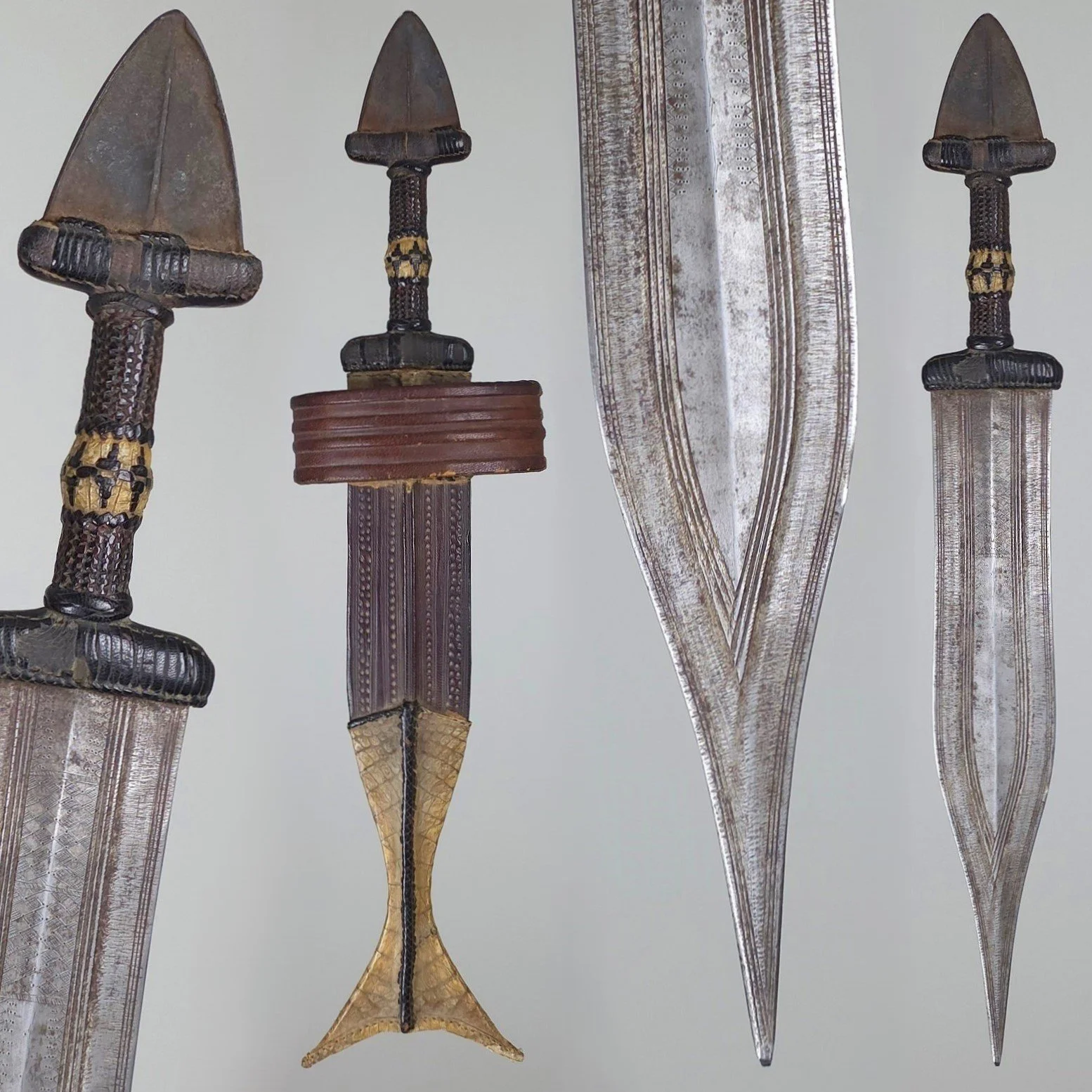
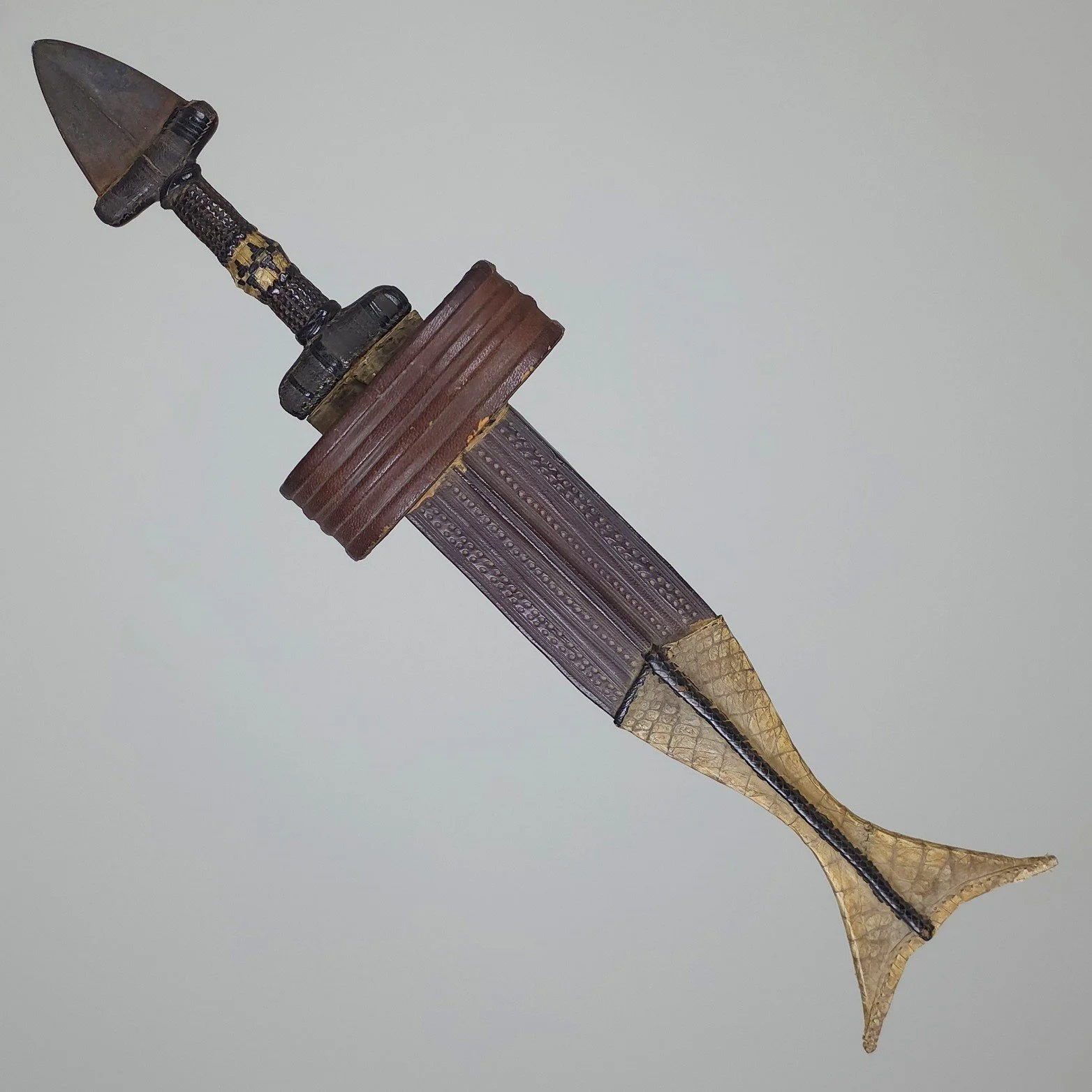
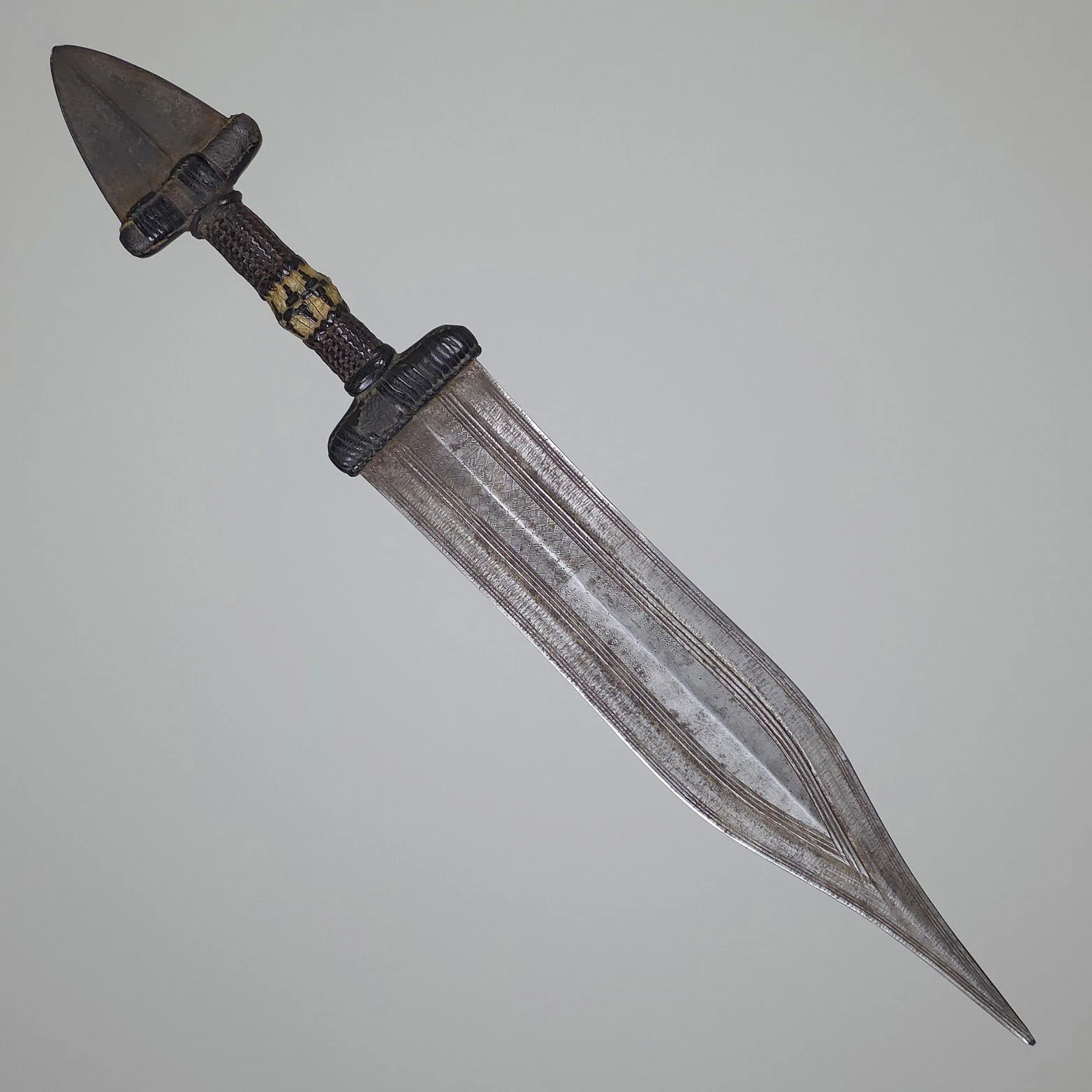
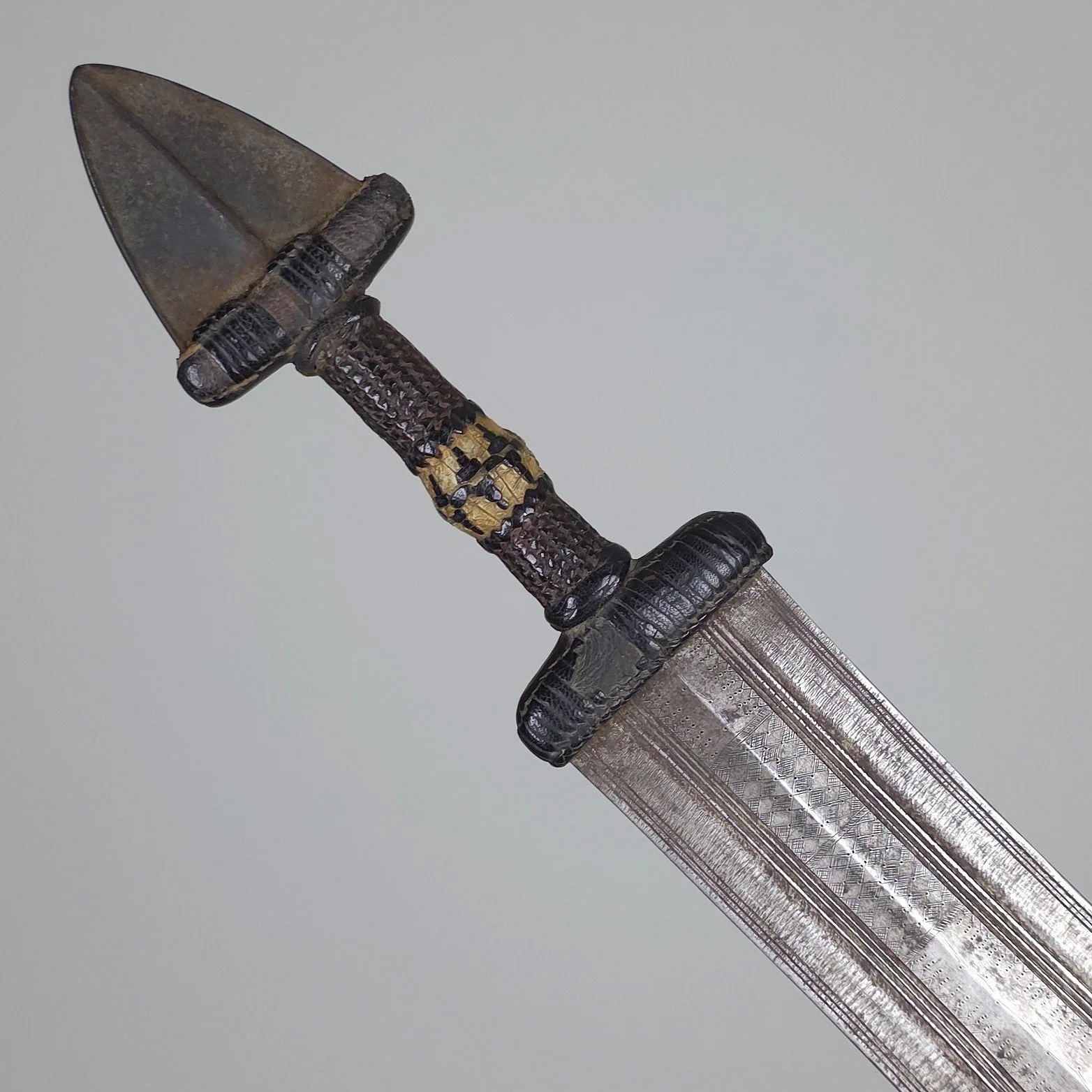
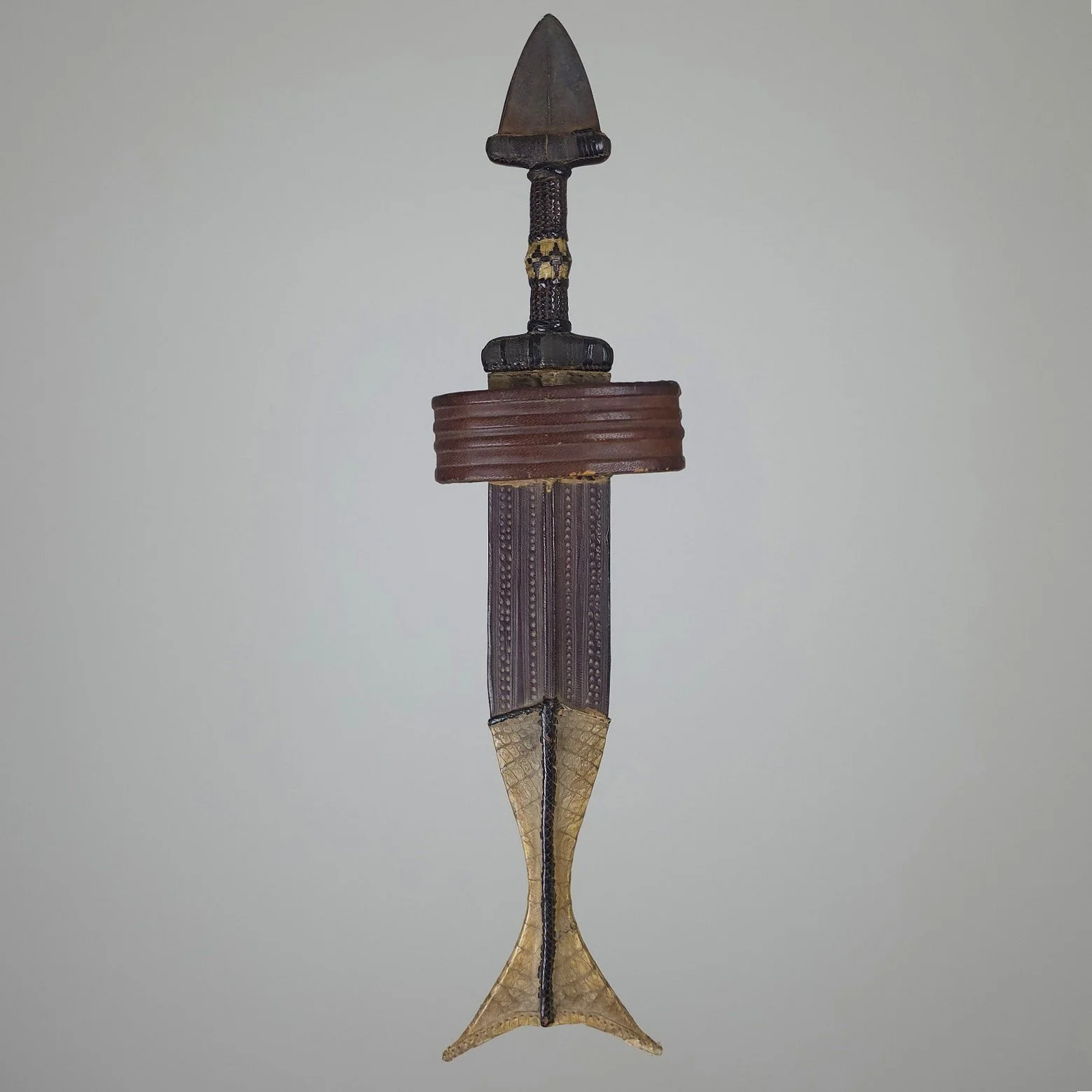
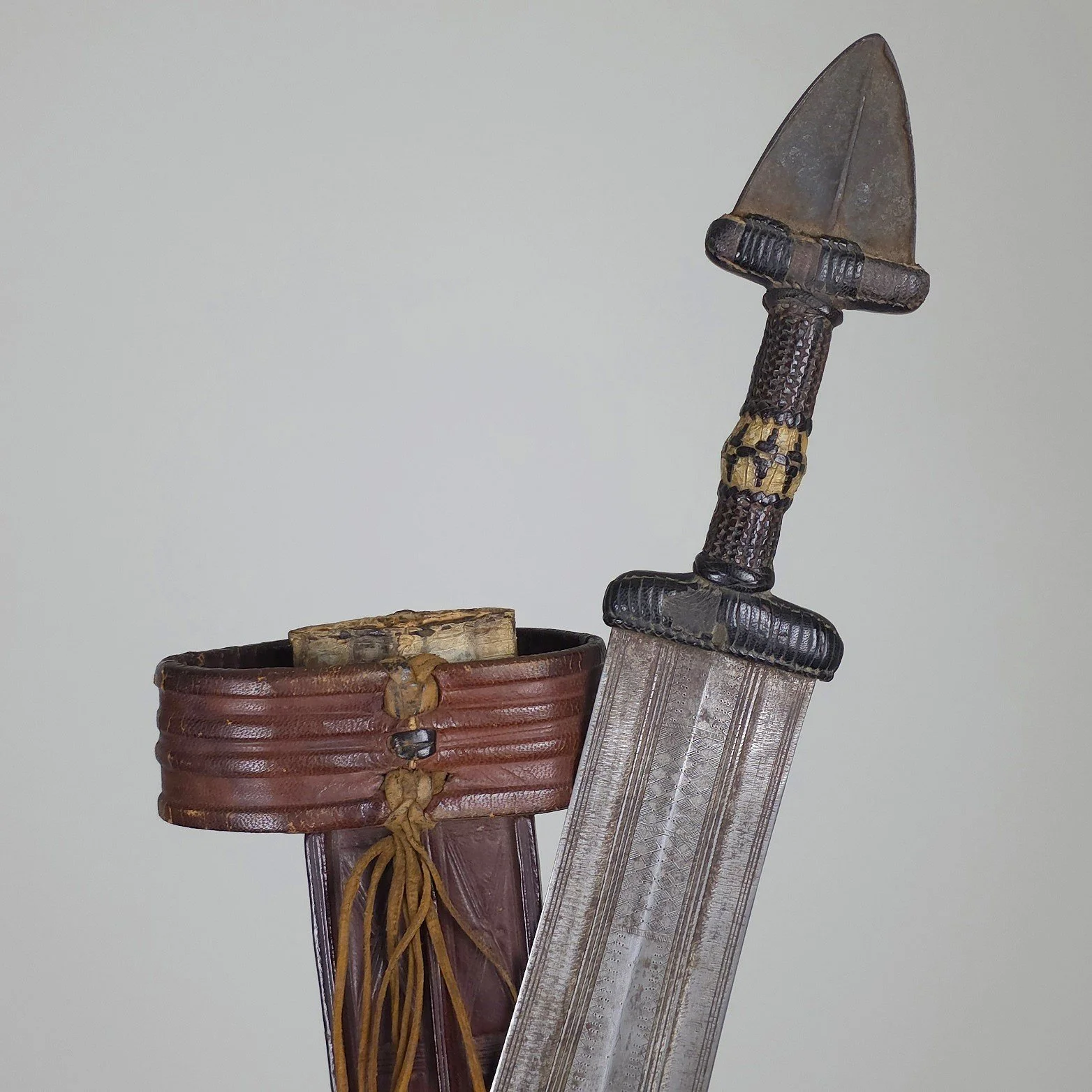
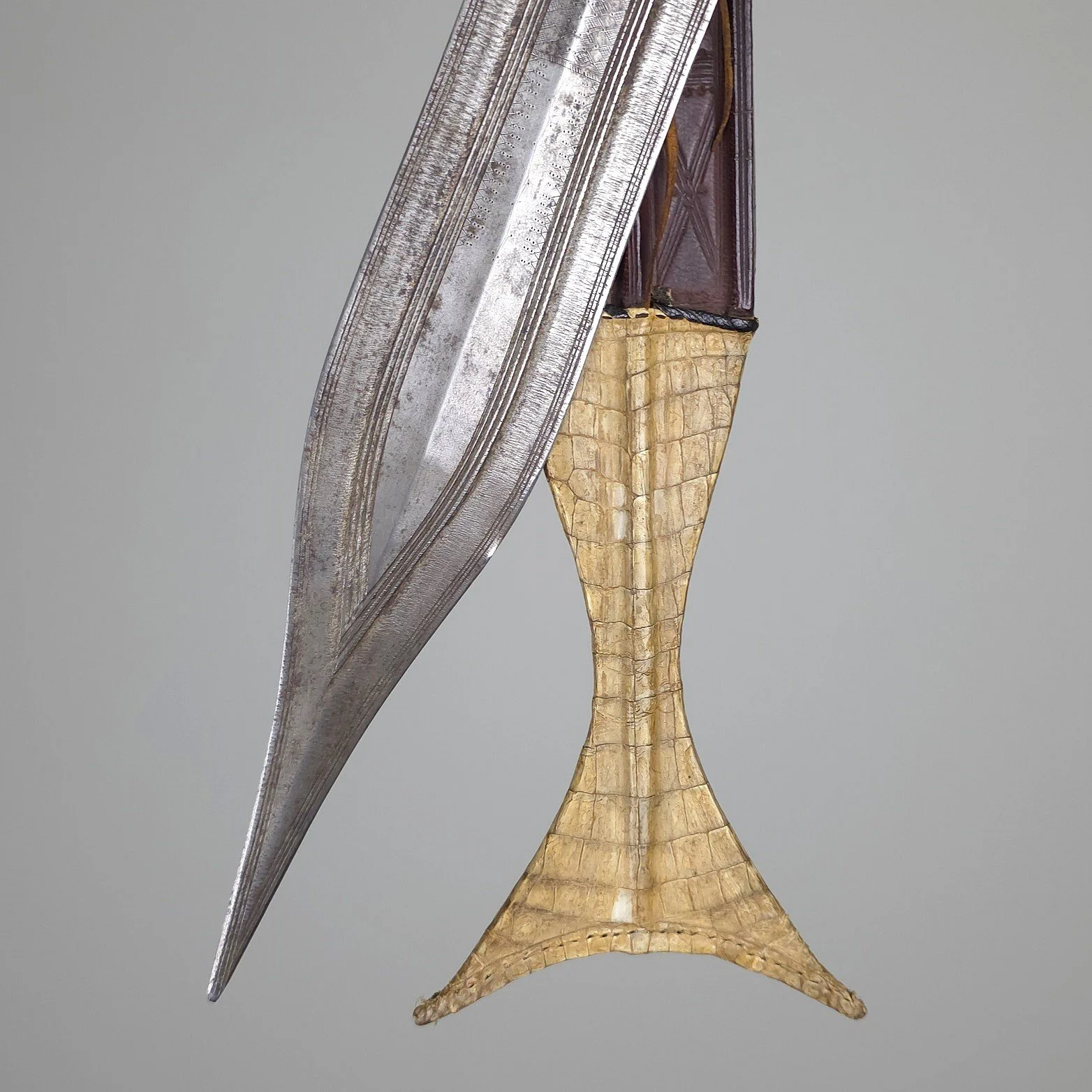
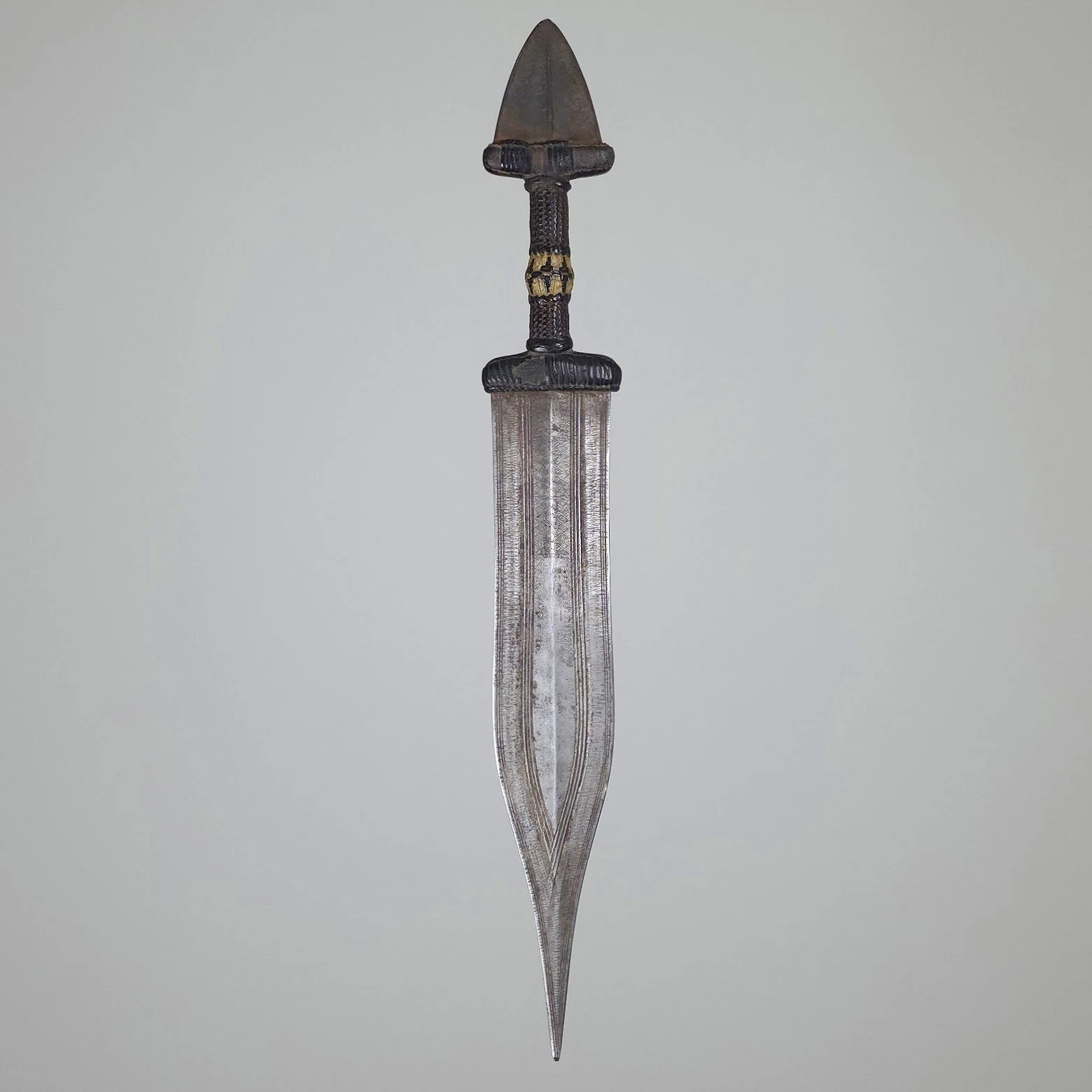
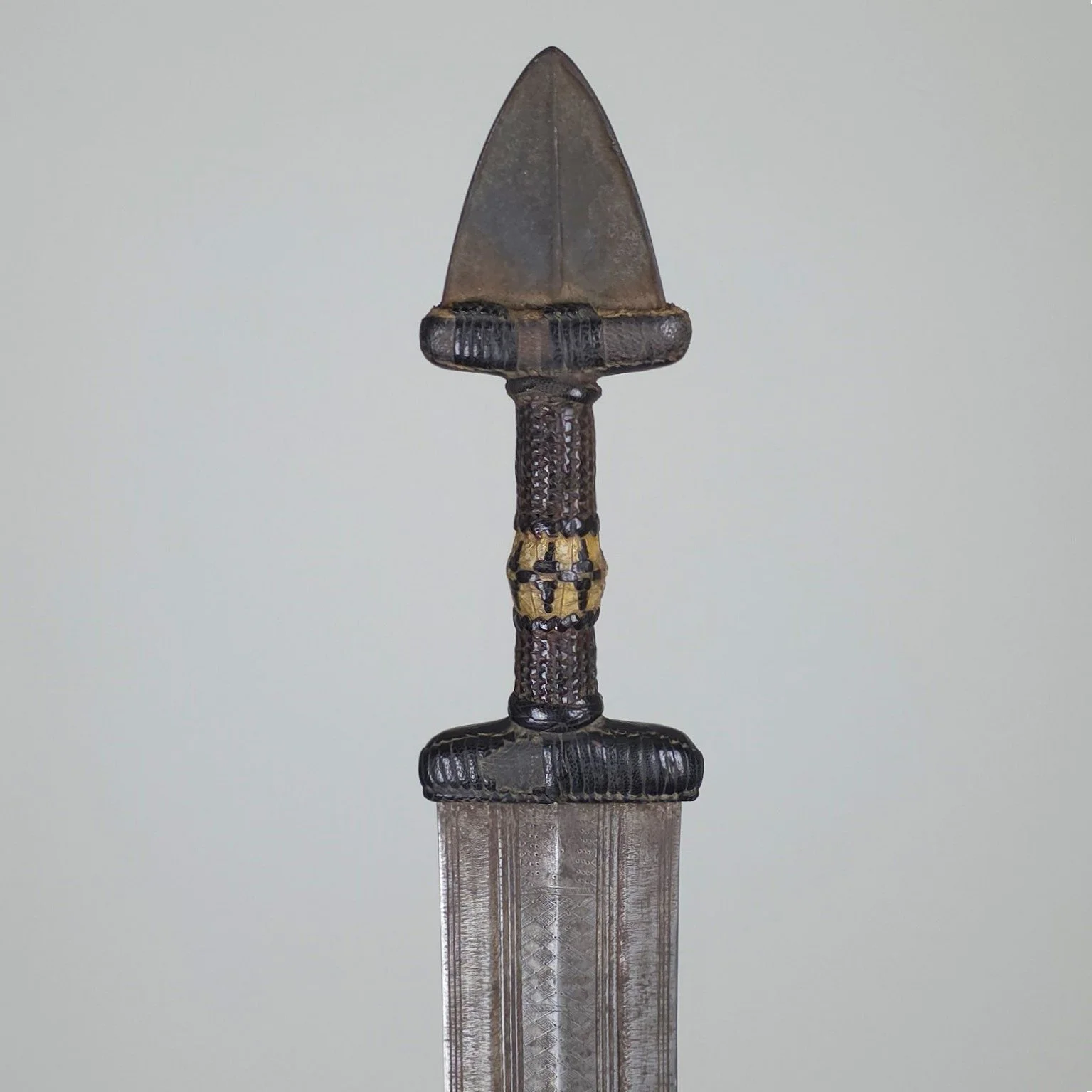
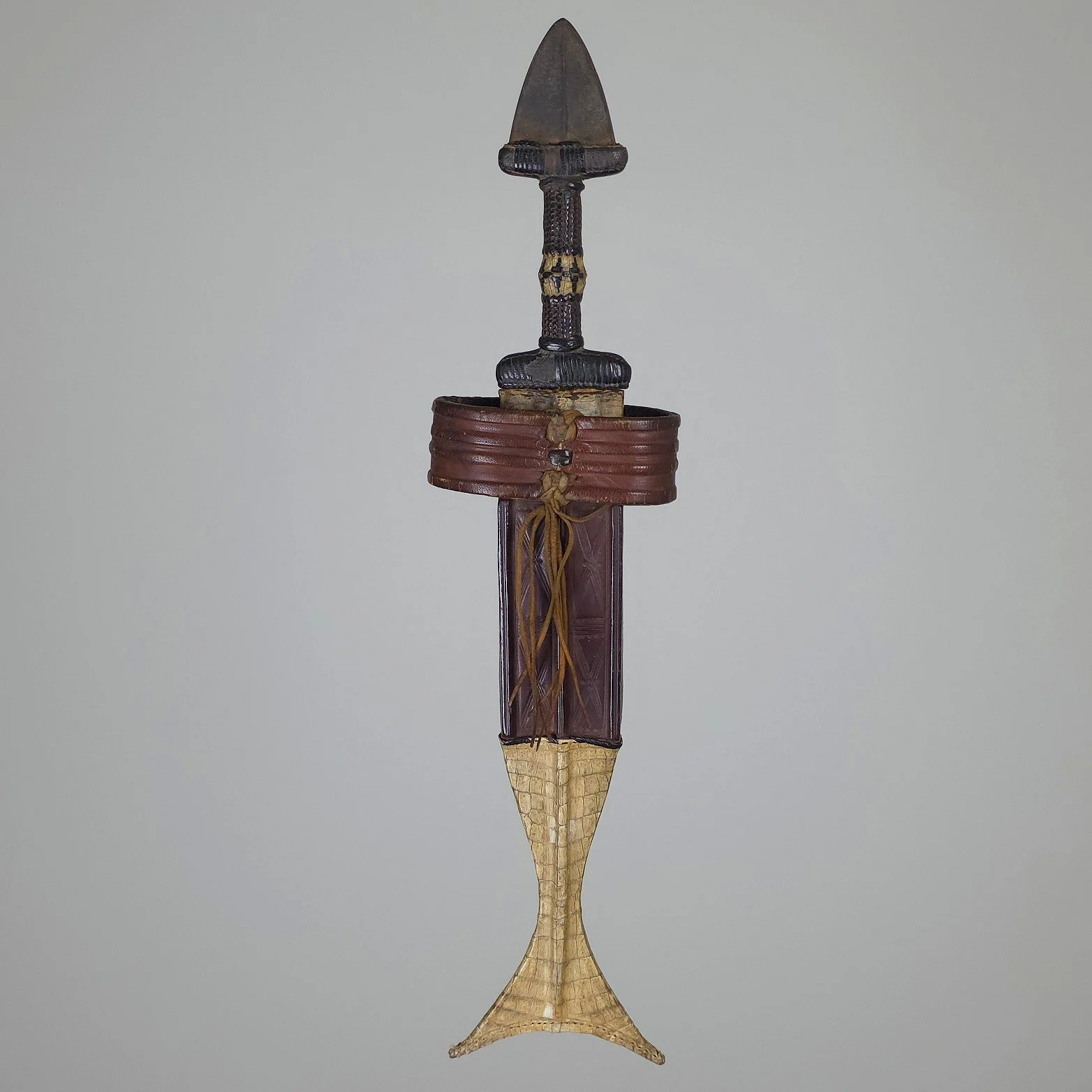
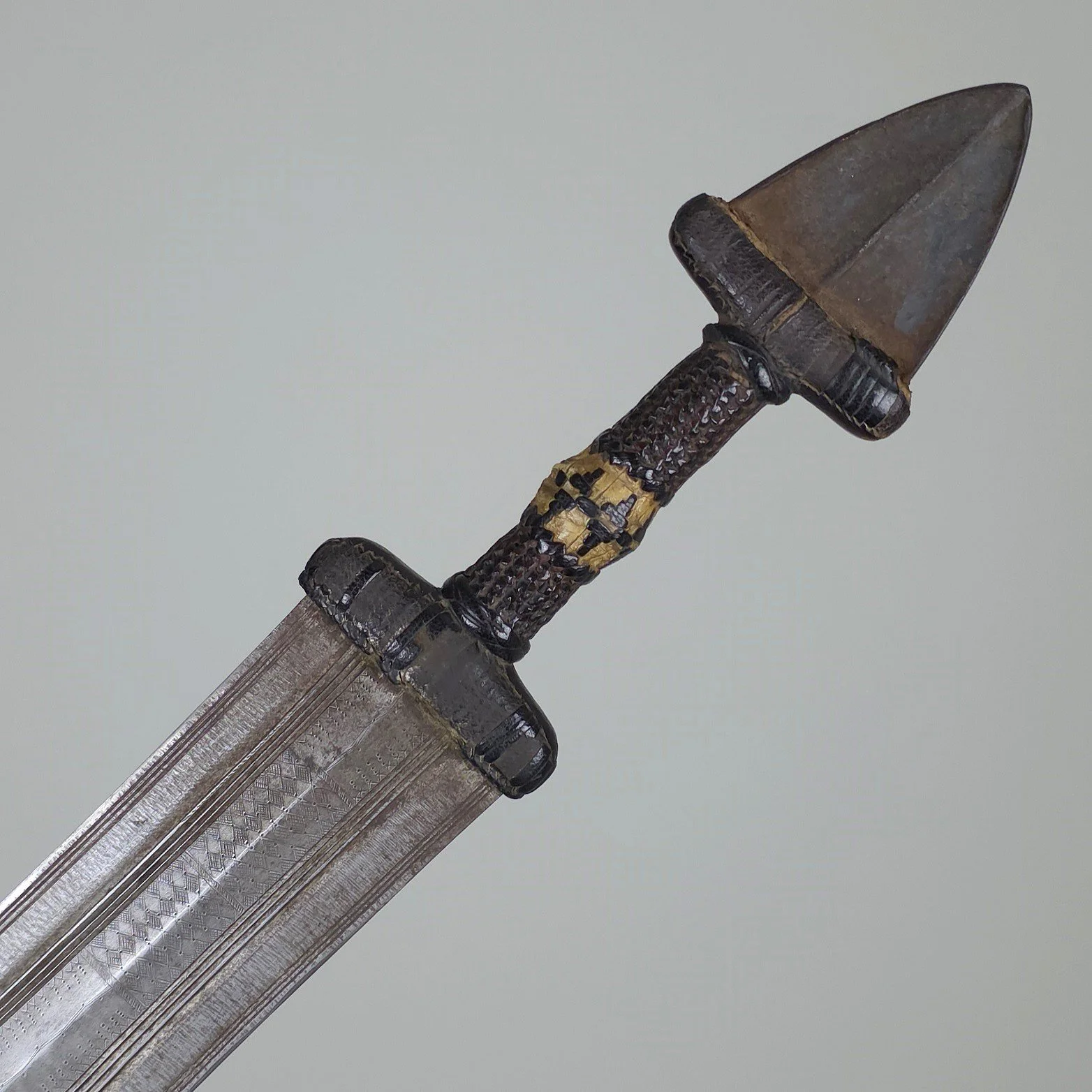
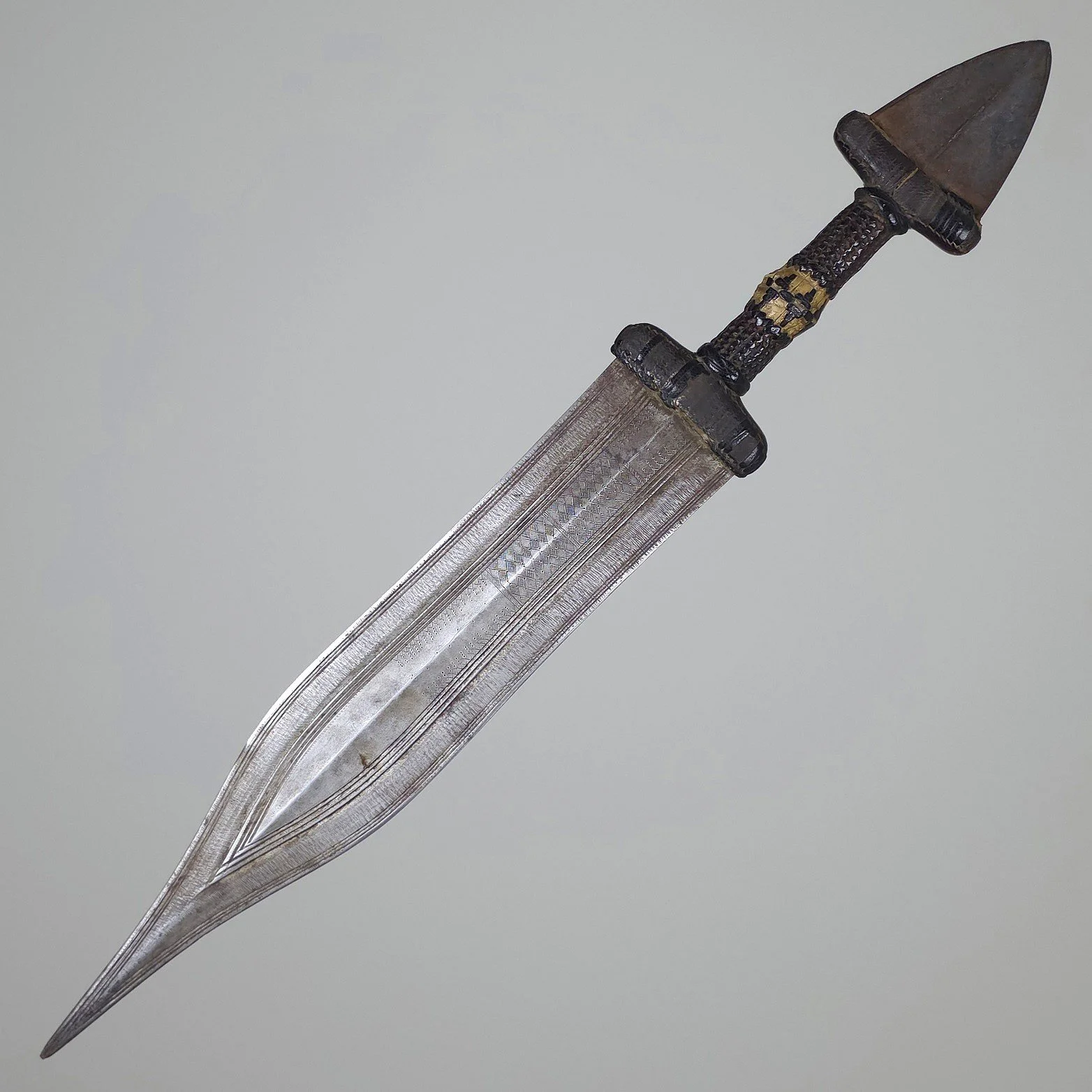
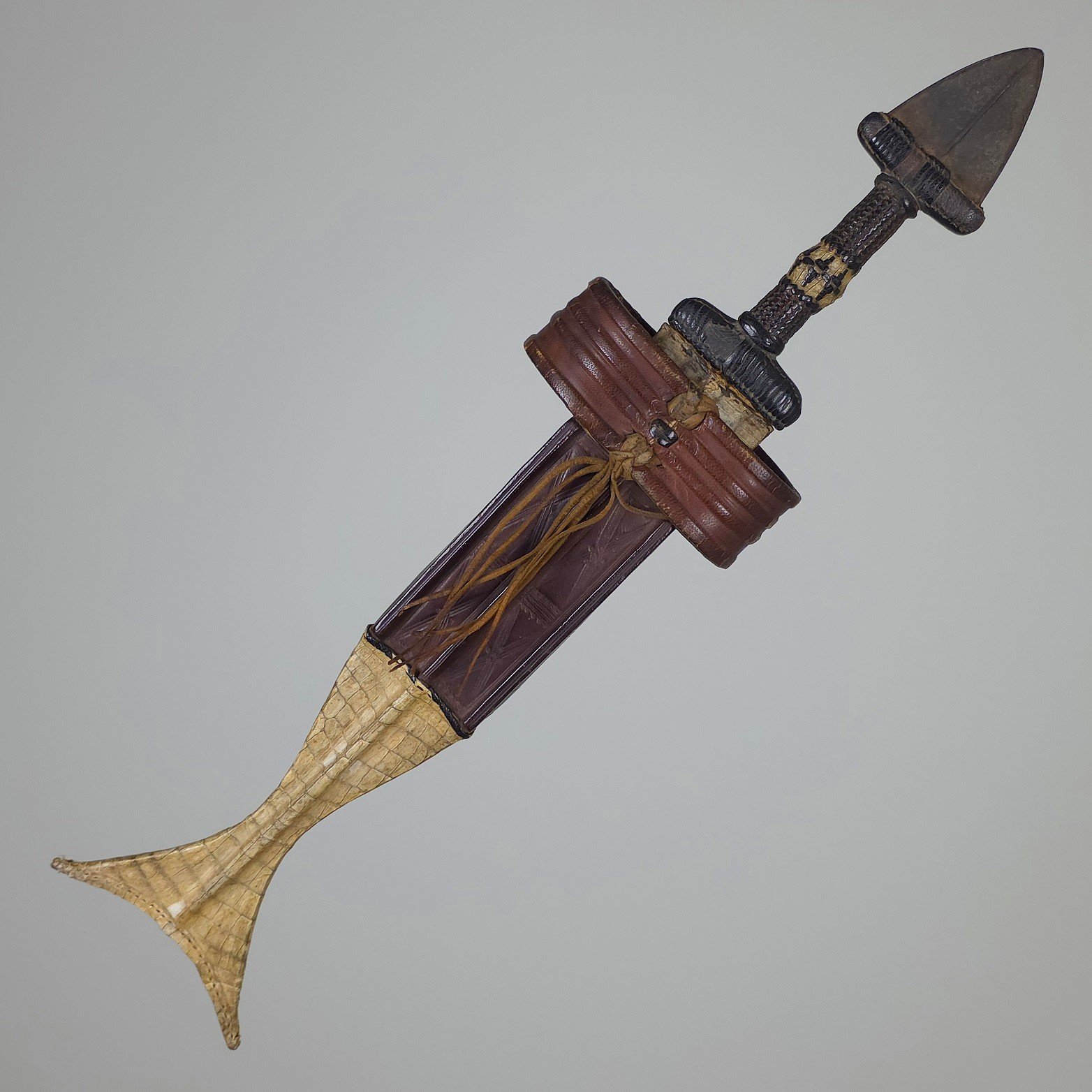
Kanuri - Kotoko Arm Dagger
Kanuri - Kotoko - Mandara - Toubou
Borno Emirate, British Nigeria - Kotoko Kingdom - Dikwa Emirate - Mandara Kingdom - Logone Emirate - German Kamerun - French Chad (Northeastern Nigeria - Northern Cameroon - Southwestern Chad)
Late 19th - Early 20th century (ca. 1890 - 1915)
Steel, leather, reptile skin
Blade: 10 7/8" (27.6cm)
Hilt & Blade: 16 5/8" (42.2cm)
Hilt, Blade, Sheath: 17 3/4" (45.1cm)
Collection Date: 2024
Collection Number: 406
Ex. American Art Market (2024)
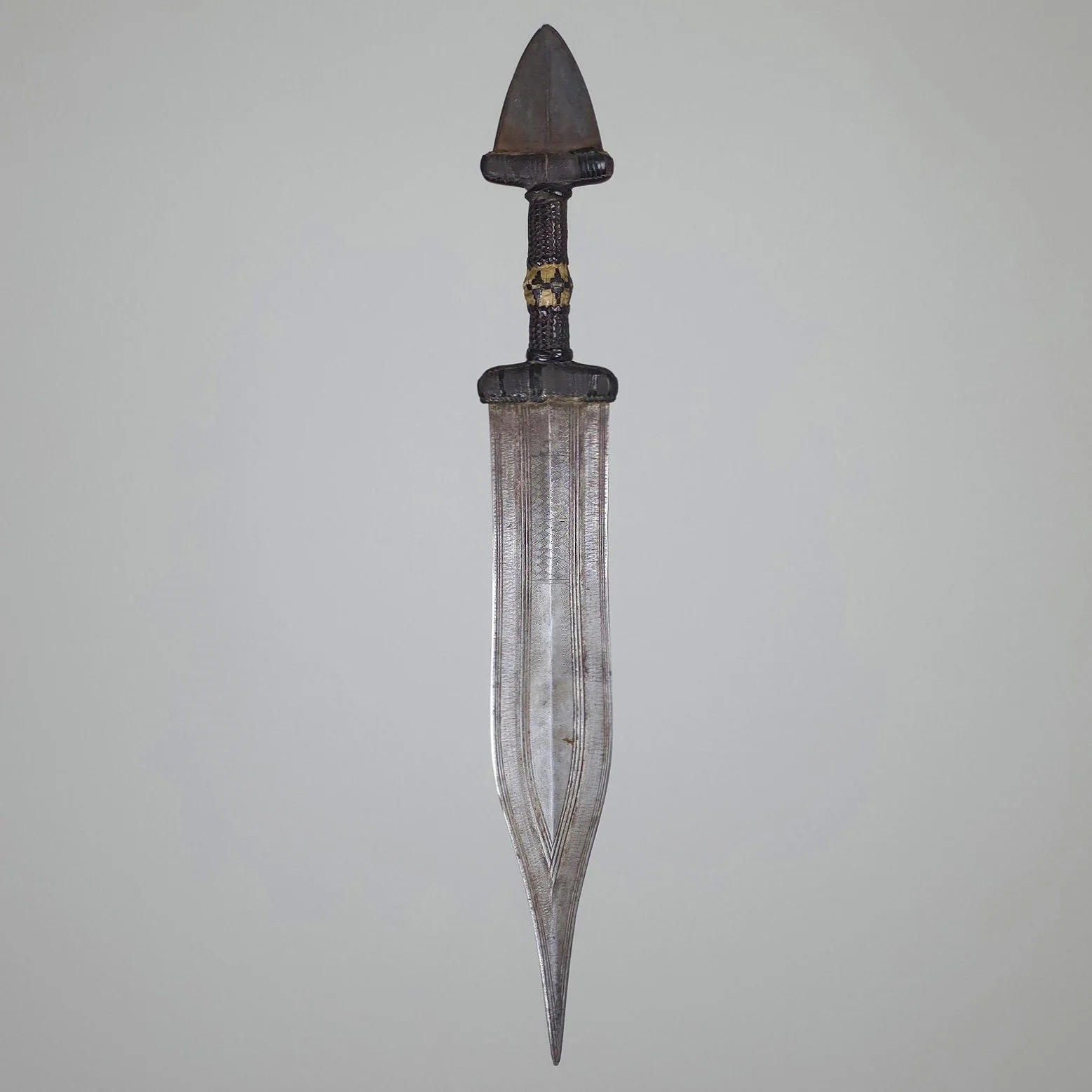
A unique style of arm dagger originating from the old Borno Empire lands, which split up around the turn of the 20th century into smaller Islamic Emirates controlled by Sultans and Chieftains. This land roughly corresponds to the triangle between Nigeria, Cameroon, and Chad from which this dagger is used by the Kanuri, Kotoko, and others living nearby.
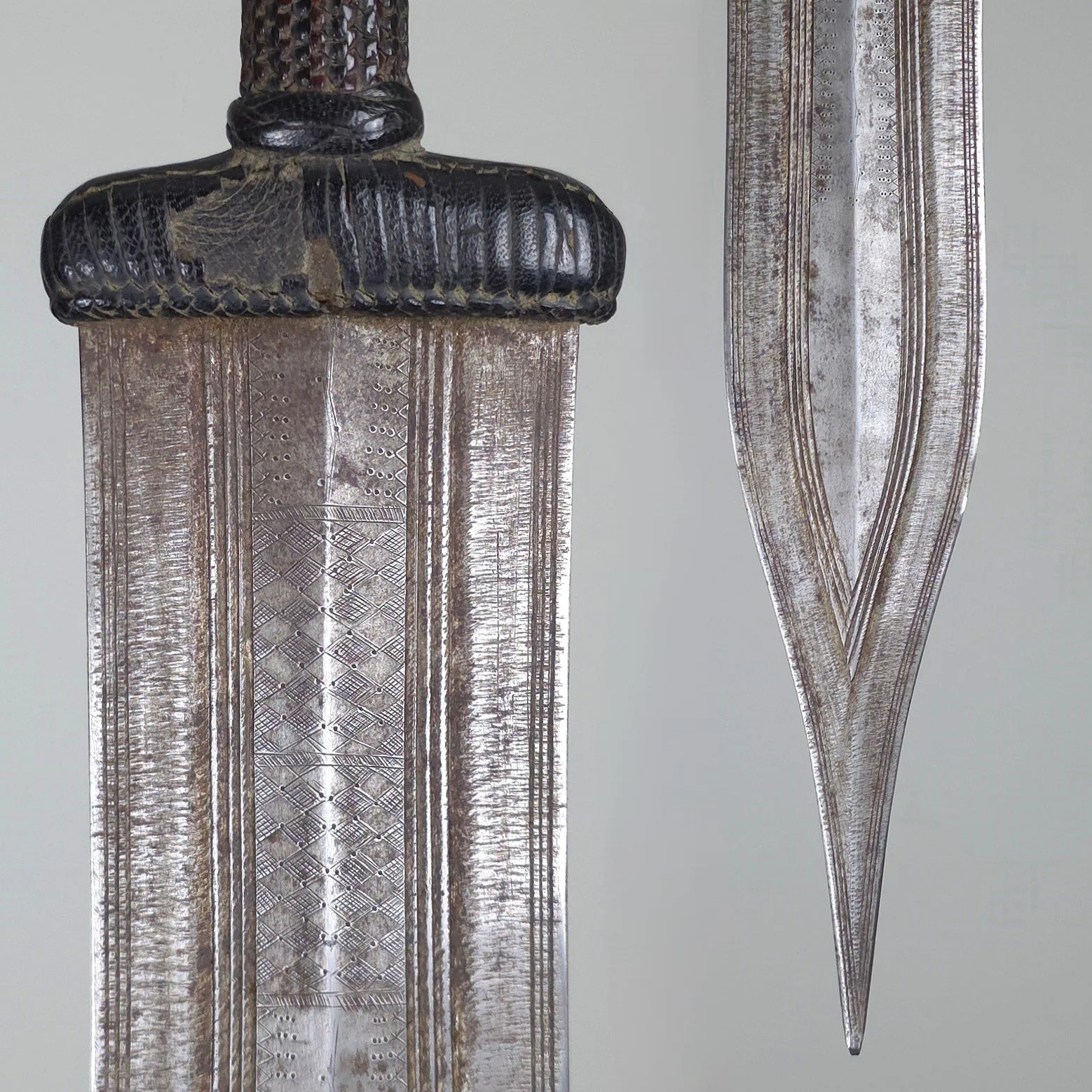
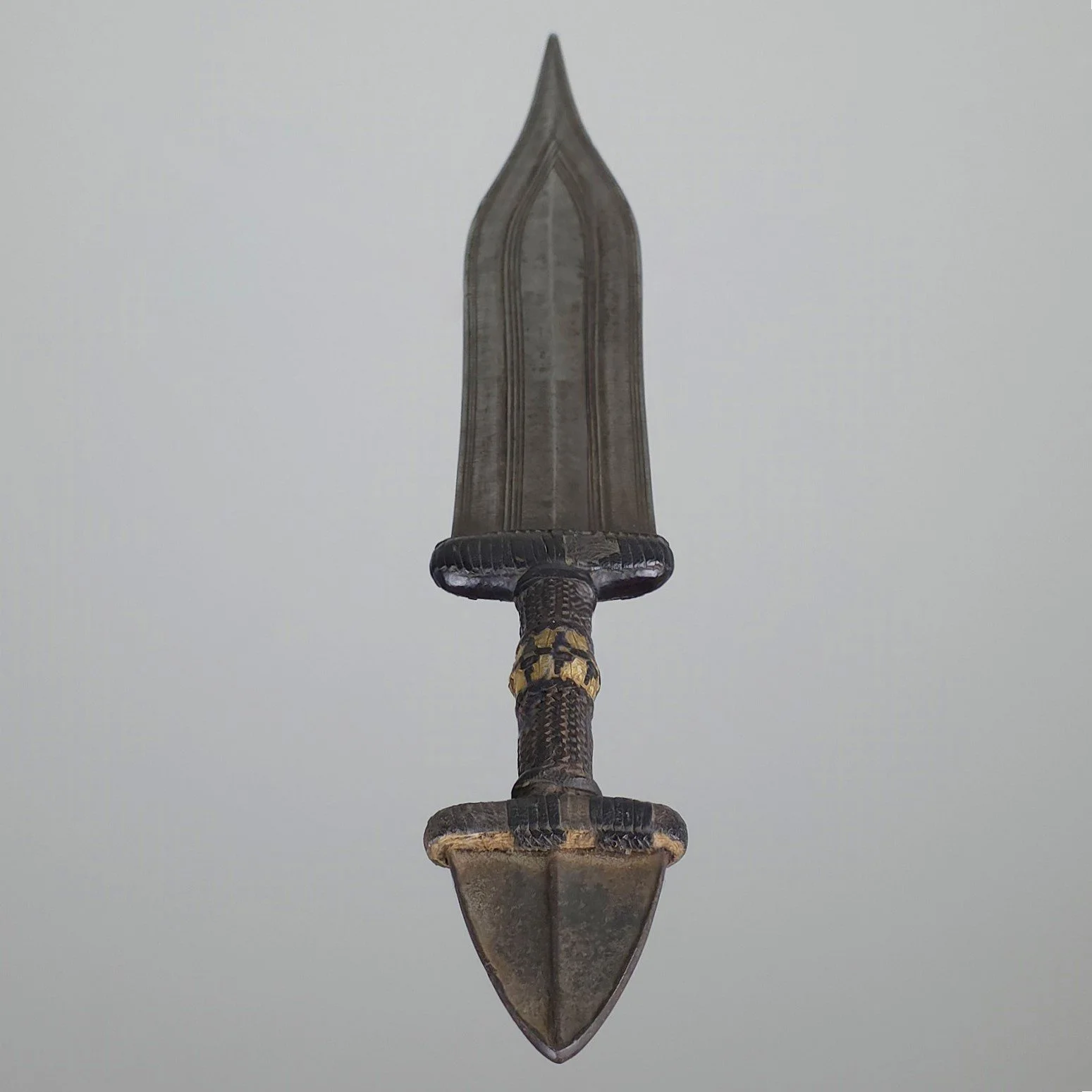
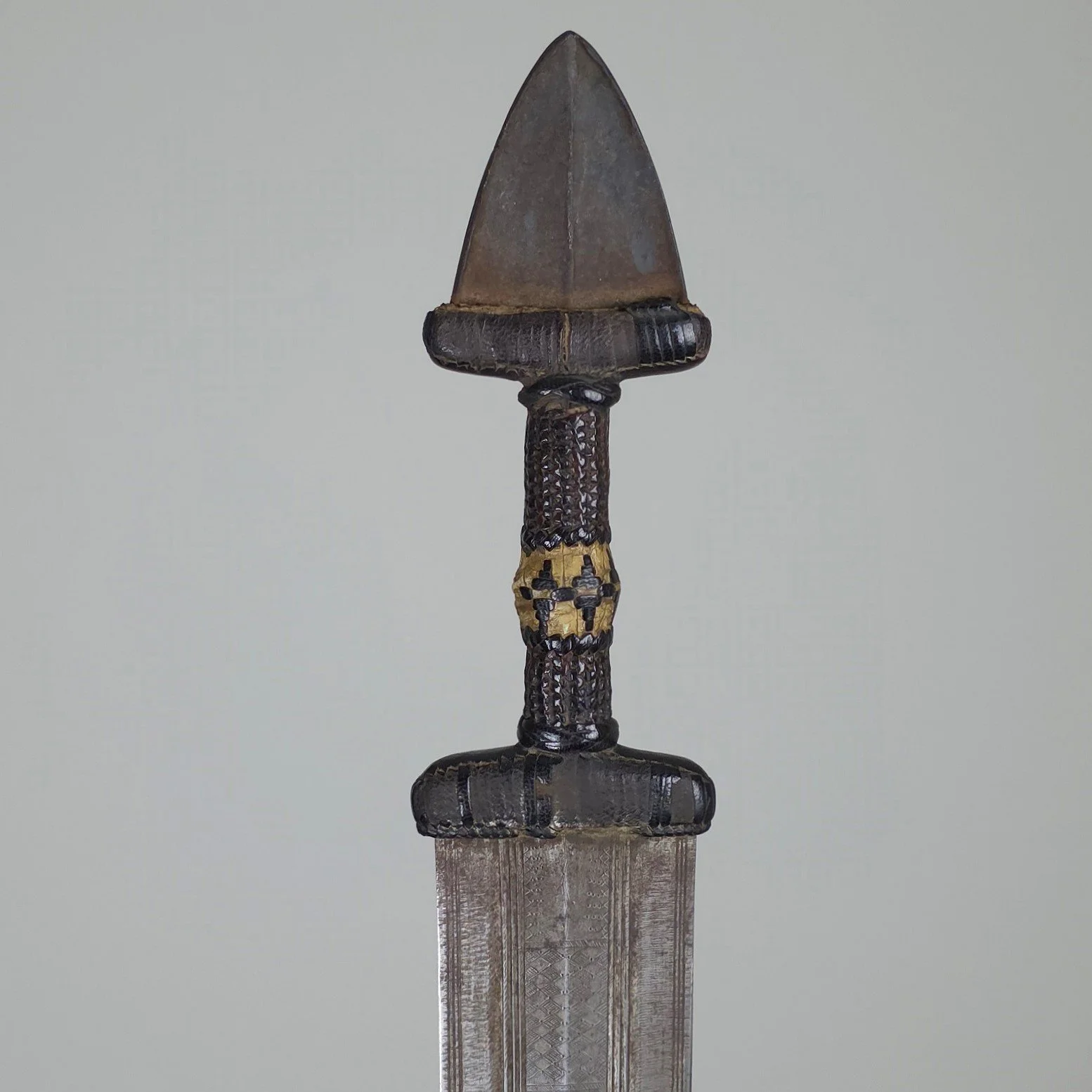
The double- edged leaf- shaped steel blade is wide at the base before tapering inward into an elongated point. The center plane is raised with a medial ridge. The center is hand chiseled in intricate incisions of linear a geometric diamond cross- hatched patterns in very fine detail. A series of four fine striations separate the center section of the blade to the outer section where another three grooves are present, running parallel along the edges.
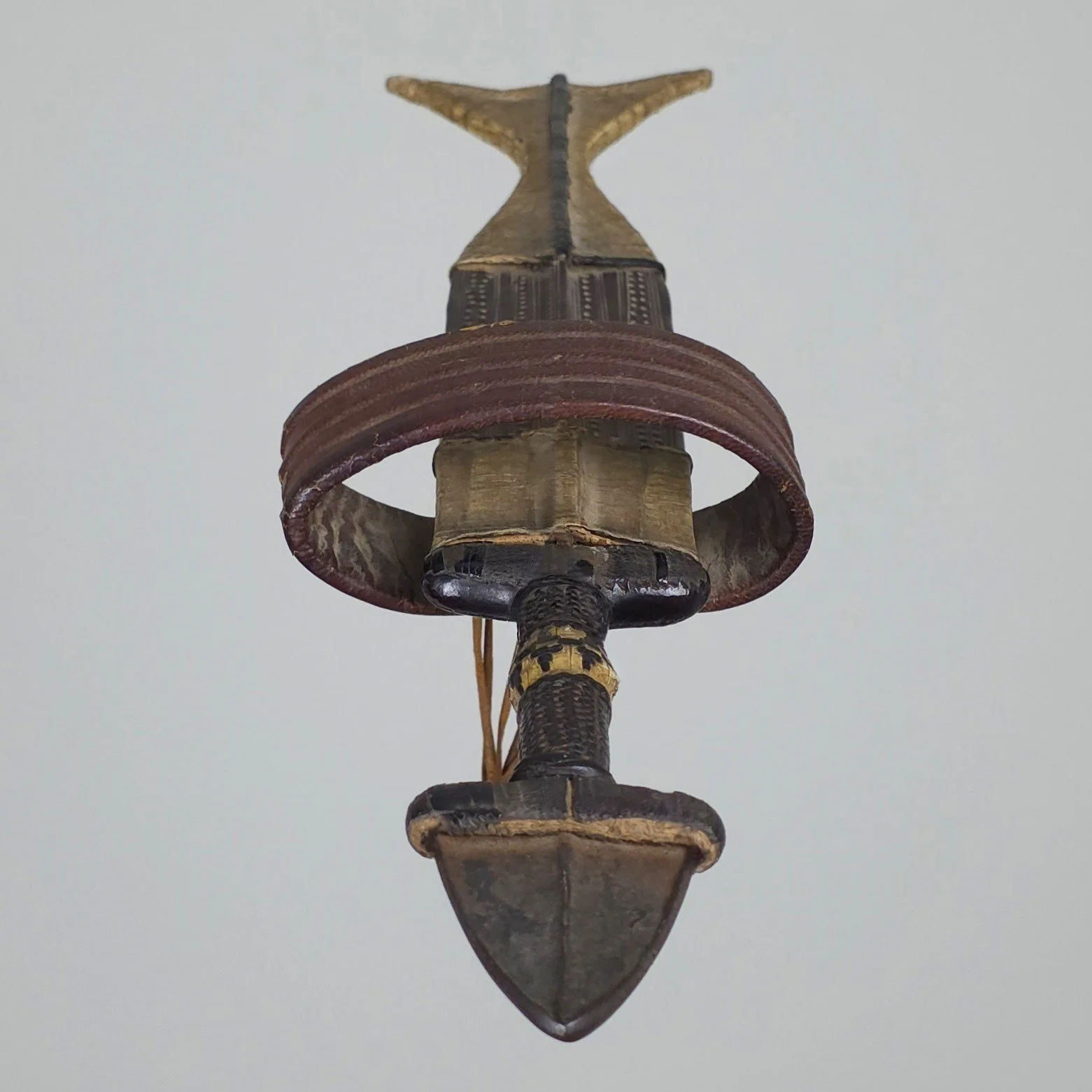
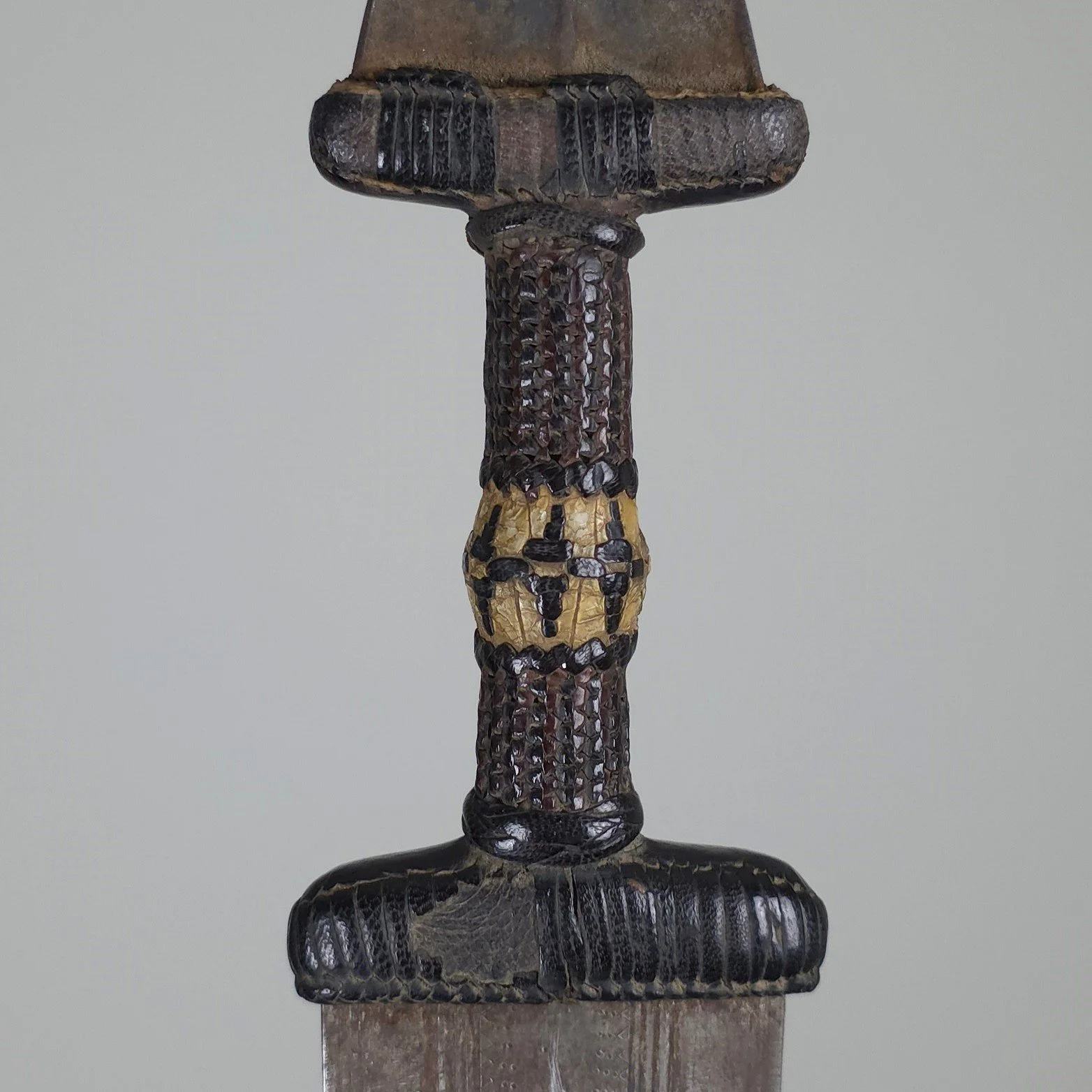
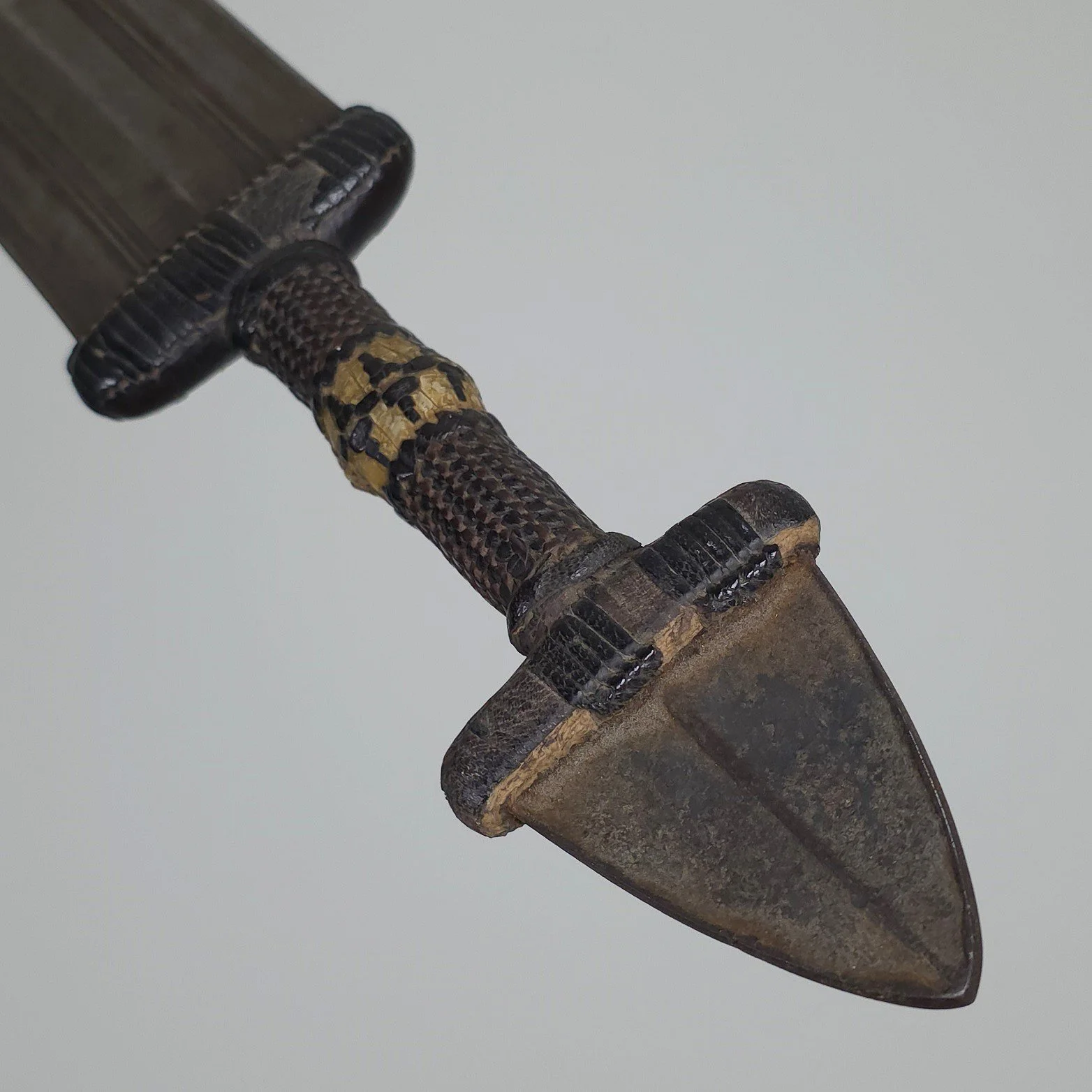
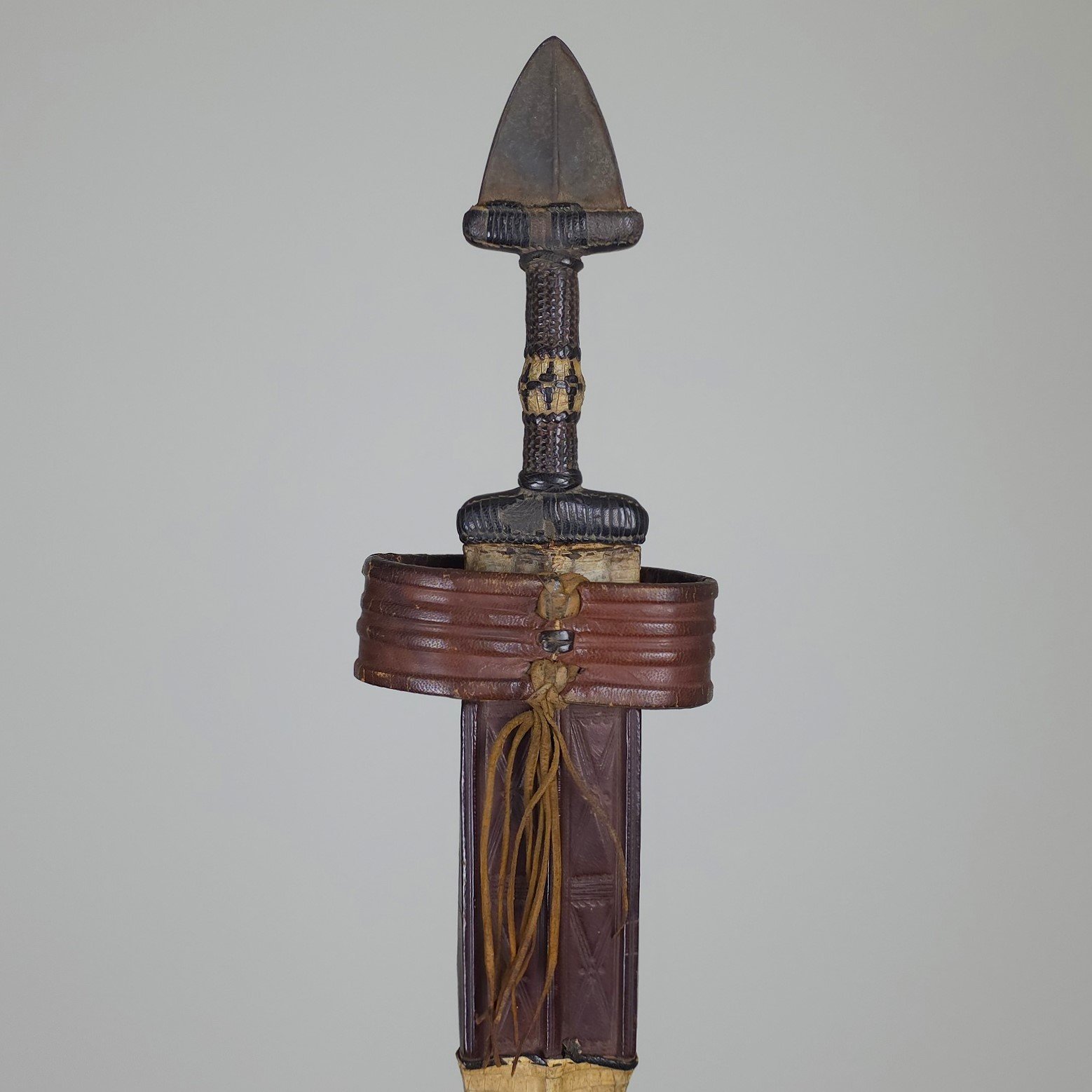
The hilt is of leather, interlocked tightly in strips. The central grip of a reptile skin woven in traditional geometric patterns. The pommel having a large triangular iron protrusion.
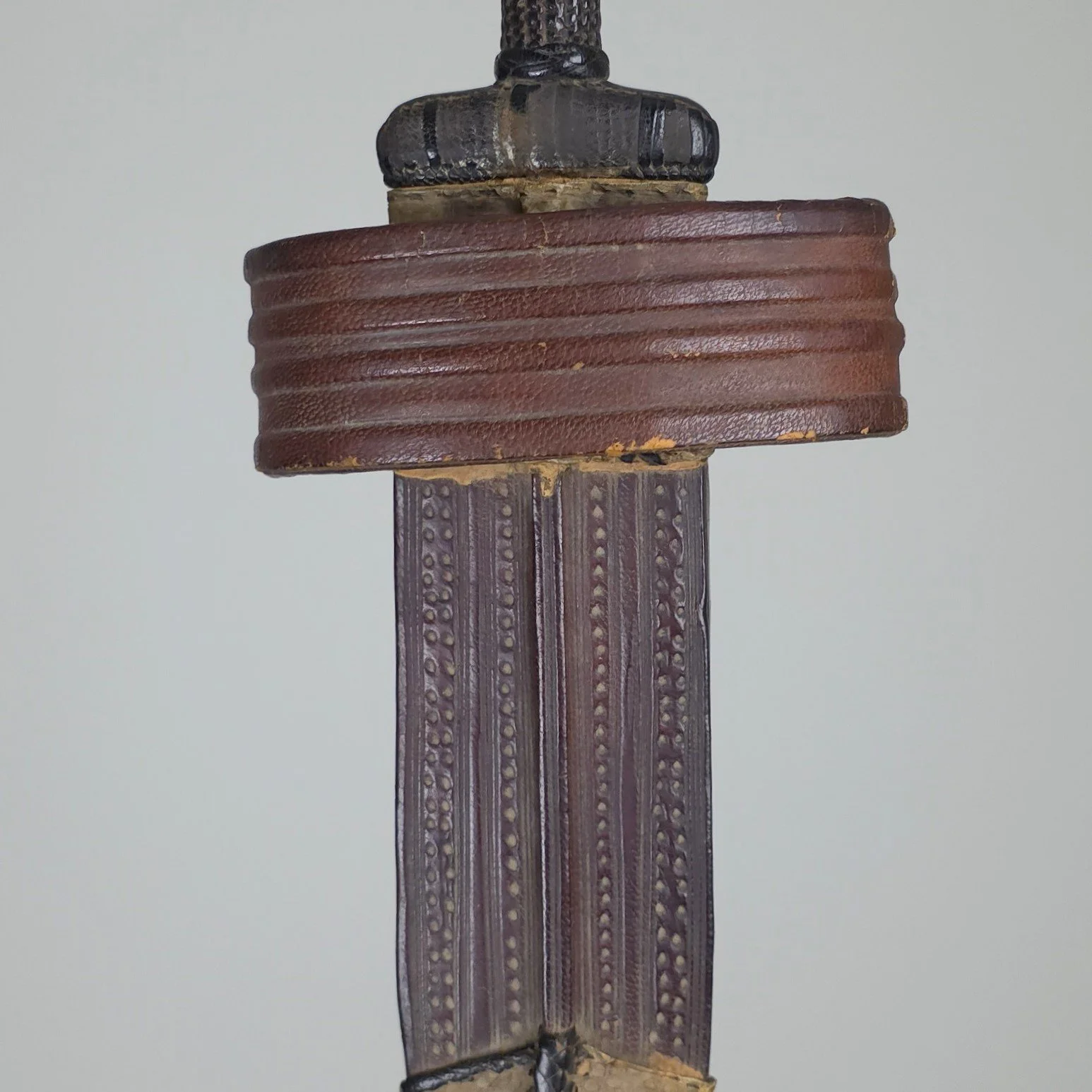
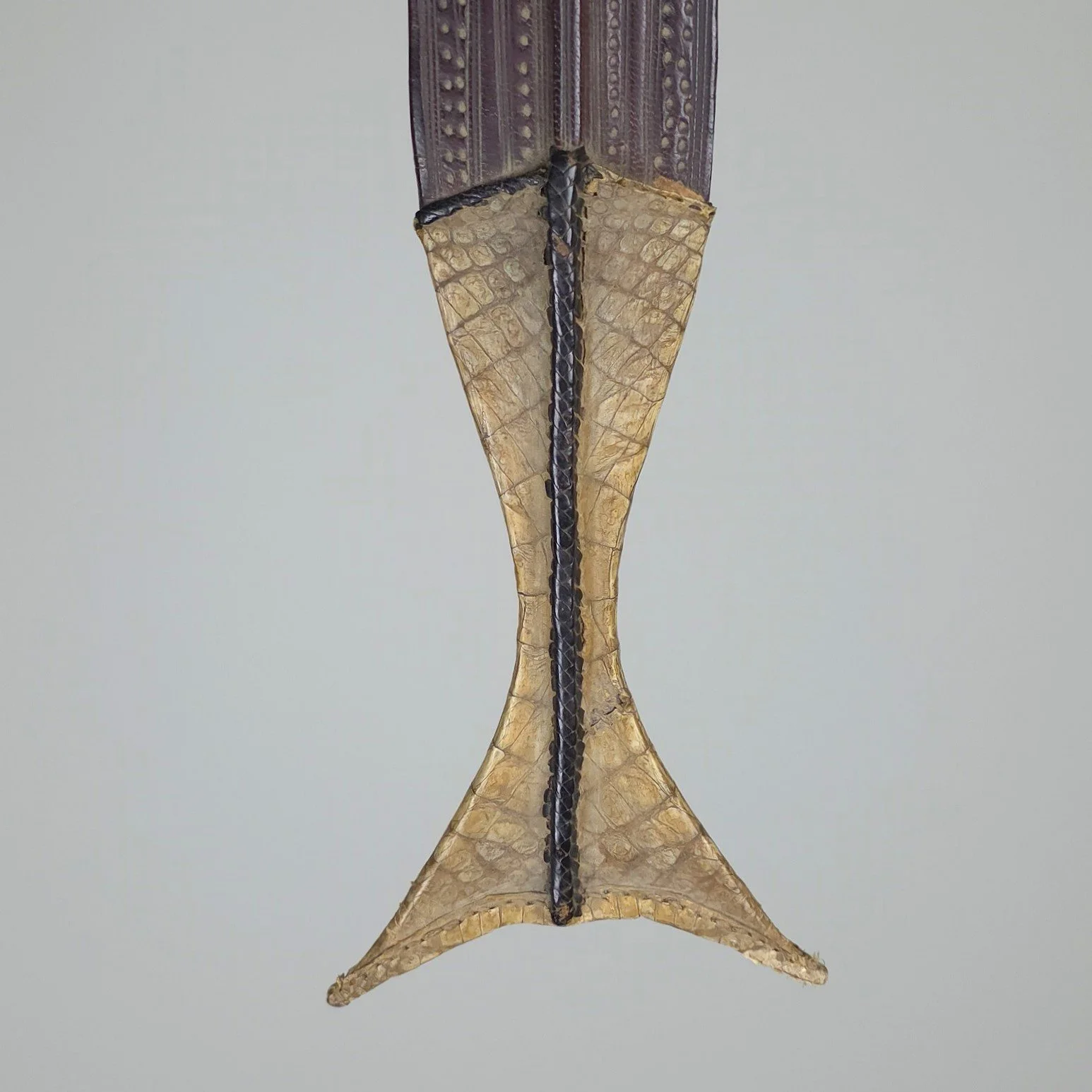
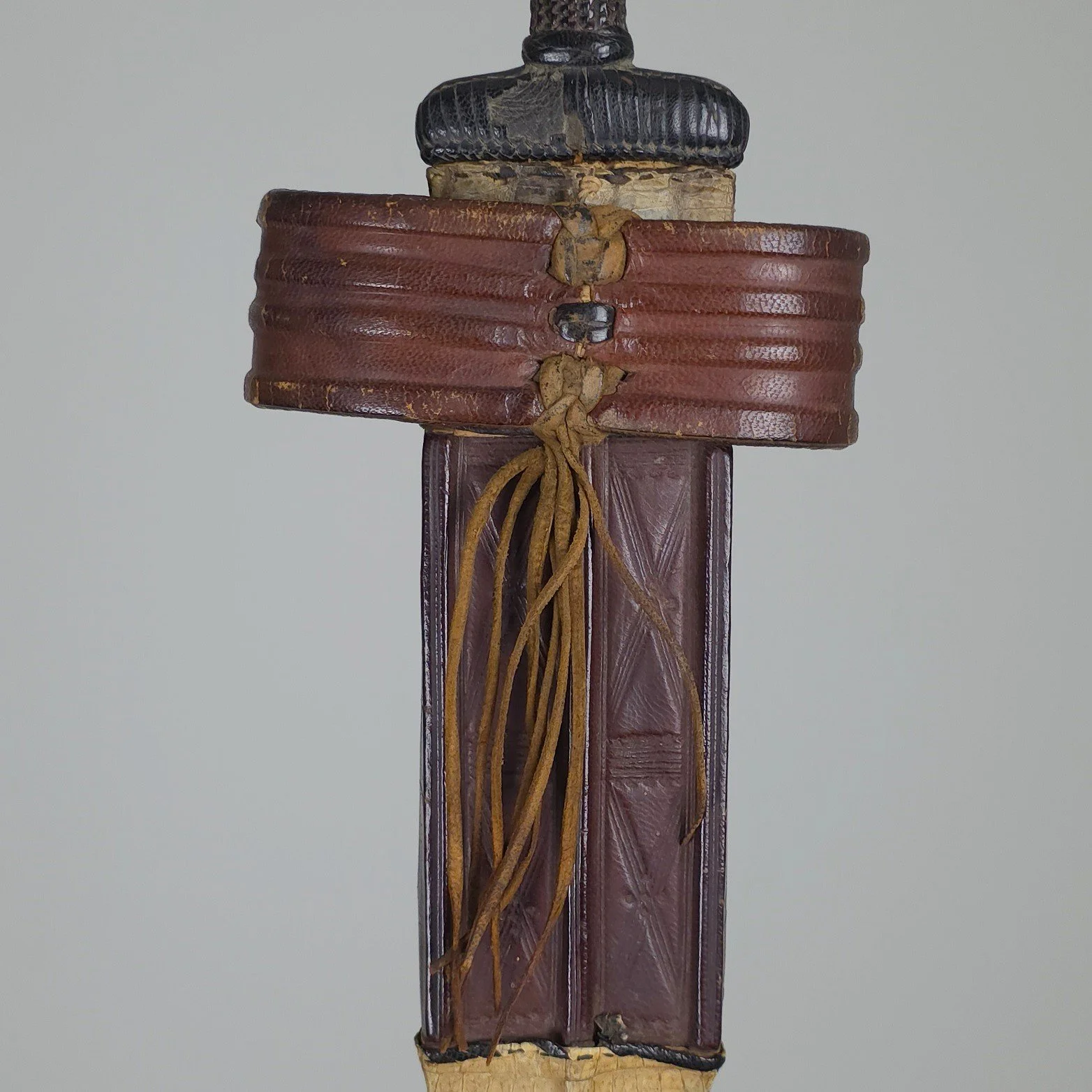
The sheath is tooled red leather with pressed geometric designs. The mouth and chape are composed of reptile skin. The chape is styled in the flared "fishtail" or "hawk's wings" variant found near Lake Chad. Solid leather arm band attached with dangling leather strips.
This type of arm dagger is often referred to as a chief or sultans knife, "mogheo te me". It is larger than most arm daggers. The blade is a work of art in itself as the incisions are precisely executed in workmanship and fine detail. Very similar to Toubou arm daggers in form, this type was used by the Kanuri, Kotoko, and neighbors near the area of Logone-et-Chari, collected in German Kamerun in the early years of the 20th century.
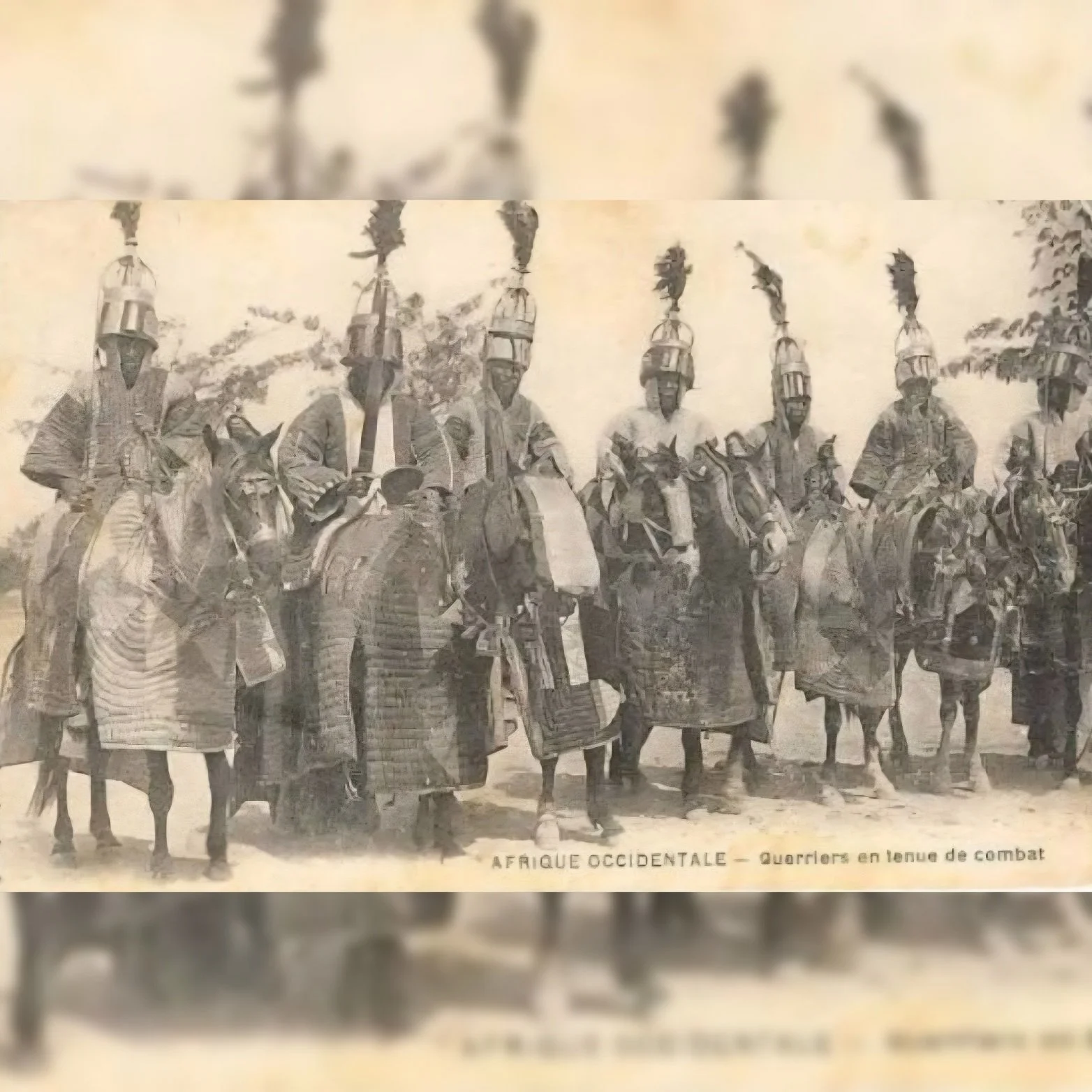
Photograph 25: Postcard of West African cavalry, Bornu Horsemen in combat attire, late 19th - early 20th century.
[1] https://www.britishmuseum.org/collection/object/E_Af1911-1214-24-a
[2] https://www.britishmuseum.org/collection/object/E_Af1986-06-34-a
[4] https://african-weapons.com/gallery?8-tubu-arm-dagger-45-41-cm-gr
[5] https://african-weapons.com/gallery?1-kotoko-kanuri-sultan-knfe-39-cm-with-scab-46-cm
[6] https://african-weapons.com/gallery?3-kotoko-kanuri-sultan-knfe-with-scab-46-cm
[7] https://african-weapons.com/gallery?2-tubu-dagger-from-major-ernst-von-raben-40-cm