Keris
Keris
Sultanate of Mataram - Surakarta Sultanate, Dutch East Indies (Surakarta, Java, Indonesia)
Blade: 17th - 18th century
Hilt: Late 18th - Early 19th century
Iron, Wood, Silver Alloy
Blade: 14 1/2" (36.2cm)
Hilt & Blade: 18 3/4" (46.7cm)
Hilt, Blade, Sheath: -
Collection Date: 2021
Collection Number: 402
Ex. Jeffrey S. Evans & Associates: Mt. Crawford, Virginia, USA (2021)
Deaccessioned from the Valentine Museum: Richmond, Virginia, USA (2021)
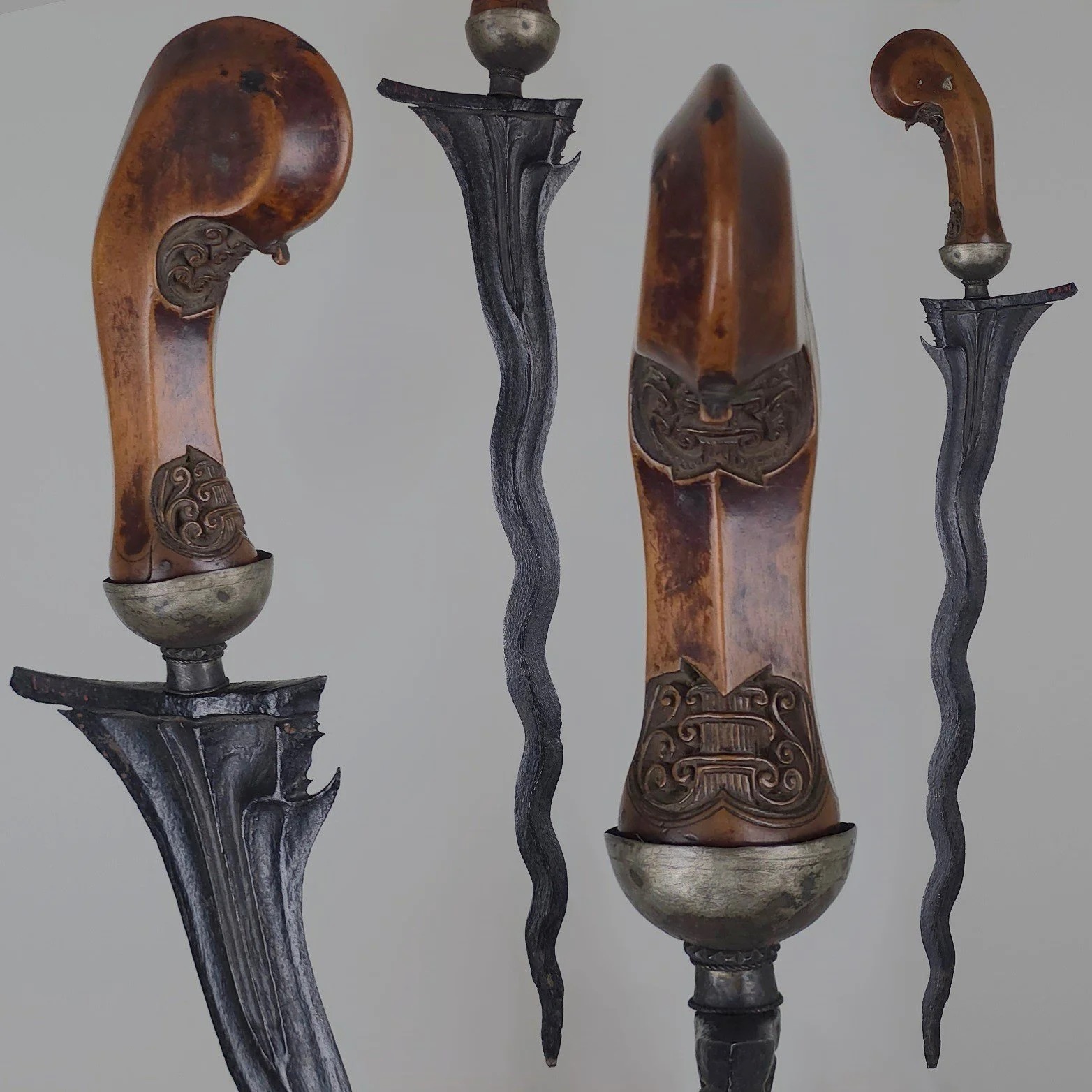
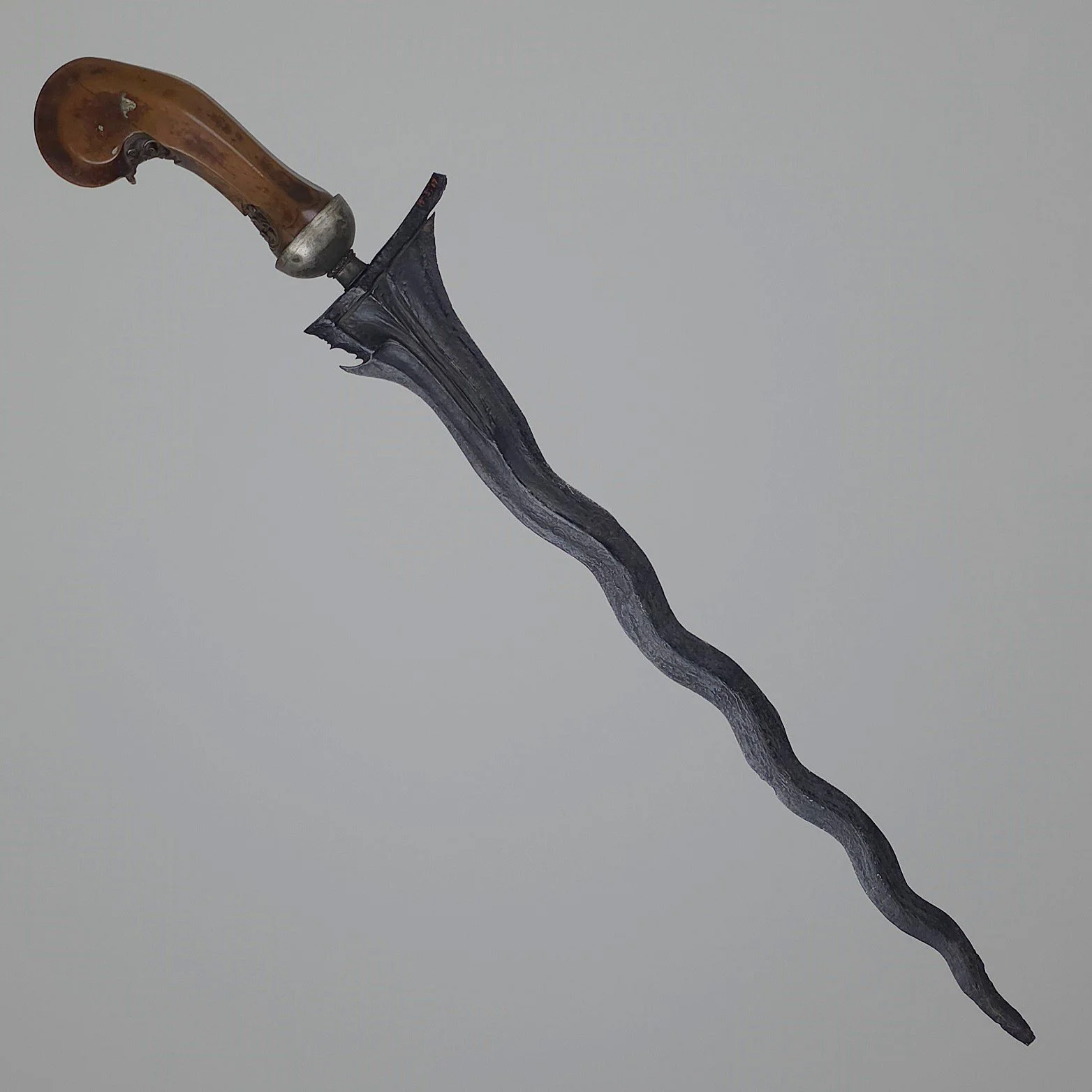
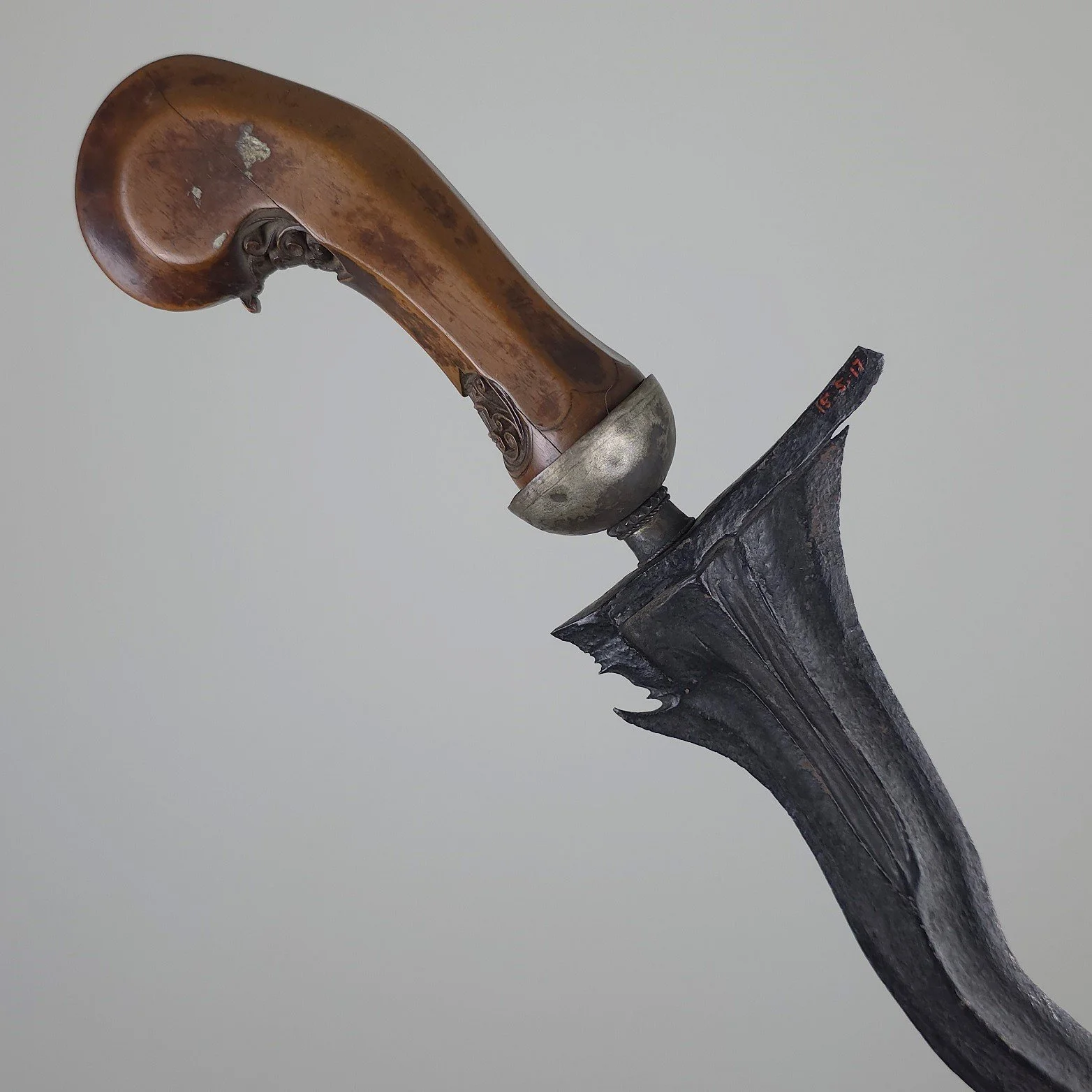
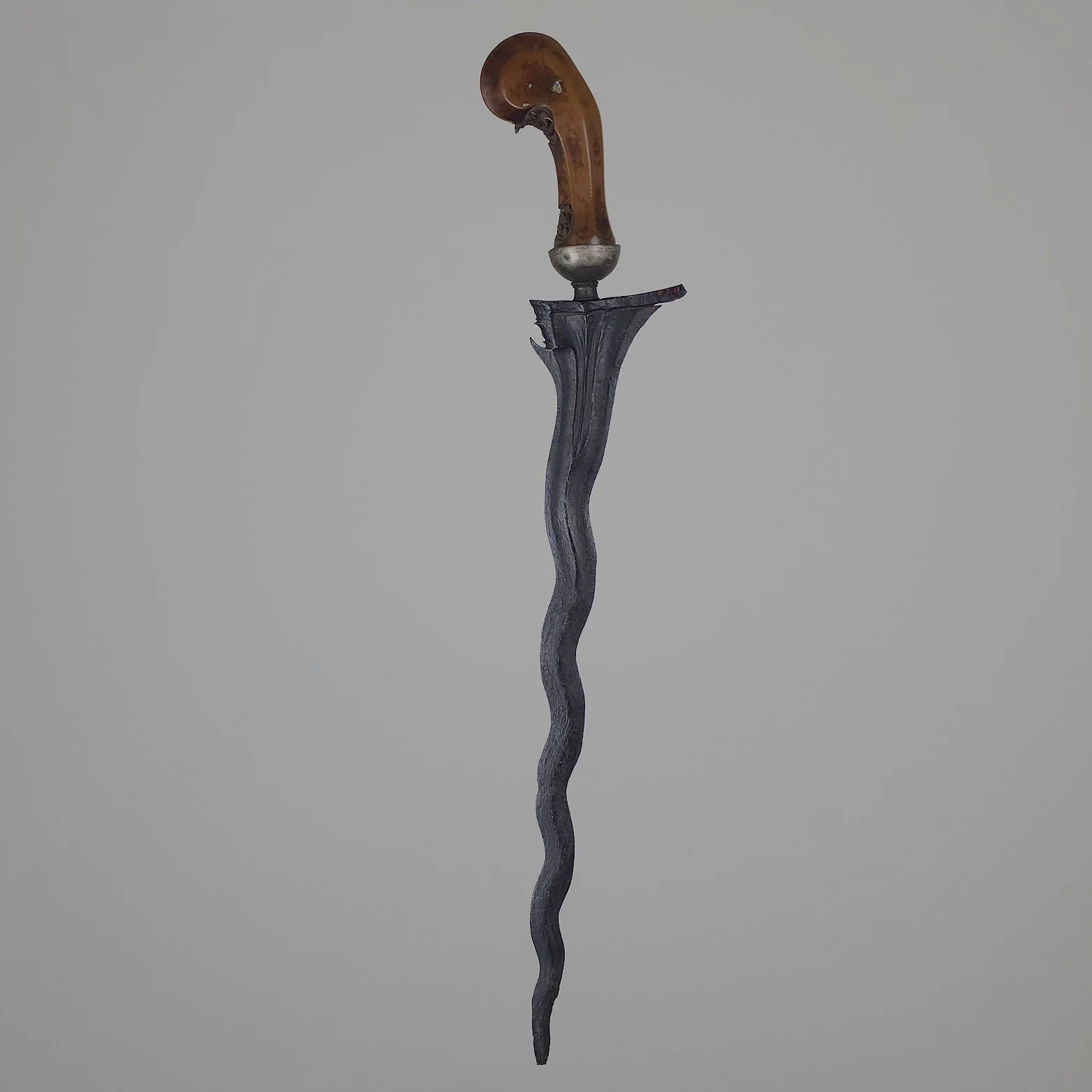
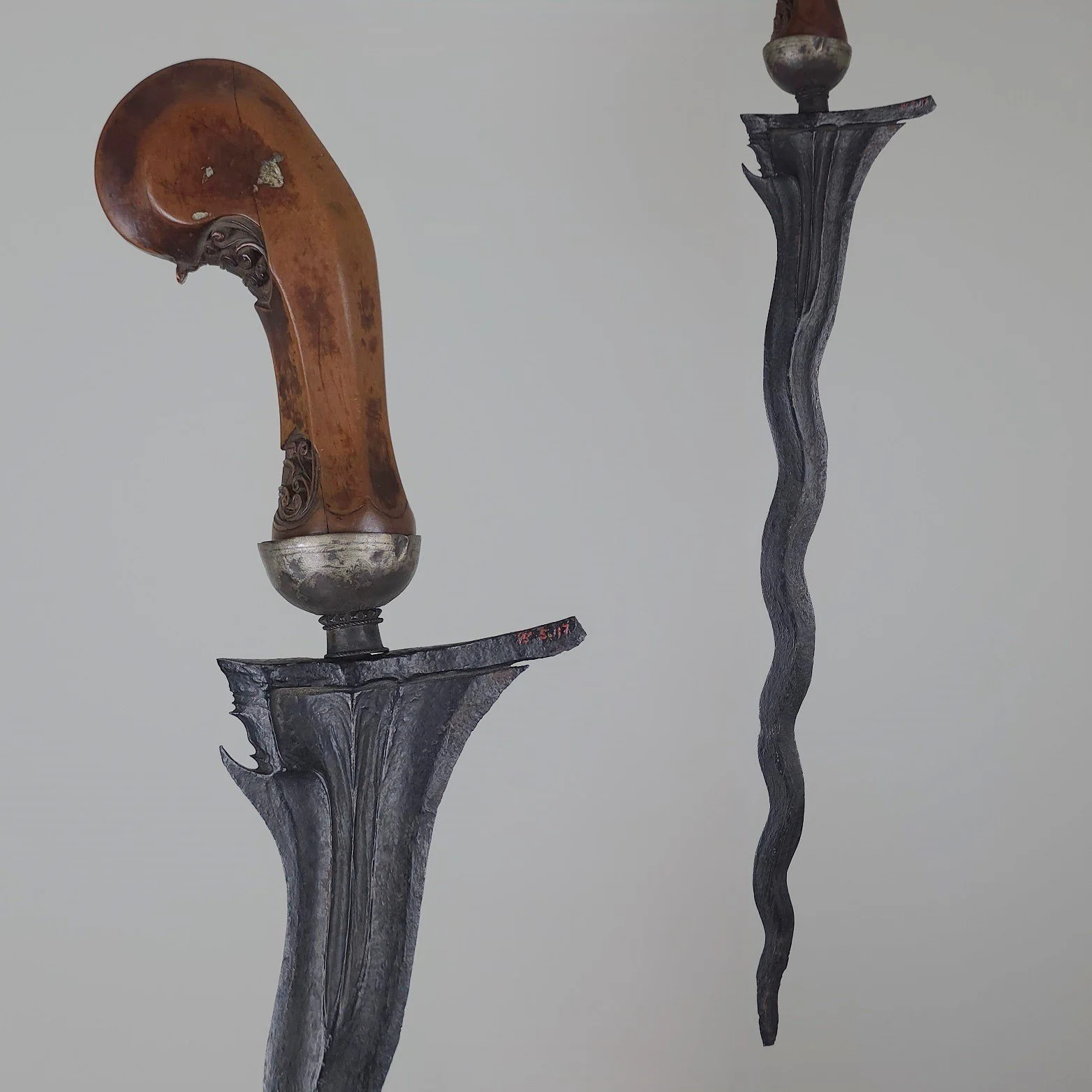
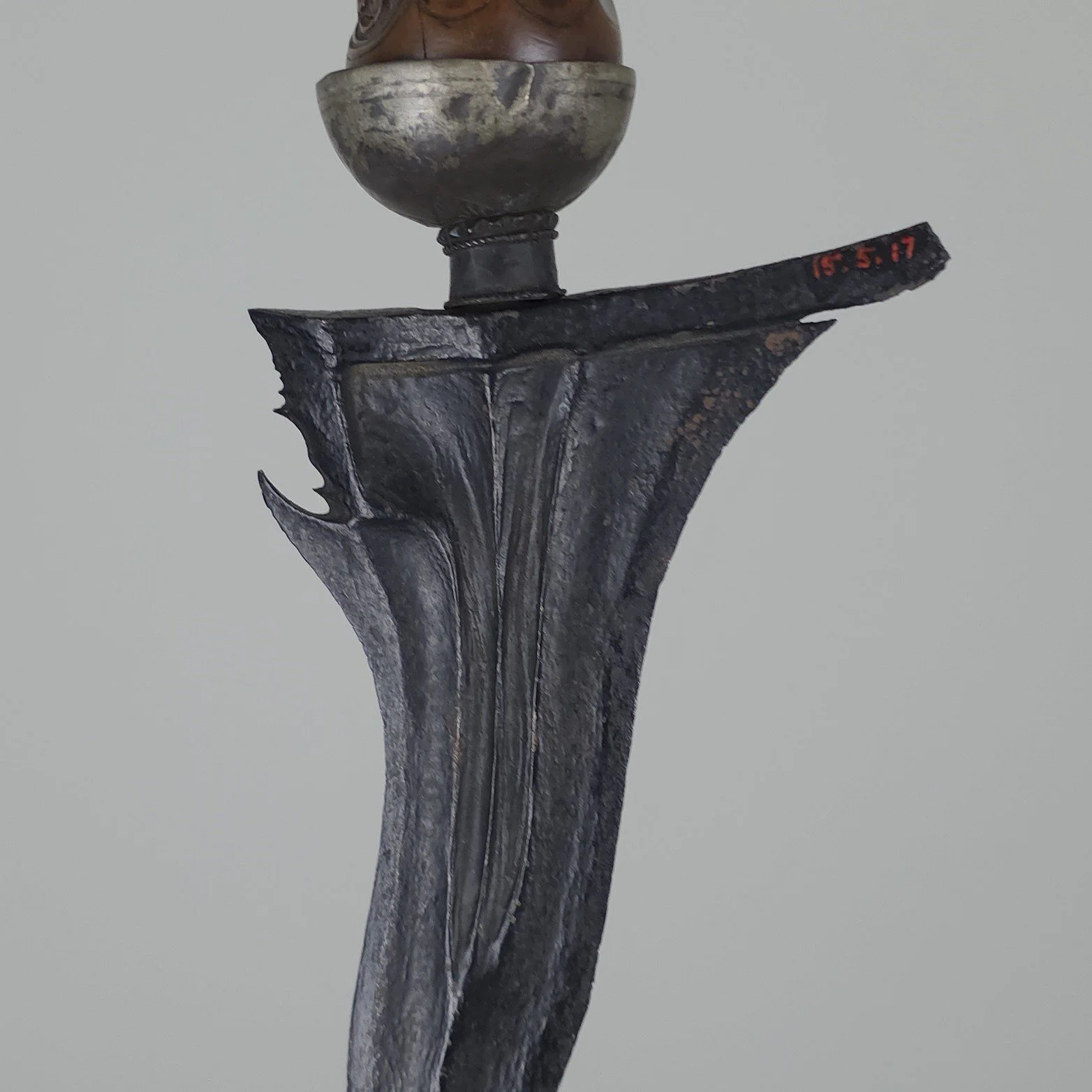
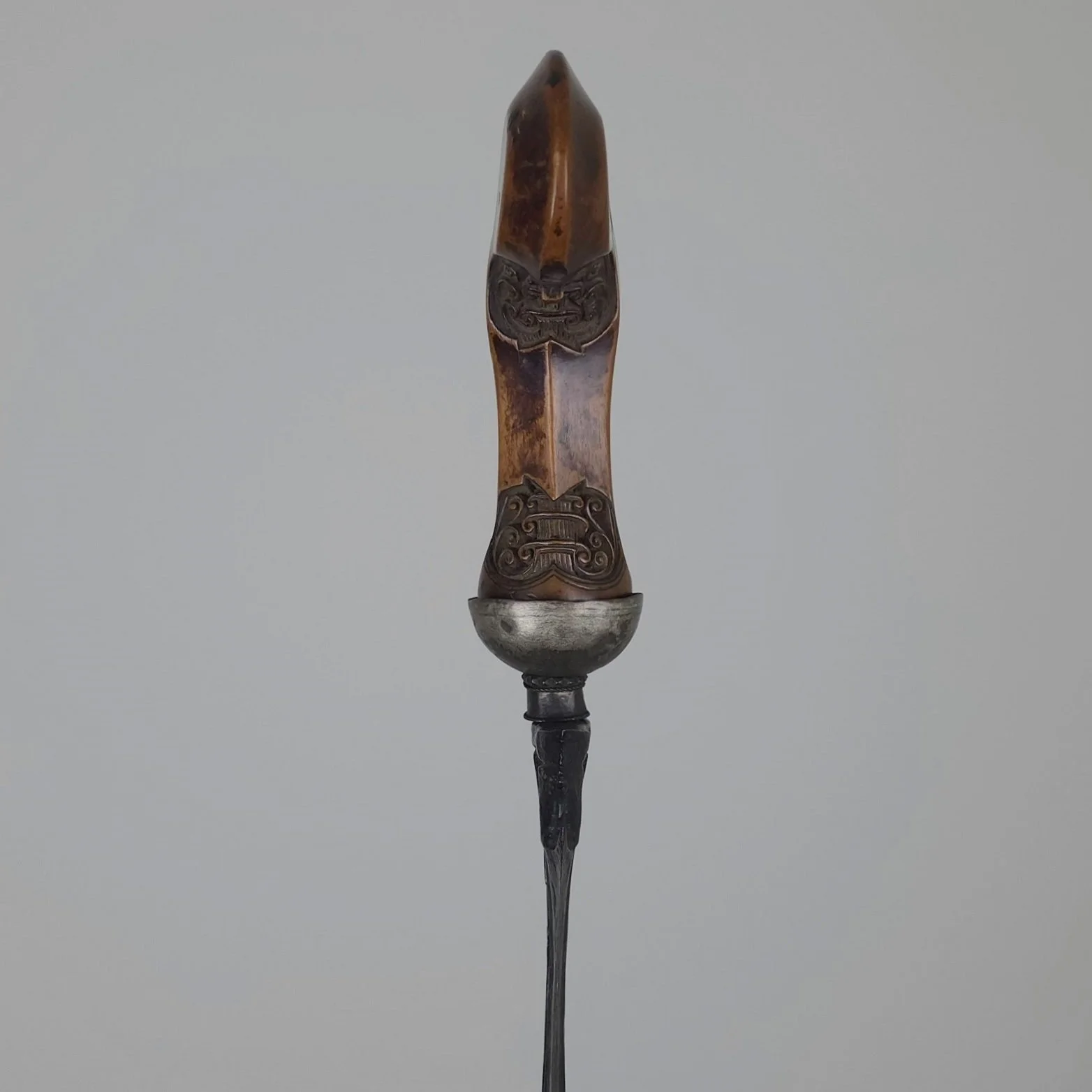
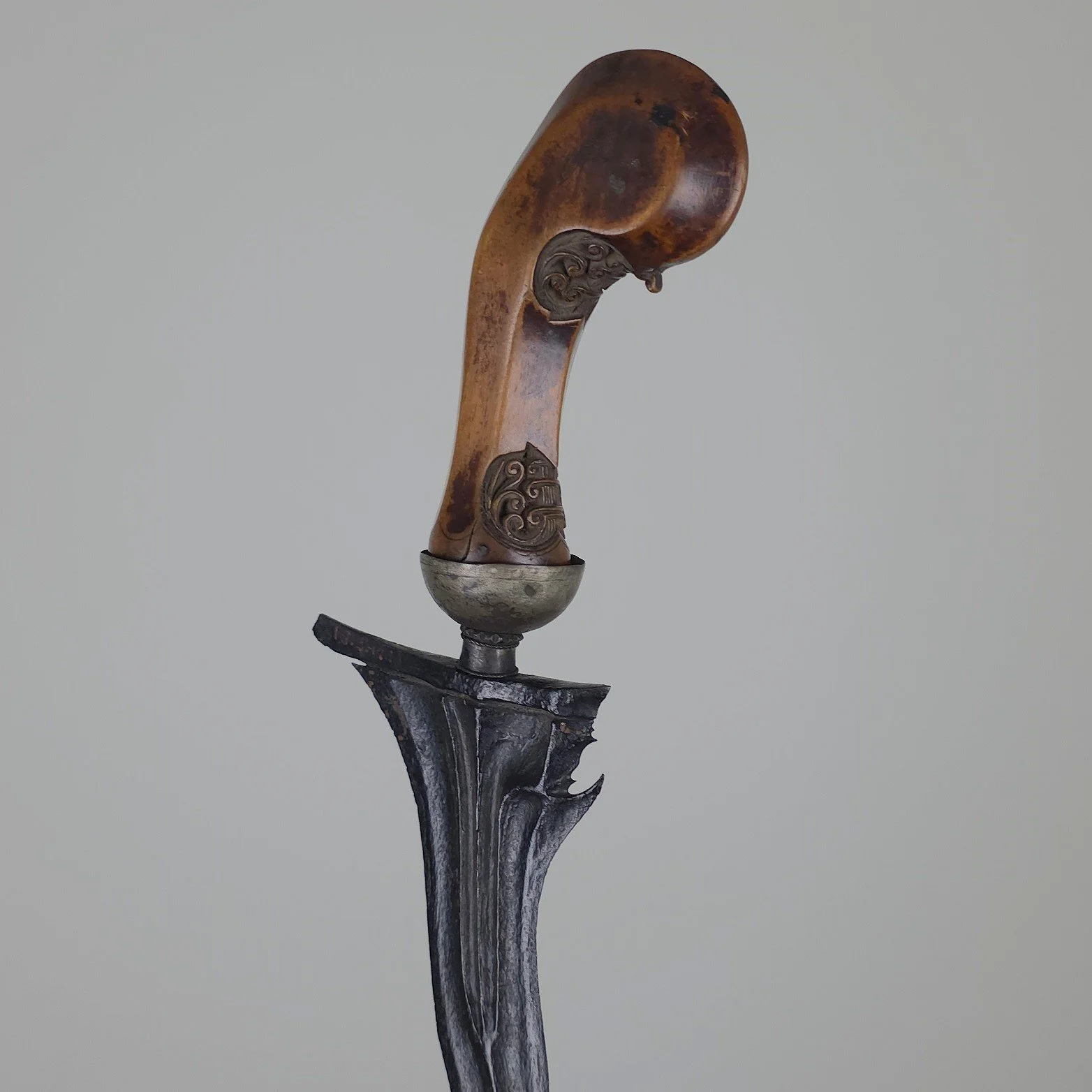
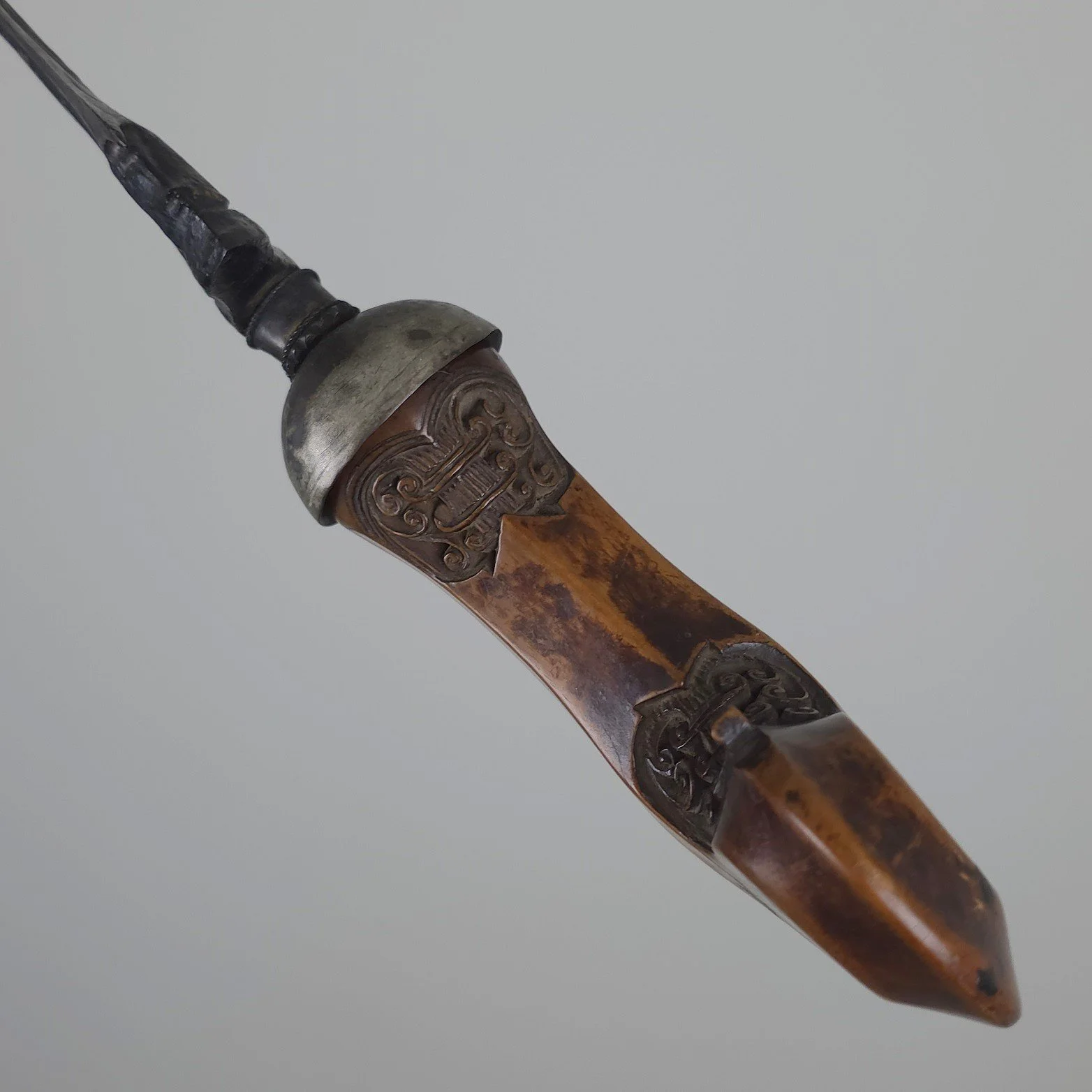
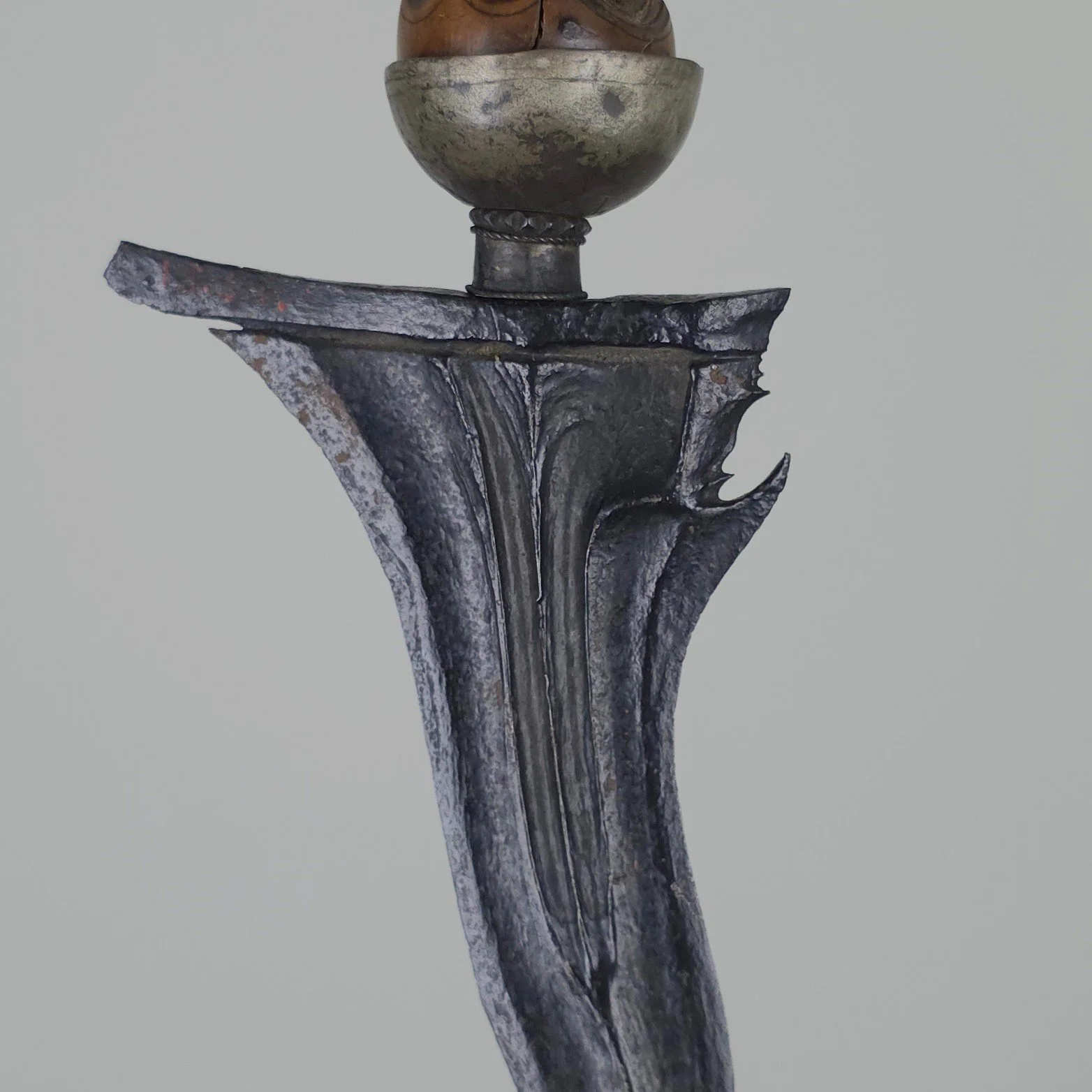
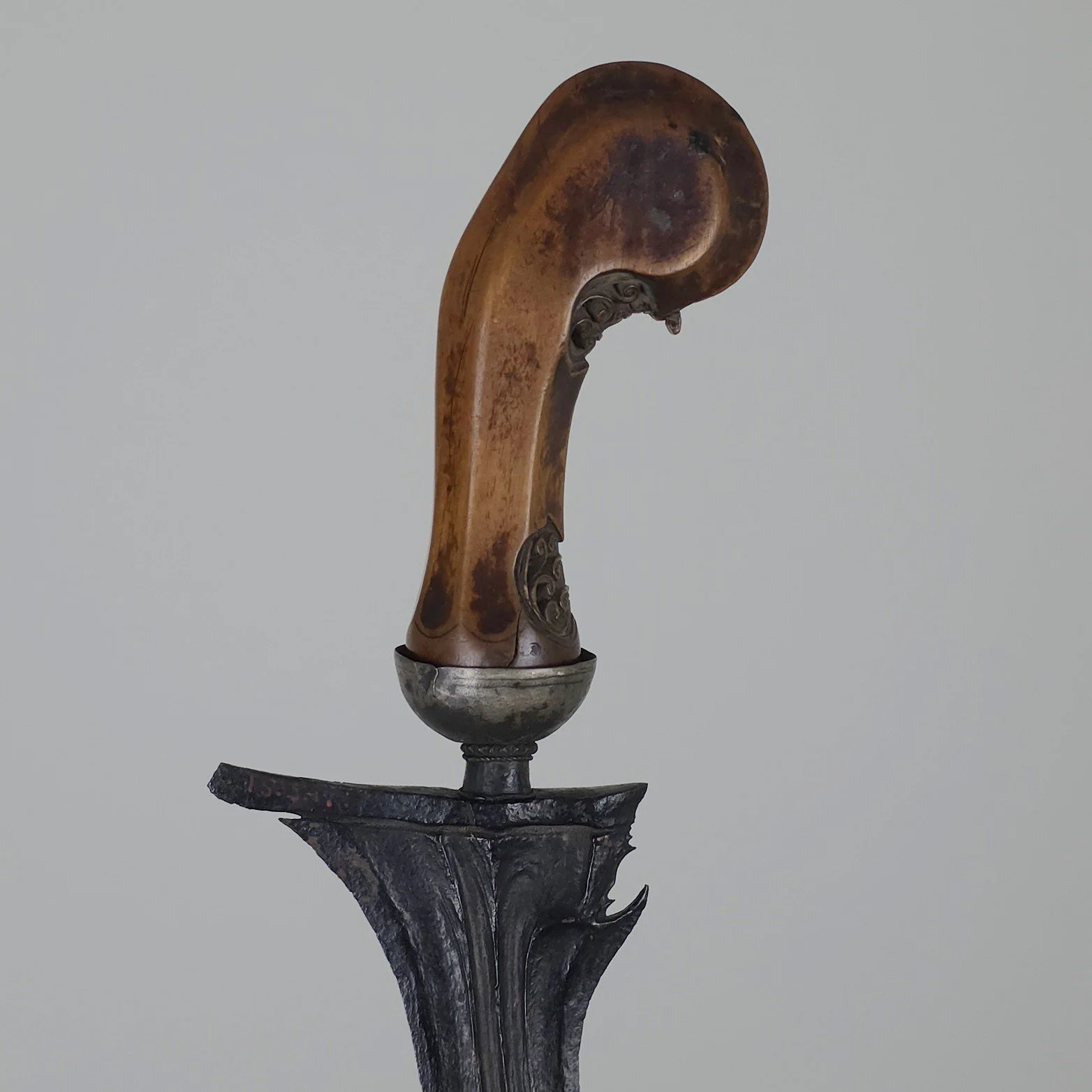
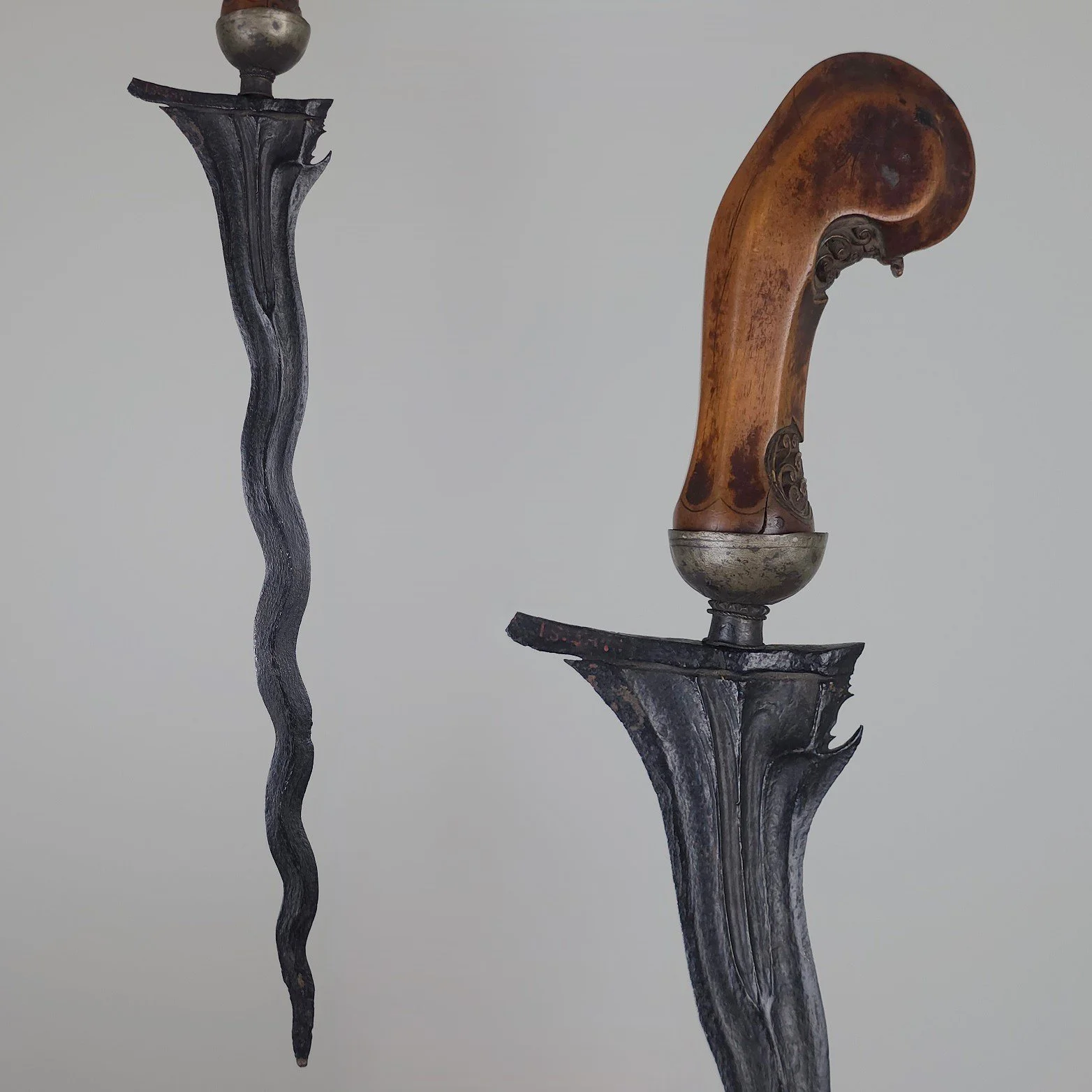
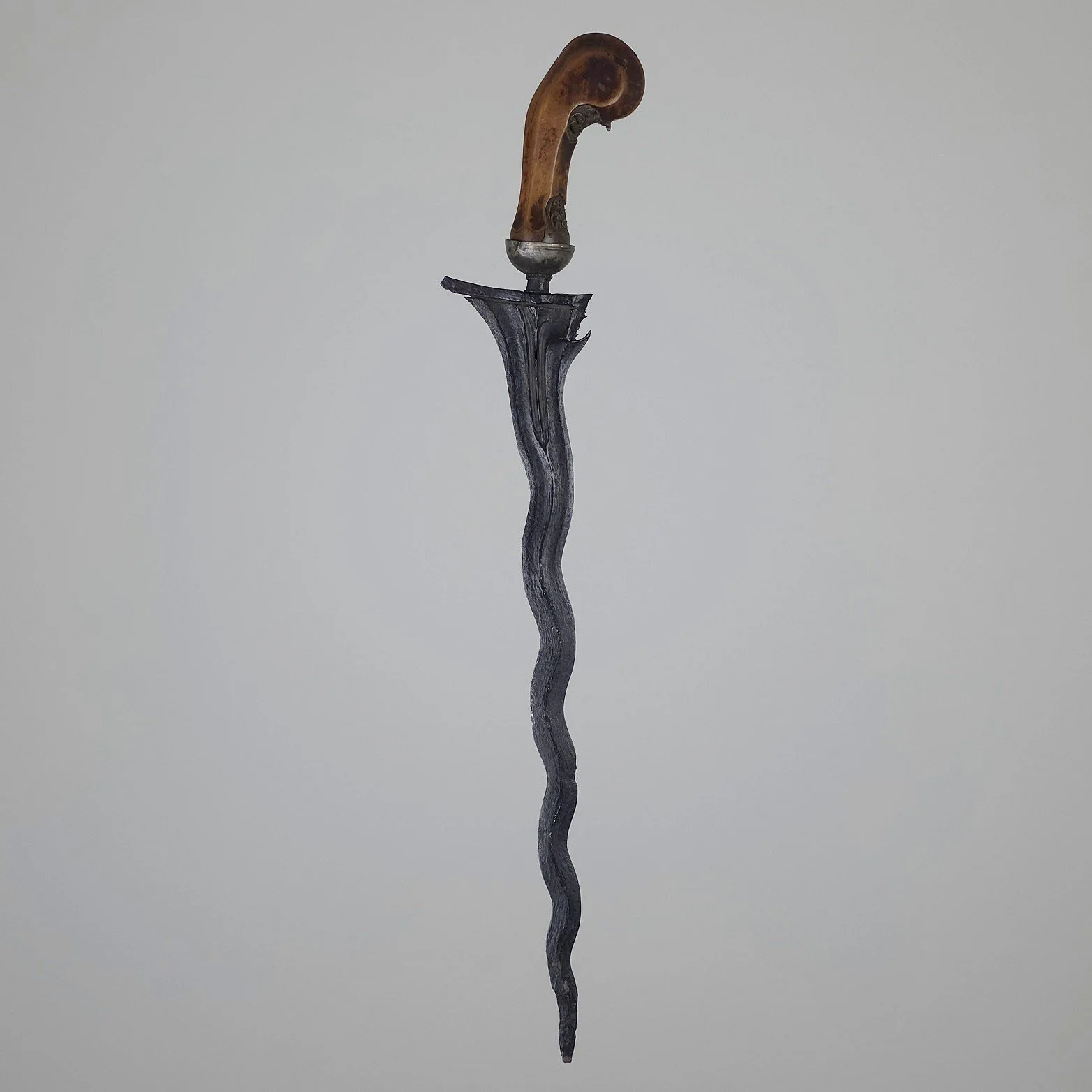
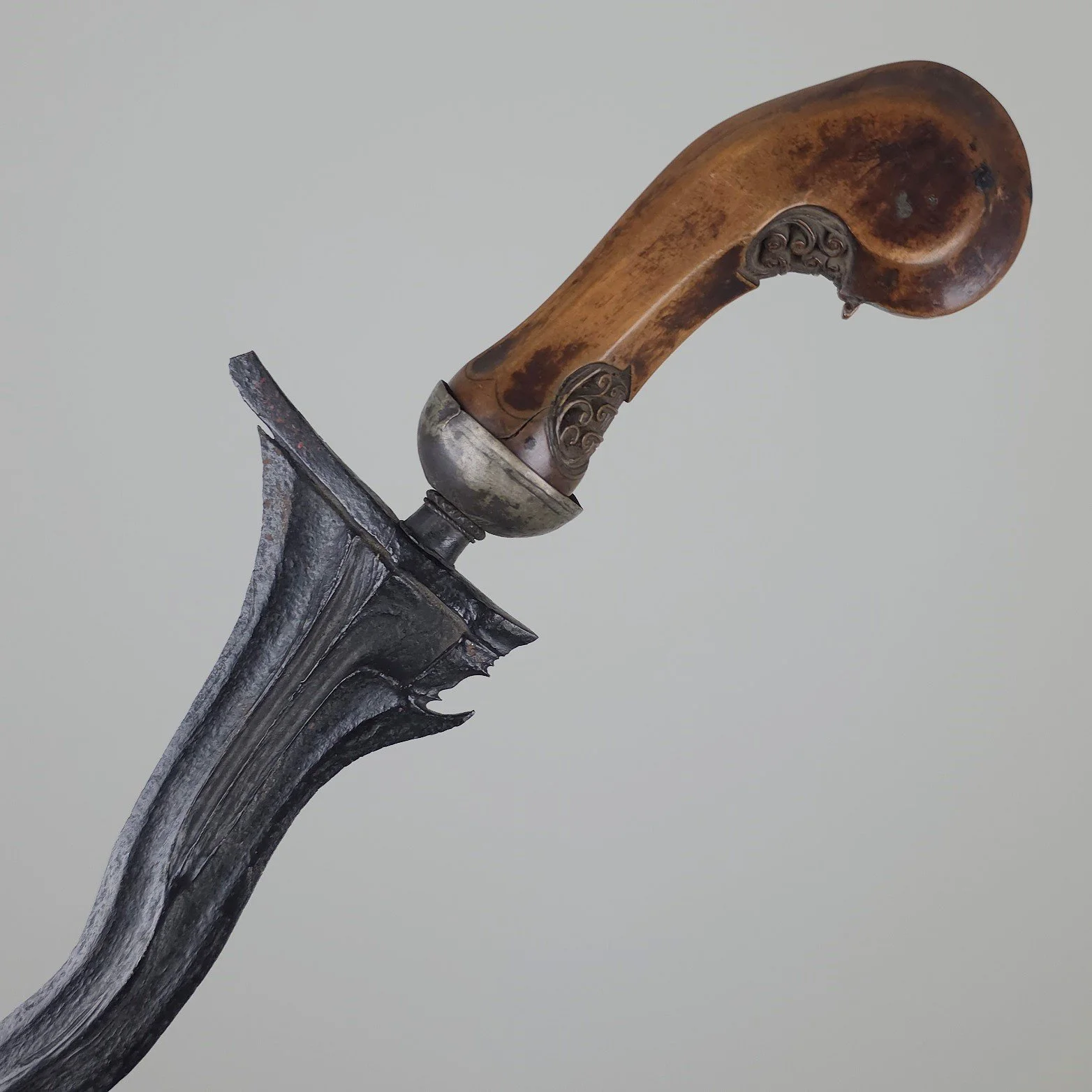
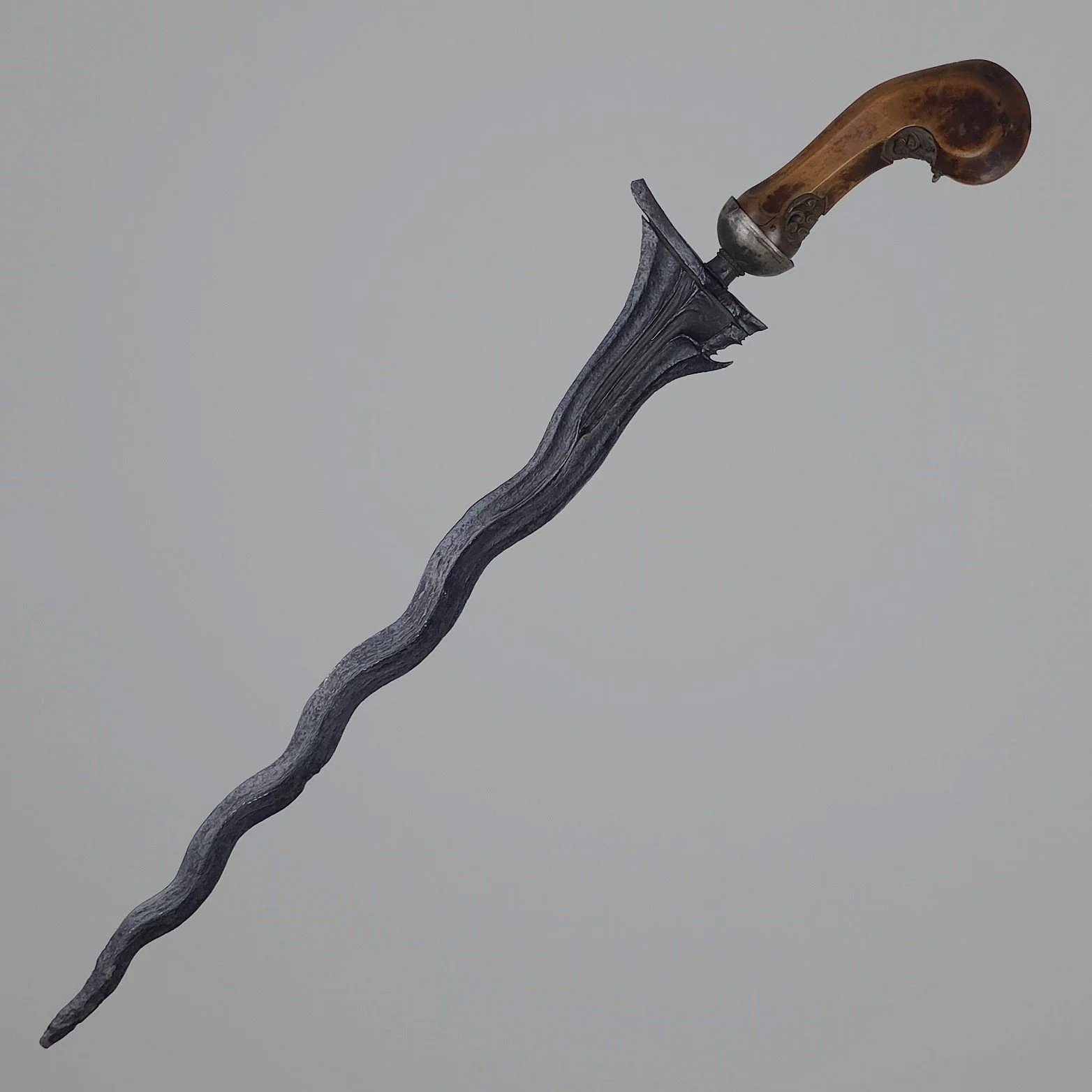
A Central Javanese Solo keris with a wavy blade dating from the 17th to 18th century. In Mataram style with forged folded steel, originally consisting of 11 luk (waves) although now having 10 luk due to age and loss while the tip is slightly bent. The blade is coated in an applied black lacquer finish from the Valentine Museum for further preservation. Worn, but well pronounced ricikan (or perabot) with strong sogokan, tikel alis, and ada- ada. There is red painted museum accession numbers painted on each side of the ganja, reading '15.5.17', assuming that this piece entered the Valentine Museum's collection in 1915.
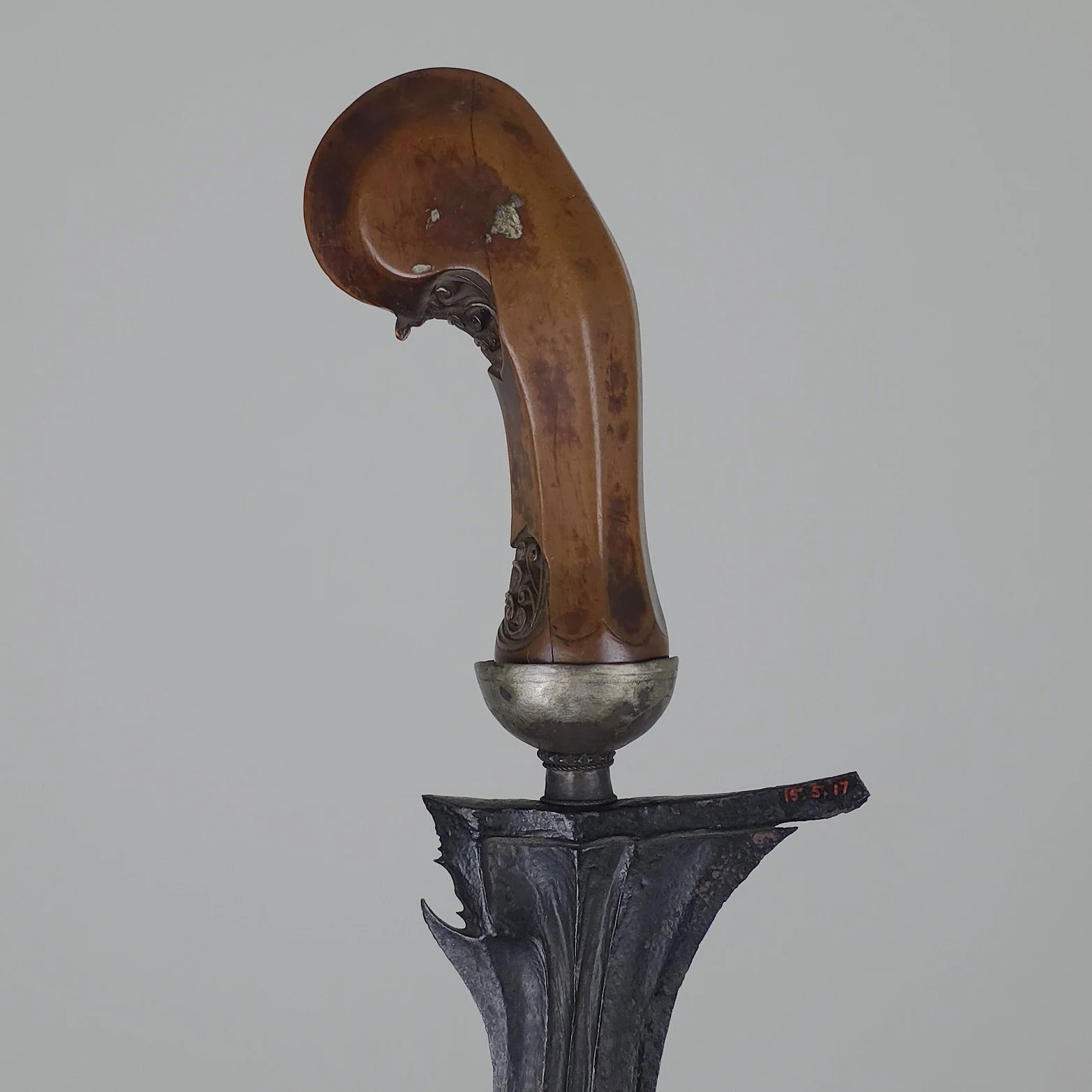
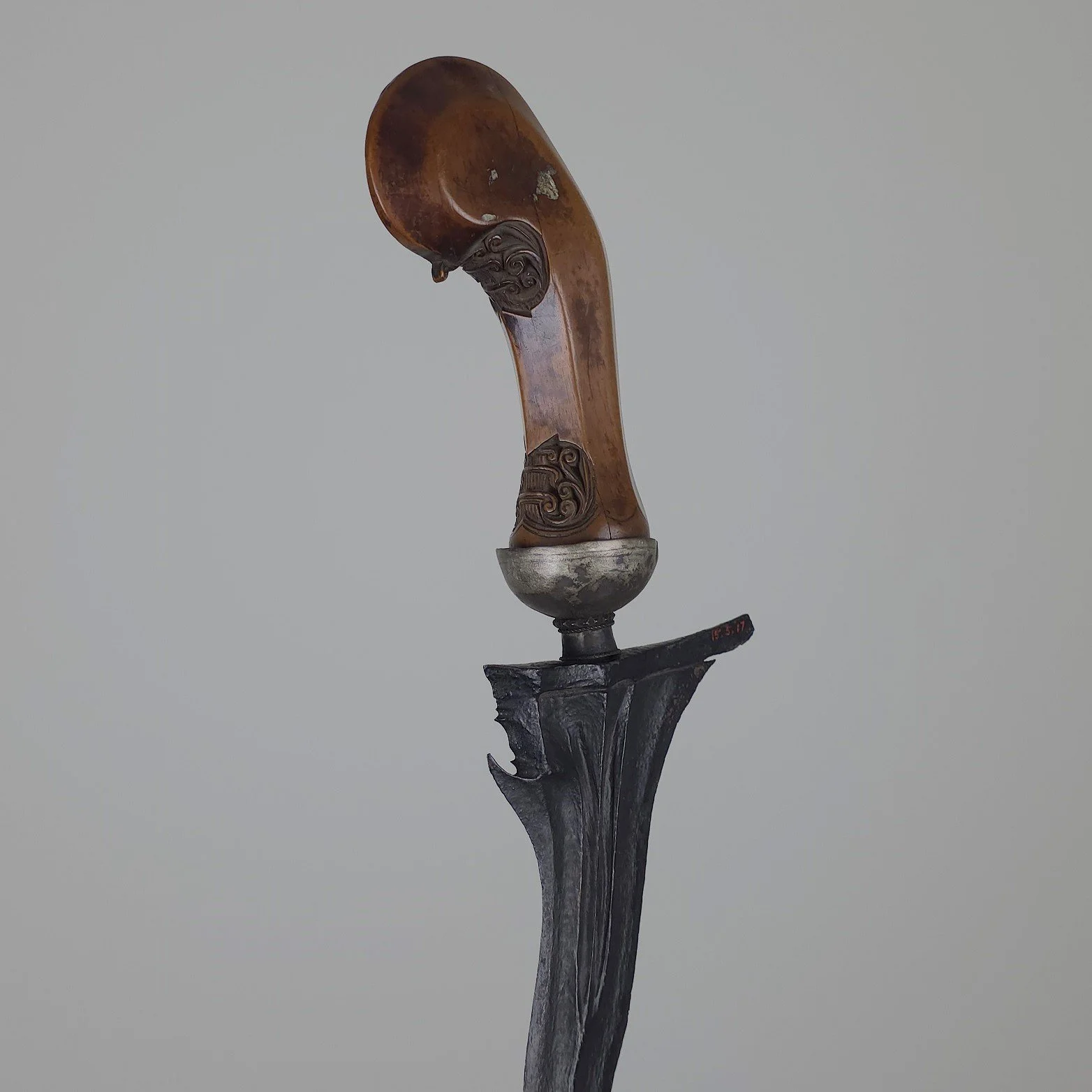
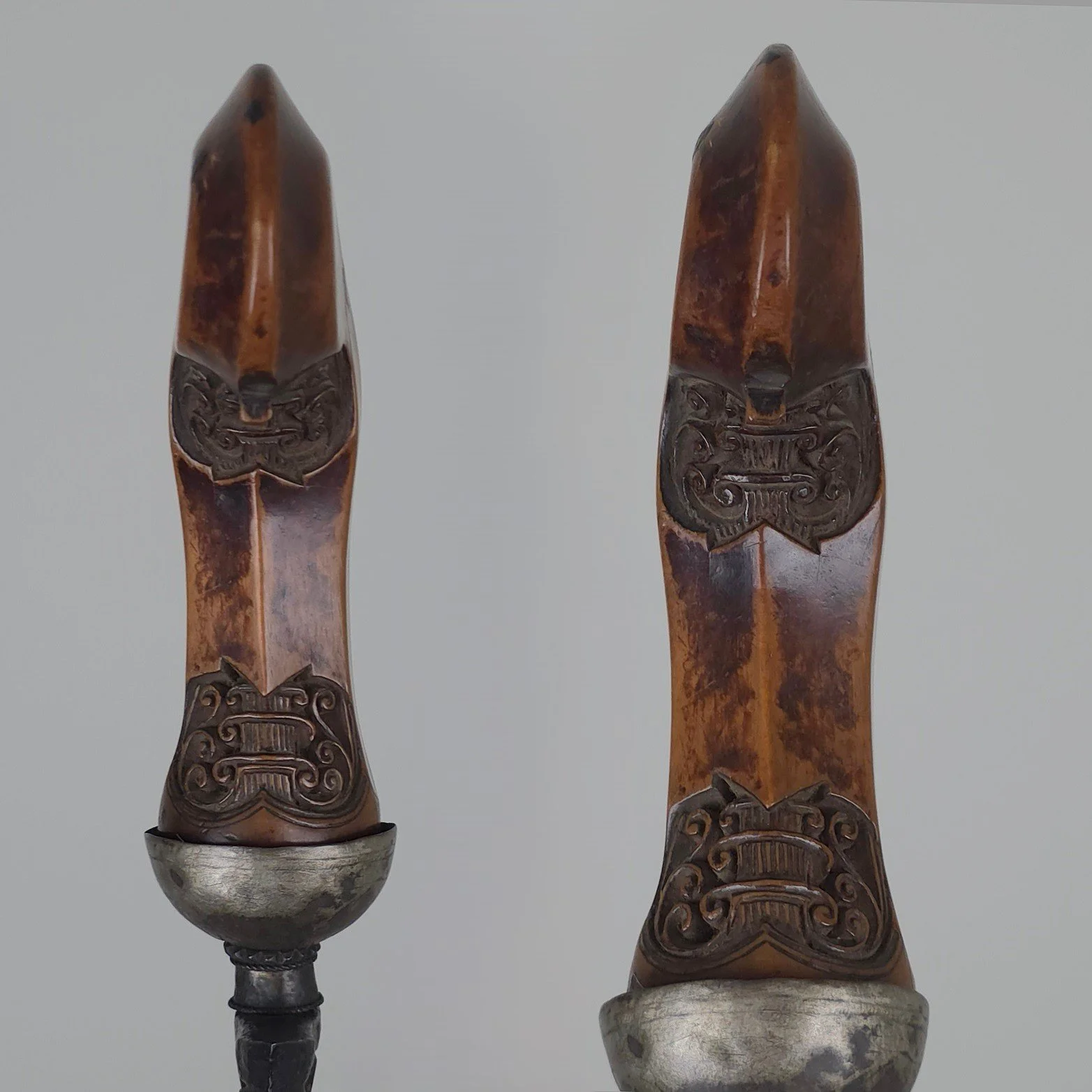
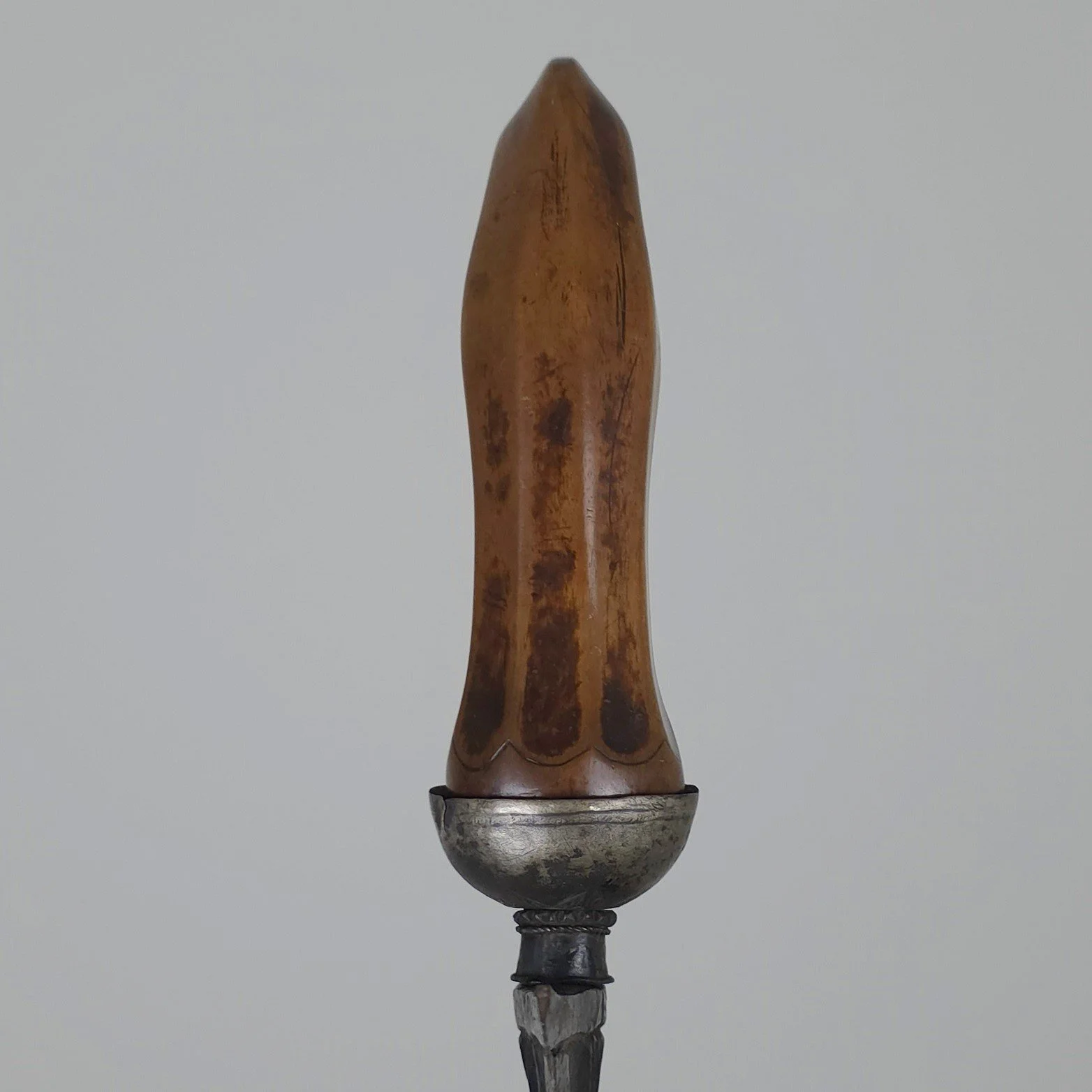
Warm honey colored wooden carved hulu (hilt) in the Solo semi nunggak style of the Royal Palaces in Central Java. The cecekan hilt with seven flat planar sides, the interior section ornately carved with two stylized motifs. They represent either faces (generally demonic) patra (carvings) or the royal court encompassed by florals, or lastly representing of a royal crest / European heraldic coat of arms, a localized form influnced by the Dutch. Near the rounded pommel is a small protrusion indicative of the Solo keris, but more expressive than those found on Yogyakarta keris. Metal alloy domed selut (bolster) that is lightly engraved with a six- pointed star paired with a beaded metal alloy mendek (ferrule). While the hilt is of Surakarta origin, the mounts are more indicative of Malay, representing a hybrid piece throughout time. This marriage would have occurred pre- 1915 before the acquisition at the Valentine Musuem. A very good and old Solo keris. Missing its sheath.
This piece was deaccessioned from the Valentine Museum located in Richmond, Virginia in 2021. It had been in their possession since 1915. The museum was founded by meat juice entrepreneur Valentine S. Mann in 1898, which had been originally the Wickham House; Mann's personal home with his private art and cultural collection.
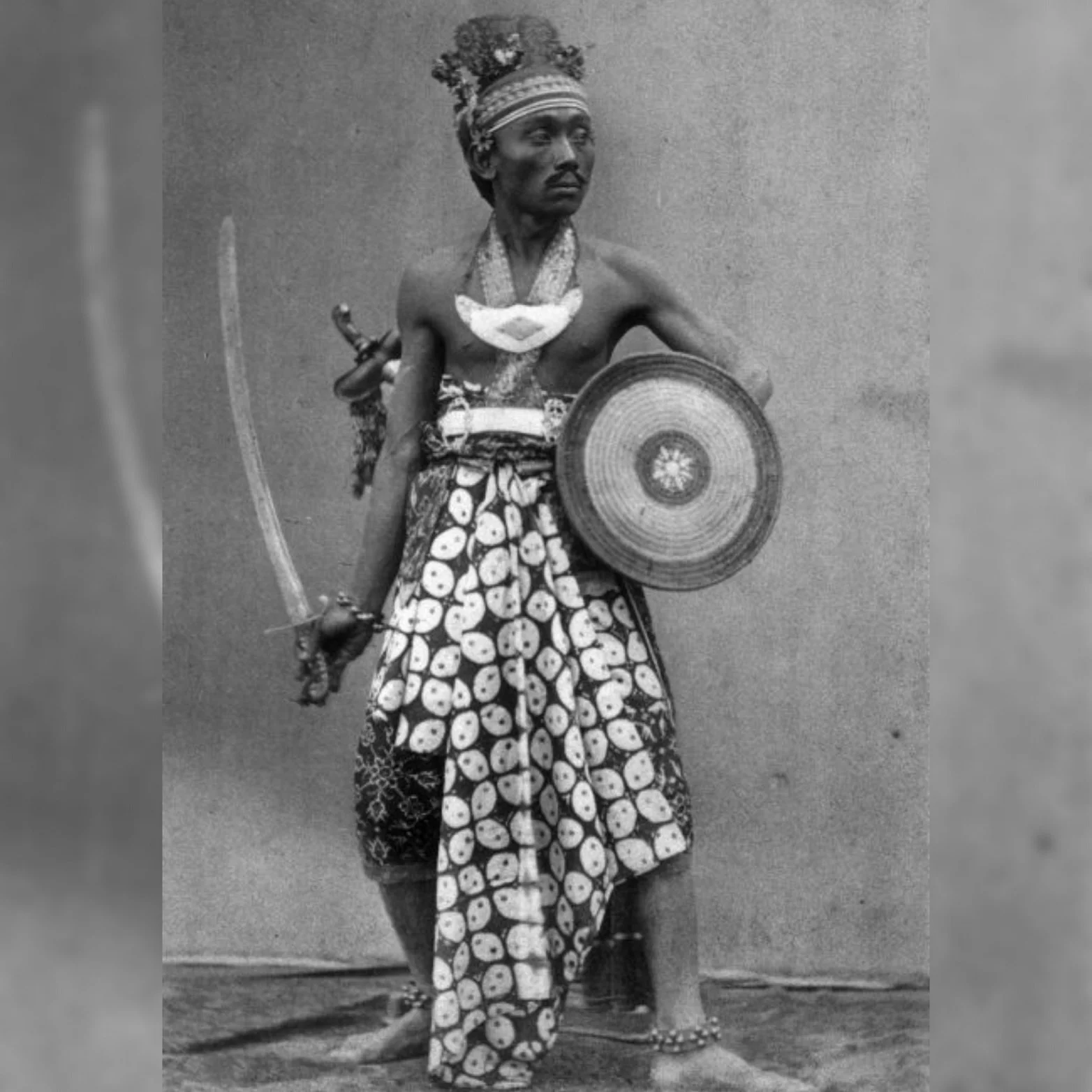
Photograph 20: Bodyguard of Hamengkoe Boewono VI, Sultan of Yogyakarta, ca. 1870
[1] http://www.vikingsword.com/vb/showthread.php?p=289559#post289559 (This Sword)
[2] Lord Egerton of Tatton. 2002. “Indian And Oriental Arms And Armor”. Page 96. #276
[3] Richardson, Thom. 2018. “Islamic Arms And Armour”. Page 120
[4] W. O. Oldman, “Illustrated Catalogue of Ethnographic Specimens”, List No. 65; Item No. 40 (16818)
[5] https://skd-online-collection.skd.museum/Details/Index/1691893
[6] https://skd-online-collection.skd.museum/Details/Index/1646538
[7] https://skd-online-collection.skd.museum/Details/Index/1643485
[8] https://skd-online-collection.skd.museum/Details/Index/1641089
[9] https://skd-online-collection.skd.museum/Details/Index/1644385
[10] https://www.weltmuseumwien.at/en/objects/kris-with-sheath-494010
[11] https://prm.ox.ac.uk/collections-online#/item/prm-object-43458
[12] https://prm.ox.ac.uk/collections-online#/item/prm-object-133640
[13] https://prm.ox.ac.uk/collections-online#/item/prm-object-114757
[14] https://www.metmuseum.org/art/collection/search/31352
[15] https://oriental-arms.com/home/885-fine-early-19-c-keris-dagger-from-java.html
[16] http://www.oriental-arms.co.il/item.php?id=4286
[17] http://www.oriental-arms.co.il/item.php?id=1897
[18] http://www.oriental-arms.co.il/item.php?id=3145
[19] http://www.oriental-arms.co.il/item.php?id=1756
[20] https://www.mandarinmansion.com/glossary/hulu-nunggak-semi
[21] https://www.mandarinmansion.com/item/solo-court-keris
[22] https://www.mandarinmansion.com/item/fine-11-luk-solo-keris