Hadendowa Dagger
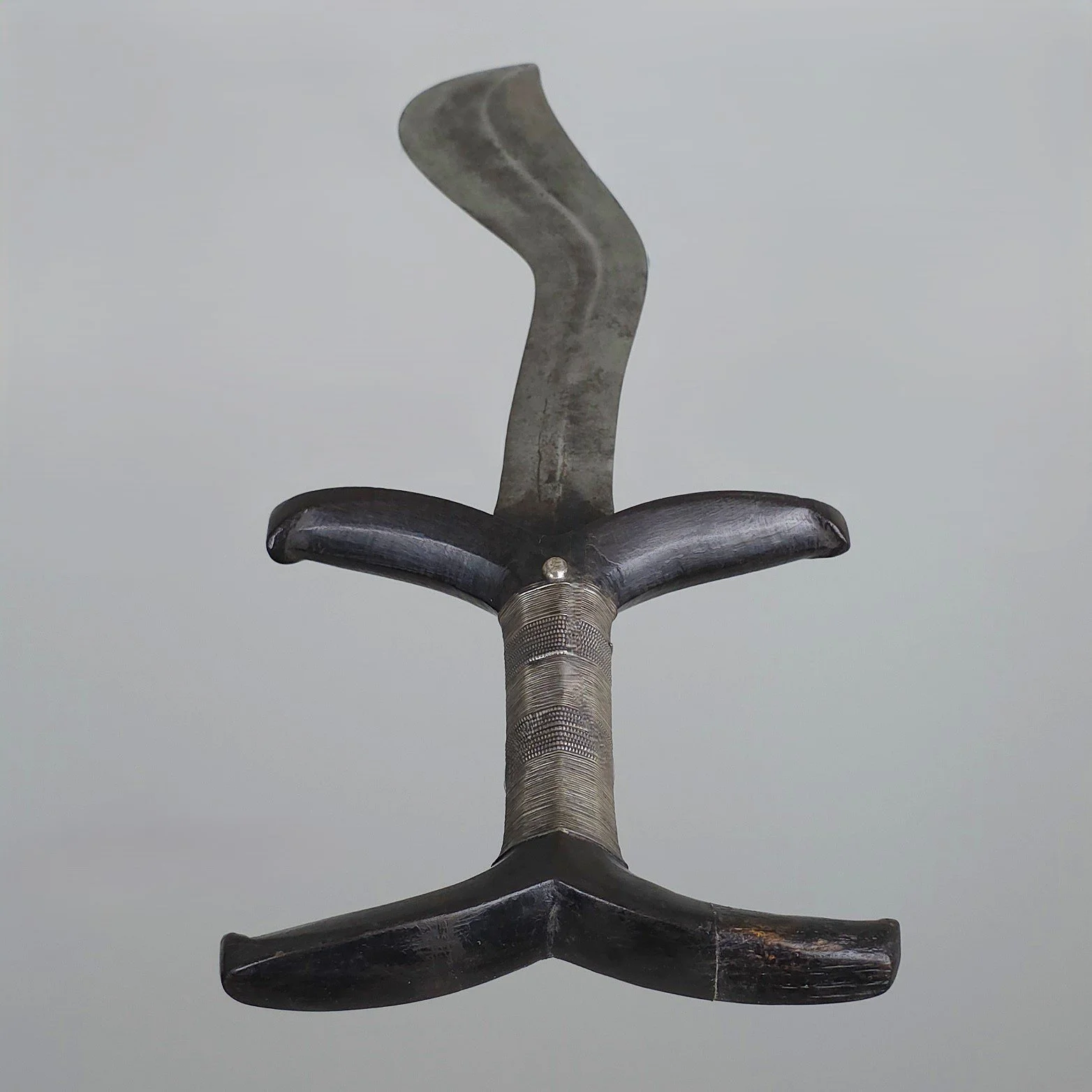
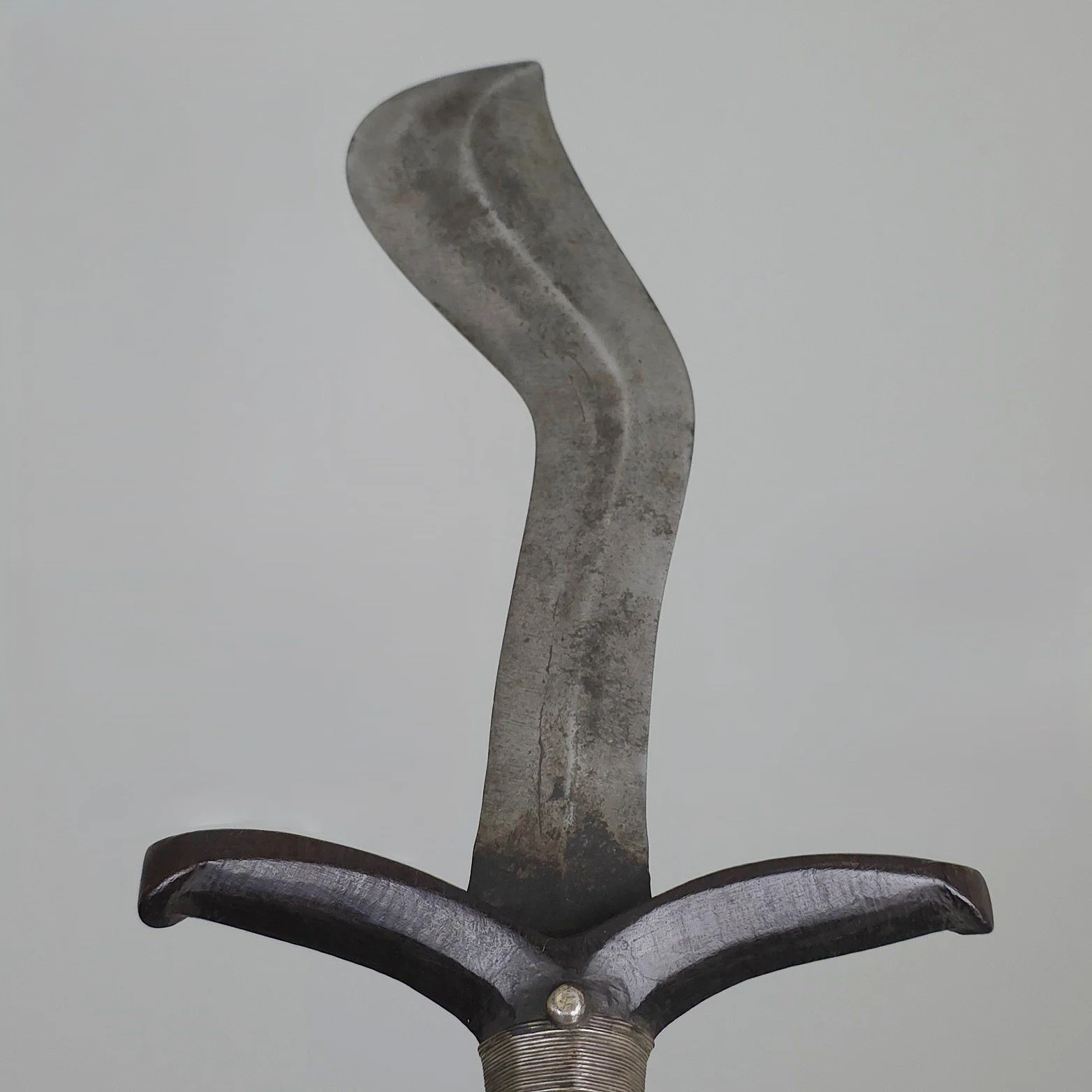
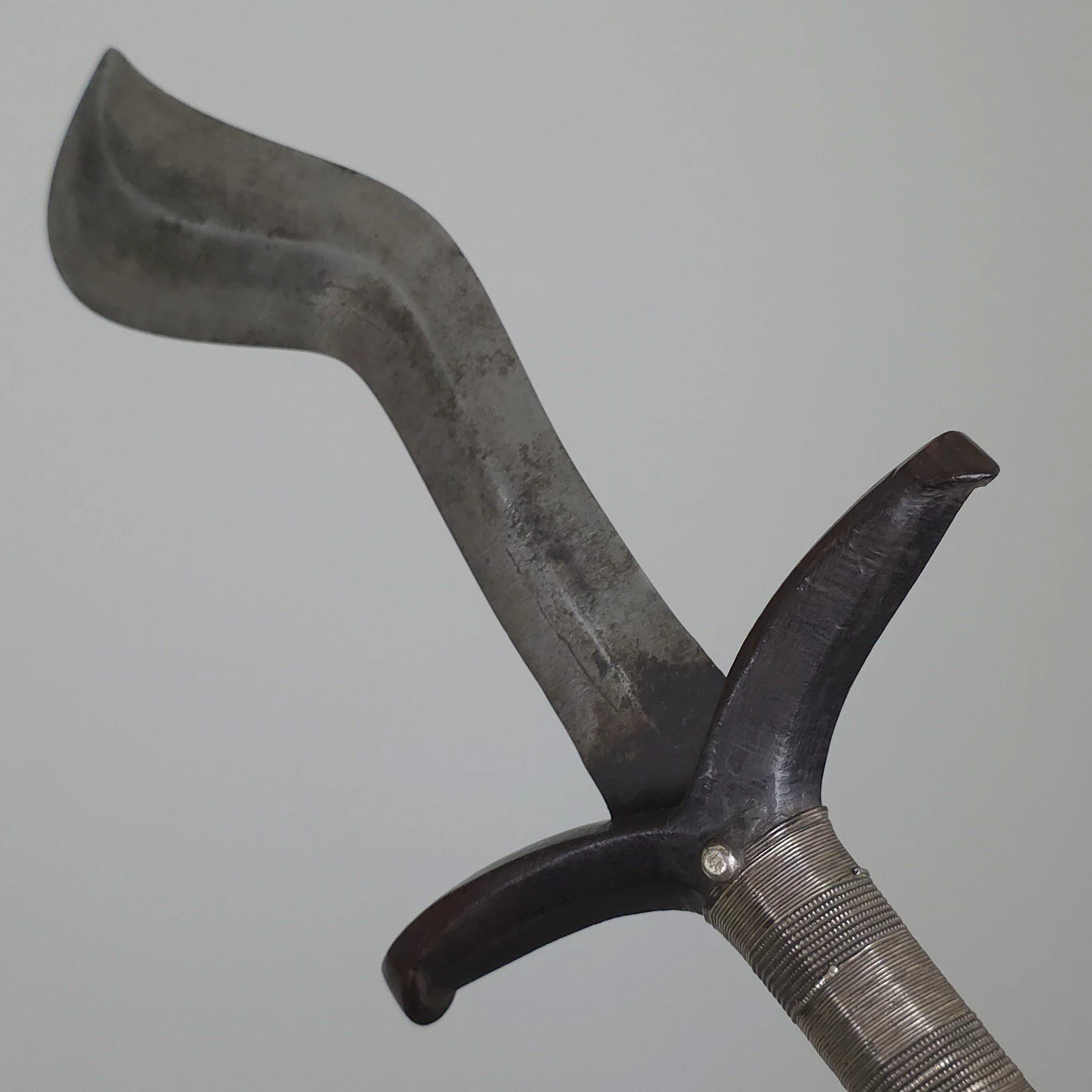
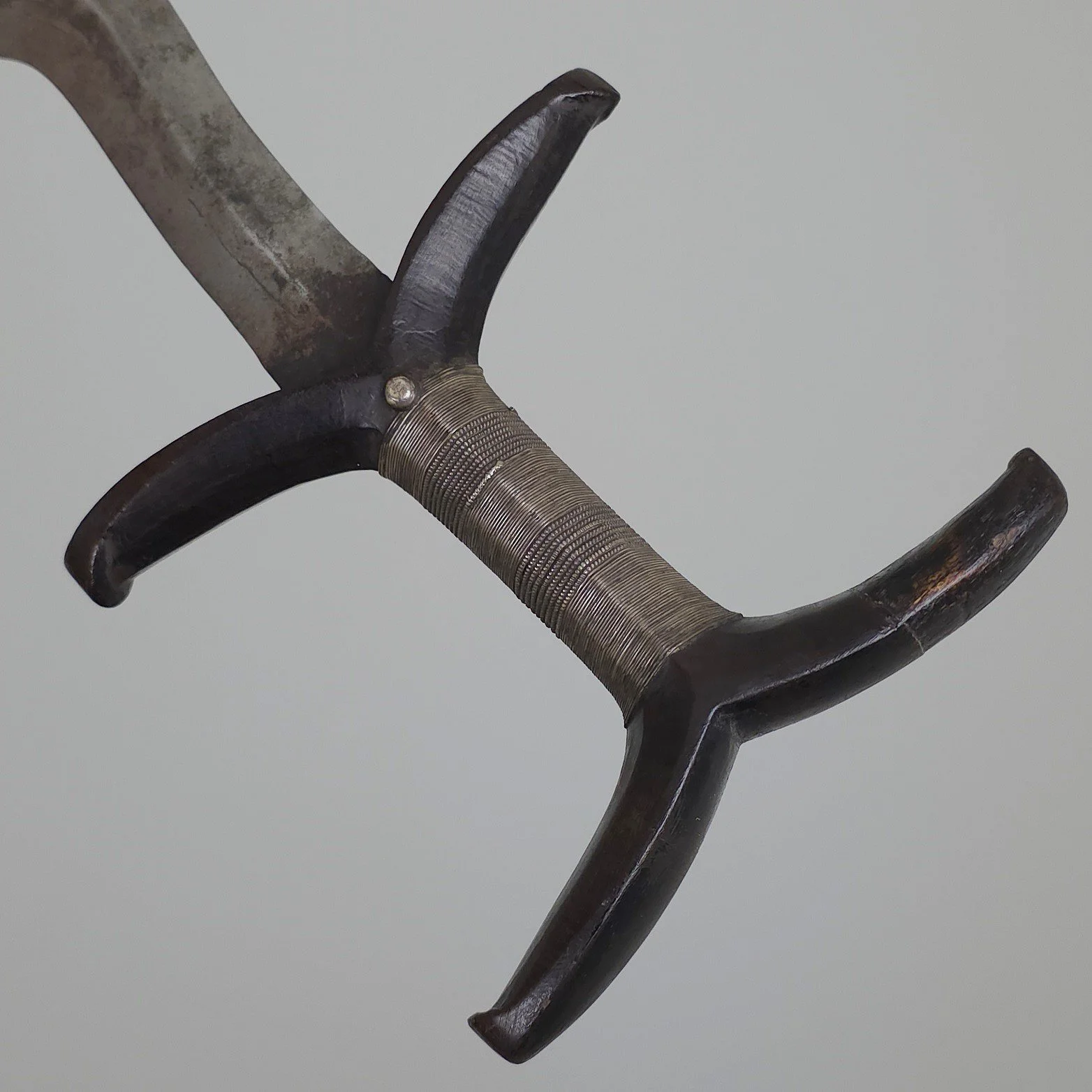
Hadendowa Dagger
Hadendowa / Beja
Mahdist, Sudan ( Eastern Sudan): Collected in Tamai
Ca. 1880
Steel, Wood, Silver Alloy, Leather
Blade: 7 1/2" (19.1cm)
Hilt & Blade: 11 1/2" (29.2cm)
Hilt, Blade, Sheath: 11 7/8" (30.2cm)
Collection Date: 2024
Collection Number: 412
Ex. Antony Cribb: Newbury, UK (2024)
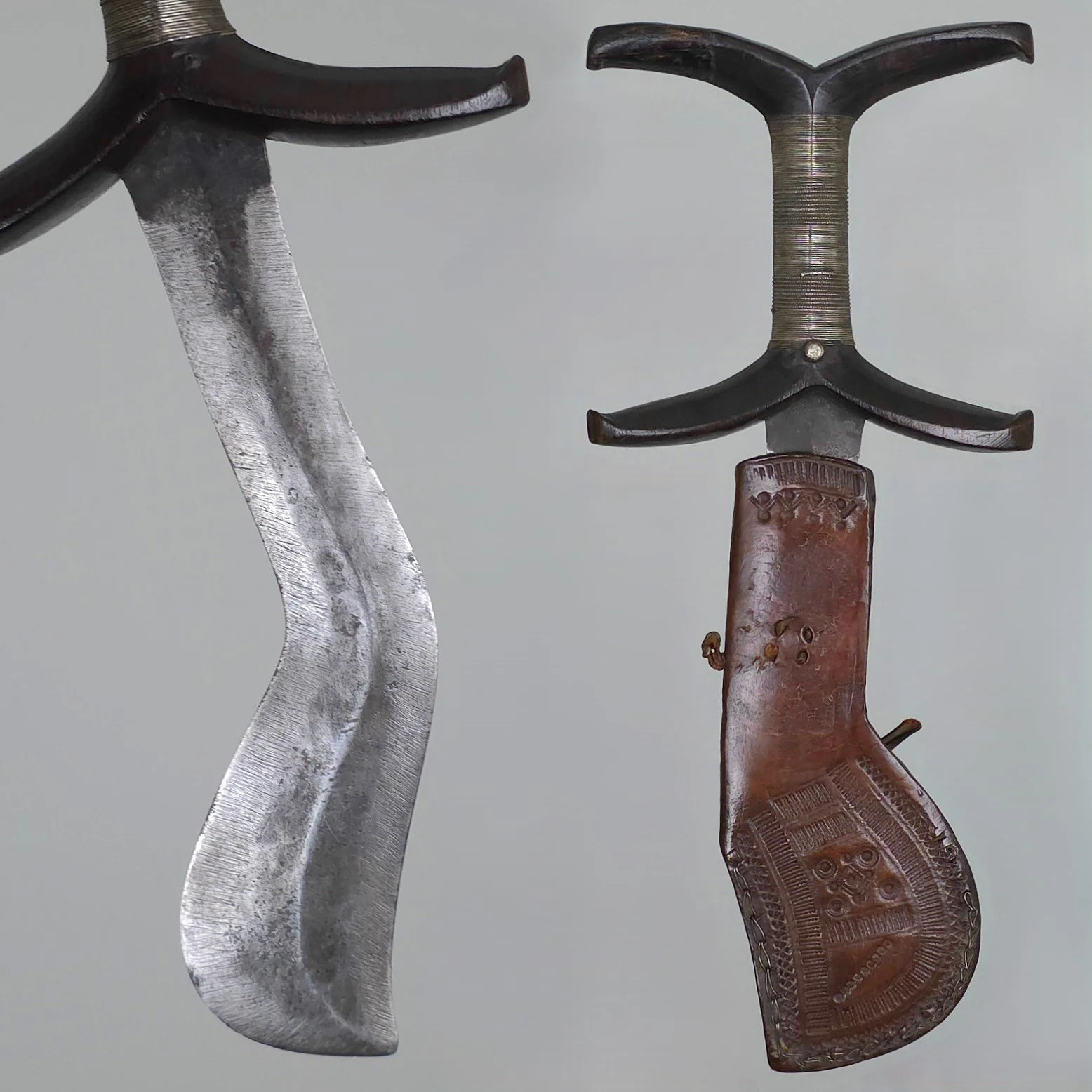
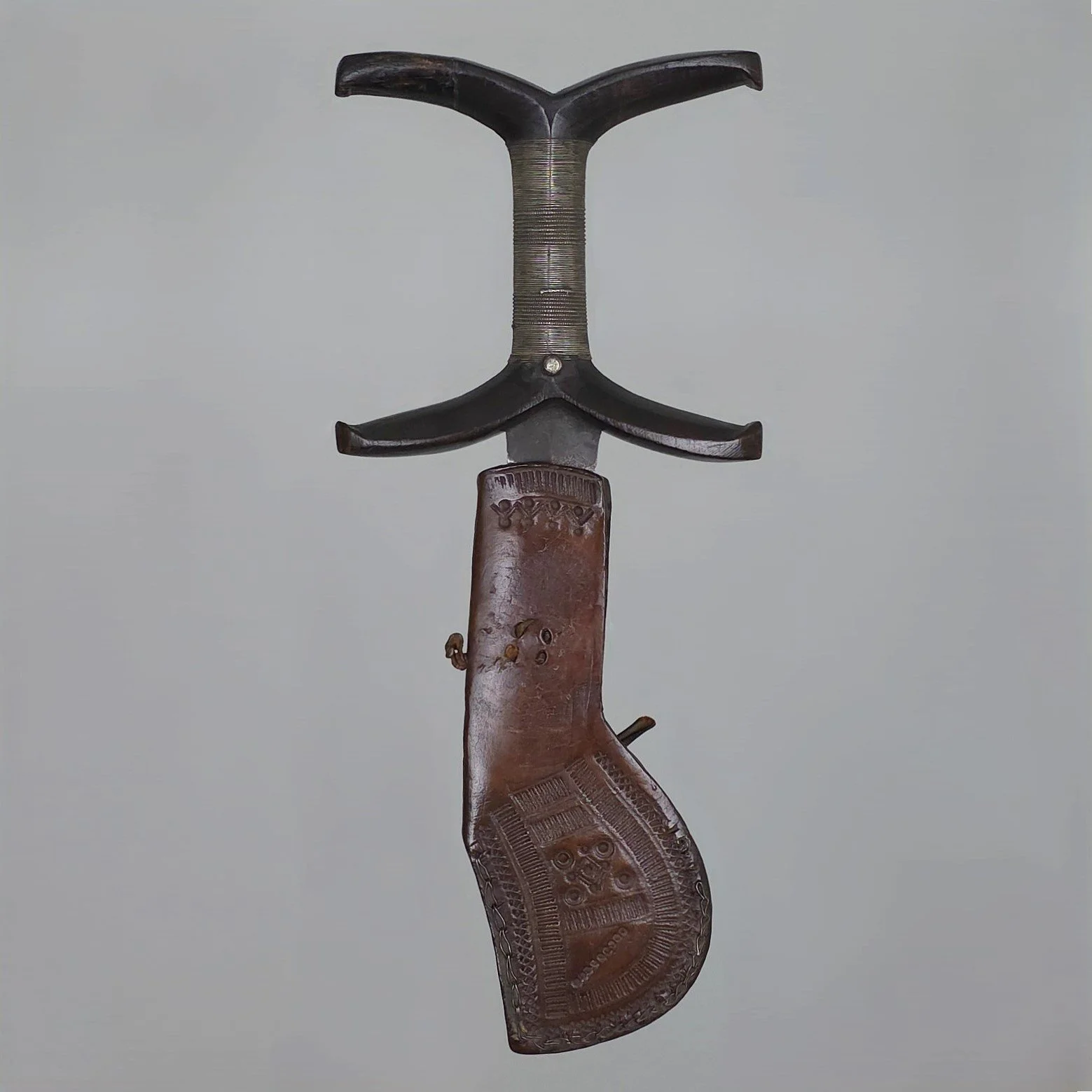
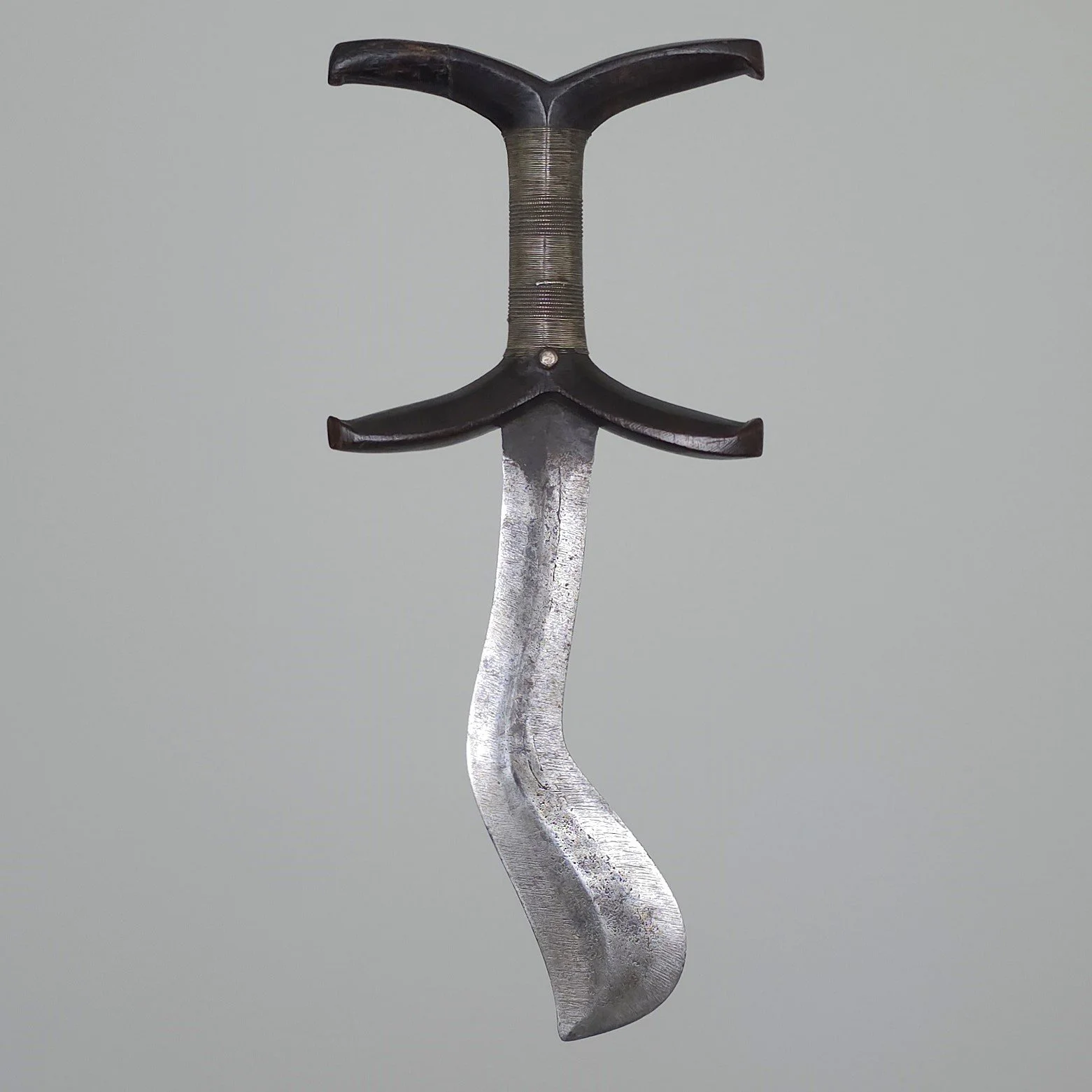
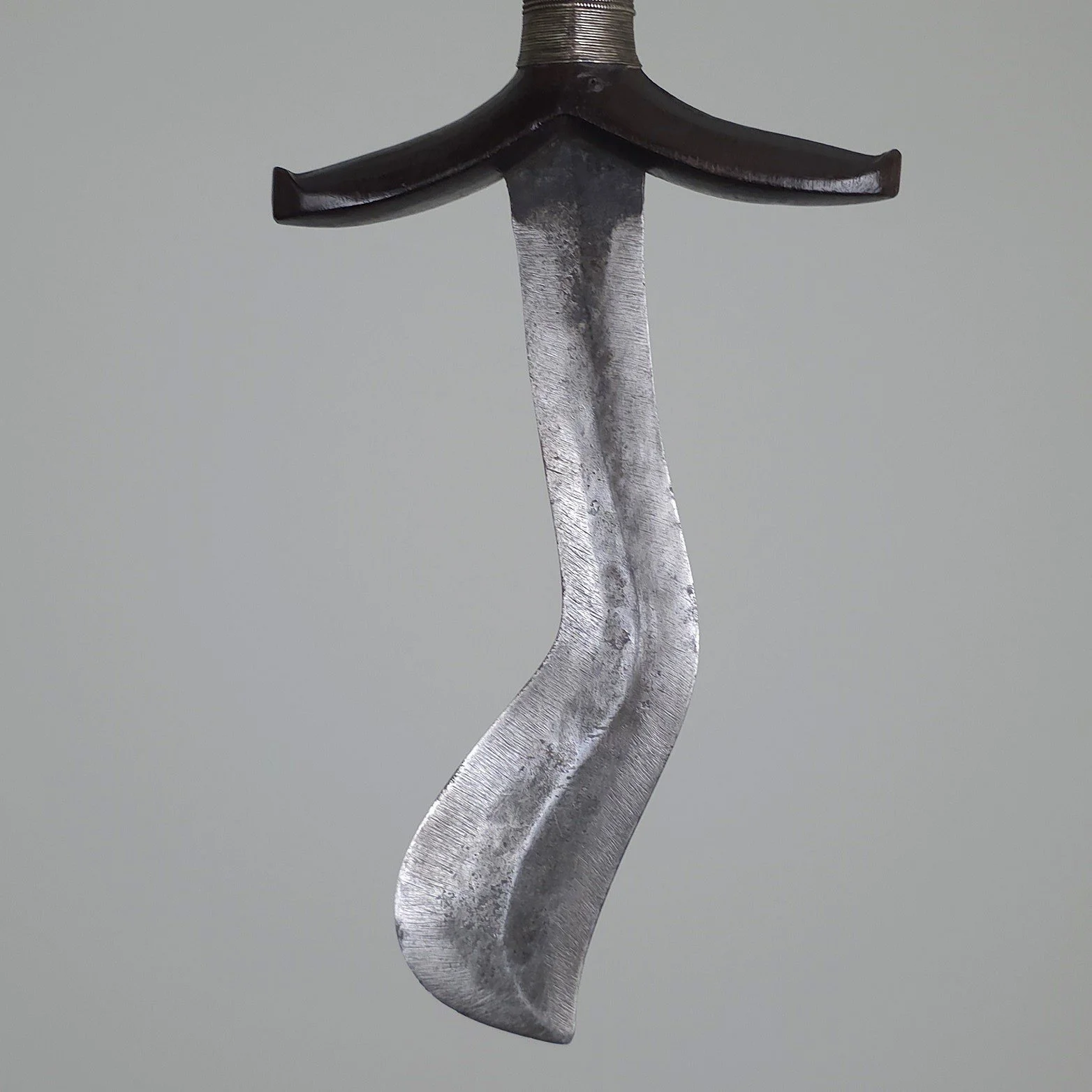
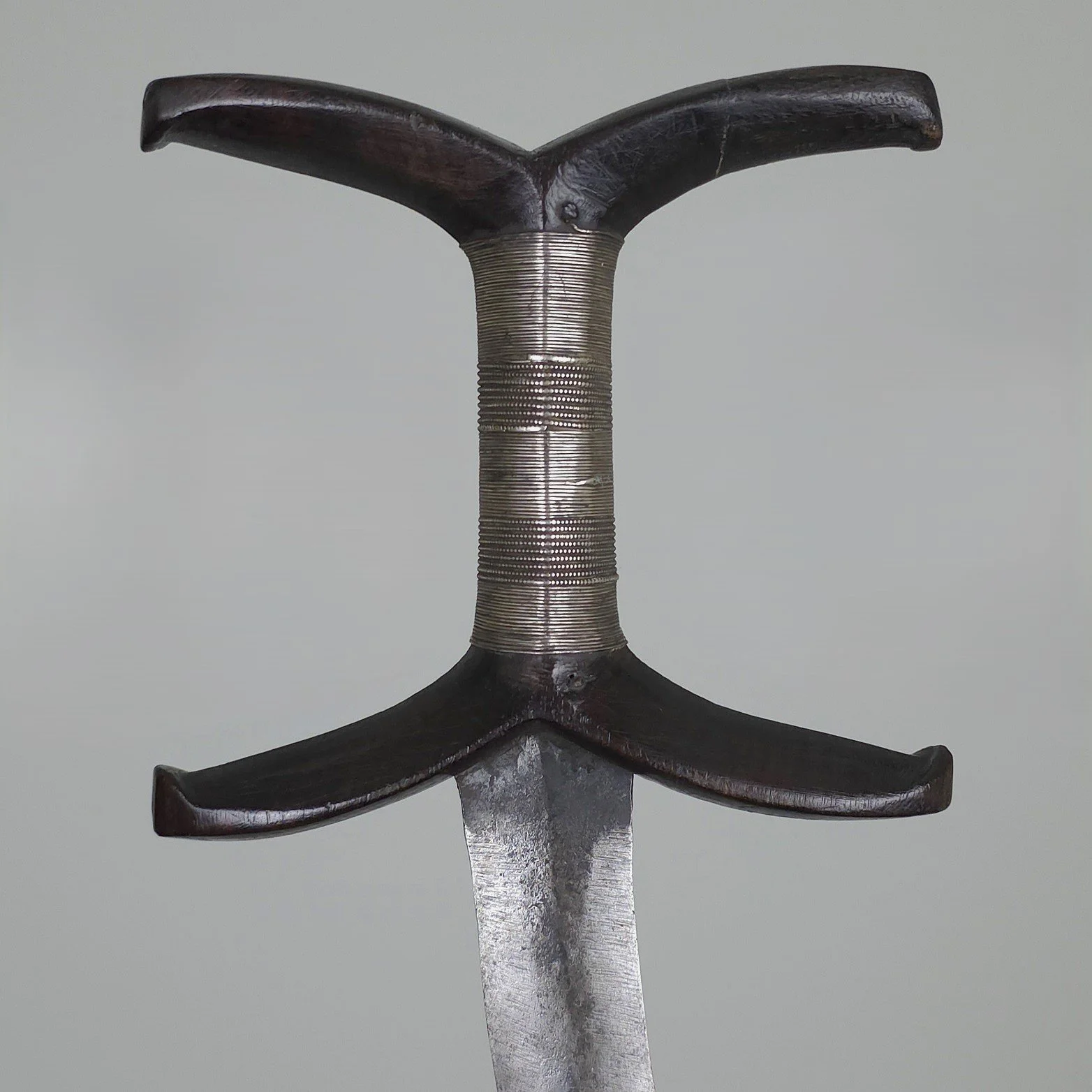
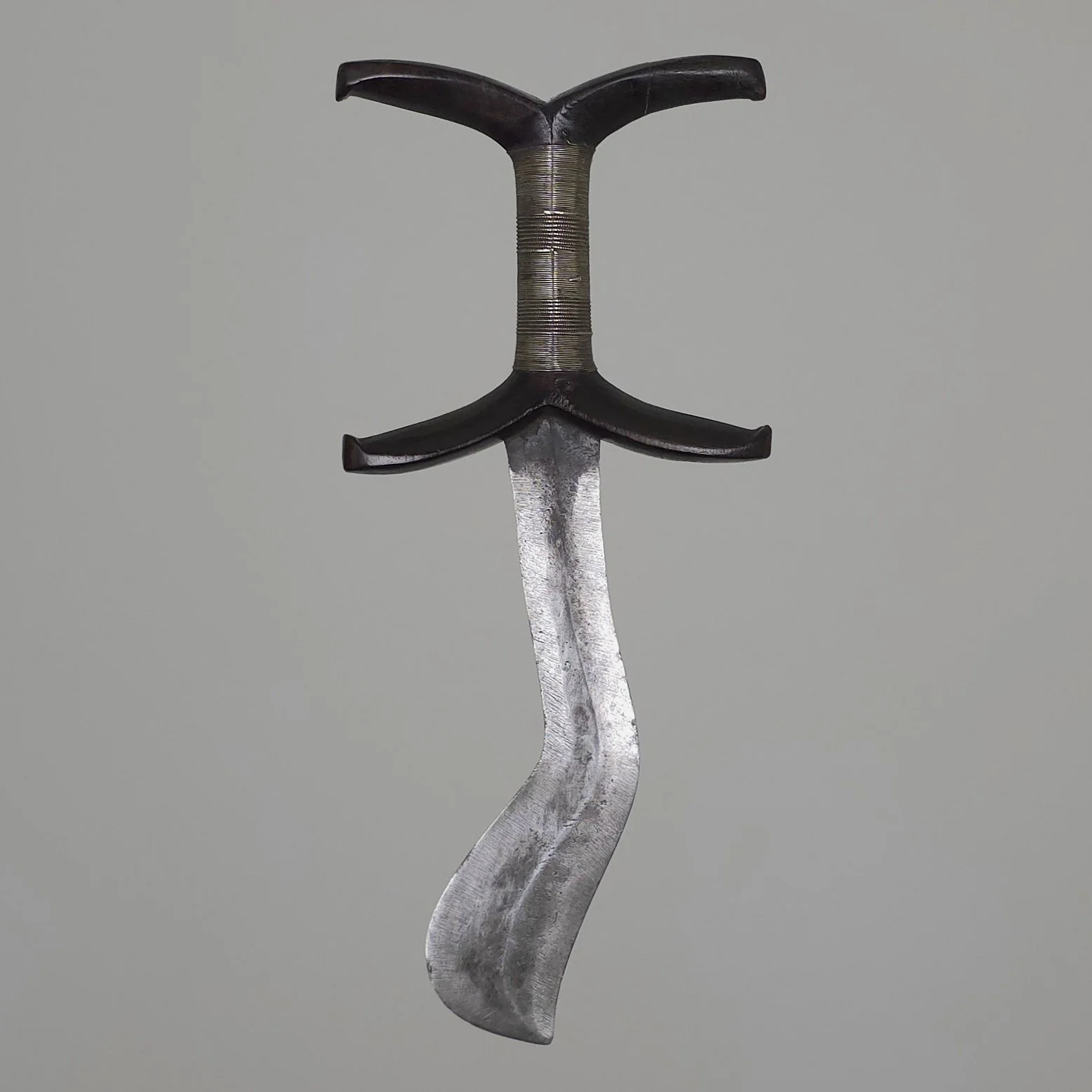
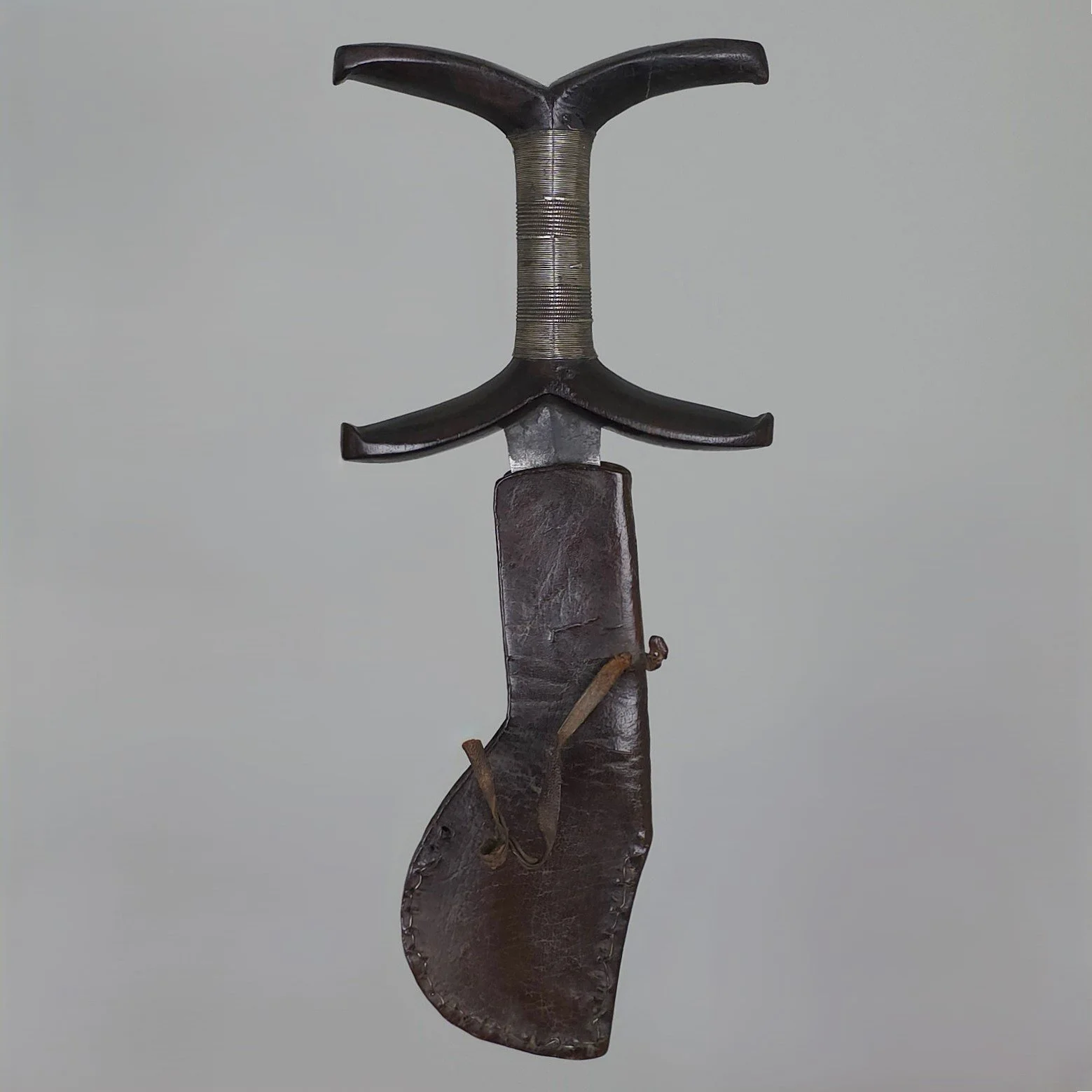
A very fine Hadendowa dagger of great quality decorated in silver mounts. This style of arm dagger was used by the Beja People and their subdivided clans including the Hadendowa in Eastern Sudan. The example here was picked up by Lt. Col. F.M. Hext after the Battle of Tamai on March 13, 1884, during the Mahdist uprisings. The battle led to a British victory. However, the British suffered their highest losses than in any other battle during the Mahdist War at 214 wounded and killed. The Mahdist suffering losses between 2,000 and 4,000 men. The British, composed of 4,500 men against the Mahdist of 10,000, mostly Hadendowa under the great Hadendowa commander, Osman Digna. The battle is known for the Mahdist break through in the famous British infantry square, leading to brutal hand to hand combat between opposing forces. This dagger would have been picked up from the scattered bodies of the battlefield the following day from an unlucky Mahdist warrior by F.M. Hext. It serves as part of a larger group of weapons that were collected by him as battlefield souvenirs.
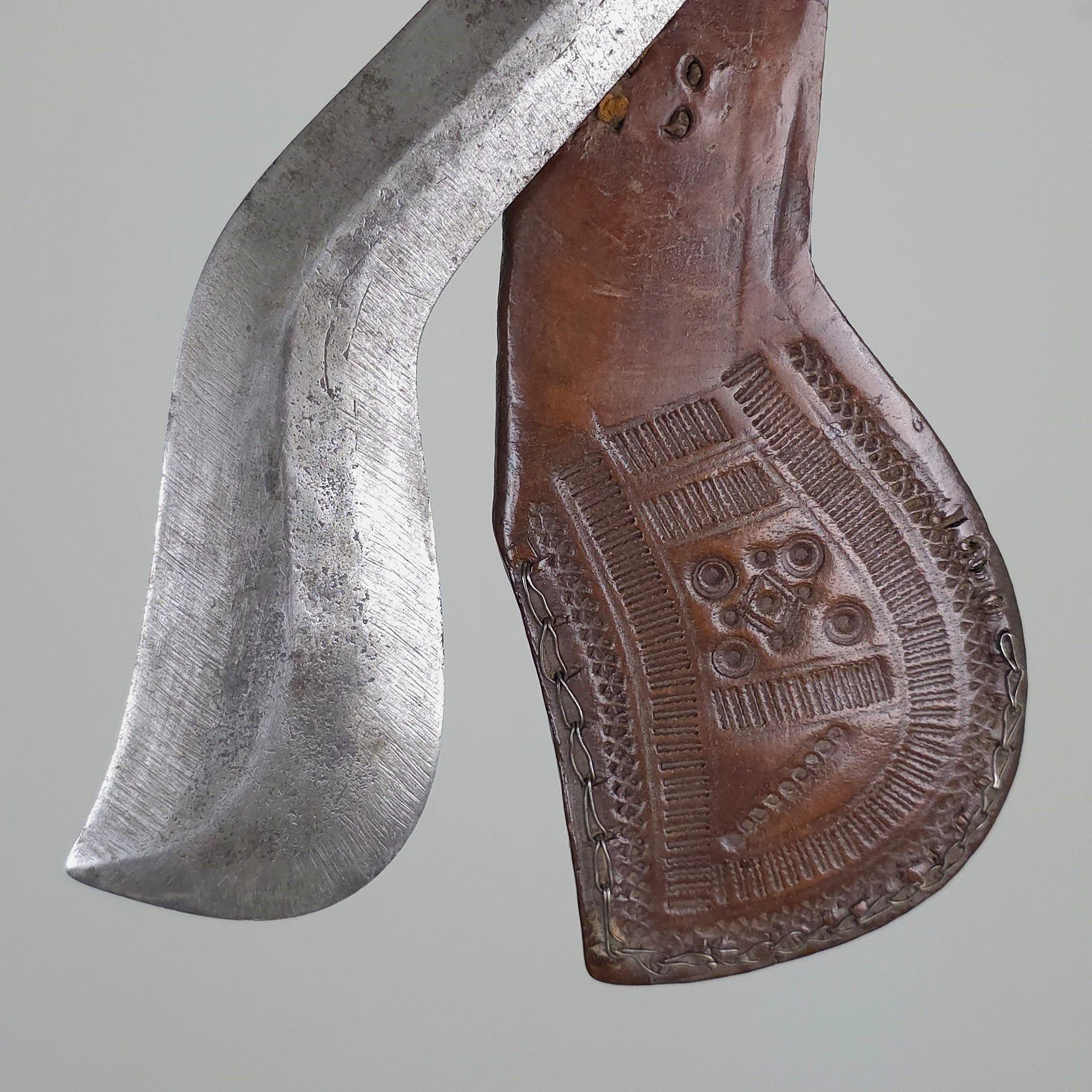
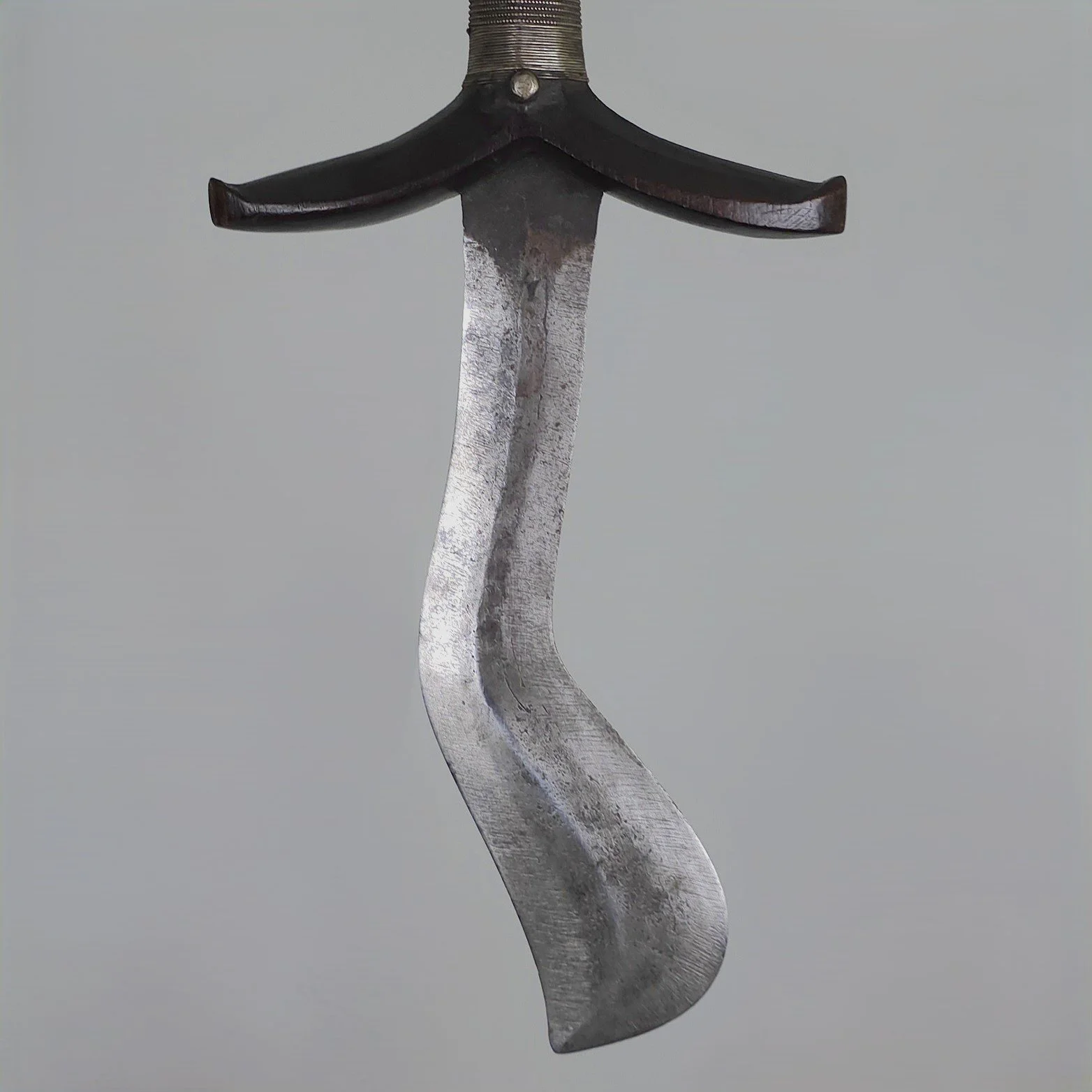
The double- edged steel blade has a medial ridge in entirety with the blade form in a 'reversed hook variation', unique to Beja arms and a less common form compared to the common curved blades of the same type. The blade is straight in form before curving into a hook, then recurving back outward, widening profusely at the tip.
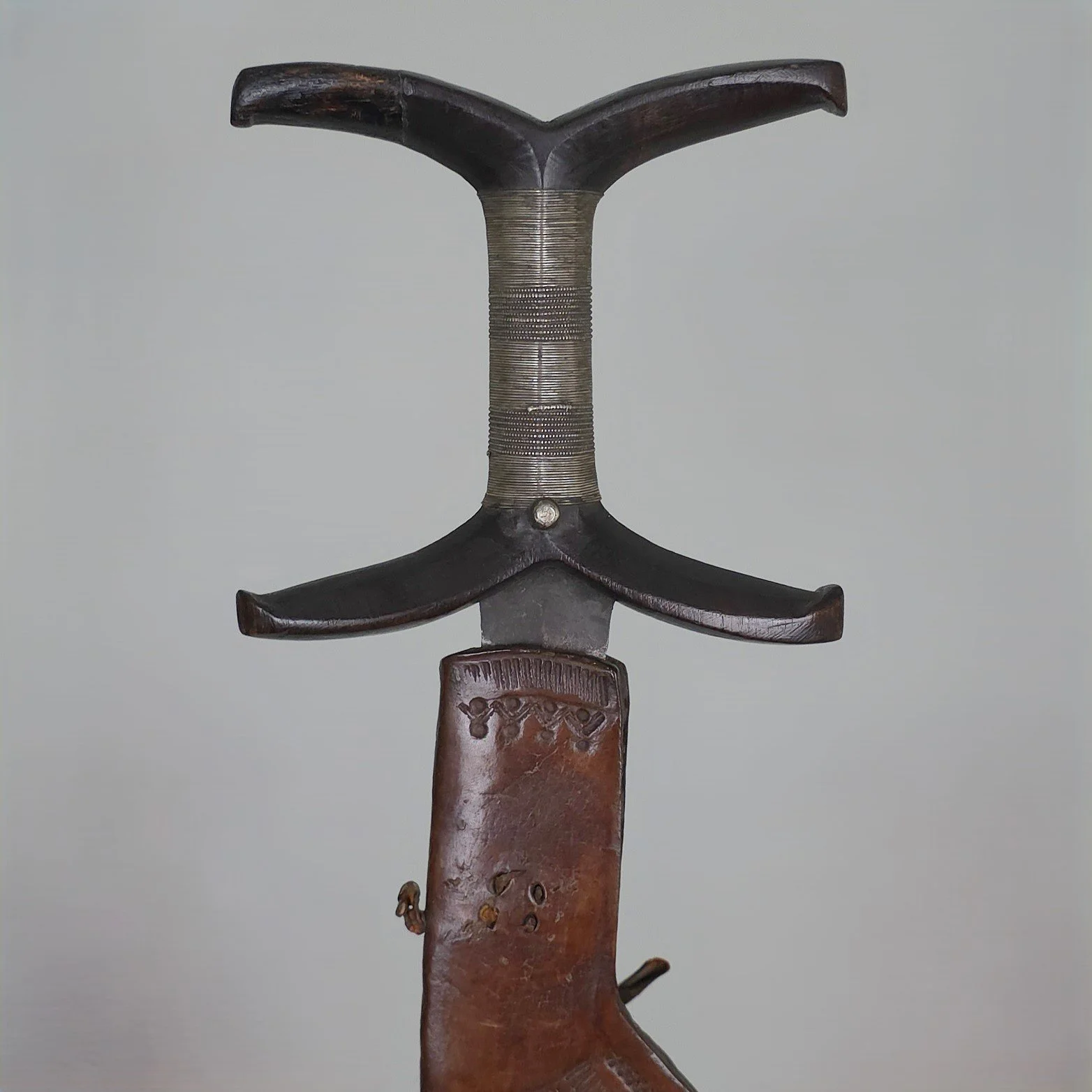
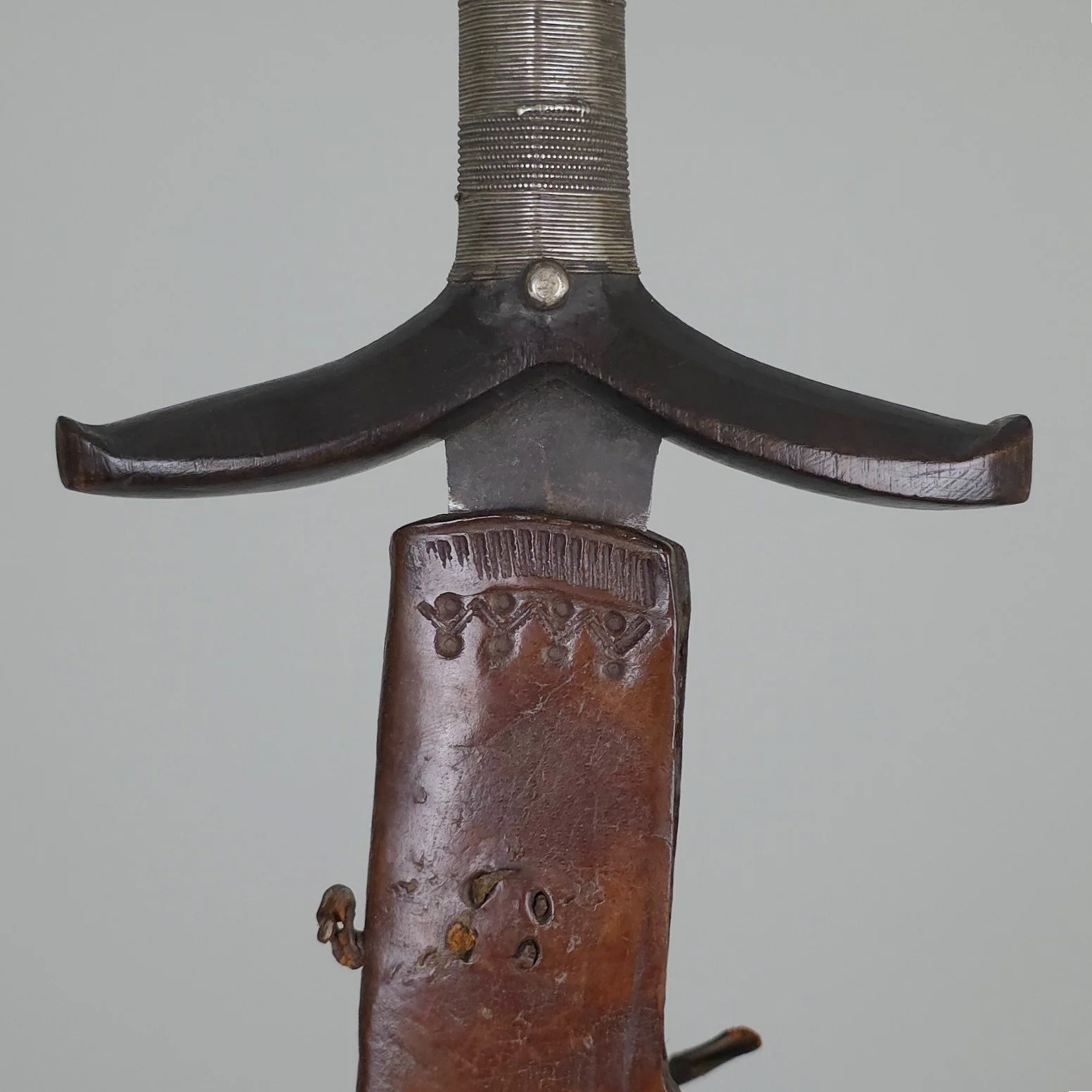
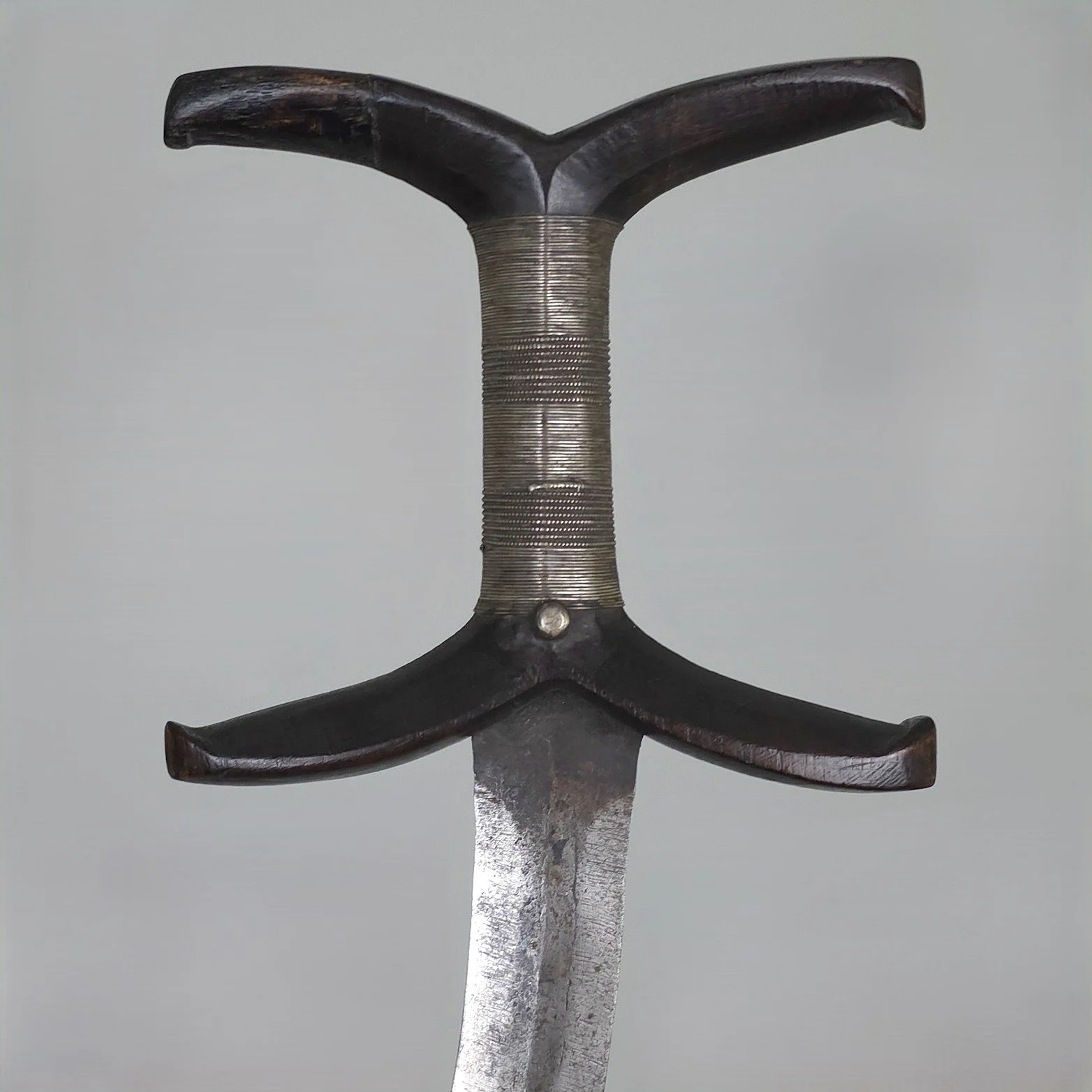
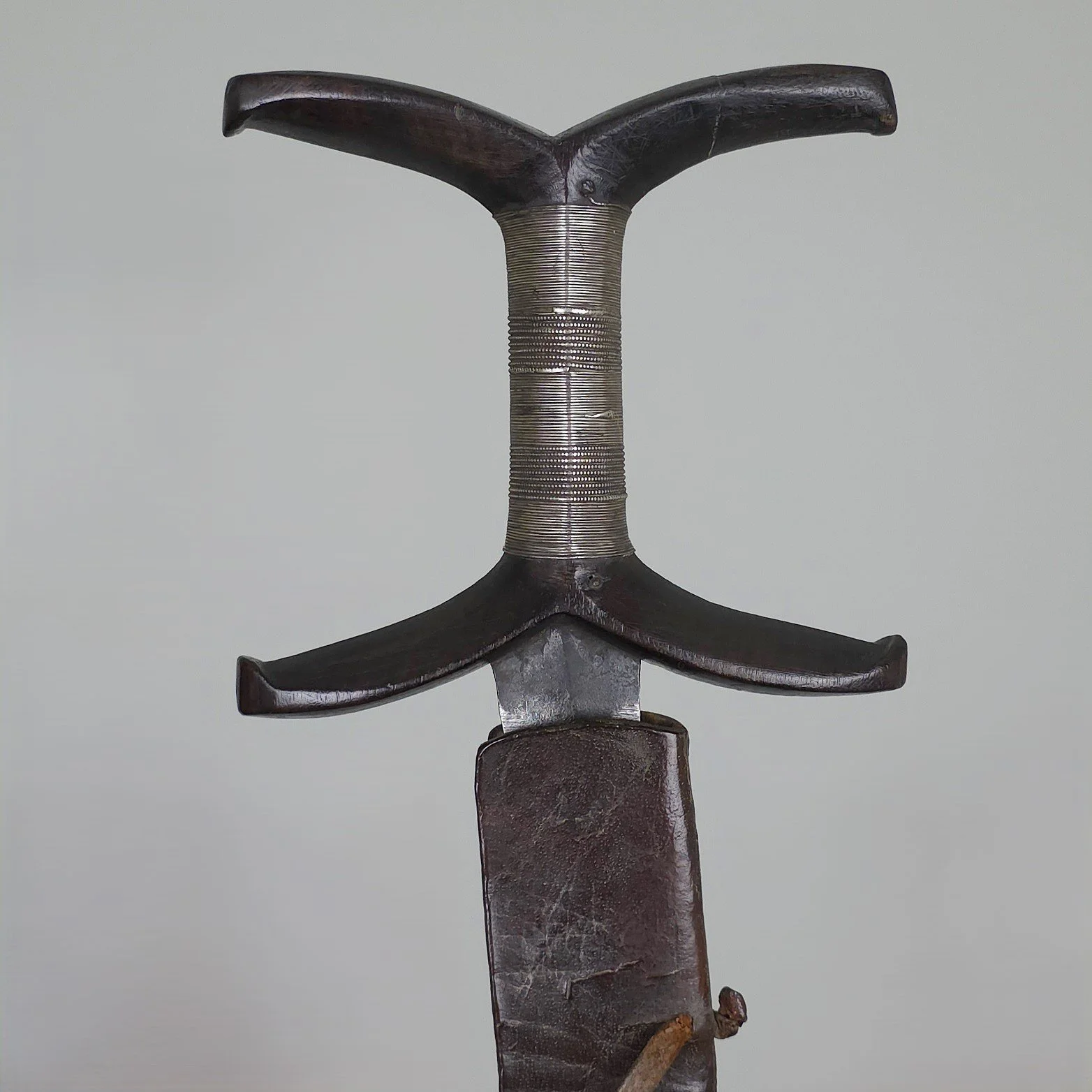
The large hilt is carved from wood in an 'I' shape, the central grip bound tightly in coiled silver wire, two sections of the middle portion which have braided wire work. A silver stud is present near the top. The heavily tooled red leather sheath exhibits extensive geometric patterns on the front side, sewn with metal wire, and having an open seam for the insertion of the wide blade. A collection tag attached reads, "Battle of Tamamieh 1884 Capt. F.M. Hext”. A fine and early example of great quality with solid provenance from Capt. F.M. Hext.
Francis Marwood Hext (1860 - 1944) Born January 14 in St. Austell, Cornwall, England. His father, Thomas Hext (1805 - 1881) Born in St. Austell held the Office of the Justice of Peace in Tranarren, Cornwall.
1880: October 3, Date of 1st Commission Divisional Amunition Column from the Royal Cornwall Rangers (Possibly 3rd Battalion: Duke of Cornwall's own militia).
1884: Suakin Expedition, Served as Captian of the 2nd Battalion of the Royal Irish Fusiliers.
1888: July 1, Promoted to Lieutenant Colonel of the Royal Irish Fusiliers. Served as a Major within the 4th Battalion of the Devonshire Regiment.|
1901: February 23, Retired from Service.
1933: Became High Sheriff of Devon and lived out his later years after retirement at his estate in Redhayes, Pinhoe near Exeter until his Death.
1944: December 21, Passing.
F.M. Hext served in both the Egyptian and Sudanese campaigns during the Suakin expedition forming part of the 1st Brigade under Brigadier General Sir Redvers Buller during the Battle of Tamai. It was common practice in the Victorian age to pick up weapons from the battlefield as war trophies to commemorate their service during these close quarter encounters. The Battle of Tamai was one of the British Empires most desperate defensive actions in North Africa, famously the only time in history that an opposition had successfully breached the famous British Infantry Square, the powerful Hadendowa warriors under commander Osman Digna.
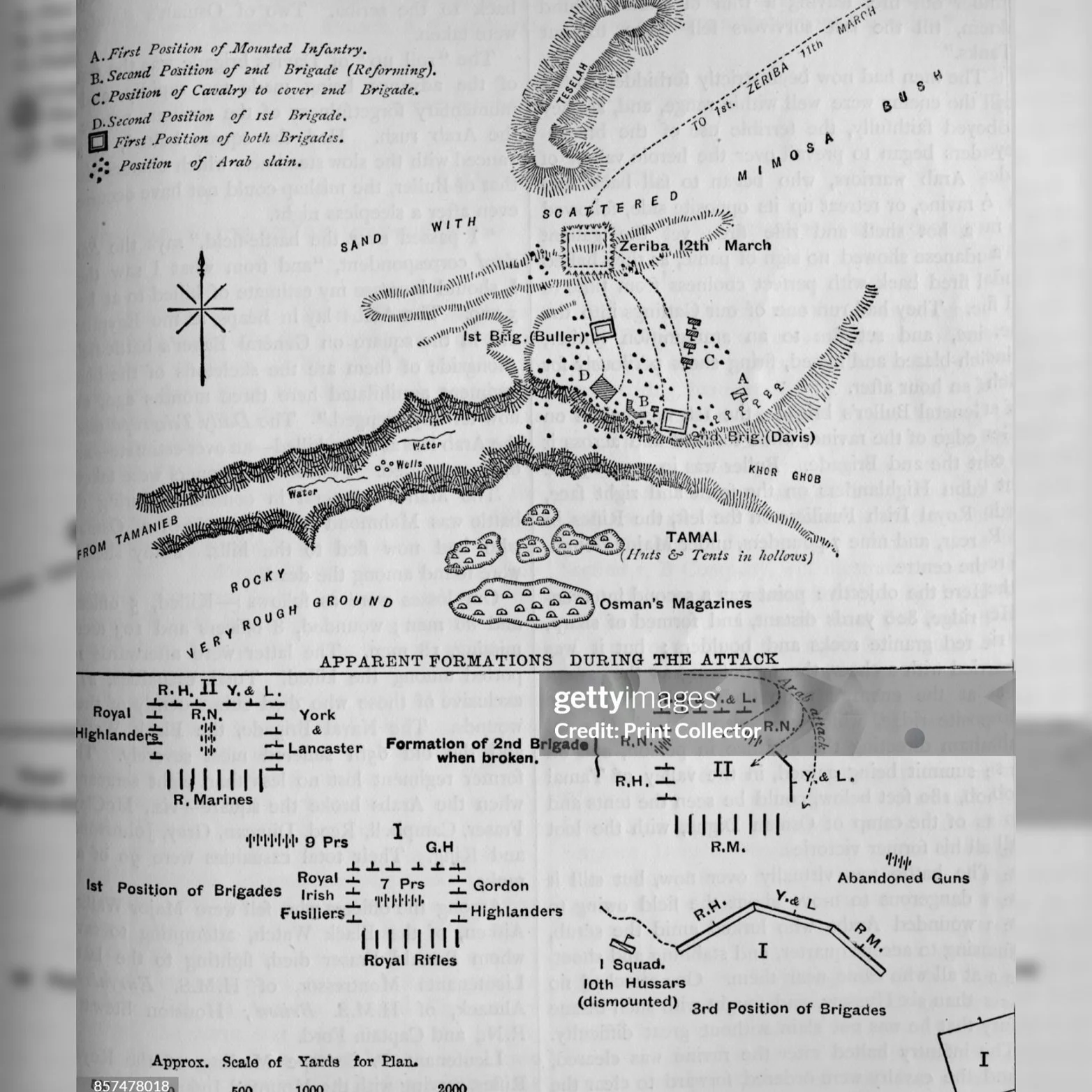
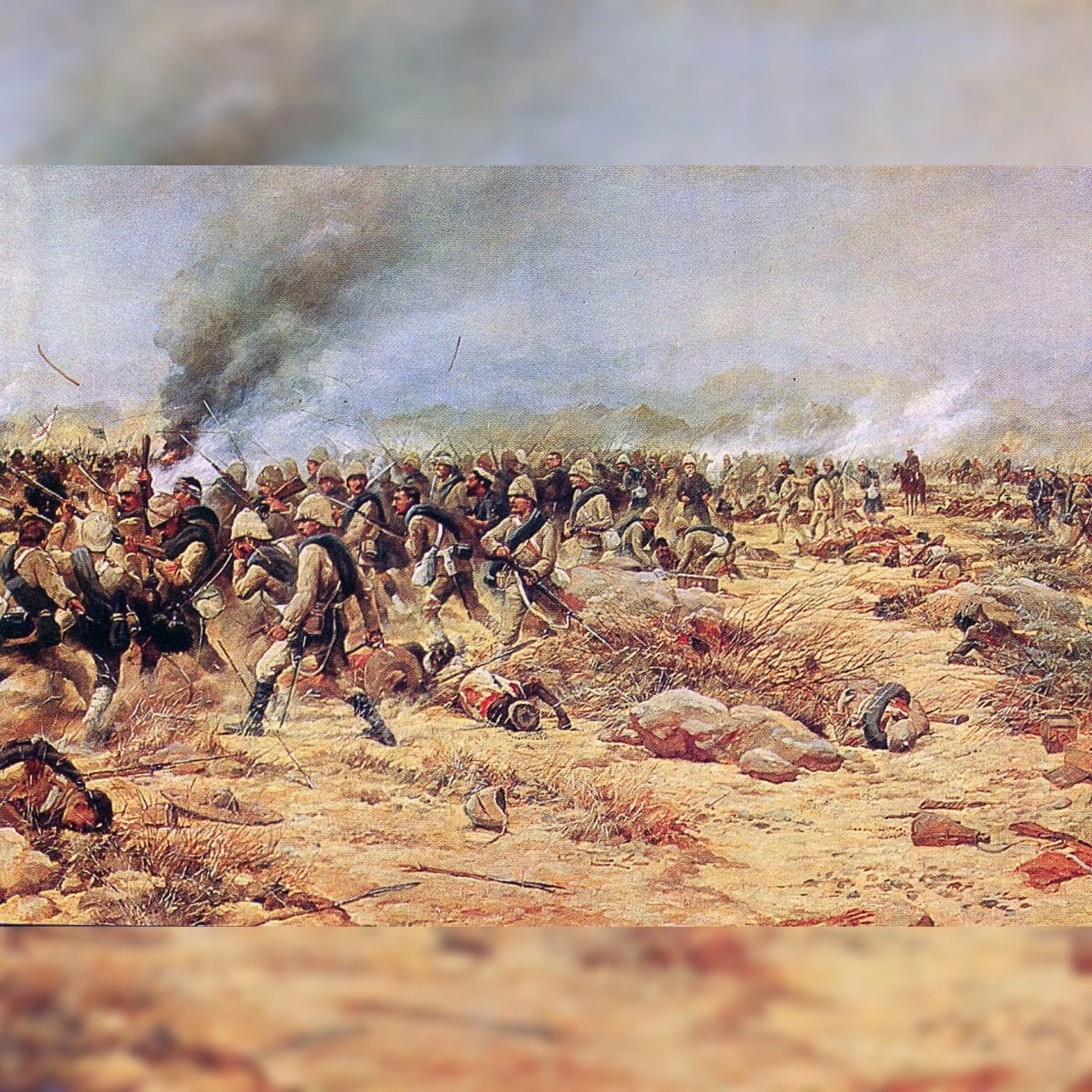
On March 13, 1884, the 1st Battalion of the Royal Irish Fusiliers formed the rear and right flank faces of Major General John Davis’s 2nd Brigade infantry square. This tactical formation was designed to protect troops from ambush as they advanced through the broken, ravine- scarred terrain toward the Mahdist camp. When the brigade moved forward, the front of the square (composed of the Black Watch or Sudanese troops) made a premature charge across a deep ravine. This created a dangerous gap on the right flank- precisely where the Royal Irish Fusiliers were positioned. Osman Digna’s Hadendowa warriors surged directly into this open gap. Because the square was compromised, Captian Hext and his men were immediately thrown into desparate, chaotic close- quarters combat. The battle briefly devolved into a melee of bayonets and firearms agianst traditional spears, swords, and daggers. Under severe pressure, the brigade was forced to temporarily fall back. The Royal Irish Fusiliers, along with the remaining units, maintained a steady, fighting retreat until reinforcements and heavy machine gun fire from the 1st Brigade halted the mahdist advance. The square reformed, pushed forward, and successfully retook the ground and the enemy camp. As a surviving officer of this brutal engagement, Captain Hext picked up this arm dagger from the battlefield. Given the frantic hand- to- hand fighting that occured right at the gap where his battalion stood, the dagger likely belonged to an elite Hadendoa warrior who directly engaged the Royal Irish Fusiliers line.
Photograph 18: Map of the Battle of Tamia
Photograph 19: 1st York and Langcaster and 1st Black Watch rallying for the counter- attack. Picture by Douglas Giles
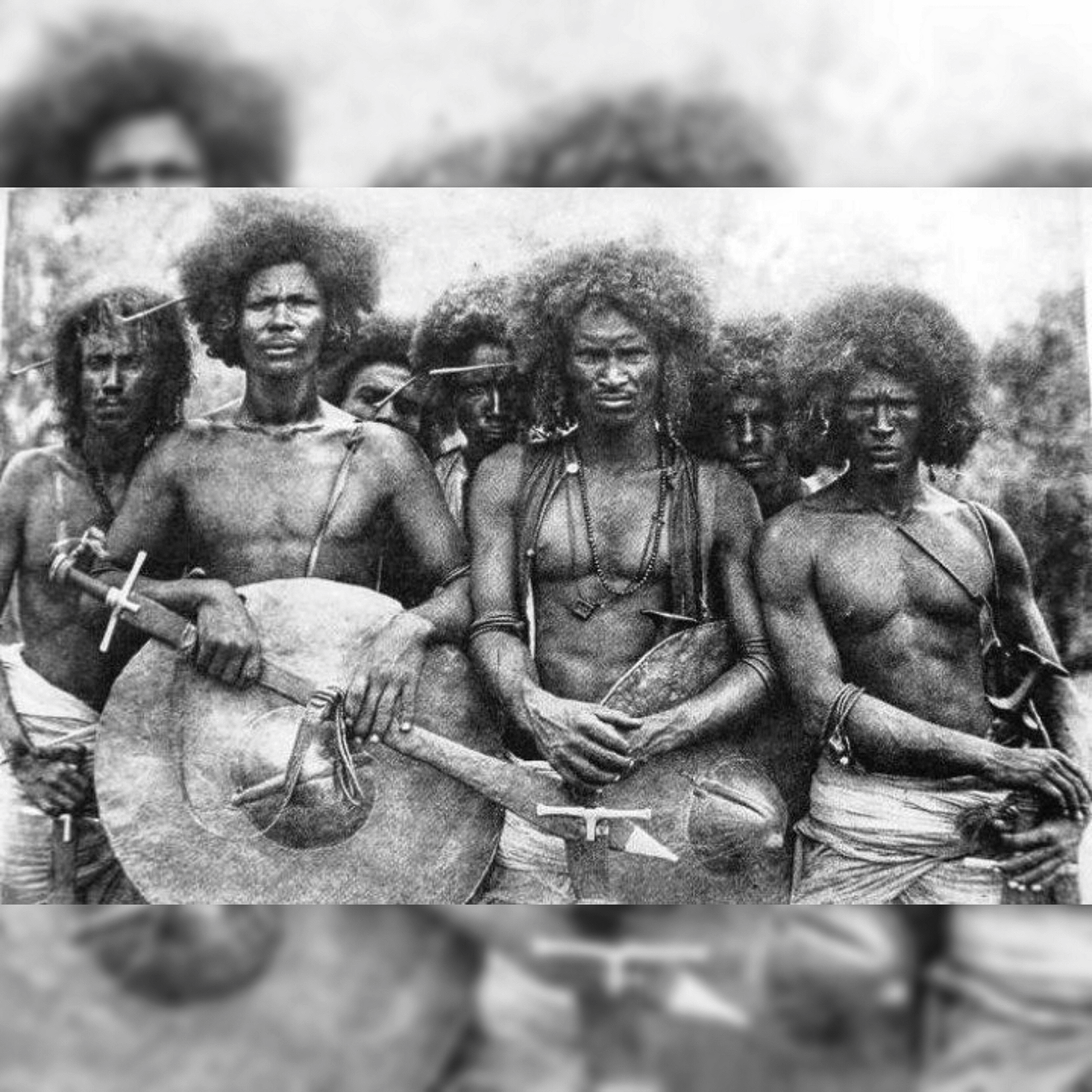
Photographs 20: Hadendowa warriors.
[1] https://www.invaluable.com/auction-lot/a-19th-century-sudanese-beja-dagger-circa-1880-5194c55989 (This Knife)
[2] https://www.vikingsword.org/home/forum/discussion-forums/ethnographic-weapons/28147-makers-mark-on-19th-century-star-and-comet-kaskara-blade (This Knife)
[3] https://deriv.nls.uk/dcn30/1007/1426/100714260.30.jpg

[4] https://www.britishbattles.com/war-in-egypt-and-sudan/battle-of-tamai/
[5] https://collections.penn.museum/collections/object/151236
[6] https://prm.ox.ac.uk/collections-online#/item/prm-object-77476
[7] https://www.britishmuseum.org/collection/object/E_Af1936-0508-2
[8] https://www.britishmuseum.org/collection/object/E_Af1936-0508-4-a
[9] https://www.britishmuseum.org/collection/object/E_Af1935-0307-1
[10] https://www.britishmuseum.org/collection/object/E_Af-4402
[11] http://www.oriental-arms.co.il/item.php?id=933
[13] https://africanarms.com/weapons.html?2-3-x-hadendoa
[14] https://africanarms.com/weapons.html?5-hadendoa-handle-gow
[15] https://www.mandarinmansion.com/item/fine-african-bedja-dagger (Sold $600)
[16] https://www.sothebys.com/en/auctions/ecatalogue/2019/coll-riviere-pf1928/lot.180.html?locale=en