Flyssa (Flissa) Sword
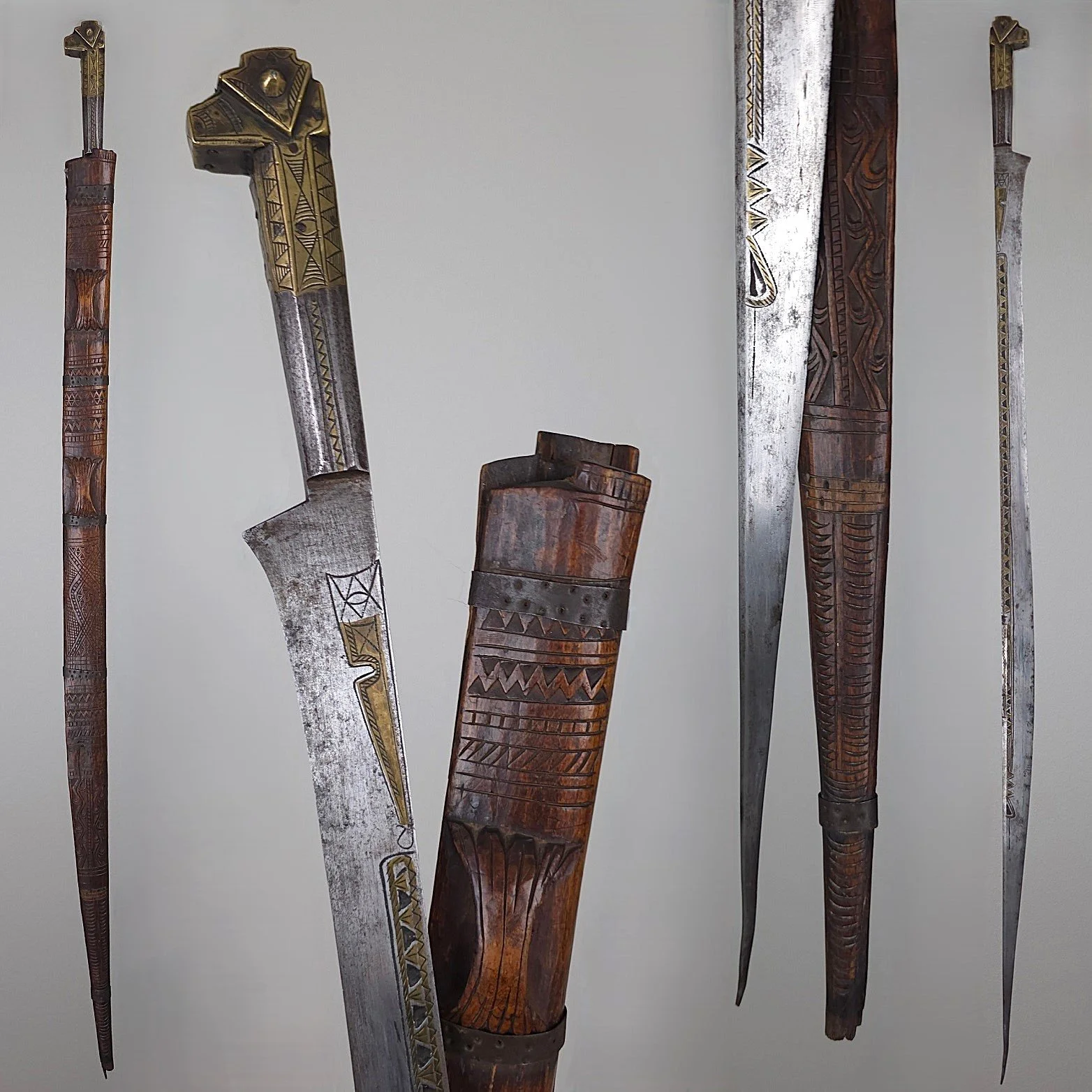
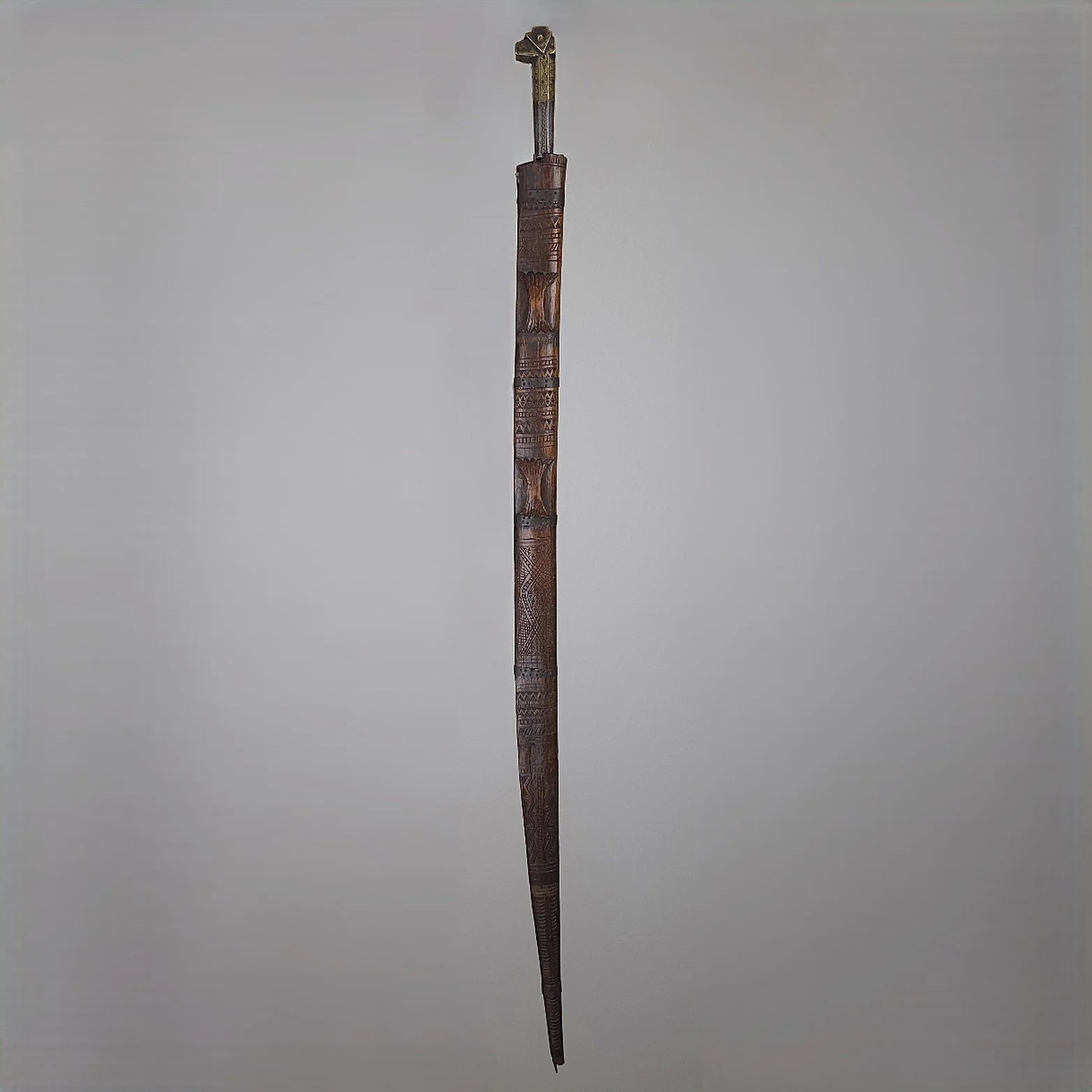
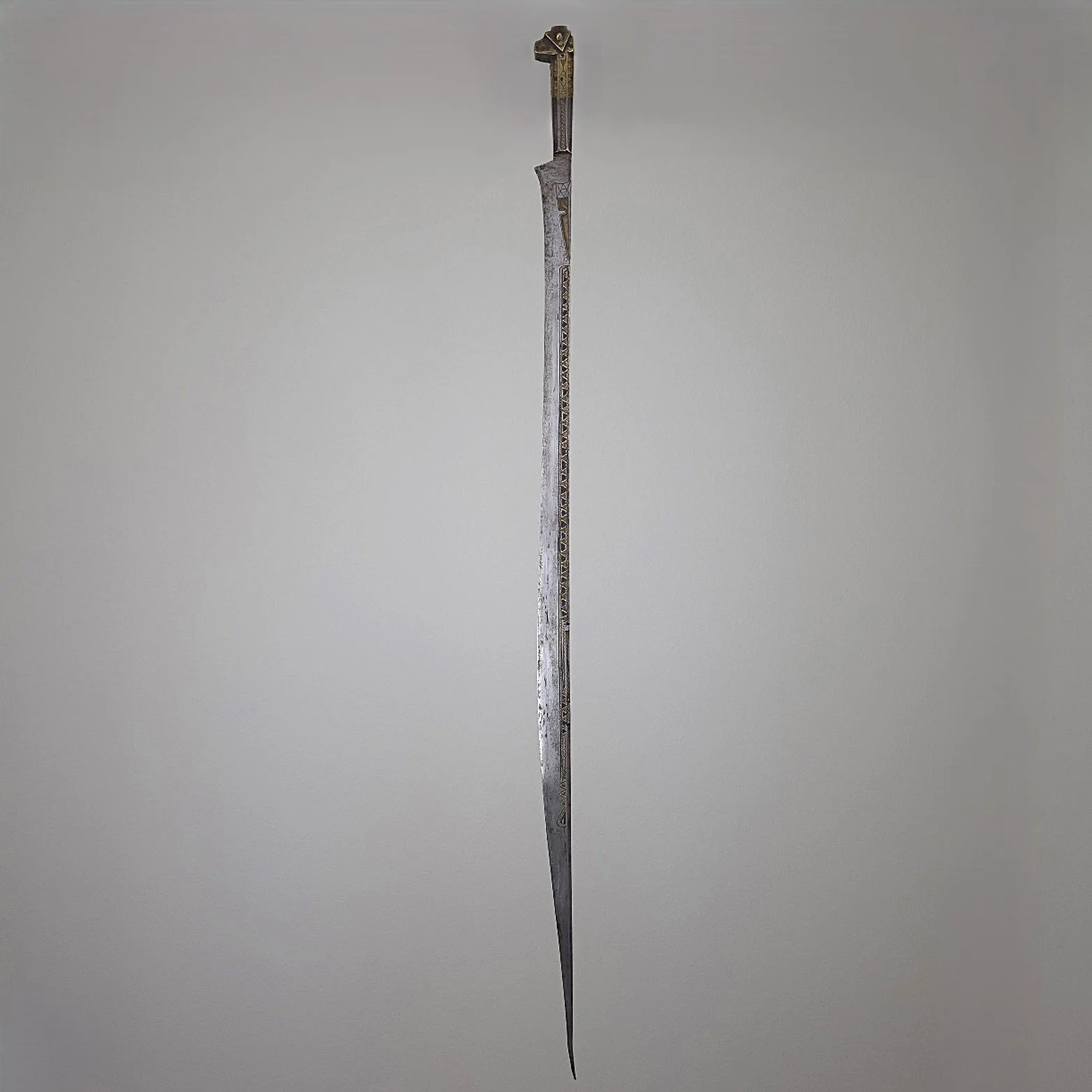
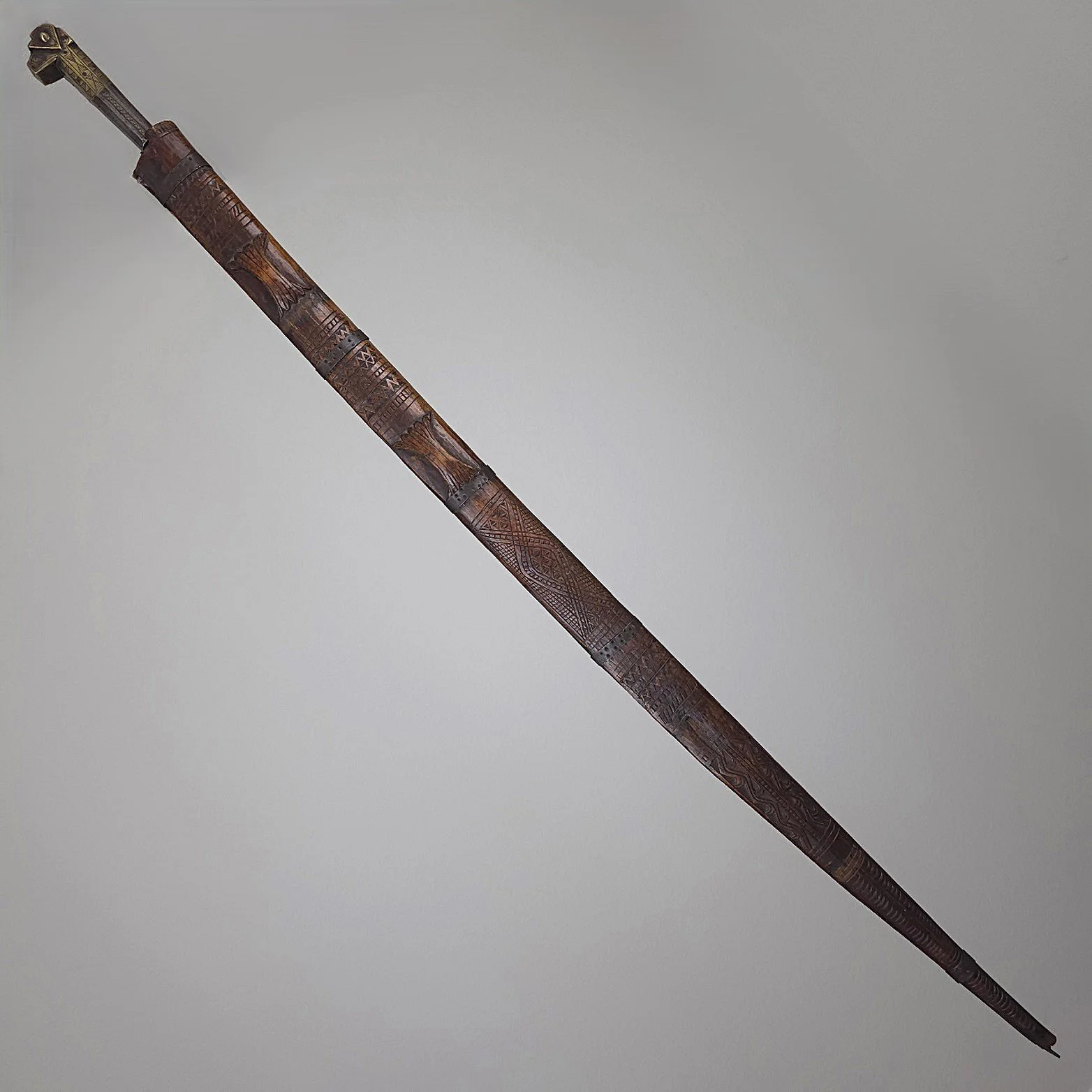
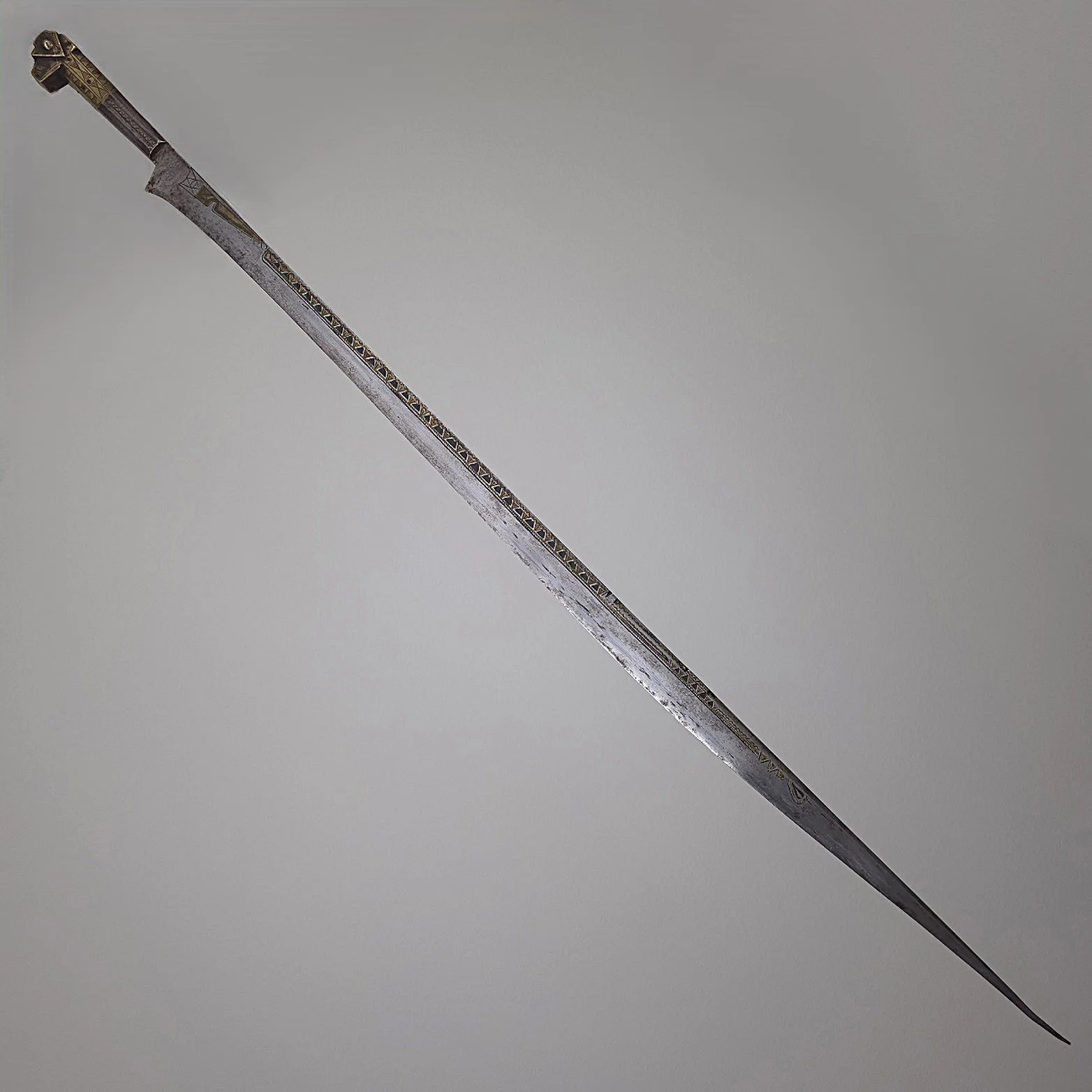
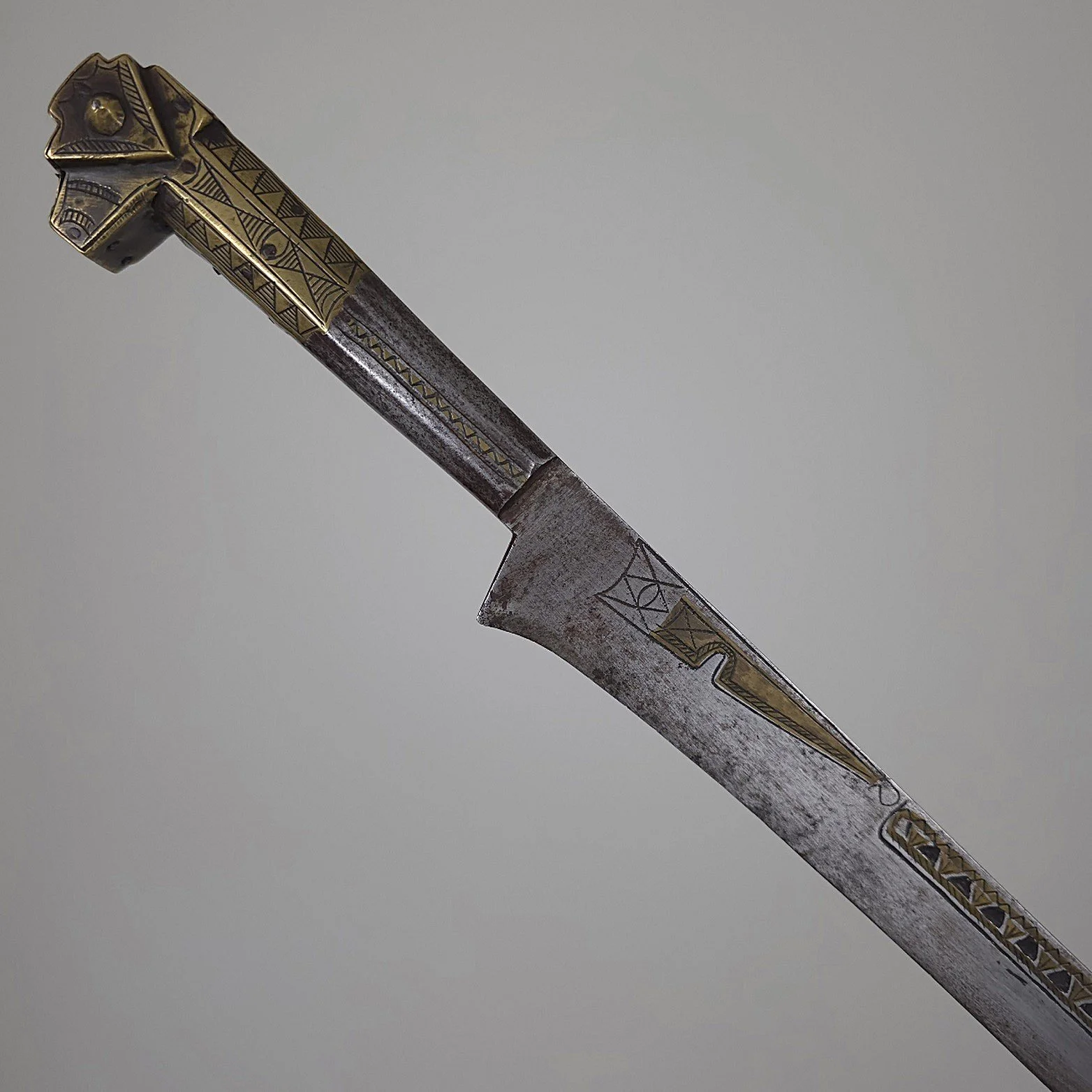

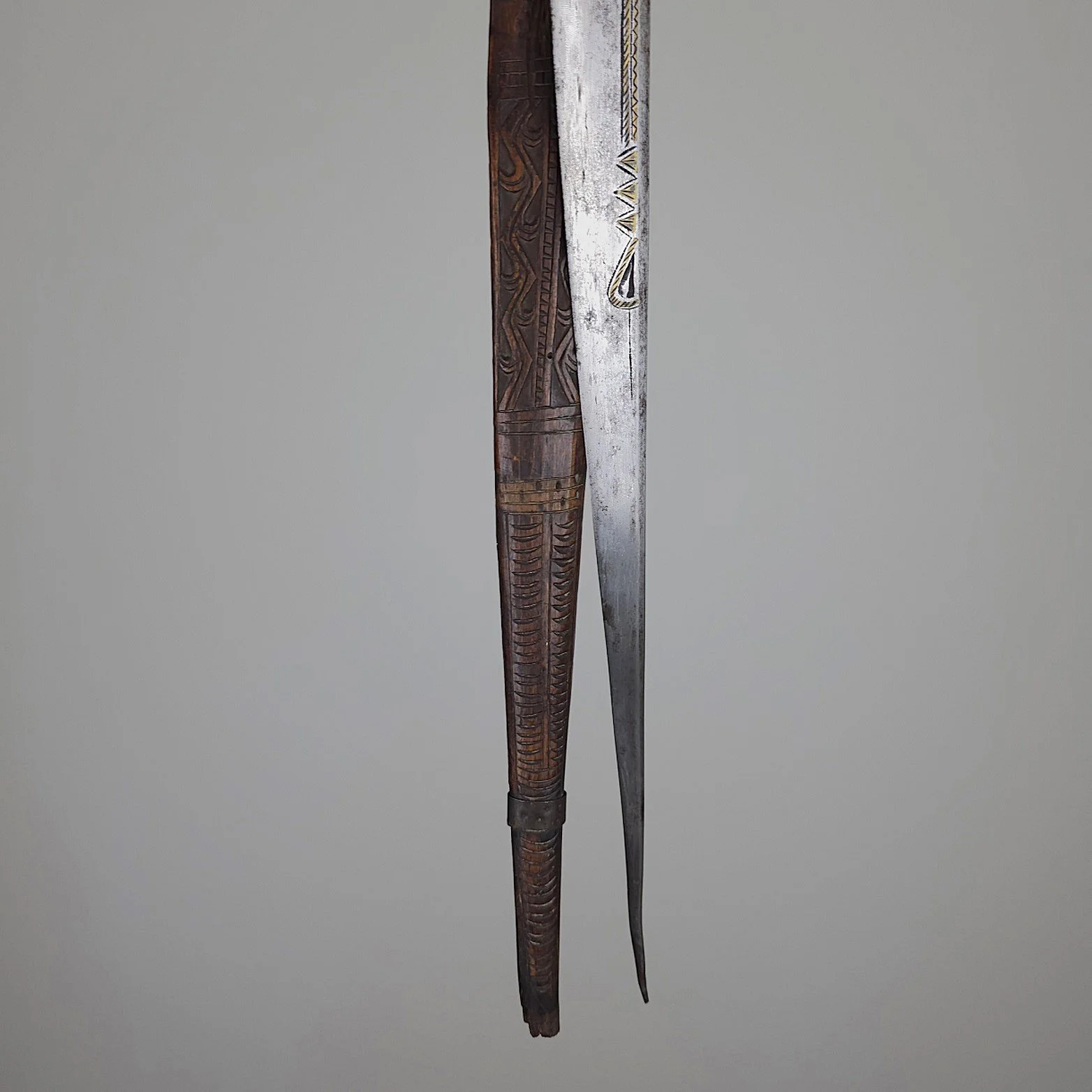
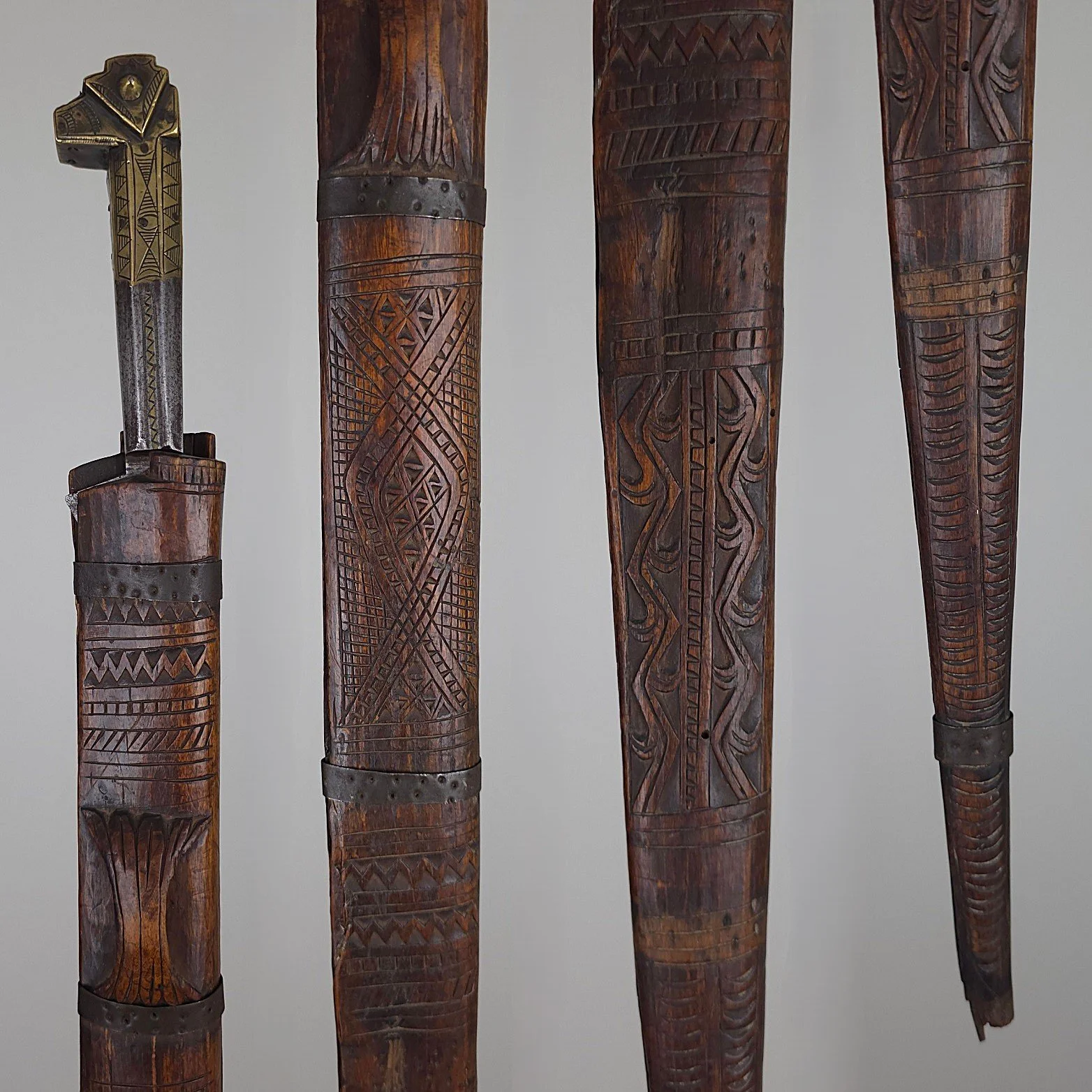
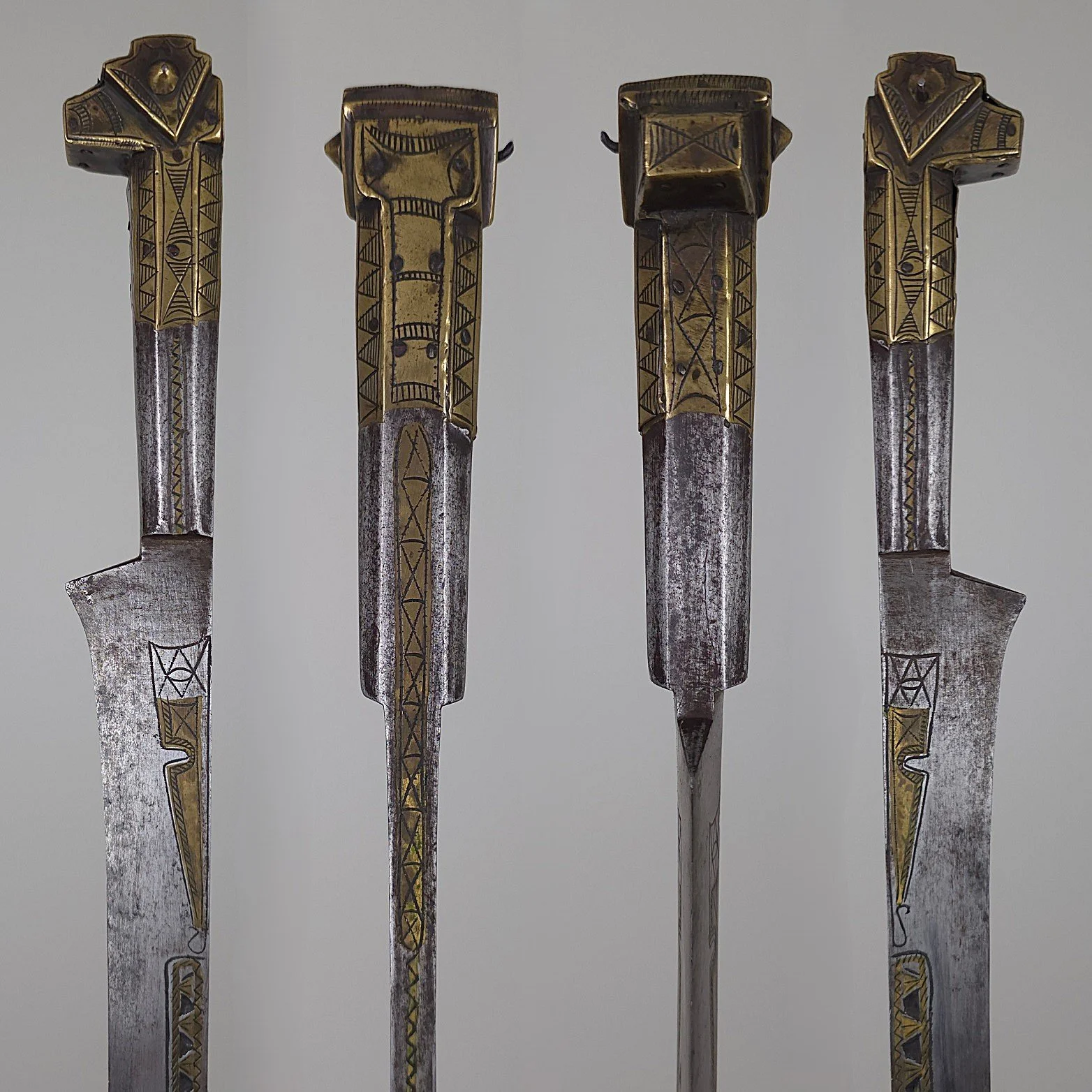
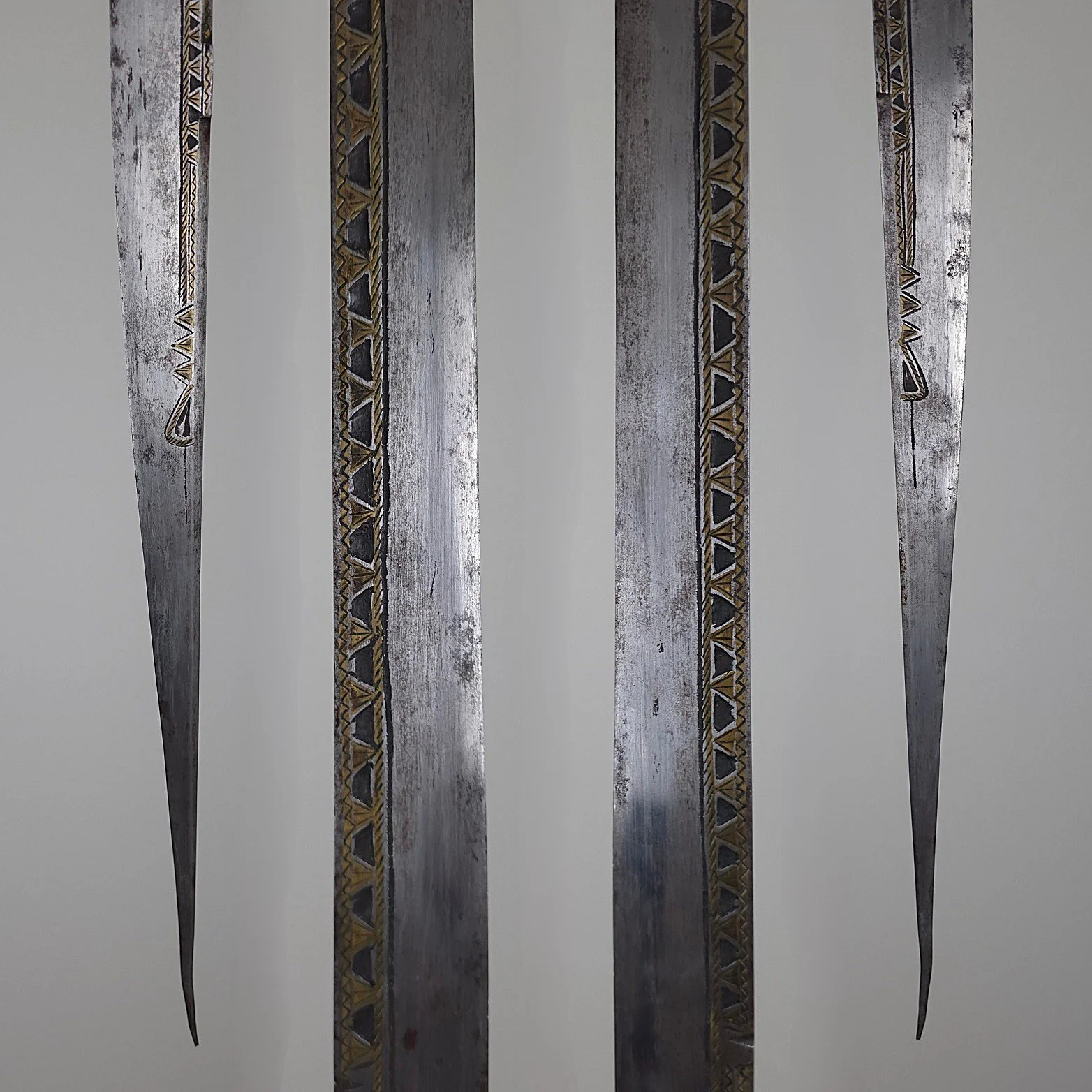
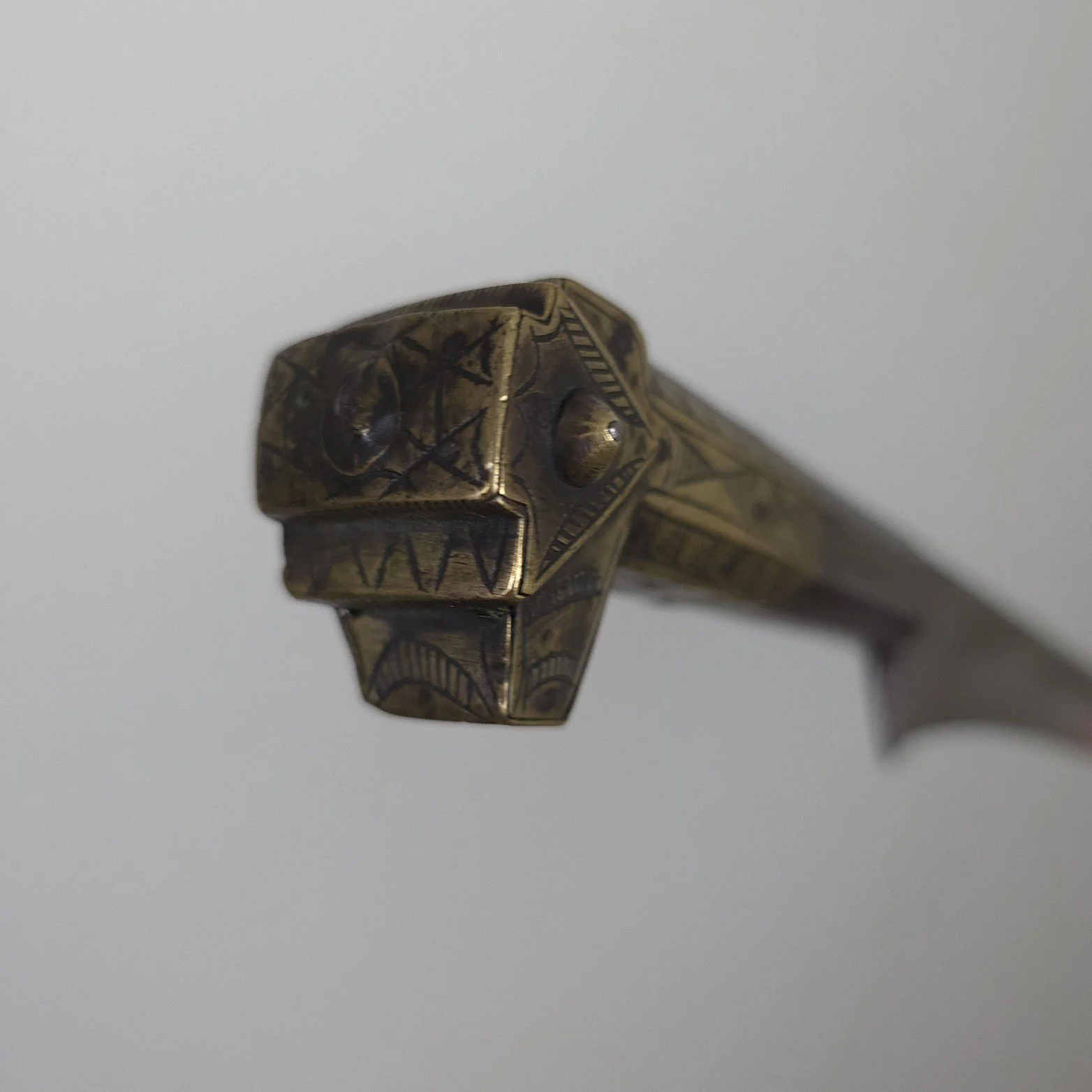
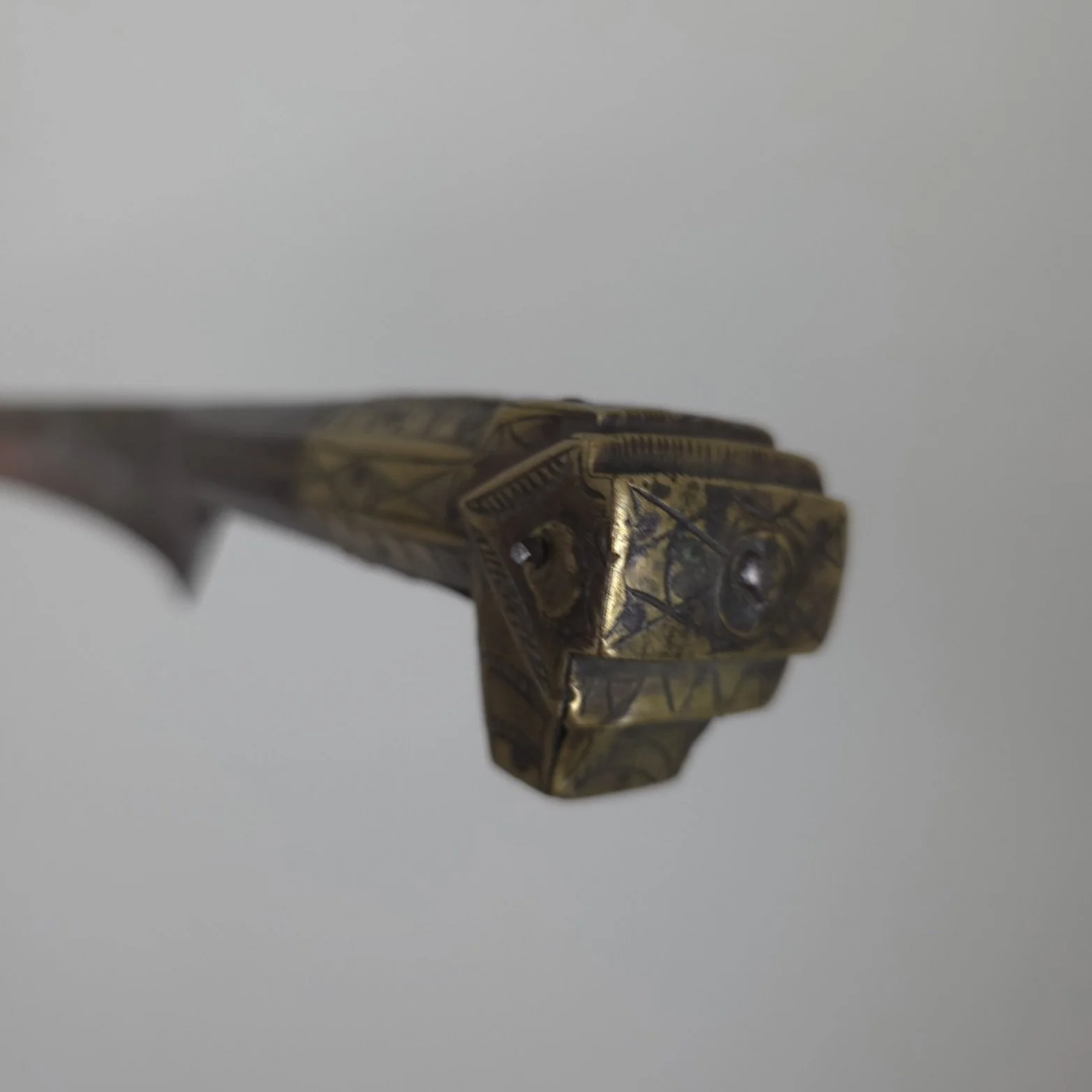

Flyssa (Flissa) Sword
Iflissen Lebhar Tribal Confederacy
Kabylia, Algeria - Kabylia, French Algeria (Algeria)
Mid-19th century (ca. 1830 - 1850)
Steel, wood, brass, iron
Blade: 94,3cm
Hilt & Blade: 105,4cm
Hilt, Blade, Sheath: 105,4cm
Collection Date: 2016
Collection Number: 10
Ex. Herman Historica Auction House: Munich, Germany (2016)
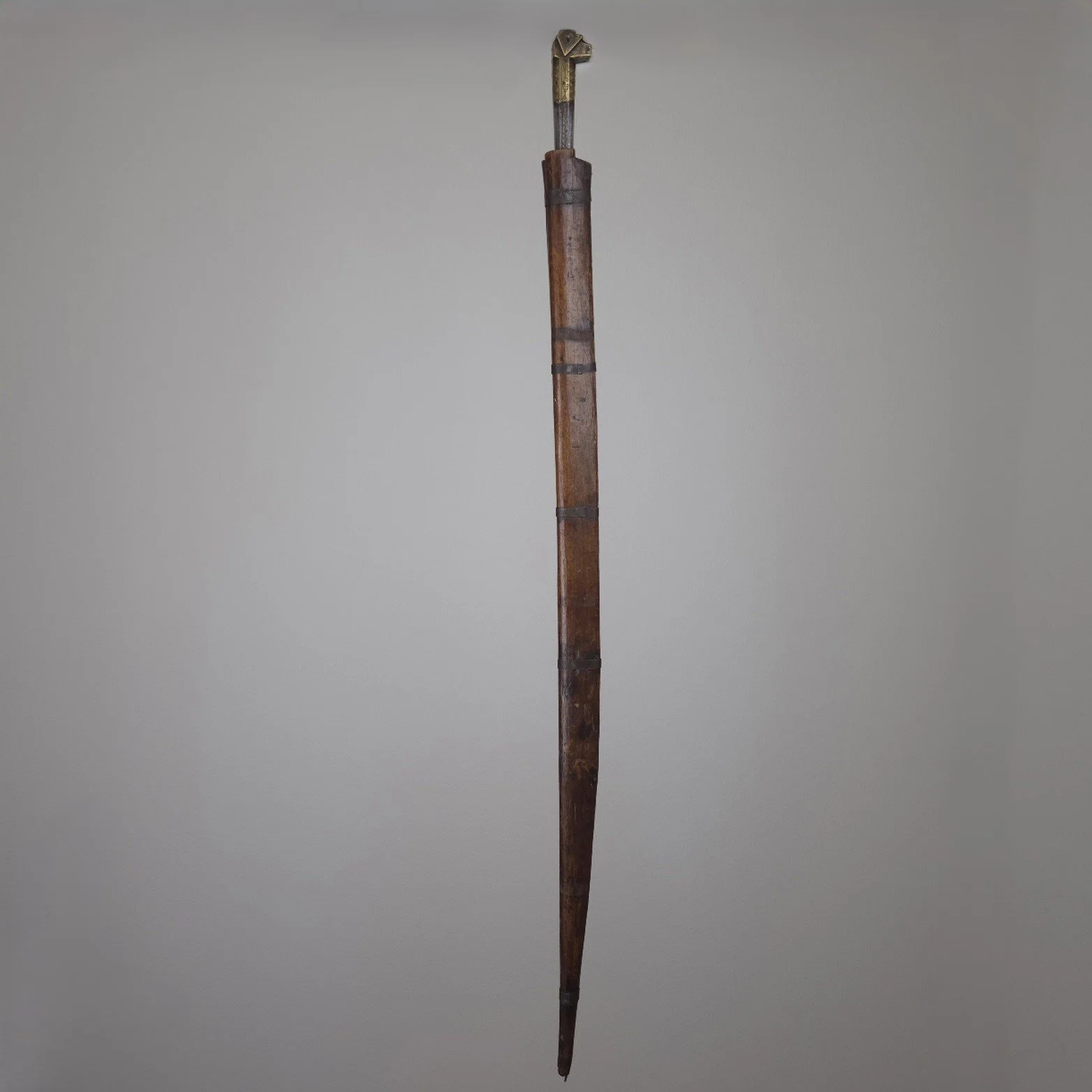
The flissa is the traditional weapon of the Iflissen Kabyles, an ethnic Berber group originating from the Atlas Mountain Range in Northern Algeria. Their weapons range from small knives to very long swords, most of which are very consistent in design using brass inlays and geometric motifs.
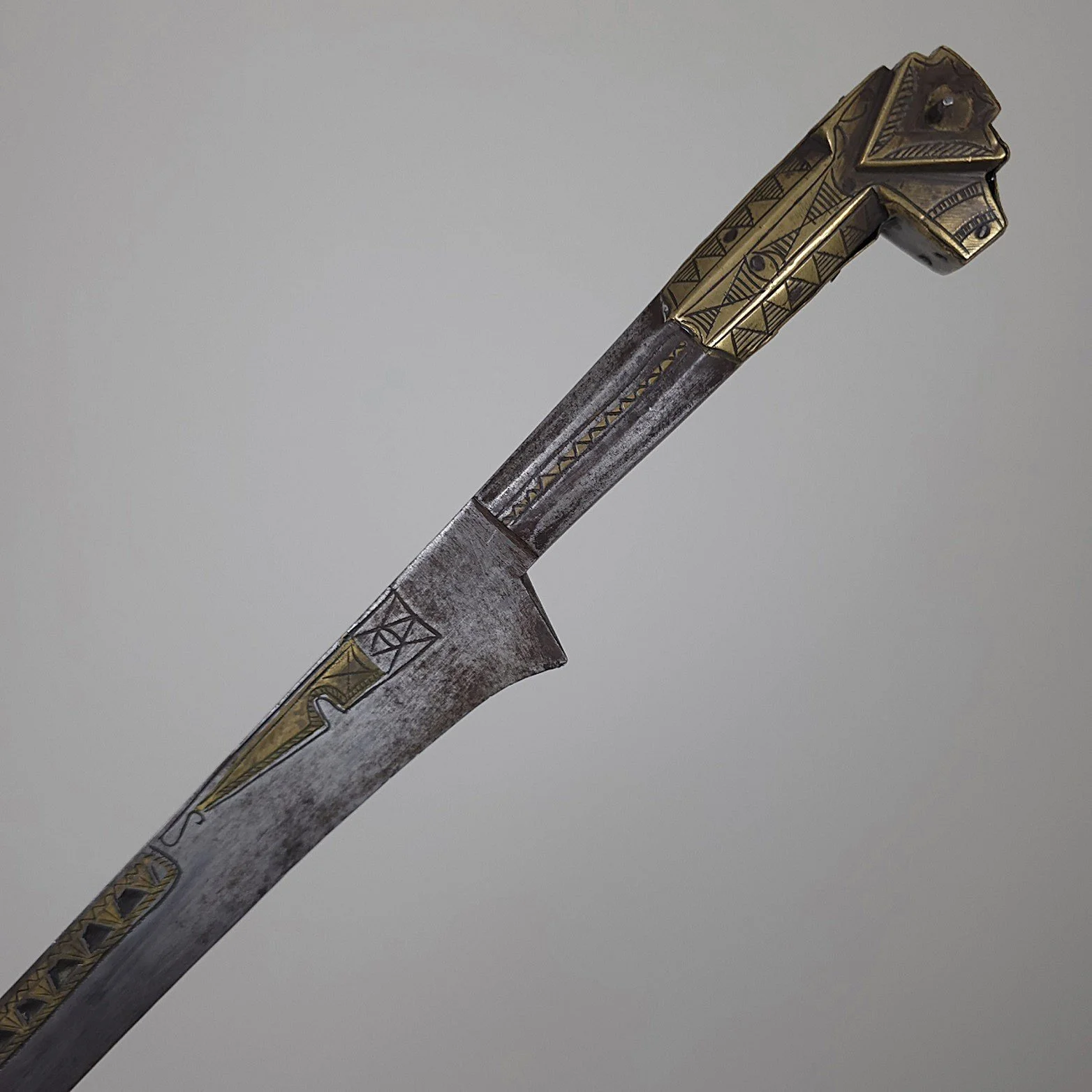
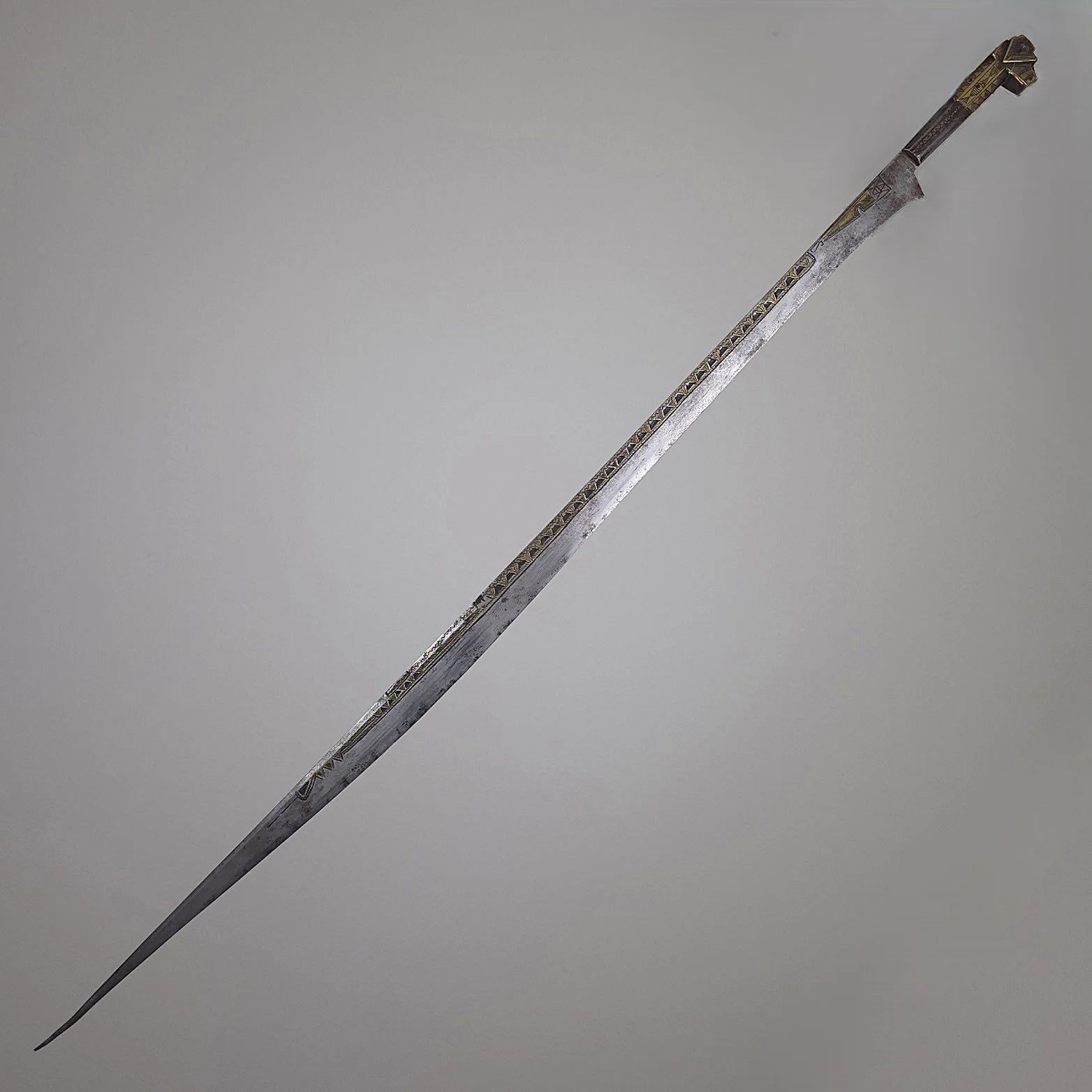
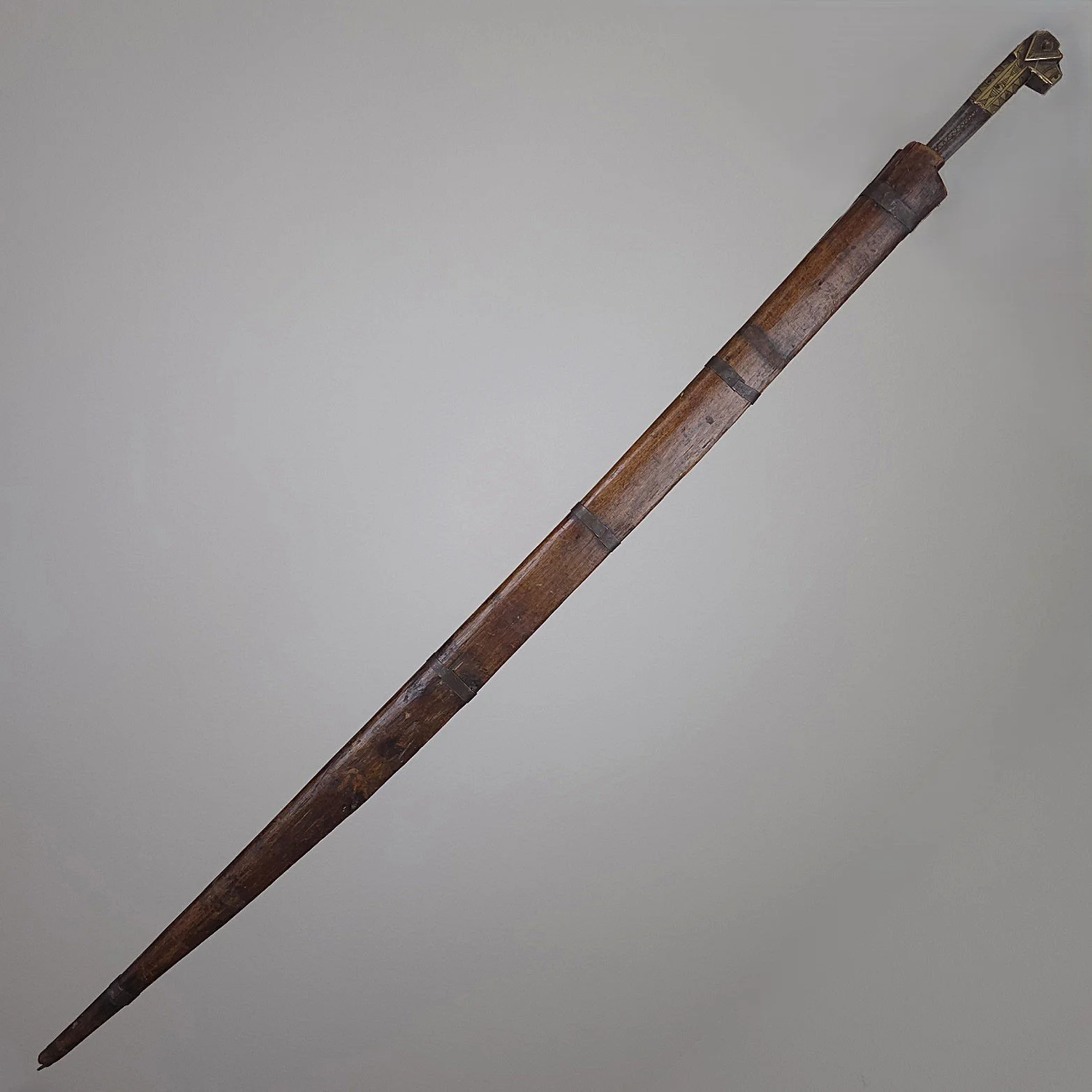
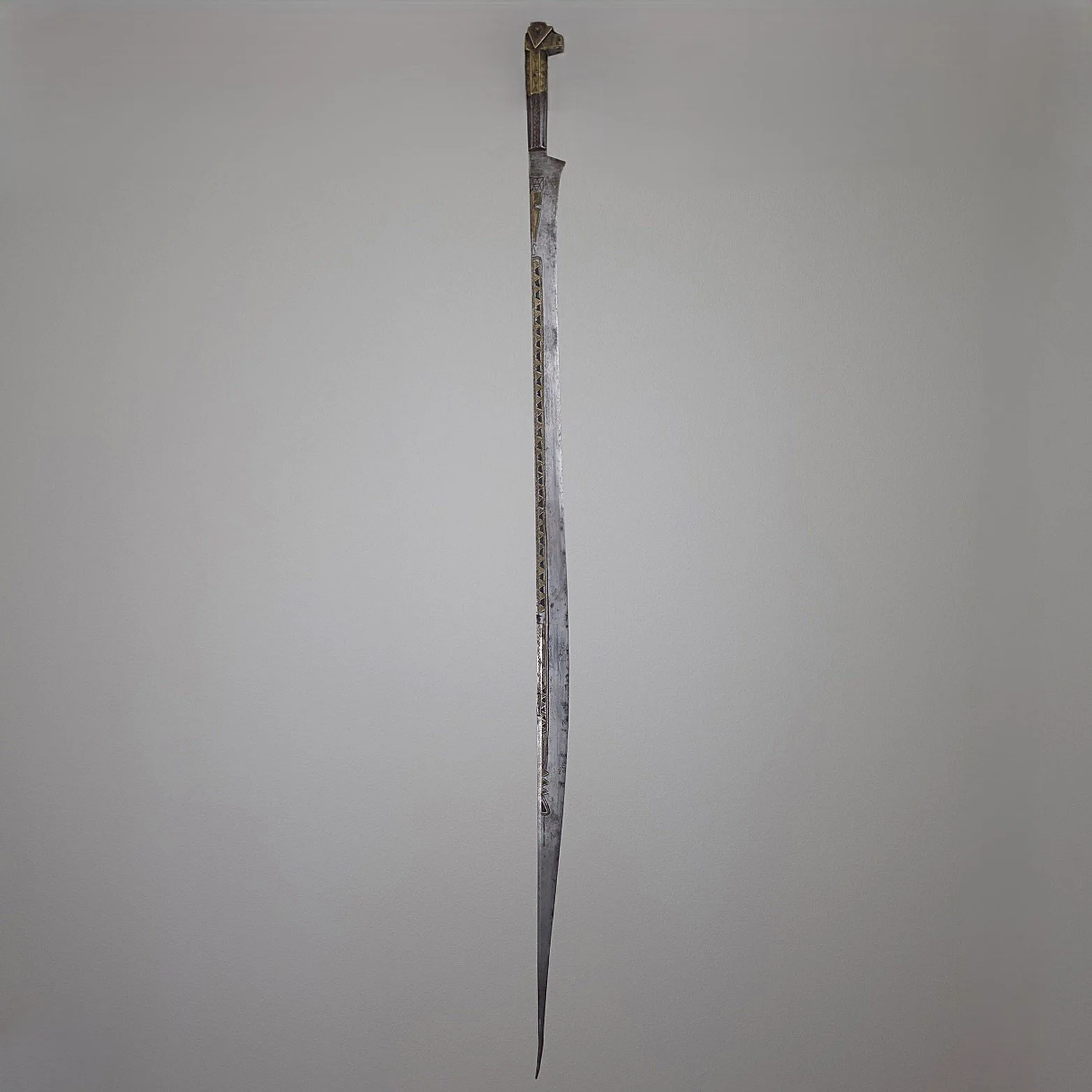
This fine example is the sword version having good age and still retaining its original sheath. Its quality can be seen in the carved details and fine workmanship. The straight single- edged steel blade is elongated with a slight outward curve, then recurving into an acute sharp point. Traditional triangular geometric brass inlays, fanciful linear work, and motifs are inlaid within a long panel for the first 3/4 of the blade. The last 1/4 length of blade has a false edge that tapers into an acute tip.
The wooden hilt in the form of a zoomorphic pommel animal head. The hilt is covered in brass sheet in finely worked geometric and linear designs. The steel bolster and spine are also decorated in brass geometric and zig-zag patterns (snake). The sheath of walnut wood in two pieces held together in iron bands, is elaborately engraved in geometric designs on the front side. A fine flyssa sword having good age to this example. The sheath is still present, which is often lost. Minor damage to the sheath tip. The blade tip is also slightly bent from long ago.
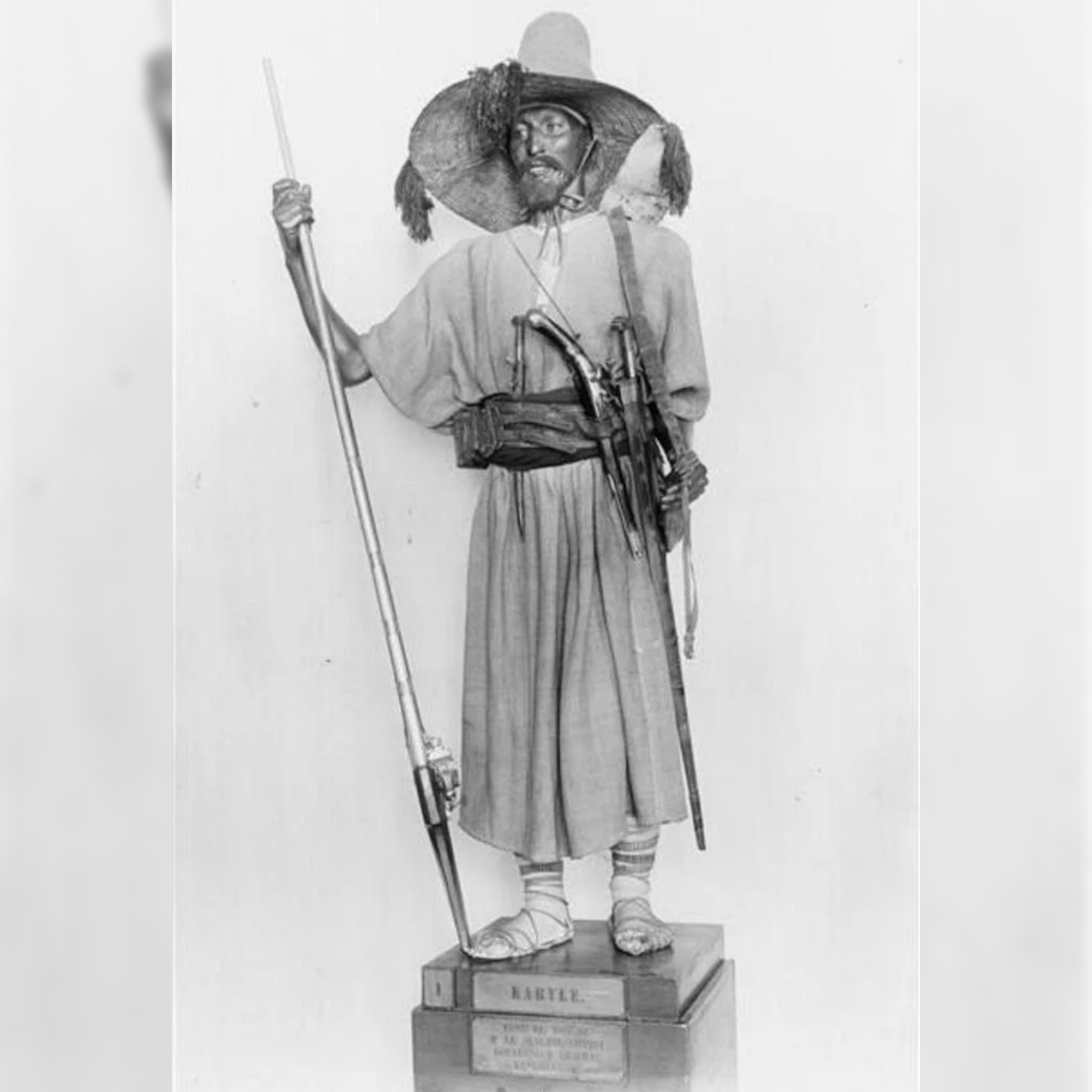
Photograph 19: Mannequin of a Kabyle warrior in full kit. Ca. 1830.
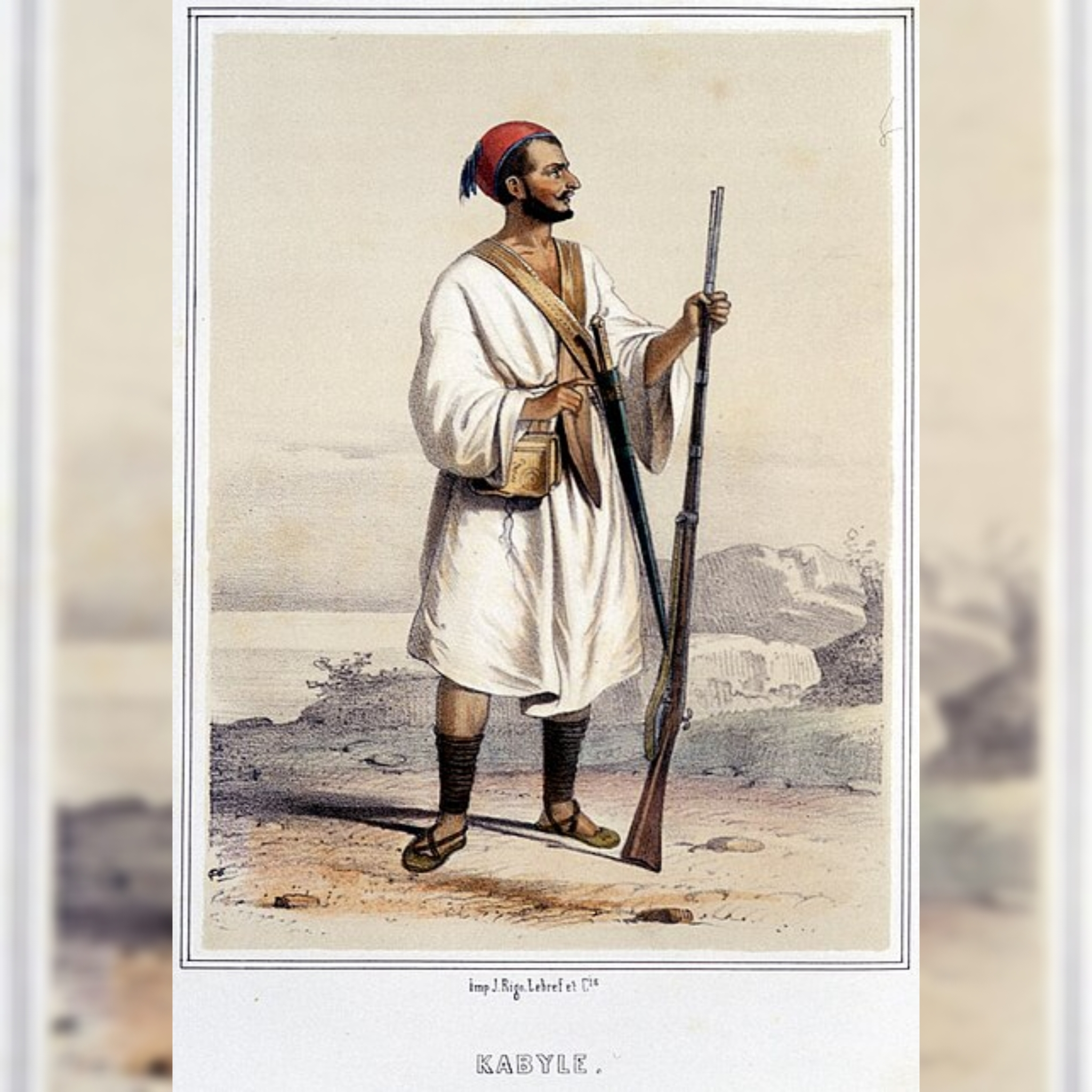
Photograph 20: Kabyle Warrior with Musket and Flyssa, 1842 -1846. By Jules Alfred Vincent Rigo.
Photograph 21: Kabyle Warrior with Musket and Flyssa. 19th century.
[1] https://www.invaluable.com/auction-lot/flyssa-der-kabylen-algerien-19-jhdt-deb4fb1987
[2] Claude, Eric. 2020. “The Small Catalog of Moroccan and Algerian Edged Weapons”. Pages 164 – 167
[3] Hales, Robert. 2013. "Islamic and Oriental Arms and Armour". Page 240: No. 593
[4] Pinchot, Oliver S. 2014. “Arms of the Paladins”. Page 81; Cat. 4-56
[5] Spring, Christopher. 1993. “African Arms and Armor”. Pages 21 24
[6] Tirri, Anthony C. 2003. “Islamic Weapons Maghrib to Moghul”. Page 25, Figure 8
[7] Tirri, Anthony C. 2007. “Islamic and Native Weapons of Colonial Africa 1800 - 1960”. Page 620, Figure 11-33
[8] https://www.metmuseum.org/art/collection/search/31190
[9] https://www.metmuseum.org/art/collection/search/31188
[10] https://www.britishmuseum.org/collection/object/E_Af-1626-a
[11] https://www.britishmuseum.org/collection/object/E_Af-1626-b
[13] https://oriental-arms.com/product/long-and-heavy-flyssa-sword/
[14] https://oriental-arms.com/product/very-long-and-heavy-flyssa-sword/
[15] http://oriental-arms.co.il/item.php?id=62
[16] http://oriental-arms.co.il/item.php?id=6793
[17] http://oriental-arms.co.il/item.php?id=5868
[18] http://oriental-arms.co.il/item.php?id=1292
[19] https://african-weapons.com/gallery?8-flyssa-mit-scheide-u
[20] https://african-weapons.com/gallery?6-flyssa-110-cm-gr
[21] https://www.helgot.com/items/flyssa-sword