Pesh- Kabz
Pesh- Kabz
Misls Confederacy - Sikh Empire (Bahawalpur - Punjab, Pakistan) - Kalhora Dynasty - Talpur Dynasty (Sindh, Pakistan) - Rajputana (Rajasthan, India)
Late 18th - Early 19th century (ca. 1750 - 1825)
Steel, gold, walrus ivory, wood, fabric
Blade: 23,8cm
Hilt & Blade: 34,6cm
Hilt, Blade, Sheath: 35,9cm
Collection Date: 2022
Collection Number: 282
Ex. Auctions Imperial: Chatsworth, California, USA (2022)
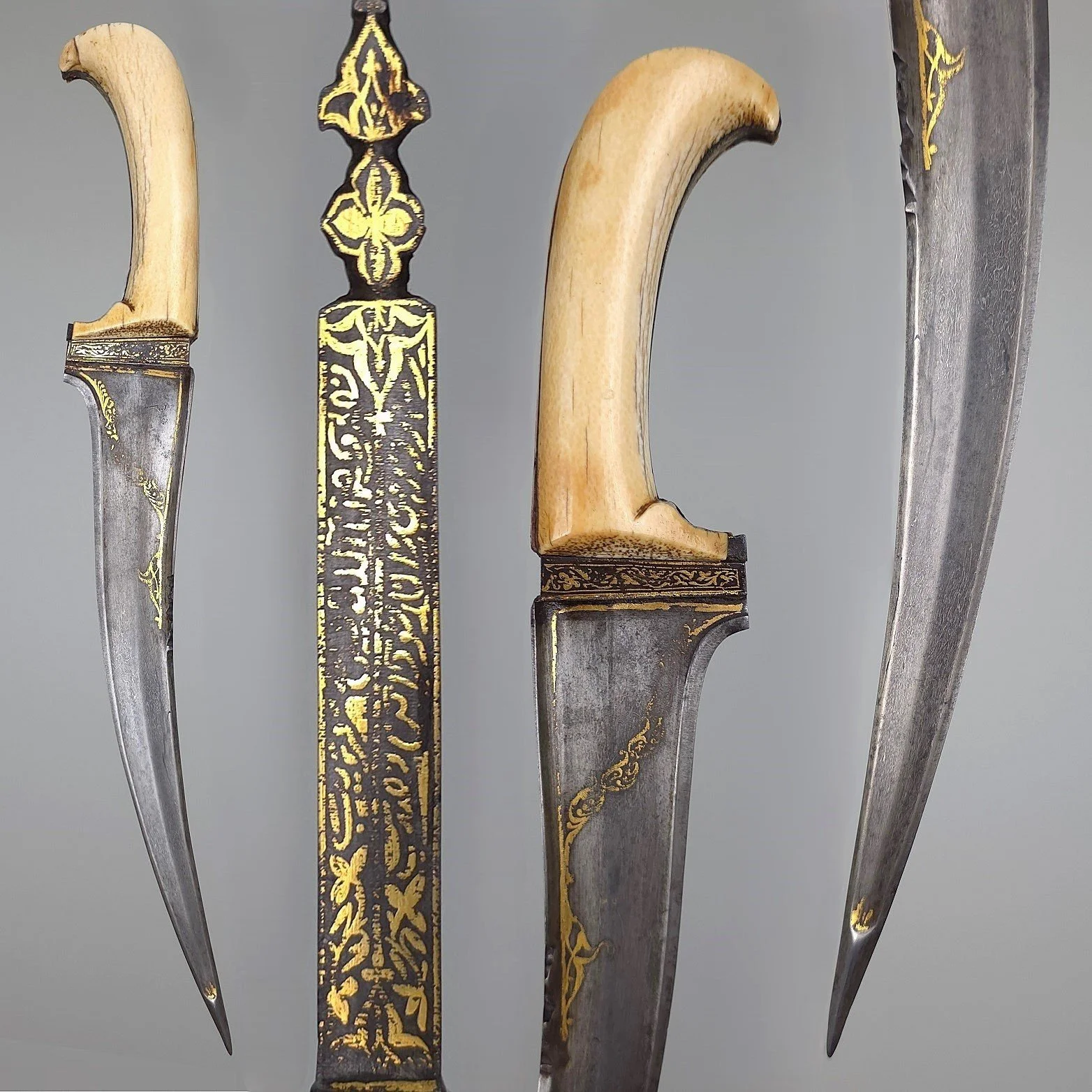
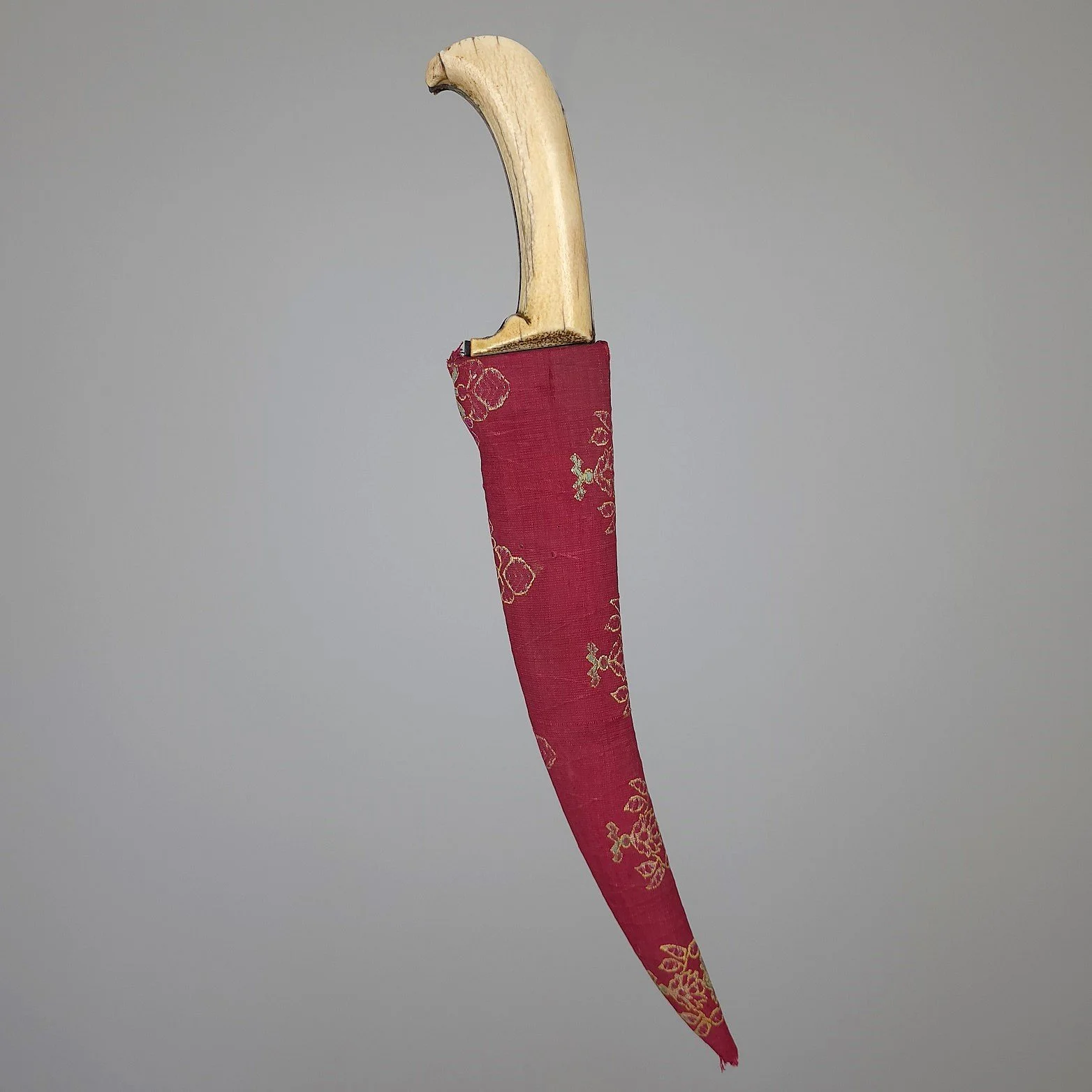
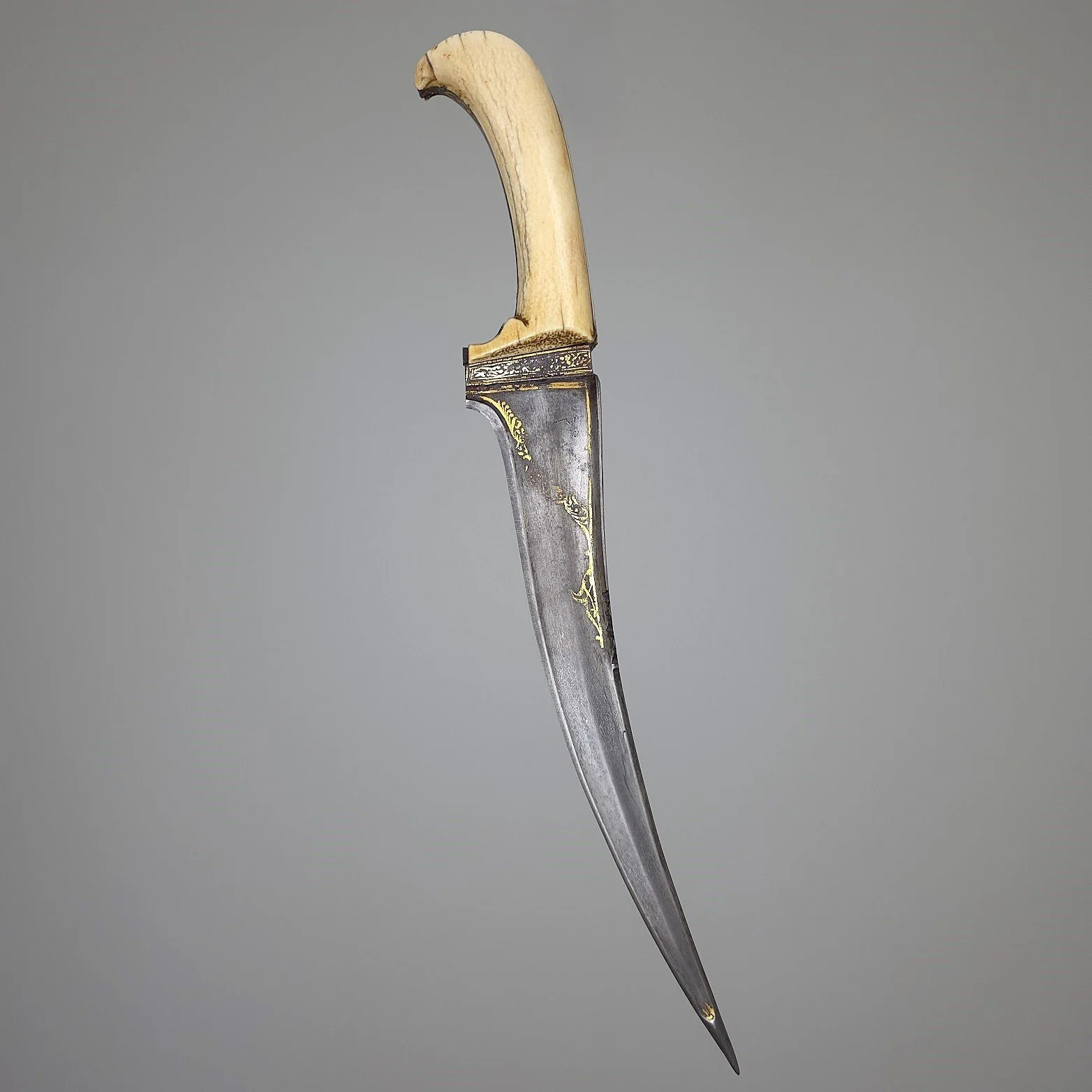
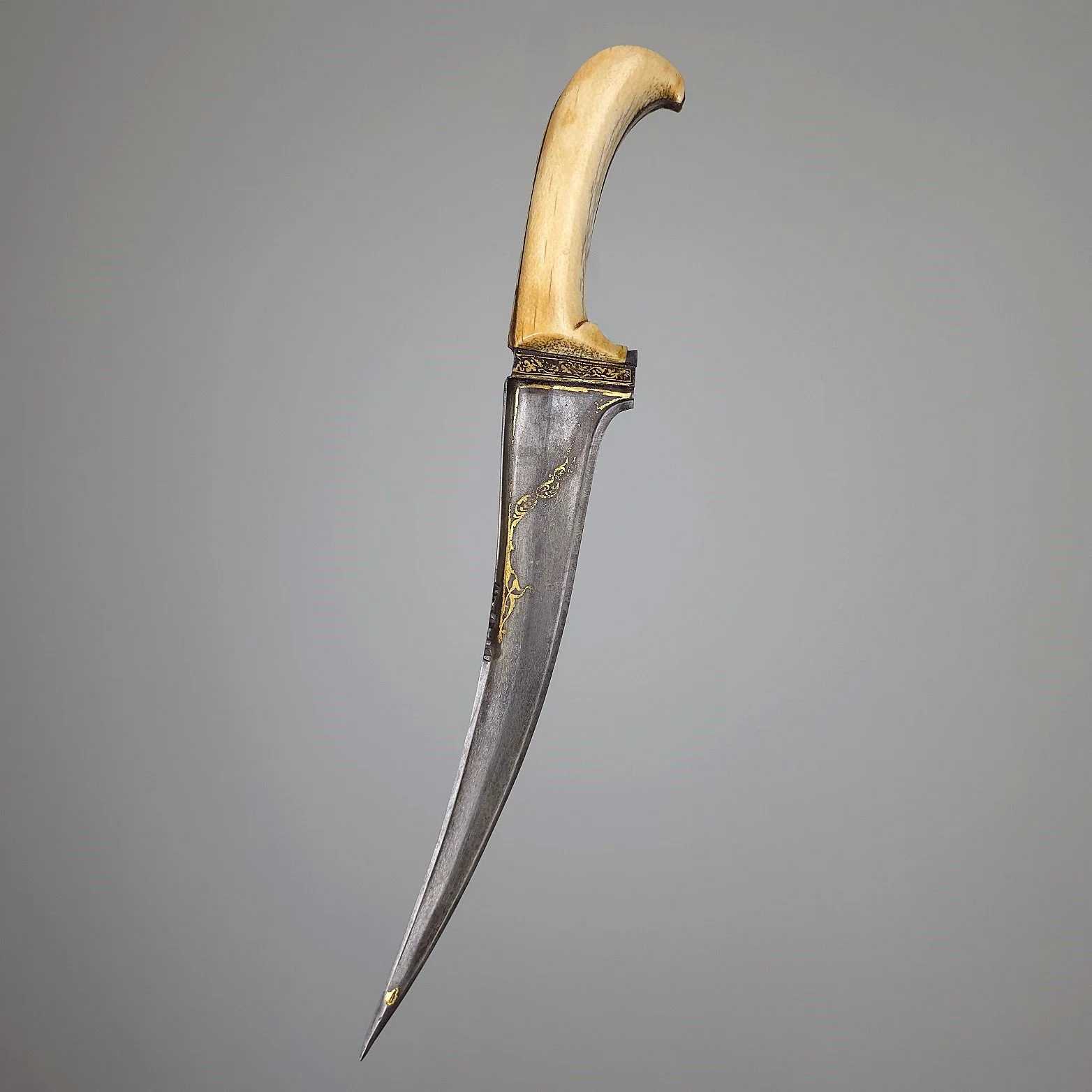
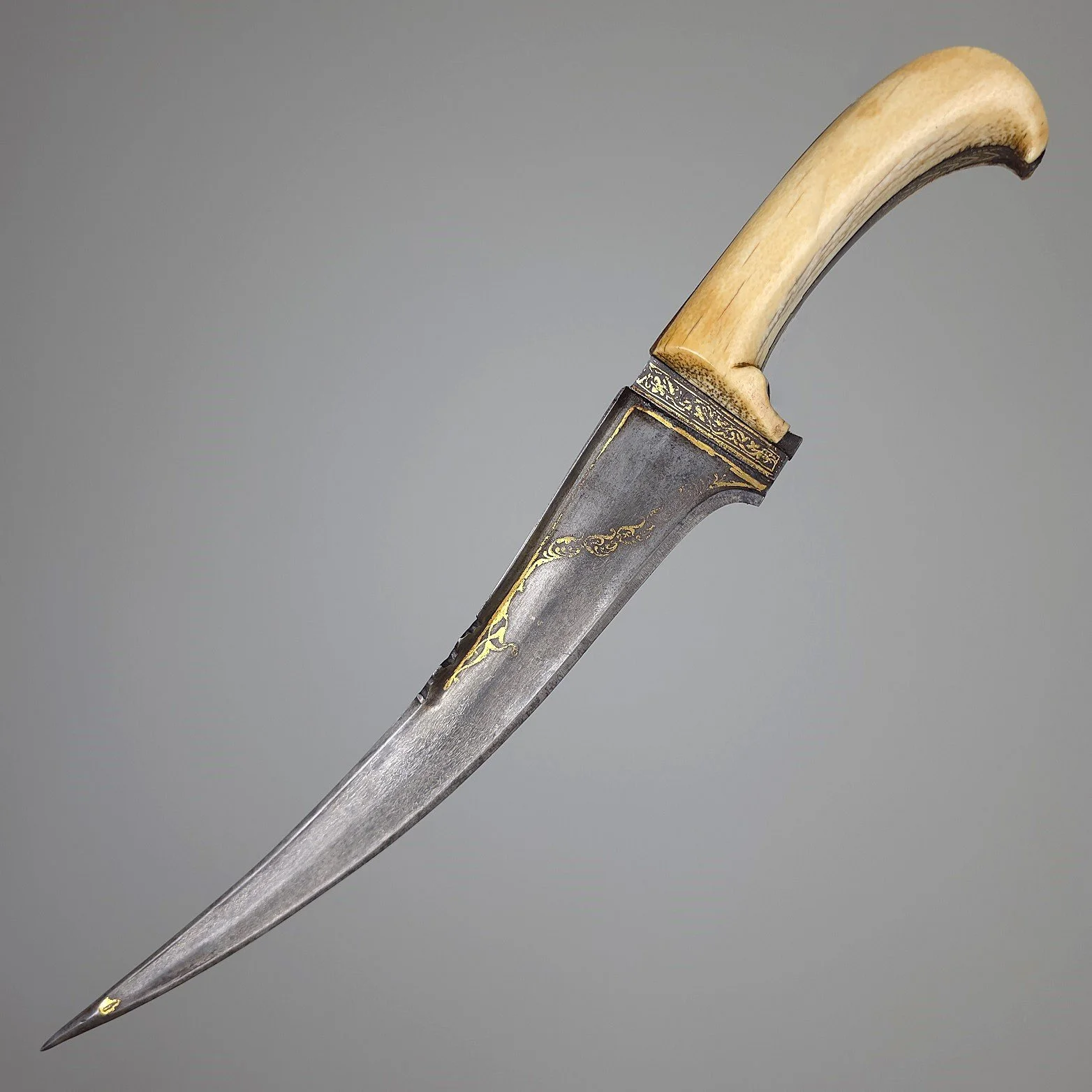
A fine pesh- kabz dagger originating in the Northern Indian region. This style was common in Bahawalpur during the late 18th and early 19th century showing strong influence from Persian arms.
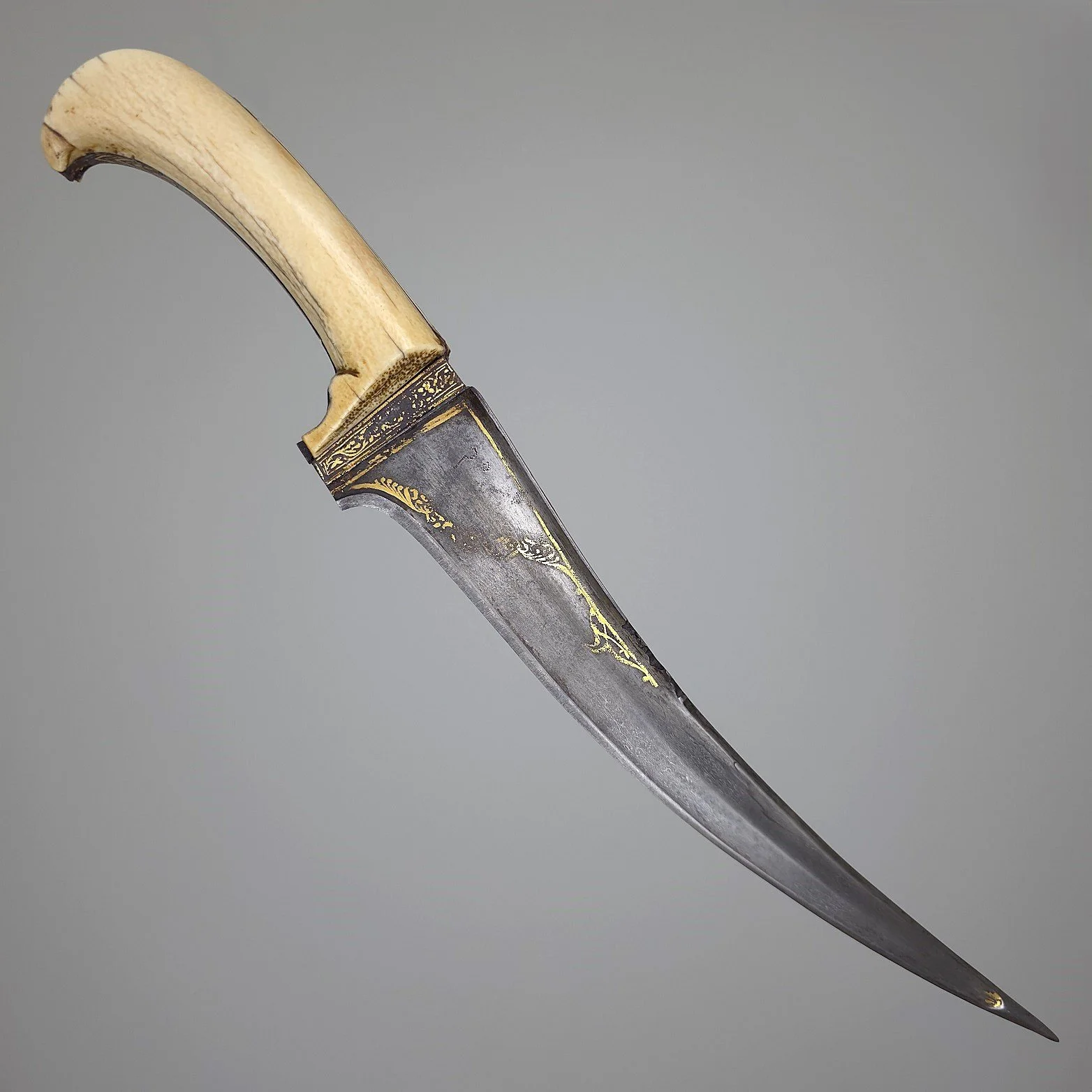
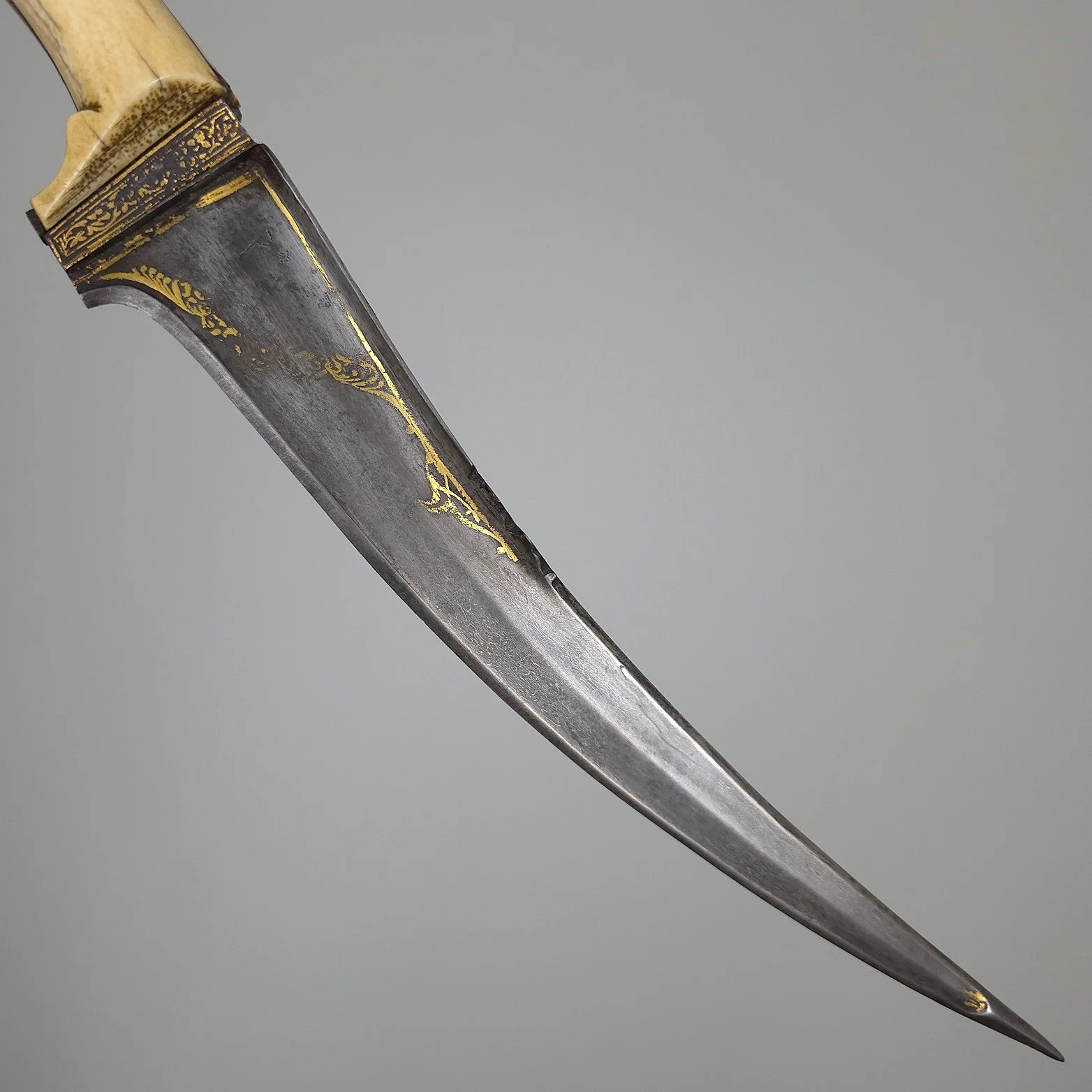
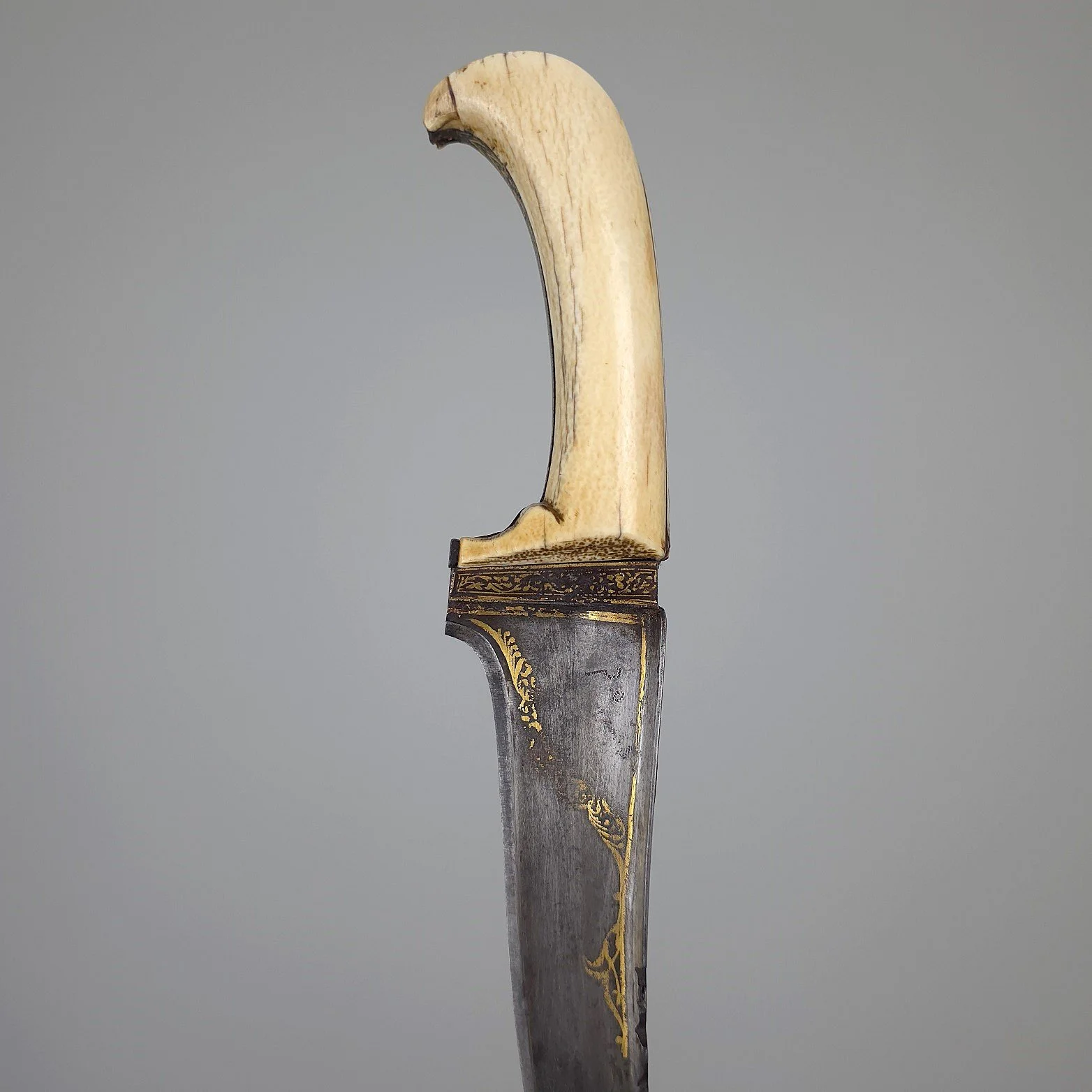
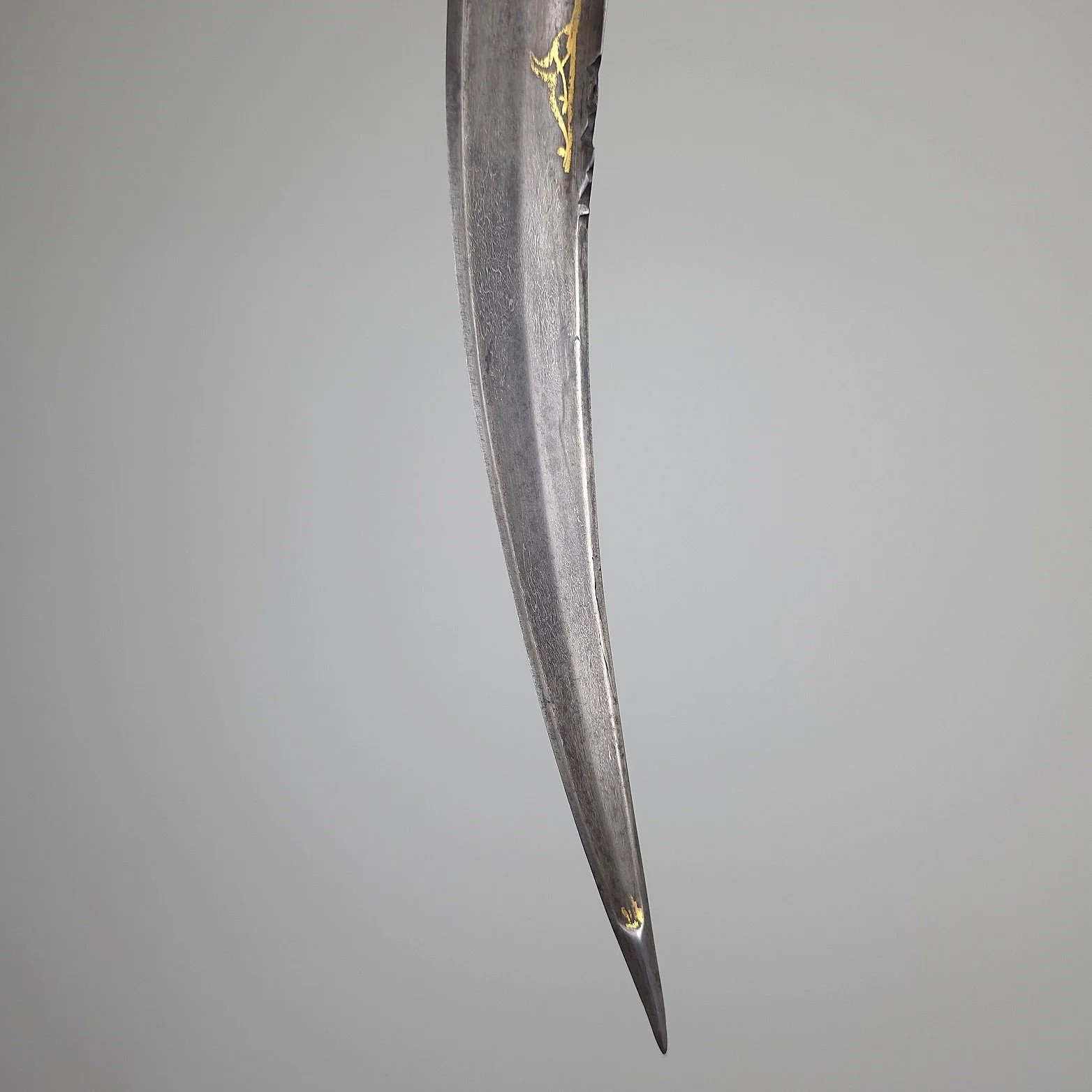
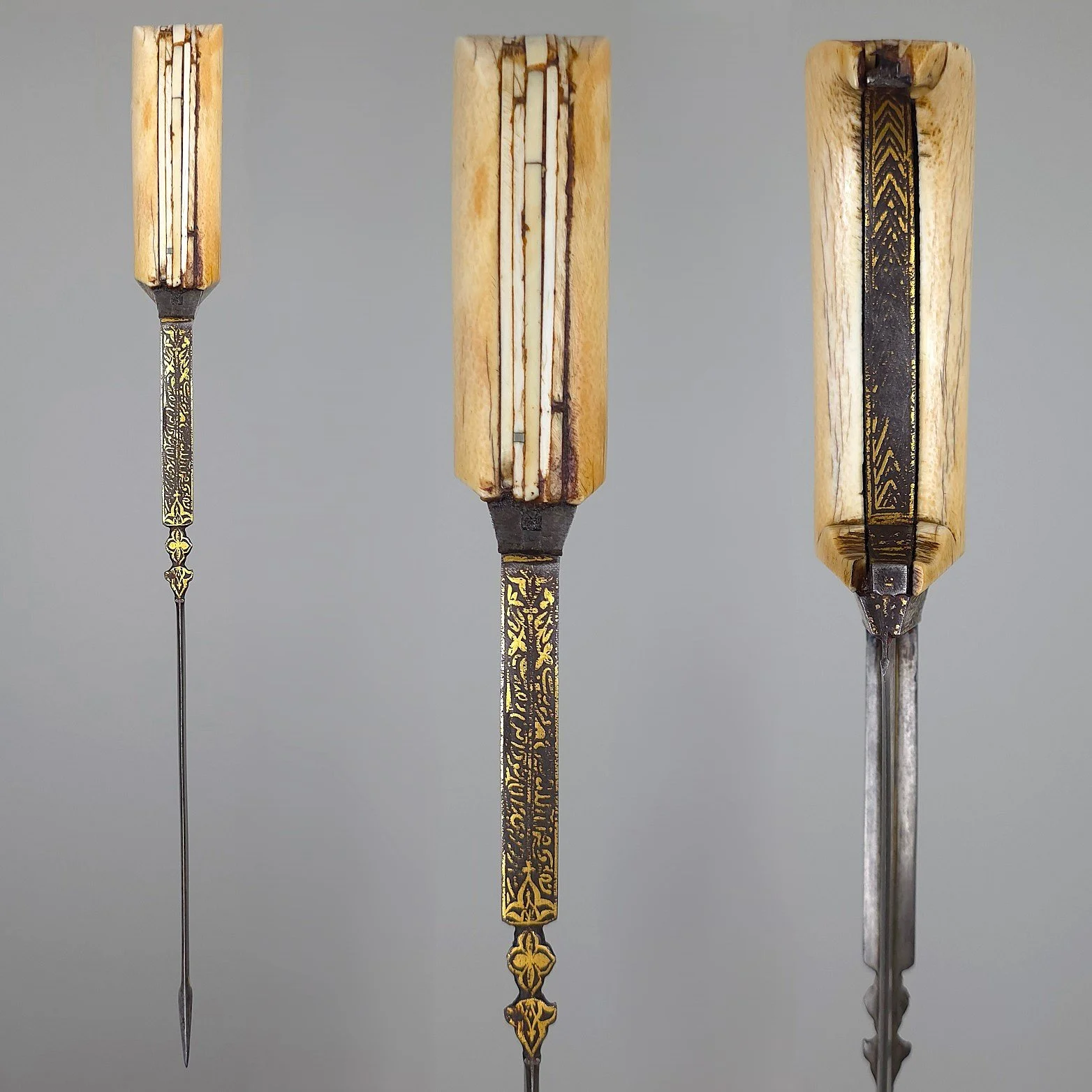
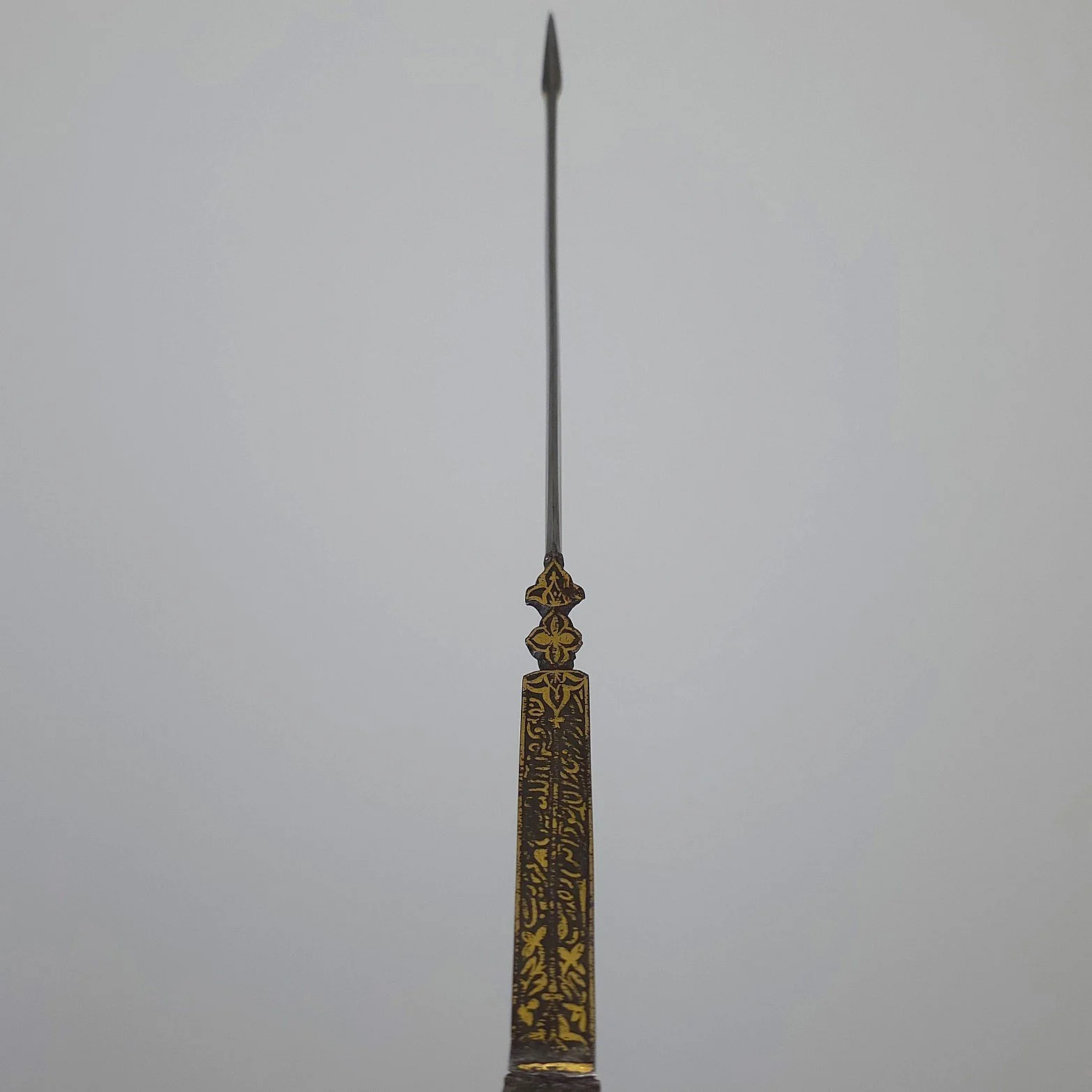
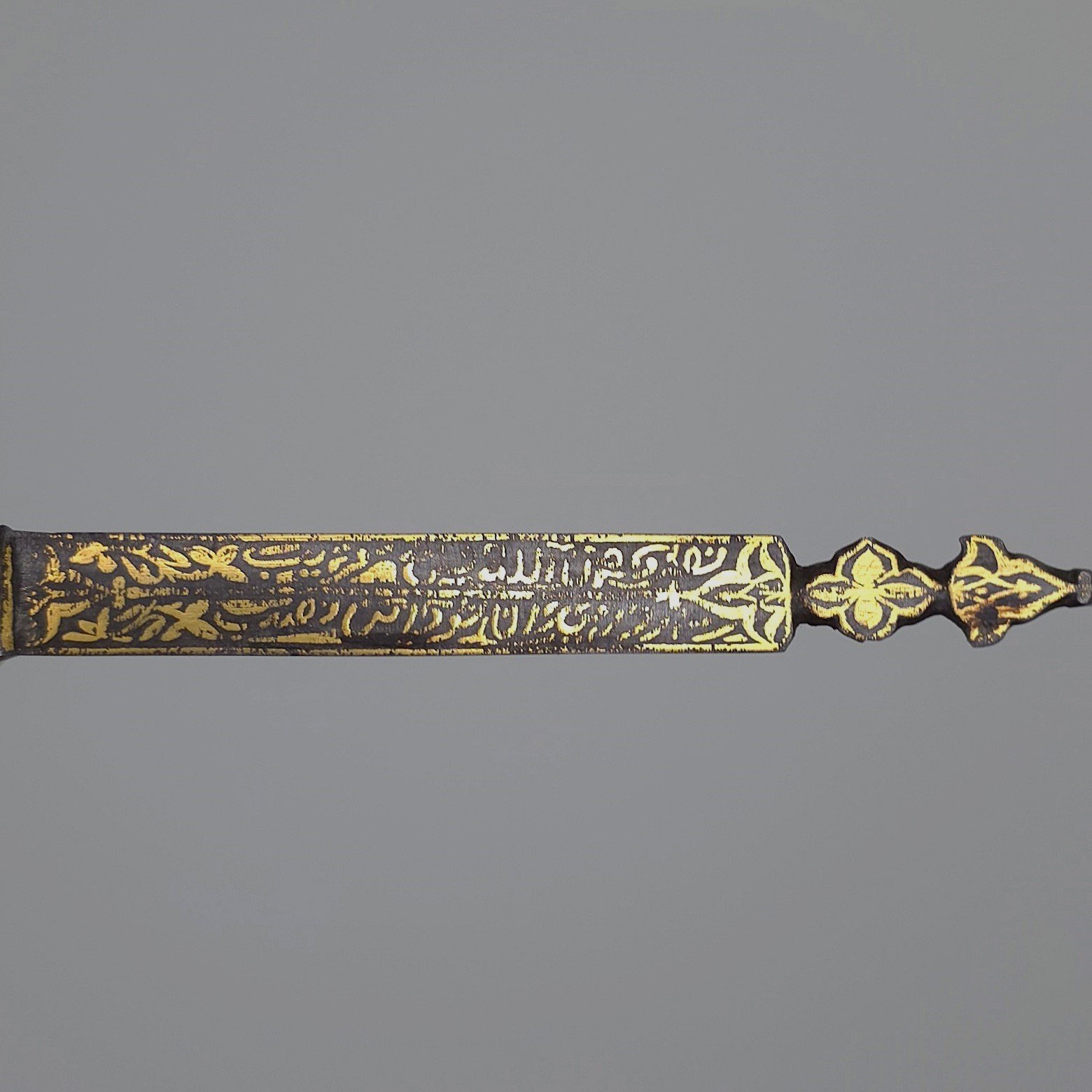
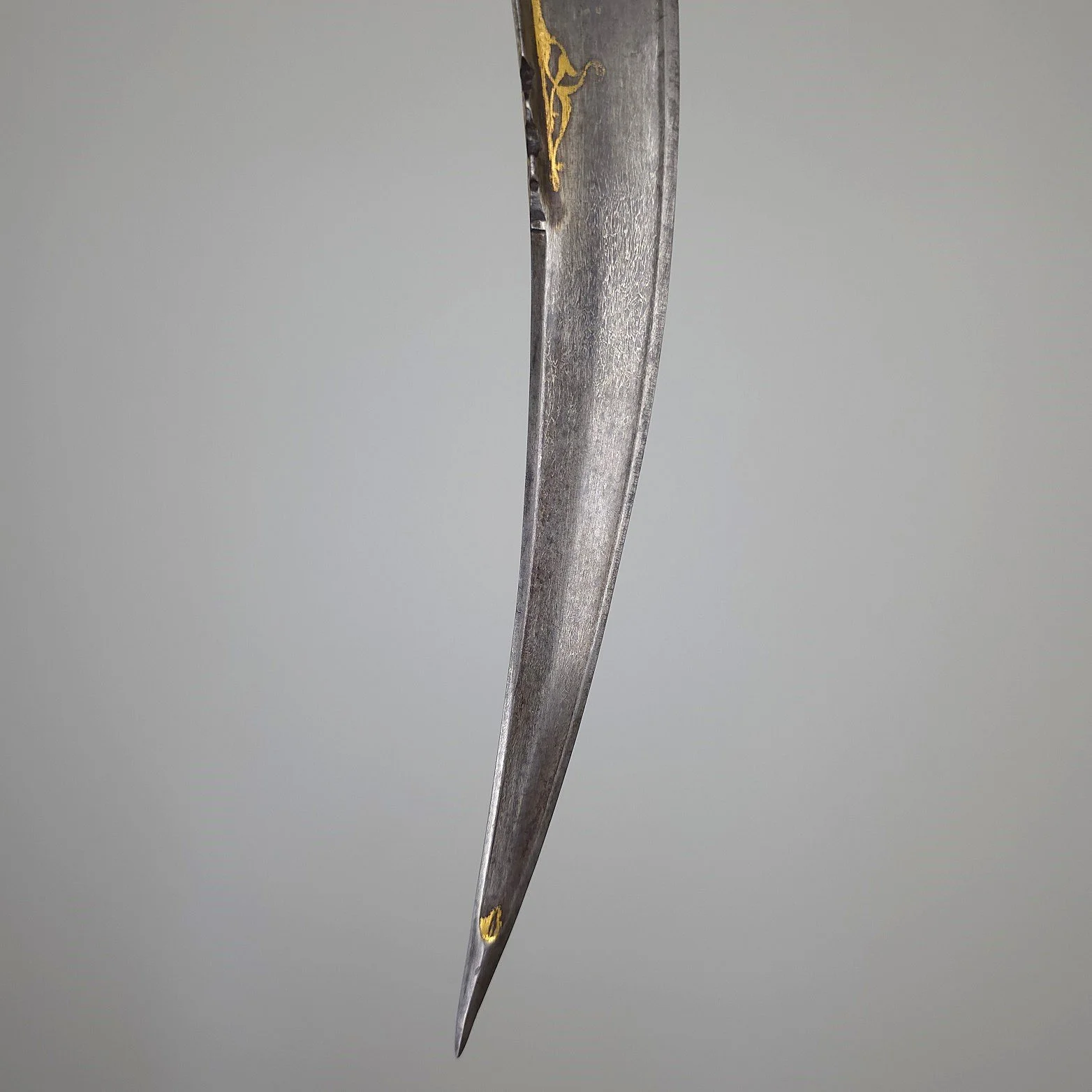
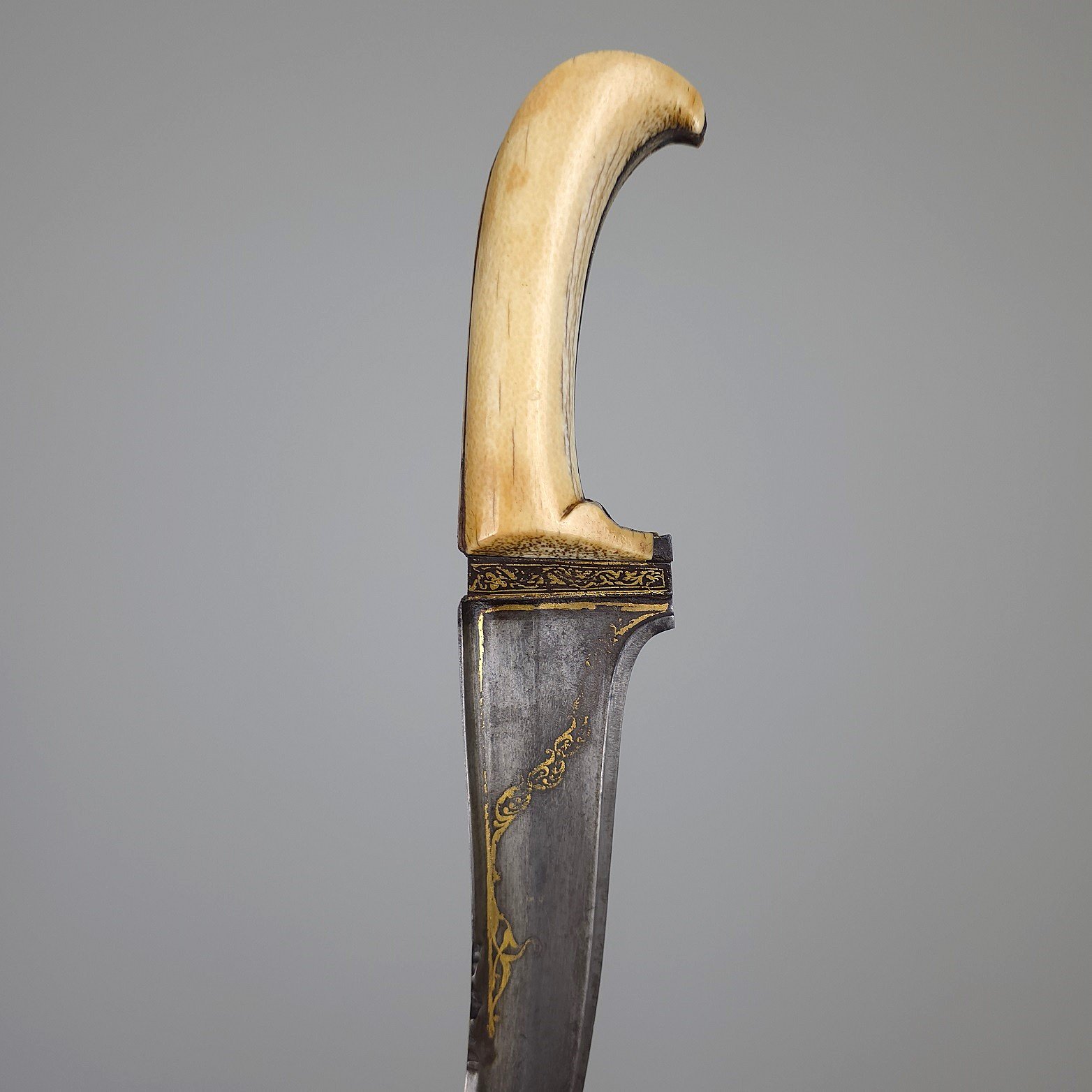
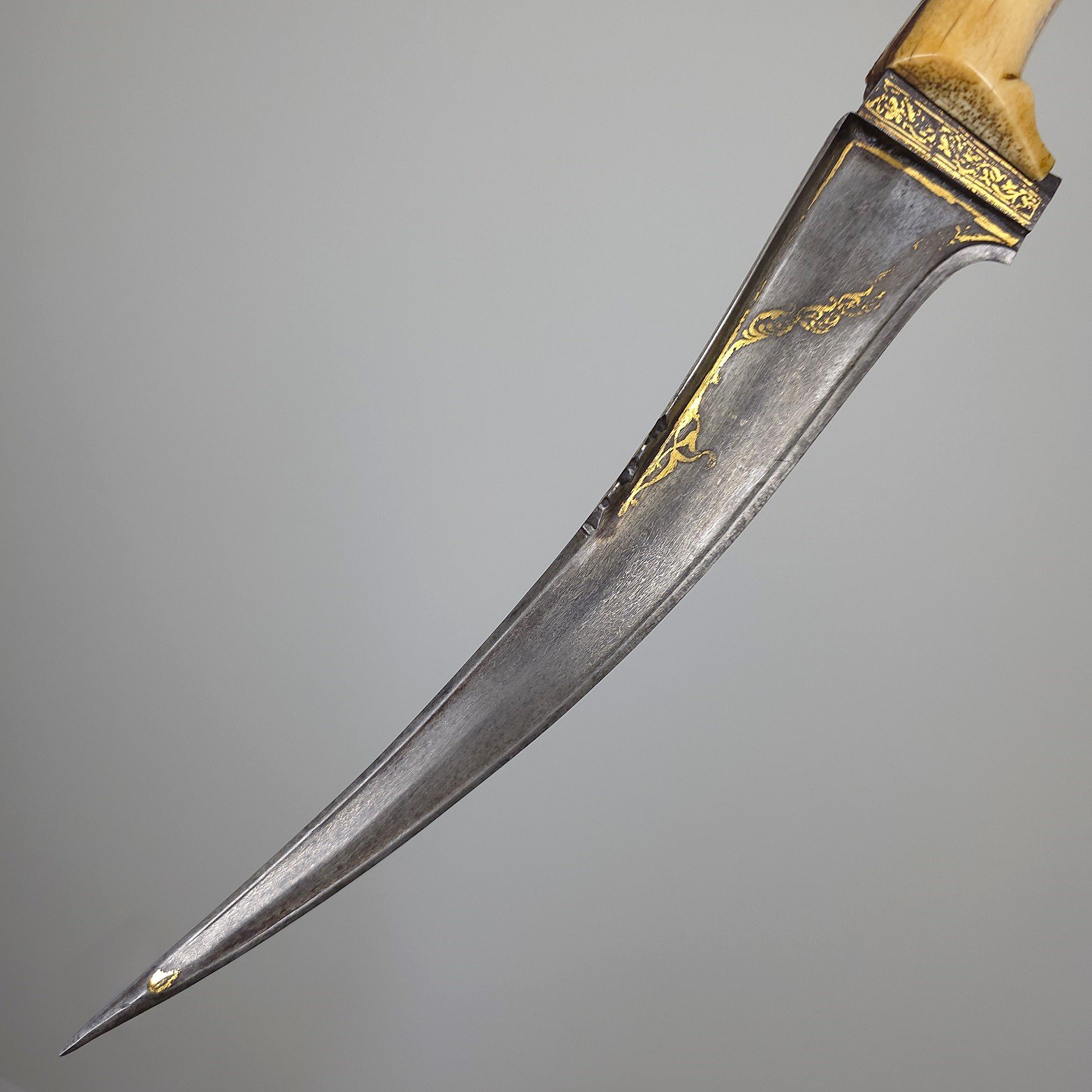
The straight steel blade of a single-edge upcurves toward the middle. With a pronounced T-shaped cross section that is present for approximately one half of the blade's length before transitioning into two floral motifs forged within the spine, the last is a flowering lotus, before the blade transitions into a top edge. The blade's edge is slightly raised and chamfered with the central ridge developing into a reinforced point. Foliage gold koftgari panels are present on each side of the blade as well as on the steel bolster. The blade exhibits a watered wootz pattern throughout. On one side, a small stippled untranslated mark is located, possibly an armory register. A gold koftgari section is also located near the blade's reinforced point on each side. On the spine, the gold kofgari panel is inscribed, "Victory from God and Conquest Nigh!" with the steel floral motifs bordered in gold.
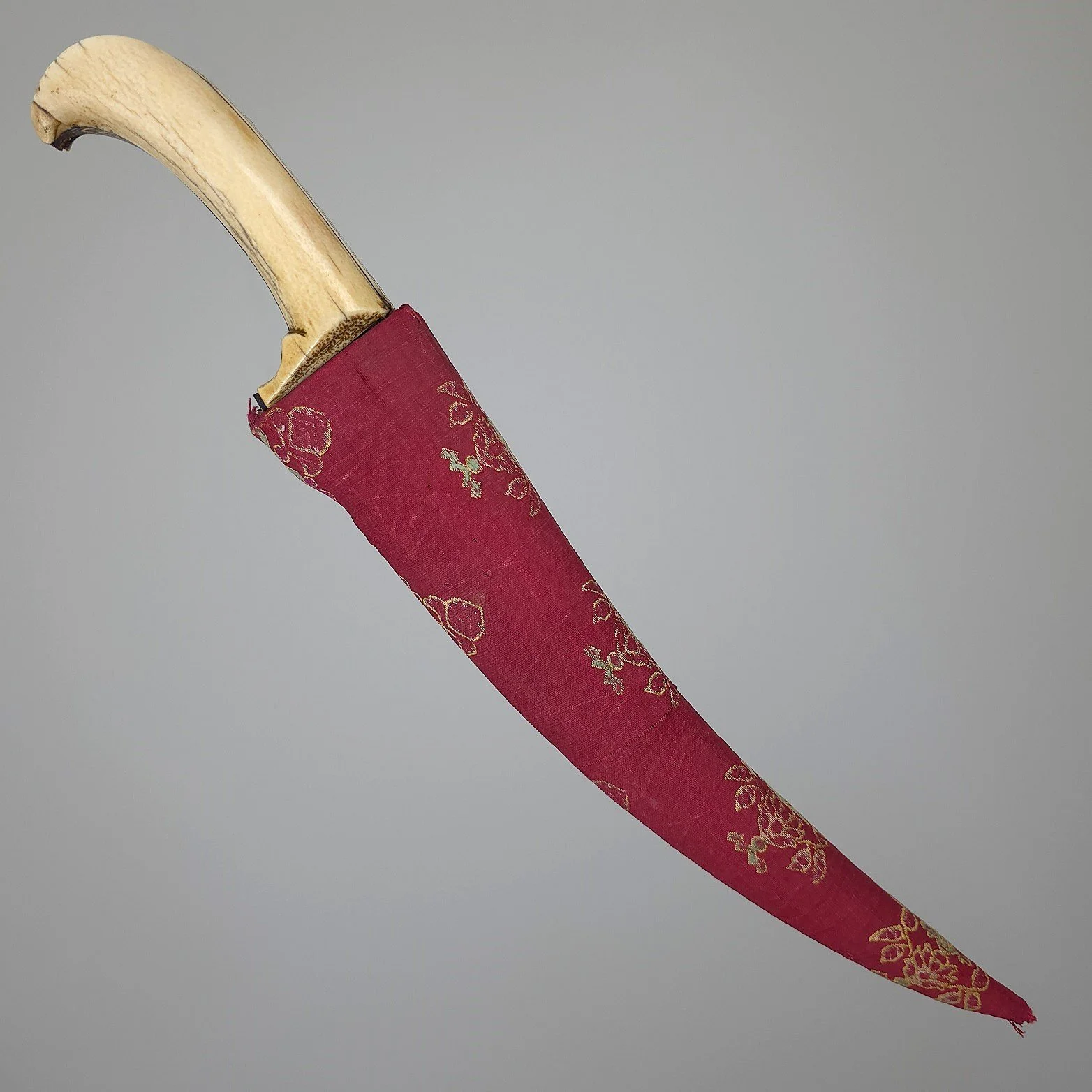
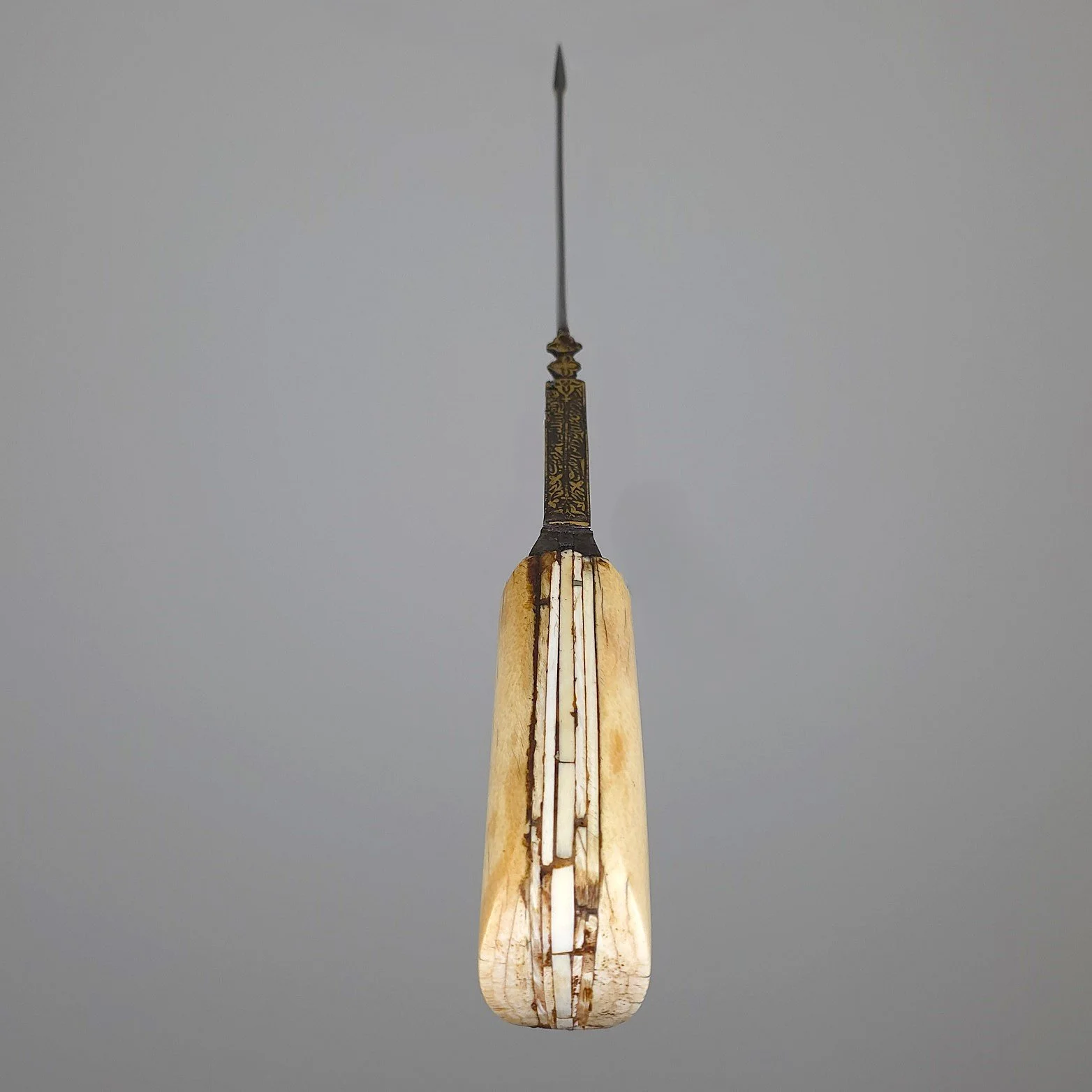
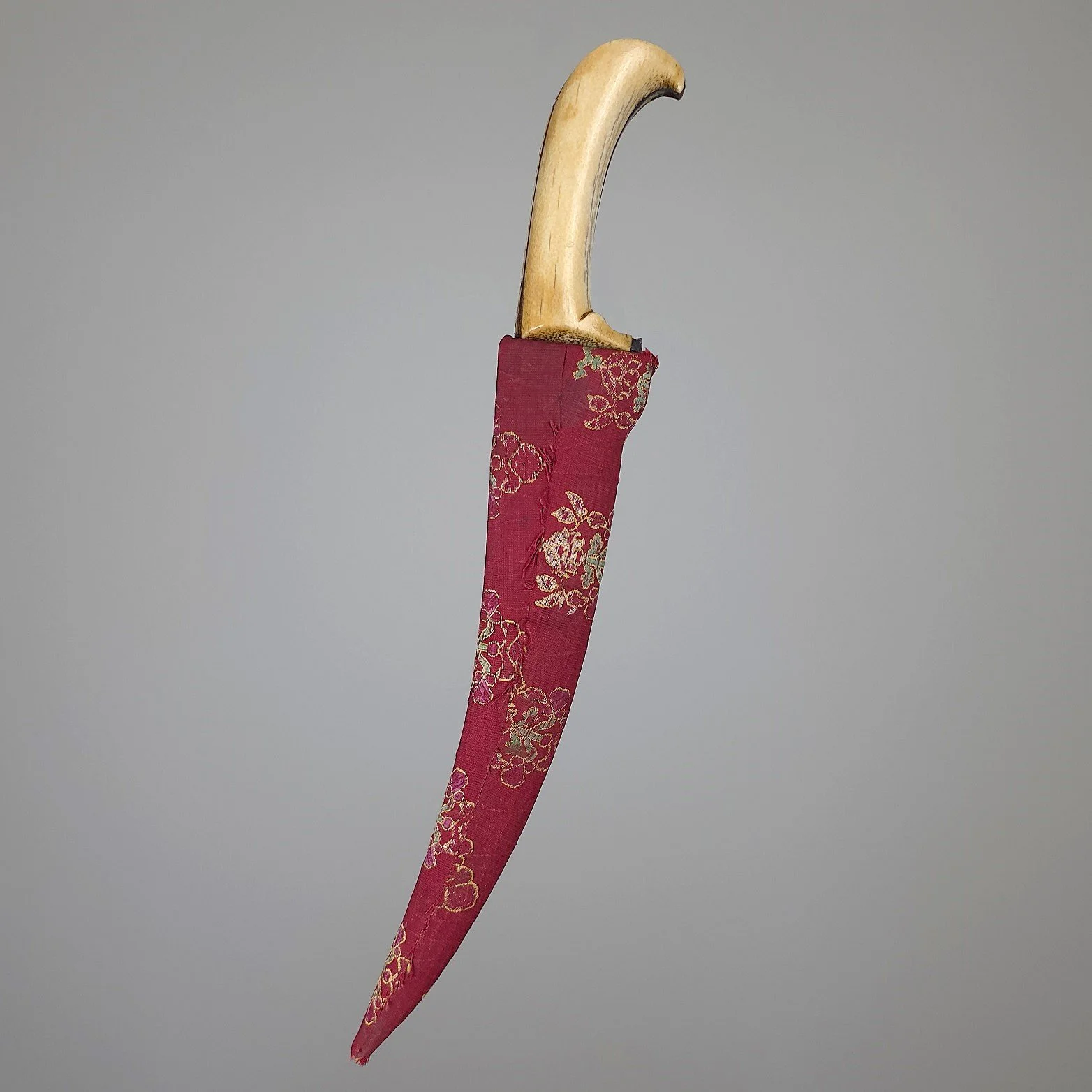
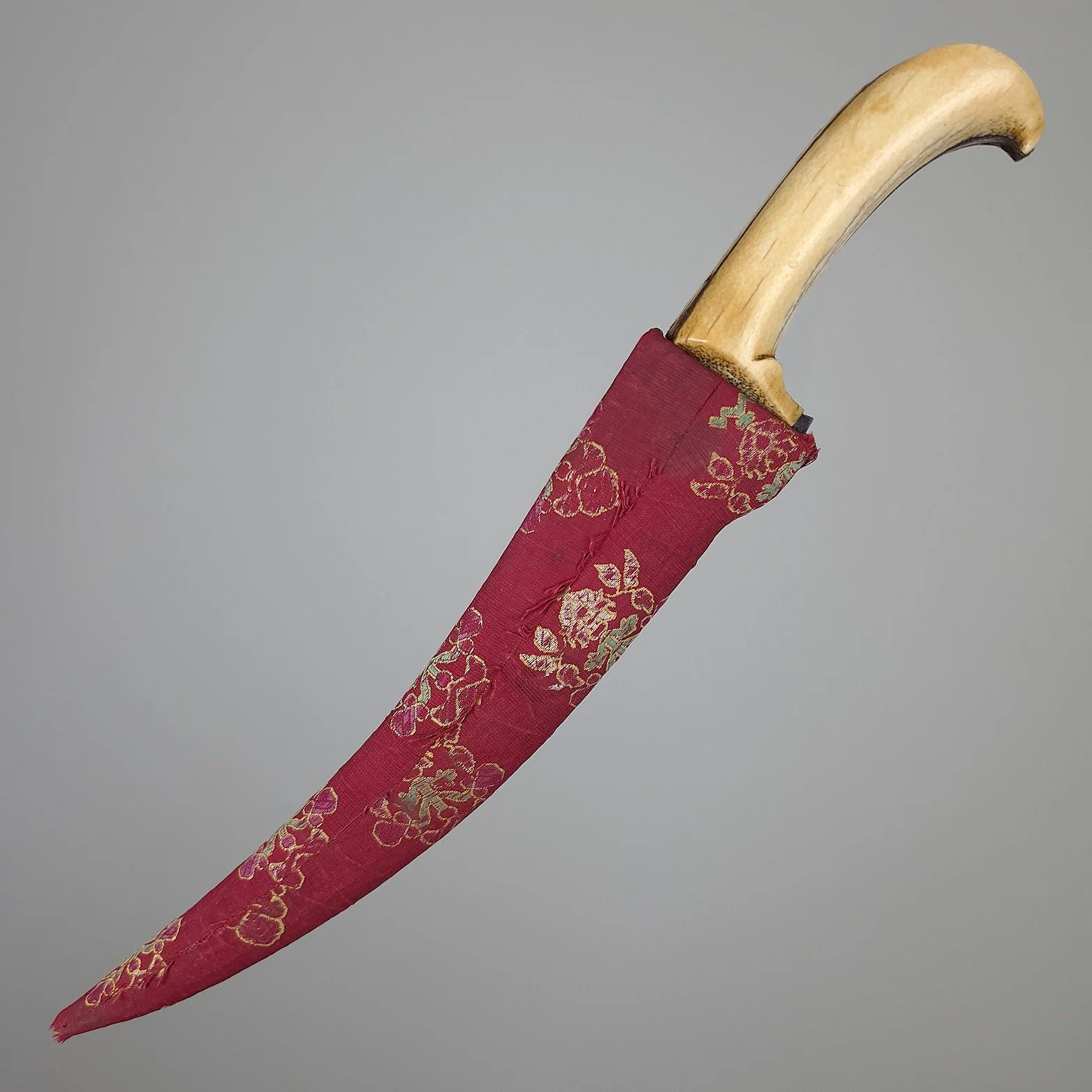
The hilt of walrus ivory scale grips. The original steel backstrap is missing and has been replaced with ivory spacers to fill the void, an old repair done long ago. The bottom steel backstrap retains a gold koftgari chevron pattern. The contemporary sheath is wood covered by red silk with a gold floral embroidered design. A fine pesh- kabz dagger from the Bahawalpur Region.
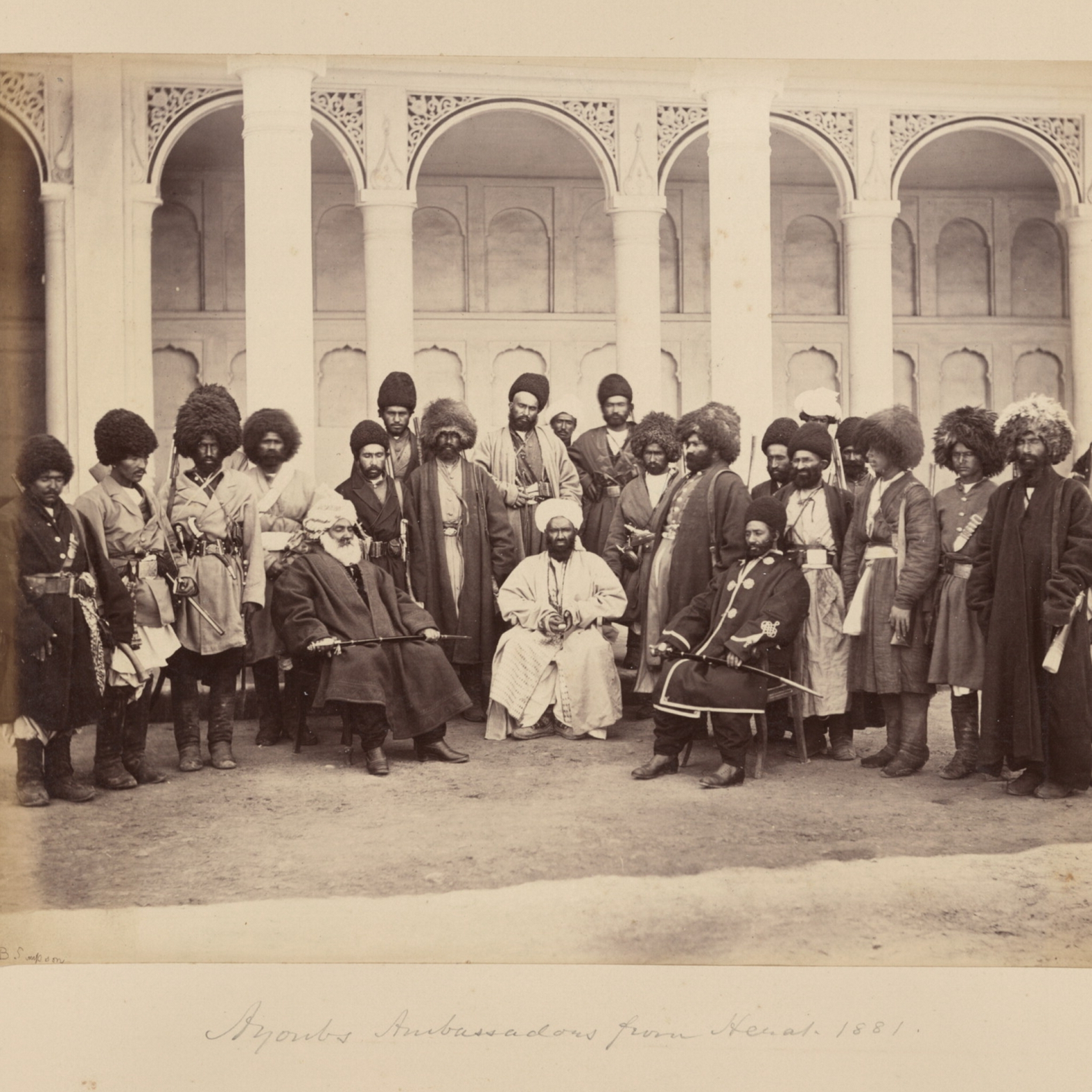
Photograph 20: The Afghan delegation that represented Ayub Khan, the governor of Herat and brother of dethroned Amir Yakub Khan, in discussions with the British at Khandahar, 1880. Photograph by Benjamin Simpson (1831 - 1923), 2nd Afghan War (1878 - 1880), National Army Museum. The thrid delegate from the left shows a similar pesh0kabz dagger within his belt.
[1] https://www.invaluable.com/auction-lot/a-rare-persian-pesh-qabz-dagger-57e4856b6f
[2] Manouchehr, Moshtagh Khorasani. “Arms and Armor from Iran”. 2006. Page 619 Cat. 261
[3] Holstein, P. Contribution a L’Etede Des Armes Orientales, Vol II, Plate XX
[4] Pinchot, Oliver S. “Arms of the Paladins”. 2014. Page 51. Cat. 3-112
[5] Hales, Robert. "Islamic and Oriental Arms and Armour". 2013. Page 10: No.23, Page 14: No. 34
[6] https://www.penn.museum/collections/object/218525
[7] https://www.metmuseum.org/art/collection/search/31701
[8] https://www.britishmuseum.org/collection/object/W_OA-7405_1
[9] http://www.oriental-arms.co.il/item.php?id=5354
[10] http://www.oriental-arms.co.il/item.php?id=4441
[11] http://www.oriental-arms.co.il/item.php?id=5282
[12] http://www.oriental-arms.co.il/item.php?id=5642
[13] http://www.oriental-arms.co.il/item.php?id=1491
[14] http://oriental-arms.co.il/item.php?id=5282
[15] http://www.vikingsword.com/vb/showthread.php?t=977&highlight=karud+choora+pesh+kabz
[17] https://www.invaluable.com/auction-lot/a-gold-inlaid-indian-pesh-kabz-18th-century-1045-c-f254817954