Dha Hmyuang
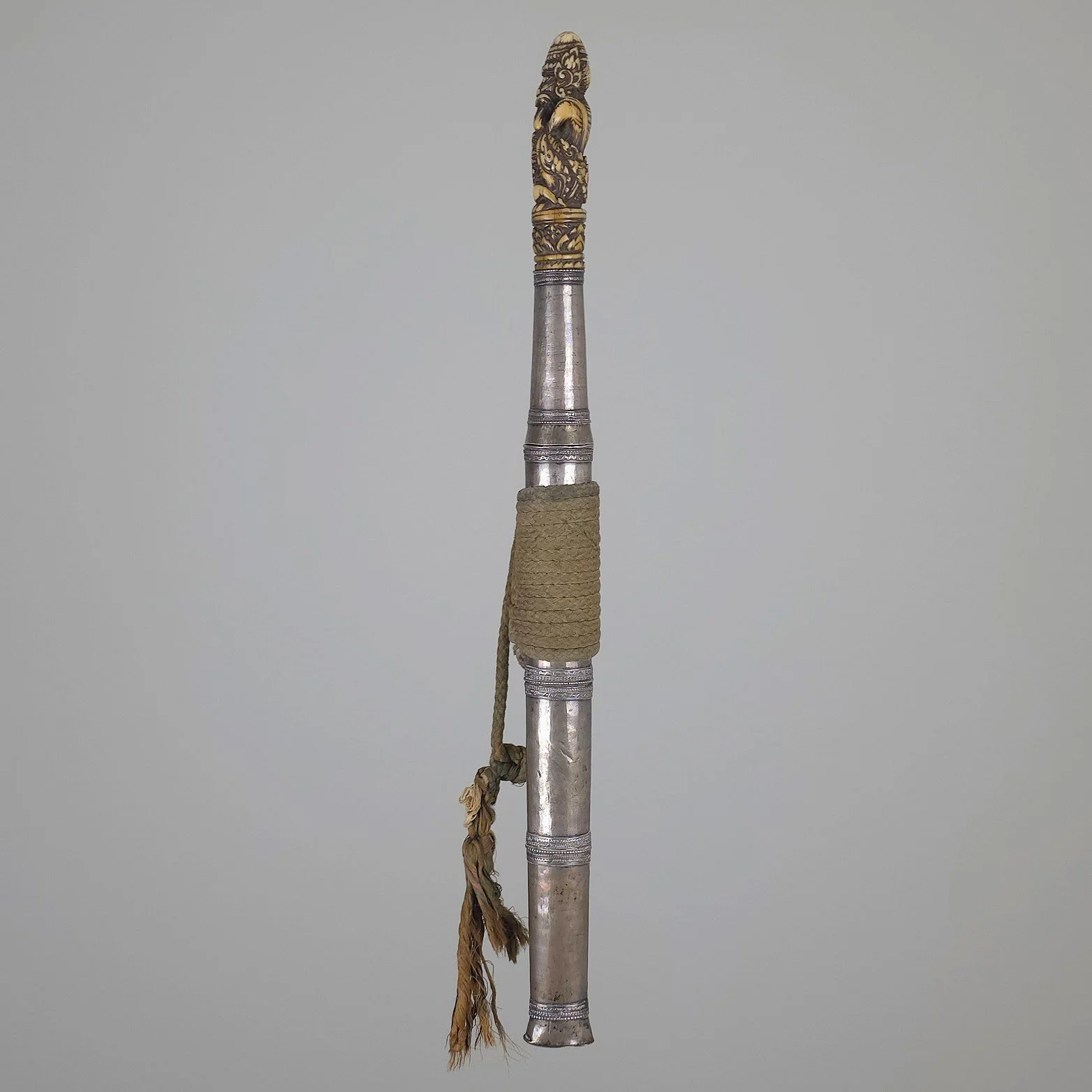
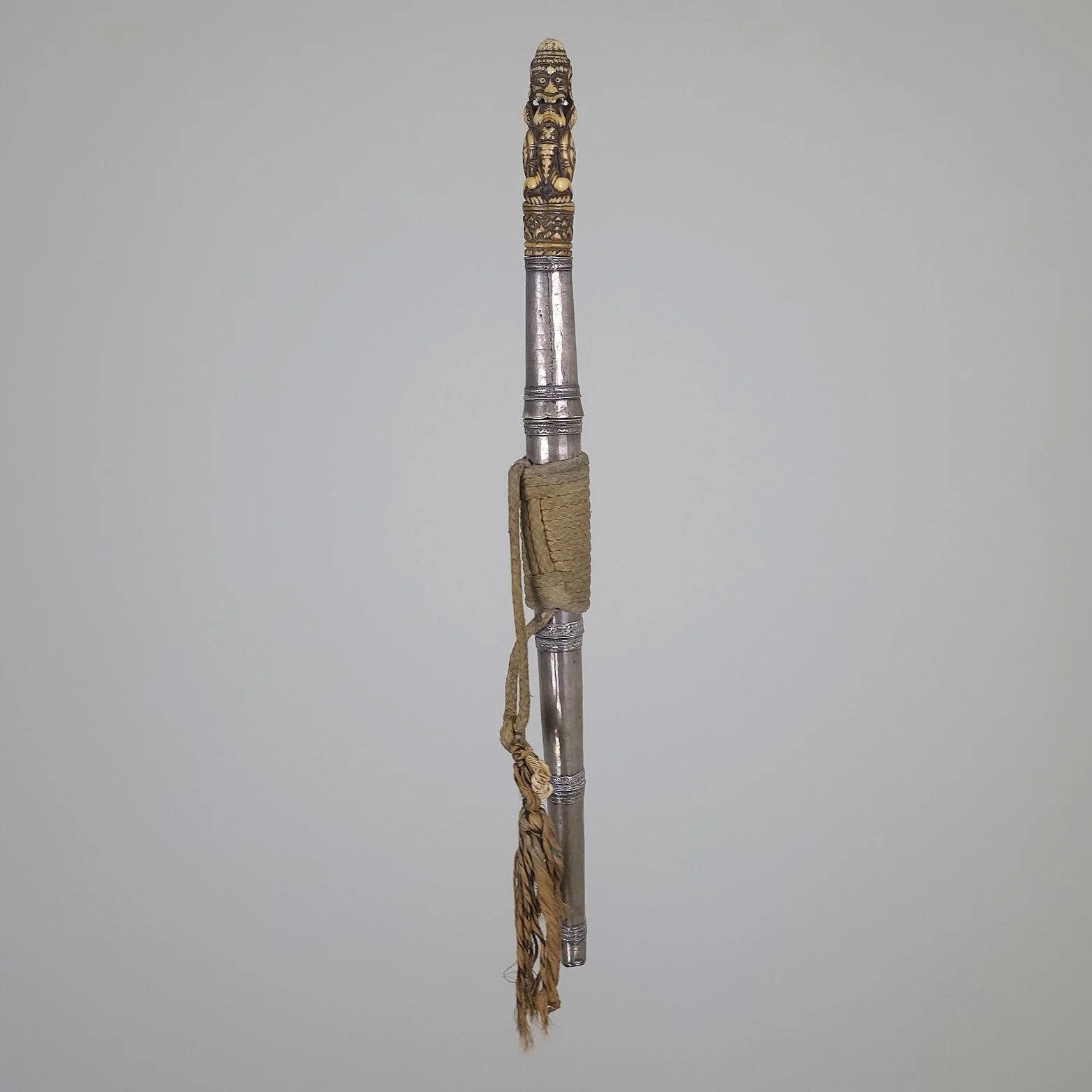
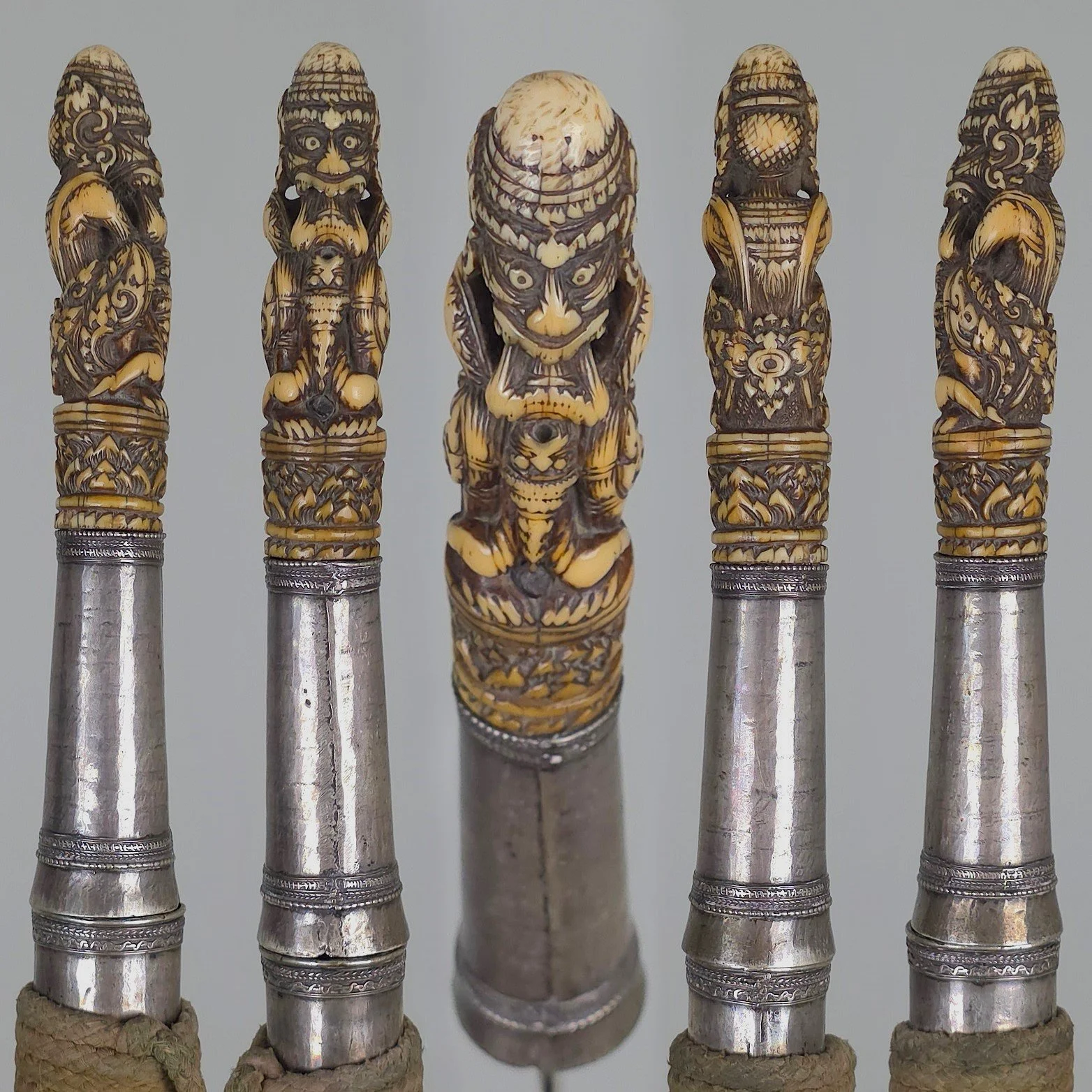
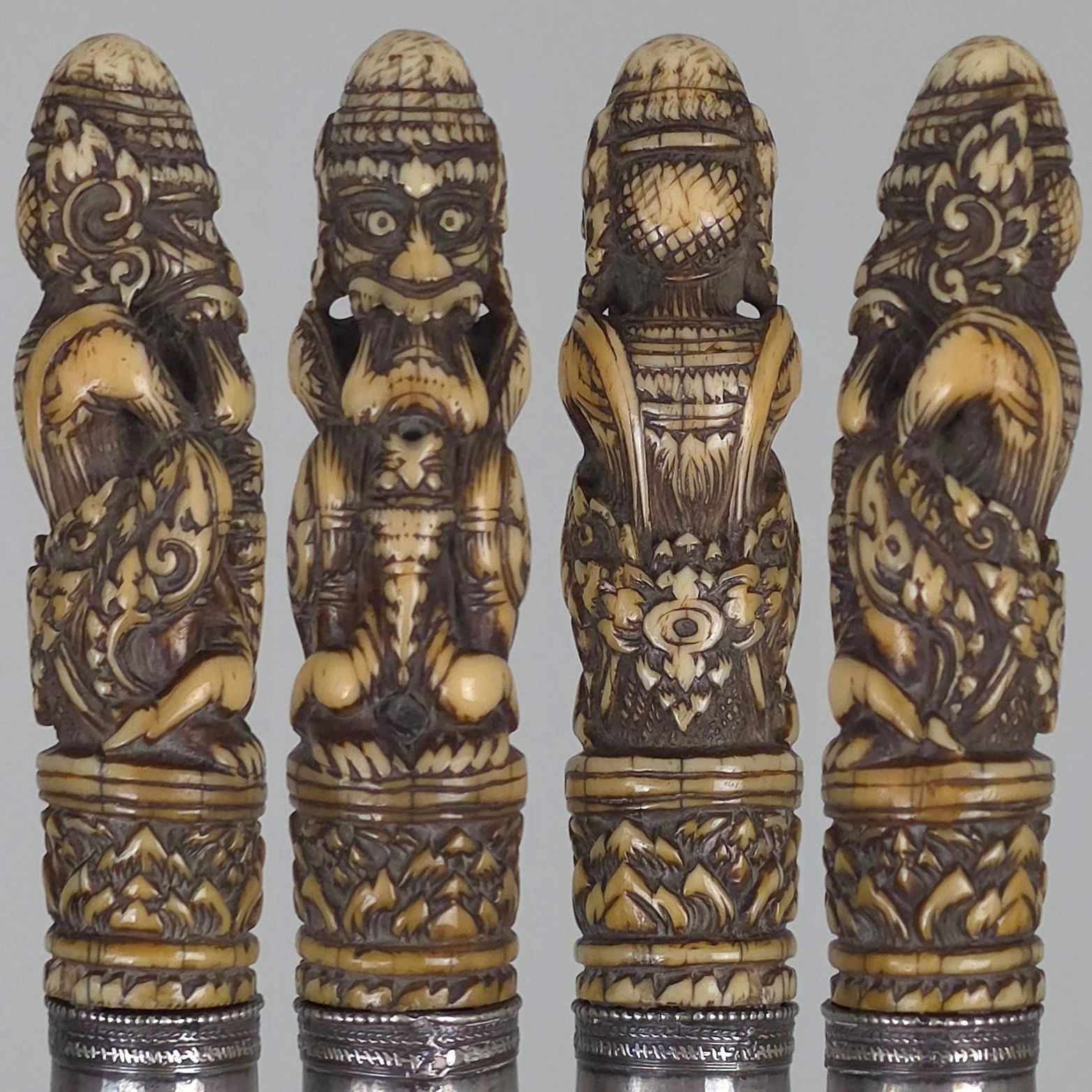
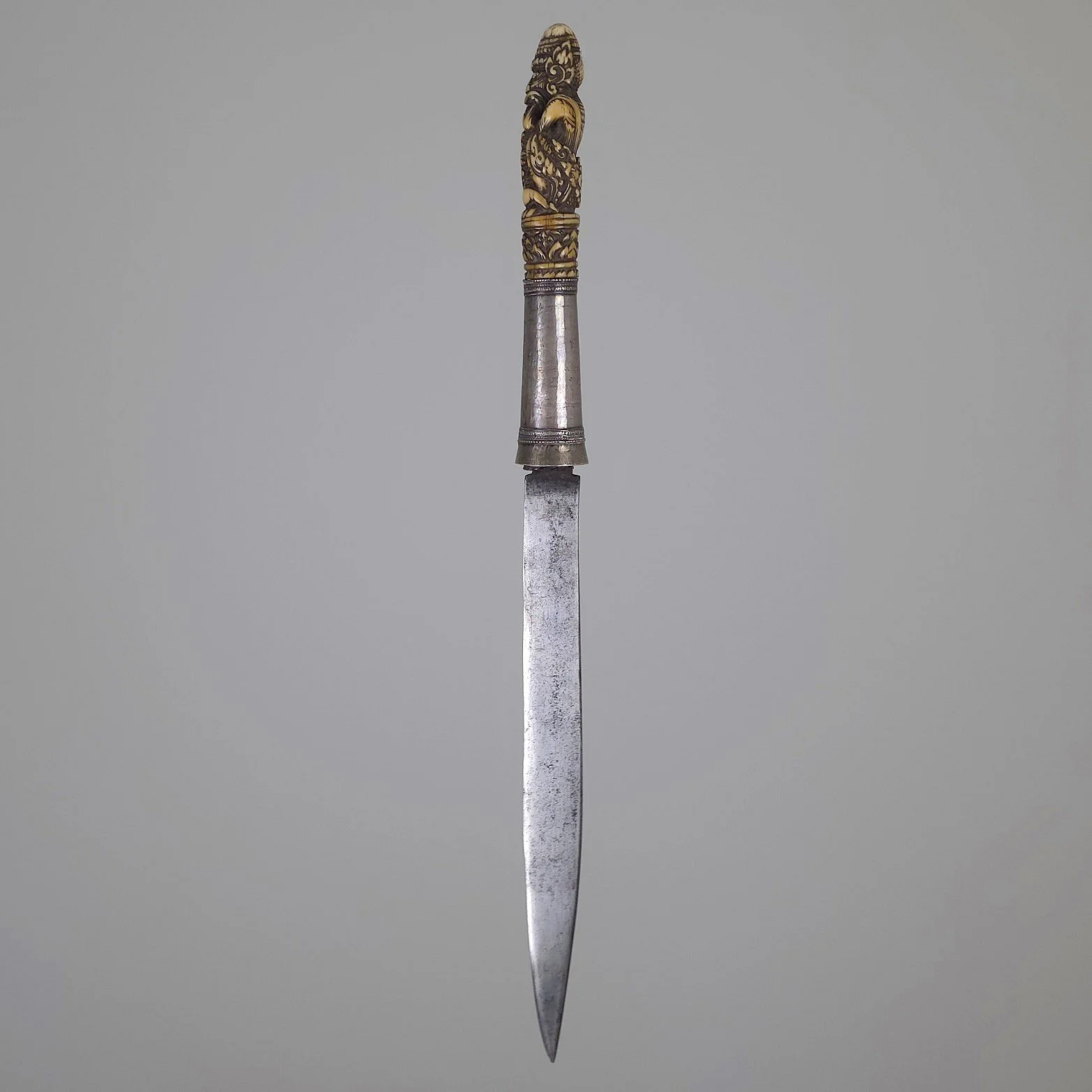
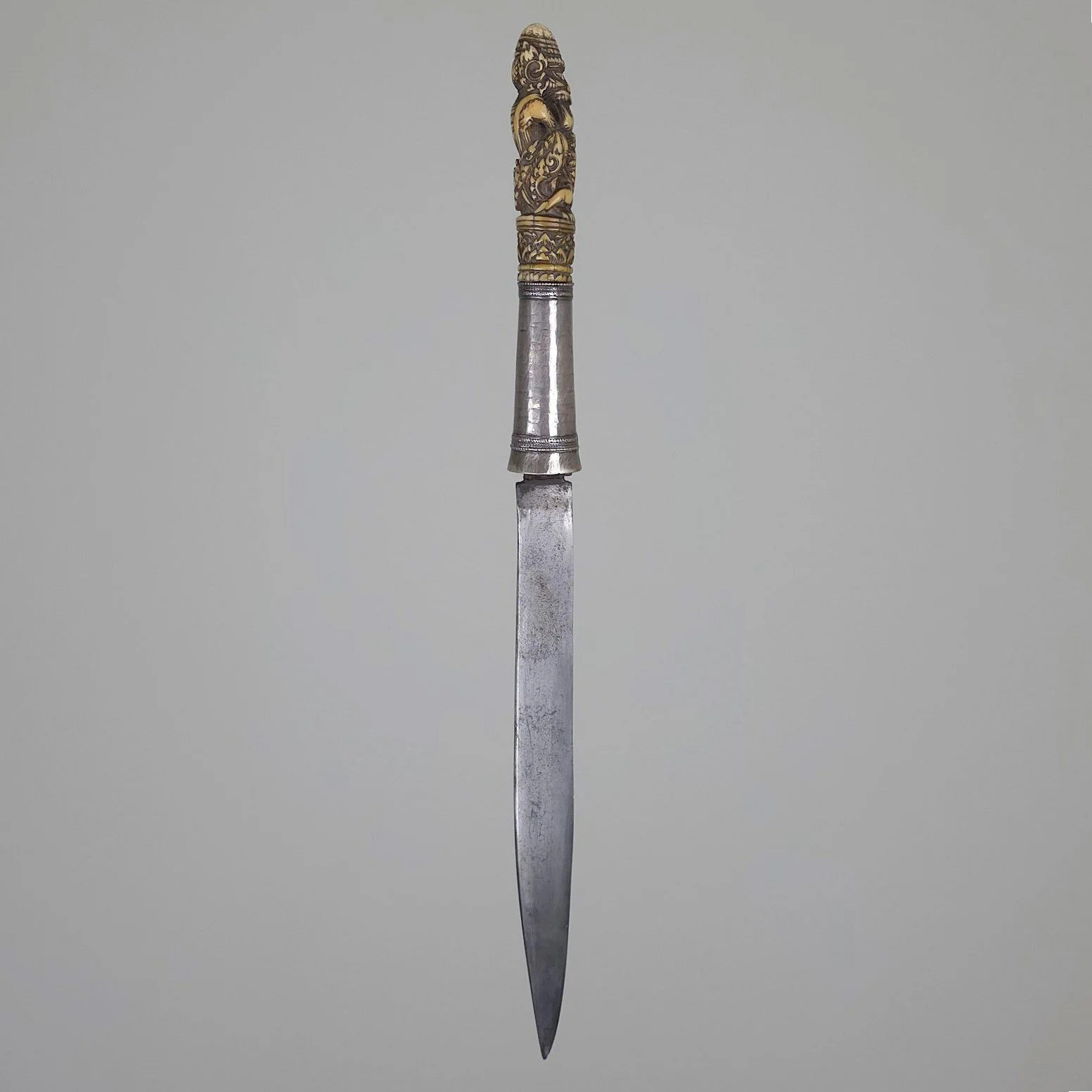
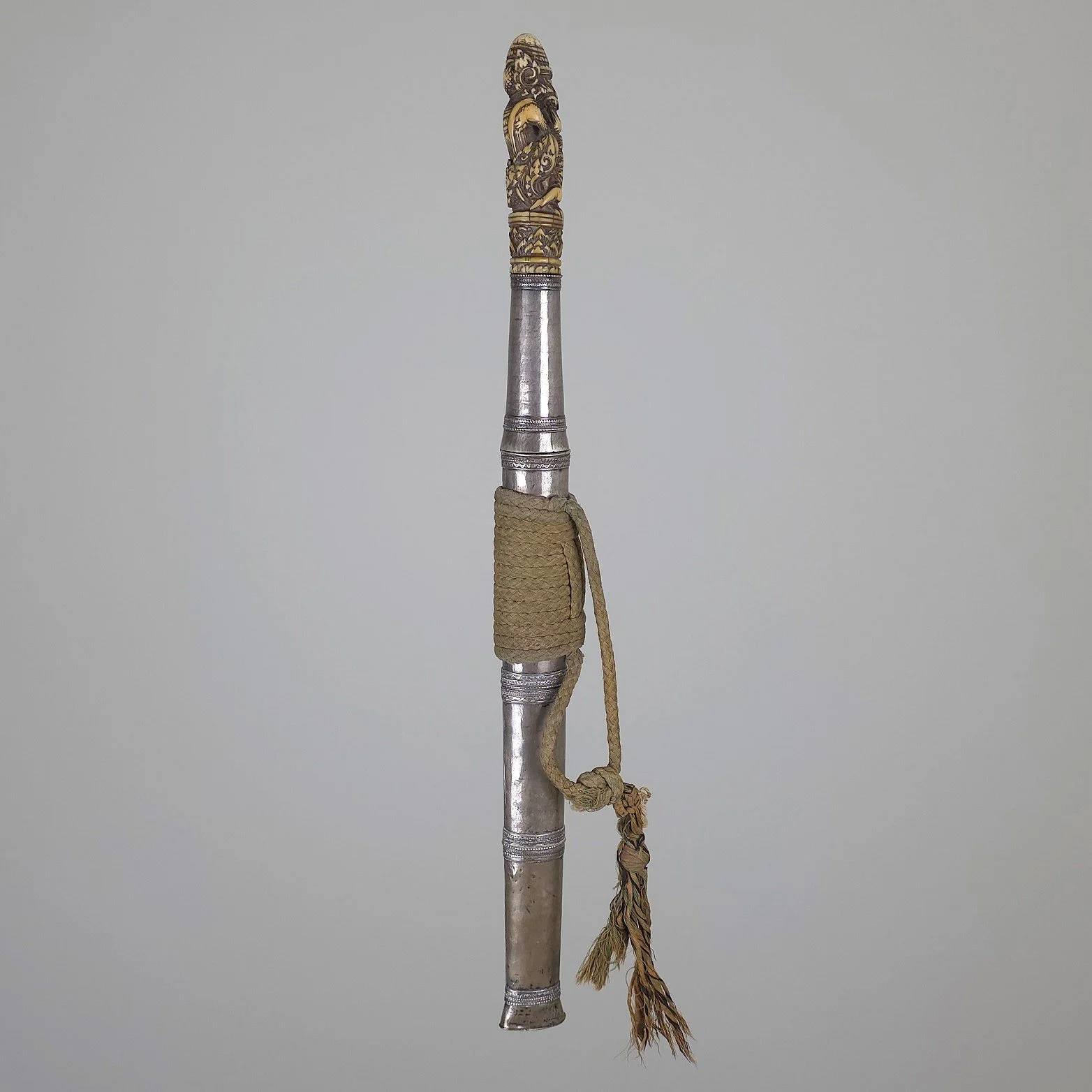
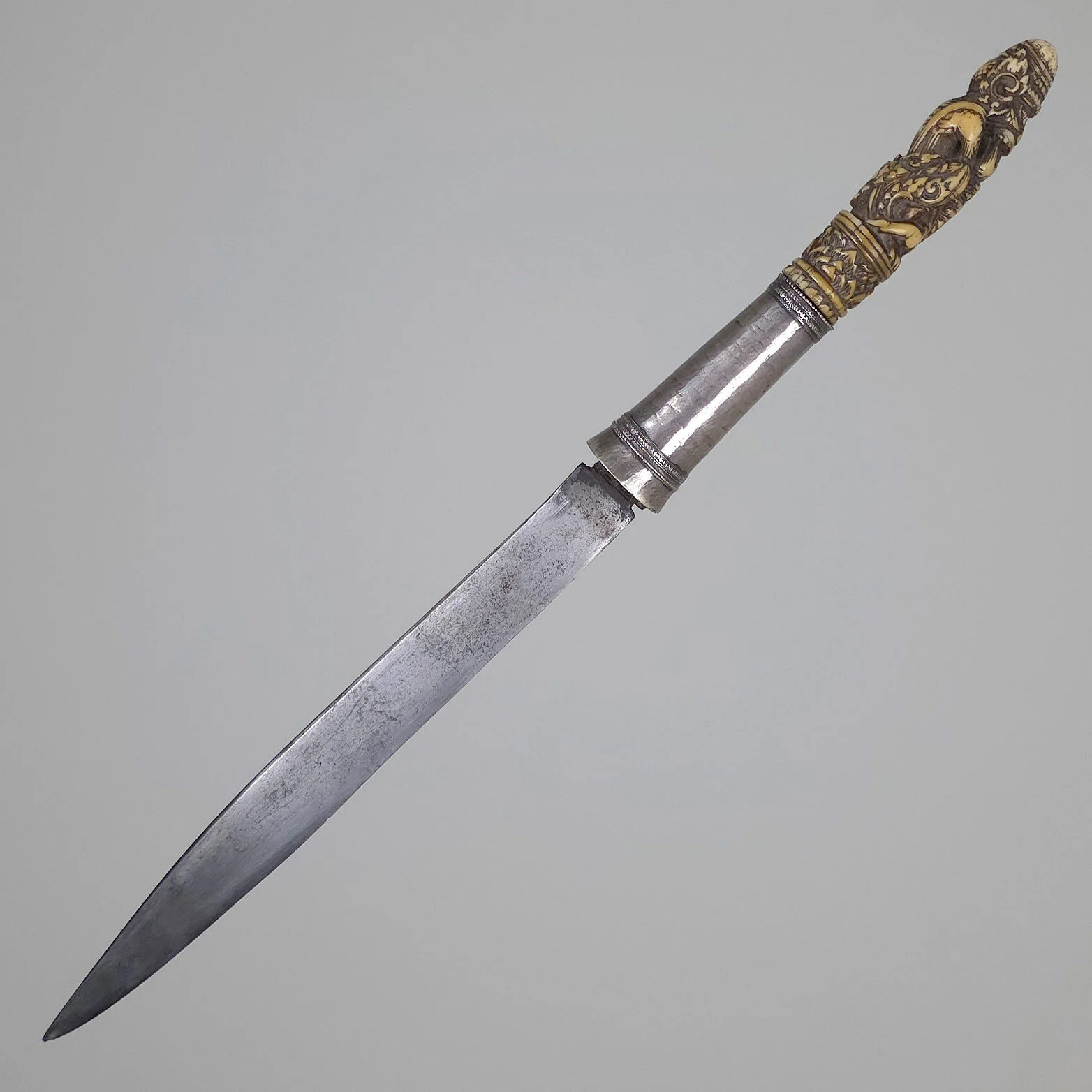
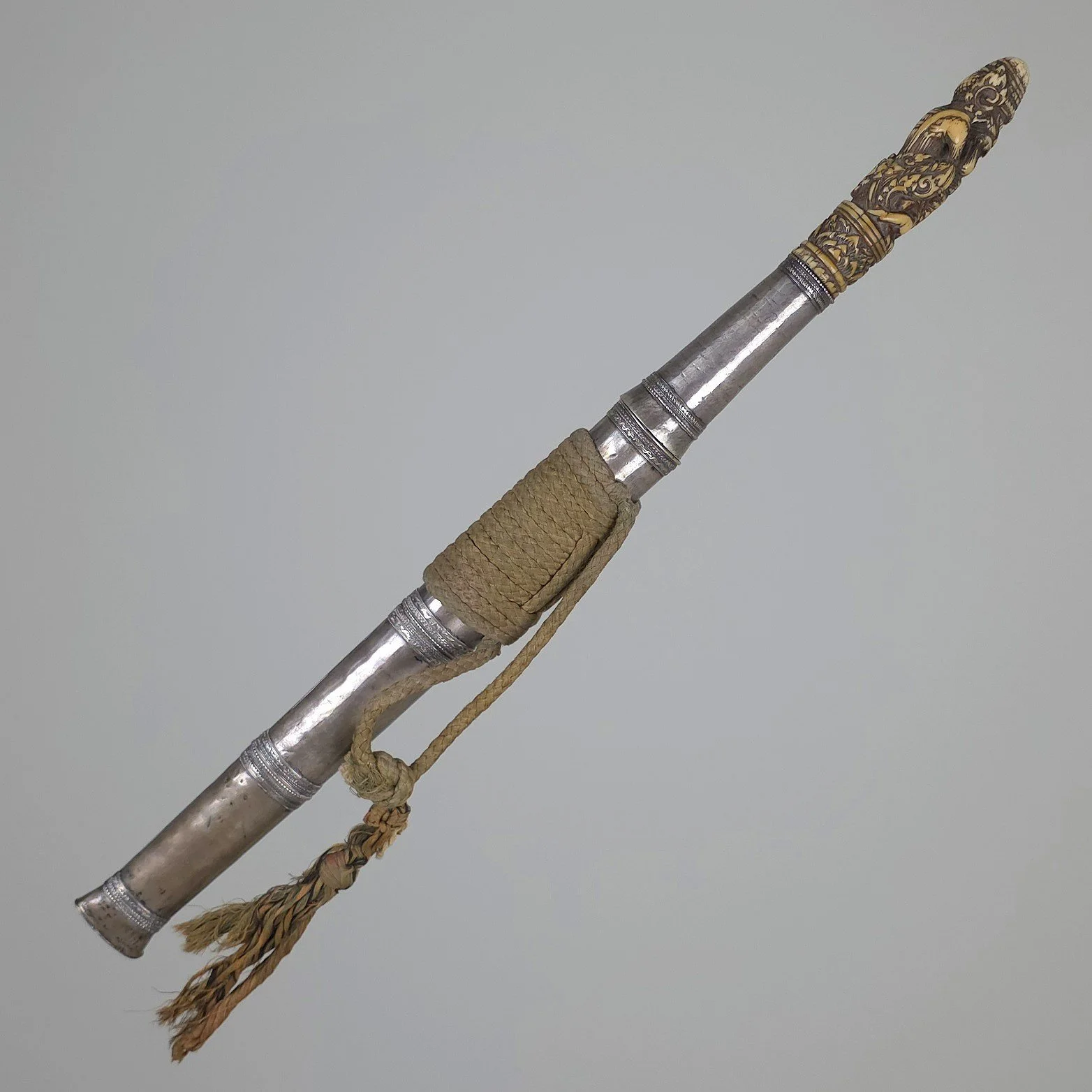

Dha Hmyuang
Shan
Shan State - British Burma (Myanmar)
First half of the 19th century
Steel, elephant ivory, silver, wood, cotton
Blade: 9 1/4" (23.5cm)
Hilt & Blade: 15 1/2" (39.4cm)
Hilt, Blade, Sheath: 16" (40.6cm)
Collection Date: 2023
Collection Number: 350
Ex. Oriental Arms: Haifa, Israel (2023)
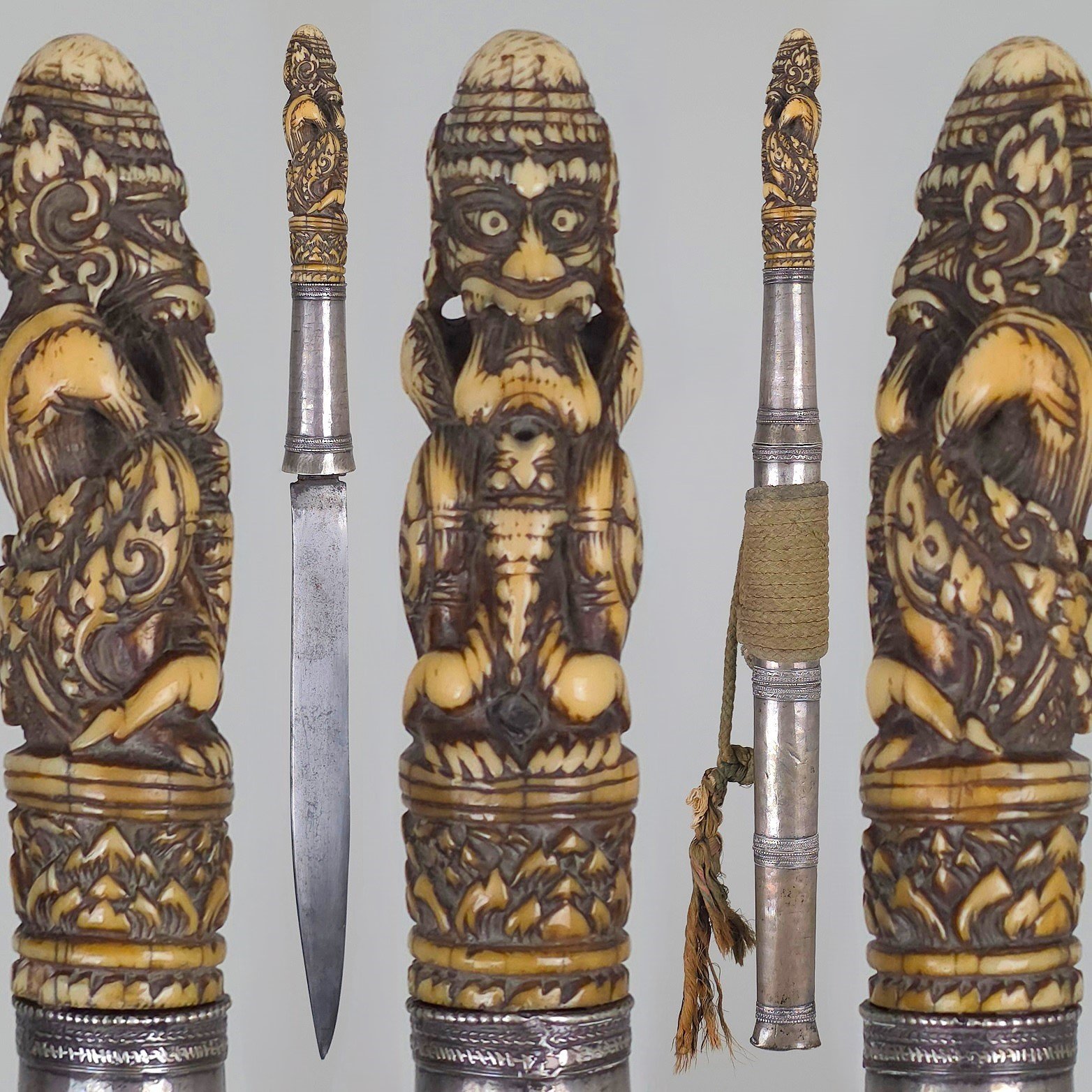
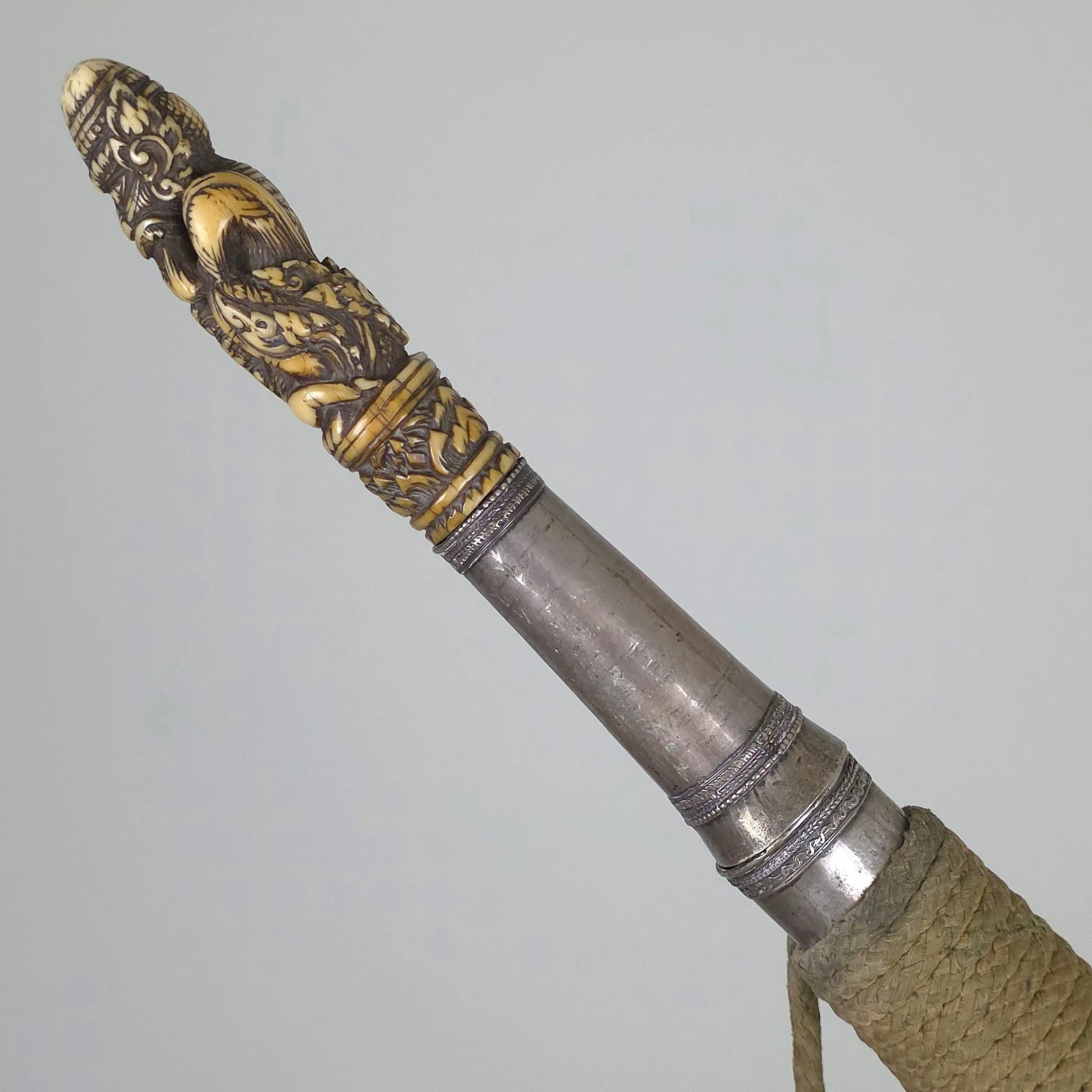
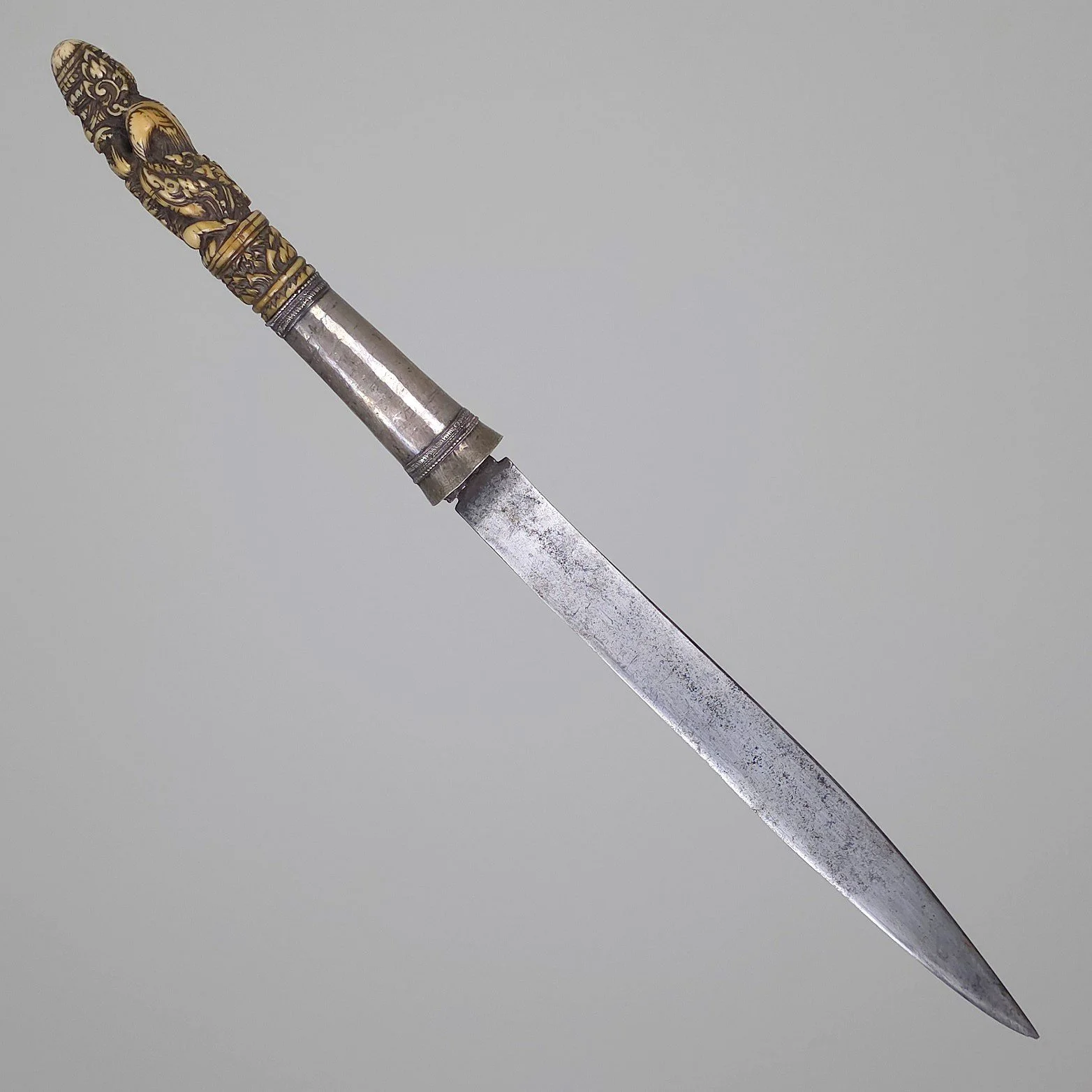
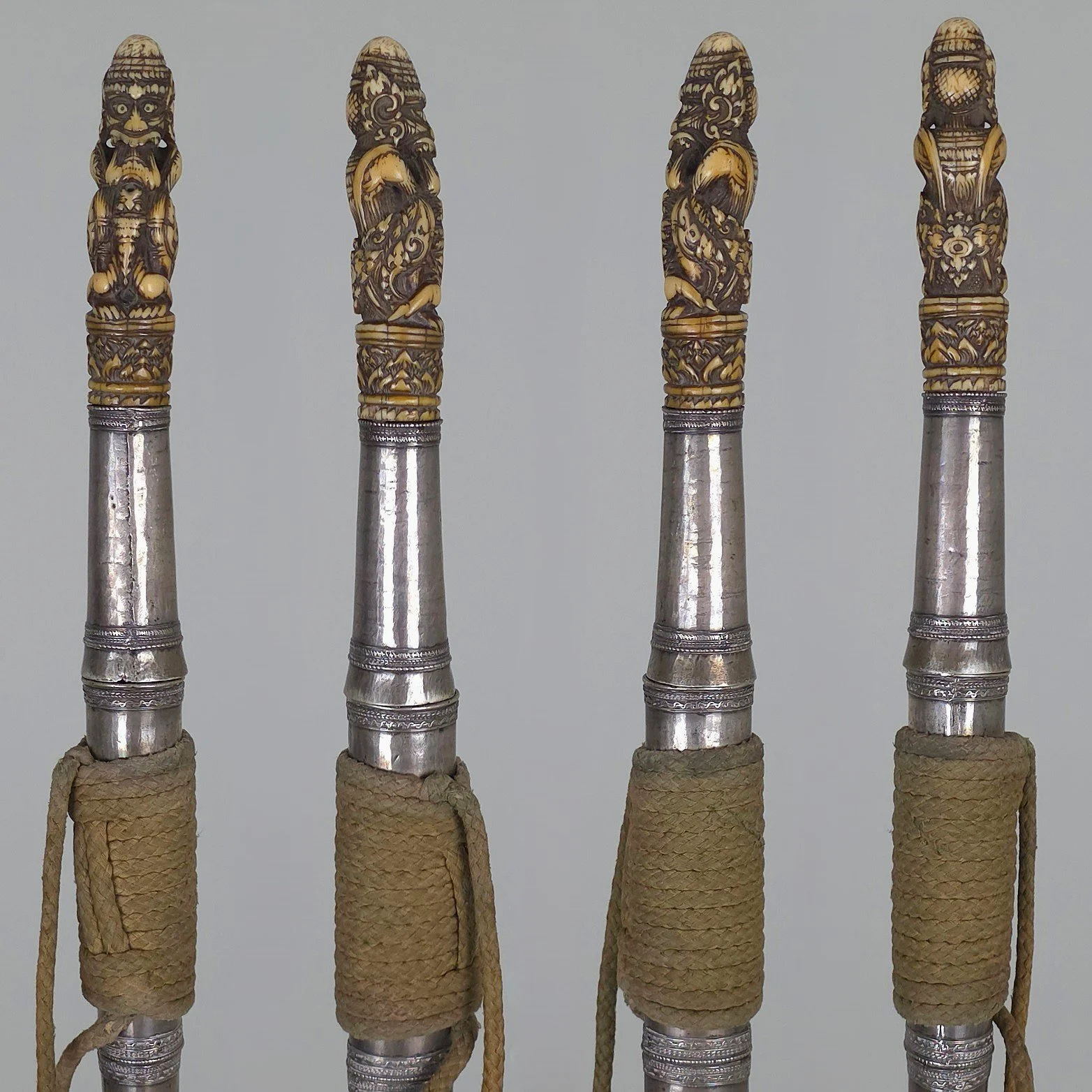
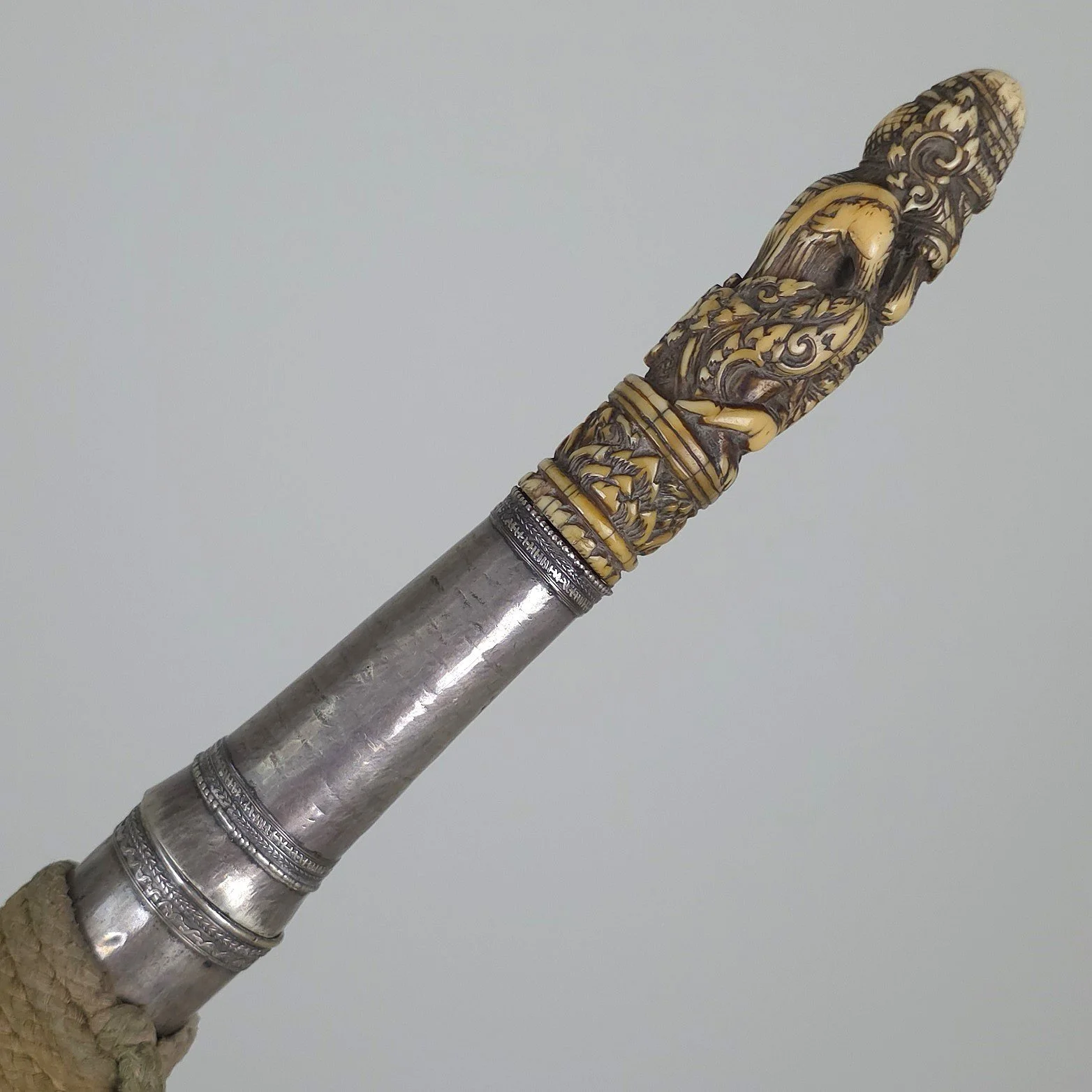
An exceptional dha knife known as a dha hmyuang from the historic Burmese region. The nearly straight single- edged steel blade downcurves toward the acute sharp point. The hilt pommel is elegantly carved and pierced of elephant ivory in a deep yellow and cream coloration, in the style of Bilu Panwa, a fierce ogre and guardian of evil spirits in Buddhist mythology. Characterized by a tiered crown, large bulging eyes, and an open mouth revealing a row of teeth with large fangs devouring a figure. Cropped amongst and upon a kankok (vegetal) scrollwork base.
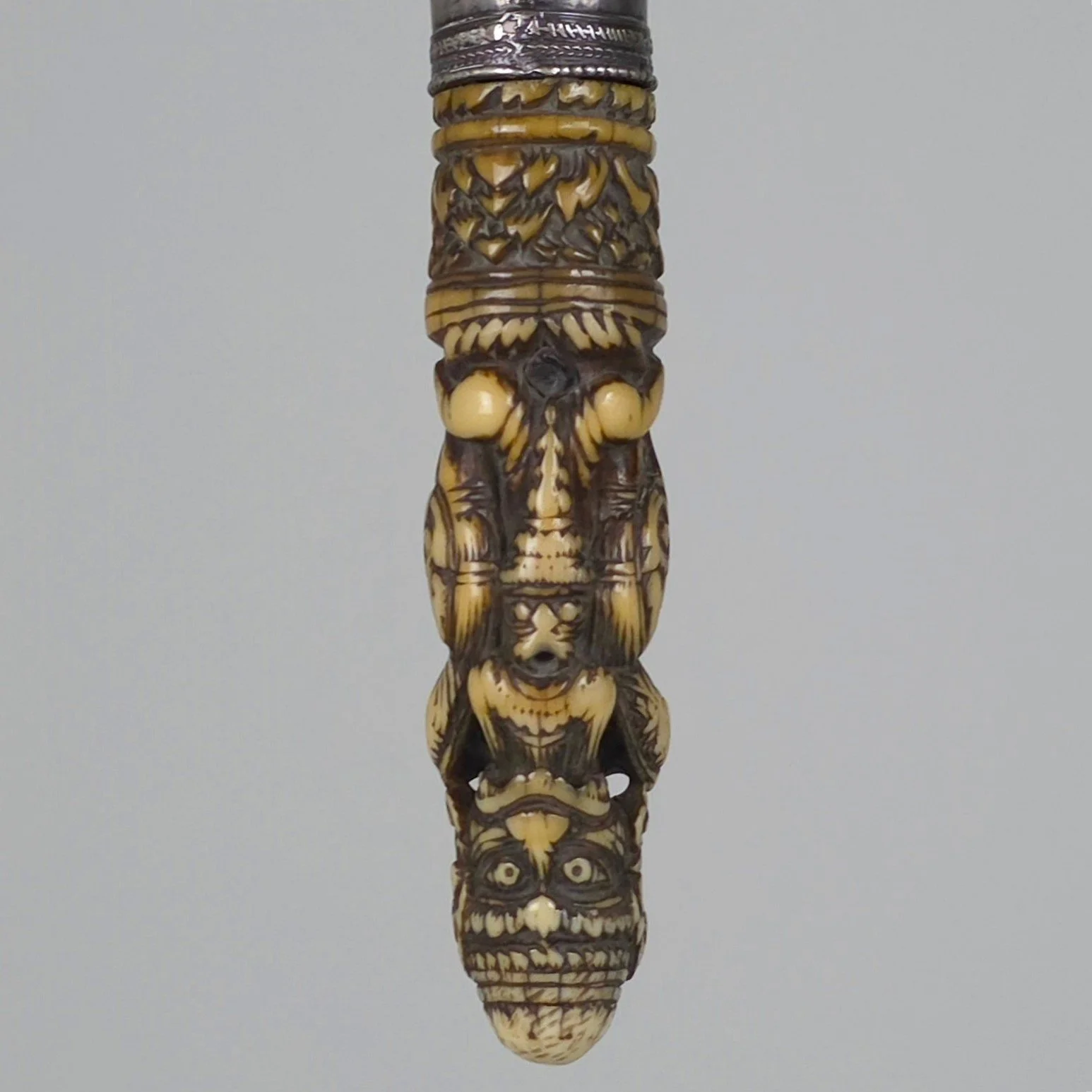
Holding the hilt upside down completely changes the perspective and reveals a stunning double image composition. In this orientation, the figure that previously looked like it was being eaten now shows a royal Min (prince) or Deva (celestial deity) wearing a traditional tiered pointed maukto (crown), in a meditative posture. The gaping jaw of the ogre now transforms into a massive, ornate throne supporting the figure. This composition tells a classic Buddhist story of spiritual triumph representing the triumph of dharma (righteousness and order, represented by the prince/deity) over chaotic and demonic forces (Bilu). Instead of the ogre eating a victim, the prince has successfully tamed the monster, forcing the powerful demon to submit and serve as his royal mount.
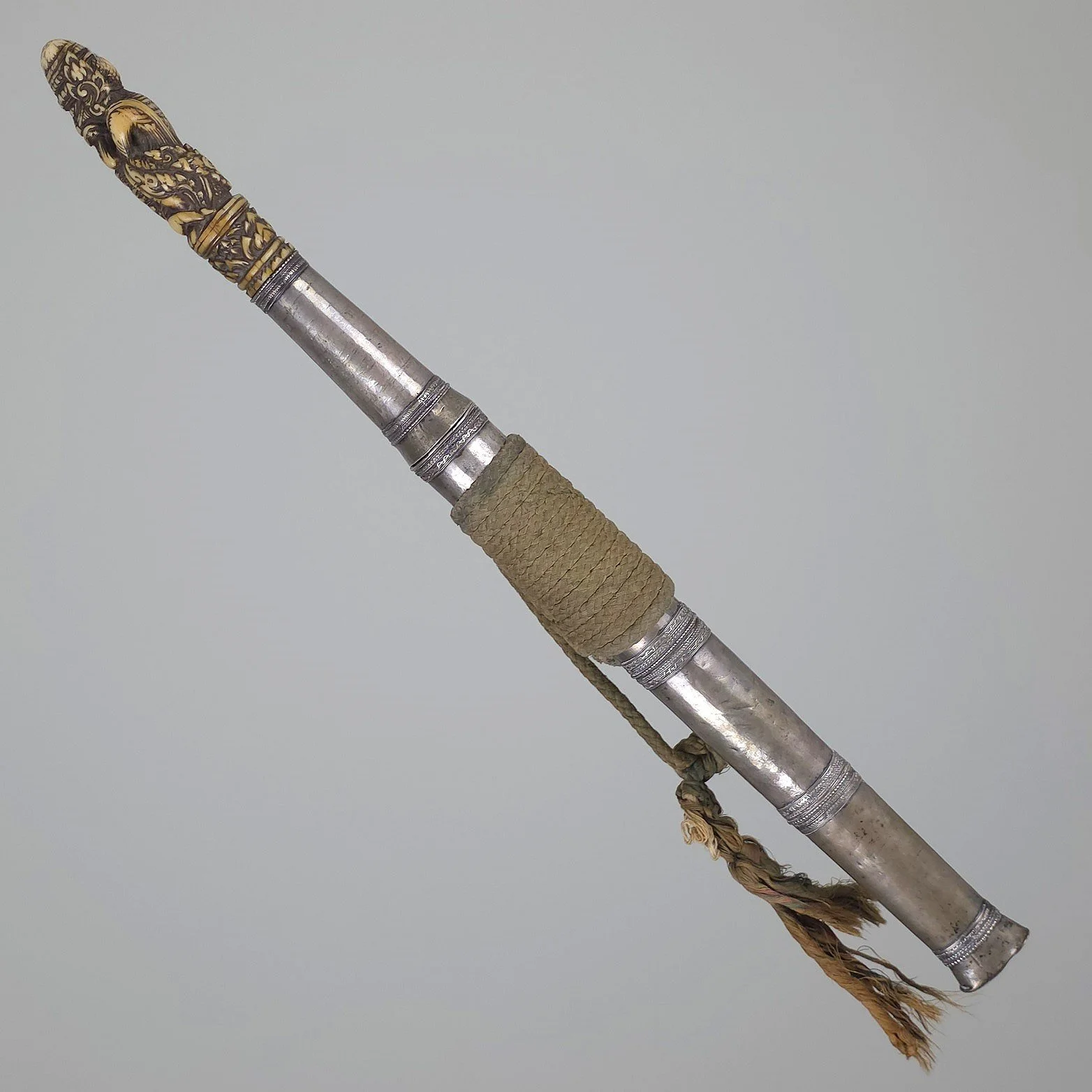
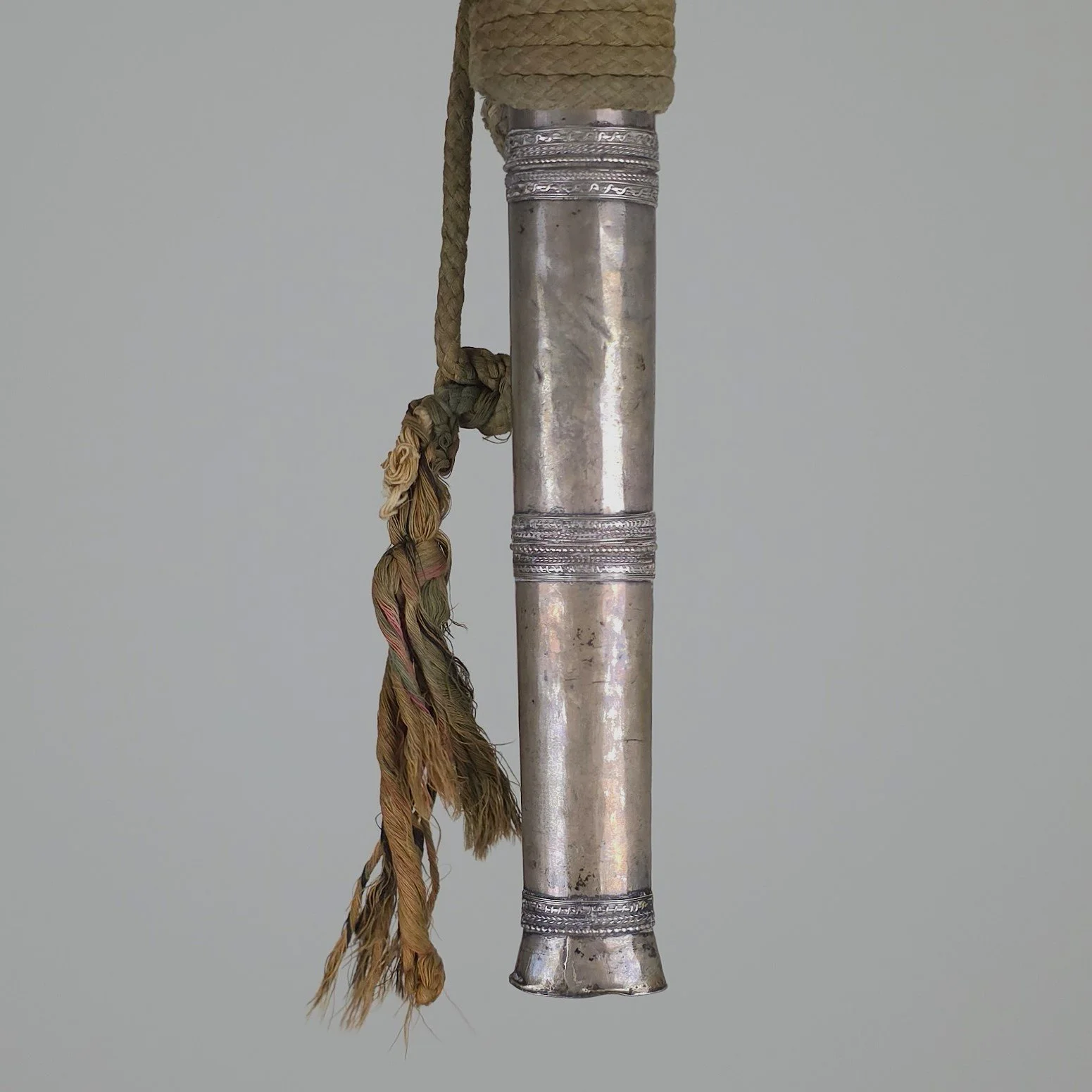
The second half of the hilt is composed of a wooden interior covered in silver sheet decorated in bands of silver filigree. The sheath in the same manner construction, and still retaining the original green baldric cord that is tied to the upper section.
An exceptional dha knife having an elegant, complex, and carefully crafted ivory hilt supportive of Buddhists mythology. Uniquely carved as each Burmese pommel was specifically produced for their owner with no two alike. The silver mounts are at least a medium grade silver as they oxide and tarnish with time. A very fine and rare knife.
Photo 18: A comparison with examples in Robert Hales "Islamic and Oriental Arms and Armour", pages 154 -155.
[1] Hales, Robert. "Islamic and Oriental Arms and Armour". 2013. Pages 148 – 158
[2] https://collections.penn.museum/collections/object/88025
[3] https://www.metmuseum.org/art/collection/search/38553
[4] https://www.metmuseum.org/art/collection/search/31588
[5] https://www.britishmuseum.org/collection/object/A_1946-0713-1
[6] https://www.britishmuseum.org/collection/object/A_1946-0713-2?selectedImageId=1614047395
[7] https://www.britishmuseum.org/collection/object/A_1952-1110-5-a-b?selectedImageId=1614053842
[8] https://www.britishmuseum.org/collection/object/A_As1972-Q-3321-a
[9] https://www.britishmuseum.org/collection/object/A_2003-0306-1