Dha Shay
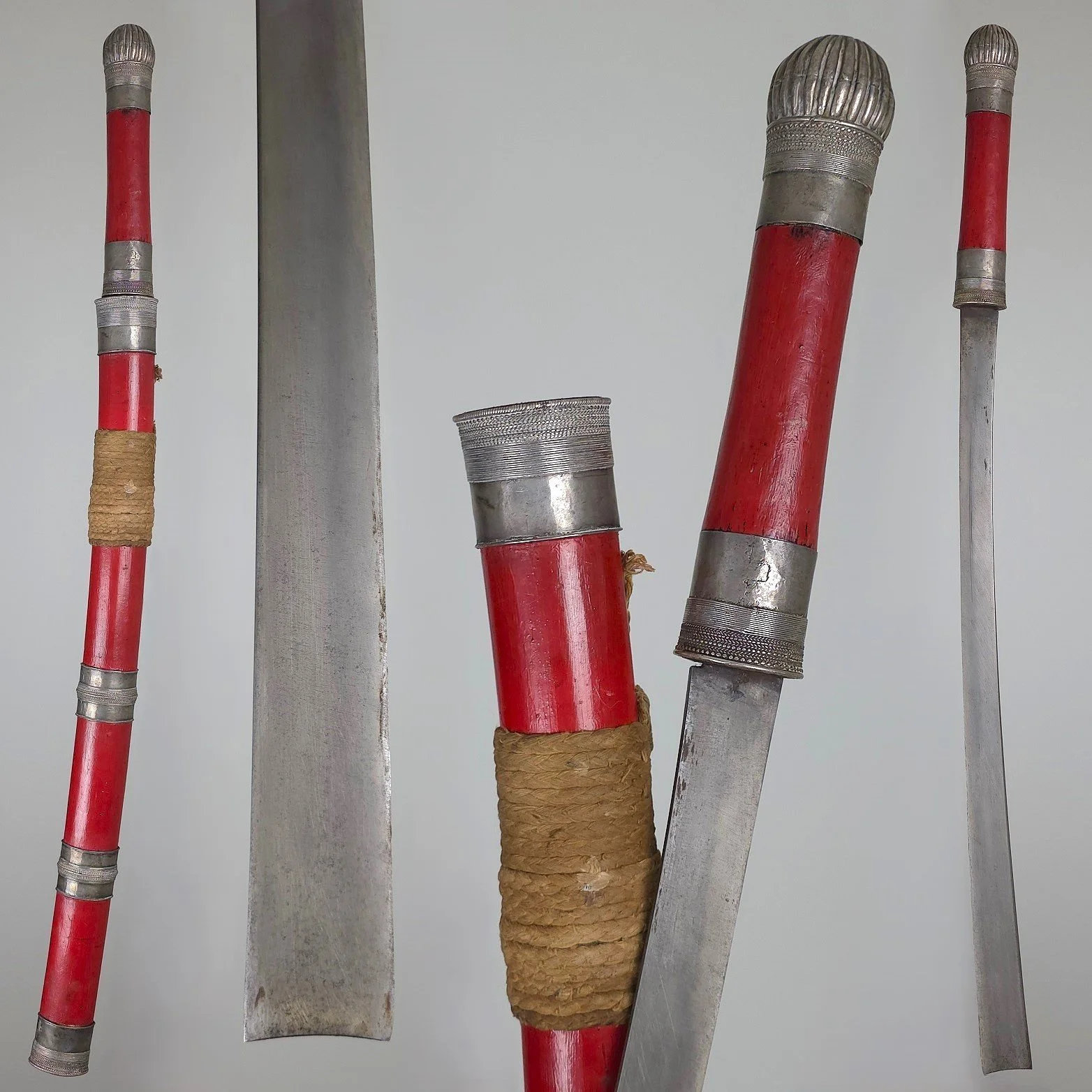
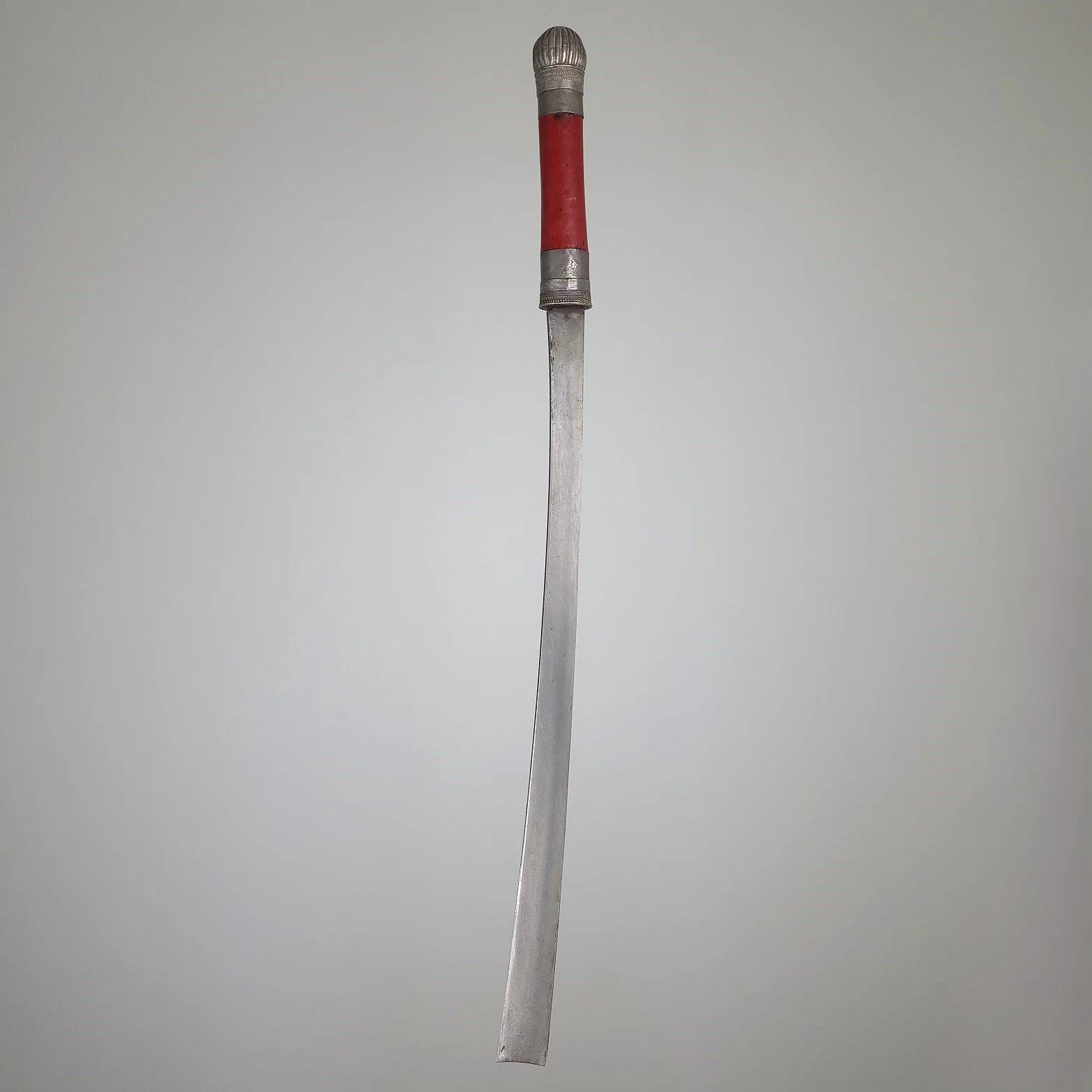
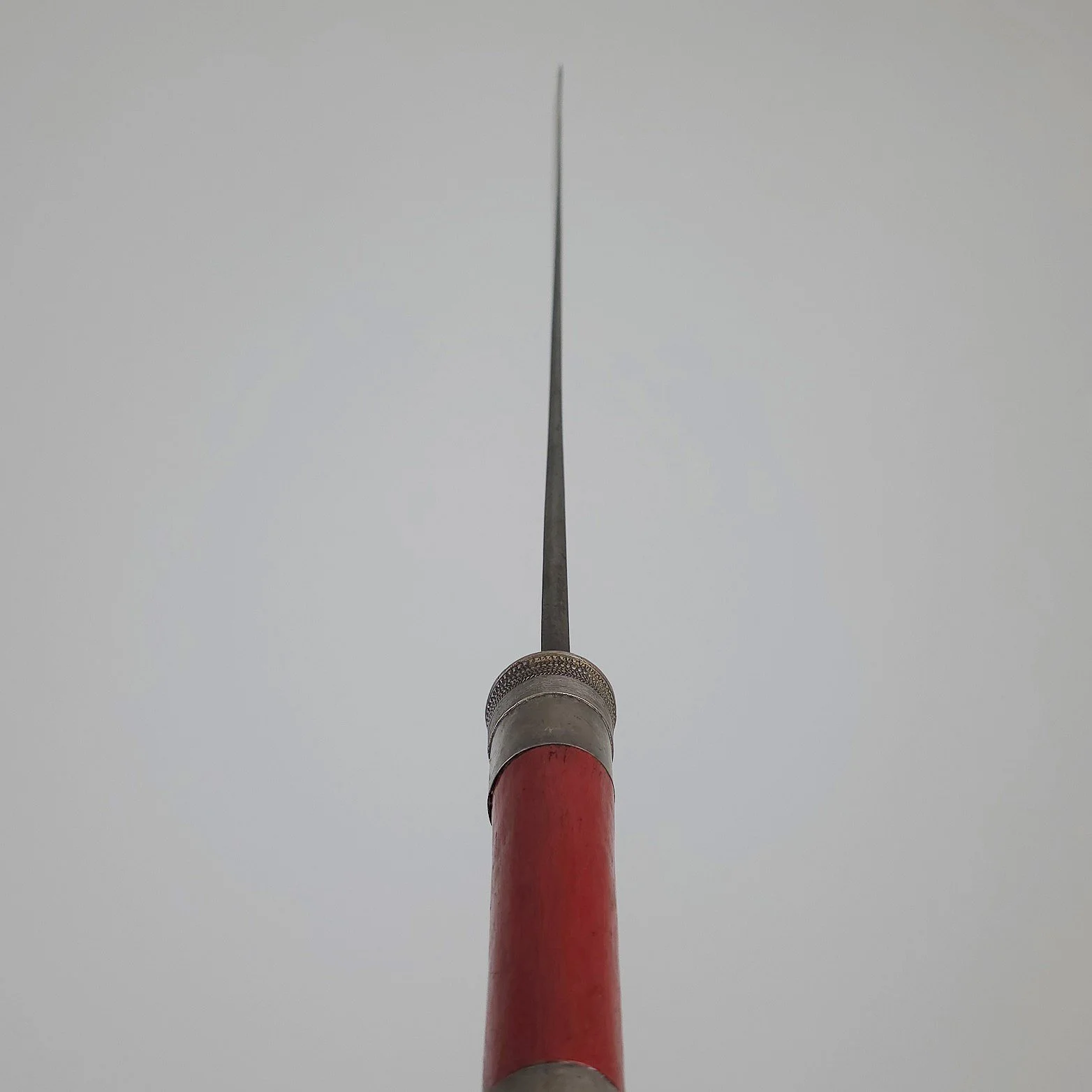
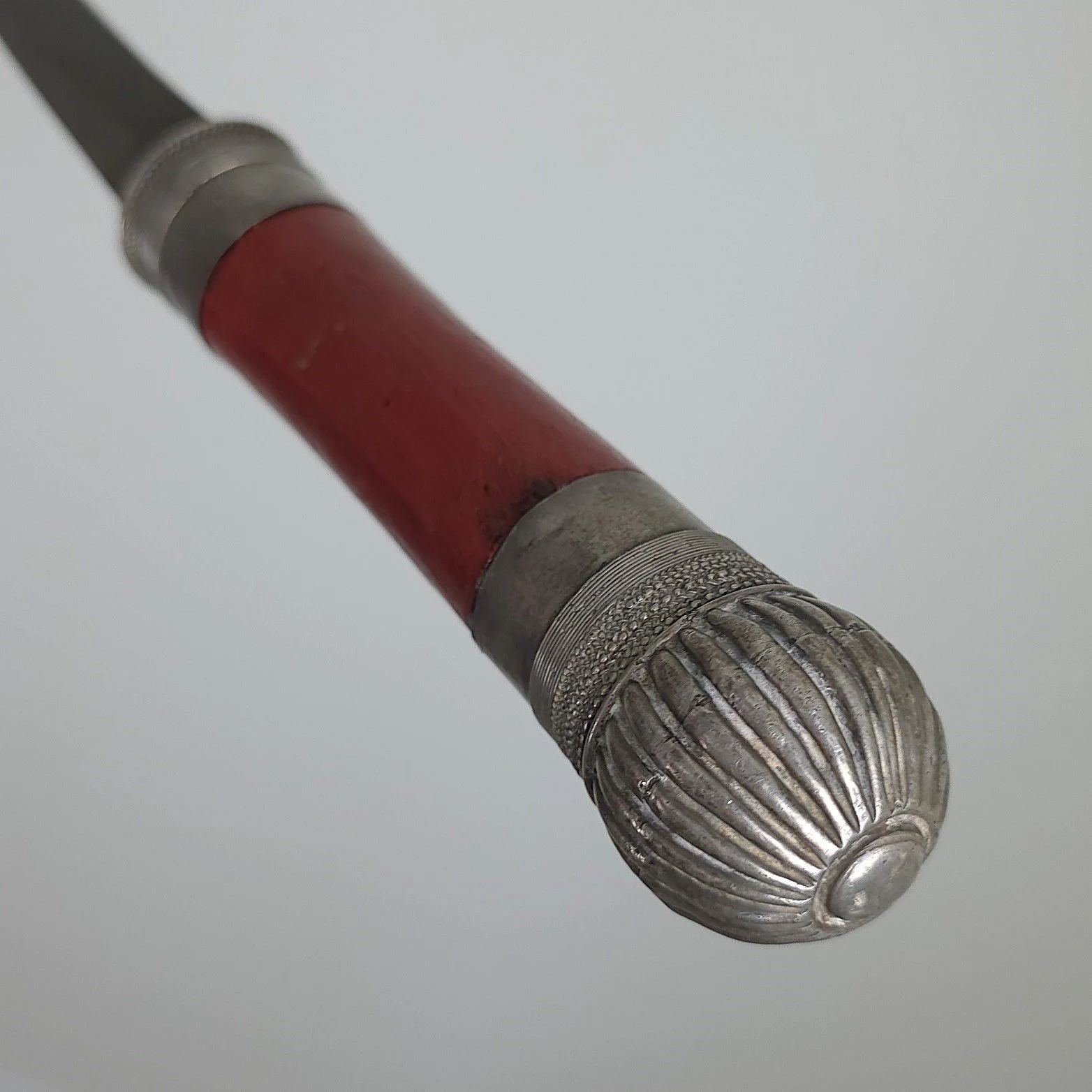
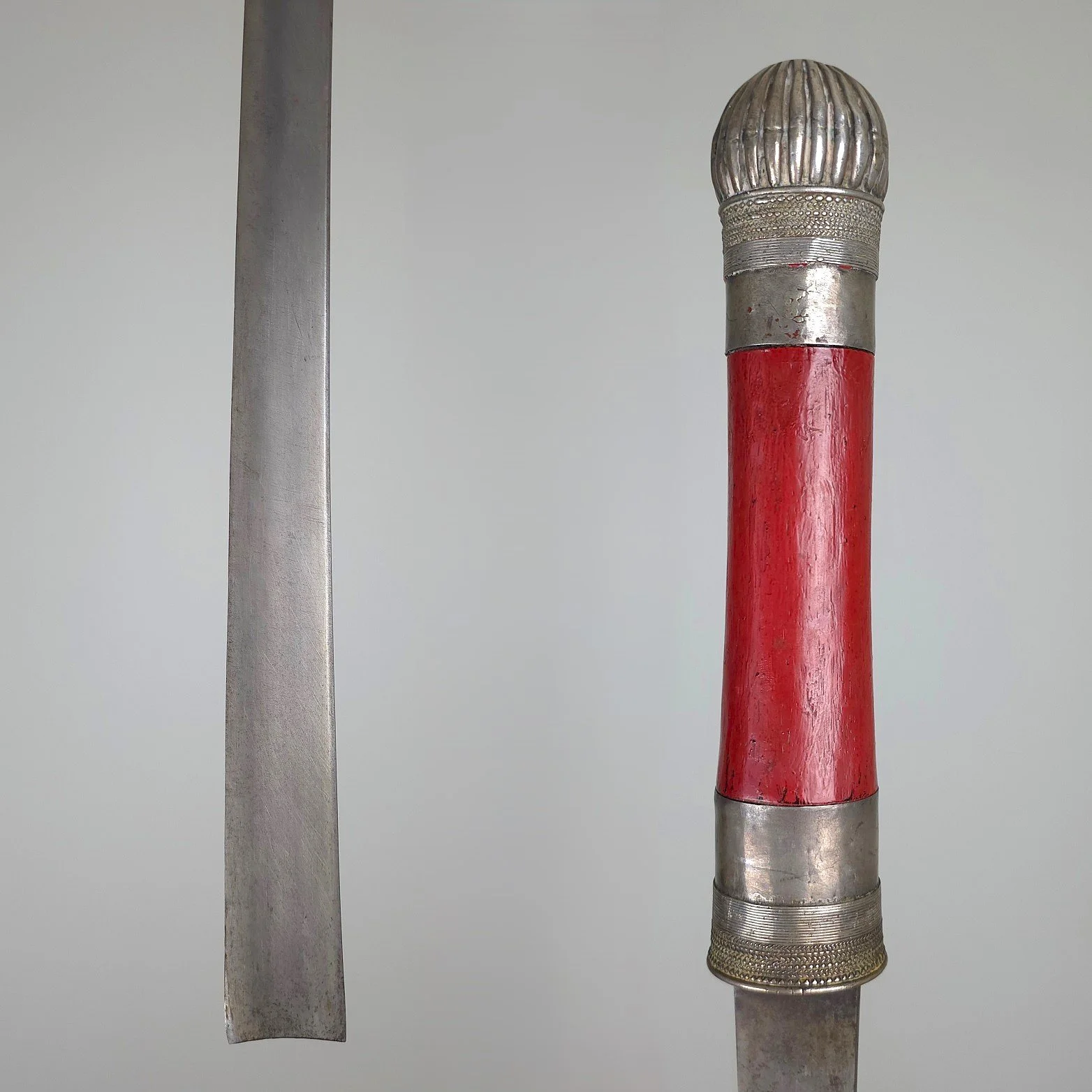
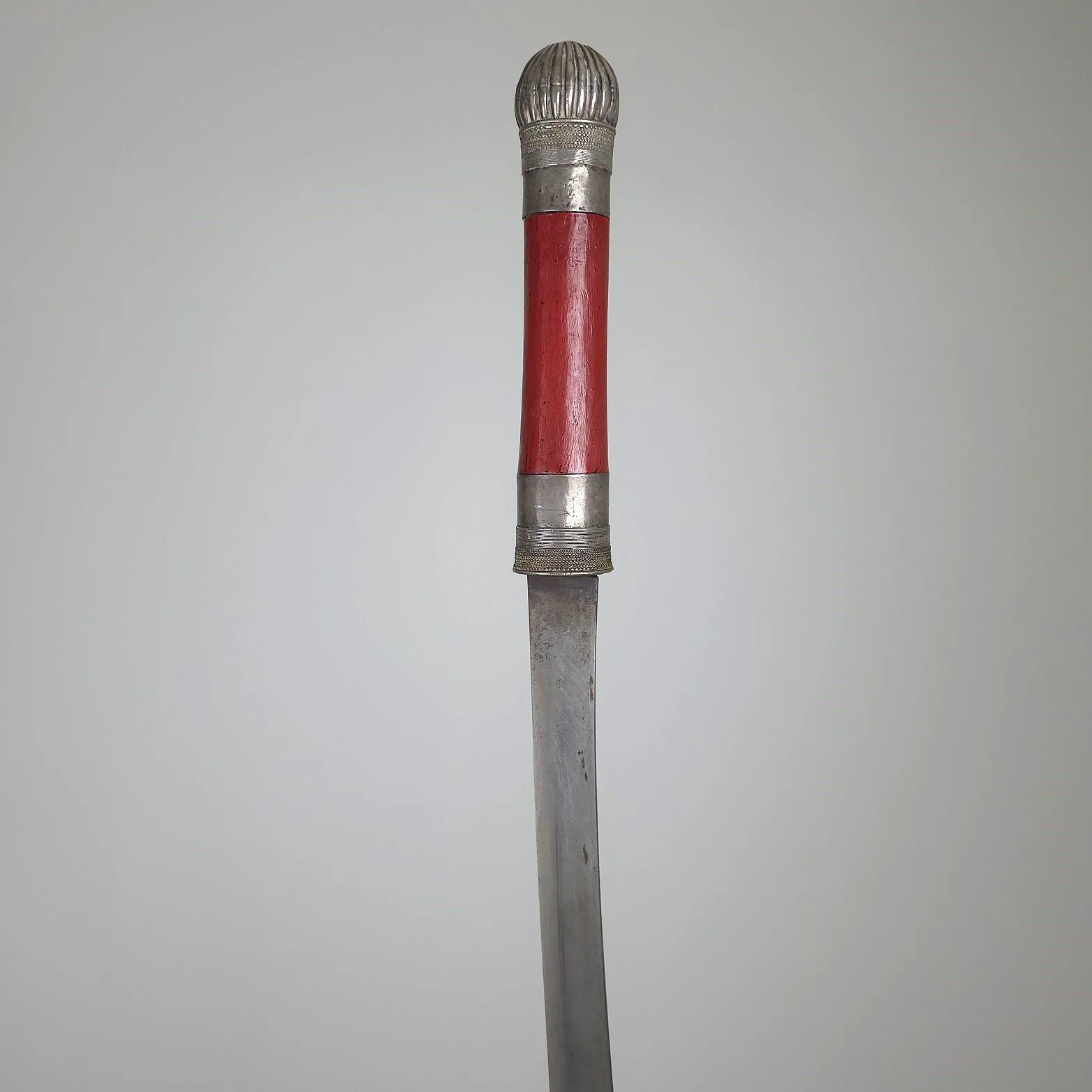
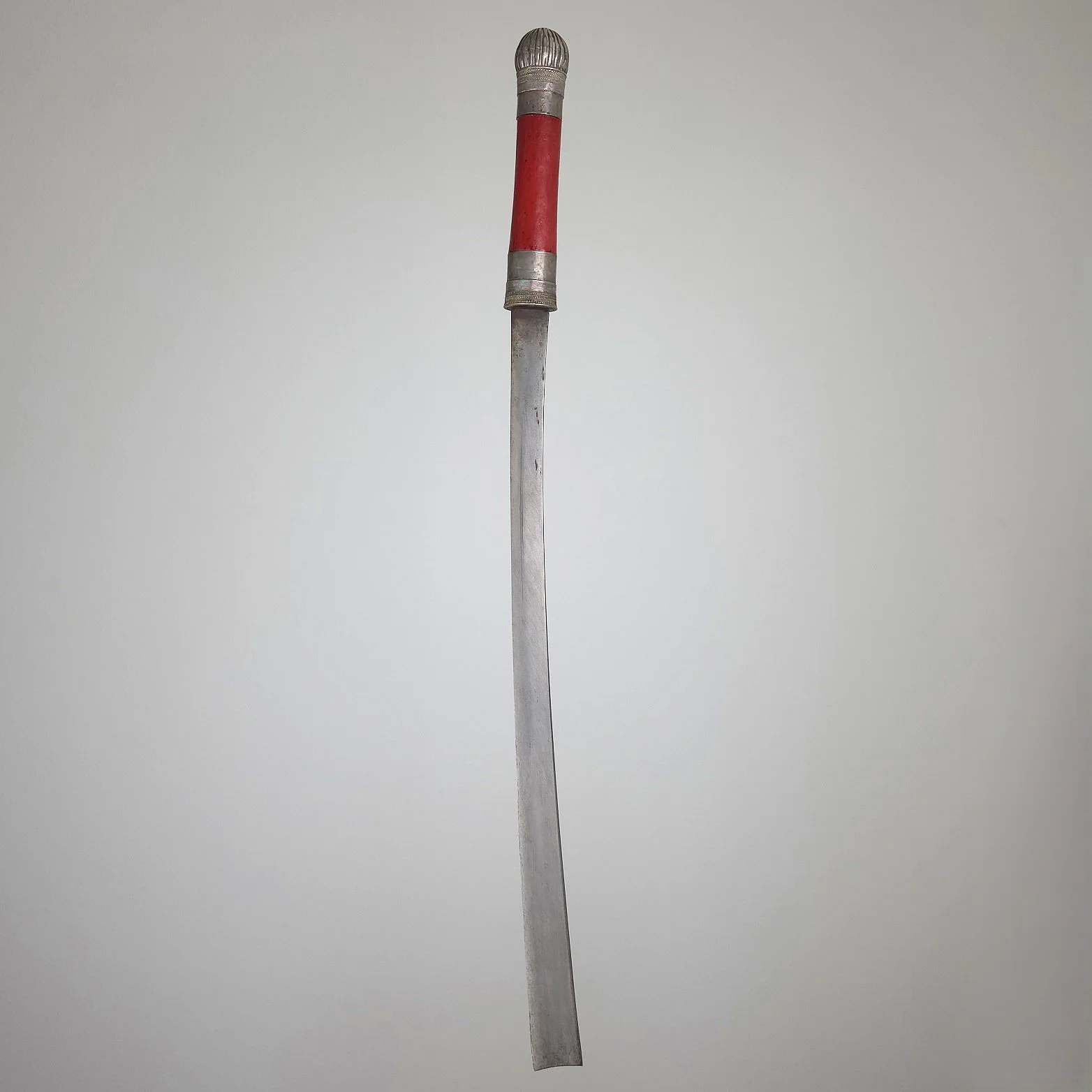
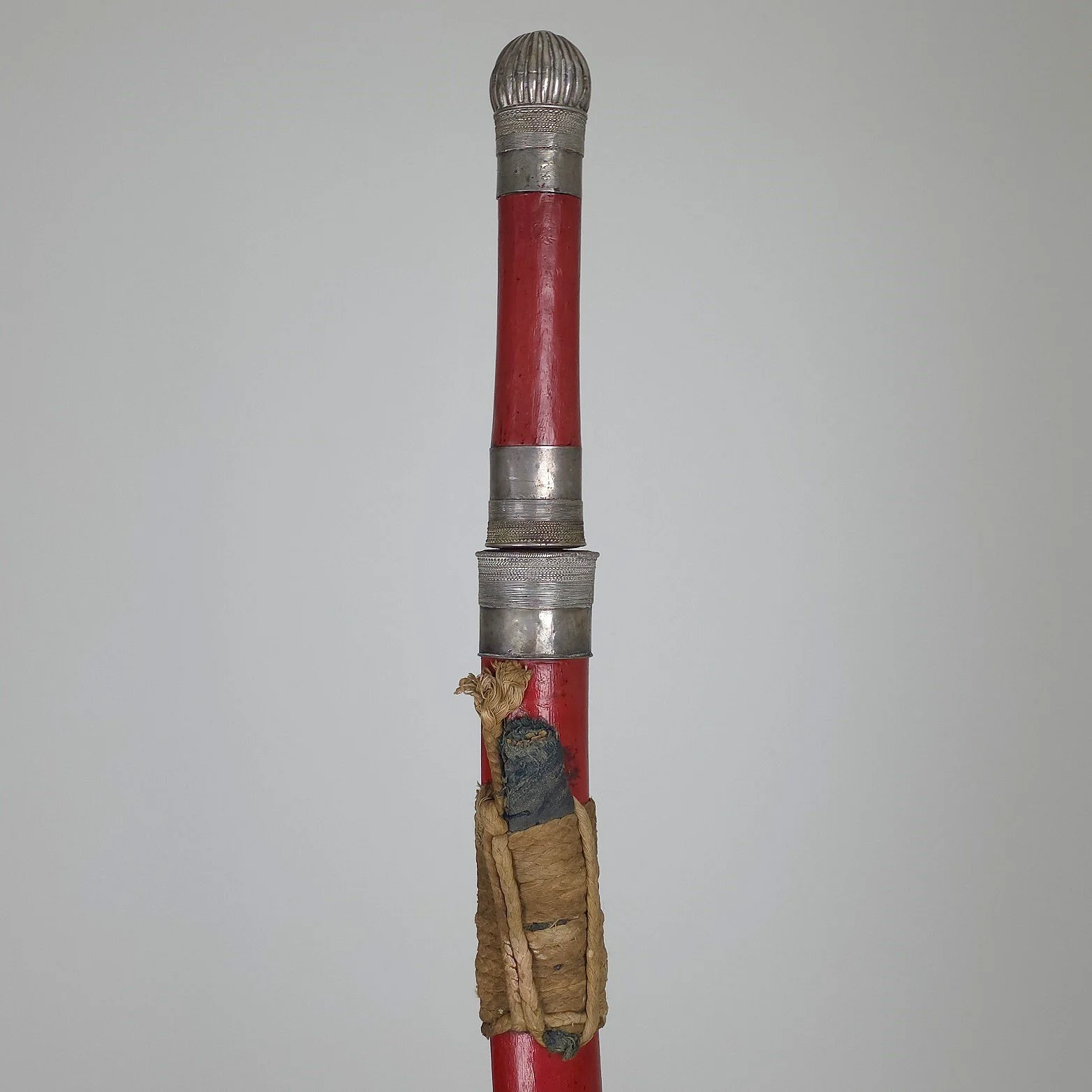
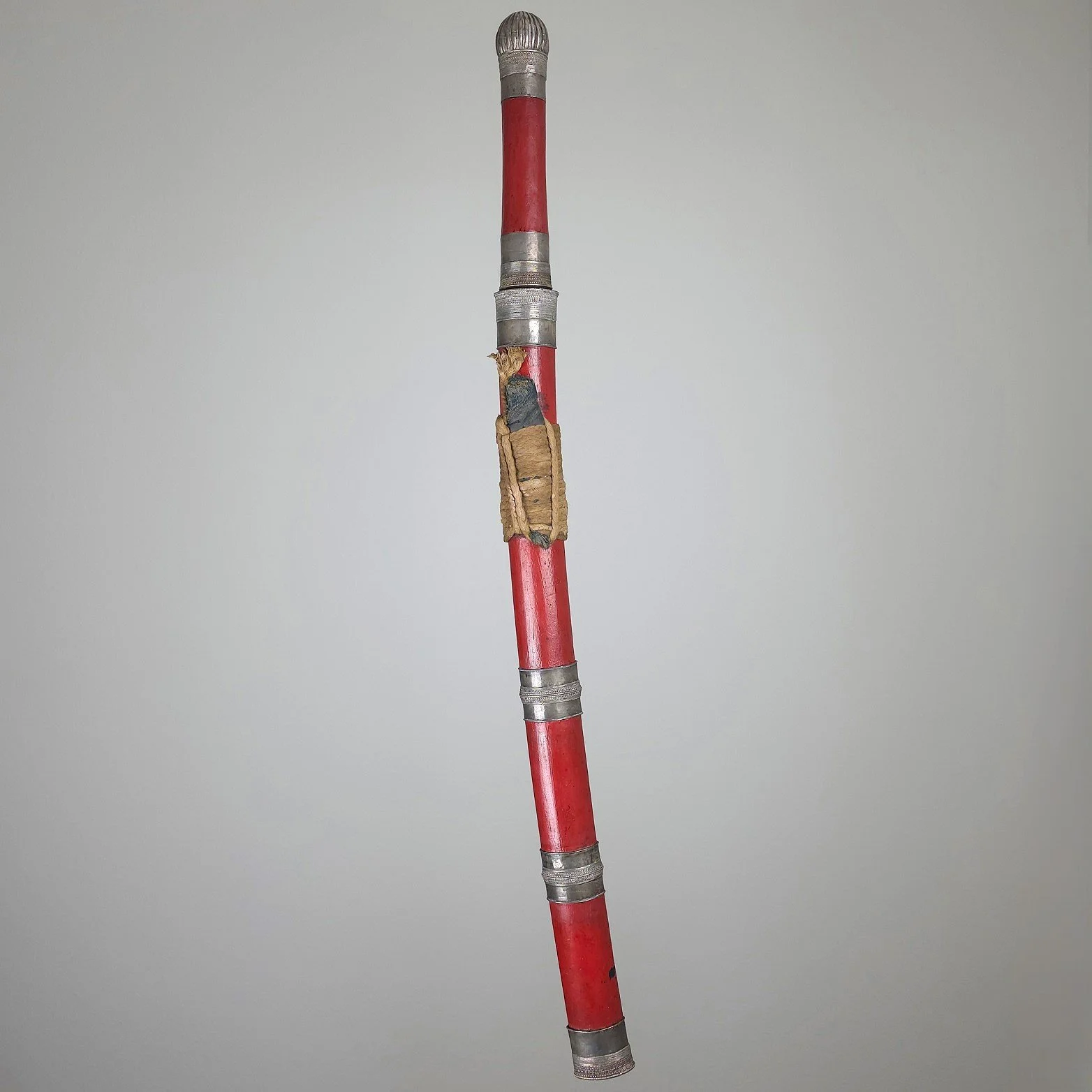
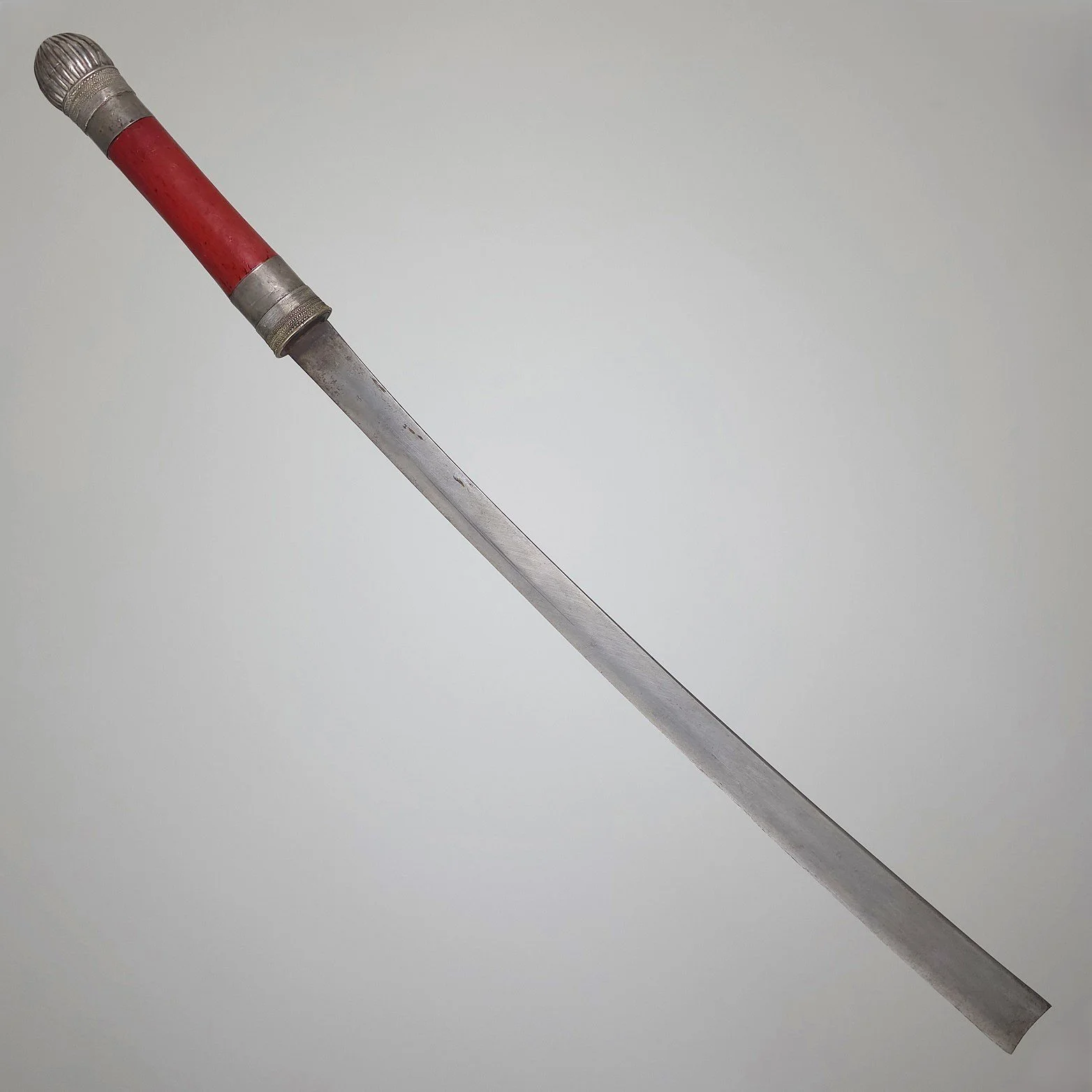
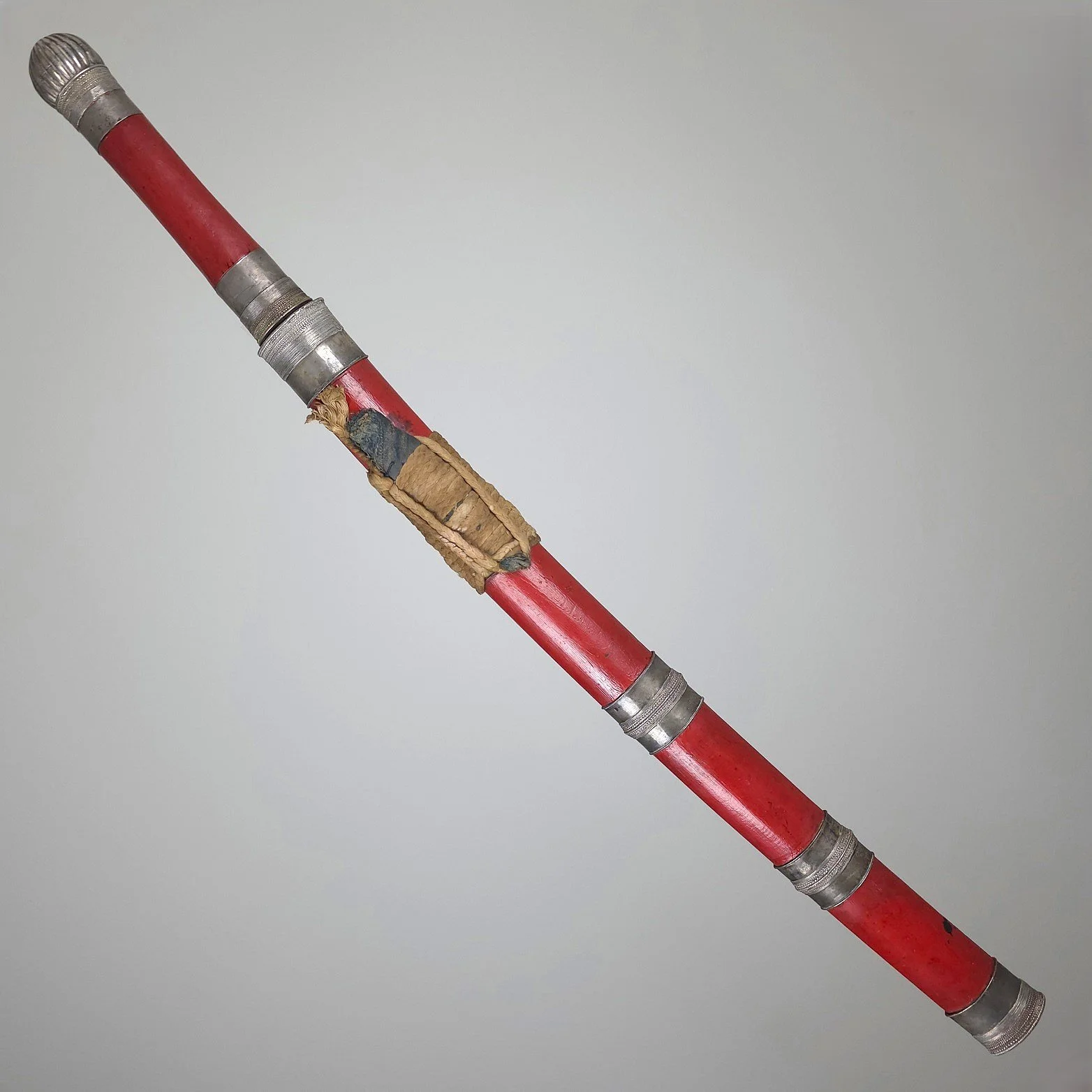

Dha Shay
Chin - Lushai - Shan - Kachin
Chin Hills - Kachin, Upper Burma, Bengal British Raj (Chin State - Sagaing, Myanmar - Assam, India)
Late 19th - Early 20th century (ca. 1895 - 1920)
Steel, wood, laquer, silver, cotton,
Blade: 58,4cm
Hilt & Blade: 78,1cm
Hilt, Blade, Sheath: 80,3cm
Collection Date: 2021
Collection Number: 158
Ex. Rick Stroud: Raleigh, North Carolina, USA (2021)
Ex. Chiswick Auctions: London, UK (2020)
Ex. UK Family Collection ((1895 - 1920)) - 2020)
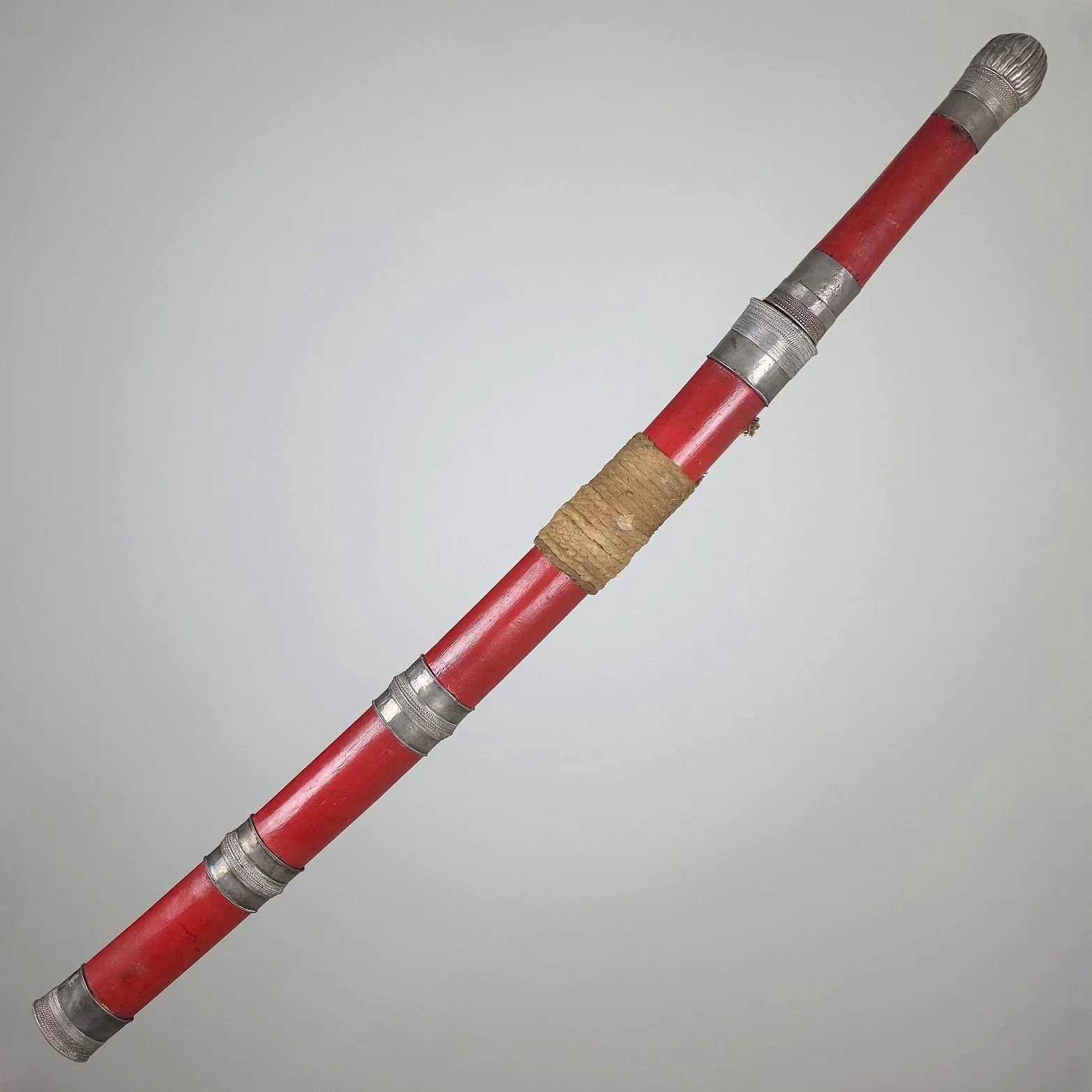
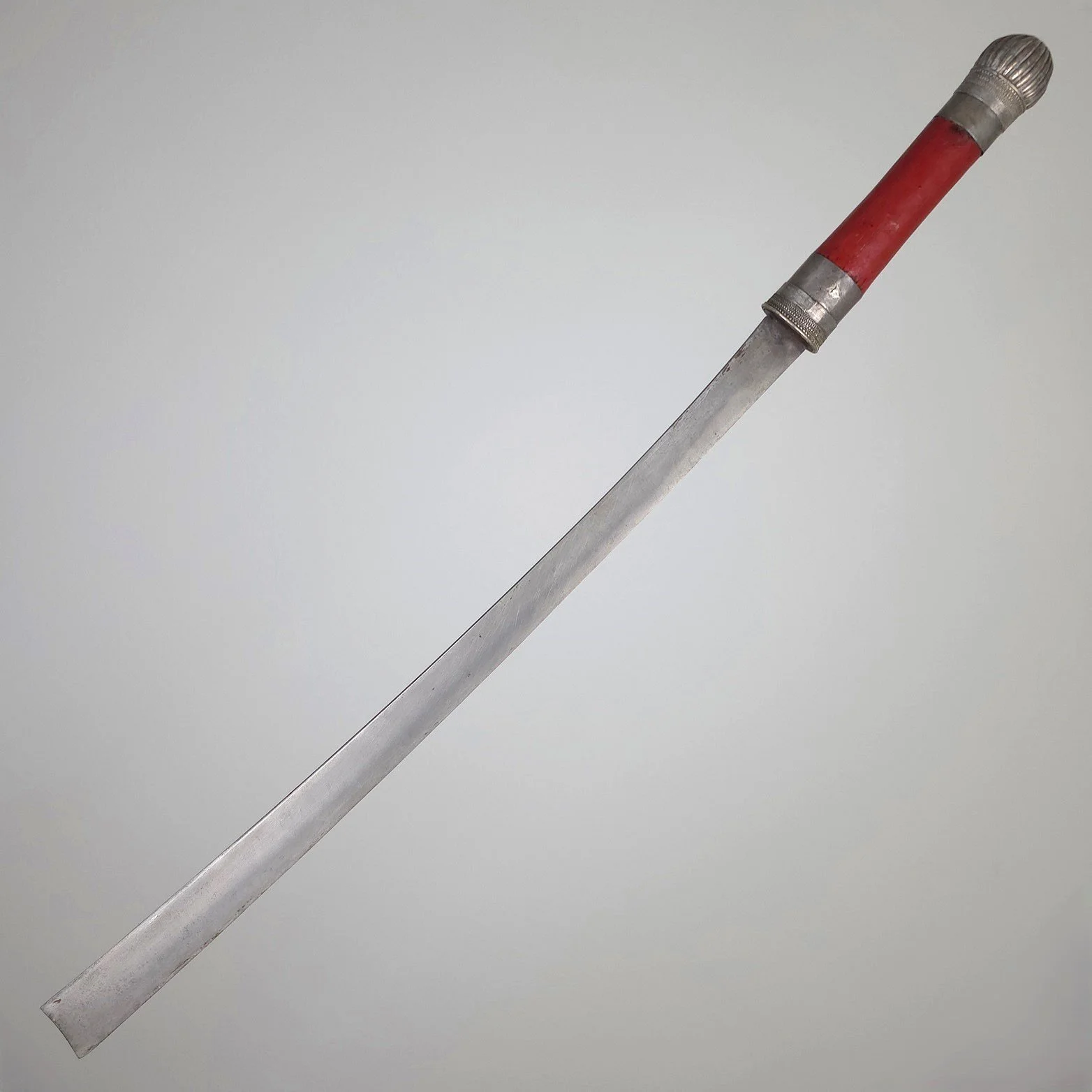
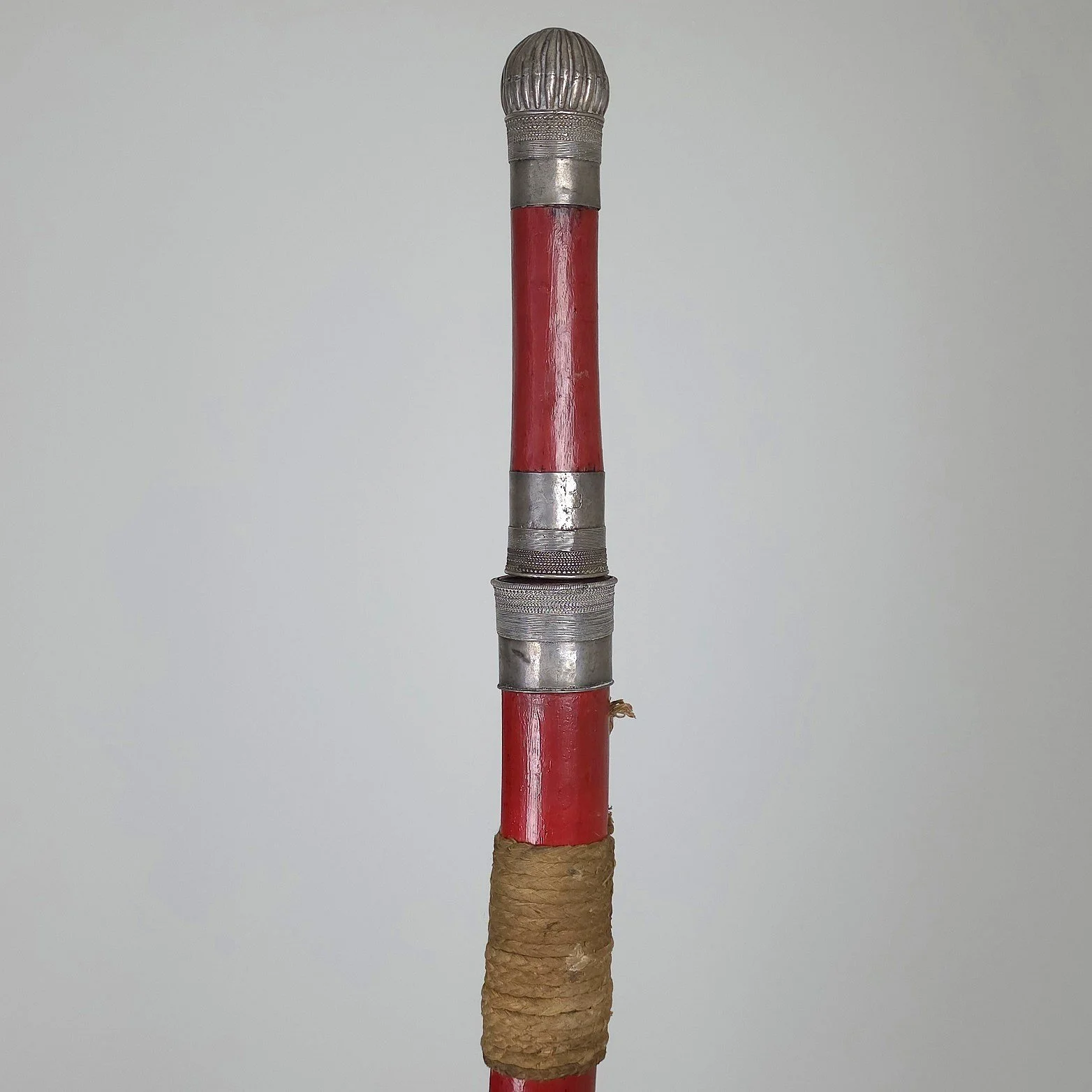
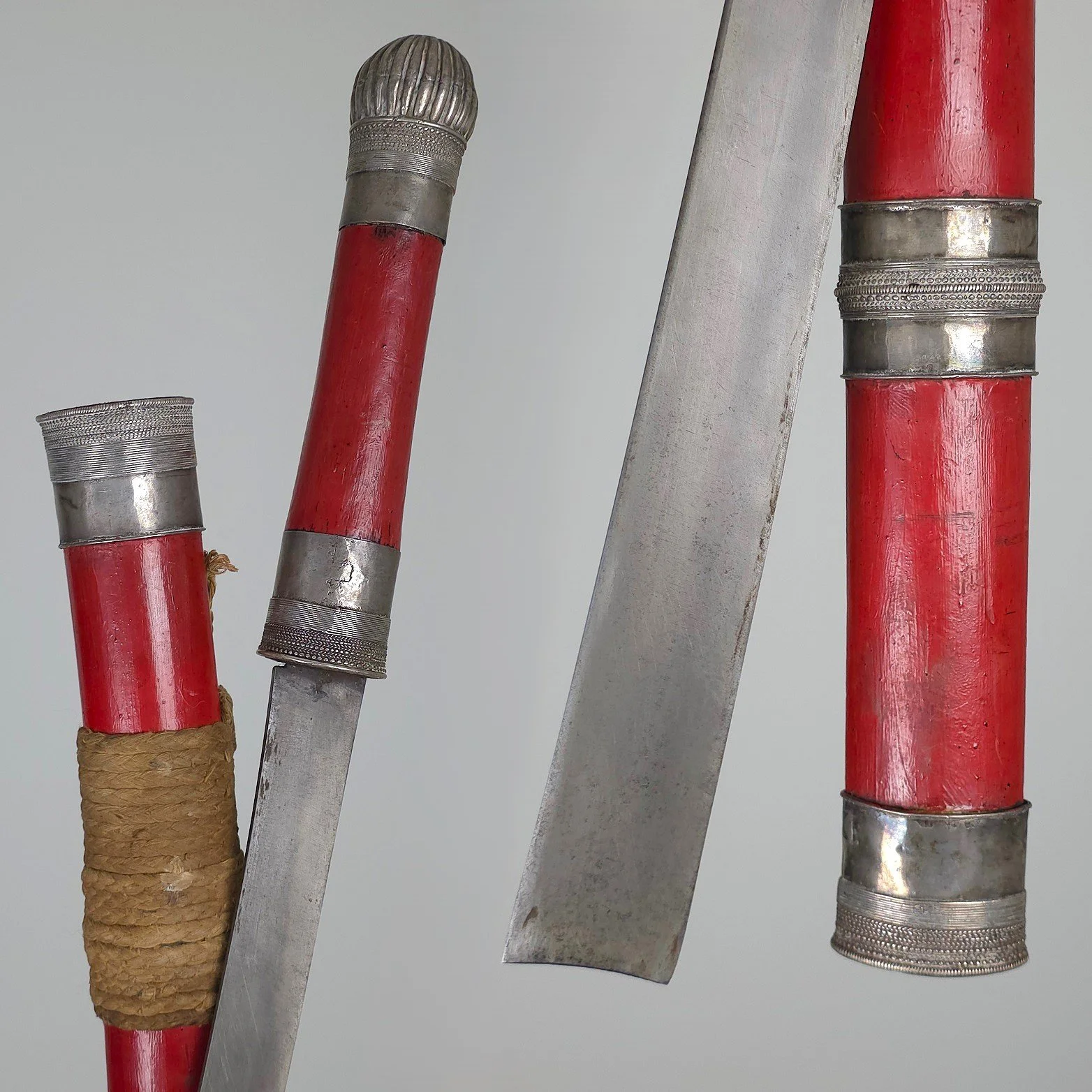
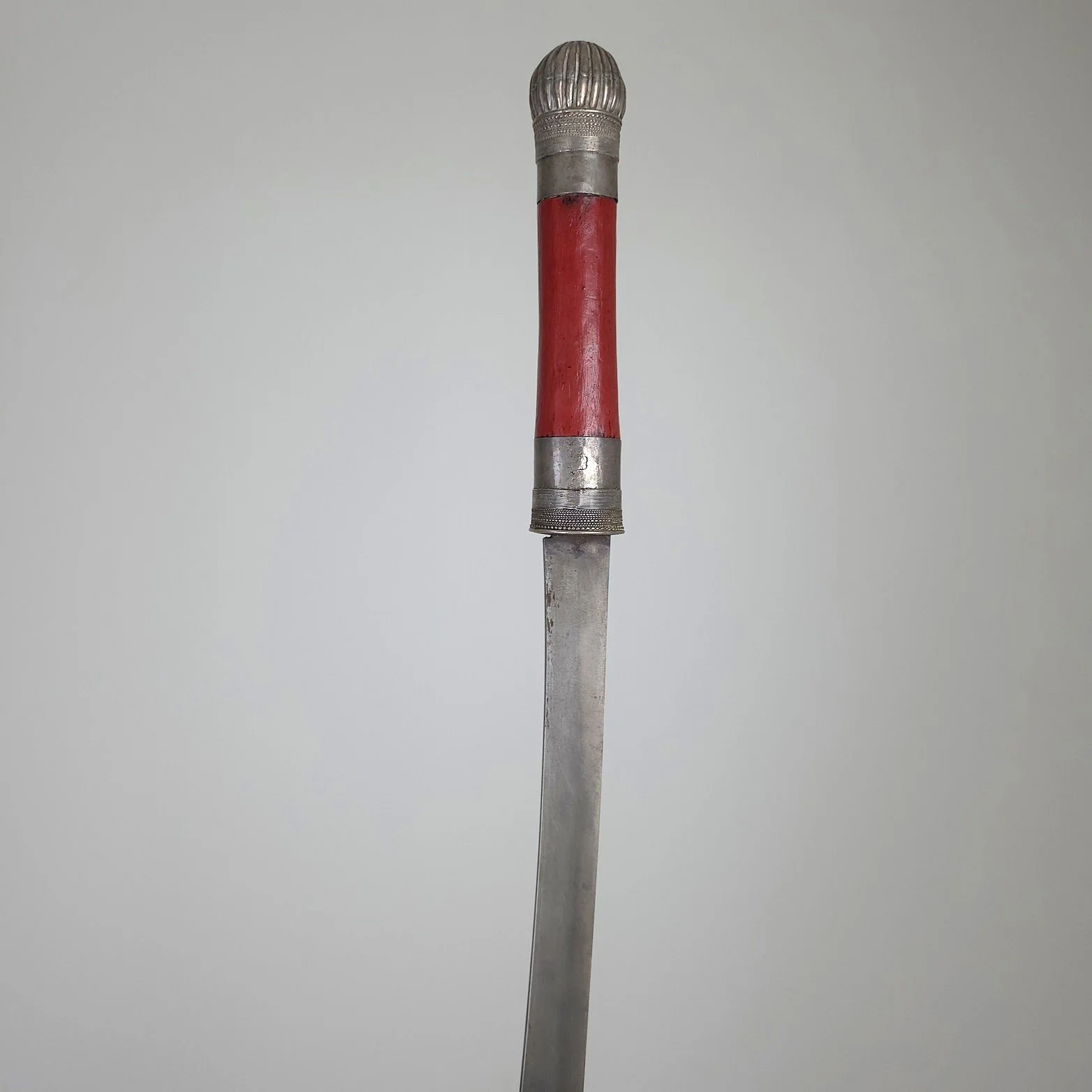
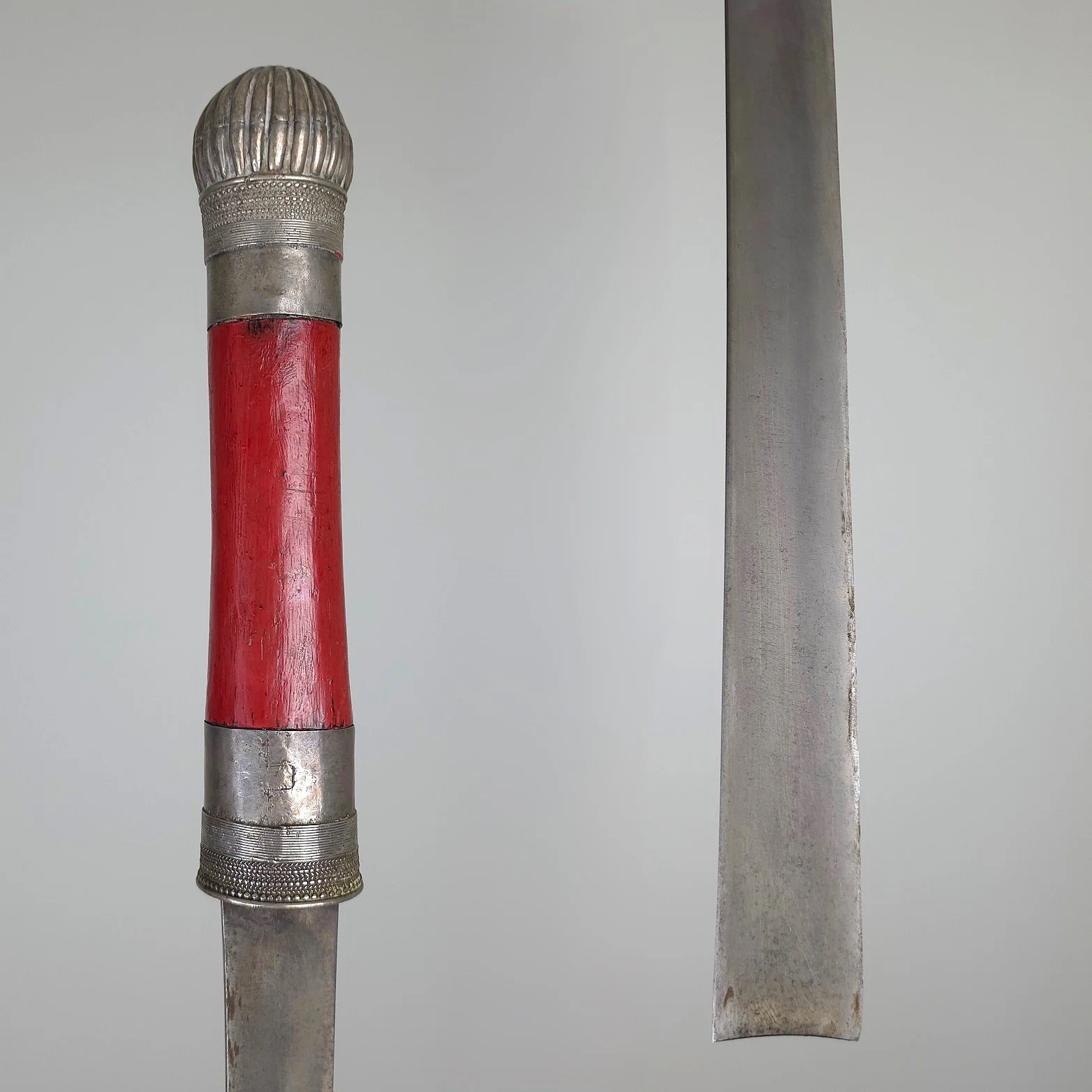
A finely mounted dha shay sword from historic Upper Burma, likely from the Chin People of the Chin Hills Region of Western Burma. The silver mounts are reminiscent of Shan silversmiths, while the squared tip style can be found near Assam and northward into Kachin and Yunnan province. The red laquer and styling best suggests Chin origin.
Chiswick Provenance: "Purchased by the vendor's grandfather whilst he was working and living in the British Raj (between 1895 - 1920), brought to the UK at the end of his service in the 1920s -1930s and then passed on by descent to the present vendor".
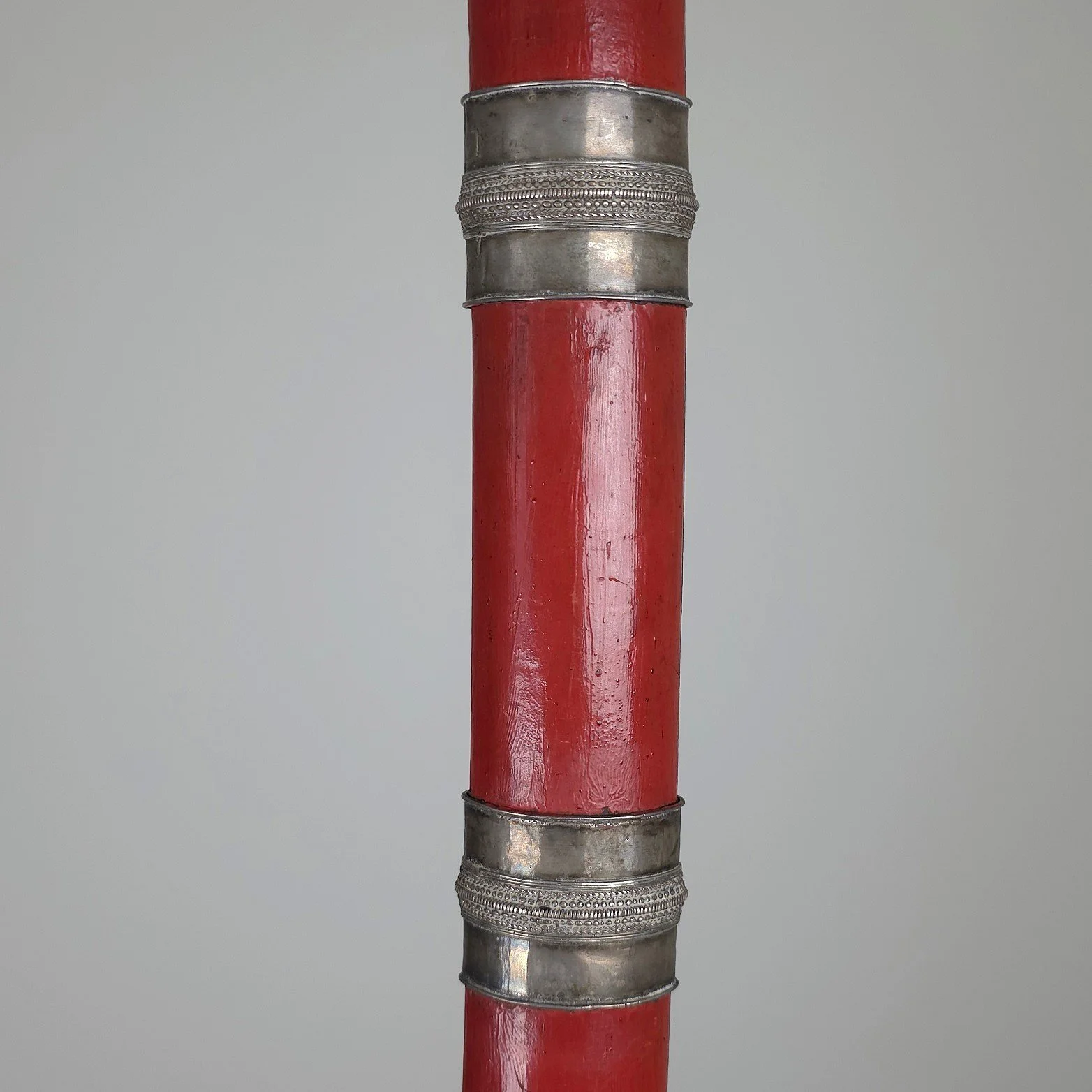
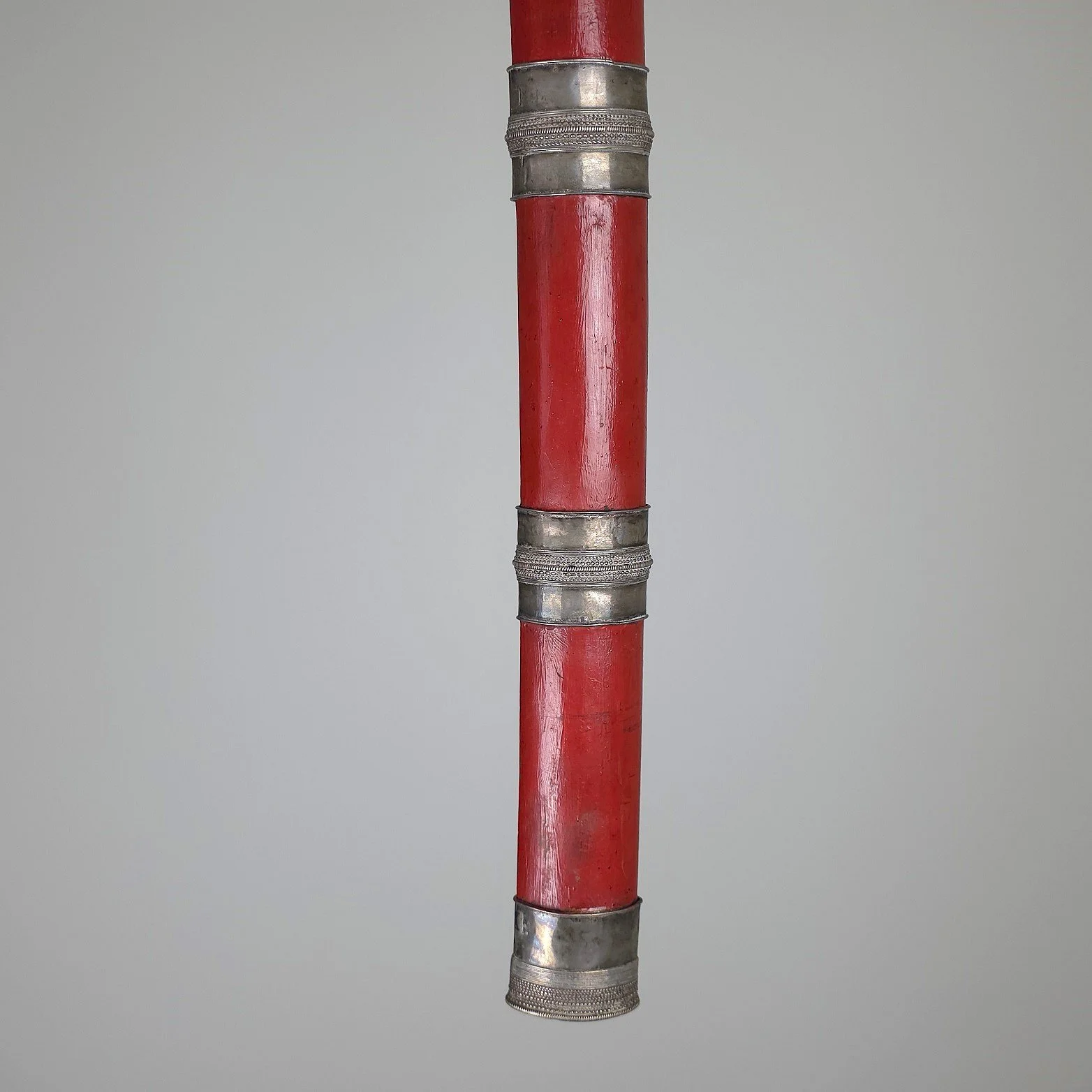
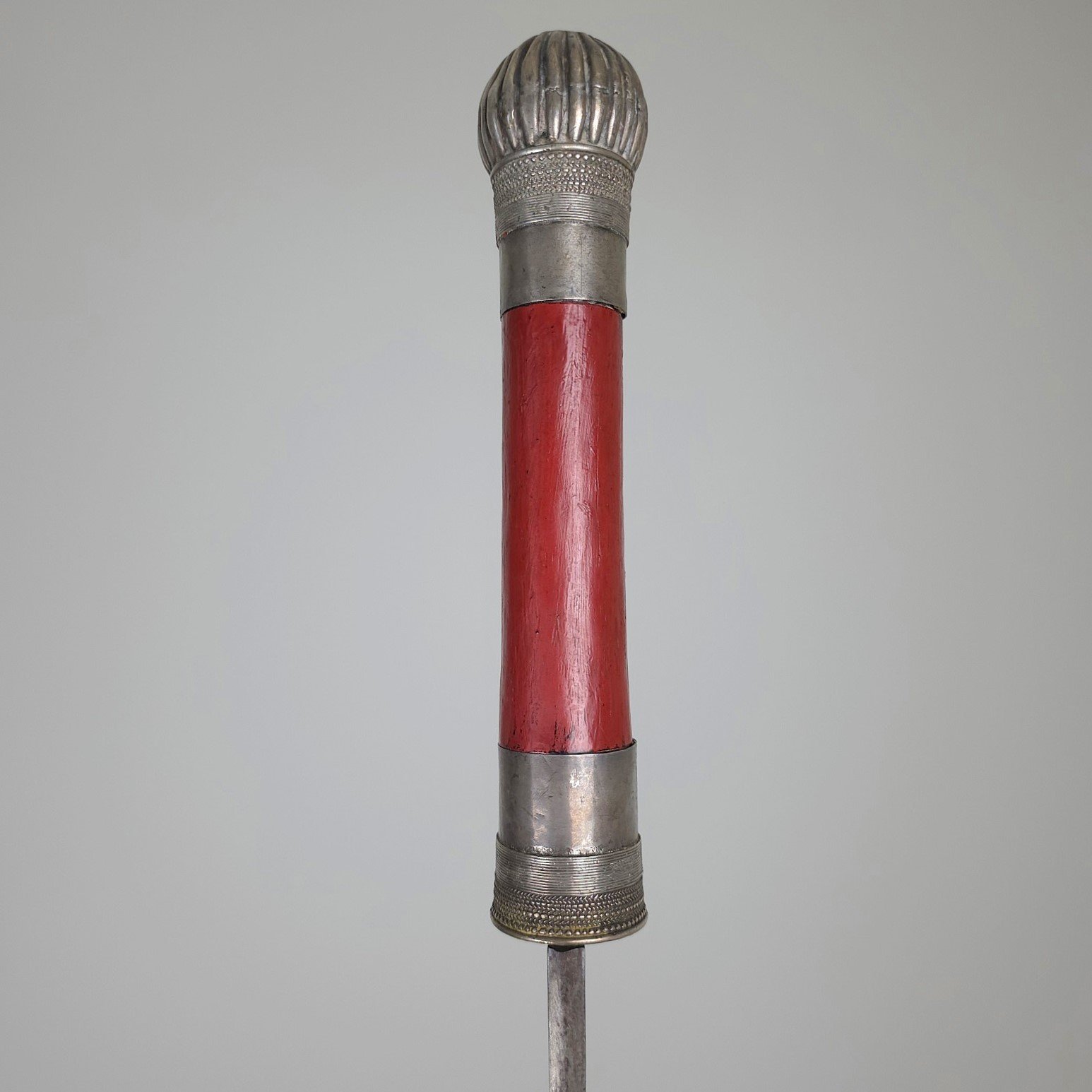
The single- edged heavy steel blade is gently curved, with a thick spine, the point ending in a concave squared tip. There is a tempered zone on the cutting edge indicating that it has been heat treated during the forging process. Bright red laquered cylindrical wooded hilt. Mounts of silver sheet bands decorated in a variety of silver wire, composed of a silver ferrule and a large gadrooned silver pommel representative of a lotus bud.
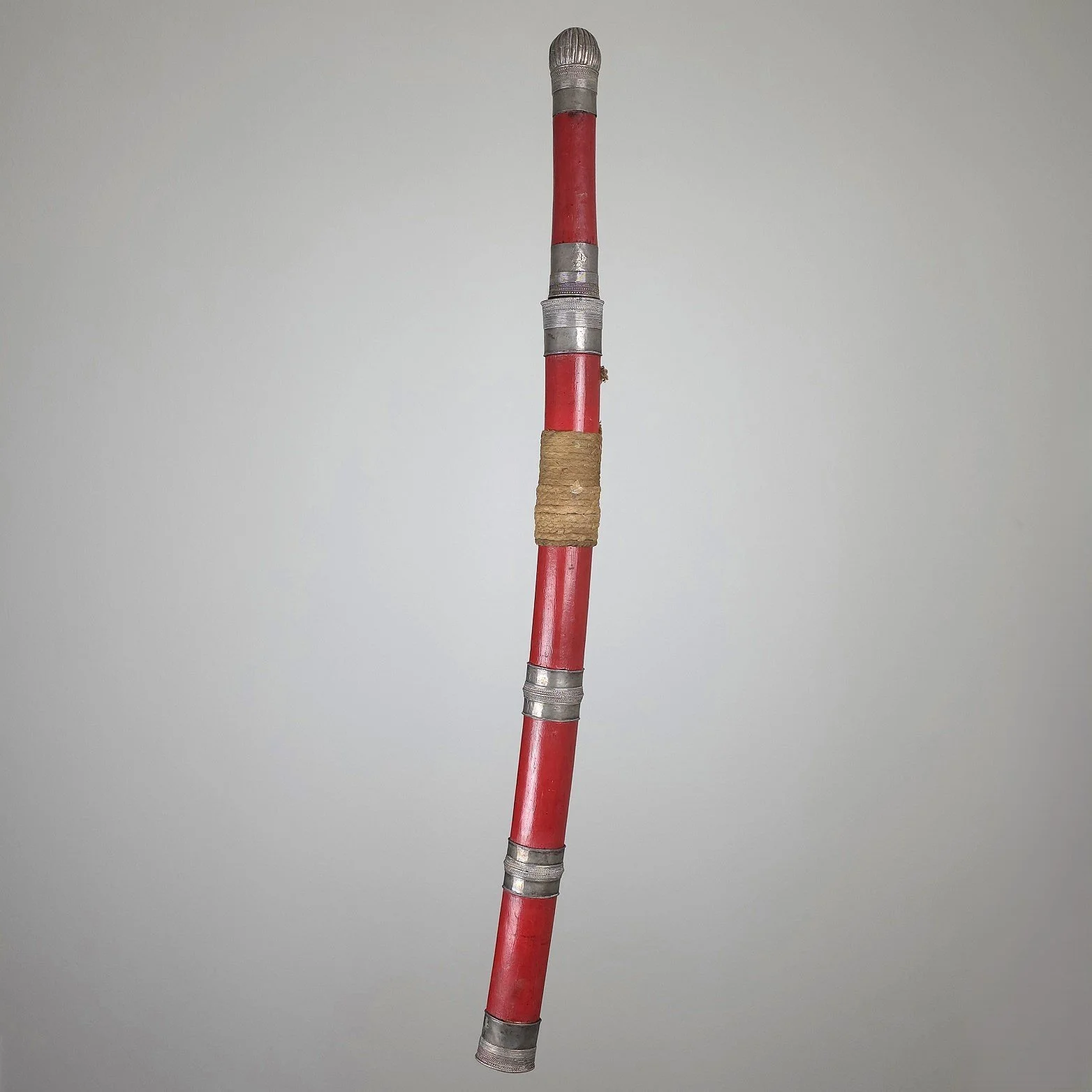
Wood covered sheath in a bright red laquer with four silver bands extensively decorated in silver wire. Remnants of a blue baldric cord tied to tan wrappings that would mount the sword to its wearer. The quality of this sword symbolizes that the owner was one of a high societal status, suggestive of why the red laquer was applied as well with the elaborate silver mounts. A fine and nicely balanced sword of the type, even with the heavy weight and larger size, the blade is eager to chop downwards smoothly while held in the hands.
Photograph 22: Sizang (Siyin) Chiefs in the Chin Hills, British Burma, ca. 1900
[2] https://www.metmuseum.org/art/collection/search/31082
[3] W. O. Oldman. “Illustrated Catalogue of Ethnographic Specimens”. November 1904: List No. 20; Item #66 (6578)
[4] http://www.oriental-arms.co.il/item.php?id=644
[5] http://www.oriental-arms.co.il/item.php?id=4718
[6] http://www.oriental-arms.co.il/item.php?id=1752
[7] http://www.oriental-arms.co.il/item.php?id=588
[8] http://www.oriental-arms.co.il/item.php?id=4649
[9] https://www.mandarinmansion.com/item/shan-kachin-style-dha
[10] https://www.mandarinmansion.com/glossary/shan-da
[11] http://www.vikingsword.com/vb/showthread.php?t=20168&highlight=burma
[12] https://iainnorman.com/swords-of-the-chin