Ethiopian Icon Painting
Ethiopian Icon Painting
Abyssinia (Ethiopia)
Late 19th - Early 20th century
Pigment, goatskin, wood
Height: 10 5/8” (27cm)
Length: 18 1/8” (46cm)
Collection Date: 2023
Collection Number: 358
Ex. Niek Meijer Collection: Rotterdam, Netherlands. Collected between 1970 -2020.
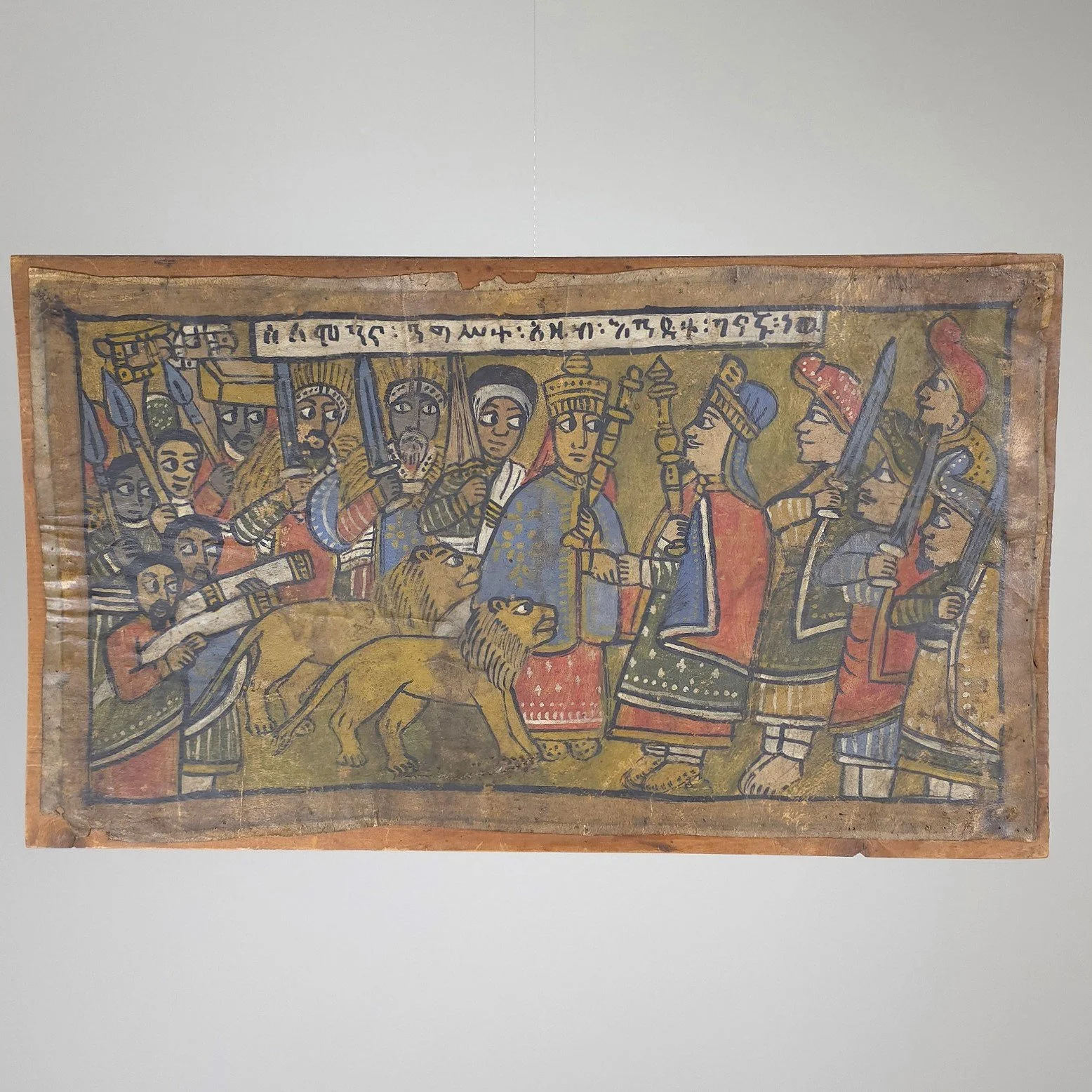
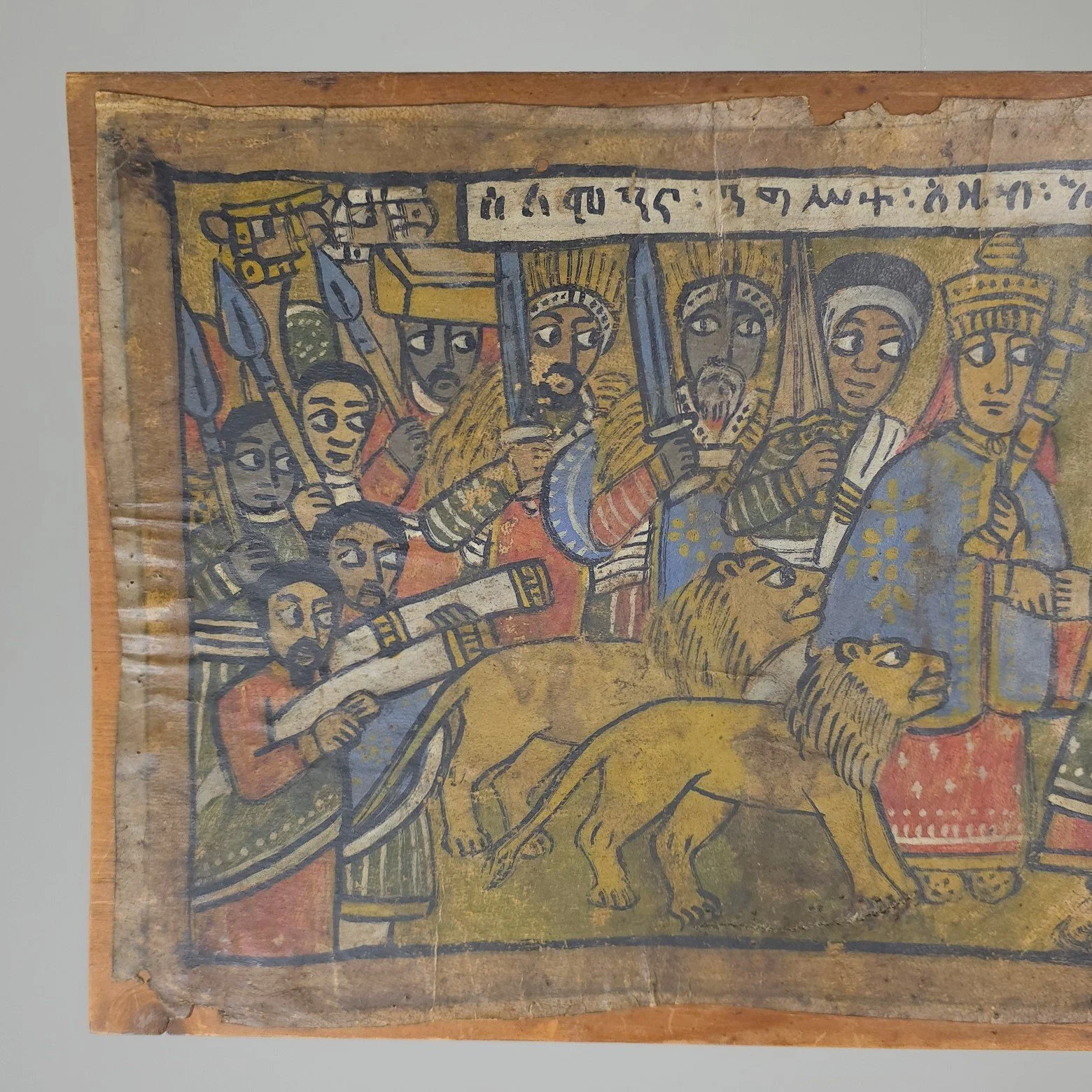
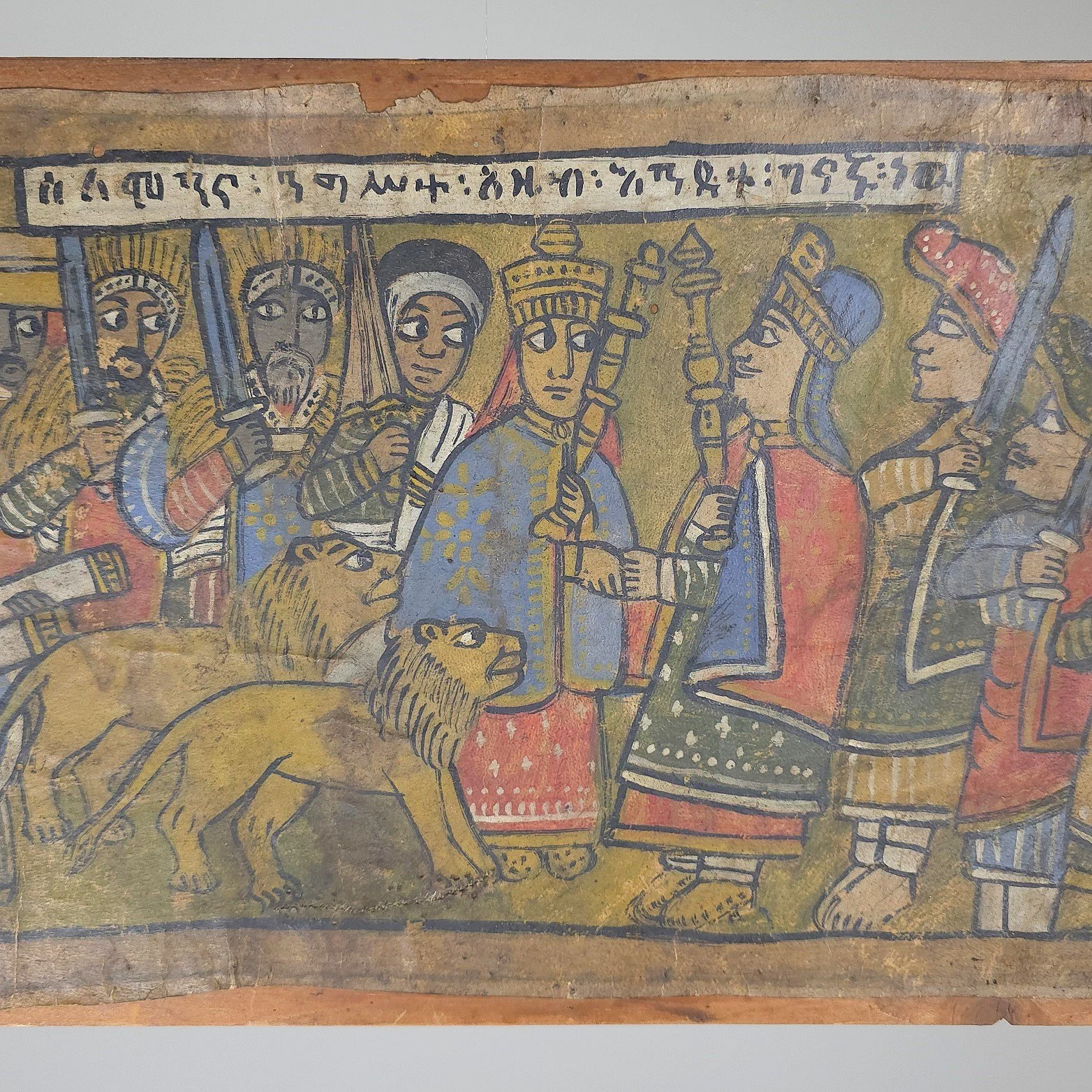
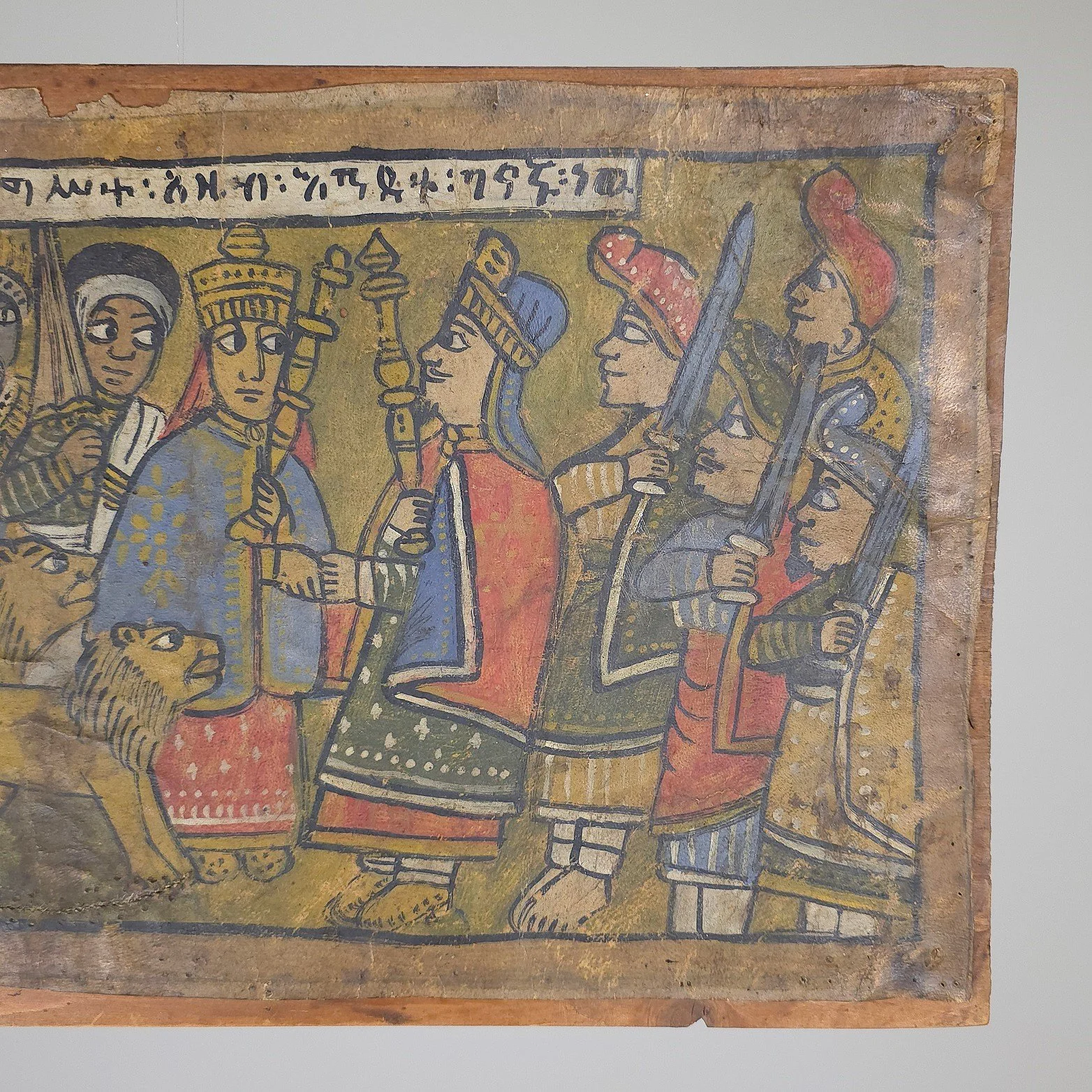
An Ethiopian tempera painting on parchment goatskin mounted on a wood backing with untranslated Amharic or Ge'ez script at the top. The artwork depicts a historical and biblical scene involving royalty, likely representing the legendary visitation of Judeo - Christian - Islamic antiquity central figures Queen Sheba (Makeda) of the Axumite Empire and King Solomon in Jerusalem surrounded by their respective servants. The historical narration is described in the Ethiopian national saga, Kebra Nagast (Glory to the Kings). Makeda is greeting King Solomon, both wearing elaborate cloaks and crowns. In the background, they are surrounded by their retainers, carrying spears, swords, and gunpowder weaponry. The Ethiopian lions representing the Lion of Judah. According to the narrative, Sheba and Solomon would later birth Menelik I, who would go on to establish the Solomonic Dynasty. This lineage is deeply rooted in Ethiopian national identity and history today.
The painting is in very good condition with minor wear to the corners of the goat skin. The colors are still vibrant with the style reminiscent of Ethiopian narrative art of the late 19th and early 20th century.
[1] https://www.britishmuseum.org/collection/object/E_Af1969-33-8