Command Baton
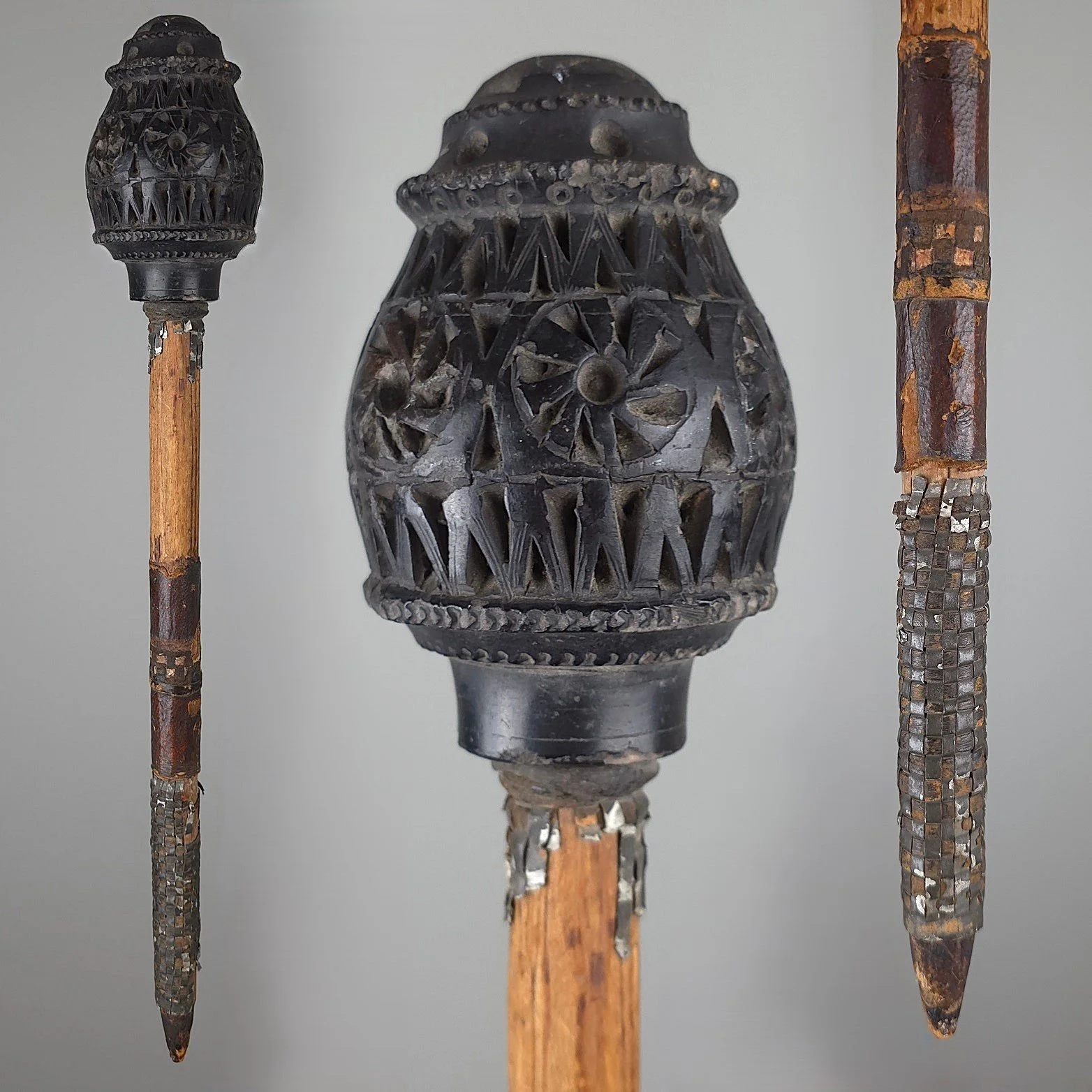
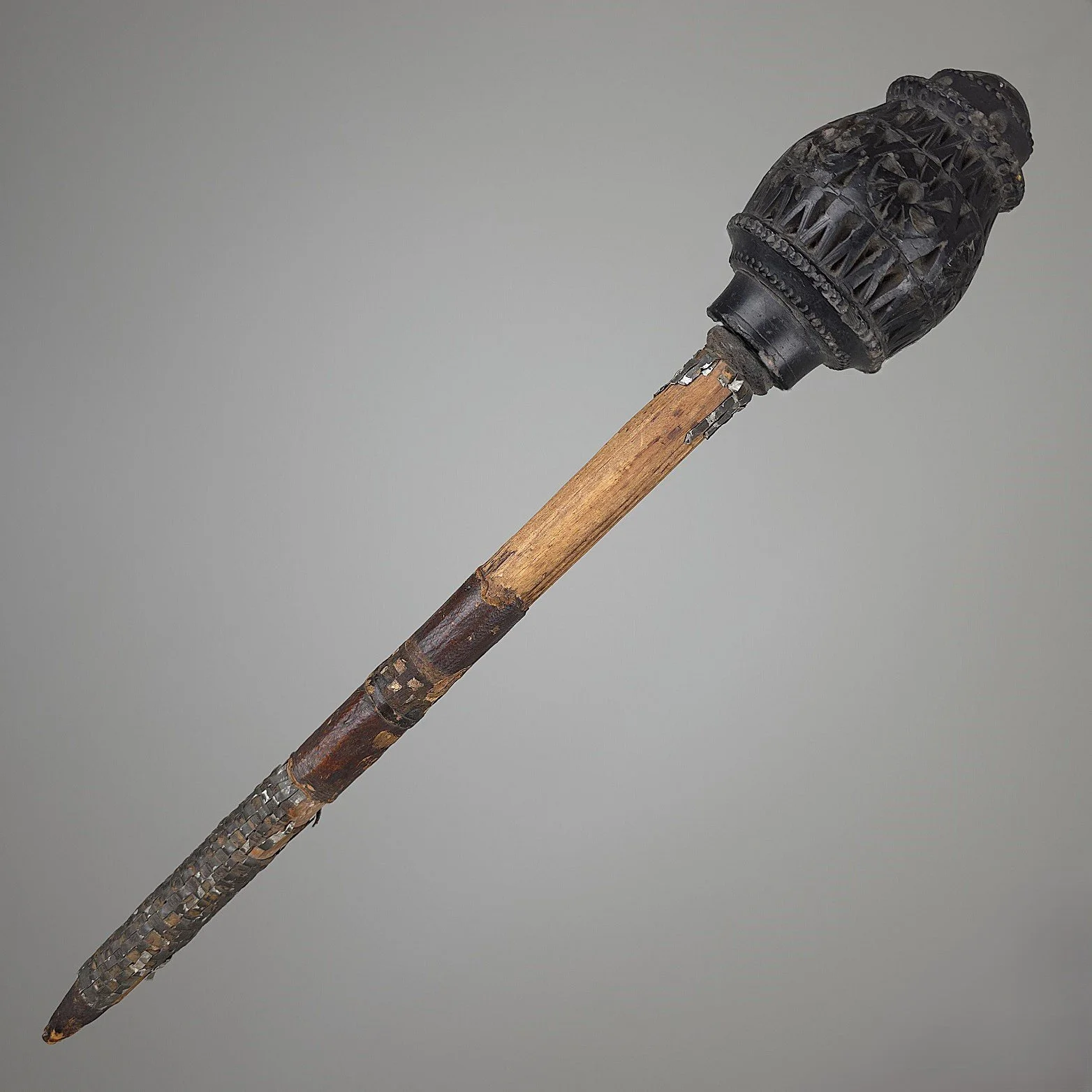
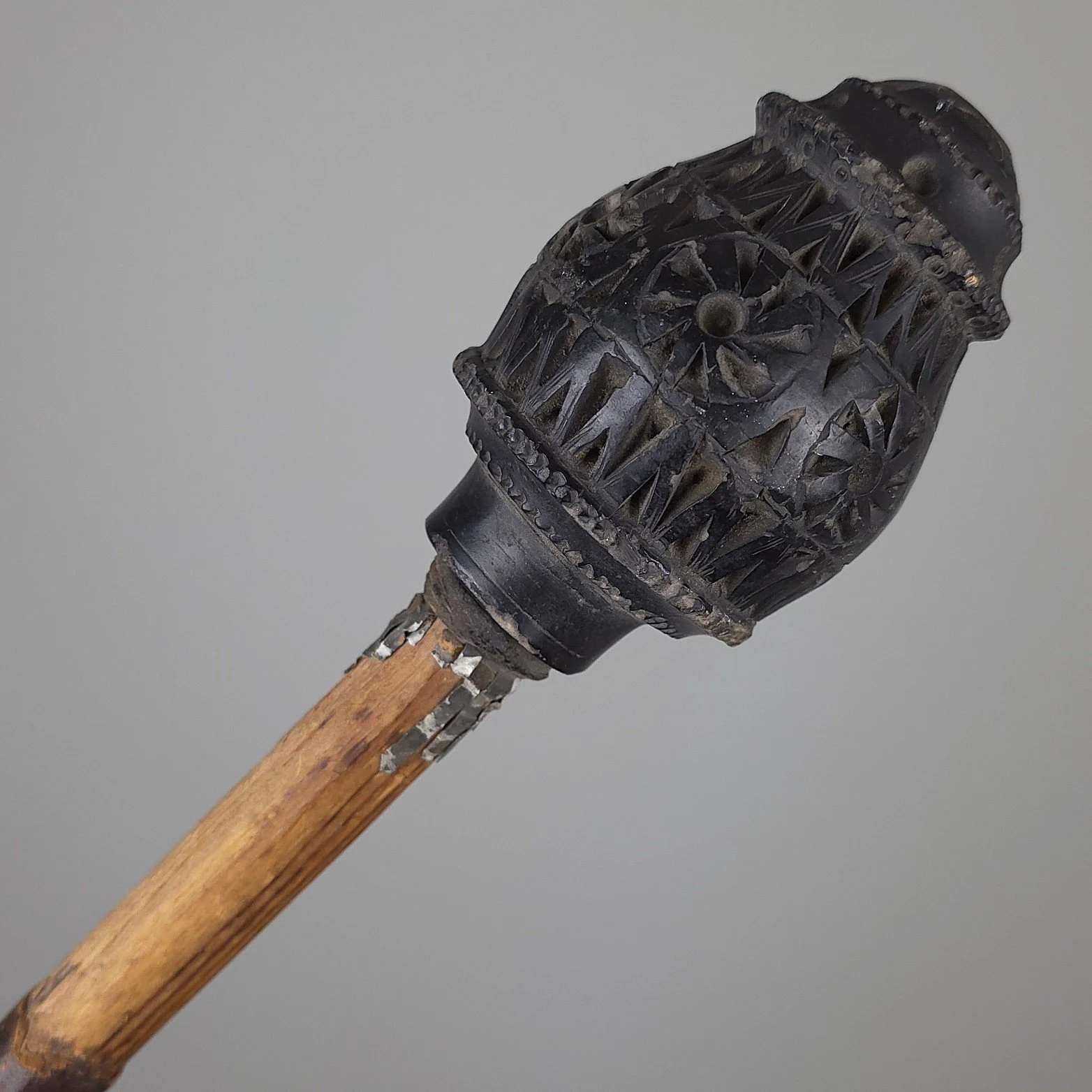
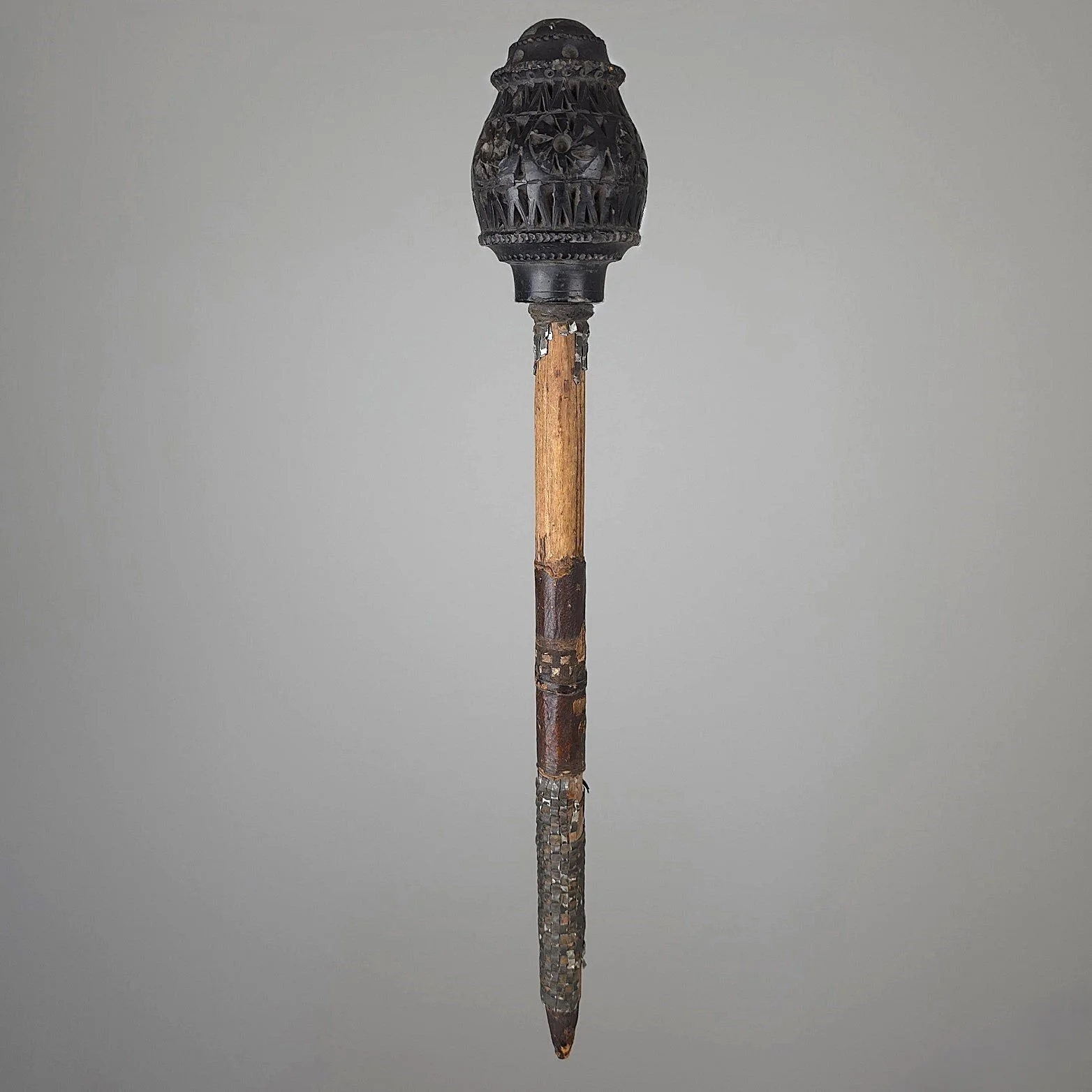
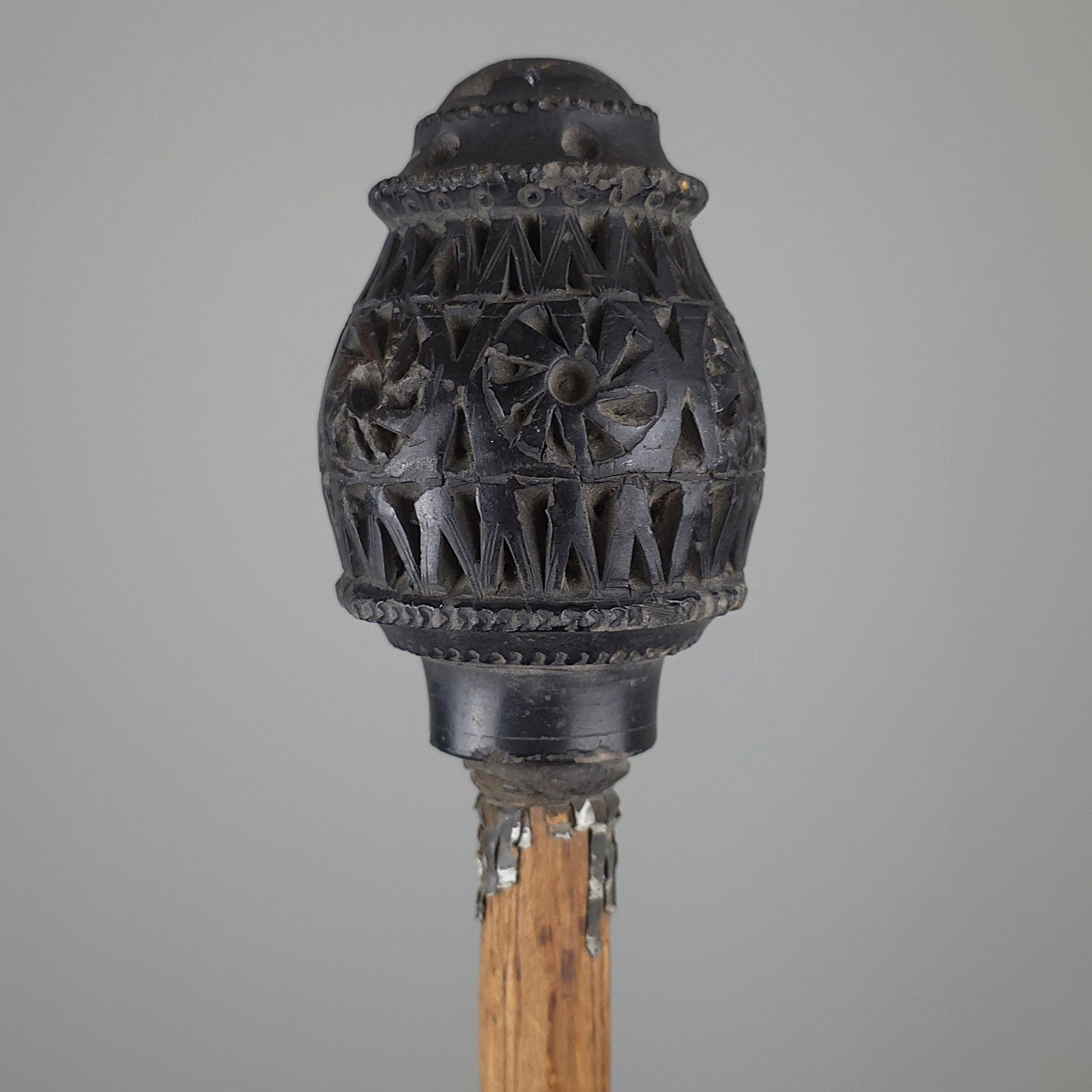
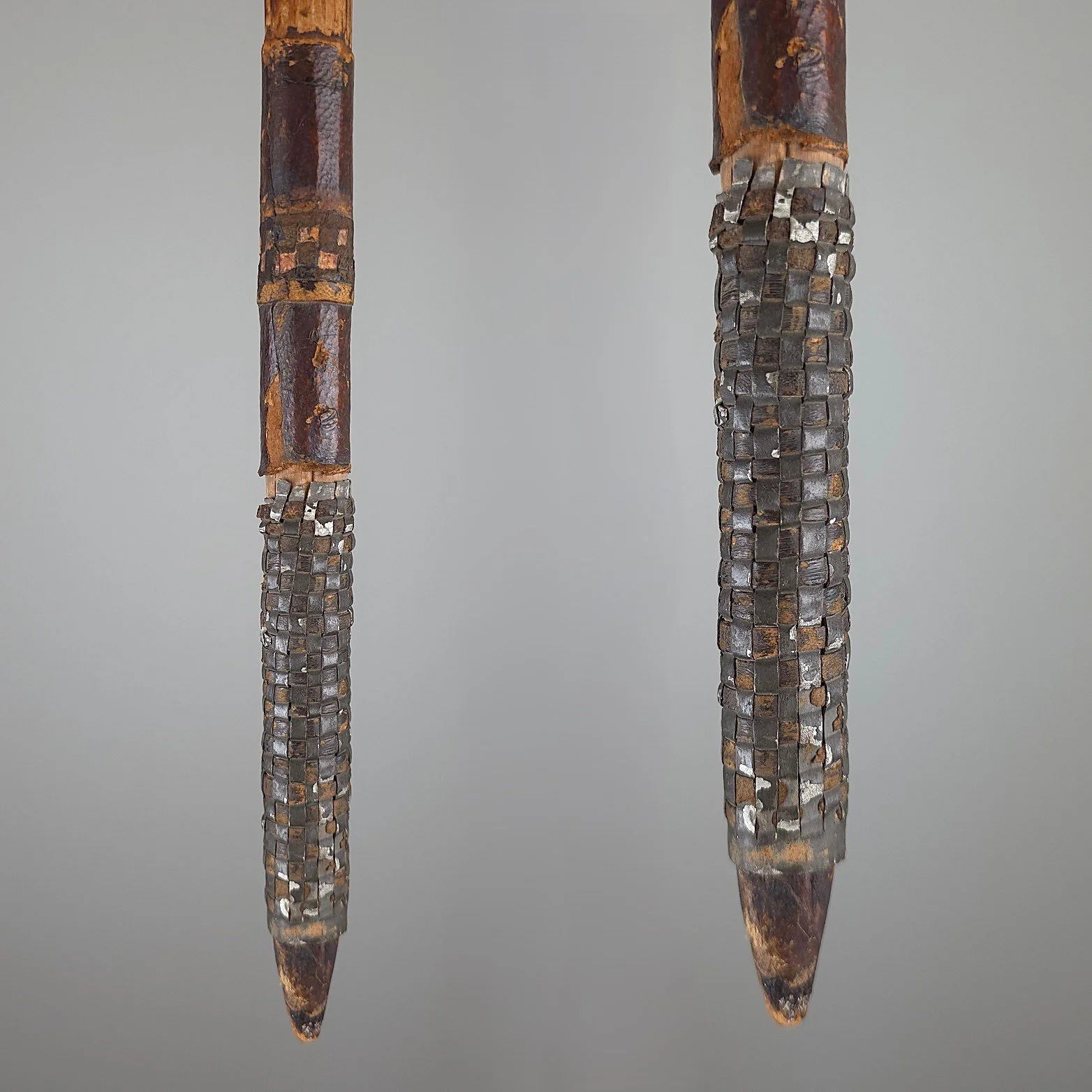
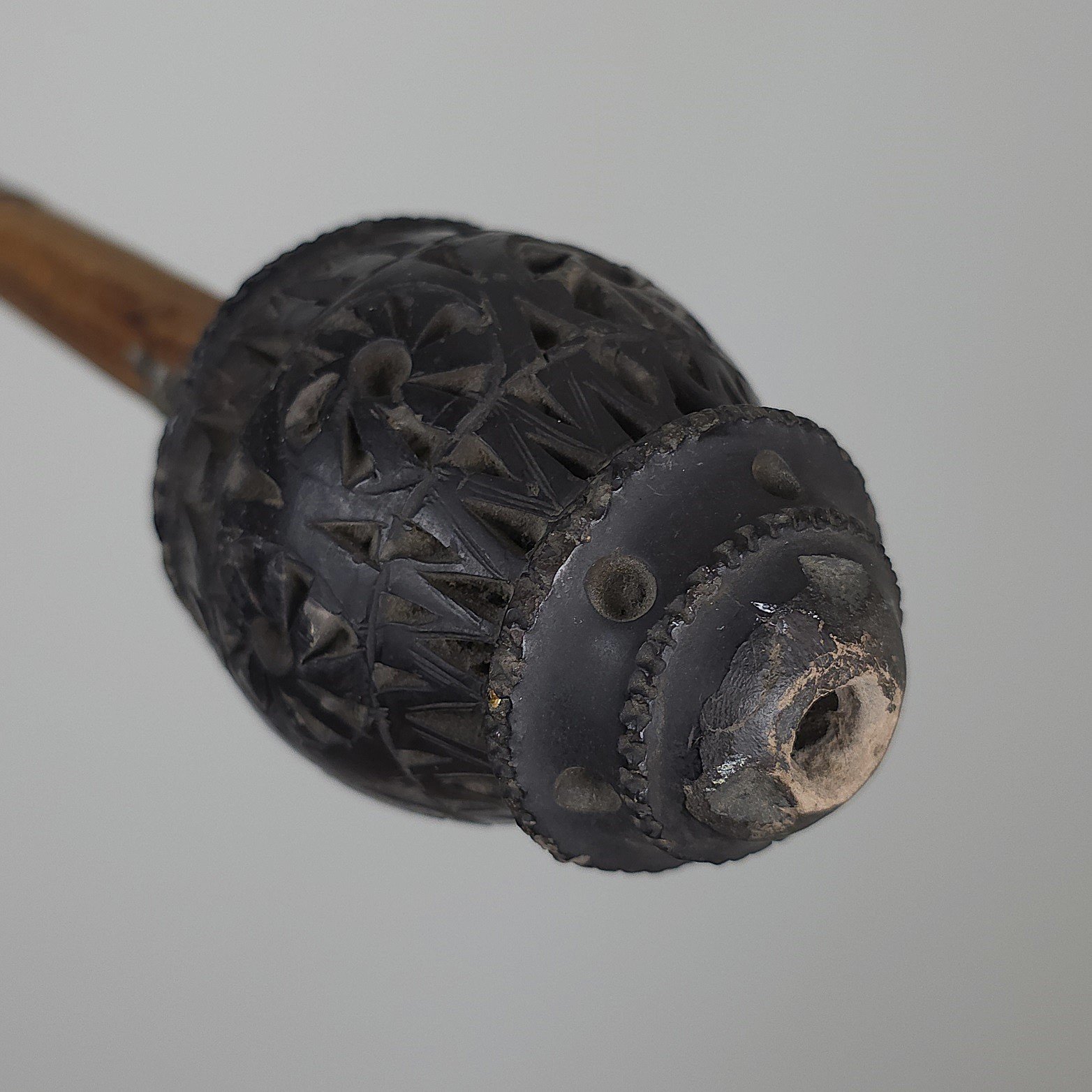
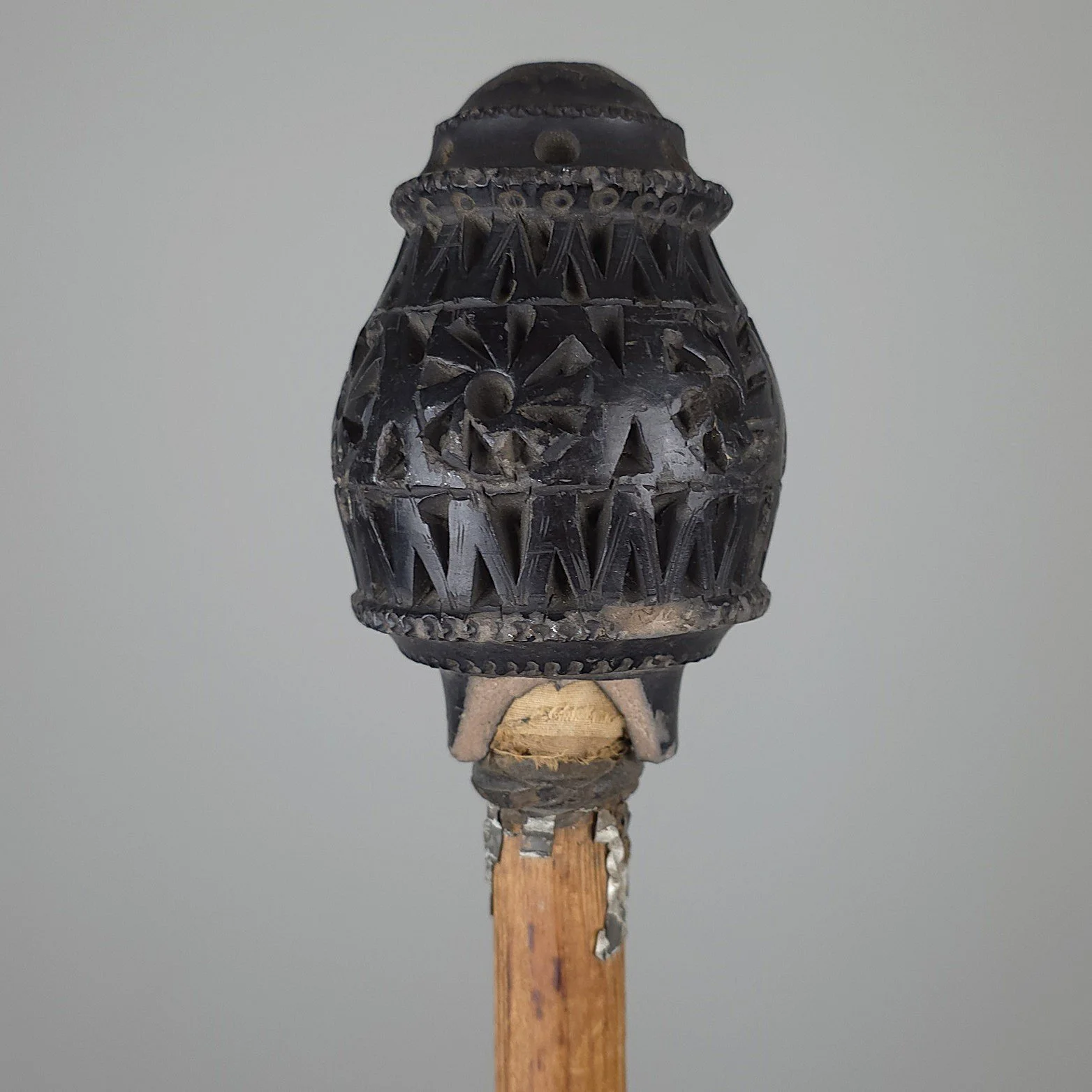
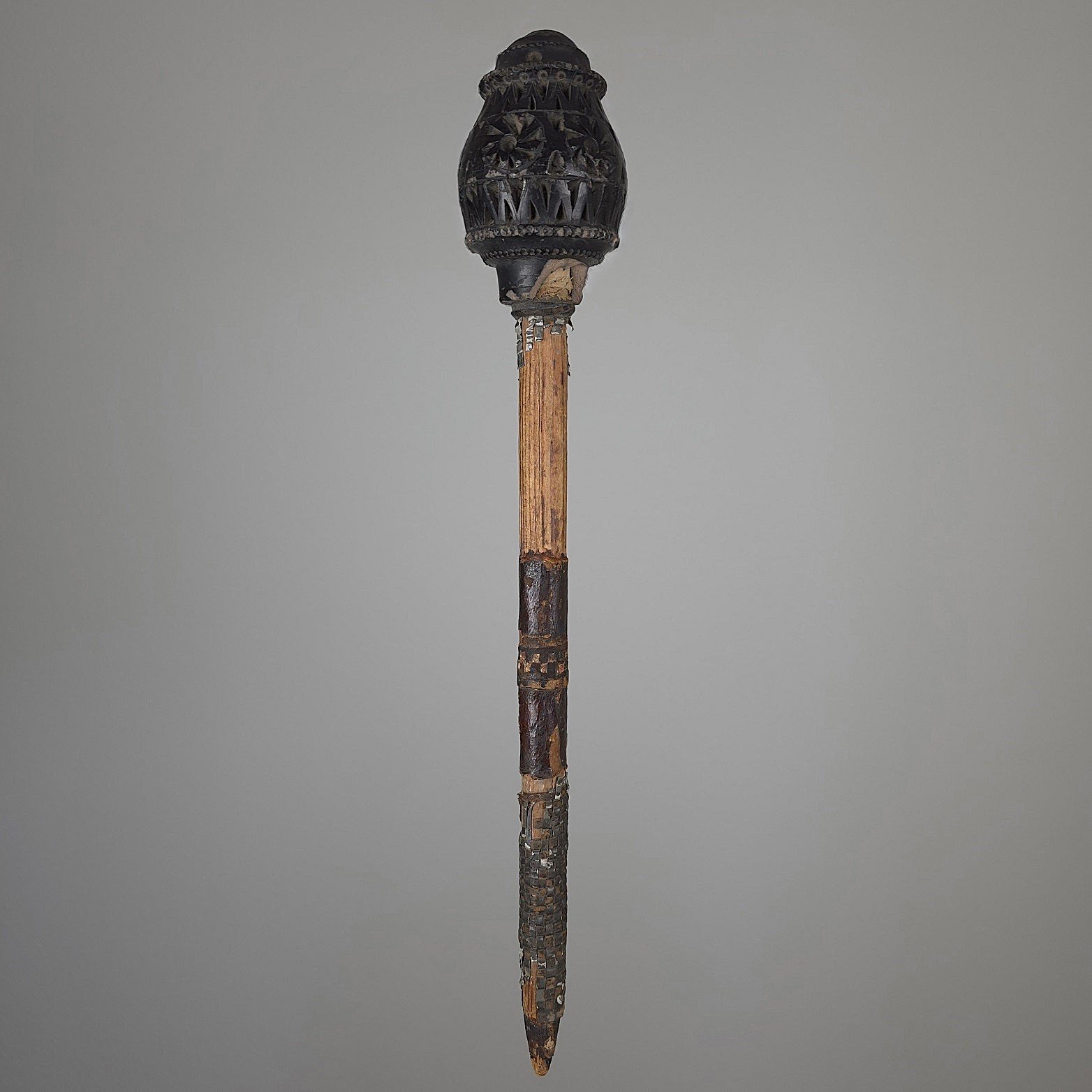
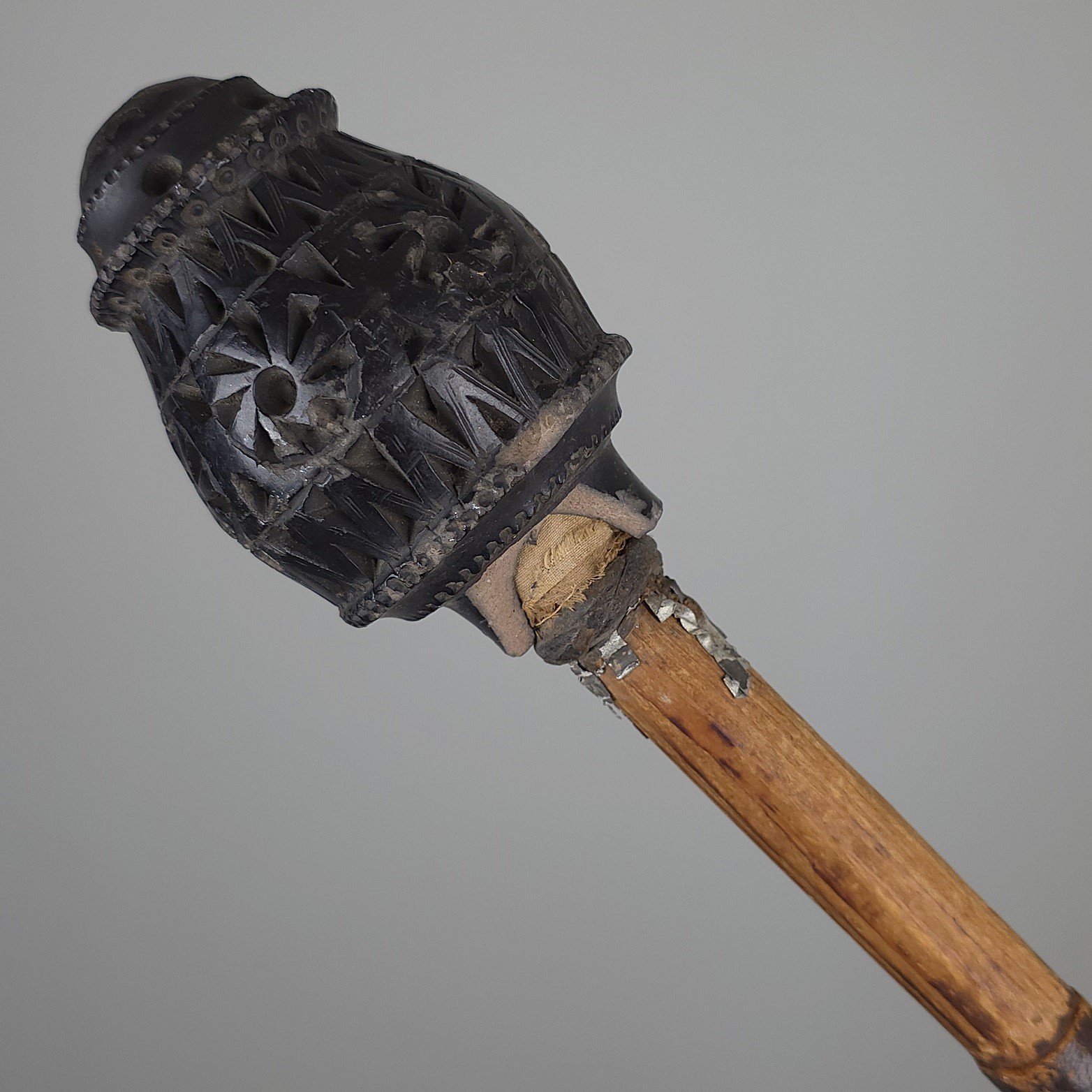
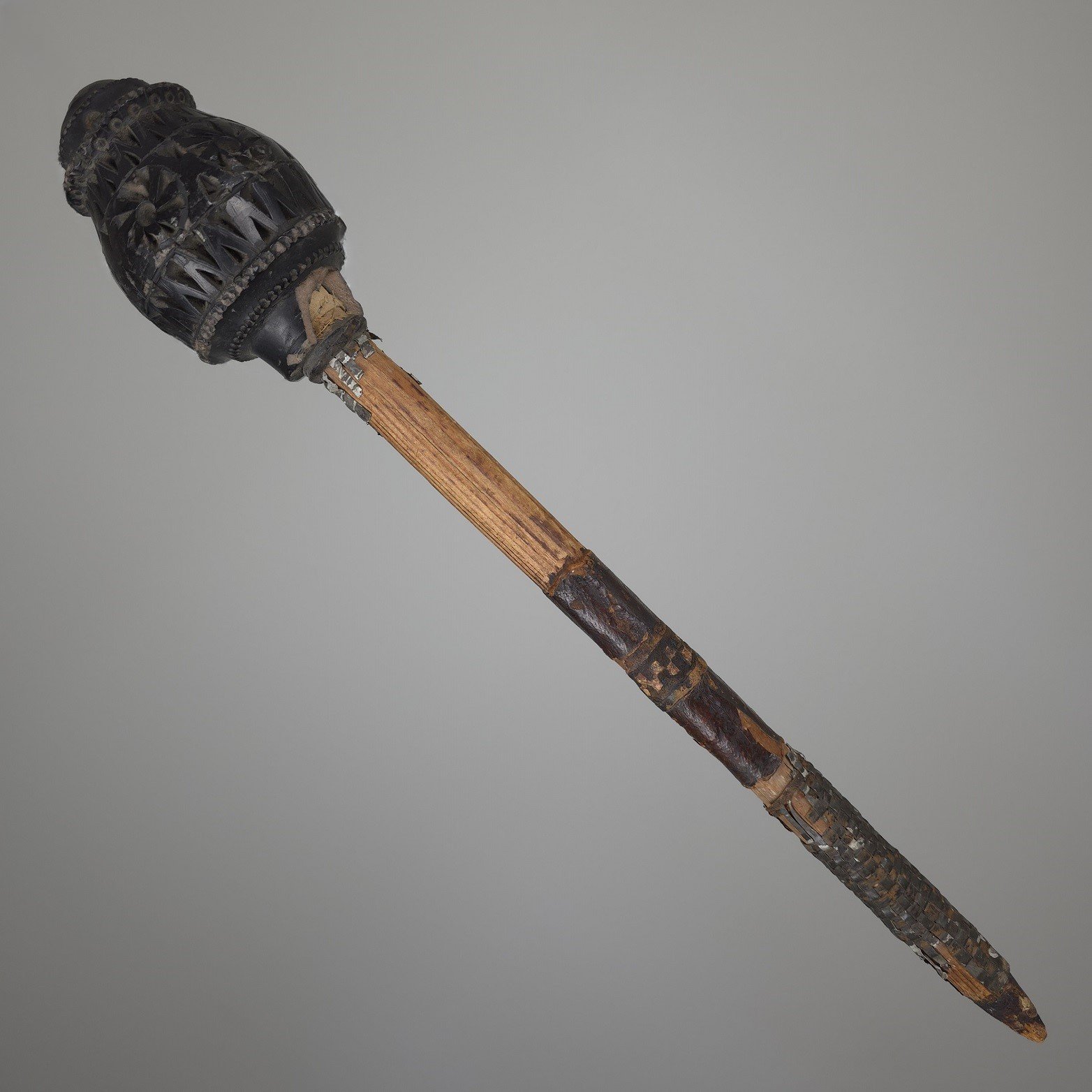
Dervish Mahdist Command Baton
Sudanese Mahdist
Scepter Head: Mamluk Sultanate (Egypt- Northern Sudan)
Shaft: Likely Khartoum - Omdurman, Mahdist Sudan (Khartoum - Omdurman, Sudan)
Scepter Head: 13th -15th century
Shaft: 1820 - 1898
Ceramic, cloth, wood, leather, metal alloy
Scepter Head Length: 9,5cm
Scepter Head Width: 6,7cm
Shaft Length: 31,1cm
Overall Length: 41,3cm
Collection Date: 2025
Collection Number: 495
Ex. American Art Market (2025)
A very rare Command baton from the Mahdist period in Sudan of the late 19th century. The head of the scepter is a Mamluk vessel made of ceramic in sphero-conical form, decorated in hollowed geometrical and floral patterns. A wooden shaft isinserted into the top of the vessel with old cloth inside. The shaft has a central grip of very old leather. The top and bottom have metal alloy strips that are interlaced, much of which is now lost. The bottom of the shaft is pointed where there was likely an iron spike or spear head attached at one point in time.
This is a very rare and old command baton. The scepter head is a reuse of a Medieval Mamluk shero-conical vessel, similiar to Bukhara stone maces but made of ceramic and exclusive to Sudanese weaponry. The scepters were used by unit commanders as a standard, alam, or badges of command having talismanic value. They smbolized the Sufi order and served as an important symbol for unit organization and authority of the Mahdist regiments by the leader.
Many were collected between 1820 - 1827 after the Battle of Navarino in Greece during the Egyptian military campaign. Muhammad Ali dispatched an army of 5,000 men, conquering Sudan, incorporating drafted Sudanese from the western and southern provinces into an Egyptian infantry regiment known as the "jihadiyya". A year later, the Sudanese troops were dispatched to the Mediterranean by Egypt, requested by the Ottoman Empire Sultan, Muhammad Ali, sending 16,000 soldiers toward Greece. The entire Egyptian fleet was destroyed by Greece's allies, namely Britain, France, and Russia. Following the battle, Egyptian military equipment was captured, and large amounts war heirlooms were collected, including these types of Dervish batons. They were also later used during the Mahdist period serving the same function as they did earlier in the century, now in the fight against the British and their Egyptian counterparts.
[1] https://www.britishmuseum.org/collection/object/E_Af1936-1116-3
[2] https://www.britishmuseum.org/collection/object/E_Af1979-01-125
[3] https://www.britishmuseum.org/collection/object/E_Af1979-01-124
[4] https://africanarms.com/gallery.html?mahdi-staff-sudan-45-5-cm
[5] https://africanarms.com/gallery.html?mahdist-staff-33-5-cm
[7] https://www.adamprout.com/piece/club-11/