Burmese Marionette
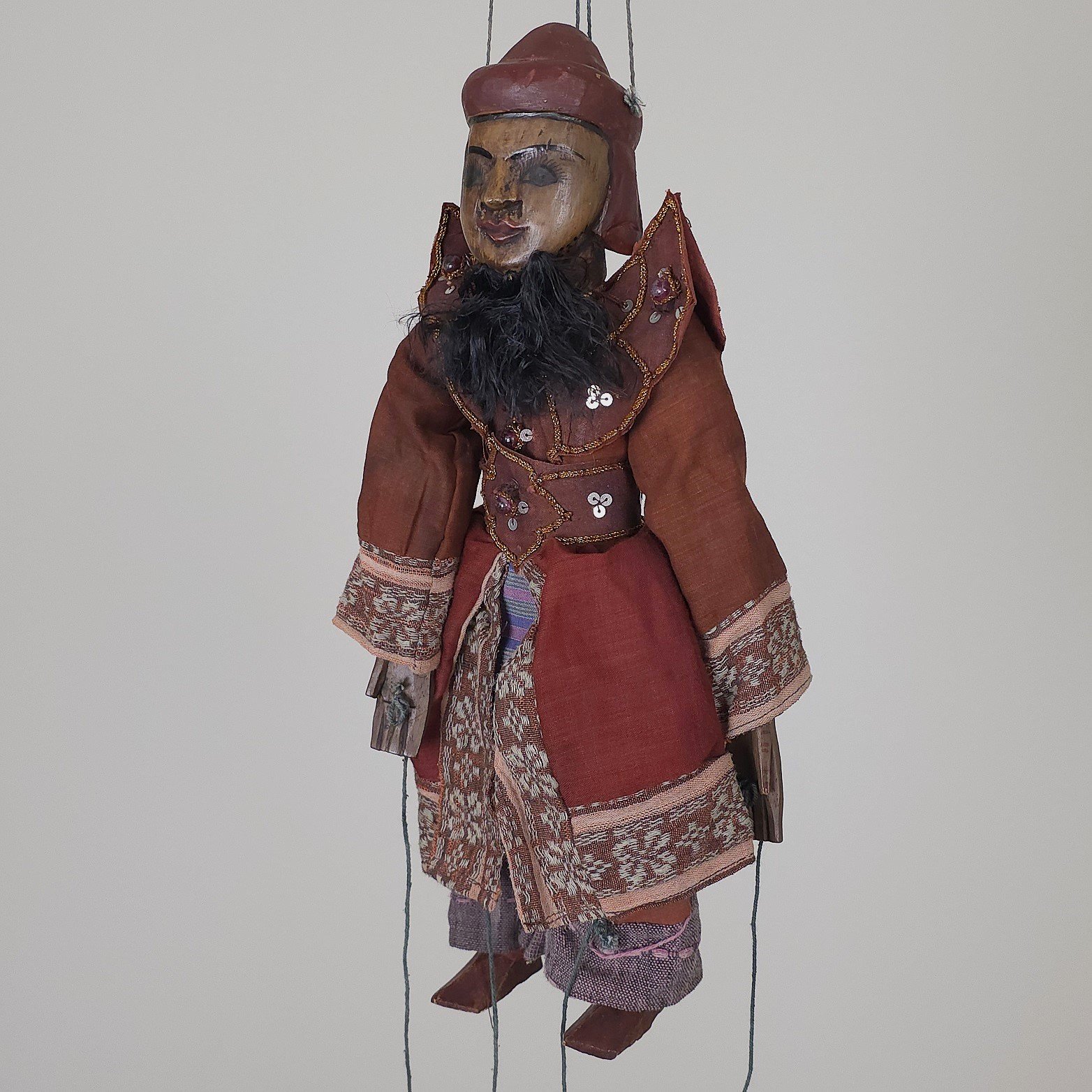
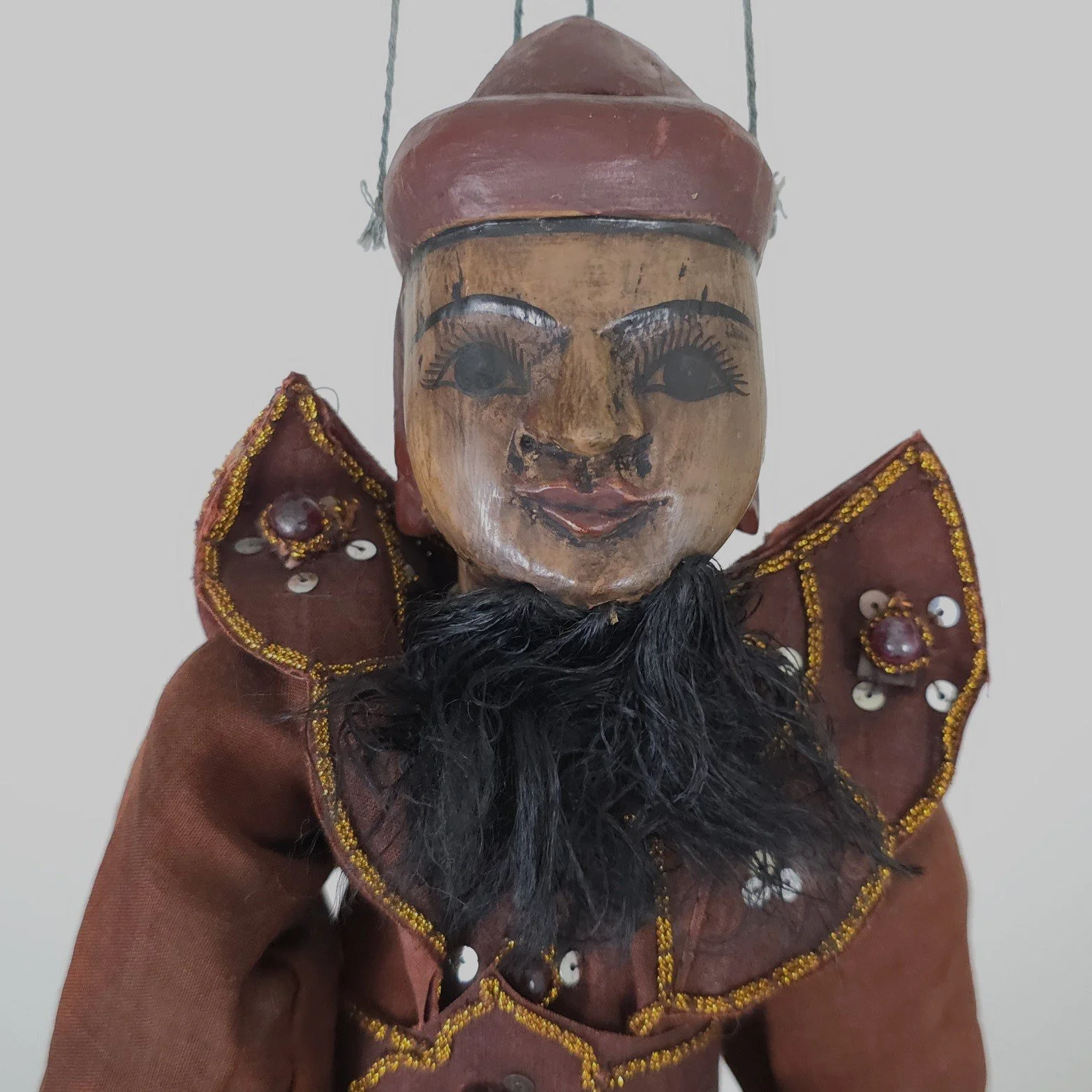
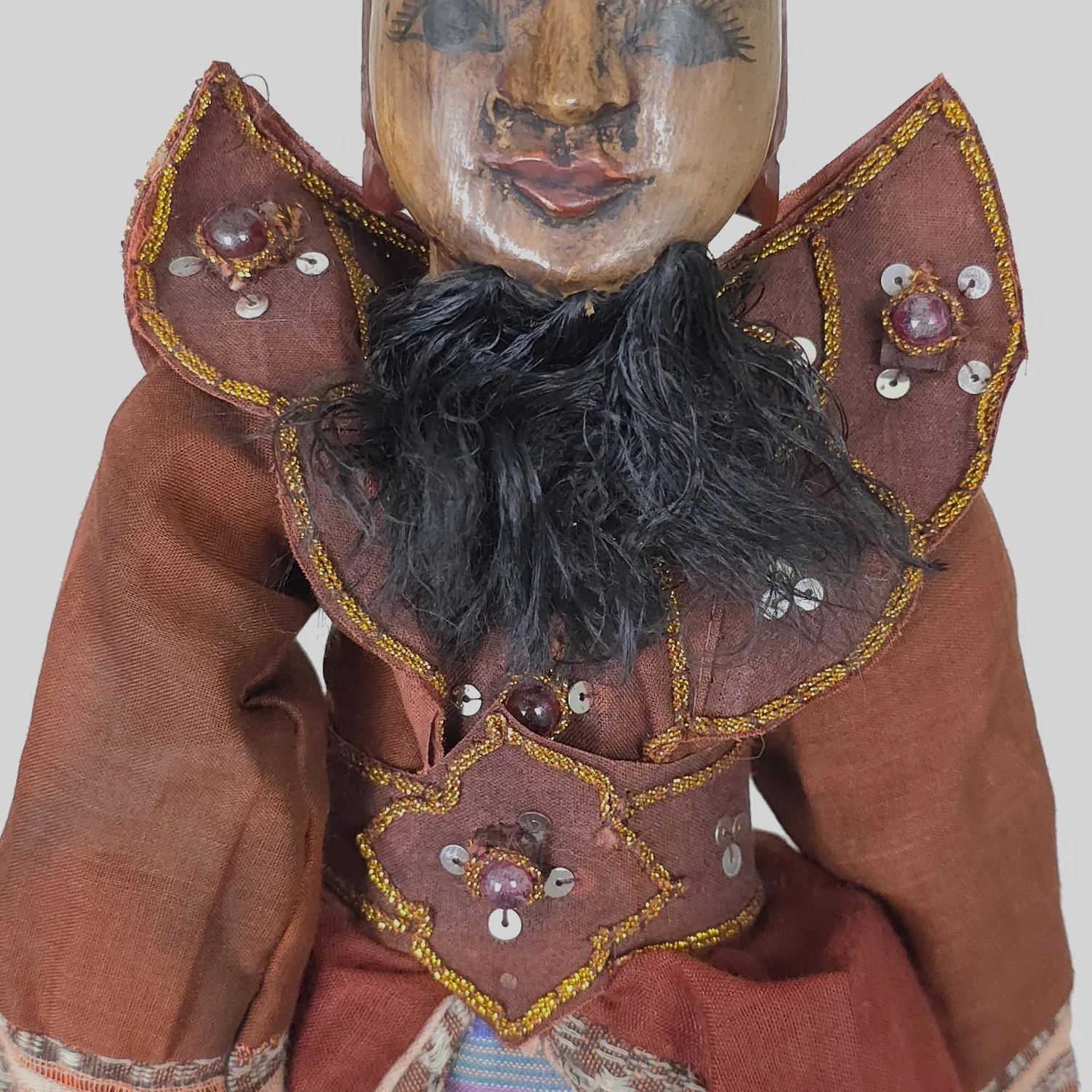
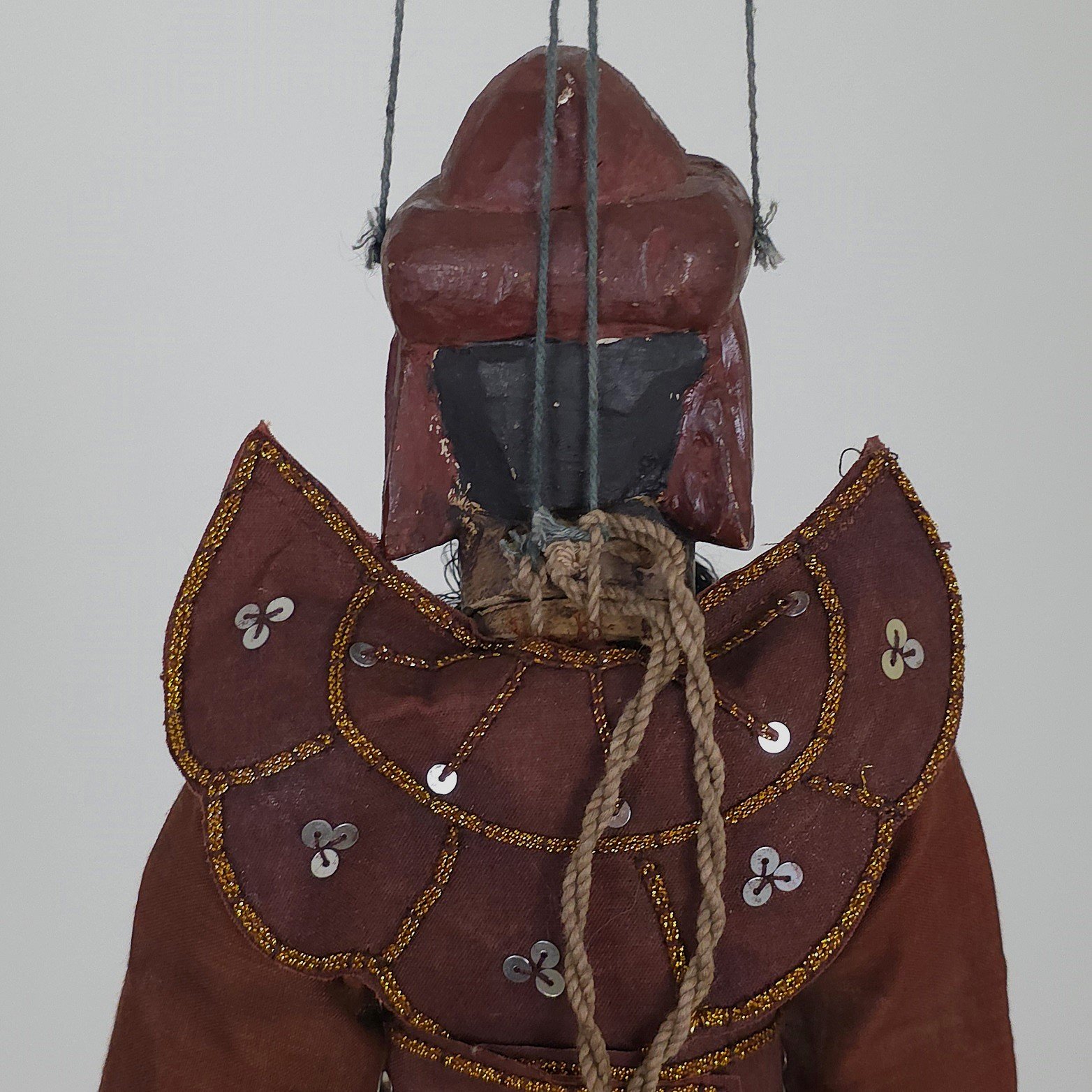
Yoke Thé Marionette, Zawgyi
Burmese
Burma (Myanmar)
Last half of the century
Wood, pigment, hair, textile, glass
Height: 13 1/4" (33.7cm)
Width: 6" (15.2cm)
Collection Date: 2010
Collection Number: 169
Ex. Thai Art Market (2010)
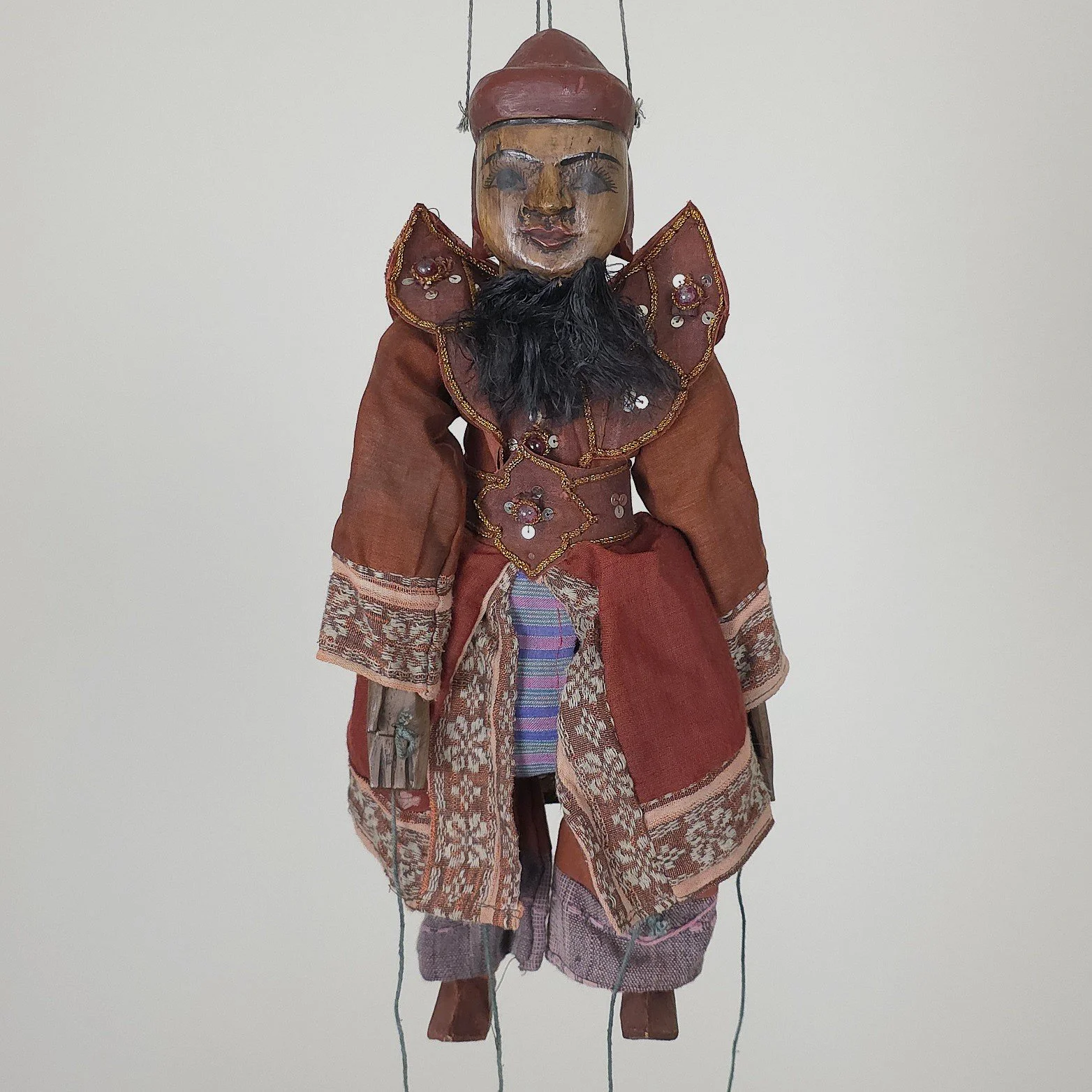
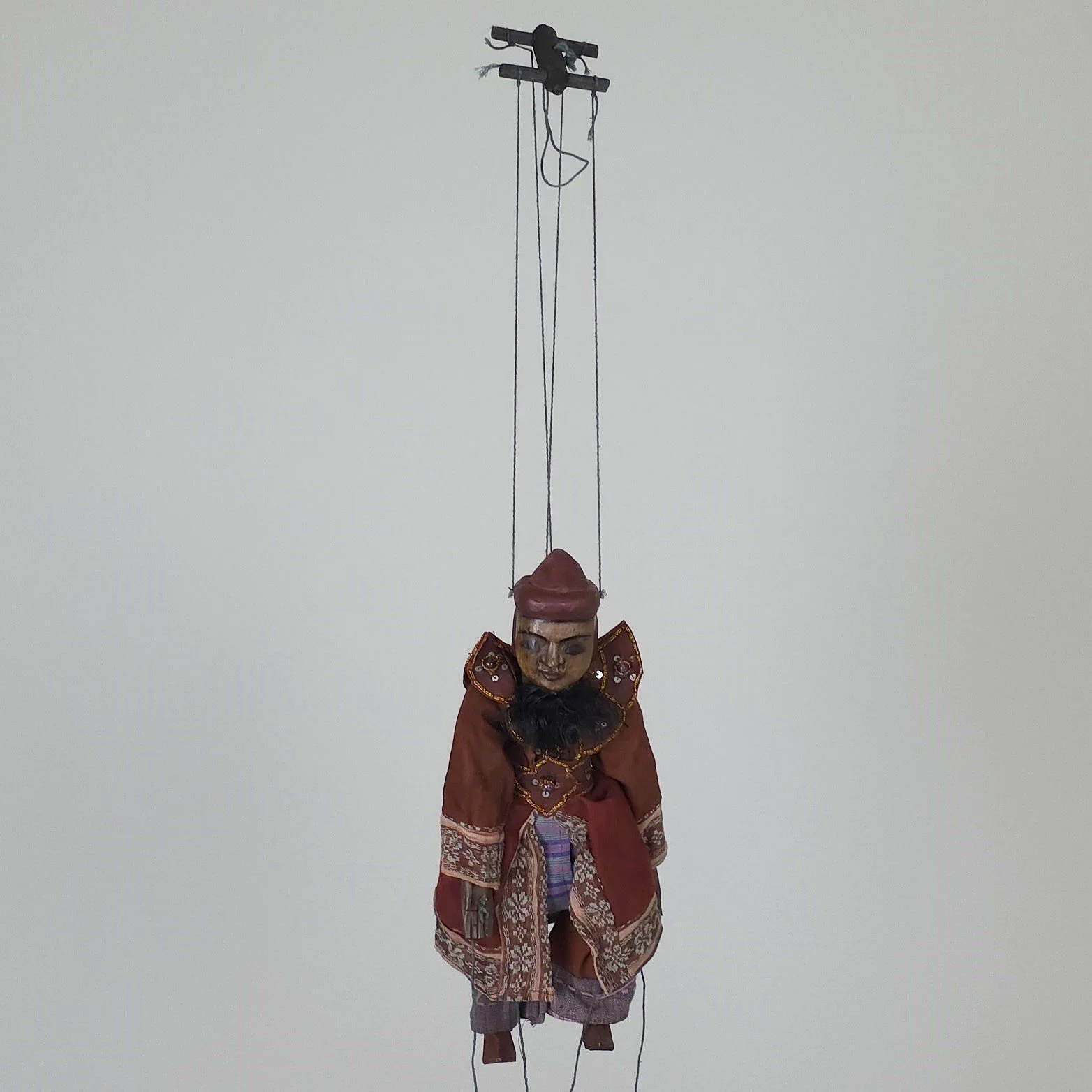
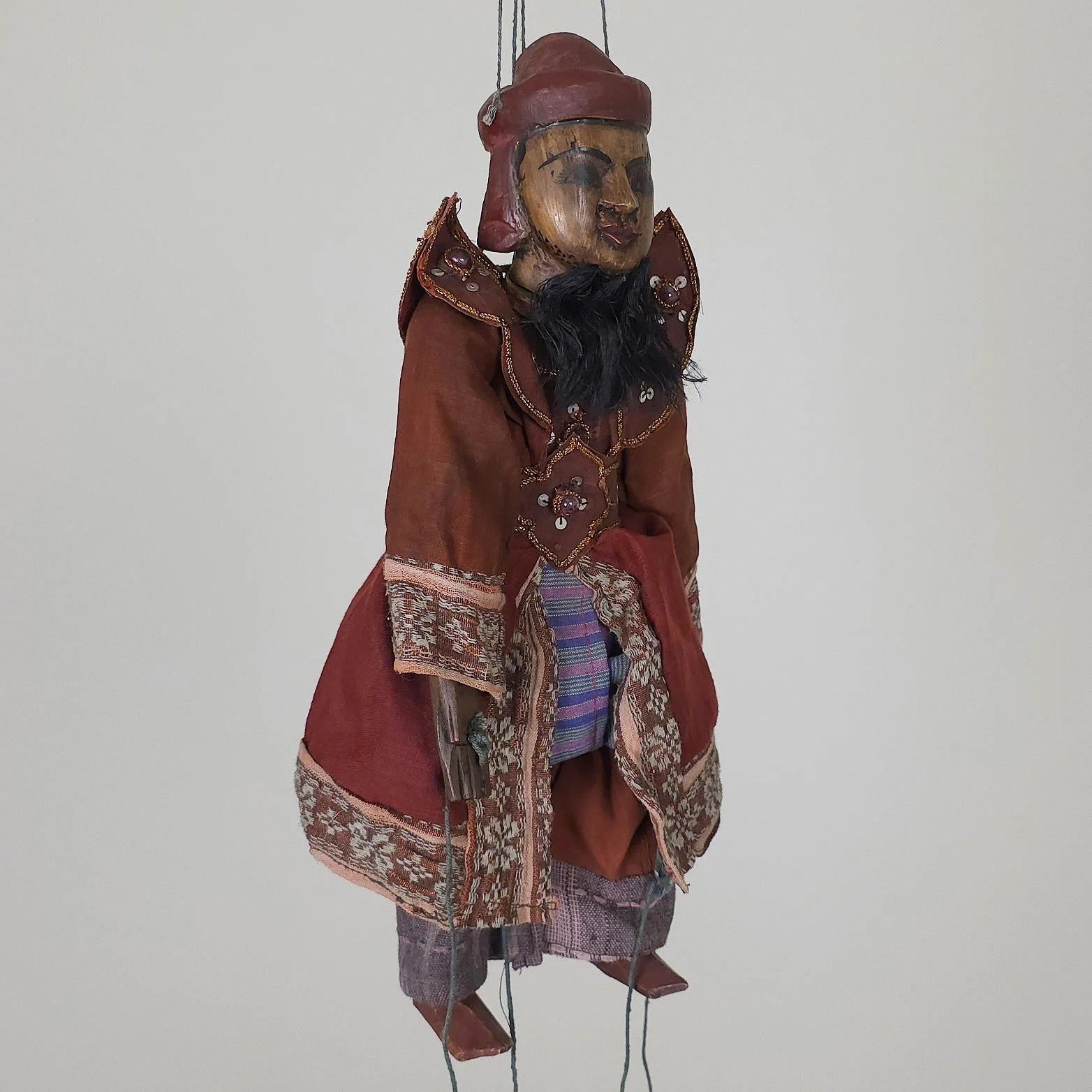
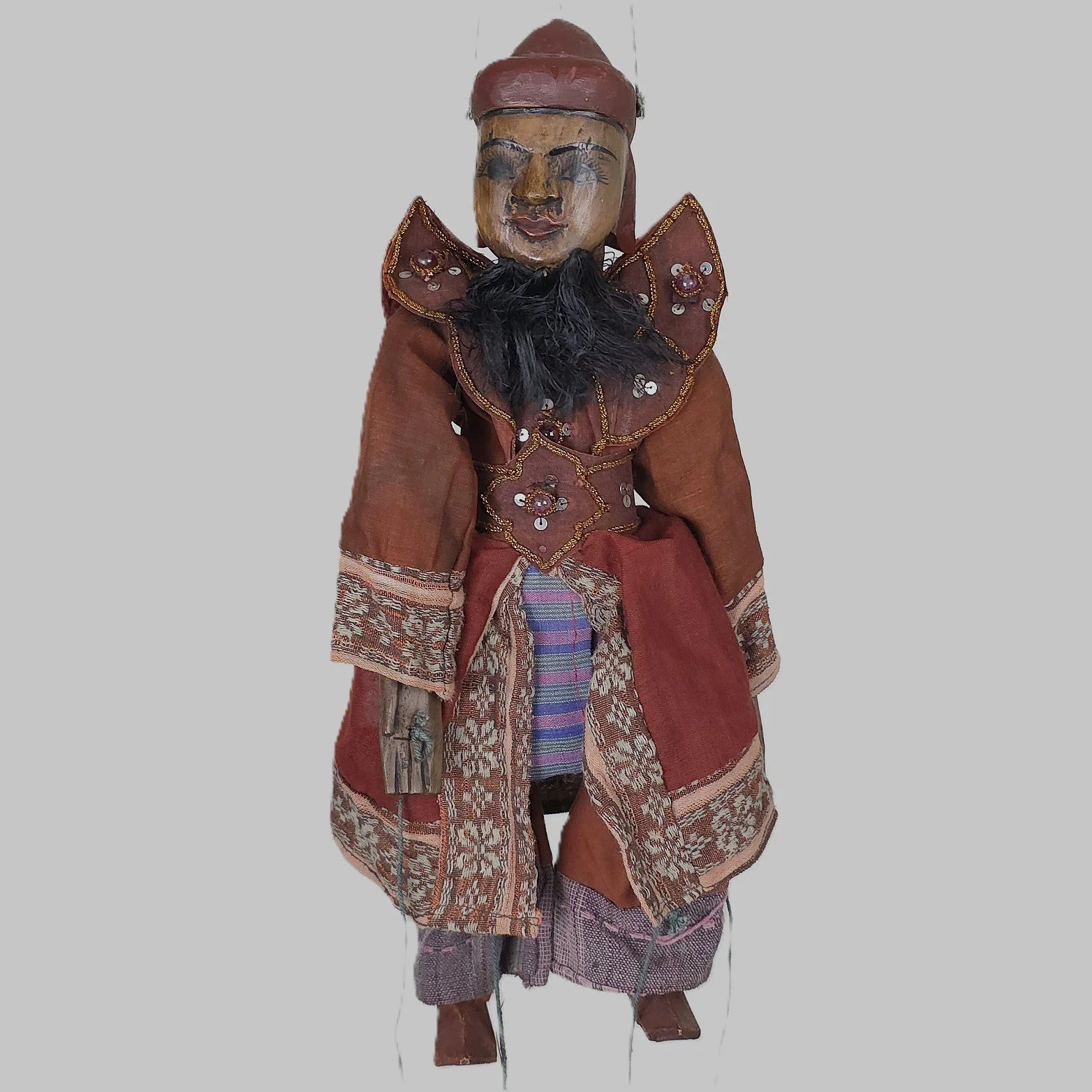
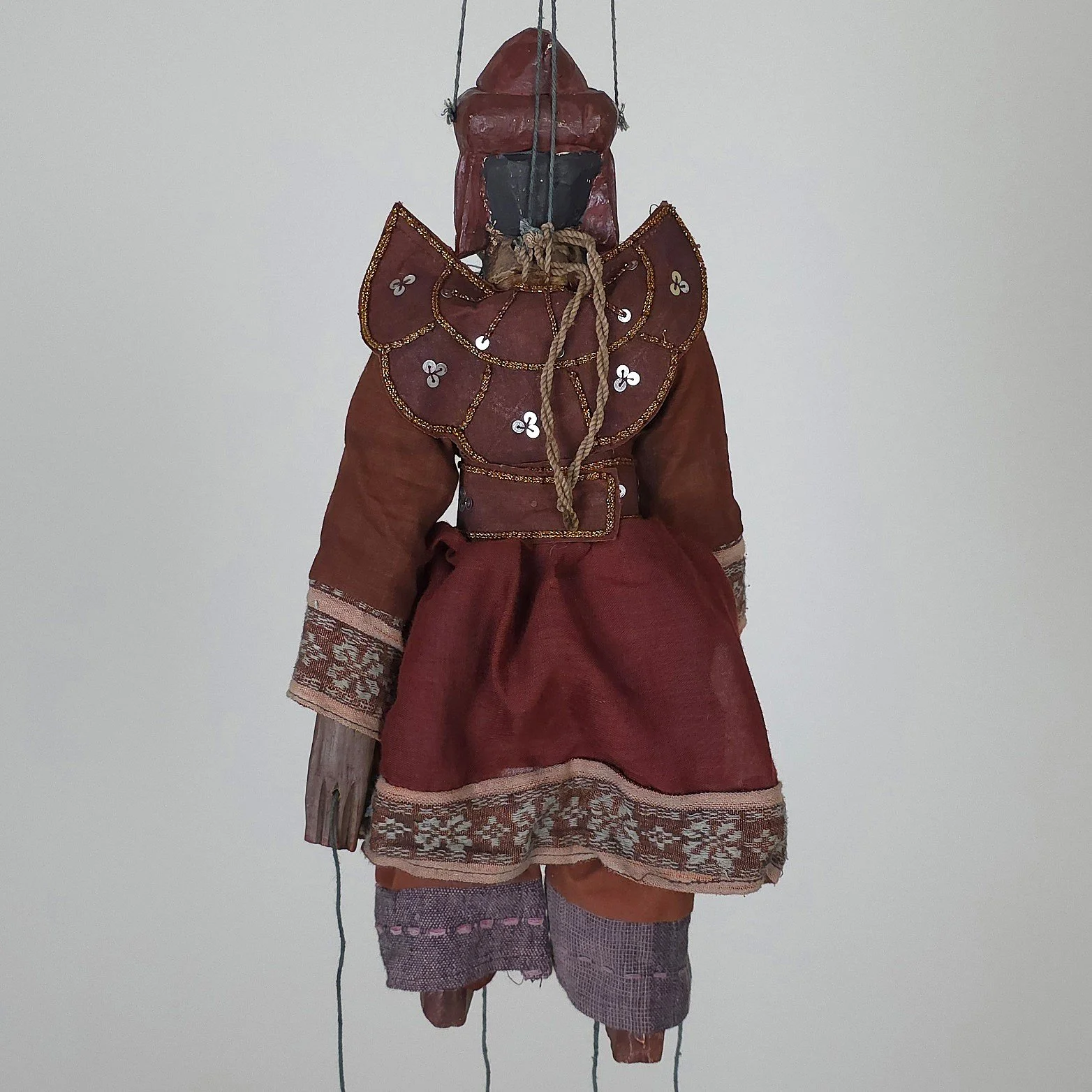
Yoke Thé "miniatures" is the Burmese name for marionette puppetry. Although the term can be used for puppetry in general, its usage usually refers to the local form of string puppetry. Like most of Burmese refined art, yoke thé performances originated from royal patronage and were gradually adapted for the wider populace. Yoke thé are almost always performed in the form of Burmese operas. Burmese marionettes are very intricate and their use requires dexterous skills, as they employ 18 or 19 wires for male and female characters respectively, and each puppet is controlled by only one puppeteer. The marionette here is the character Zawgyi, the mystic alchemist or wizard in Burmese folklore who has magical powers and known for his eccentric acrobatic dancing.
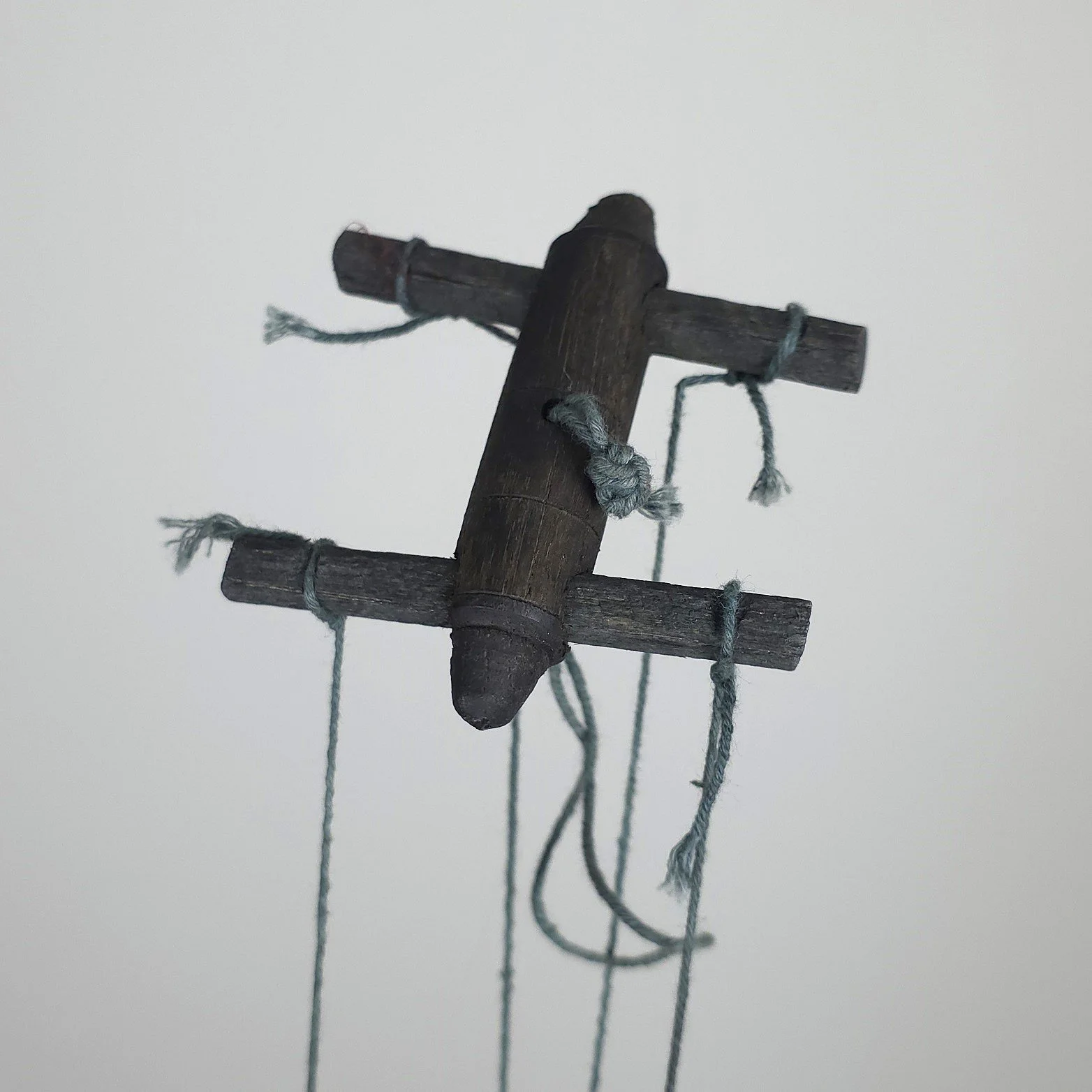
Constructed of a hand carved rotating wooden head and red cap with black horse hair beard and wooden hands and shoes. Wearing an elaborate red textile traditional robe with gold embroidery and glass decorations over a patterned longyi. Control strings are attached to a wooden hand- bar. A good vintage Zawgyi marionette, likely from the late 20th century.
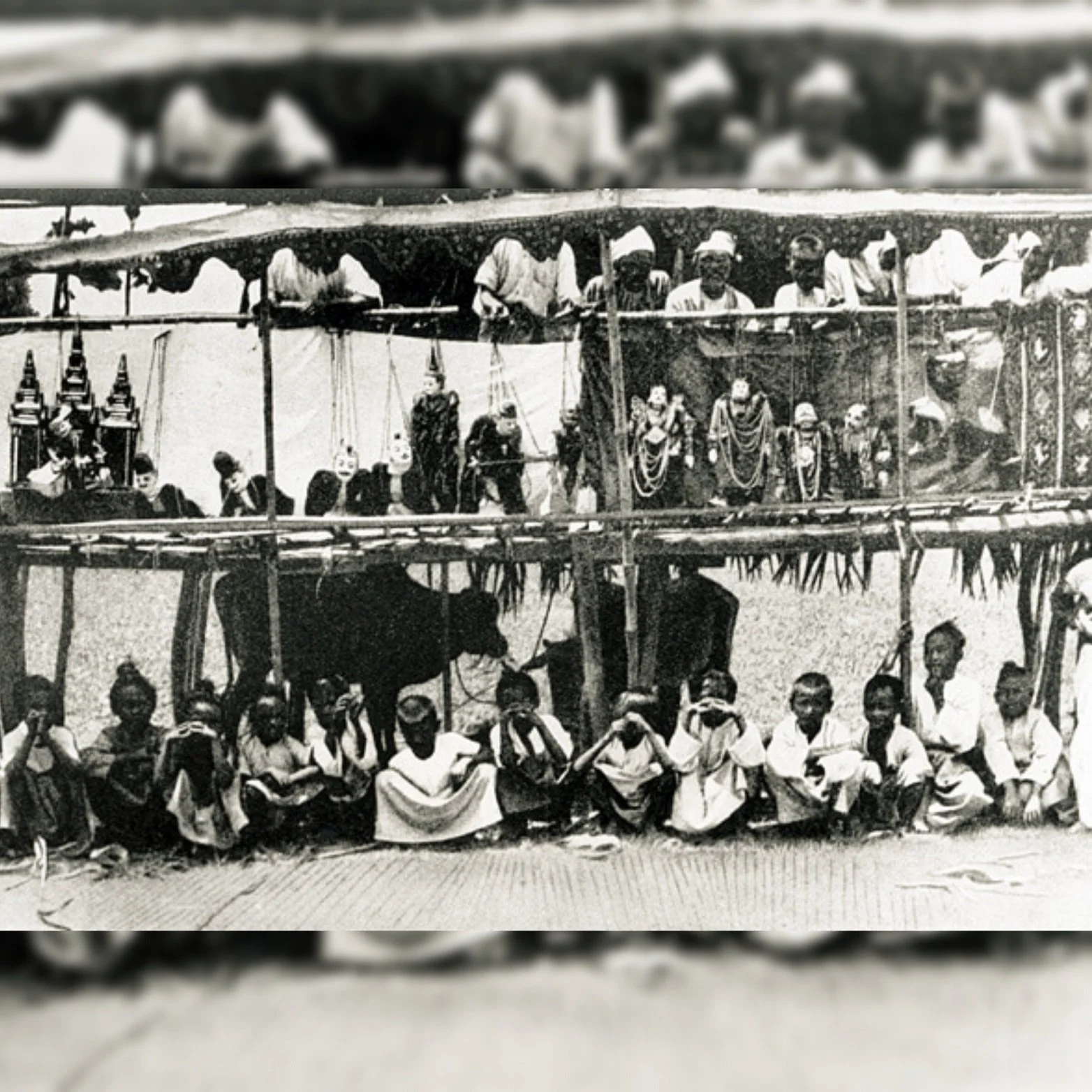
Photograph 11: Marionette stage with a palace scene on the left and a forest scene on the right. “Länder och Folk I Ord och Bild”, By Holger Schildts, Helsinki 1928.