Dha Hmyuang
Dha Hmyuang
Burmese
Konbaung Dynasty - British Burma (Myanmar) - Kingdom of Siam (Laos)
Last half of the 19th century (ca. 1885)
Steel, Ivory, Silver, Wood, Rattan
Blade: 5 7/8" (14.9cm)
Hilt & Blade: 10 1/4" (26cm)
Hilt, Blade, Sheath: 10 3/4" (27.3cm)
Collection Date: 2024
Collection Number: 440
Ex. American Art Market: (2024)
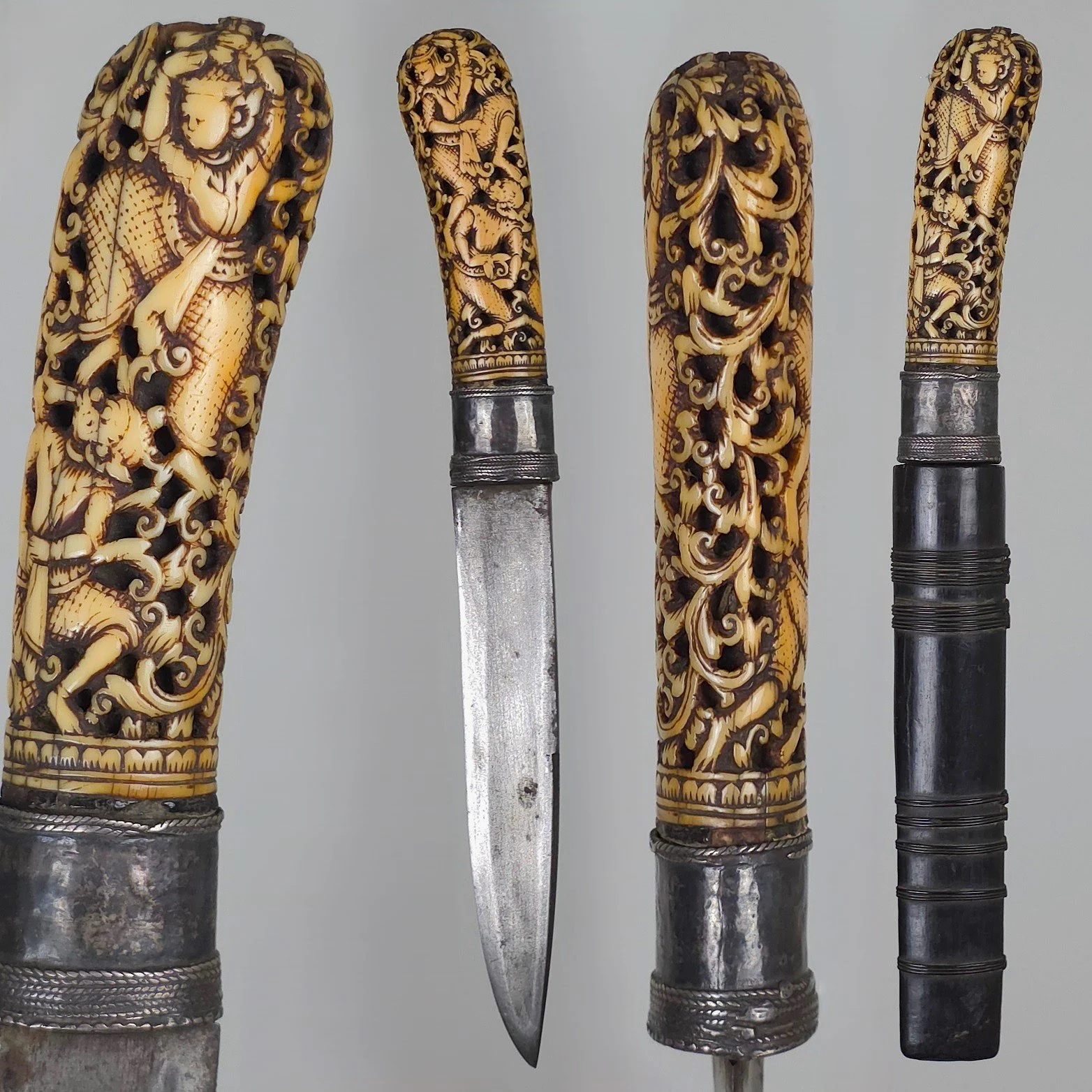
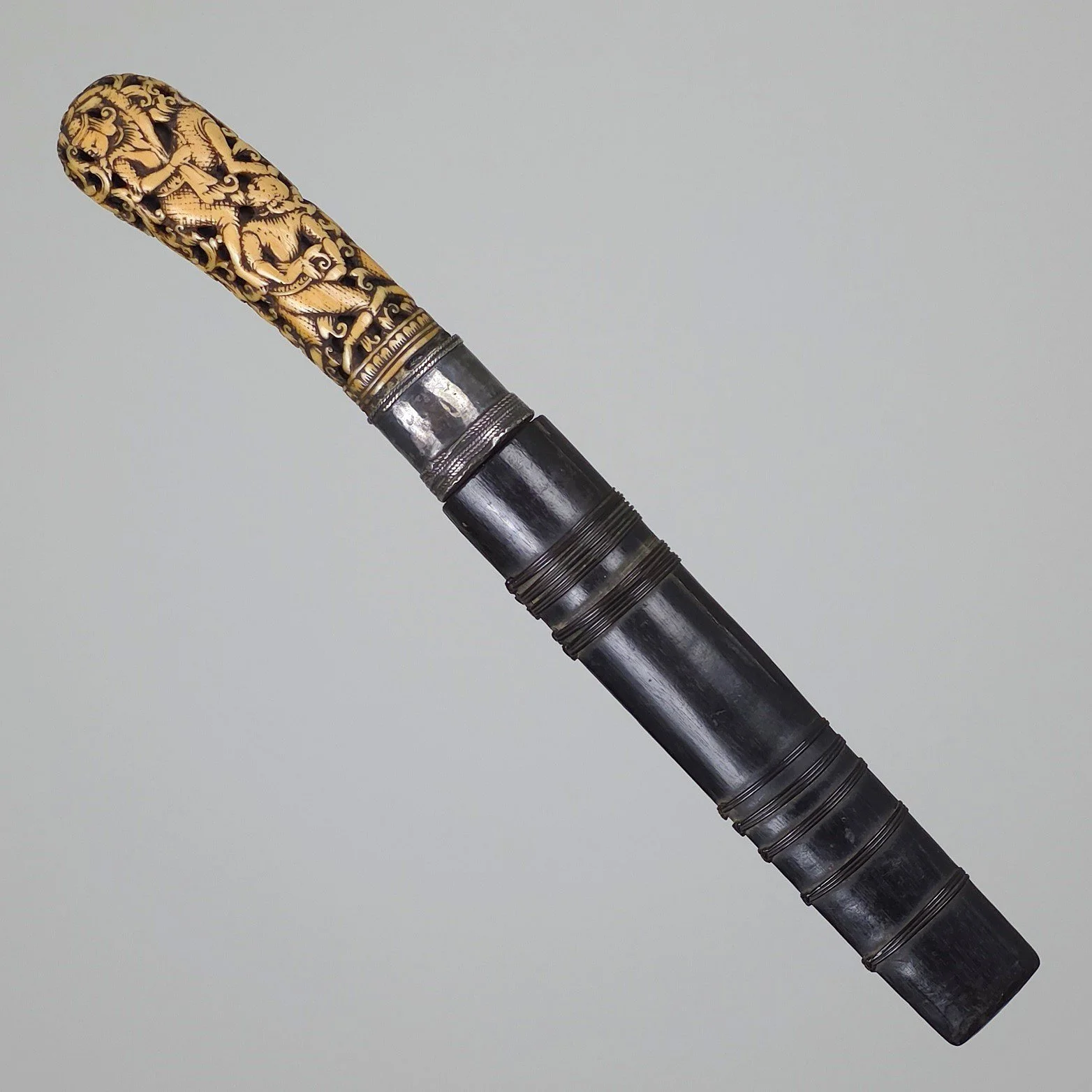
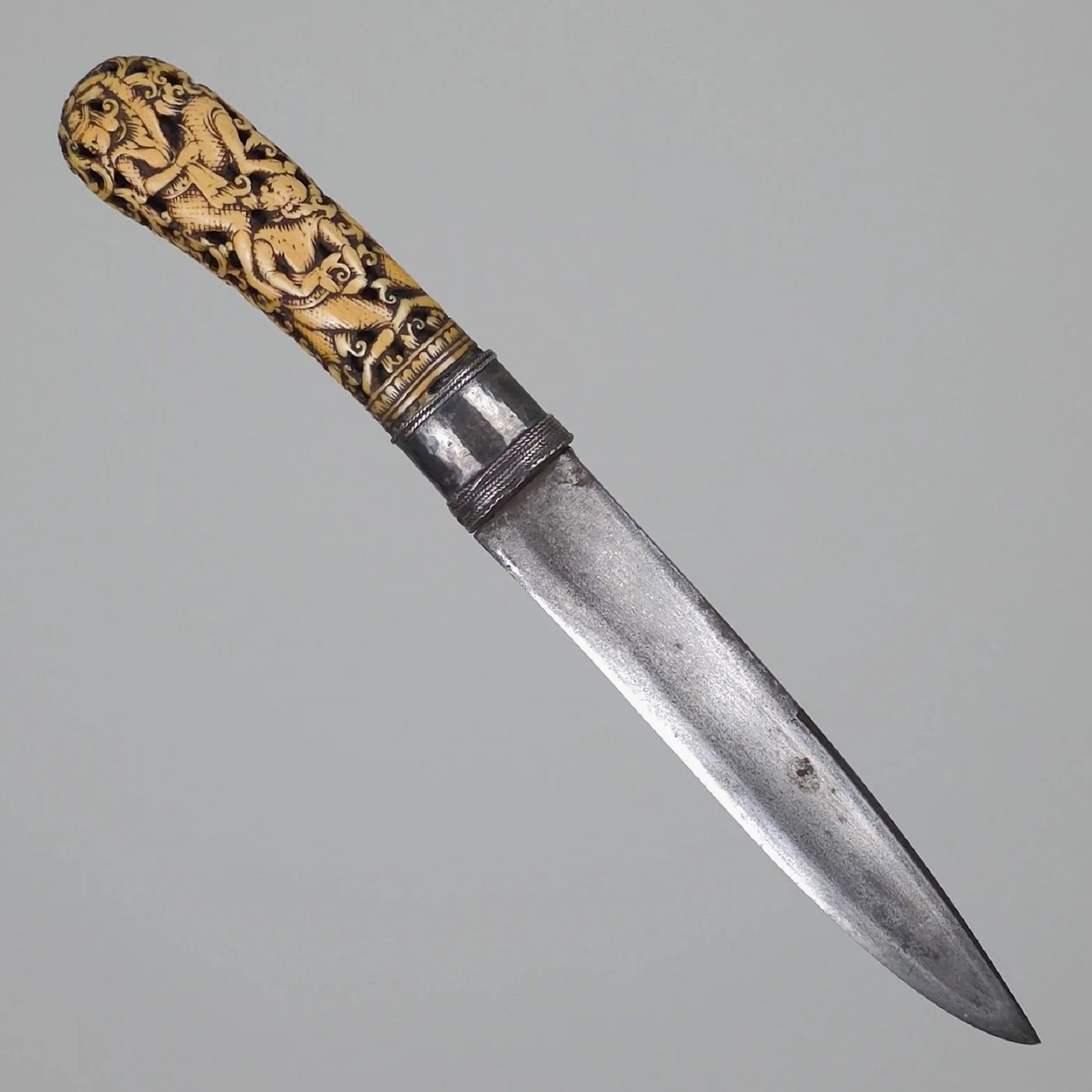
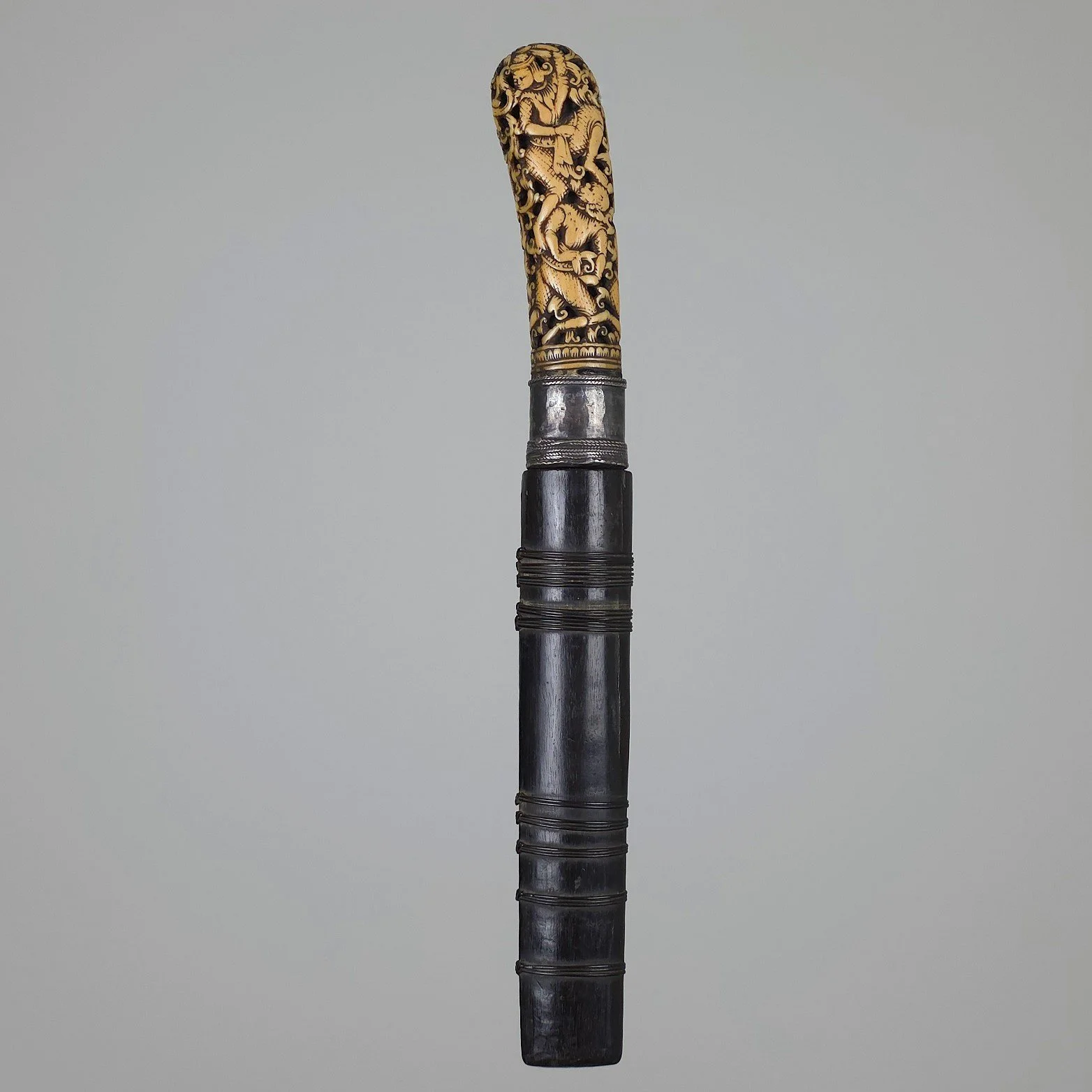
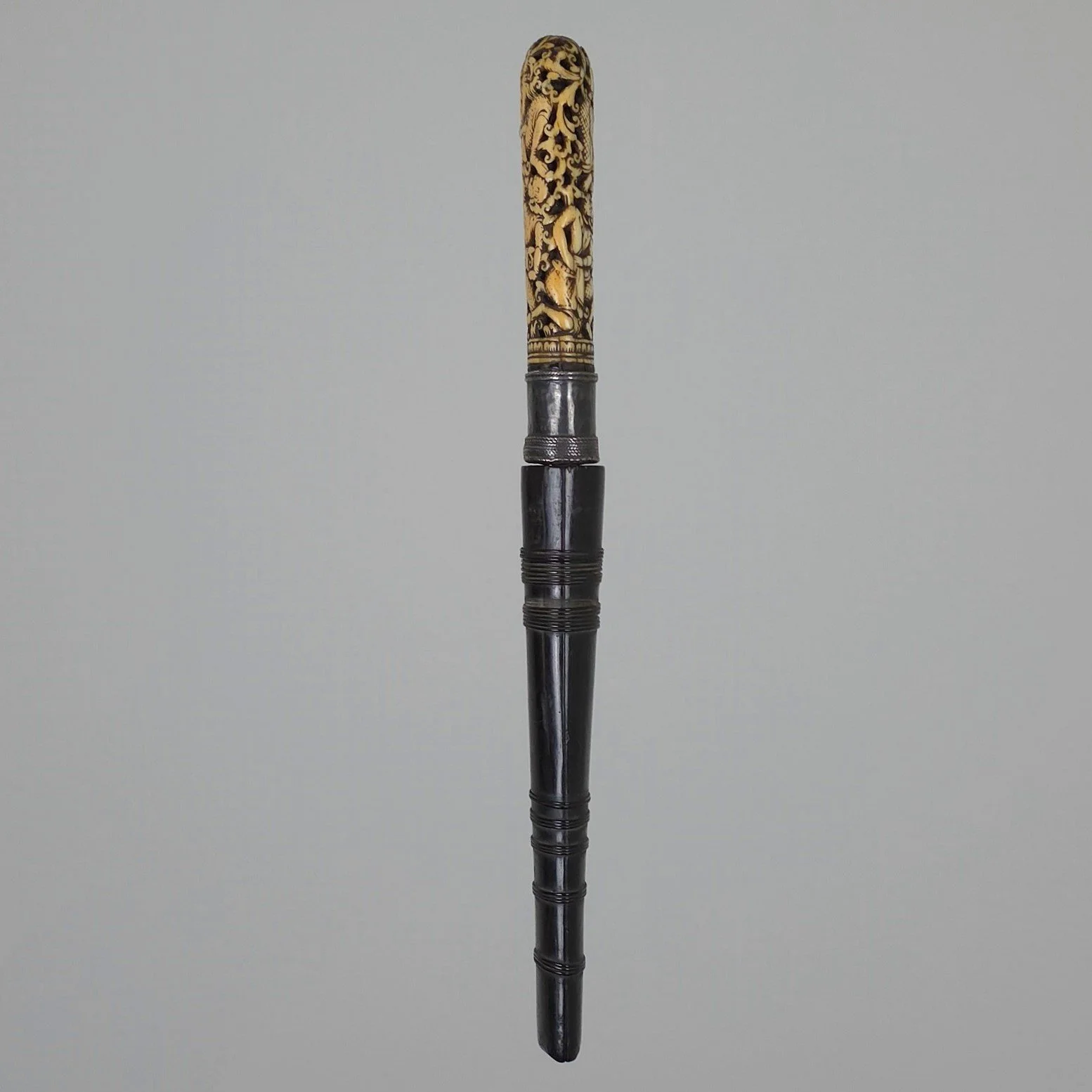
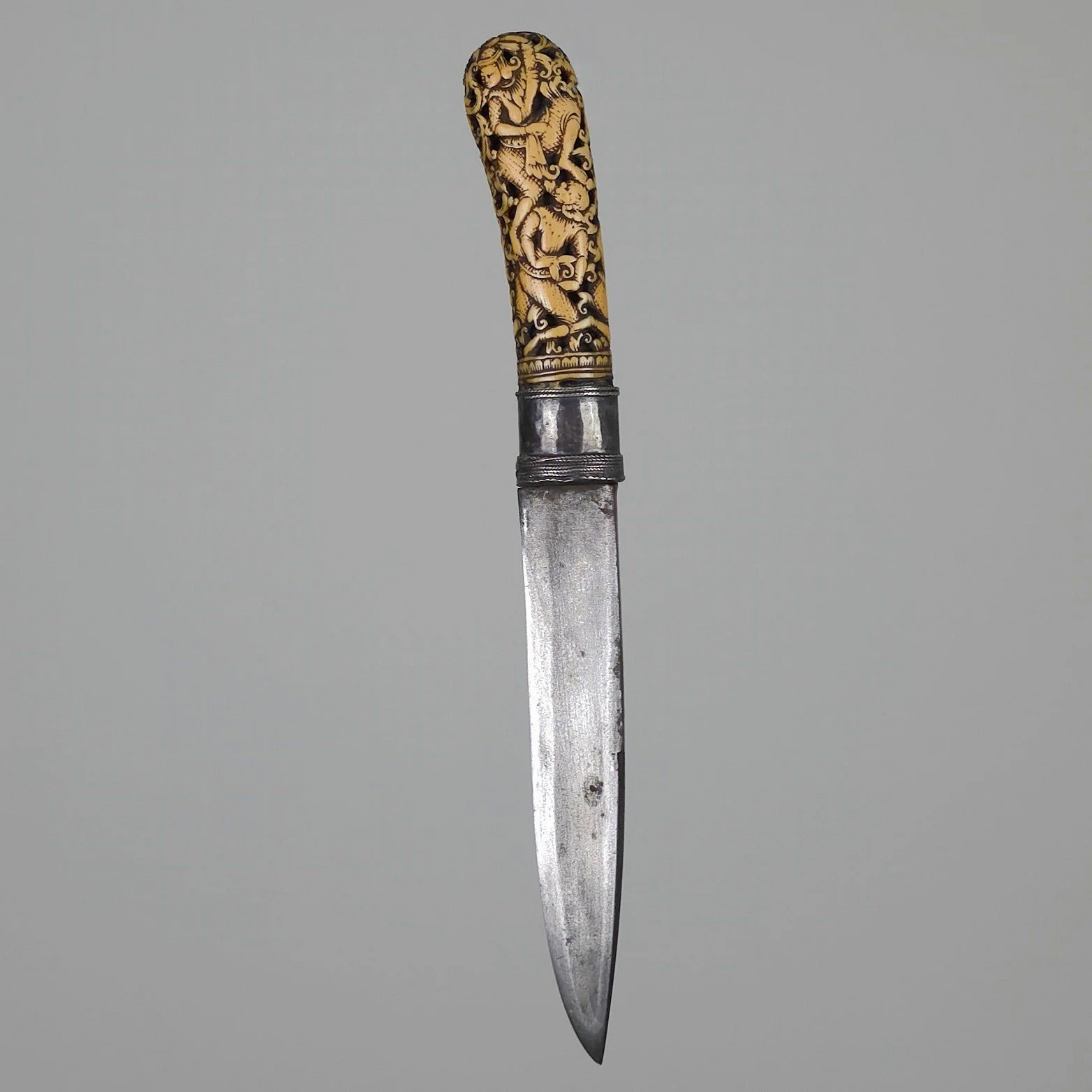
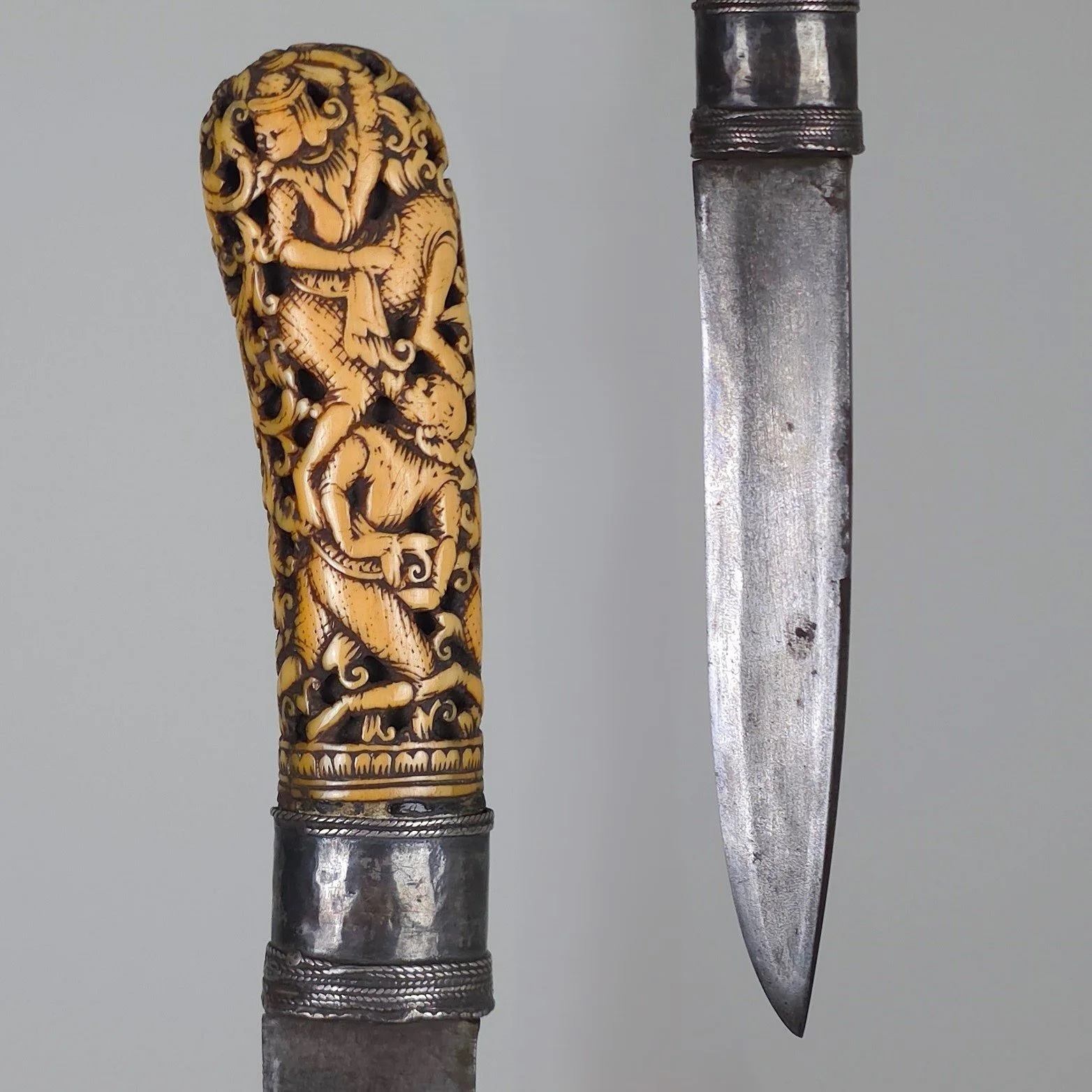
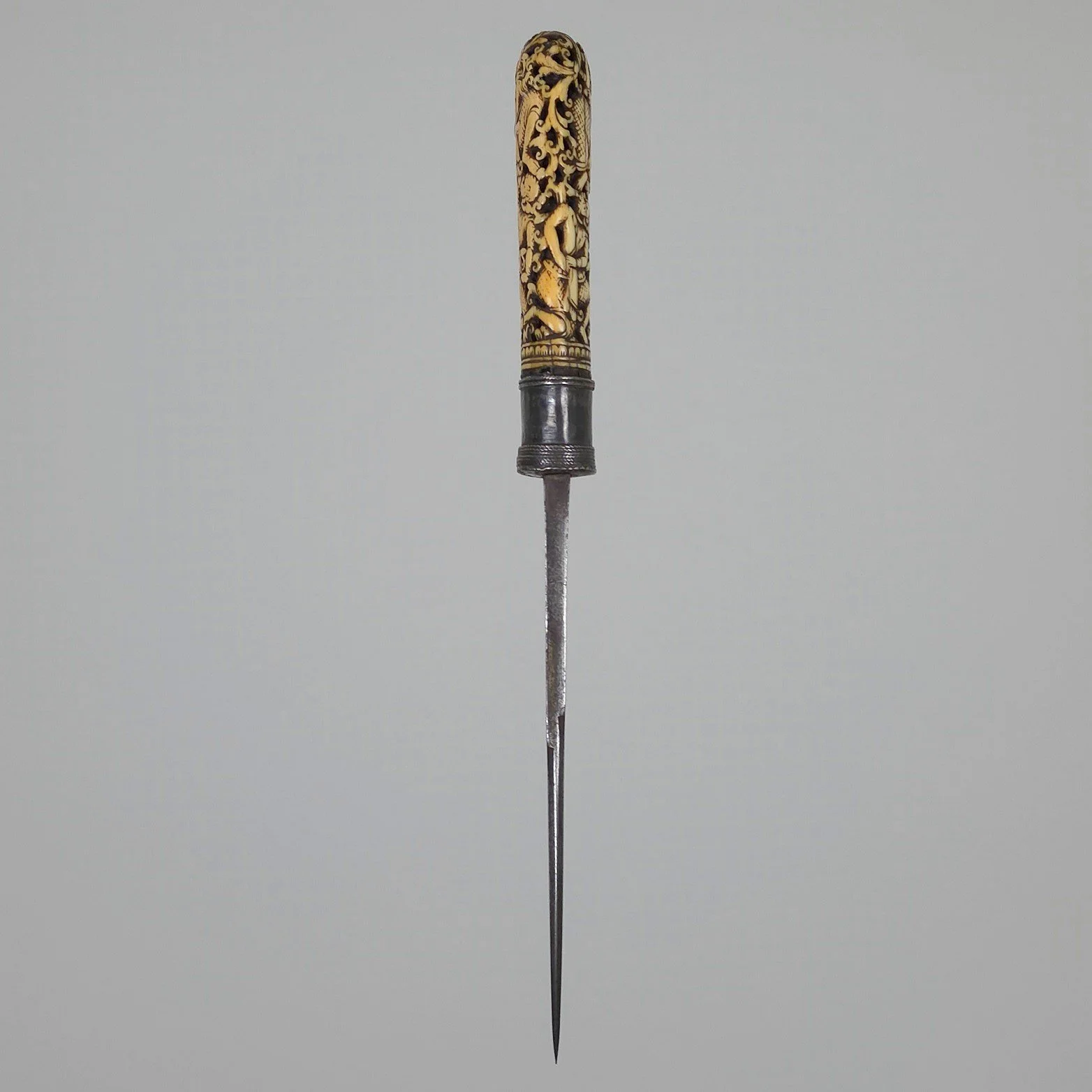
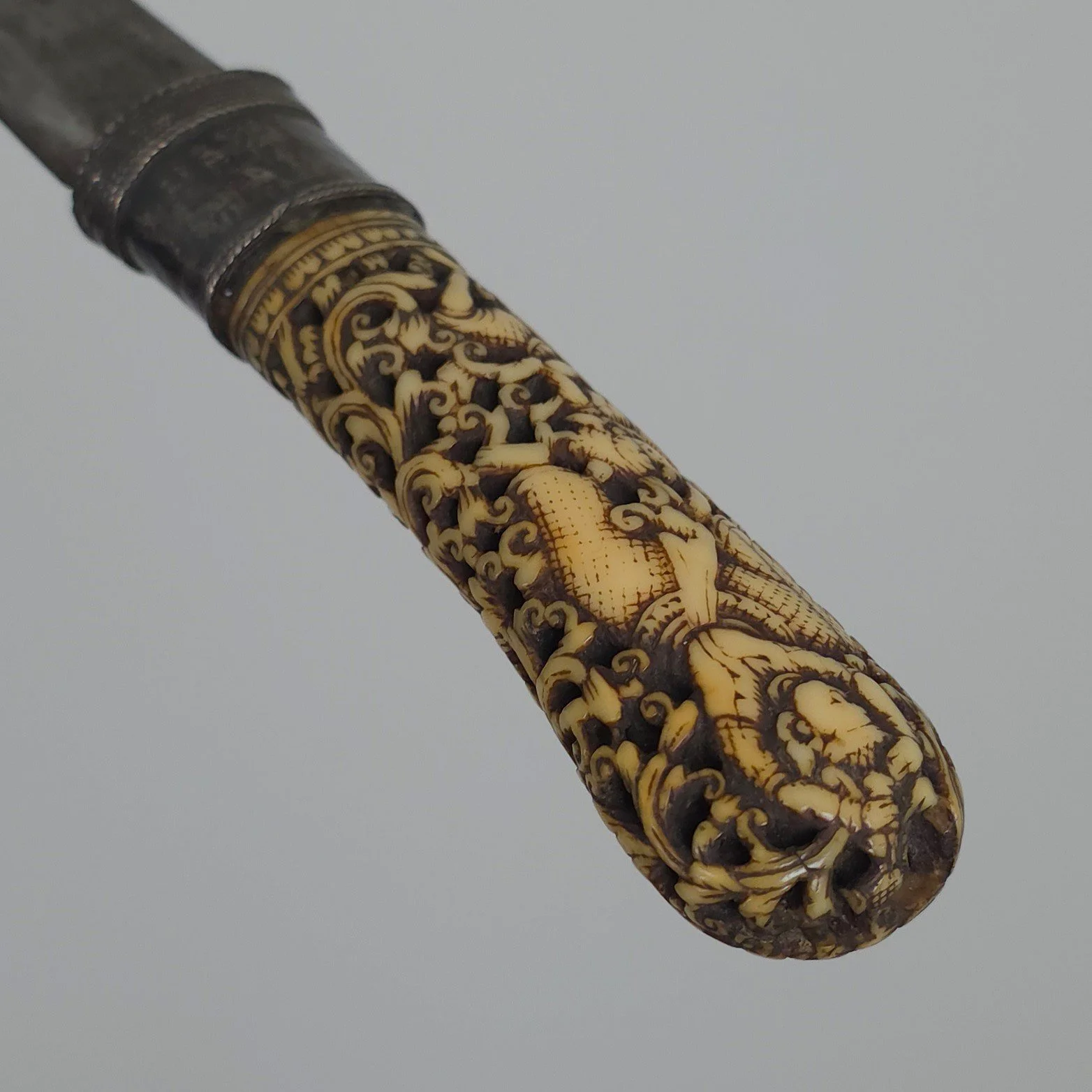
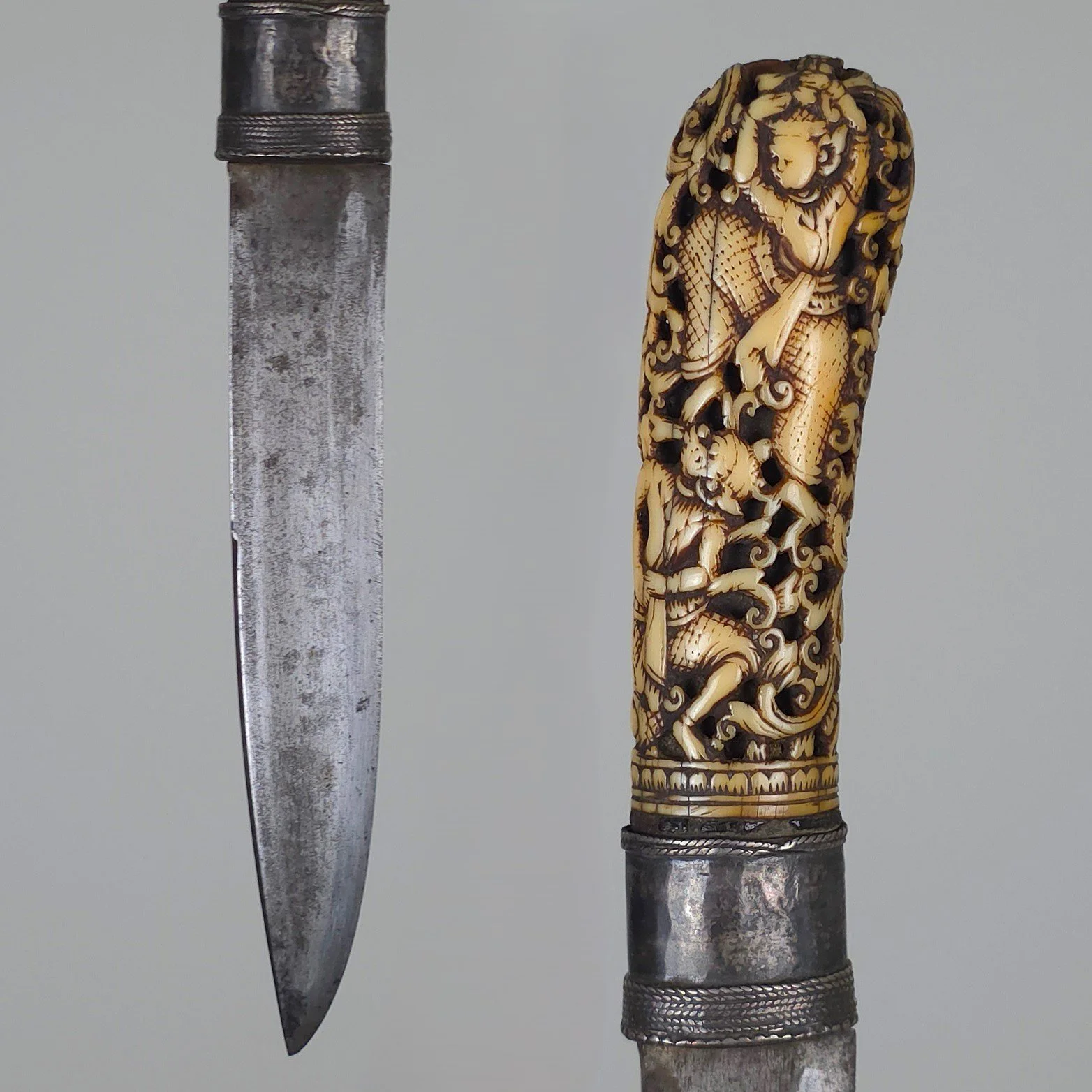
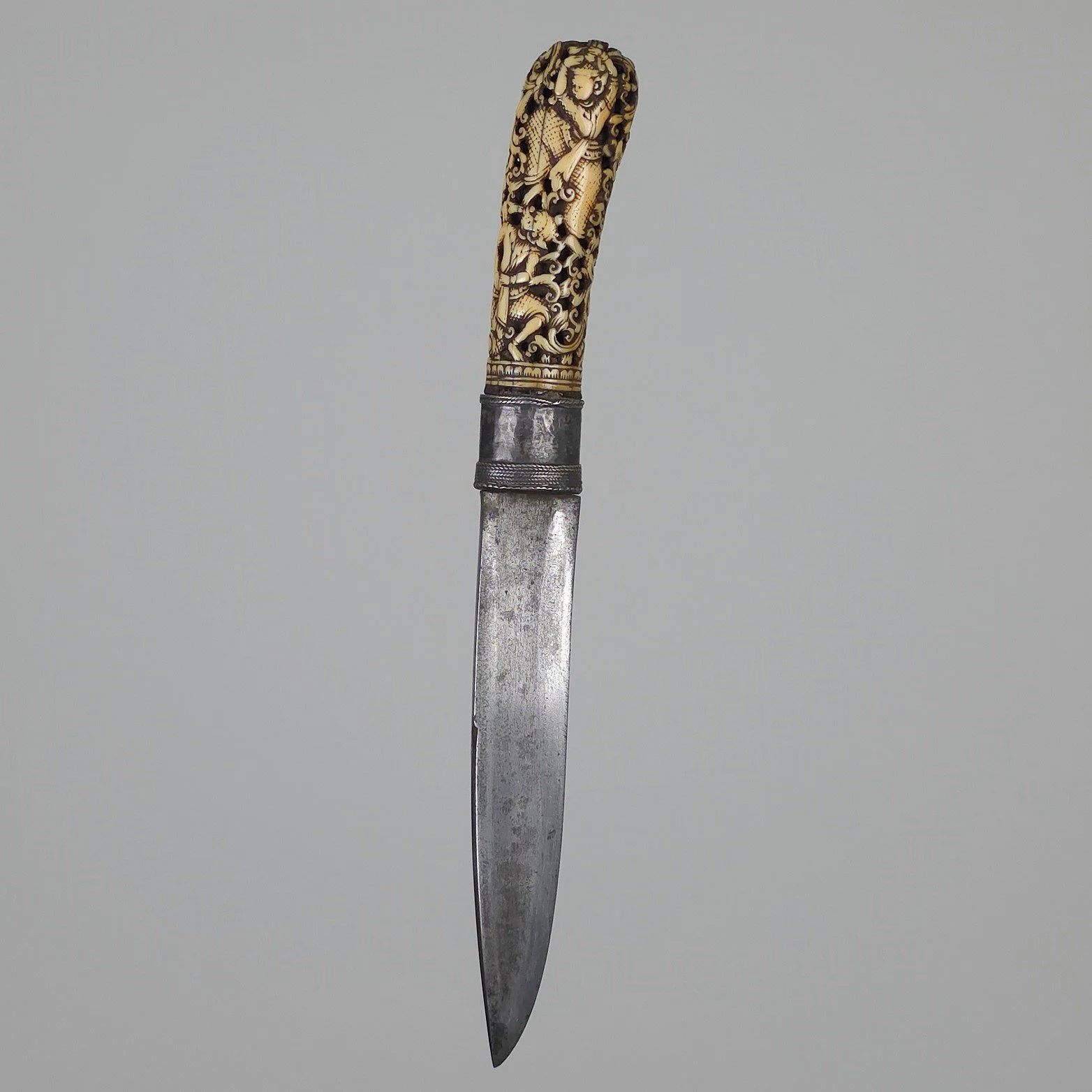
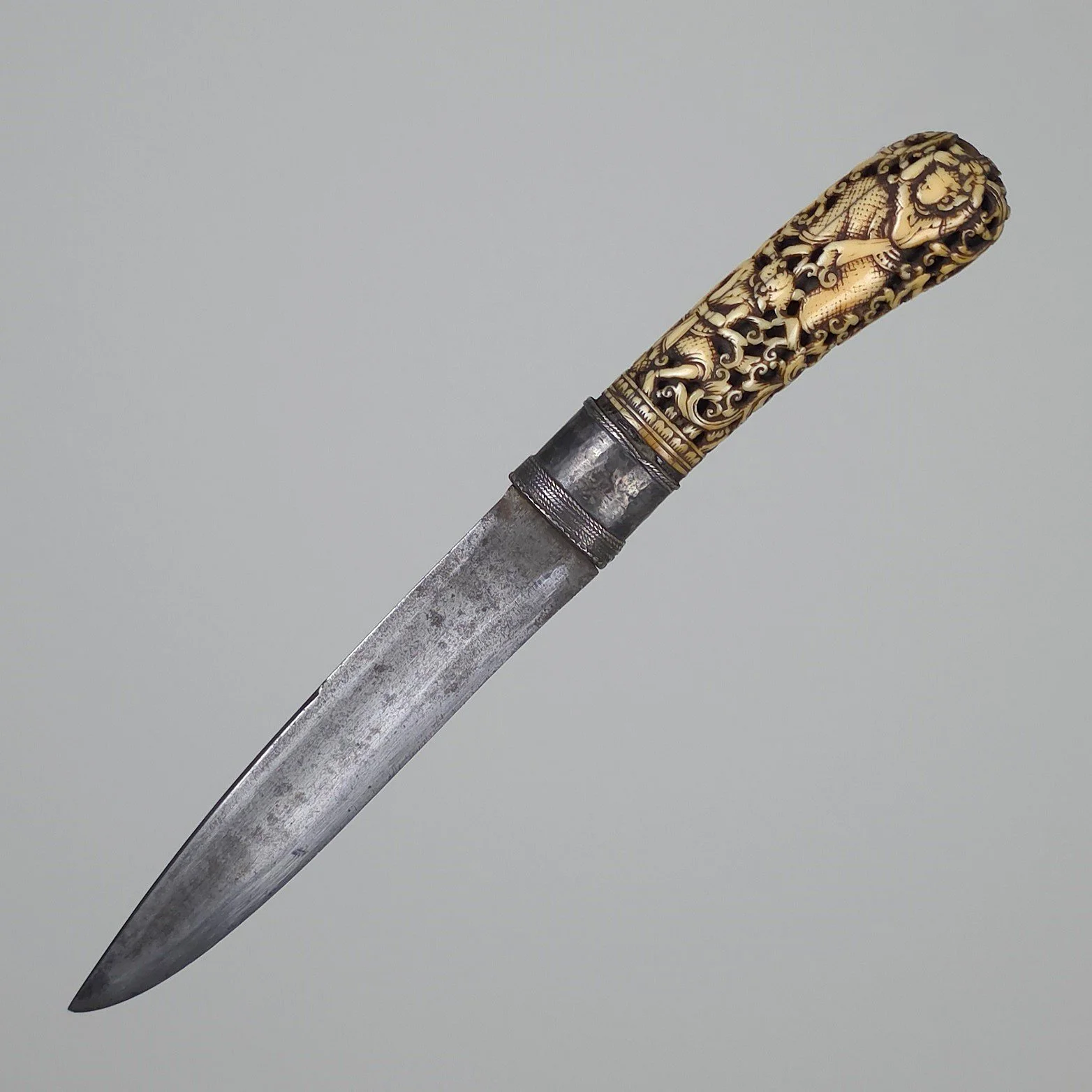
A very fine dha hmyuang, a traditional knife from the historic Burmese region. It features a thick, straight, single-edged steel blade that gently curves downward toward an upswept point. The spine is beveled along the forward half of the blade, while a broad fuller runs centrally along its length. The blade is fitted with a silver ferrule accented with finely worked filigree wire.
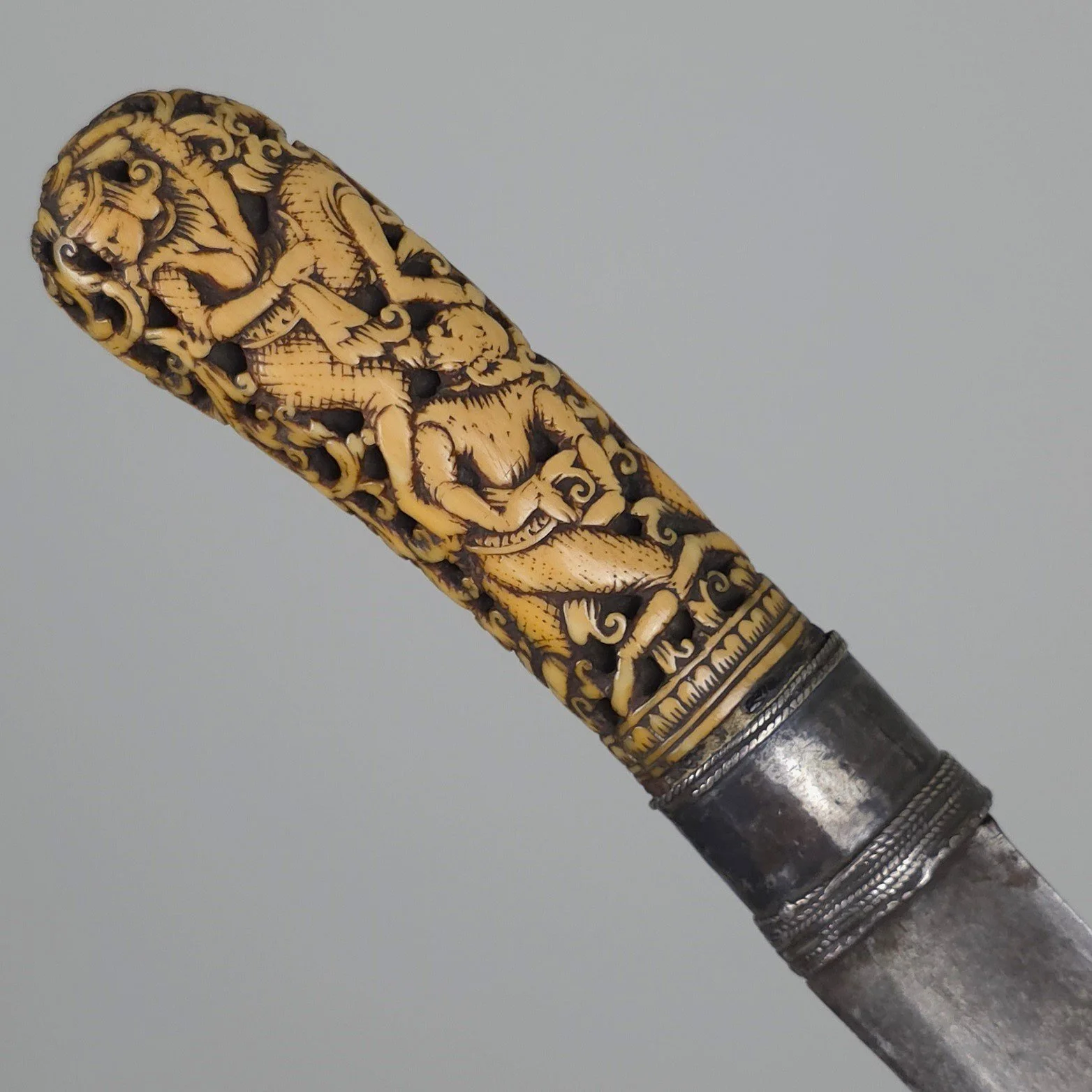
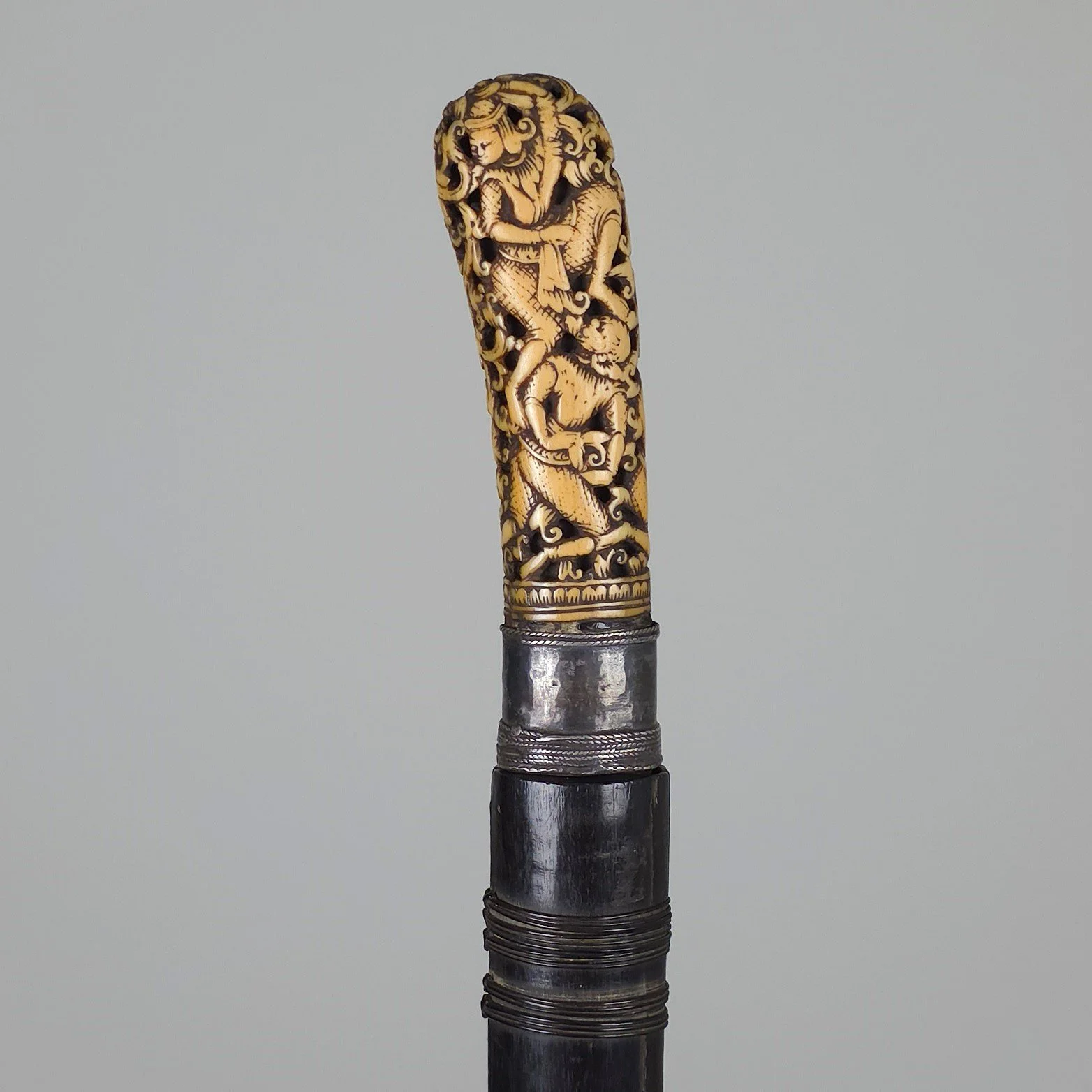
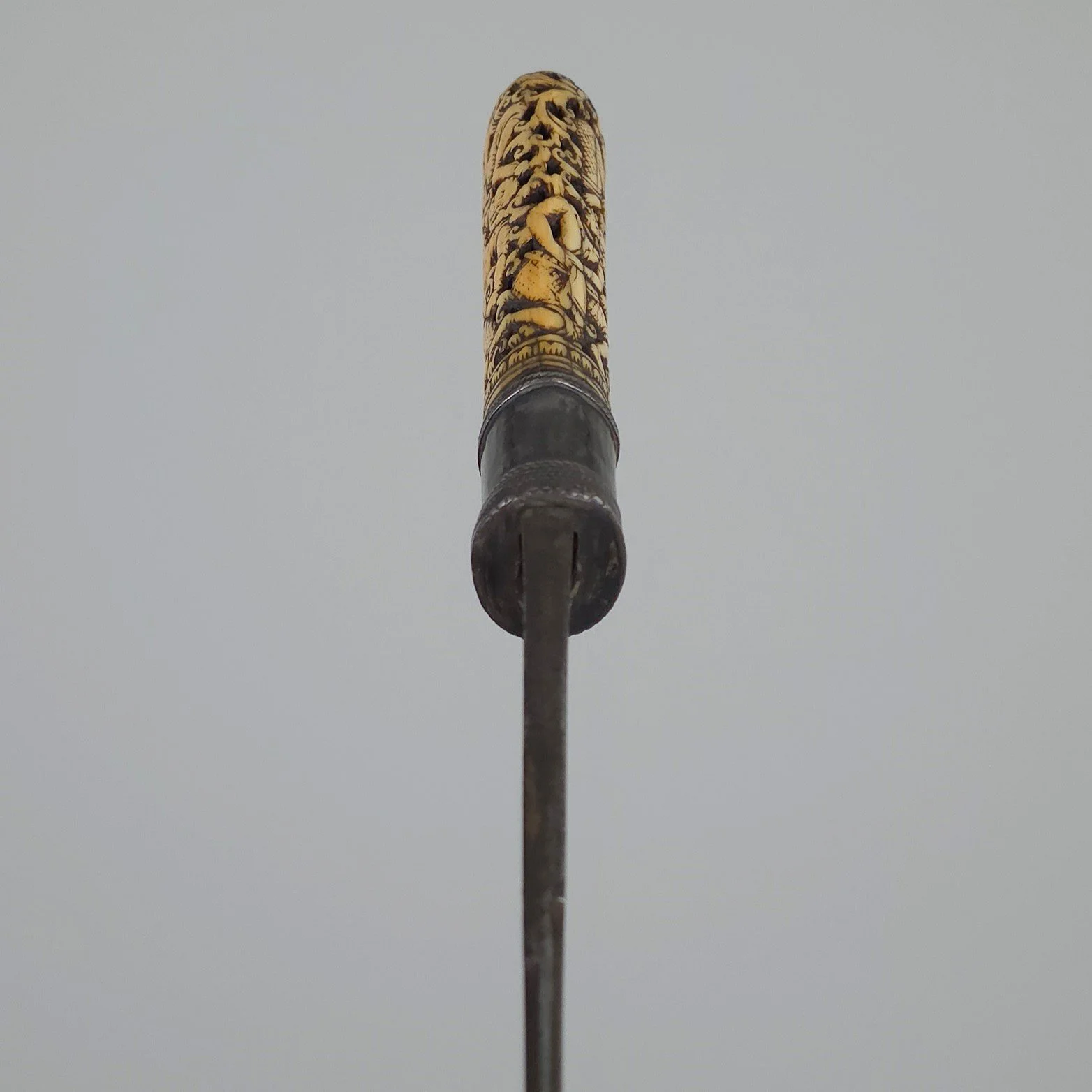
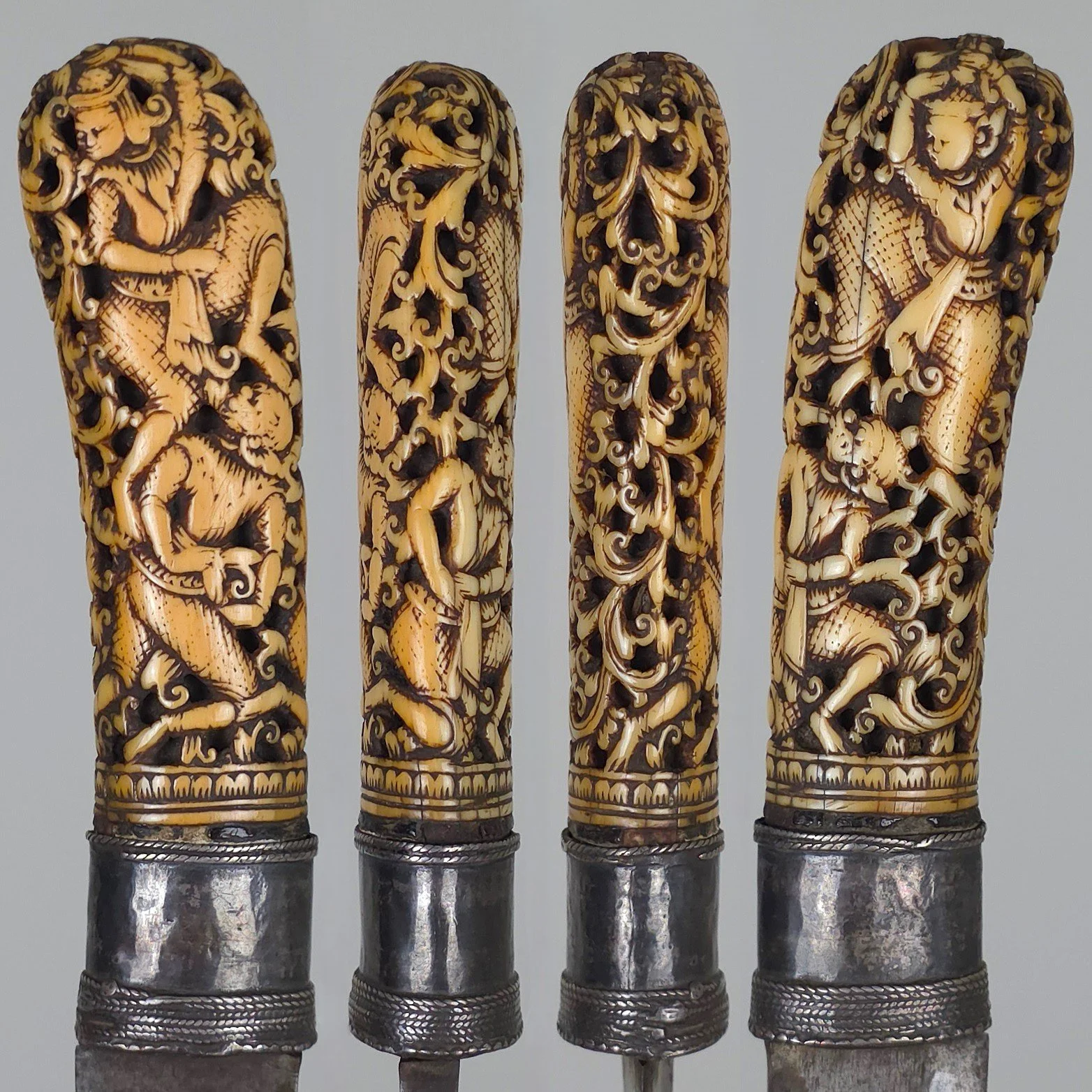
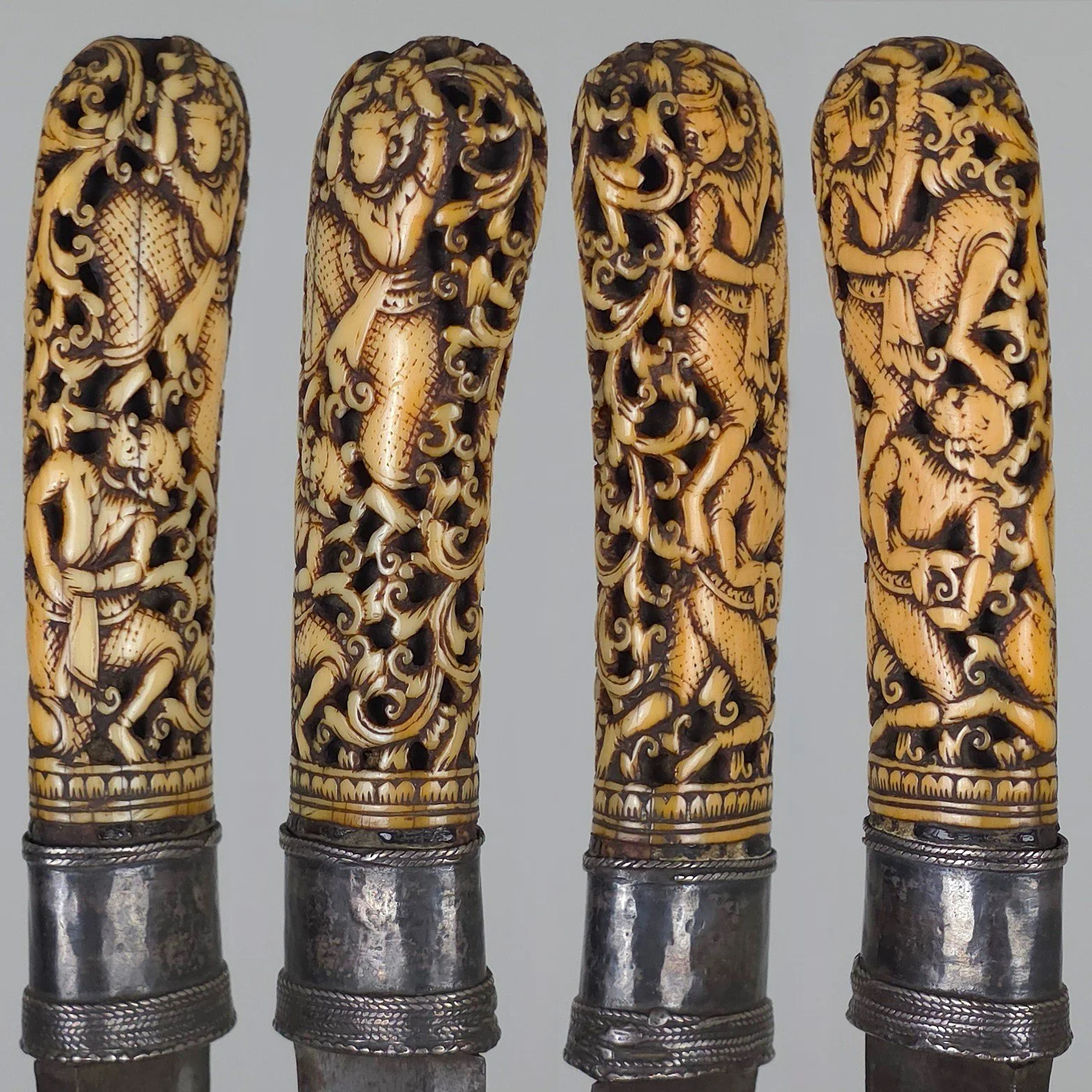
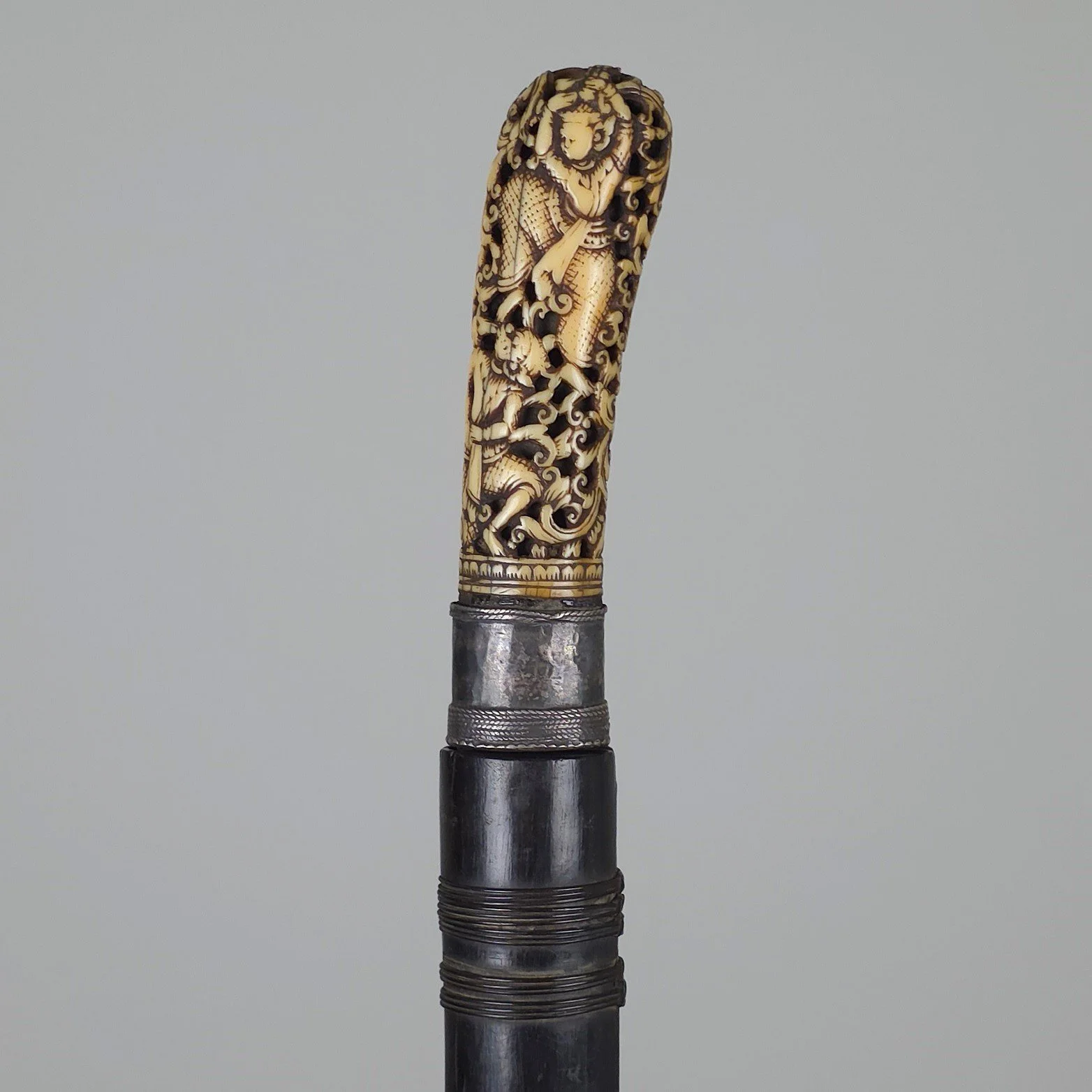
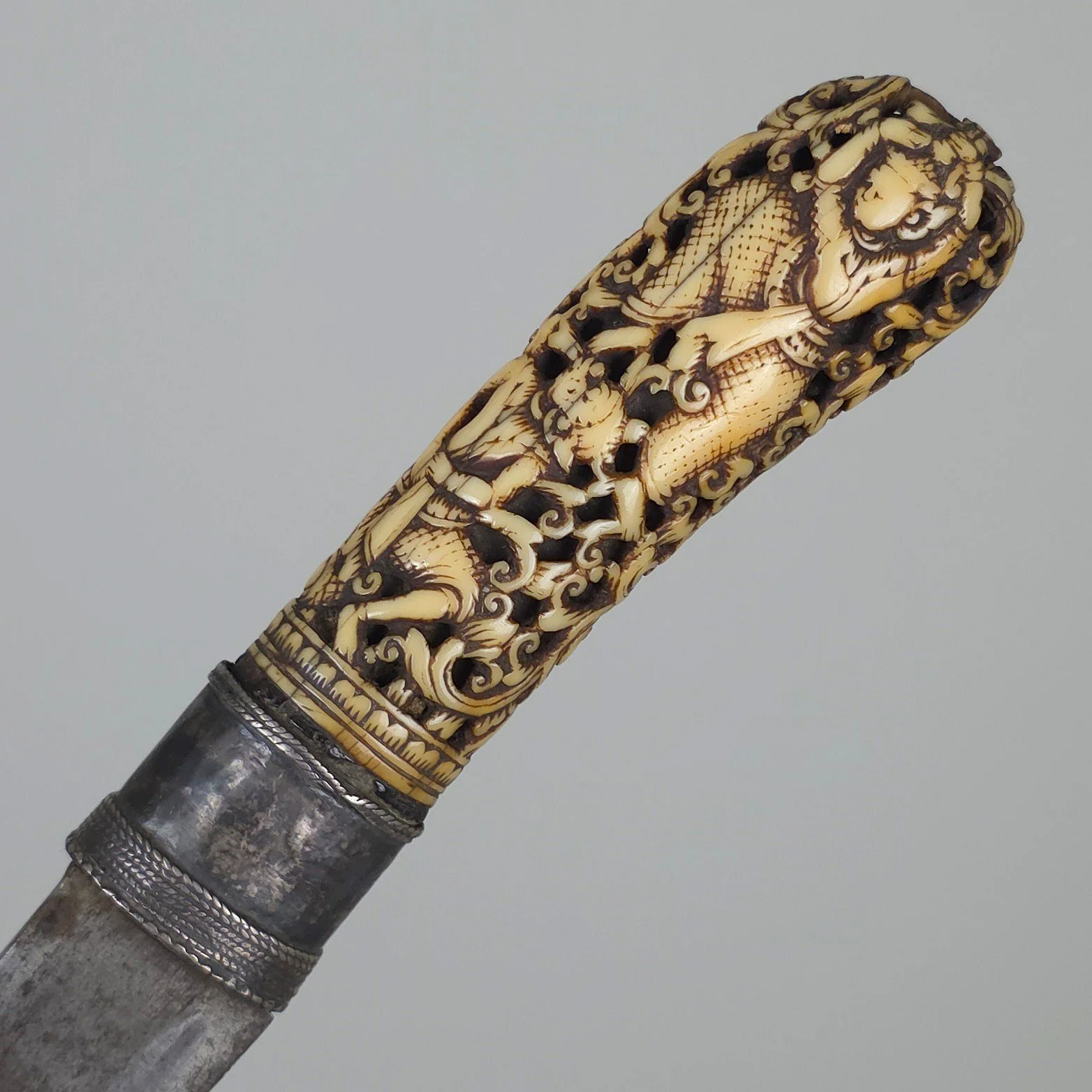
The cylindrical elephant ivory hilt displays a rich golden-honey patina and is extensively decorated with finely detailed openwork carving known as A-Yoke-Son, or figural carving. The decoration features two distinct narrative scenes, one on each side, framed by elaborate scrolling floral motifs. The imagery draws from the Yama Zatdaw, Burma's national epic, and its adaptation of the ancient Indian Ramayana.
The upper portions of both sides depict divine figures, or Nats, likely representing Prince Rama, dressed in ornate court attire (Paso) and wearing an elaborate crown (Mokot). Their serene expressions convey divine authority and righteousness. Below, mythological creatures or demons, appear in dynamic poses of defeat, with fierce expressions. The figures' movement and positioning suggest a dramatic confrontation, possibly depicting Prince Rama's battle against the demon forces of King Ravana.
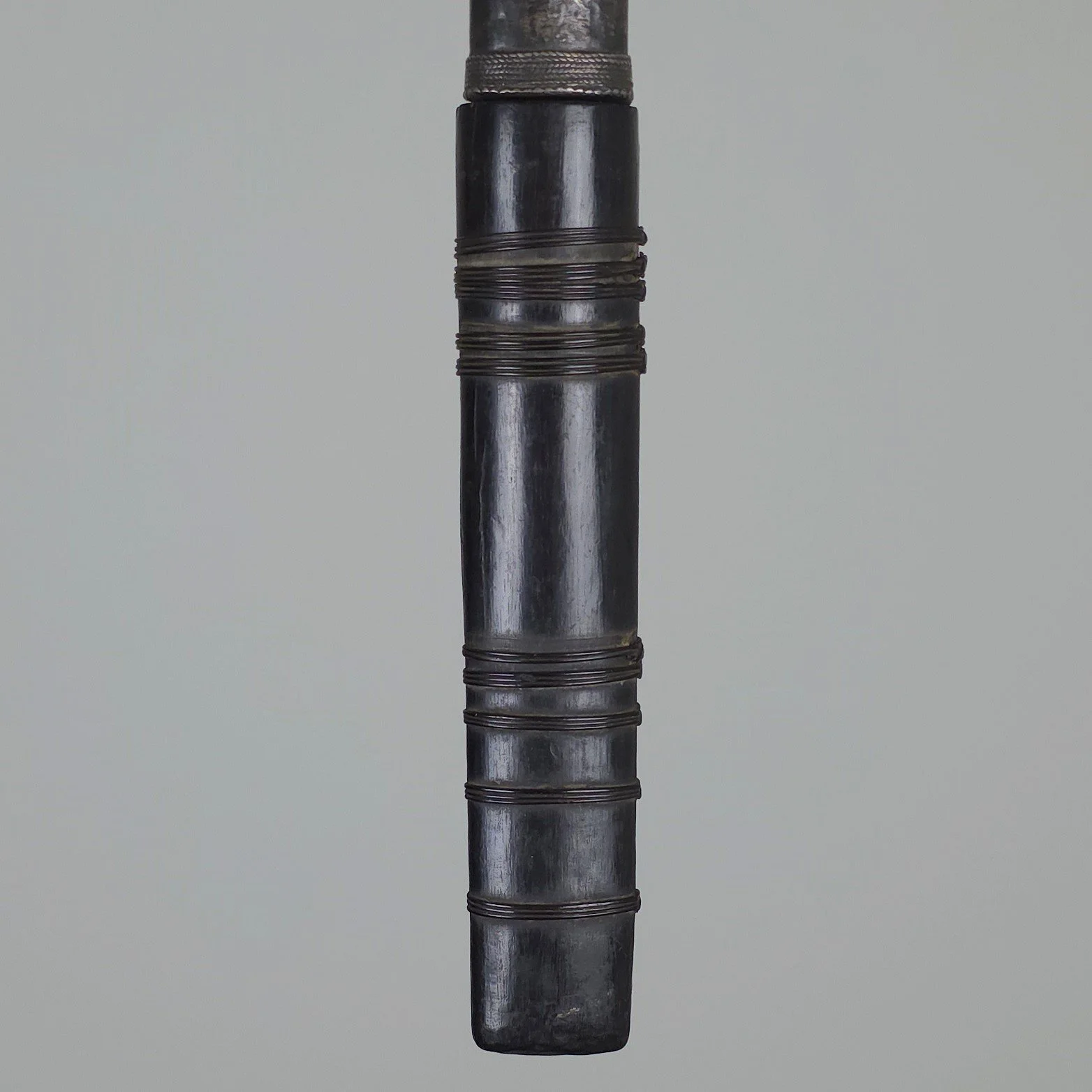
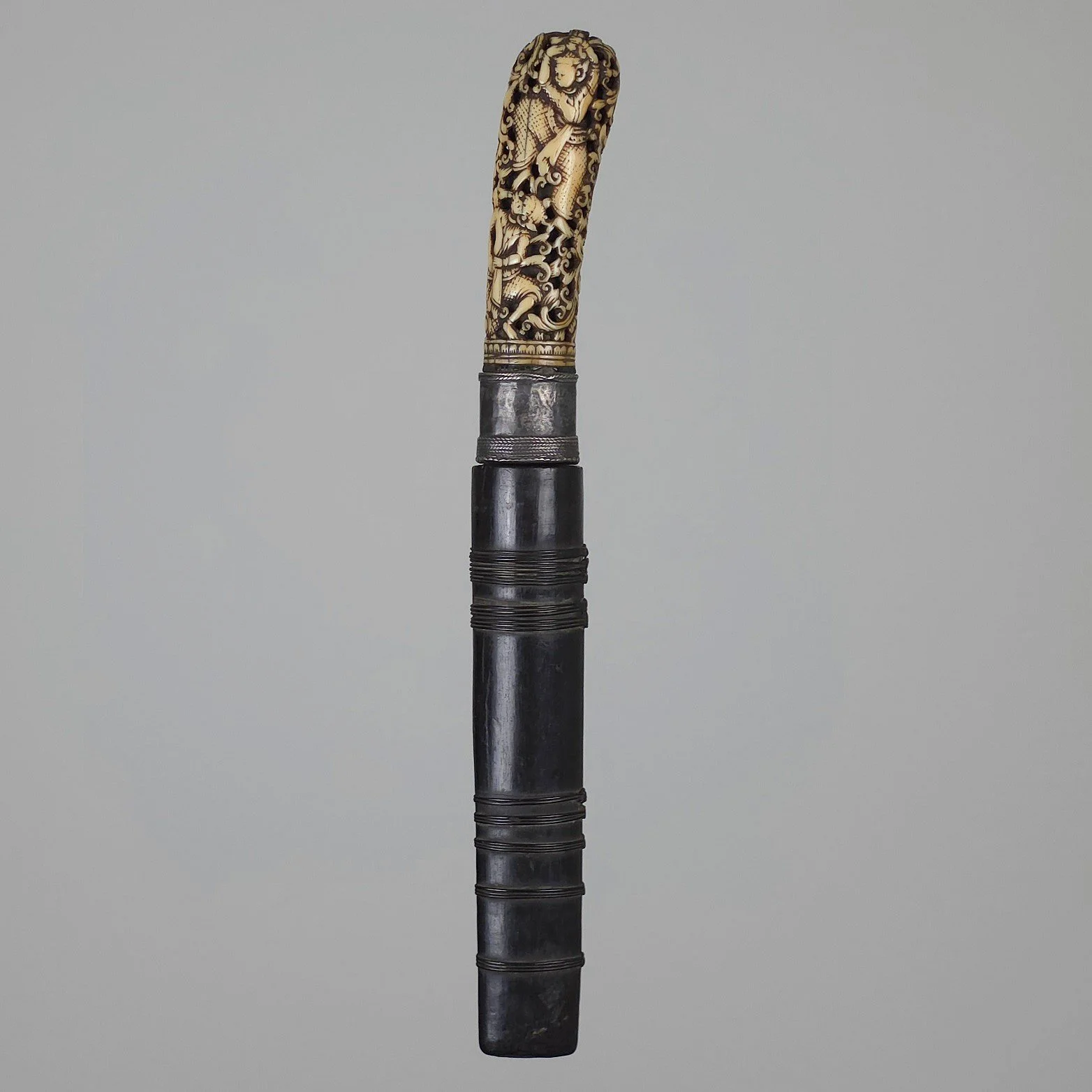
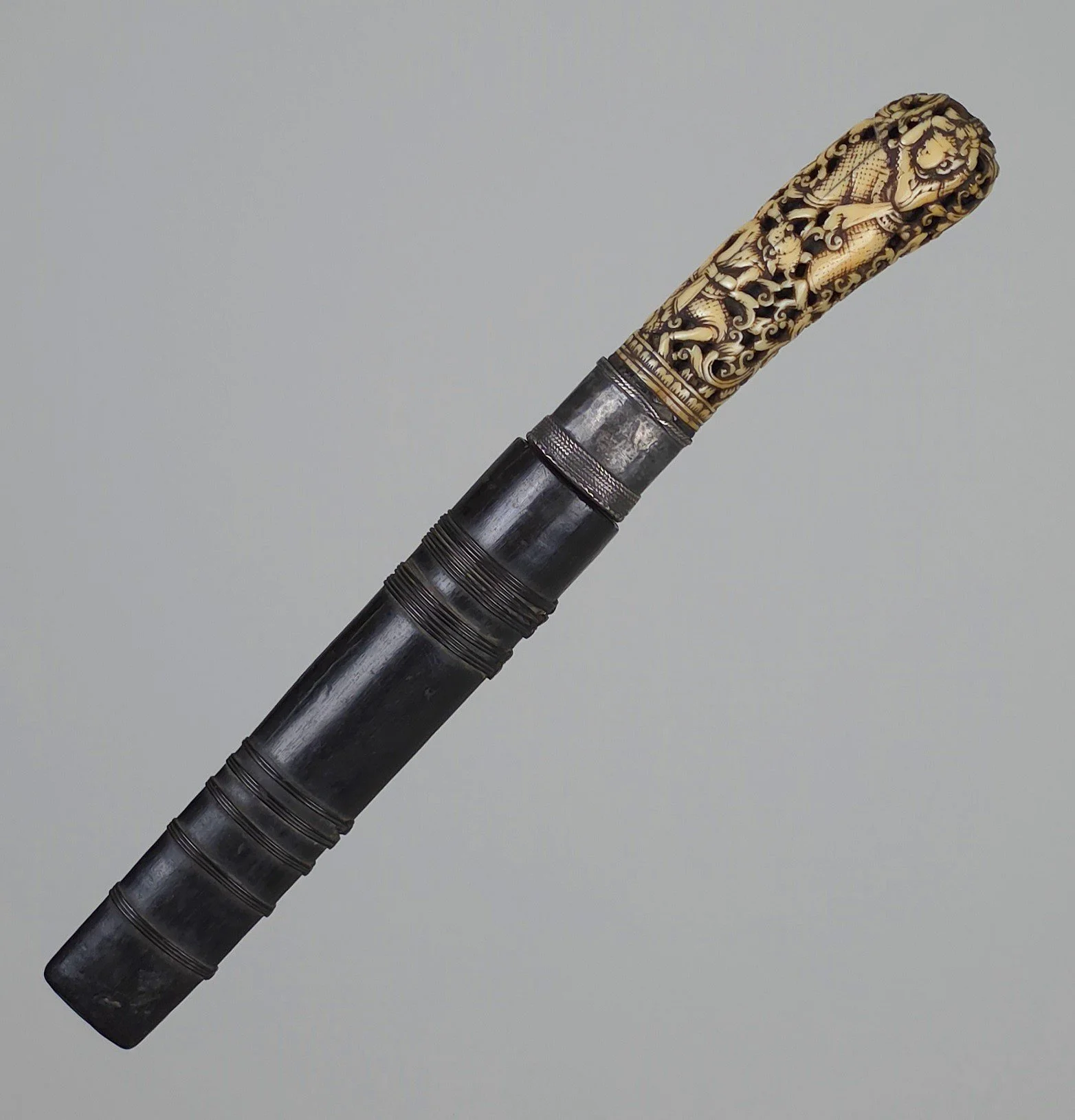
The base of the hilt is finished with a crisply defined lotus- petal border (Kyarhmat), positioned above the silver collar. The accompanying sheath consists of two symmetrical wooden halves, finished in black lacquer and secured with a series of rattan bindings.
An exceptional example of Burmese craftsmanship, this knife is distinguished by its intricately carved openwork ivory hilt, which illustrates the country's national epic through the remarkable artistry of Burmese ivory carvers.
[1] https://collections.penn.museum/collections/object/88025
[2] https://www.metmuseum.org/art/collection/search/31618
[3] https://www.metmuseum.org/art/collection/search/30920
[4] https://www.metmuseum.org/art/collection/search/31587
[5] https://www.britishmuseum.org/collection/object/A_1952-1110-5-a-b?selectedImageId=1614053842
[6] https://www.britishmuseum.org/collection/object/A_1952-1110-6-a-b?selectedImageId=1614054081
[7] https://www.britishmuseum.org/collection/object/A_As1972-Q-3321-a
[8] http://www.oriental-arms.co.il/item.php?id=7188
[9] http://www.oriental-arms.co.il/item.php?id=6689
[10] http://www.oriental-arms.co.il/item.php?id=8324
[11] http://www.oriental-arms.co.il/item.php?id=4364
[12] http://www.oriental-arms.co.il/item.php?id=3839
[13] http://www.oriental-arms.co.il/item.php?id=3805
[14] http://www.oriental-arms.co.il/item.php?id=4919
[15] https://www.mandarinmansion.com/item/burmese-dha-openwork-handle
[16] https://www.mandarinmansion.com/item/fine-burmese-dha-hmyaung